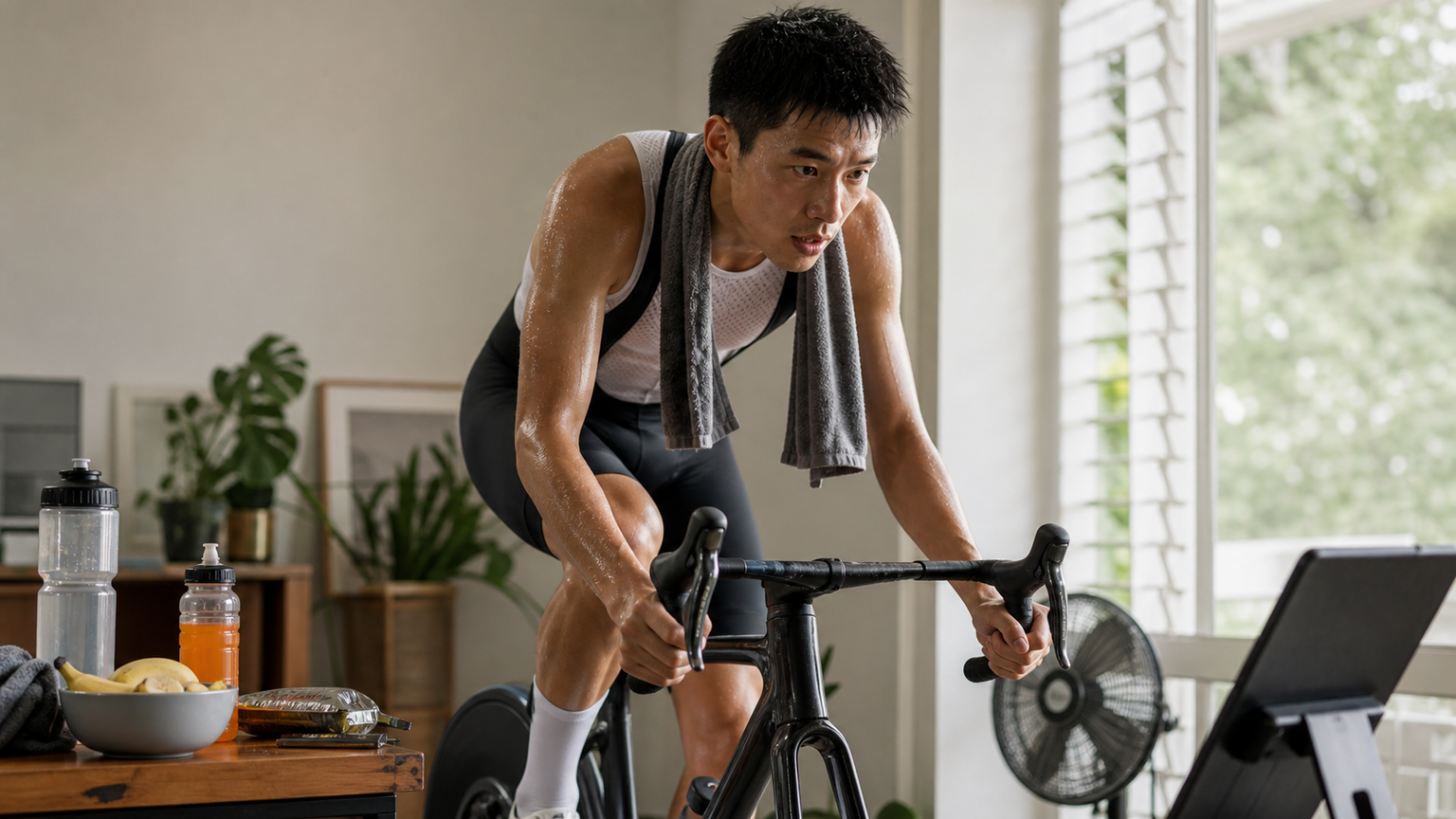
Indoor Training Nutrition: Fueling Strategies That Differ from Outdoor Riding
Many cyclists, upon starting indoor training, directly transfer their outdoor riding nutrition strategies to the trainer. However, the unique characteristics of the indoor training environment—higher sweat rates, different exercise patterns, and the convenience of easily accessible fuel—all require us to adjust our nutrition strategies. Proper indoor training nutrition planning can significantly enhance your training quality and recovery.
Indoor Training Sweat Rates Are Surprising
Differences in Sweat Rates
This is the biggest source of difference between indoor and outdoor nutrition strategies. Due to lower heat dissipation efficiency indoors, the body attempts to cool down through profuse sweating:
| Environment | Estimated Sweat Rate per Hour |
|---|---|
| Outdoor Riding (Cool Weather) | 0.5-0.8 L |
| Outdoor Riding (Hot Weather) | 0.8-1.5 L |
| Indoor Training (Good Ventilation) | 0.8-1.2 L |
| Indoor Training (Poor Ventilation) | 1.2-2.0 L |
| Indoor High-Intensity Training (Poor Ventilation) | 1.5-2.5 L |
Individual sweat rates vary greatly, influenced by genetics, fitness level, ambient temperature, and training intensity. You can estimate your own sweat rate by weighing yourself before and after training.
Measuring Sweat Rate with the Body Weight Method
- Weigh yourself nude before training (A)
- Record the amount of fluid consumed during training (B)
- After training, dry off sweat and weigh yourself nude ©
- Sweat loss = A - C + B
- Divide by training duration to get your hourly sweat rate
Knowing your sweat rate is the foundation for creating a hydration plan.
Hydration and Electrolyte Replacement
Pre-Training Hydration
2-3 hours before starting indoor training, consume 400-600 ml of fluid:
- You can add a small amount of electrolyte powder
- Avoid drinking large amounts at once, which can cause stomach discomfort
- Drink another 200-300 ml 30 minutes before training
- Use light yellow urine color as a reference for hydration status
Hydration Strategy During Training
A major advantage of indoor training is the ability to conveniently replenish fluids at any time. Take advantage of this:
Hydration Frequency:
- Drink 150-250 ml every 10-15 minutes
- Aim to replace 70-80% of sweat loss (100% replacement is not necessary)
- Recovery periods during high-intensity intervals are the best time to hydrate
Drink Temperature:
- Cold drinks (5-10°C): Help lower core temperature, particularly beneficial during indoor training
- Studies show cold drinks can extend the duration of high-intensity exercise
- Preparing a water bottle with ice cubes is a simple and effective method
Electrolyte Management
Heavy sweating loses not only water but also significant amounts of electrolytes, especially sodium:
Importance of Sodium:
- Sodium concentration in sweat is approximately 200-1,500 mg/L (highly individual)
- If you are a “salty sweater” (often having white salt stains on your clothes), your sodium loss may be very high
- Drinking plain water alone cannot replace lost electrolytes and may lead to hyponatremia
Supplementation Recommendations:
- Add 300-700 mg of sodium per liter of drinking water
- Use dedicated electrolyte powders or effervescent tablets
- Electrolyte supplementation is essential for training lasting over 60 minutes
- The higher the training intensity and the more you sweat, the more electrolytes you need
Common Electrolyte Supplement Options:
- Electrolyte effervescent tablets (e.g., Nuun, SIS Hydro)
- Sports drink powders (e.g., Skratch Labs, Precision Hydration)
- Homemade electrolyte water (water + salt + a little sugar + lemon juice)
Avoiding Overhydration
Overhydration (drinking more than you sweat) is equally dangerous and can lead to hyponatremia:
- Don’t force yourself to drink more than your thirst dictates
- Weight gain (weighing more after training than before) is an indicator of overhydration
- Reasonable goal: post-training weight loss should not exceed 2% of pre-training body weight
Pre-Training Nutrition
Timing of Meals
The timing of meals for indoor training is similar to outdoor riding, but with some adjustments:
2-3 Hours Before Training: Full Meal
- Primarily carbohydrates (rice, bread, sweet potatoes, etc.)
- Moderate protein
- Low fat, low fiber (to avoid digestive discomfort)
- Example: A bowl of white rice + chicken breast + a small amount of vegetables
30-60 Minutes Before Training: Light Snack
- Easily digestible carbohydrates
- Examples: Banana, energy bar, white toast with jam
- Intake amount: 30-50 grams of carbohydrates
Special Considerations for Indoor Training
Since indoor training typically involves being fixed on a trainer, the stomach experiences less vibration and pressure. Therefore:
- You can eat slightly later compared to outdoor riding
- The risk of stomach discomfort is lower
- However, still avoid overeating, as significant blood flow to the digestive system can impair performance
Nutrition During Training
Carbohydrate Supplementation
Carbohydrate needs during training depend on training duration and intensity:
| Training Duration | Carbohydrate Needs | Supplement Form |
|---|---|---|
| < 45 minutes | Usually not needed | Plain water or electrolyte water |
| 45-75 minutes | Small amount (mouth rinse is sufficient) | Sports drink |
| 75-120 minutes | 30-60 g/hour | Sports drink + energy gels |
| > 120 minutes | 60-90 g/hour | Mixed-source carbohydrates |
Advantages of Fueling Indoors
Indoors, you have greater convenience for fueling:
- Solid food is more convenient: No need to fumble for an energy bar from your pocket; just grab it from the table
- Liquids are always accessible: Unlike outdoors, where you need to reach for your bottle cage
- You can use custom-mixed drinks: Homemade sports drinks, diluted juice, etc.
- Food temperature is controllable: Keep cold drinks cold, hot food warm
Practical Indoor Training Fuel Options
- Energy gels: Quick carbohydrate source, suitable for intake during interval recovery
- Bananas: Natural carbs + potassium, slice them and keep within arm’s reach
- Rice crackers or salty biscuits: Provide carbohydrates + sodium
- Sports drinks: All-in-one liquid + carbs + electrolytes
- Japanese rice balls (onigiri): A solid carbohydrate option for longer sessions
Post-Training Nutrition
The Recovery Window
The 30-60 minutes following training is the golden recovery period for nutrient absorption:
Carbohydrates:
- Target: 1.0-1.2 g/kg body weight
- Choose high-glycemic-index foods to accelerate glycogen replenishment
- Examples: White rice, potatoes, sports recovery drinks
Protein:
- Target: 0.3-0.4 g/kg body weight (approximately 20-30 grams)
- High-quality protein sources
- Examples: Eggs, chicken breast, whey protein powder, Greek yogurt
Recovery Advantages After Indoor Training
Compared to outdoor riding, nutrient intake for recovery after indoor training has clear advantages:
- Immediate access: No need to ride or drive home before you can eat
- Food quality control: You can prepare a nutritionally balanced recovery meal
- Precise measurement: You can precisely control nutrient intake
It is recommended to prepare your recovery meal before training and eat it immediately after finishing, either before or after your shower.
Continued Fluid Replenishment
Post-training hydration should continue:
- Within 2-4 hours after training, replace 125-150% of the weight lost
- For example: If you lost 1 kg during training, drink 1.25-1.5 liters within 2-4 hours after
- Continuing with electrolyte-containing drinks promotes fluid absorption more effectively than plain water
- Monitor urine color until it returns to light yellow
Nutrition Strategies for Different Training Types
Zone 2 Long Rides (> 90 minutes)
- Eat a full meal before training
- Consume 30-60 grams of carbohydrates per hour
- Maintain steady, consistent hydration
- You can eat while watching videos
High-Intensity Intervals
- Ensure glycogen stores are sufficient (consume adequate carbohydrates before training)
- Interval recovery periods are the time to hydrate and refuel
- Energy gels are the most convenient source of carbohydrates
- Replenish recovery nutrition as soon as possible after training
Early Morning Fasted Training
Some cyclists are accustomed to doing low-intensity aerobic training on an empty stomach in the morning:
- Only suitable for intensities below Z2 and within 60 minutes
- Be sure to hydrate thoroughly (drink 300-500 ml of water after waking up)
- Not suitable for high-intensity training
- Stop immediately if you feel unwell
Common Nutrition Mistakes
- Drinking only plain water: Drinking only plain water during long training sessions may lead to electrolyte imbalance
- Not eating after training: Missing the recovery window will delay muscle repair and glycogen replenishment
- Overly restricting calories: Indoor training burns more calories than you might think
- Ignoring protein: Focusing too much on carbohydrates while neglecting protein intake
- Excessive caffeine: Drinking too much coffee before training may accelerate dehydration
- Supplements replacing meals: Supplements cannot substitute for a balanced diet
Conclusion
The core of indoor training nutrition strategy is coping with greater fluid loss and making full use of the convenience of refueling. Establish a fueling routine that suits you—prepare water bottles and food before training, replenish regularly during training, and recover immediately after training—so that nutrition becomes a boost to your training progress rather than an obstacle. Everyone’s body responds differently; through experimentation and record-keeping, finding the nutrition plan that works best for you is an important part of improving the quality of your indoor training.
Related Reading
- Indoor vs. Outdoor Power Difference Analysis: Why Can’t You Match Your Outdoor Numbers on the Trainer?
- The Complete Guide to Indoor Cycling Cooling and Fan Setup: Stop Letting Heat Defeat Your Training
- Cyclist’s Diet Plan: Nutrition Differences Between Training Days and Rest Days
- Trainer vs. Outdoor Riding: Is Indoor Training Really More Efficient?
靠單車減肥35公斤 心得分享與整理
7 年前
2016/4/20 - 中社路 夜騎 半年甩肉14KG 後測
10 年前
#公路車 #Fitting 靠人工智慧APP 幫你調整單車
6 年前
CT暗黑廚房) 車友必備 宇宙無敵鮮蚵湯 幫助訓練恢復 天然食補 好市多 超肥鮮蚵 破PR
7 年前
風櫃嘴! 現實與虛擬騎乘 會有誤差嗎? 背著iPad邊騎一趟風櫃嘴實際測試一次 | 公路車 | CT Yeh
3 年前
沉浸室內單車練功房開箱! 100吋大畫面,最便宜的花費? 居然還能K歌!? | 公路車 | CT Yeh
3 年前
洗單車神器 吹水機! 實際洗車用用看 暴力洗鍊條大法 | 公路車 | CT Yeh
4 年前
西進武嶺 免費訓練分析服務 Intervals | 練不夠還是練過頭?你哪一種類型選手?AI模型告訴你! | 備戰神器 | 公路車 訓練 | CT Yeh
4 年前