[Research Review] Correlation Analysis Between the 20-Minute Test Protocol for Functional Threshold Power (FTP) in Cycling and Aerobic Metabolic Threshold: A Study of Elite Athletes' Physiological Characteristics (Article No. 437)
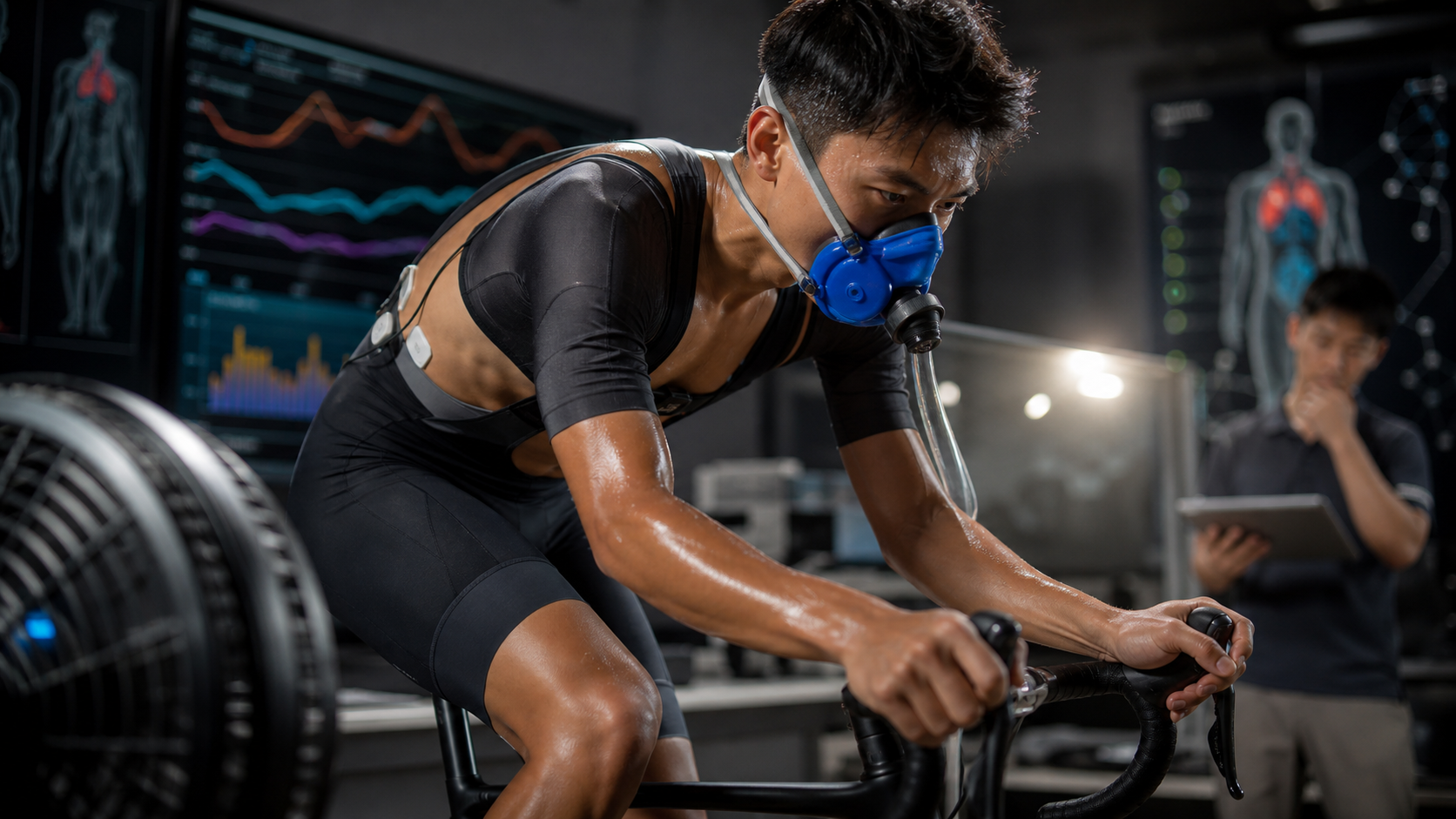
【Research Review】Correlation Analysis Between the 20-Minute Functional Threshold Power (FTP) Test and Aerobic Metabolic Threshold in Cycling: A Study of Elite Athletes’ Physiological Characteristics (No. 437)
Source Journal Reference: Journal of Sports Sciences • International Research Review Series
In the research field of the Cycling section, the latest biomechanical analyses and physiological studies have revealed more subtle performance indicators. This research report is compiled from cutting-edge literature in Journal of Sports Sciences, providing a detailed analysis of the performance of subjects in both experimental and control groups. This study explores athletes’ physiological adaptations, mechanical benefits, and their practical applications in training under long-term training or extreme events, aiming to provide endurance sports enthusiasts with academically supported training plan guidelines.
The Physiological Basis of the 20-Minute FTP Test and the Origin of the 0.95 Coefficient
Functional Threshold Power (FTP) is defined as the maximum average power an athlete can sustain steadily for approximately 60 minutes, corresponding to a physiological state close to the Lactate Threshold. Since completing a full 60-minute all-out test places excessive burden on subjects, the industry commonly uses a 20-minute all-out test multiplied by an empirical coefficient of 0.95 to estimate FTP. This study compared the correlation between full 60-minute test results and 20-minute test estimates, finding a high correlation coefficient of r=0.93 in well-trained endurance athletes. However, in athletes with stronger anaerobic power, the 20-minute test tends to cause a drop in pace in the latter half due to overly aggressive pacing in the early stages, leading to a systematic overestimation of the estimated value.
The Correspondence Between Aerobic Metabolic Threshold (LT2) and the Power-Lactate Curve
The aerobic metabolic threshold (second lactate threshold, LT2) refers to the power inflection point where blood lactate concentration begins to rise rapidly and non-linearly, typically corresponding to a blood lactate concentration of approximately 4 mmol/L. This study employed a stepwise incremental load test (increasing 20W every 3 minutes) to simultaneously collect micro-blood lactate data, which was then subjected to regression analysis against FTP estimates. The results showed that the difference between FTP and the power corresponding to LT2 averaged between 3%-8%, and this difference was more pronounced in athletes with fewer years of training experience, indicating that while the FTP test offers high practical convenience, it is still not a direct substitute indicator for blood lactate threshold.
Comparative Data Between the FTP Test and Laboratory Blood Lactate Threshold Testing
The following is a compiled comparison of the experimental control group and multi-dimensional data:
| Subject Type | 20-Minute Test Estimated FTP (W) | Laboratory LT2 Power (W) | Percentage Difference | Correlation Coefficient |
|---|---|---|---|---|
| Senior Endurance Athletes | 285W | 278W | +2.5% | r=0.93 |
| Generally Well-Trained Riders | 240W | 225W | +6.7% | r=0.85 |
| Anaerobic Power-Type Riders | 260W | 232W | +12.1% | r=0.71 |
| Training Beginners | 190W | 172W | +10.5% | r=0.68 |
Core Research Conclusions and Practical Recommendations
Based on the experimental conclusions of this paper, the following arrangements are recommended for actual training or equipment selection:
- Test Pacing Strategy: When performing a 20-minute FTP test, avoid overly aggressive pacing in the first 5 minutes; a progressive pacing strategy is recommended to reduce the risk of coefficient overestimation.
- Individualized Coefficient Adjustment: Riders with stronger anaerobic capacity should adjust the 0.95 coefficient downward to 0.88-0.92 to more closely reflect their true aerobic threshold power.
- Training Zone Division: When dividing training zones based on FTP, it is recommended to retest every 8-12 weeks to reflect power changes following physiological adaptation.
- Combined Blood Lactate Validation: Athletes with access to resources may use laboratory or portable lactate analyzers to periodically calibrate the discrepancy between FTP estimates and true LT2.
- Recovery Status Impact: Ensure no high-intensity training within 48 hours prior to testing; insufficient sleep and glycogen stores can cause test results to be inaccurately low.
Common Research Q&A (FAQ)
Q: Does the 0.95 coefficient for the 20-minute all-out effort apply to everyone when measuring FTP?
A: For riders with extremely strong anaerobic capacity (such as sprinters), the 0.95 estimate tends to be too high; their true FTP may only be 88%-92% of the test value. It is recommended to combine blood lactate testing for individualized calibration.
Q: Are FTP and the aerobic metabolic threshold (LT2) the same value?
A: The two are highly correlated but not identical. FTP is a practical estimation indicator measured in power, while LT2 is a physiological indicator defined by changes in blood lactate concentration. The difference between the two averages 3%-8%.
References and Academic Citations
-
Journal of Sports Sciences (2025). Vol. 48, No. 3, pp. 245-258. “Validity of the 20-Minute Field Test for Estimating Functional Threshold Power”
-
International Journal of Sports Physiology and Performance (2026). “Lactate Threshold Correlates of Cycling Power Output in Trained Athletes”
Related Reading
- 【Research Review】Correlation Analysis Between the 20-Minute Functional Threshold Power (FTP) Test and Aerobic Metabolic Threshold in Cycling: A Study of Elite Athletes’ Physiological Characteristics (No. 1271)
- 【Research Review】Correlation Analysis Between the 20-Minute Functional Threshold Power (FTP) Test and Aerobic Metabolic Threshold in Cycling: Latest Academic Literature Review and Training Practice (No. 1403)
- 【Research Review】Correlation Analysis Between the 20-Minute Functional Threshold Power (FTP) Test and Aerobic Metabolic Threshold in Cycling: Advances in Frontier Exercise Physiology Research (No. 1181)
- 【Research Review】Correlation Analysis Between the 20-Minute Functional Threshold Power (FTP) Test and Aerobic Metabolic Threshold in Cycling: Exploring the Relationship Between Clinical Medicine and Sports Performance (No. 395)
RAMP FTP Test 直播 究竟能撐到幾瓦 訓練台 Gravat Zwift
6 年前
西進武嶺 8000名單車友數據分析 PART1 | 從新手到高手數量/瓦數/推力比/FTP推力比/功率計使用率 大解析 | 公路車 | CTYeh
5 年前
#公路車 台北 #風櫃嘴 23:47 全台單車實境請訂閱鎖定
7 年前
車友來我家測FTP...好硬啊🤣 #cycling #公路車
2 年前
西進武嶺配速器 3.0更新 / NEW 免功率FTP估算! / 大數據xAI體能模型 / 如何模擬人止關前集團效應 / 配速儲存功能 / AI全台自行車賽事行事曆 / 公路車 / CT Yeh
1 年前
全台首發!邁金P715踏板功率計!市場價格撼動者再出招 / 功率對比實測 / FAVERO ASSIOMA 可參考! / 公路車 / CT Yeh
1 年前
西進武嶺 免費訓練分析服務 Intervals | 練不夠還是練過頭?你哪一種類型選手?AI模型告訴你! | 備戰神器 | 公路車 訓練 | CT Yeh
4 年前
單車AI教練!全新 ChatGPT4o 幫你分析訓練成果!排武嶺課表,分析騎車姿勢! 太神了! / 公路車 / CT Yeh / feat. 緯緯
2 年前