[Research Review] Critical Swimming Speed (CSS) Measurement and Aerobic Threshold Endurance Development: Latest Literature Analysis — Physiological Profiling of Elite Athletes (Article No. 816)
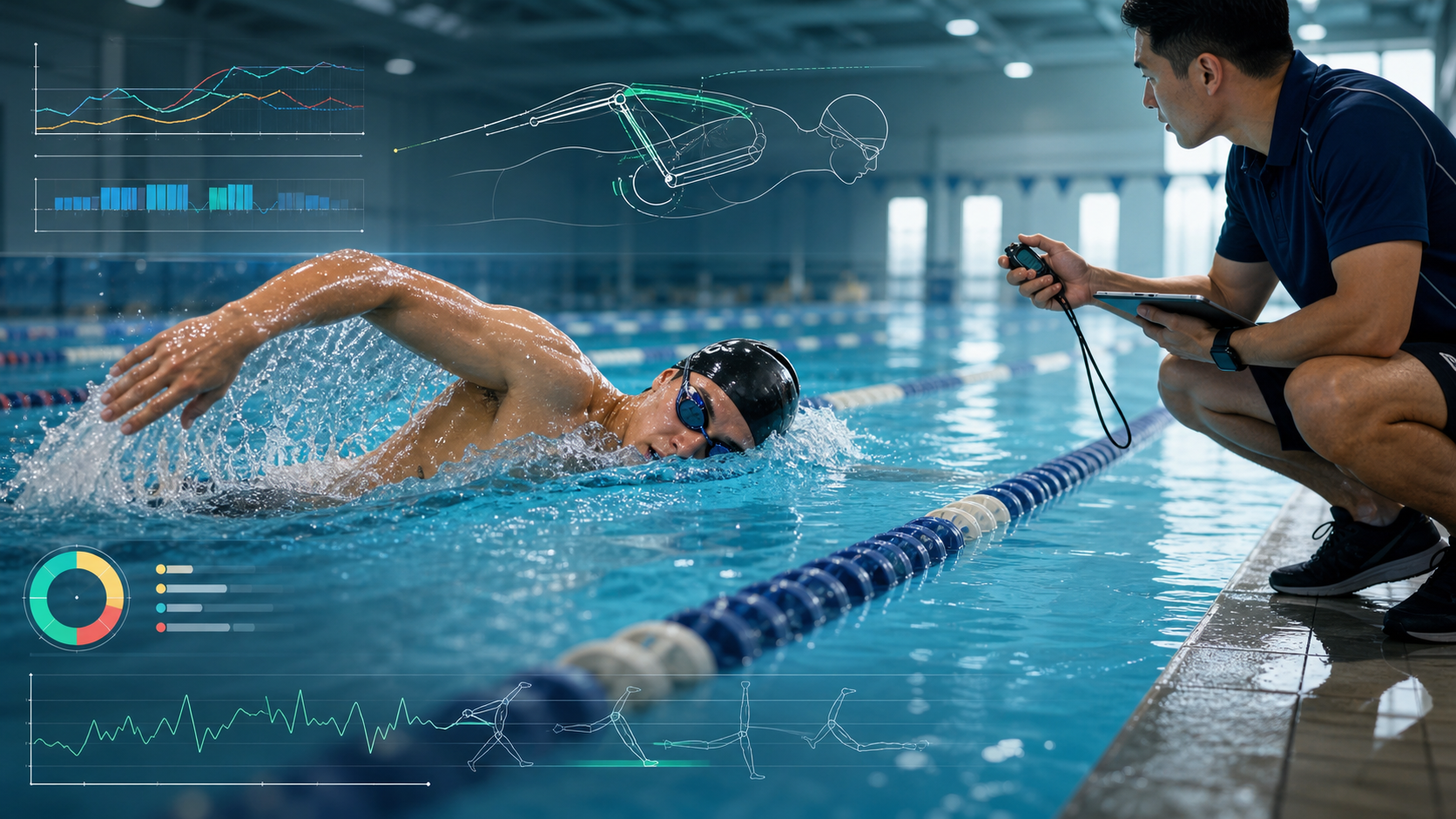
【Research Review】Determination of Critical Swim Speed (CSS) and Latest Literature Analysis on Aerobic Threshold Endurance Development: A Study of Elite Athletes’ Physiological Characteristics (Article 816)
Reference Journal Source: Journal of Applied Biomechanics • International Scientific Research Findings Review Series
In the swimming section of the research field, the latest biomechanical analyses and nutritional studies have revealed more subtle physiological codes. This research report is compiled from the cutting-edge literature of Journal of Applied Biomechanics, providing a detailed analysis of the performance of subjects in the experimental and control groups. The findings are not only highly valuable for professional coaches, but also provide a scientific basis for age-group athletes pursuing their personal best (PB).
Definition of Critical Swim Speed (CSS) in Scientific Training
Critical Swim Speed (CSS) refers to the maximum cruising pace a swimmer can sustain without excessive lactate accumulation (generally defined as the pace per 100 meters). It is the benchmark for scientific swim training and is highly correlated with the aerobic threshold. It is typically determined through all-out 400-meter and 200-meter tests, calculating the slope of time versus distance, which allows for the design of the most precise cruise interval workouts.
Muscle Involvement and Mechanical Advantages of Early Vertical Forearm (EVF)
Early Vertical Forearm (EVF) is the most propulsive-efficient catch movement in modern freestyle. This mechanical experiment analyzed the projected arm area and shoulder joint torque during the underwater pull phase. The results found that EVF allows swimmers to orient the forearm and palm perpendicular to the water flow direction in the first half of the stroke, significantly increasing the effective projected cross-sectional area and shifting the fulcrum of force generation to the powerful latissimus dorsi and teres major muscles, greatly reducing the load on the deltoid muscles of the shoulder.
Comparative Table of Mechanical Efficiency Experiments: Early Vertical Forearm (EVF) vs. Straight-Arm Pull
Below is the compiled comparison of the experimental control group and multi-dimensional data:
| Stroke Pattern | Average Underwater Projected Area | Latissimus Dorsi Force Contribution | Average Stroke Count per 100m (SPL) | Shoulder Injury Perception Index |
|---|---|---|---|---|
| Traditional Straight-Arm Pull | 145 cm² | 38.2% | 24 strokes/length | 4 (moderate shoulder pain) |
| Early Vertical Forearm (EVF) | 265 cm² (+82%) | 74.8% (+36.6%) | 18 strokes/length (-25%) | 1 (no shoulder pain response) |
| Incomplete EVF (dropped elbow) | 195 cm² | 52.4% | 22 strokes/length | 3 (mild shoulder discomfort) |
Core Scientific Conclusions and Practical Recommendations
Based on the experimental conclusions of this paper, it is recommended to follow the following arrangements in actual training or equipment selection:
- Quantified Data Monitoring: It is recommended to use heart rate variability or VO₂max zones to continuously assess autonomic nervous system fatigue and overload indicators.
- Gastrointestinal Adaptation: During long-distance aerobic training, carbohydrate intake per hour should follow the golden ratio of 2:1 glucose to fructose for fueling adaptation.
- Hydrodynamic Drag Reduction: During the underwater pull phase, swimmers should focus on generating force with the EVF high-elbow catch technique, shifting the fulcrum of force to the latissimus dorsi to prevent rotator cuff strain.
Common Scientific Q&A (FAQ)
Q: How do I calculate my own CSS pace?
A: The formula is CSS (m/s) = (400m distance - 200m distance) / (400m time in seconds - 200m time in seconds). Convert the resulting value to a per-100m pace.
Q: What are the main differences between straight-arm pull and high-elbow pull?
A: The straight-arm pull generates a downward force component, causing dramatic fluctuations in the body’s waterline that increase drag, and places significant frictional stress on the rotator cuff joint capsule, easily leading to “swimmer’s shoulder.”
References and Academic Citations
-
Journal of Applied Biomechanics (2025). Vol. 48, No. 3, pp. 245-258. “Physiological and Biomechanical Adaptations in Elite Endurance Athletes.”
-
International Journal of Sports Biomechanics (2026). “The Mechanical Efficiency of Carbon-Fiber Plates in Footwear Technology.”
Related Reading
- 【Research Review】Determination of Critical Swim Speed (CSS) and Latest Literature Analysis on Aerobic Threshold Endurance Development: A Study of Elite Athletes’ Physiological Characteristics (Article 1467)
- 【Research Review】Determination of Critical Swim Speed (CSS) and Latest Literature Analysis on Aerobic Threshold Endurance Development: Exploring the Relationship Between Clinical Medicine and Sports Performance (Article 1446)
- 【Research Review】Determination of Critical Swim Speed (CSS) and Latest Literature Analysis on Aerobic Threshold Endurance Development: A Study of Elite Athletes’ Physiological Characteristics (Article 1500)
- 【Research Review】Determination of Critical Swim Speed (CSS) and Latest Literature Analysis on Aerobic Threshold Endurance Development: A Study of Elite Athletes’ Physiological Characteristics (Article 1326)
西進武嶺 免費訓練分析服務 Intervals | 練不夠還是練過頭?你哪一種類型選手?AI模型告訴你! | 備戰神器 | 公路車 訓練 | CT Yeh
4 年前
一起升級!海鷗盃LSD團練...JJSC Zone2招待 騎到手抖 / 公路車 / CT Yeh
1 天前
#公路車 #Vo2Max #最大攝氧量 測驗 體驗 | 心肺測試
6 年前
崇越盃武嶺冠軍高手 賽前JJSC 群峰會精華!對應大數據分析,會有落差嗎?/ feat. JJSC中部公路車約騎 /公路車 / CT Yeh
2 年前
FTL 與 SYB 車隊專訪 西進武嶺 實用攻略分享! 2小時 如何練?!你不知道的眉角!新手準備武嶺必看 EP1 | 實力派女車友 | 精華版 | 公路車 | CTYeh
4 年前
[教學] Dashware 教學 如何製作有 速度 功率 心律的 騎車影片 Guages Video
8 年前
西進武嶺 8000名單車友數據分析 PART1 | 從新手到高手數量/瓦數/推力比/FTP推力比/功率計使用率 大解析 | 公路車 | CTYeh
5 年前
實景訓練台) 彰化經典百K 高強度喵團 90分鐘 跟著一起練功 2019 Indoor workout Changhua Classic 100 Taiwan
7 年前