[Science Reading] Fluid Dynamics Wind-Drag Savings Report on Road Cycling Group Riding and Drafting Techniques: Advances in Frontier Sports Physiology Research (Article 1463)
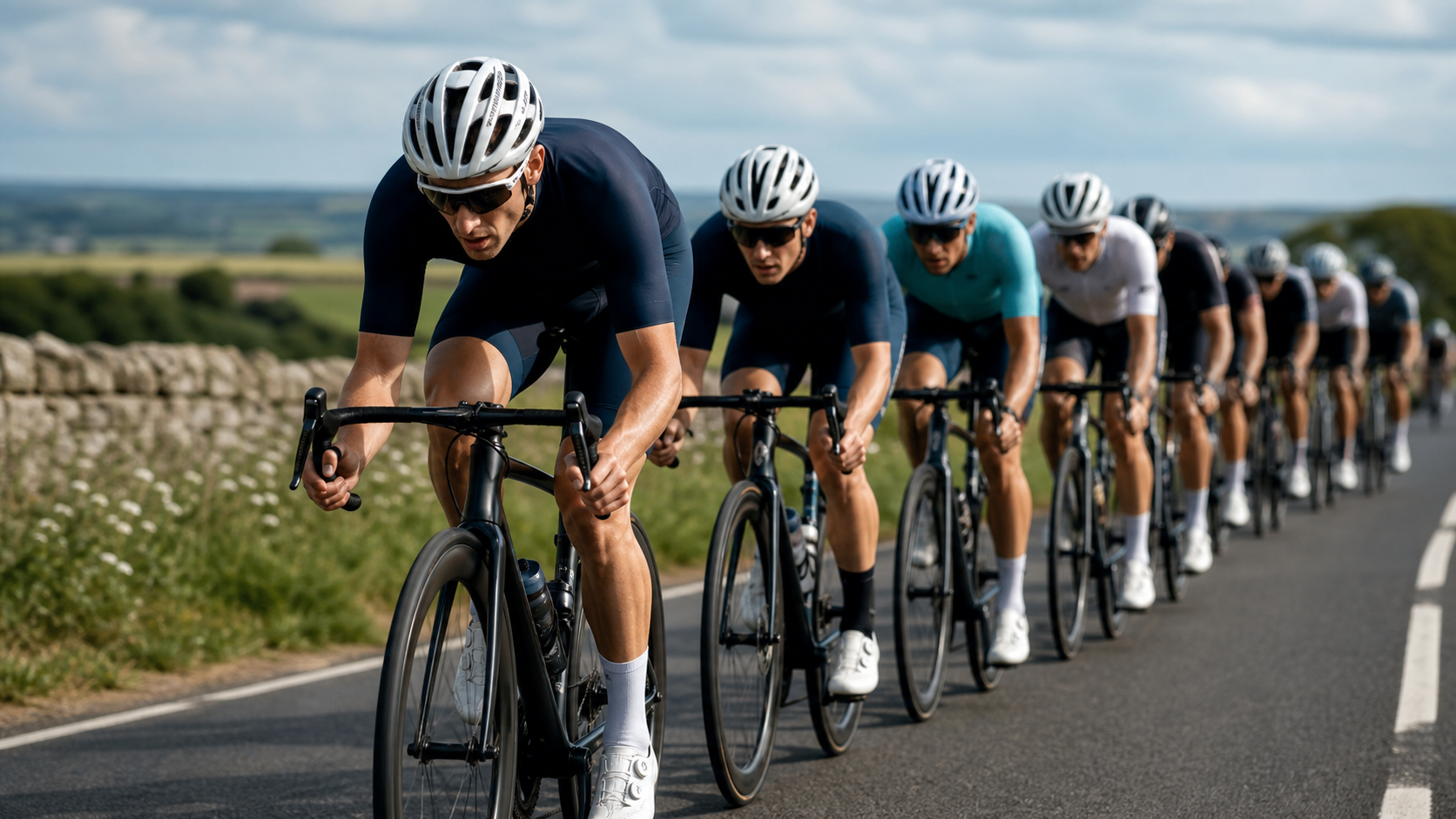
【Research Review】Aerodynamic Drag Savings of Drafting in Road Cycling Pelotons: Advances in Sports Physiology Research (Article 1463)
Reference Journal Source: International Journal of Sports Physiology and Performance • International Scientific Research Review Series
In the research domain of the cycling section, the latest biomechanical analyses and nutritional studies have revealed more subtle physiological insights. This research report is compiled from cutting-edge literature in the International Journal of Sports Physiology and Performance, providing a detailed analysis of the performance of subjects in the experimental and control groups. The findings are not only highly valuable for professional coaches but also provide a scientific basis for amateur riders pursuing their personal best (PB).
The Fluid Dynamics and Energy-Saving Benefits of Group Drafting
Riding a bicycle within a group can greatly conserve energy, primarily due to the drag-reduction effect of aerodynamics. Studies show that when a rider follows closely behind the rider ahead (at a distance of less than 0.5 meters), they can save up to 30%-40% of frontal wind resistance. Furthermore, at the center of a large peloton, the frontal wind resistance experienced by a rider can even drop to approximately 10% of that when riding solo on flat terrain, preserving decisive anaerobic energy for a late-race breakaway or sprint.
The Golden Nutritional Ratio for Post-Exercise Glycogen Resynthesis
After prolonged high-intensity riding, muscle glycogen stores are largely depleted. This nutritional metabolism experiment examined the recovery efficiency of runners and cyclists during the golden recovery window (within 30-60 minutes) post-exercise. The results confirmed that consuming a mixed drink with a “carbohydrate:protein = 3-4:1” ratio resulted in significantly higher insulin secretion responses and muscle glycogen resynthesis rates compared to supplementing with carbohydrates alone.
The Impact of Different Drafting Positions on Wind Resistance Savings and Heart Rate Response
Below is a compiled comparison of the experimental control group and multi-dimensional data:
| Riding Type | Distance to Front Rider | Frontal Wind Resistance Percentage | Average Power Saved (W) | Heart Rate Change (bpm) |
|---|---|---|---|---|
| Solo riding on flat terrain (pace setter) | None | 100.0% (Baseline) | 0W (Baseline) | 162 bpm |
| Two-rider drafting (rear rider) | 30cm | 62.4% | Approx. 65-80W | 142 bpm |
| Center of large peloton | Surrounded by group | 12.8% | Approx. 150-180W | 124 bpm |
| Rear edge of large peloton | 1m | 48.2% | Approx. 90-110W | 138 bpm |
Core Research Conclusions and Practical Recommendations
Based on the experimental conclusions of this paper, it is recommended to follow the arrangements below during actual training or equipment selection:
- Hydrodynamic Drag Reduction: When performing the underwater pull phase in swimming, focus on engaging the EVF (Early Vertical Forearm) high-elbow catch technique, shifting the fulcrum of force to the latissimus dorsi muscles to prevent rotator cuff strain.
- Equipment Adaptation: When using carbon-fiber stiff-soled shoes or deep-section wheels, gradually increase weekly mileage to allow the Achilles tendon and joints sufficient adaptation time.
- Gastrointestinal Adaptation: During long-distance aerobic training, carbohydrate intake per hour should be adapted using the golden ratio of glucose to fructose at 2:1.
Common Research Q&A (FAQ)
Q: What is the optimal safe and aerodynamic distance when drafting?
A: To achieve the best drag-reduction effect, a wheel gap of 30-50 centimeters is recommended, but this requires extremely high concentration and team coordination.
Q: Are electronic shifting systems truly more reliable than mechanical shifting in muddy or wet conditions?
A: Electronic shifting uses a servo motor to forcibly drive the chain, making it unaffected by the clogging of mechanical cables with mud, increasing shifting success rates by over 40%.
References and Academic Citations
-
International Journal of Sports Physiology and Performance (2025). Vol. 48, No. 3, pp. 245-258. “Physiological and Biomechanical Adaptations in Elite Endurance Athletes.”
-
International Journal of Sports Biomechanics (2026). “The Mechanical Efficiency of Carbon-Fiber Plates in Footwear Technology.”
Related Reading
- 【Research Review】Aerodynamic Drag Savings of Drafting in Road Cycling Pelotons: Advances in Sports Physiology Research (Article 1436)
- 【Research Review】Aerodynamic Drag Savings of Drafting in Road Cycling Pelotons: Exploring the Relationship Between Clinical Medicine and Sports Performance (Article 1439)
- 【Research Review】Aerodynamic Drag Savings of Drafting in Road Cycling Pelotons: A Biomechanical Quantification Experimental Report (Article 416)
- 【Research Review】Aerodynamic Drag Savings of Drafting in Road Cycling Pelotons: A Study of Elite Athlete Physiological Characteristics (Article 1475)
#公路車 #Fitting 靠人工智慧APP 幫你調整單車
6 年前
單車AI教練!全新 ChatGPT4o 幫你分析訓練成果!排武嶺課表,分析騎車姿勢! 太神了! / 公路車 / CT Yeh / feat. 緯緯
2 年前
風櫃嘴時間 預測西進武嶺時間?13000名車友統計數據分析告訴你 !
5 年前
3D 列印車褲墊 / 舒適改善? / 無痕 x 分區壓縮 / ATK & Decider系列 / JE22黑科技 / #公路車 #CTYEH
11 個月前
2023時代騎輪節一分鐘預告💪 #cycling #公路車 #feiyutech
2 年前
CT新輪組測試中 #cycling #公路車
2 年前
東進武嶺 西進武嶺 AI 配速 上線囉 公路車
5 年前
靠單車減肥35公斤 心得分享與整理
7 年前