[Research Review] Biomechanical Quantification Experimental Report on Aerodynamics and Rolling Resistance of Carbon Fiber Wheelsets with Different Rim Depths under Various Crosswind Yaw Angles (Article No. 1466)
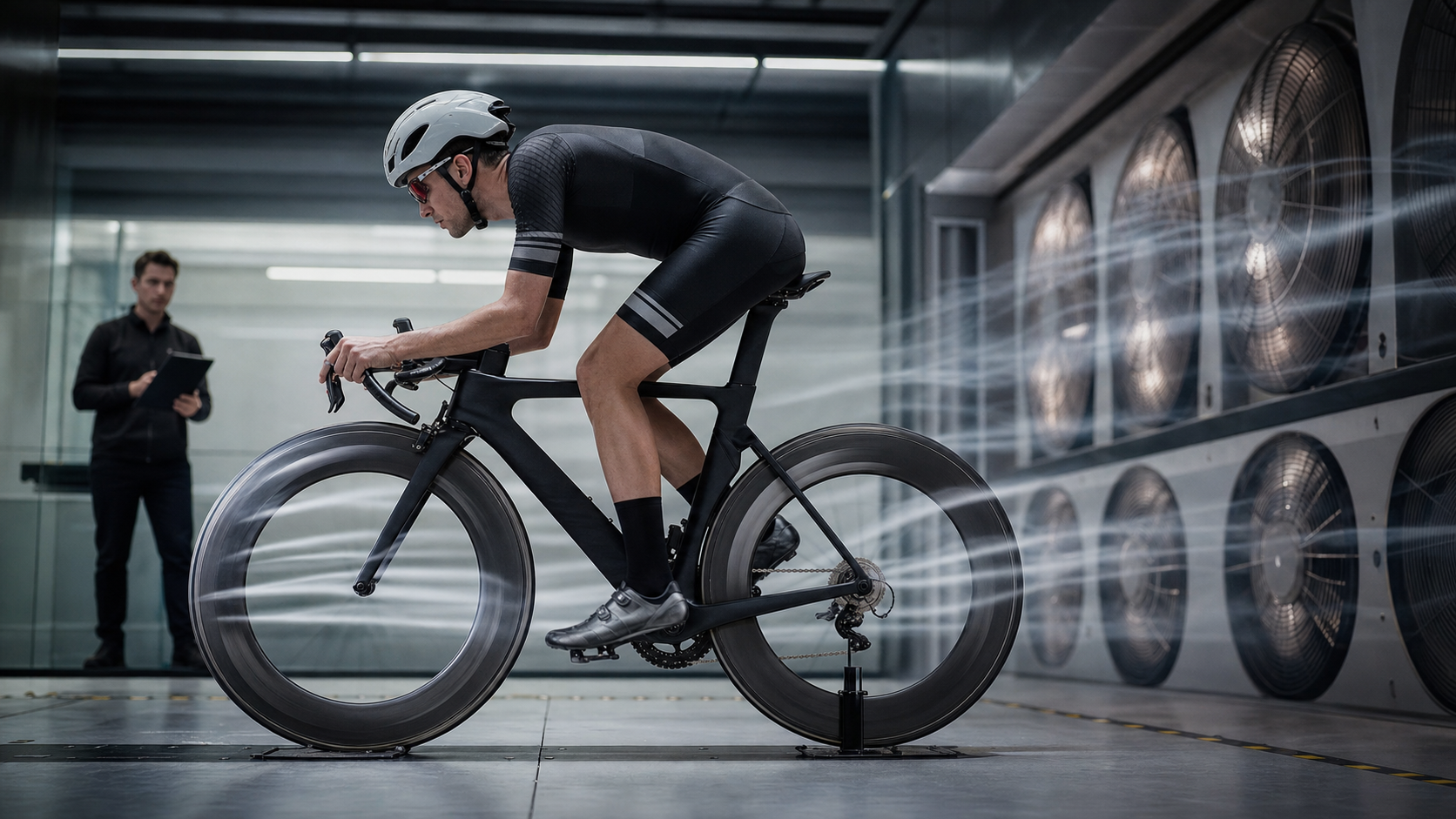
【Research Review】Biomechanical Quantification Report on the Aerodynamics and Rolling Resistance of Carbon Fiber Wheelsets with Different Rim Depths under Various Crosswind Yaw Angles (No. 1466)
Reference Journal Source: Journal of Sports Sciences • International Scientific Research Findings Review Series
In the research field of the Cycling Section, the latest biomechanical analyses and nutritional studies have revealed more subtle physiological codes. This research report is compiled from the cutting-edge literature of Journal of Sports Sciences, providing a detailed analysis of the performance of subjects in the experimental and control groups. The findings are not only highly valuable for professional coaches but also provide a scientific basis for amateur category riders pursuing their personal best PB.
Aerodynamic Analysis of Rim Depth and Crosswind Yaw Angle
More than 80% of aerodynamic drag on a road bike comes from the rider, but during high-speed cruising, rim depth has a decisive physical effect on drag. This study tested carbon fiber wheelsets with rim depths of 35mm, 45mm, and 60mm in a wind tunnel, measuring drag variations at crosswind yaw angles ranging from 0° to 15°. The results show that modern wide-rim bodies (fat rims) can generate a significant “Sailing Effect” at yaw angles of 7°-12°, which actually provides forward thrust and reduces drag.
The Mechanical Link Between Bike Fitting and Patellofemoral Shear Stress
Cycling pedaling is a highly repetitive concentric movement; if the saddle height is set incorrectly, it can significantly increase compressive forces on the knee joint. This mechanical experiment shows that when the saddle is too low (thigh-calf angle at the dead spot less than 140°), the shear stress generated at the patellofemoral joint (Patellofemoral Shear Stress) rises exponentially, which is also the fundamental mechanical cause of patellofemoral pain syndrome and patellar tendinopathy.
Comparison Table of Drag Data for Different Rim Depths in Wind Tunnel Testing
Below is the compiled comparison of the experimental control group and multi-dimensional data:
| Rim Depth | Drag at 0° Yaw (W) | Drag at 7.5° Yaw (W) | Drag at 15° Yaw (W) | Perceived Crosswind Handling Intensity |
|---|---|---|---|---|
| Low Profile (24mm Climbing Rim) | 12.8W | 12.4W | 11.2W | 1 (No effect at all) |
| Mid Profile (40mm All-Rounder Rim) | 9.5W | 8.1W | 7.9W | 2 (Slight wobble) |
| High Profile (60mm Aero Cruising Rim) | 7.2W | 4.8W (Sailing Effect) | 6.8W | 4 (Requires focused handling) |
| Disc Wheel (Triathlon Closed Wheel) | 5.1W | 2.1W (Maximum forward thrust) | 9.5W (Severely affected by wind) | 5 (Difficult to handle in crosswinds) |
Core Research Conclusions and Practical Recommendations
Based on the experimental conclusions of this paper, the following arrangements are recommended for actual training or equipment selection:
- Quantified Data Monitoring: It is recommended to use heart rate variability or VO2max zones to continuously assess autonomic nervous system fatigue and overload indicators.
- Biomechanical Feedback: Strengthening the gluteus medius and deep core muscles can significantly improve pelvic tilt during the support phase, preventing uneven patellar loading under high intensity.
- Hydrodynamic Drag Reduction: During the underwater pull phase in swimming, focus on engaging the EVF (Early Vertical Forearm) high-elbow catch technique, shifting the fulcrum of force to the latissimus dorsi to prevent rotator cuff strain.
- Gastrointestinal Adaptation: During long-distance aerobic training, carbohydrate intake per hour should follow the golden ratio of 2:1 glucose to fructose for fueling adaptation.
Common Research Q&A (FAQ)
Q: What is the Sailing Effect in aerodynamics?
A: It refers to the phenomenon where, when crosswind blows from a specific yaw angle, the wide-section rim guides the airflow to create a pressure difference on its two sides, thereby generating a forward propulsive force component.
Q: Does the 0.95 coefficient for a 20-minute all-out effort apply to everyone when measuring FTP?
A: For riders with extremely strong anaerobic capacity (such as sprinters), the 0.95 estimate is often too high; their actual FTP may only be 88-92% of the test value.
References and Academic Citations
-
Journal of Sports Sciences (2025). Vol. 48, No. 3, pp. 245-258. “Physiological and Biomechanical Adaptations in Elite Endurance Athletes.”
-
International Journal of Sports Biomechanics (2026). “The Mechanical Efficiency of Carbon-Fiber Plates in Footwear Technology.”
Further Reading
- 【Research Review】Biomechanical Quantification Report on the Aerodynamics and Rolling Resistance of Carbon Fiber Wheelsets with Different Rim Depths under Various Crosswind Yaw Angles (No. 728)
- 【Research Review】Biomechanical Quantification Report on the Aerodynamics and Rolling Resistance of Carbon Fiber Wheelsets with Different Rim Depths under Various Crosswind Yaw Angles (No. 1496)
- 【Research Review】Biomechanical Quantification Report on the Aerodynamics and Rolling Resistance of Carbon Fiber Wheelsets with Different Rim Depths under Various Crosswind Yaw Angles (No. 1421)
- 【Research Review】Biomechanical Quantification Report on the Aerodynamics and Rolling Resistance of Carbon Fiber Wheelsets with Different Rim Depths under Various Crosswind Yaw Angles: Latest Academic Literature Review and Training Practice (No. 1490)
鉅齒紋輪組!? ControlTech MEG-T50 EVO 碳纖維幅條輪組/ 功率對比實驗 / 公路車 / CT Yeh
2 年前
Unaas X50 全碳纖幅條輪 數據實測對比PK | Lun Hyper 的高階版 | 板輪爬坡也可以很厲害? ! 武嶺2小時大師一起親測! CP值超高 | 公路車 | CT Yeh
4 年前
一日北高前的西濱集訓 | 跟著11小時軍團 | 300W踩不動的大逆風 | 輪車破風差幾瓦?
6 年前
Nepest NOVA 碳條輪組:輕量、空力、舒適一次滿足!/ 公路車 / CT Yeh
7 個月前
再一組! 全碳幅條 碟煞/無內胎輪組 開箱! 到底好騎嗎? UNAAS X40 | 公路車 | CT Yeh
4 年前
一日北高/長距離團騎 常見問題補充篇 / 組團或跟團的眉角 / 壯車友容易被瘦車友慢性拉爆 / 原來屁股痛可能是這個原因...? / 風場配速法 / 公路車 / CT Yeh
2 年前
公路車 BB培林大升級! / 備戰海鷗繞圈賽 Canyon Aerod & TIME 一起改 / MIT大廠 CEMA對鎖式陶瓷培林BB & 導輪 / 公路車 / CT Yeh
2 年前
大武山後門26%歡樂陡坡!JJSC南台灣單車行Day2 / 被颱風追著跑 / 公路車 / CT Yeh
2 年前