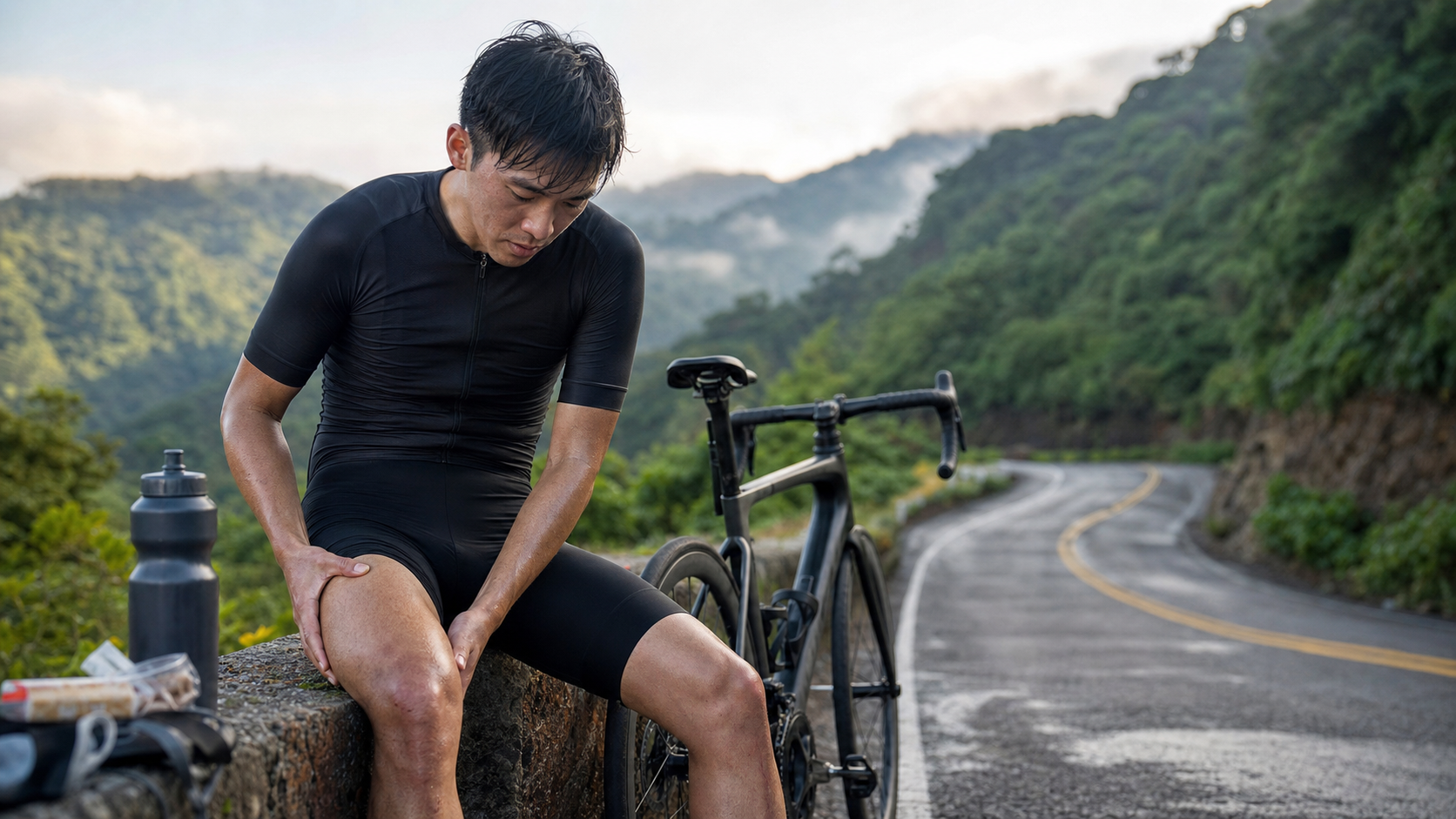
Opening: Why Systematic Training Matters
Without structure, cycling training often results in the gap of “putting in effort but seeing no progress.” This article discusses power, technique, fatigue, and road conditions from a perspective that can be implemented in Taiwan.
1. Goals and Measurement
Post-road-race recovery and reactive muscle repair can be monitored along two axes: power and perceived exertion.
- Set target power zones while retaining room to scale back.
- Review fatigue on a 2–4 week cycle.
2. Core Skills: Pacing, Cadence
Cadence and gear selection are not separate strategies; both affect efficiency simultaneously. High cadence can improve muscular rhythm in certain sections, while low cadence supports load-bearing strength, but avoid becoming locked into a fixed pattern.
3. 8-Week Training Prescription
| Week | Focus | Execution | Checkpoint |
|---|---|---|---|
| Weeks 1–2 | Aerobic base | 4 sessions per week, mainly Zone 2 | Maintain conversational pedaling each session |
| Weeks 3–4 | Short intervals begin | 2 sessions of 3–5 min at FTP 85–95% | Power curve stays smooth |
| Weeks 5–6 | Anaerobic threshold block | 2–3 sets of 8-min threshold intervals | Recovery is manageable after rest |
| Weeks 7–8 | Pre-race integration | Long rides and fueling rehearsal | Hydration and body weight changes remain stable |
4. Injury Prevention and Corrections
- Every 6–8 weeks, review power trends to confirm that efficiency gains come from pacing rather than fatigue resistance.
- When perceived fatigue is high, drop down 1–2 zones instead of pushing through.
- Simplify gear strategy: stabilize first, then refine, avoiding frequent shifting.
- Plan food and fueling in advance for long-distance days; do not decide on the spot.
5. Nutrition and Hydration
In the 24 hours before a race, establish a regular fluid intake schedule; for rides longer than 2 hours, combine 20–30g of carbohydrates and electrolytes every 25–30 minutes.
6. Recovery and Sleep
If sleep is disrupted after a heavy training load, treat the next session as an easy day to allow neuromuscular recovery.
7. Common Myths
- Myth: Just pedal at high power.
- Truth: High power without sustainability cannot handle race pace.
- Myth: The more detailed the power meter, the more accurate it is.
- Truth: Body signals remain the ultimate test.
8. Route and Scenario Application
Plan three route models: steady pace on flats, rhythmic climbing, and drafting in group rides, building your own library of cadence-switching rhythms.
9. Academic Research References
- “Hydration for health hypothesis: a narrative review of supporting evidence” indicates that dehydration and electrolyte imbalance affect muscle control and cognitive performance, especially on hot, long-distance rides.
- A single test is only a snapshot; 6–12 weeks of data is the main focus.
Key Takeaways
- Power and cadence both need to be applied contextually.
- Risk management and recovery determine long-term results.
- On Taiwan’s terrain, rhythm beats blindly chasing speed.
Related Reading
- Cycling Feature | Post-Road-Race Recovery and Reactive Muscle Repair (C040)
- Cycling Feature | Post-Road-Race Recovery and Reactive Muscle Repair (C020)
- Cycling Feature | Post-Road-Race Recovery and Reactive Muscle Repair (C060)
- Cycling Feature | Post-Road-Race Recovery and Reactive Muscle Repair (C100)
#公路車 #Fitting 靠人工智慧APP 幫你調整單車
6 年前
西進武嶺 免費訓練分析服務 Intervals | 練不夠還是練過頭?你哪一種類型選手?AI模型告訴你! | 備戰神器 | 公路車 訓練 | CT Yeh
4 年前
DJI Osmo Action 6 / 單車運動拍攝實用技巧 公路車 CT Yeh
7 個月前
一日北高/長距離團騎 常見問題補充篇 / 組團或跟團的眉角 / 壯車友容易被瘦車友慢性拉爆 / 原來屁股痛可能是這個原因...? / 風場配速法 / 公路車 / CT Yeh
2 年前
單車 一日北高 ( 雙城 ) 肥宅雙人瘋狂行 紀錄片 REACTO
10 年前
單車AI教練!全新 ChatGPT4o 幫你分析訓練成果!排武嶺課表,分析騎車姿勢! 太神了! / 公路車 / CT Yeh / feat. 緯緯
2 年前
一個測試有沒有認真練車的方法😂 #公路車
10 個月前
西進武嶺配速器 3.0更新 / NEW 免功率FTP估算! / 大數據xAI體能模型 / 如何模擬人止關前集團效應 / 配速儲存功能 / AI全台自行車賽事行事曆 / 公路車 / CT Yeh
1 年前