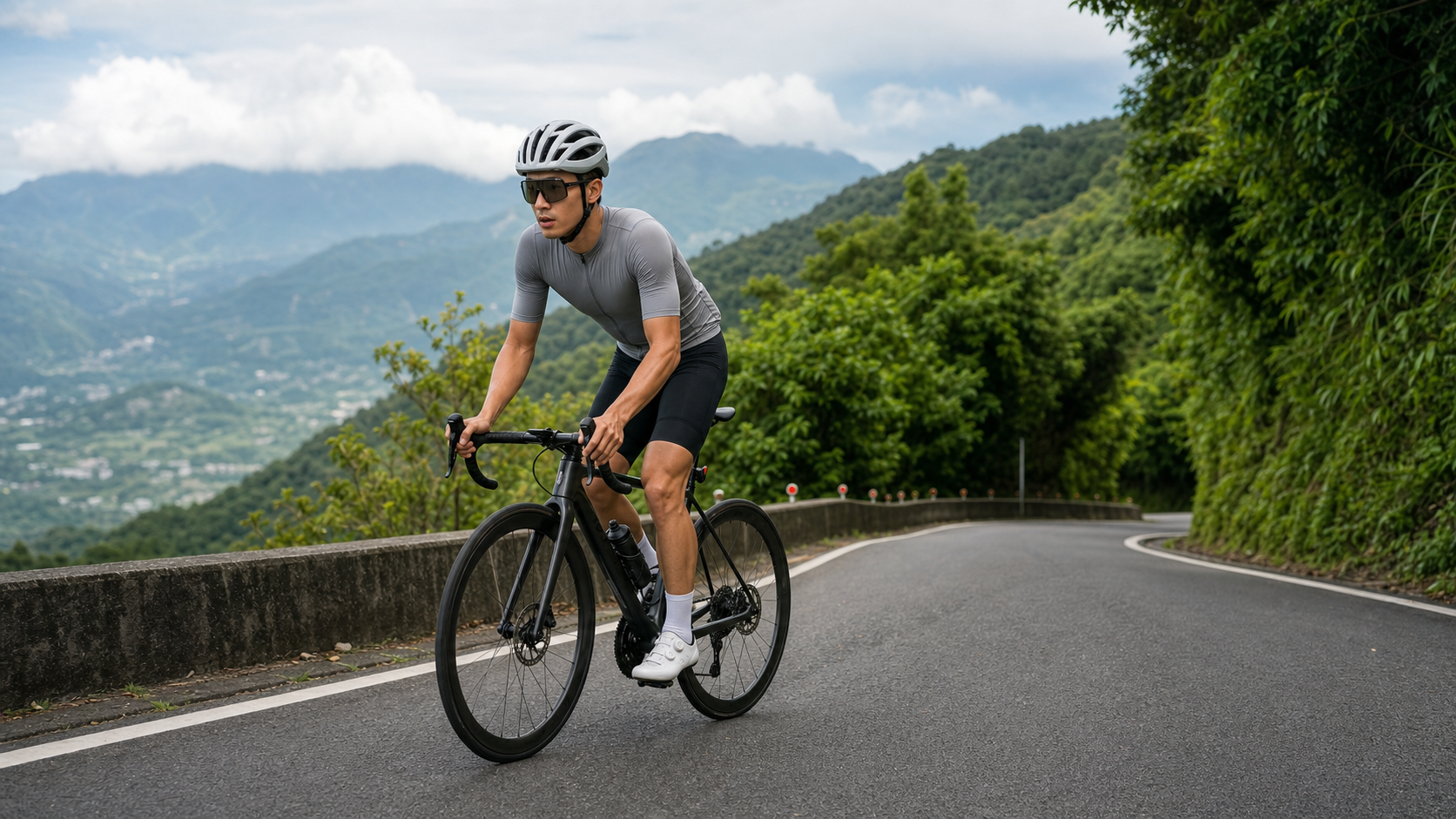
Opening: Why Systematic Training Matters
Without structure in cycling training, there is often a gap between “putting in effort” and “seeing progress.” This article discusses power, technique, fatigue, and road conditions from a practical perspective applicable in Taiwan.
1. Goals and Measurement
Climbing power distribution: from heart rate to W/kg can be monitored along two axes—power and perceived exertion.
- Set target power zones while leaving room to dial back.
- Review fatigue on a 2–4 week cycle.
2. Core Techniques: Rhythm, Cadence
Cadence and gear ratio are not separate strategies; both affect efficiency simultaneously. High cadence can improve muscular rhythm in certain sections, while low cadence helps with power loading, but avoid becoming locked into a fixed pattern.
3. 8-Week Training Prescription
| Week | Focus | Protocol | Check Metric |
|---|---|---|---|
| Weeks 1–2 | Aerobic base | 4 sessions per week, mainly Zone 2 | Maintain conversational pedaling each session |
| Weeks 3–4 | Short intervals begin | 2 sessions of 3–5 min at FTP 85–95% | Smooth power curve |
| Weeks 5–6 | Anaerobic threshold block | 2–3 sets of 8-minute threshold intervals | Recovery under control after rest |
| Weeks 7–8 | Pre-race integration | Long rides and fueling rehearsal | Stable hydration and body weight |
4. Injury Prevention and Corrections
- Review power trends every 6–8 weeks to confirm that efficiency gains come from rhythm rather than fatigue resistance.
- When perceived fatigue is high, drop 1–2 zones instead of pushing through.
- Simplify gear strategy—stabilize first, then fine-tune—to avoid frequent shifting.
- Plan food and fueling ahead of long-distance days; do not decide on the spot.
5. Nutrition and Hydration
Arrange regular fluid intake 24 hours before the race; for efforts longer than 2 hours, pair with 20–30g of carbohydrates and electrolytes every 25–30 minutes.
6. Recovery and Sleep
If sleep is disrupted after a high-stress training session, treat the next session as an easy day to allow neuromuscular recovery.
7. Common Myths
- Myth: Just producing high power is enough.
- Truth: High power without sustainability cannot match race pace.
- Myth: The more detailed the power meter, the more accurate it is.
- Truth: Body signals remain the ultimate test.
8. Route and Scenario Application
Plan three route models: steady pace on flats, rhythm on climbs, and energy conservation in group rides, building your own library of cadence-switching rhythms.
9. Academic Research References
- Effects of Altering Pedal Cadence on Cycling Time-Trial Performance reminds us that both high- and low-cadence training have value, but race scenarios hinge on stable output.
- A single test is only a snapshot; 6–12 weeks of data is the main focus.
Key Takeaways
- Power and cadence both need to be applied contextually.
- Risk management and recovery determine long-term results.
- On Taiwan’s terrain, rhythm beats blindly chasing speed.
Related Reading
- Cycling Feature | Climbing Power Distribution: From Heart Rate to W/kg (C064)
- Cycling Feature | Climbing Power Distribution: From Heart Rate to W/kg (C024)
- Cycling Feature | Climbing Power Distribution: From Heart Rate to W/kg (C044)
- Cycling Feature | Climbing Power Distribution: From Heart Rate to W/kg (C004)
西進武嶺 免費訓練分析服務 Intervals | 練不夠還是練過頭?你哪一種類型選手?AI模型告訴你! | 備戰神器 | 公路車 訓練 | CT Yeh
4 年前
西進武嶺配速器 3.0更新 / NEW 免功率FTP估算! / 大數據xAI體能模型 / 如何模擬人止關前集團效應 / 配速儲存功能 / AI全台自行車賽事行事曆 / 公路車 / CT Yeh
1 年前
單車 一日北高 ( 雙城 ) 肥宅雙人瘋狂行 紀錄片 REACTO
10 年前
全台首發!邁金P715踏板功率計!市場價格撼動者再出招 / 功率對比實測 / FAVERO ASSIOMA 可參考! / 公路車 / CT Yeh
1 年前
西進武嶺 8000名單車友數據分析 PART1 | 從新手到高手數量/瓦數/推力比/FTP推力比/功率計使用率 大解析 | 公路車 | CTYeh
5 年前
#公路車 #Fitting 靠人工智慧APP 幫你調整單車
6 年前
西進武嶺 自製新版AI配速表產生器 x 賽前攻略 抱佛腳! 沒有功率計也可以產生配速表嗎?有什麼其他眉角賽前要注意的呢? | 西進武嶺 / 東進武嶺 KOM 攻略 | 公路車 | CT Yeh
4 年前
靠單車減肥35公斤 心得分享與整理
7 年前