Sleep: The Cheapest Legal Performance Enhancer—How Coaches Help You Steal Back Your Training Gains
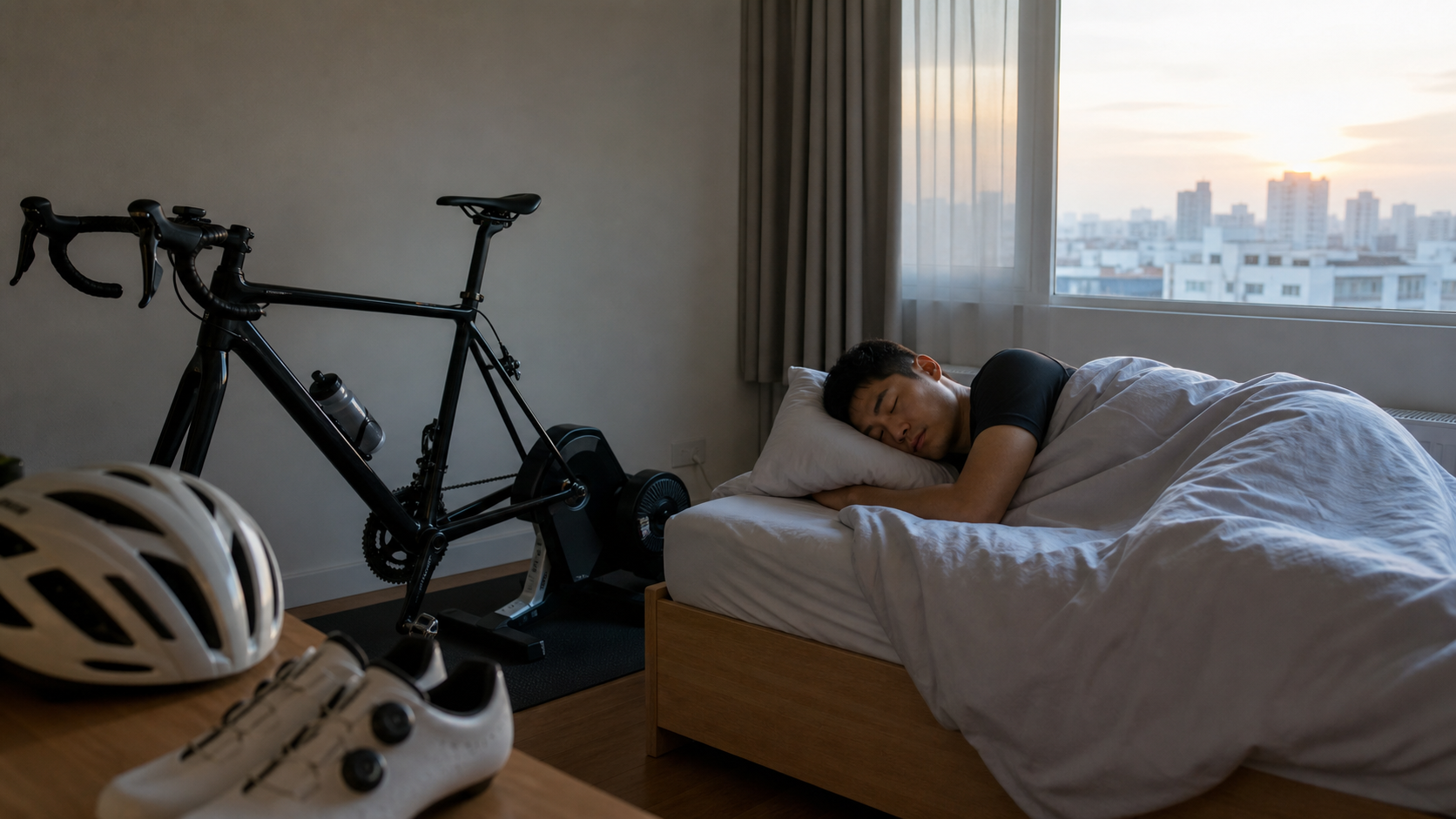
Coach’s Opening: The Trainee Who Trained Hardest but Never Improved
Having coached triathletes for fifteen years—from office workers who needed company just to finish a 51.5 race, to athletes I eventually helped reach the Kona qualifying line—I’ve noticed one thing: what truly separates athletes isn’t who has the most brutal training plan, but who recovers most consistently. And within recovery, the most underestimated, cheapest, most legal, yet most poorly executed factor is sleep.
The case that stands out most to me is an engineer working in the Hsinchu Science Park. Let’s call him Mr. A. Mr. A was extremely dedicated—up at 5:30 AM on weekdays to ride the trainer, working overtime until past 10 PM, then coming home to scroll through power data on his phone and compare Strava files with others. His power-to-weight ratio was stuck at a plateau, and he came to me asking if his training intensity wasn’t high enough.
I reviewed his training log. The intensity wasn’t low at all—if anything, it was slightly excessive. The real problem was hidden in a field I asked him to fill in: averaging under six hours of sleep per night. I didn’t add a single interval to his plan. I did only one thing—pushed his bedtime earlier and set a sleep target of seven and a half to eight hours. Six weeks later, on the same training plan and at the same body weight, his FTP test improved by nearly 20 watts. He was shocked. I wasn’t in the least.
In this article, I want to distill fifteen years of coaching experience plus the sports science literature I continuously read into something you can start implementing tonight. Sleep isn’t just “getting some rest”—it has a dosage, a strategy, and a checklist. Let’s go through it item by item.
Concepts and Scientific Foundations: What Sleep Actually Does for You
Training Adaptations Don’t Grow on the Training Plan
Let’s establish a core concept first: training merely sends your body a signal that it “should get stronger.” The actual process of getting stronger happens during recovery, and the most critical part of recovery is sleep.
During deep sleep (slow-wave sleep), your body does several things that are crucial for endurance athletes:
- Secretes growth hormone: Deep sleep is the peak period for human growth hormone secretion, which is closely tied to muscle repair and tissue regeneration.
- Replenishes glycogen: During sleep, your body continuously manages energy metabolism. Glycogen replenishment and the allocation of fat and carbohydrates all require adequate sleep support.
- Consolidates motor memory: The pedaling rhythm, swim stroke, and running form you practiced today need sleep to transition from “deliberate effort” to “automatic execution.” This is especially important for triathlon, where you need to master three disciplines simultaneously.
- Regulates immunity and inflammation: Chronic sleep deprivation raises your body’s low-grade inflammatory state. You’ll feel like “I’m always tired and keep catching minor colds”—this is actually a sign of accumulating recovery debt.
So when I say “sleep is the cheapest legal performance enhancer,” this isn’t a poetic metaphor. It’s a physiological variable that genuinely affects how many watts you can output tomorrow, how long you can sustain effort, and whether your heart rate runs abnormally high.
The Dose-Response Relationship Between Sleep and Performance: What the Data Shows
Many people assume sleep’s impact on performance is vague and psychological. In reality, verifiable research shows a remarkably consistent direction. I’ll only cite studies I can actually look up and reference:
A classic example is Stanford University’s sleep extension study on collegiate male basketball players. The study first had players maintain their usual sleep habits (averaging under seven hours per night) as a baseline period, then entered a sleep extension phase where they were asked to stay in bed for at least 10 hours per night over several weeks. After extended sleep, the players’ 282-foot sprint times improved from approximately 16.2 seconds to 15.5 seconds, free-throw and three-point shooting percentages both improved significantly by about nine percentage points, and athletes universally reported better physical and mental states. (Source listed in references at the end)
This tells us one thing: sleep isn’t a pass/fail system where “getting enough” means you’re fine—it’s a dose-response system where “more sleep equals better performance.” These players weren’t sick and weren’t severely sleep-deprived. They simply went from “a mediocre seven hours” to “around nine hours,” and performance clearly moved upward.
Now let’s look at the deprivation side. Reviews of sports science literature indicate that a single night of total sleep deprivation, or several consecutive nights of partial sleep restriction, can reduce endurance performance in “exercise to exhaustion” tasks like running or cycling by up to roughly 20 percent. There are also earlier, more conservative experiments showing that under prolonged exercise at near 80 percent of maximal oxygen uptake, sleep deprivation shortened time to exhaustion by an average of about 10 percent. (Source listed in references at the end) Whether it’s the conservative 10 percent or the severe 20 percent, for an athlete racing Olympic-distance or half-Ironman events, that’s a world of difference.
There’s another number I frequently use to remind parents of junior athletes. A study on adolescent athletes found that those averaging fewer than 8 hours of sleep per night had approximately 1.7 times the injury risk of those sleeping a full 8 hours. (Source listed in references at the end) Sleep isn’t just a performance issue—it directly determines whether you can “stay in the game.”
The Structure of Sleep: Not Every Hour Is Equally Valuable
Let’s go a bit deeper into the science so you understand “why being woken up is especially brutal.” A night of sleep isn’t uniform. It’s composed of roughly 90-minute cycles, each containing light sleep, deep sleep (slow-wave sleep), and rapid eye movement (REM) sleep. Each stage has its own job:
- Deep sleep (slow-wave sleep): Concentrated mainly in the first half of the night, this is the peak for physical repair and growth hormone secretion. It’s the most critical stage for tissue repair in endurance athletes.
- REM sleep: Its proportion increases in the second half of the night and is closely linked to memory consolidation, emotional regulation, and motor skill learning.
- Light sleep: Takes up the largest proportion, serving as the transition between stages, and it’s also when you’re most easily woken up.
This leads to two practical takeaways. First, the first half of the night is especially precious because that’s where deep sleep is concentrated. So the damage of “going to bed too late” isn’t just fewer total hours—it’s that the golden window for deep sleep gets eaten away. Second, fragmented sleep is highly damaging—if you keep waking up in the middle of the night or get disturbed, your cycles are interrupted, and you won’t get your full quota of deep sleep and REM. Even if total hours look sufficient, recovery quality suffers. That’s why I always emphasize that “sleeping continuously” is just as important as “sleeping long enough.”
Translating These Numbers into Language Triathletes Understand
Here’s how I usually explain it to my athletes:
- You did a brutal threshold interval session today. If you don’t get enough sleep tomorrow, it’s like you delivered the “stimulus” but never let your body “cash it in” as adaptation. You paid the price of training but didn’t collect the reward.
- When you’re sleep-deprived, the same pace feels more breathless, your heart rate runs higher, and perceived exertion feels heavier. This is even more pronounced in Taiwan’s humid summer heat—your body already has to expend energy on cooling, and adding sleep debt on top makes perceived exertion spike.
- Chronic sleep deprivation raises your risk of injury and illness. One bout of Achilles tendinitis or a bad cold can wipe out months of training.
Sleep Hygiene Checklist: Follow It Item by Item
Now that we’ve covered the science, let’s get to the most practical part. “Sleep hygiene” is a set of habits that make it easier to fall asleep, sleep deeper, and sleep more continuously. I’ve organized it into three time blocks: daytime, the 3 hours before bed, and after getting into bed.
Sleep Hygiene Master Table
| Time Block | Do | Avoid | Coach’s Notes |
|---|---|---|---|
| Daytime | Get 10-15 minutes of natural light after waking; keep a consistent wake-up time | Strong coffee or energy drinks after noon | Light exposure is the strongest signal for calibrating your circadian clock |
| Afternoon | Take a 20-30 minute nap if needed | Napping more than 40 minutes after 4 PM | Naps are a triathlete’s best friend in Taiwan, but don’t oversleep |
| 3 hours before bed | Finish dinner and complete your trainer workout | High-intensity intervals, heavy meals, excessive fluid intake | High intensity too late keeps your sympathetic nervous system from winding down |
| 1 hour before bed | Dim the lights, take a warm shower, stretch and relax | Blue-light screens, checking data, binge-watching shows | Your body temperature drops after a shower, which helps you fall asleep |
| After getting into bed | Room completely dark, cool, and quiet | Scrolling on your phone or watching race videos in bed | Train your brain to firmly associate “bed” with “sleep” |
Breaking It Down, with Taiwan-Specific Context
1. Keep a fixed routine; don’t sleep in revenge-style on weekends. The circadian clock’s worst enemy is waking at 5 AM on weekdays and sleeping until noon on weekends. This “social jet lag” leaves you adjusting for the first three days of the week. I ask my athletes that even if they want to sleep in on weekends, they try not to deviate more than one hour from their weekday schedule.
2. Get sunlight after waking up. Taiwan’s morning natural light is more than sufficient. After getting up, pull open the curtains, or simply step out onto the balcony or the street corner for 10 to 15 minutes. The light tells your brain “daytime has started,” so the time you feel sleepy at night arrives on schedule. Athletes who do morning rides or runs have a natural advantage here.
3. Caffeine has a half-life; don’t let it go to bed with you. Caffeine’s half-life in the body varies from person to person, but generally falls within a range of several hours. That means the hand-shaken coffee you drink at 3 PM might still have half of it lingering in your bloodstream at 10 PM. I generally advise athletes to concentrate caffeine intake from morning to before noon, and switch to decaf in the afternoon. Taiwan’s hand-shaken drink shops are dense and delicious, so this requires particular self-discipline.
4. Move dinner and trainer time earlier. Many commuter athletes can only train on the trainer in the evening, and that’s understandable. But if you schedule a high-intensity interval session that pushes your heart rate above 170 bpm within an hour of bedtime, your sympathetic nervous system is still fired up, and you’ll just be staring at the ceiling when you lie down. My rule is: finish high-intensity workouts at least 3 hours before bed, and leave the time before sleep for cool-down, stretching, and showering.
5. Put the screens down one hour before bed. The blue light from phones and tablets suppresses melatonin, making it harder to fall asleep. What’s worse is the content itself—if you’re comparing others’ power numbers or watching race highlights right before bed, your brain has no intention of resting. I ask athletes to put their phones outside the bedroom to charge an hour before bed, and you’ll find you fall asleep much faster.
6. The room should be dark, cool, and quiet. Taiwan’s summers are hot and humid, and sleep quality easily suffers from the heat. Use air conditioning or a fan to set the room to a temperature that feels slightly cool, and use blackout curtains to block out streetlights and signboard glow. A drop in body temperature is a physiological signal for falling asleep; a room that’s too hot directly blocks that mechanism.
7. Associate the bed with sleep only. Don’t work, binge-watch shows, or scroll on your phone in bed. If you can’t fall asleep after 20 minutes, get up, go to the living room and do something boring (no bright lights, no screens), and return to bed only when you feel sleepy. This is to help your brain relearn that “bed = sleep.”
Napping Strategy: Taiwan Athletes’ Underrated Weapon
Taiwan has a strong napping culture, which is actually an advantage for endurance athletes, but many people nap the wrong way and end up feeling groggier afterward.
Two Correct Ways to Nap
| Nap Type | Recommended Duration | Best Use Case | State Upon Waking |
|---|---|---|---|
| Power Nap | 20-30 minutes | Workday lunch break, pre-race top-up | Alert, not groggy |
| Full Cycle Nap | 90 minutes | High-volume weekends, significant sleep debt | Brief grogginess acceptable, but full recovery |
The key is “don’t get stuck in the middle.” Sleep 20 to 30 minutes and you stay in light sleep, waking up refreshed; sleep a full 90 minutes and you complete an entire sleep cycle, waking up fine as well. The worst is sleeping 50 or 60 minutes, getting yanked out of deep sleep by your alarm—that grogginess (sleep inertia) will make you more tired for the rest of the afternoon.
My Napping Principles for Athletes
- Don’t nap too late. After 4 PM, skip the nap, or it will affect your nighttime sleep.
- Set an alarm. For a power nap, honestly set it for 25 to 30 minutes. Don’t go by feel—it’s all too easy to sleep for an hour.
- Use a nap the day before a race to pay down sleep debt. It’s normal to sleep poorly the night before a race due to nerves. A 20 to 30 minute nap the previous afternoon to bank some rest is far better than toughing it out through a night of anxiety.
- Naps are a supplement, not a substitute. No matter how good a nap is, it can’t replace a full night’s sleep. Don’t use it as an excuse to say, “I’ll sleep two hours less tonight and make it up at noon.”
Common Mistakes and Fixes: The Six Landmines I Catch Most Often
After coaching athletes for so many years, the pitfalls in sleep are highly repetitive. Here are the six most common ones, along with the corresponding fixes.
Mistake One: Toughing it out with willpower, treating “being tired” as a badge of effort
Symptoms: Feeling that sleep is a waste of time, and that sleeping less means you’re working harder than others.
Fix: Flip your mindset. Sleep is part of training, not the opposite of training. Those eight hours you sleep are when your body cashes in your workout. Toughing it out only wastes the training stimulus and raises your injury risk.
Mistake Two: Revenge late nights and catch-up sleep on weekends
Symptoms: Not sleeping enough during the week, then sleeping until noon on weekends to make up for it.
Fix: Catch-up sleep helps, but it doesn’t recover everything, and it disrupts your circadian rhythm. Instead of wild swings, try to push your nightly sleep a bit higher during the week to shrink the gap.
Mistake Three: Looking at data and watching races before bed
Symptoms: Scrolling Strava, comparing power numbers, and watching foreign athletes’ videos right up until the moment you lie down.
Fix: Do those things during the day. The hour before bed is “deceleration time”—blue light plus stimulating content is the enemy of falling asleep. Move the phone out of the room.
Mistake Four: Scheduling high-intensity workouts too late
Symptoms: Finishing an interval set that pushes your heart rate above 170 bpm at 10 PM, then wondering why you can’t sleep.
Fix: Push high-intensity work earlier, and leave low-intensity and relaxation for the hours before bed. If your schedule truly only allows evening training, then move the hardest workouts to weekend daytime.
Mistake Five: Relying on alcohol to fall asleep
Symptoms: Thinking a little drink before bed helps you sleep better.
Fix: Alcohol does help you fall asleep faster, but it severely disrupts the structure of the second half of the night, making your sleep shallower, waking you up in the middle of the night, and leaving you more tired the next day. For an athlete who needs recovery, this is counterproductive.
Mistake Six: Ignoring the temperature of the sleep environment
Symptoms: In Taiwan’s summer, refusing to run the air conditioner to save electricity, and sleeping in a stuffy room.
Fix: A cool environment promotes falling asleep and maintaining deep sleep. Compared to what you spend on training, equipment, and nutrition, this electricity bill is the highest-return investment you can make.
Actionable Advice for Athletes at Different Levels
The principles of sleep are universal, but athletes at different stages have different priorities. I roughly divide my athletes into three groups, and give each a checklist they can follow directly.
First-Timer Finisher Group (Goal: Finish a 51.5 or a first half marathon healthy)
At this stage, your training volume isn’t huge yet, but life and work are most likely to squeeze your sleep. The focus is “lay the foundation first.”
- Set a fixed bedtime and actually stick to it. This is the starting point for everything.
- Aim for 7 to 8 hours per night. Chase consistency first, not perfection.
- Break the phone habit in the hour before bed. Just this one change noticeably improves sleep quality for many people.
- Make good use of a 20 to 30 minute power nap during your lunch break.
Advanced Age-Group Group (Goal: Age-group results, PB in Olympic-distance or half-long-course triathlon)
You already know how to train, and both volume and intensity have ramped up. Recovery must keep pace, or your body will push back.
- Write sleep into your plan as part of the workout schedule. On high-volume days, proactively arrange for more sleep, rather than passively sleeping only when exhausted.
- Monitor trends. If you track morning resting heart rate or sleep hours, observe how they relate to training load. Several consecutive days of elevated morning heart rate and poor sleep are usually a signal to schedule recovery.
- Pay special attention to sleep in the week before a race. The taper isn’t just about cutting training volume; it’s also prime time to pay down sleep debt.
- After a big weekend workout, allow yourself a full 90-minute catch-up nap.
Elite/Race Qualification Challenge Group (Goal: Kona Qualification, National Ranking)
At this level, the gap in training is actually very small; recovery and attention to detail are what make the difference. Sleep should be managed as a professional discipline.
- Push sleep hours higher, aiming for 8 to 9 hours or more of “time in bed.” The sleep extension research mentioned earlier follows this logic—there is better beyond just enough.
- Professionalize the sleep environment. Get blackout, temperature control, and soundproofing done all at once. When traveling for races, try to replicate familiar sleep conditions as much as possible.
- Adjust jet lag in advance for cross-time-zone races. When traveling abroad for major races, adjust your schedule and light exposure a few days early—don’t just tough it out on-site.
- Incorporate napping into your daily routine. On high-volume days, a daytime recovery nap is key to maintaining the quality of the second workout session.
Practical Demonstration: Writing Sleep into a Weekly Schedule
Principles alone are too abstract. Let me give you a one-week example I often prescribe to “advanced age-group athletes who work weekdays and do big weekend sessions.” The point isn’t that the schedule itself is magical, but how you see each day’s sleep target adjusted in tandem with training load.
One-Week Training and Sleep Integration Example
| Day | Main Workout | Training Time | Sleep Target | Coach’s Notes |
|---|---|---|---|---|
| Monday | Recovery swim + core | Evening | 8 hours | Prioritize paying back sleep debt after the big weekend sessions |
| Tuesday | Threshold intervals on the trainer | Early evening | 8-8.5 hours | High-intensity day, add more sleep |
| Wednesday | Easy 40-min run | Early morning | 7.5 hours | Low intensity, keep routine stable |
| Thursday | Swim technique + aerobic cycling | Evening | 8 hours | Technique day, sleep aids motor memory consolidation |
| Friday | Complete rest or walk | — | 8-9 hours | Most important night of the week, recharge for the weekend |
| Saturday | Long ride 3-4 hours | Depart early morning | 8.5 hours the night before + 30-min nap | Big session day, manage sleep before and after |
| Sunday | Long run + brick run | Early morning | 8 hours the night before + 90-min nap | Allow a full cycle of catch-up sleep |
You’ll notice a few design principles: on high-intensity or high-volume days, the sleep target is proactively increased, rather than passively sleeping only after the body breaks down. I specifically marked Friday night as the “most important of the week” because it carries the week’s accumulated fatigue and must recharge you for the two hardest days ahead. Many athletes initially don’t understand why they should sleep the most on a rest day—once they follow this for two to three weeks and see the quality of their weekend long sessions improve, they get it.
Three Adjustments Learned from Mr. A’s Case
Let me circle back to add details on Mr. A, the Hsinchu Science Park engineer from the beginning, because his adjustments are very representative:
- Move the evening trainer intervals earlier. He used to get home after overtime and hop on the trainer at 10 PM. I asked him to eat something light first, start before 9 PM, finish the high-intensity portion by 9:30 PM, and leave 20 minutes for cool-down. Just this sequencing change alone moved his average sleep onset nearly an hour earlier.
- Move the phone out of the bedroom. His hardest habit to break was lying in bed scrolling Strava and comparing others’ climbing data. We used a simple but effective method: put the charging cable in the living room, and the phone always charges there. The first three days were tough for him, but by the second week he reported “sleeping more deeply.”
- Change weekend catch-up sleep to controlled napping. He used to sleep until noon on weekends, wrecking his routine. We changed it to waking up early on Saturday and Sunday as usual, but allowing afternoon naps. His energy at work on Mondays actually improved.
None of these three adjustments cost any money, and none touched his training intensity. The nearly 20 extra watts that showed up six weeks later were “stolen” back exactly this way.
Special Situations: Three Common Challenges for Taiwanese Athletes
Challenge One: Summer Heat Makes It Hard to Sleep Deeply
Taiwan’s summers are humid and hot—the number one killer of sleep quality. The core logic is: falling asleep requires a drop in core body temperature; a room that’s too hot blocks this physiological switch. In practice, I have athletes do this: take a warm shower one to two hours before bed (not cold—the post-shower temperature drop actually aids sleep), use air conditioning or a fan to make the room feel slightly cool, and choose breathable, moisture-wicking bedding. Don’t be stingy about the electricity bill—the time and money you spend on training far outweigh the cost of air conditioning.
Challenge Two: Shift Workers or Overtime Workers with Irregular Schedules
Some athletes are nurses, engineers, or work shifts or regular overtime. In these cases, a “fixed schedule” is hard to execute perfectly, but we can settle for the next best thing: at least keep the length of your core sleep window stable. Even if bedtime shifts, try to ensure each main sleep block is long enough; before and after shift changes, use short naps to bank some sleep and reduce the gap. These athletes especially need daytime recovery naps—for them, napping isn’t a bonus; it’s a necessity.
Challenge Three: Sleeping Poorly Away from Home Before Races
Many major races in Taiwan are in the central/southern regions or on outlying islands, so athletes often stay out the night before. Poor sleep in a new environment is common. My advice: bring familiar sleep cues with you. Your usual pillow, a blackout eye mask, and earplugs—these small items can greatly reduce disruption from an unfamiliar environment. When you arrive at the accommodation, check the curtains and set the air conditioning first so the room matches your home sleep conditions as closely as possible. For international races across time zones, adjust your schedule and light exposure a few days in advance—don’t just tough it out on-site.
Sleep, Nutrition, and Hydration: A Triangle of Interacting Forces
Sleep isn’t an isolated variable; it interacts with your eating and hydration habits. This section covers several practical interactions that are common but rarely noticed.
What and When to Eat for Dinner
Going to bed too full, too greasy, or too spicy means your gut is still working overtime, leaving you with shallow sleep and likely nighttime awakenings. Taiwan’s eating-out environment is convenient, but it’s also easy to fall into traps—eating a big bowl of braised pork rice with fried chicken too late is a double blow to sleep. My principle: finish dinner at least 3 hours before bed, focusing on easily digestible foods. If training is in the evening and you eat late afterward, control portion sizes and choose lighter combinations, avoiding heavy fried and spicy foods.
The Hydration Dilemma
Endurance athletes care a lot about hydration, but chugging a big glass of water before bed comes at the cost of middle-of-the-night bathroom trips that fragment sleep. The solution is to shift the focus of hydration to the daytime and early evening, taking only small sips before bed. In summer when you sweat a lot, be intentional about topping up fluids during the day rather than cramming right before bed.
Caffeine and Alcohol: Two Invisible Sleep Killers
As mentioned earlier, caffeine has a long half-life, so you should stop by the afternoon. Alcohol is another common misconception—many people feel a nightcap helps them sleep, but while alcohol may help you fall asleep faster, it severely disrupts the sleep structure in the second half of the night, preventing you from getting enough deep sleep and REM, leaving you more tired the next day. For athletes training seriously and needing recovery, both need to be managed. Here’s a quick-reference table:
| Substance | Effect on Falling Asleep | Effect on Sleep Quality | Coach’s Recommendation |
|---|---|---|---|
| Caffeine | Makes it harder to fall asleep | Long half-life, residual interference with deep sleep | Concentrate intake from morning to before noon |
| Alcohol | Falls asleep faster (illusion) | Disrupts second-half structure, shallow sleep and awakenings | Avoid during training periods, especially before races |
| Large late-night meal | Gut burden, hard to fall asleep | Prone to nighttime awakenings | Finish eating 3 hours before bed |
| Large water intake before bed | Minimal effect | Nighttime bathroom trips break sleep cycles | Shift hydration focus to daytime and early evening |
How to Turn “Getting Good Sleep” into a Habit You Can Actually Keep
Everyone knows the theory; the hard part is execution. This section is about how to move sleep from “knowing” to “doing.”
First, set a fixed pre-bedtime reminder. Just as you set an alarm to wake up, you should also set one to remind yourself “it’s time to start winding down.” I ask my athletes to set a reminder 45 minutes before their target bedtime. When it goes off, start slowing down: turn off the main lights, take a shower, and take your phone to the living room.
Second, change only one habit at a time. Don’t expect to implement the entire checklist above tonight—that usually doesn’t last more than three days. Pick the one that has the biggest impact on you first—for most office workers, it’s “phone before bed”; for most night owls, it’s “a fixed bedtime.” Once one habit is stable, add the next.
Third, log your sleep in your training diary. You record how many kilometers you rode, how many watts, and your heart rate in bpm—so also jot down how many hours you slept last night. When you can see “sleep hours” alongside “next-day feel and output,” you’ll see the dose-response relationship with your own eyes, and the motivation will come naturally.
Fourth, be kind to yourself. There will inevitably be nights with social engagements, overtime, or insomnia—that’s completely normal. The point isn’t perfection every single night; it’s whether your “average” is trending in the right direction. If you have one bad night, make up for it with a nap the next day and go to bed a little earlier that evening. Don’t abandon the whole plan just because you slipped once.
FAQ
Q1: I’m just naturally a light sleeper—five or six hours is enough for me. Is that a problem?
True genetic “short sleepers” are actually very rare. Most people who think they need little sleep have simply become accustomed to chronic sleep deprivation and have lost sensitivity to fatigue. The most practical test: go one full week without an alarm clock, sleep whenever you feel like it, and see how many hours you actually sleep when you wake naturally. Most people discover they need more than they thought.
Q2: Is it okay to exercise before bed?
Low-intensity cool-downs, stretching, and easy recovery rides are totally fine—they can even help you relax. What you should avoid are high-intensity workouts close to bedtime—the kind that spike your heart rate and fire up your sympathetic nervous system. The principle is simple: the closer to bedtime, the lower the intensity.
Q3: I’m so nervous the night before a race that I can’t sleep. Will it ruin my race?
Don’t panic about it first—that anxiety itself is more harmful. Both research and practical experience show that a poor night’s sleep on the “final night” before a race has limited impact on next-day performance. What really matters is the accumulated sleep from the entire week—or even the two to three weeks—leading up to the race. So the strategy is: sleep well the week before, pay off your sleep debt, and even if you toss and turn the final night, your body is already prepared. A 20-to-30-minute nap in the afternoon the day before can also help.
Q4: Are sleep trackers and sleep scores useful?
They can help you see “trends”—for example, whether this week you’re generally sleeping worse than last week. But don’t let a single night’s score hold you hostage, and definitely don’t get so anxious about a tracker saying your “deep sleep is insufficient” that you actually can’t fall asleep. Tools are meant to serve you, not to create stress.
Q5: Summer in Taiwan is too hot to sleep well. Any practical solutions?
The most direct approach is temperature control—use air conditioning or a fan to keep the room slightly cool. Pair that with a warm shower (the post-shower drop in body temperature helps you fall asleep) and blackout curtains to block outdoor light pollution. Don’t sacrifice recovery efficiency just to save a little on electricity—that trade-off never works out in your favor.
Q6: I actually get enough hours of sleep, but I’m still exhausted during the day. What’s going on?
First, consider whether you’re “sleeping long enough but not sleeping soundly.” Frequent nighttime awakenings, heavy snoring, or being woken up mid-sleep can all make your total hours look normal while the recovery quality is poor. Also check whether your training load has exceeded your recovery capacity—if you’ve felt for several consecutive weeks that no amount of sleep can catch you up, your morning heart rate is elevated, and your mood is low, that could be a sign of overtraining. You should proactively schedule a recovery week and, if necessary, seek professional evaluation.
Q7: So how many hours of sleep do I actually need?
There’s no single number that’s right for everyone, but for serious endurance athletes, aiming for 7 to 9 hours per night is a reasonable target range—and you should add more when training volume is high. Rather than obsessing over a specific number, observe how many hours you sleep when you “wake naturally without an alarm”—that’s usually closer to your true needs.
Conclusion: Take the Free Medicine First
Over these fifteen years, I’ve seen too many athletes throw money at lighter frames, more expensive carbon-plated shoes, and fancier supplements while completely ignoring “sleep”—a tool that’s completely free and the most effective of them all.
I’m not saying equipment doesn’t matter—I’m saying that before you consider spending tens of thousands of dollars on an upgrade, ask yourself: Am I sleeping well and enough every night? If the answer is no, then you’re leaving the cheapest, most legal, and most effective performance enhancer right there on your bed—and choosing not to take it.
Back to Mr. A, the Hsinchu Science Park engineer from the beginning. Not only did his power output go up, he also became happier—because he was no longer dragging his exhausted body through each day, but riding with full energy and enjoying every single outing. That’s the picture I most want to see.
So tonight, don’t keep scrolling through this article until midnight. Turn off the screen, dim the lights, and cool down the room. Your training effect from today is waiting to be cashed in through sleep.
This article is for educational purposes and does not replace individual assessment by a physician, physical therapist, or nutritionist.
References
- Mah CD, et al. The effects of sleep extension on the athletic performance of collegiate basketball players. SLEEP. PubMed: https://pubmed.ncbi.nlm.nih.gov/21731144/
- Effects of sleep deprivation on sports performance and perceived exertion in athletes and non-athletes: a systematic review and meta-analysis. PMC: https://pmc.ncbi.nlm.nih.gov/articles/PMC11996801/
- Milewski MD, et al. Chronic lack of sleep is associated with increased sports injuries in adolescent athletes. Journal of Pediatric Orthopaedics. PMC: https://pmc.ncbi.nlm.nih.gov/articles/PMC9496483/
Related Reading
- Sleep and Athletic Performance: The Most Underrated Recovery Tool
- The Complete Guide to Athlete Sleep Health: Treat Sleep as Your Fourth Training Discipline
- Sleep Nutrition for Athletes: What to Eat to Sleep Well—A Coach’s Practical Guide from Kitchen to Bedside
- Sleep Is the Strongest Legal Performance Enhancer: Practical Sleep Optimization for Athletes
一個測試有沒有認真練車的方法😂 #公路車
10 個月前
CT暗黑廚房) 車友必備 宇宙無敵鮮蚵湯 幫助訓練恢復 天然食補 好市多 超肥鮮蚵 破PR
7 年前
西進武嶺 免費訓練分析服務 Intervals | 練不夠還是練過頭?你哪一種類型選手?AI模型告訴你! | 備戰神器 | 公路車 訓練 | CT Yeh
4 年前
CT 喇低賽) 單車 比賽總是沒照片? 攝影師的觀點大公開 姿勢就是力量! 請加速1.25倍收看
7 年前
福隆鐵人團練隨拍
8 年前
CT 喇低賽) 武嶺牽車 才是王道 西進牽車四小時內秘訣 攝手位置 如何判斷 防抽筋小秘訣
7 年前
#公路車 #西進武嶺 配速配瓦實驗 坡度分析 四小時內攻略 建大盃 NeverStop #西進武嶺攻略
6 年前
Live) 備戰2019彰化經典百K 賽前攻略 (已完賽請看新影片
7 年前