Triathlon Training for 40+ and 50+: The Science of Age Adjustment—Helping Masters Athletes Train Smarter, Not Harder
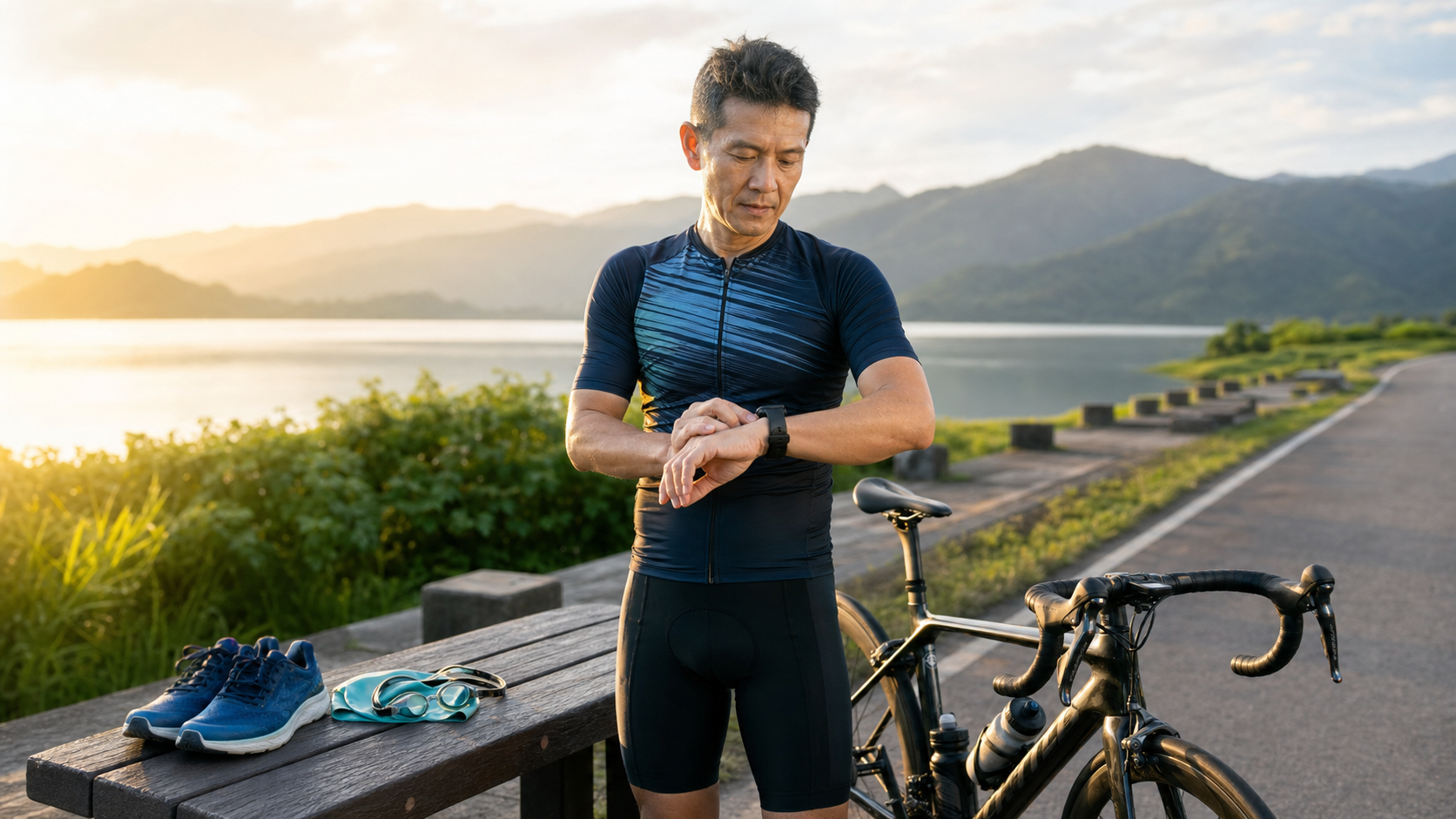
Coach’s Opening: After 40, What You Need Isn’t More Effort, but More Smarts
In 15 years of coaching athletes, the student who left the deepest impression on me was a man I’ll call A-Zhe (pseudonym). He came to me at 46, and his opening line was: “Coach, I’m clearly training harder than I did at 35—swimming, cycling, and running 12 hours a week—so why are my results getting worse? And after every big workout, the next day I feel like I’ve been run over by a truck.”
I looked at the training logs he’d uploaded, and the problem was obvious at a glance: he’d taken his 35-year-old training plan and transplanted it unchanged to age 46. Two consecutive days of high intensity, zero strength training all week, and intervals scheduled the day after a big session. At a younger age, he might have held up, but past 40, the way your body does the math changes.
This article is about the three most essential things I’ve learned over the years coaching Masters athletes (in triathlon, typically the age-group category for 40 and over): how to handle extended recovery time, why strength training has to take priority, and how Masters athletes should manage their pace expectations. This isn’t about telling you to resign yourself to getting slower—quite the opposite: with the right approach, at 40, 50, or even 60, you can still set new personal bests. But the prerequisite is that you first acknowledge the rules of the game have changed.
I often tell my athletes: “When you’re young, you rely on talent and brute force; in middle age, you rely on wisdom and discipline.” That’s not just a comforting phrase—it’s a conclusion I reached after watching A-Zhe, over two years, swim a faster 226 (full-distance) split at 48 than he had at 44.
Over the years, the Masters athletes I’ve coached have ranged from Hsinchu Science Park engineers and practicing physicians to retired teachers. What they share in common is: limited time, a few old injuries here and there, and the need to balance family and work. Precisely because resources are limited, middle-aged athletes can’t afford to train recklessly—every hour of training has to be calculated precisely and used wisely. What this article aims to give you isn’t a pile of hype and slogans, but a thinking framework I’ve actually validated—one that lets you produce results in limited time while keeping your body intact.
Concepts and Scientific Foundations: What Has Actually Changed in Your Body?
To adjust your training, you first need to understand what’s happening physiologically. Past 40, three systems begin to change noticeably, and these three systems happen to correspond to the three pillars of triathlon training.
1. The Decline of the Aerobic Engine: Not as Scary as You Think
Many people feel disheartened the moment they hear “VO2max declines with age.” But the reality is: Masters athletes who train consistently see their VO2max decline by about 5.5% per decade, while sedentary peers of the same age decline by about 12% per decade—roughly a twofold difference (source at the end of the article).
This number gives us two important takeaways:
- Decline can’t be completely avoided, but you can control the rate. Once training volume is drastically cut or stopped entirely, the decline accelerates sharply—studies have observed that after 12 weeks of detraining, VO2max can drop by as much as -20%. So for Masters athletes, “consistency” matters more than “spikes in volume.”
- An aerobic decline of roughly 0.5% per year can be offset by technique and efficiency. This is why many athletes can still improve their results after 45: their aerobic engine dips slightly, but their swimming technique, cycling economy, and pacing strategy maturity improve substantially—and when the final tally is done, they’re actually faster.
2. Muscle Loss: The Underestimated Enemy
If VO2max decline is the frog in slowly boiling water, then muscle loss is the more invisible—and more urgent—issue to confront. Research indicates that skeletal muscle mass begins declining at roughly 1% per year starting around age 40, while muscle strength declines even faster, at about 3% per year; the decline in muscular “power” even begins as early as age 30 (source at the end of the article).
This is more damaging for triathletes than for pure endurance athletes, because:
- The eccentric strength and power needed for downhill running and sprinting are the first to go.
- The power output for swimming starts, turns, and finishing sprints is directly affected.
- Fatigue resistance on the bike (especially maintaining power output in the latter stages of long distances) and core stability both depend on muscle mass.
The good news: a cross-sectional study of high-level Masters athletes aged 40 to 81 found that among those who continued training, individual differences in muscle cross-sectional area, lean tissue, and strength were not significantly correlated with age (source at the end of the article)—in other words, muscle loss is largely a matter of “use it or lose it,” not purely an age-driven fate. This is precisely the scientific basis for why I place strength training at the core of Masters training plans.
3. Changes in the Recovery System: Hormones, Repair, and Sleep
Past 40, the secretion of anabolic hormones gradually declines, muscle repair slows down, and inflammatory responses take longer to subside. In practical terms, this shows up as: the same big workout that took you 24 hours to recover from at 30 may take 48 to 72 hours at 45.
I call this phenomenon the “recovery tax.” Every time you do a high-intensity session, you pay a tax—and the older you get, the higher the rate. Athletes who don’t know how to pay the tax end up accumulating “training debt”—chronic fatigue, lowered immunity, unexplained injuries, and results that plateau or even regress. A-Zhe’s initial problem was, at its core, that he couldn’t afford the tax he was imposing on himself.
Practical Method 1: Handling Extended Recovery—Treat “Recovery” as Training
For Masters athletes, my first principle is: Recovery is not a gap in training; recovery itself is part of training. How you structure your plan is, to a large degree, designed around the question: “After this stimulus, how long do I need to absorb it?”
Widen the Gap Between Hard Days and Easy Days
Younger athletes can string together “hard-hard-easy” days in a row. For Masters, I recommend switching to “hard-easy-hard,” and even “hard-easy-easy-hard” during peak race season. The core concept is: between two high-intensity stimuli, leave at least 48 hours.
Here’s a typical weekly plan I gave to a 52-year-old athlete targeting a 113 half-ironman (70.3 distance) finish:
| Day | Workout Content | Intensity Attribute | Recovery Focus |
|---|---|---|---|
| Monday | Complete rest or 30-minute walk | Recovery | Sleep a full 8 hours |
| Tuesday | Swim technique + short intervals 2000m | Moderate-to-hard | Post-workout stretching |
| Wednesday | Strength training 45 min + easy ride 40 min | Strength + easy | Protein intake |
| Thursday | Tempo run 8 km | Hard | Foam rolling |
| Friday | Easy swim 1500m or rest | Easy | Go to bed early |
| Saturday | Long ride 80–100 km | Moderate (aerobic focus) | Proper fueling, post-race nutrition window |
| Sunday | Long run 14–18 km (including final transition-run feel) | Moderate | Ice bath / legs elevated, no hard session the next day |
Note the design logic of this table: the only truly “hard” day is Thursday. Tuesday, Saturday, and Sunday carry volume but are moderate in intensity, and the strength day on Wednesday is followed by an easy ride as active recovery. The entire week has only one day with the throttle fully open; the rest accumulates stimulus through volume and technique.
Sleep and Nutrition: The Most Underrated Recovery Tools
I often tell my athletes: “You spend a fortune on carbon wheels to save 5 watts, but losing an hour of sleep each night costs you more than 5 watts.” For masters athletes, sleep is arguably the most effective legal “supplement.” My advice:
- Prioritize sleep over extra training. If you can only choose one, choose sleep. Chronic sleep deprivation raises cortisol and inhibits recovery.
- Increase protein intake. Middle-aged and older muscles have a blunted synthetic response to protein (so-called “anabolic resistance”), typically requiring higher intakes than in younger years. General recommendations fall around 1.6 to 2.0 grams per kilogram of body weight per day (adjust the exact number based on individual circumstances and professional assessment). Since eating out is convenient for Taiwanese athletes, I often suggest using convenience store tea eggs, unsweetened soy milk, and sous-vide chicken breast packs as readily available post-training protein sources.
- Make good use of the post-training fueling window. Within 30 to 60 minutes after a long session, consume carbohydrates plus protein to help replenish glycogen and support muscle repair. Taiwan’s summers are hot and humid, so pay special attention to electrolytes and hydration after long rides.
Active Recovery and Monitoring
For masters athletes, I strongly encourage using objective metrics to monitor recovery status rather than pushing through based on feel alone:
- Morning resting heart rate (RHR): If it runs 5 to 7 bpm higher than usual for several consecutive days, it’s usually a warning sign of fatigue or illness.
- Heart rate variability (HRV): Many watches can measure this. A downward trend indicates insufficient recovery and it’s time to cut back.
- Subjective feelings: Sleep quality, muscle soreness, mood, and motivation to train—these “soft metrics” are actually the most accurate for masters athletes.
The first thing I did with A-Zhe was to have him measure his morning heart rate and log his sleep every day. After three weeks, he discovered on his own: any hard session done on days when his morning heart rate was elevated was inevitably followed by a slump. Once he learned to decisively switch to easy days when the numbers flashed red, his chronic fatigue disappeared.
Periodization for Masters Athletes: Be More Aggressive with Deload Weeks
Beyond the weekly hard/easy structure, larger-scale “periodization” is equally critical for masters athletes. Younger athletes can do “three weeks of loading, one week of deloading”; for athletes over 45, I typically adjust this to “two to three weeks of loading, one week of deloading,” and the volume in the deload week should be cut more aggressively than in younger years—usually down to 50% to 60% of normal volume, with intensity reduced as well.
This is because middle-aged and older athletes absorb training stimuli more slowly and need a more thorough “digestion phase” for the body to truly convert training gains into adaptation. Many athletes mistakenly think deload weeks are wasted time, but real progress happens during recovery, not during the hard sessions themselves. Here’s an example of a macro cycle for an 8-week base period:
| Week | Training Volume | Intensity Focus | Purpose |
|---|---|---|---|
| Weeks 1–2 | Moderate | Build aerobic base, foundational strength | Wake up the body, establish habits |
| Week 3 | High | Add tempo runs, power intervals | Apply progressive overload |
| Week 4 | Low (deload) | Reduce intensity and volume across the board | Absorb adaptation, recover |
| Weeks 5–6 | Moderate-high | Extend long sessions, event-specific intensity | Accumulate endurance and event-specific capacity |
| Week 7 | High | Simulate race pace | Approach target stimulus |
| Week 8 | Low (deload) | Recovery focus | Build capacity for the next cycle |
The biggest benefit of this rhythm is: it makes “consistency” possible. As covered earlier in the science section, for masters athletes, maintaining training continuity matters far more than chasing a single peak. Protecting yourself from injury and overtraining with steady periodization is what allows you to keep showing up at the start line year after year.
Practical Method Two: Strength-First Principle—Why I Put Lifting Before Swim, Bike, Run
This is the point I most want to emphasize when coaching masters athletes, and the one most often resisted: past 40, strength training is not an optional extra—it’s a core session that should be prioritized. Many endurance athletes instinctively feel that lifting “wastes time that could be spent swimming, biking, or running,” but for middle-aged and older athletes, this mindset needs a complete reversal.
Why Strength Matters Especially for Masters Athletes
Going back to the science: muscle strength declines by roughly 3% per year, and power begins to decline even earlier. The most clearly effective tool sports science currently has to combat this loss is progressive resistance training. It delivers several benefits that directly help triathlon performance:
- Maintains muscle mass and strength, directly countering the trend toward sarcopenia.
- Improves muscle quality and economy, allowing you to go faster at the same effort.
- Strengthens bone density and tendons/ligaments, significantly reducing injury risk in high-impact disciplines like running.
- Improves core stability, helping you hold an aero position longer on the bike and preventing your run form from falling apart late in the race.
One study focusing on women found that combining running with strength training had positive effects on muscle strength and muscle quality in both the over-50 and under-50 groups (source at the end of this article). Strength training isn’t just for young athletes—for middle-aged and older athletes, the returns are actually higher.
Principles for Masters Strength Programming
When I design strength programs for masters athletes, I follow several key principles:
- Twice a week, year-round, without interruption. Even during race season, maintain at least one “maintenance” session per week—never stop completely. Once you stop lifting, the door to muscle loss swings open.
- Focus on multi-joint, large-muscle-group compound movements. Squats, deadlifts, split squats, rows, and presses offer the best return on investment.
- Intensity must be sufficient, but form must be safe. Middle-aged and older athletes do well in the moderate to moderate-high load range with moderate rep counts (e.g., 6 to 10 reps per set)—enough to effectively stimulate strength without accumulating excessive metabolic fatigue. Proper form is non-negotiable; ideally have a coach or experienced partner oversee your technique.
- Include single-leg, unilateral, and anti-rotation core work. Triathlon is a sport of unilateral, cyclical force production. Single-leg stability and anti-rotation core capacity directly affect run form and pedaling efficiency.
Here’s a sample foundational strength session I give masters athletes (twice a week, can alternate between A/B):
| Exercise | Sets × Reps | Primary Purpose | Masters-Specific Notes |
|---|---|---|---|
| Goblet Squat / Barbell Squat | 3 × 8 | Overall lower-body strength | Warm up thoroughly; don’t let knees cave inward |
| Romanian Deadlift | 3 × 8 | Posterior chain, running propulsion | Keep spine neutral; progress weight gradually |
| Bulgarian Split Squat | 3 × 8 (per leg) | Single-leg stability, countering muscle loss | Master bodyweight first, then add load |
| Dumbbell Row | 3 × 10 | Upper back, swimming pull | Control the eccentric; no swinging |
| Shoulder Press | 3 × 10 | Shoulder girdle stability | Use dumbbells if you have a history of shoulder issues |
| Dead Bug / Plank Variations | 3 × 30–45 sec | Core anti-rotation and anti-extension | Quality over time |
| Calf Raises | 3 × 15 | Calves, Achilles tendon resilience | Critical for preventing running injuries |
This program doesn’t require gym-rat-level weights, but it does require discipline and consistency. I’ve seen too many athletes train strength passionately for two months before race season, then abandon it entirely once the season starts—only to start from zero again every year. What actually works is making it a daily habit, like brushing your teeth.
Practical Method Three: Pacing and Expectation Management—Race Against Yourself, Not Against Your 30-Year-Old Self
This is the psychological layer, yet it’s the key factor determining whether masters athletes can train happily for the long haul. I’ve coached too many middle-aged and older athletes with excellent technique and fitness who ultimately hit a wall not because of their bodies, but because of their mindset.
Accepting a Changing Baseline, But Not Surrendering
As mentioned earlier, a consistent athlete’s VO2max declines by about 5.5% per decade. What does this mean? Suppose you run a 3:30 marathon at age 35. If you do nothing, your “equivalent effort” at 45 will naturally be slower. But this doesn’t mean you have to passively accept slowing down—you can offset most or even all of the decline through strength, technique, pacing strategy, and weight management.
My approach to setting goals for masters athletes is: First, accept the slight downward shift in the physiological baseline, then use controllable factors to compensate. Mentally, shift from “I want to set a PB” to “I want to perform at the best possible level for my age.” This shift may sound like a compromise, but it’s actually more sustainable—because you’re no longer chasing a number from ten years ago.
Pacing Should Be More Conservative, Especially Early On
When you’re younger, you might rely on willpower to hold a too-fast early pace and grit your teeth through the latter part. But masters athletes have less physiological margin for error; if you blow up early, the late-race collapse will be more severe. My practical advice:
- Don’t follow the crowd off the start in the swim. Use a steady, controlled rhythm, keeping your heart rate in the aerobic zone to preserve energy for the bike and run.
- Allocate bike power pacing more strictly. For long-distance events like half-ironman and ironman, especially hold back power in the first third. Don’t overspend just because your legs feel fresh.
- Adopt a negative split mindset for the run. Be deliberately conservative in the first half, and if you have energy left, pick it up in the second half. This has a much higher success rate for masters athletes than going out hard from the start.
Practical Considerations for Racing in Taiwan
Taiwan’s triathlon environment has its unique challenges, and pacing expectations should adapt to local conditions:
- Hot and humid climate. Summer races in Taiwan (such as many triathlons held in summer) have high humidity and extreme perceived temperatures. Masters athletes, whose cooling efficiency declines slightly with age, must proactively slow down and increase hydration and electrolyte intake. Pushing the pace hard in high heat is dangerous.
- Course characteristics. Classic courses in places like Taitung, Penghu, and Yilan have sections with strong winds or rolling terrain. Power and pace should be adjusted flexibly according to the terrain, not rigidly held to a single average.
- Eating-out culture. Taiwanese athletes often eat out frequently during training blocks. Pay attention to the balance of sodium, sugar, and protein. For carbohydrate loading in the week before a race, choose familiar local Taiwanese foods that your gut can handle—don’t experiment with unfamiliar nutrition right before the event.
A Real Lesson About “Heat”
I want to share a specific example from one of my athletes because it’s so typical. A 54-year-old female athlete had a stable training pace and was capable of placing well in her age group. One year, she signed up for a summer half-ironman. Her training leading up to the race went smoothly, but on race day the temperature spiked and humidity was extreme. She insisted on sticking to her planned bike pace. Her power was solid in the first half, and the run started okay—but at the 12-kilometer mark, she began feeling dizzy, got goosebumps, and felt nauseous. These are actually early warning signs of heat exhaustion.
Fortunately, she was educated on this. She immediately slowed down, walked, rehydrated heavily with electrolytes, rested at an aid station, and slowly finished the run. Her time wasn’t what she hoped, but she finished safely. Afterwards, we reviewed: Masters athletes’ cooling efficiency naturally declines with age. Pushing the pace in Taiwan’s hot, humid summer races is gambling your health for a result—it’s simply not worth it. Since then, she learned to proactively lower her target pace by 5% to 10% on hot days, stop at every aid station to properly hydrate and cool down, and the following year, at a cooler race, she actually ran a personal best.
The lesson from this story is: Pacing expectation management isn’t just psychological—it’s a safety issue. Especially in Taiwan’s climate, the athlete who knows when to yield to the environment is the truly smart one.
Practical Method Four: Use “Efficiency” to Compensate for the “Engine”—Technique Is the Masters Athlete’s Secret Weapon
I’ve mentioned repeatedly that the aerobic engine of middle-aged athletes declines slightly, but efficiency can compensate. This deserves its own section because it’s the key I’ve seen most masters athletes use to “overtake on the curve.”
Efficiency means “how much speed or power you can produce from the same oxygen uptake.” Young athletes push with a big engine; middle-aged athletes win with low fuel consumption. Each discipline has its efficiency breakthrough:
- Swimming offers the highest return on technique. Swimming is the most technique-dependent of the three sports. Many middle-aged athletes waste enormous energy due to poor stroke mechanics, breathing rhythm, and body position. Investing time in improving feel for the water and technique often saves significant energy without any increase in fitness, preserving strength for the bike and run. I often say: “Every bit of energy saved in the swim is a deposit for the bike and run.”
- For cycling, focus on cadence and aerodynamics. Maintaining a smooth cadence and avoiding violent, erratic pedaling delays leg fatigue. The comfort and sustainability of an aero position also directly affect power maintenance in the latter part of a long race. Rather than endlessly chasing more power, middle-aged athletes should first develop the ability to hold power in an aero position.
- For running, the key is cadence and postural economy. Appropriately increasing cadence, shortening ground contact time, and maintaining a forward-leaning center of gravity reduce impact and energy loss with each step. This also positively helps protect the knees and Achilles tendons, which are prone to injury in middle-aged athletes.
Efficiency training doesn’t show immediate results like piling on mileage; it requires patience and deliberate practice. But once internalized, it barely declines with age—technique is an asset you can carry with you as you age, becoming more refined over time. This is why many athletes reach their overall best times at age 50, with technical maturity compensating for declining fitness.
Common Mistakes and Fixes: The Four (Five) Traps I See Most Often in Masters Athletes
Mistake 1: Transplanting Your Younger Training Plan Unchanged
This was A-Zhe’s original sin, and it’s the most common. Fix: Leave at least 48 hours between hard days, monitor morning heart rate and HRV, and cut volume decisively when needed. Your plan should be designed for “your current age,” not for the you of ten years ago.
Mistake 2: Making Strength Training the First Thing to Sacrifice
When time is short, many people cut lifting first. Fix: Do the opposite—when time is short, protect two strength sessions per week first, then cut “junk mileage” from swim, bike, and run. Strength is your insurance against sarcopenia and injury; it can’t be skipped.
Mistake 3: Only Training Aerobically, Ignoring High-Intensity Stimulus
Some masters athletes fear injury and only do easy long-distance all year. Fix: High-intensity stimulus (intervals, tempo runs) is still necessary—just reduce the frequency and extend recovery. Avoiding high intensity entirely accelerates the decline of your aerobic ceiling. The key is “small amounts but preserved,” not “abandoned completely.”
Mistake 4: Ignoring Warm-Up and Mobility
When you’re young, you can jump right into training. After middle age, soft tissue elasticity declines, and the risk of injury from a cold start increases dramatically. Fix: Extend the dynamic warm-up time before every session, and schedule dedicated mobility/stretching time each week, treating it as a formal part of the plan. I often require masters athletes to write warm-up into the official schedule, not as “if I have time”—because the day you’re busiest, most tired, and most tempted to skip it is often the day you’re most likely to get injured.
Mistake 5: Pushing Through an Injury
This is the most dangerous trap for middle-aged athletes. When you’re young, a minor injury can be gritted through for a few days and it heals. After middle age, the same injury can become a chronic problem or even derail an entire season. Fix: Learn to distinguish between “training soreness” and “injury warning signs.” For persistent, localized pain that worsens with training, stop and seek medical attention early—don’t tough it out with willpower. Missing a week of training won’t matter, but pushing through a minor injury into a major one can cost you three months. In the world of masters athletes, the willingness to call it quits in time is itself a form of mature strength.
Actionable Advice for Athletes of Different Levels
First-Time Triathletes (Starting After 40)
You are the luckiest group—you have no performance baggage from your younger years and can build good habits the right way from the start.
- Build a strength and mobility foundation first, then add triathlon volume. Focus on movement quality and staying injury-free for the first 2 to 3 months.
- Know your limits and make “finishing” the primary goal—don’t rush to chase speed.
- Start with shorter distances (like a 51.5 standard distance or shorter beginner events) to build successful experiences and confidence.
Intermediate Athletes (A Few Years of Experience, Looking to Improve in the Age Group)
This is the group most likely to get stuck in the trap of “using brute force to compensate for declining performance.”
- Re-examine your hard day/easy day ratio — you’re likely doing too much training and not enough recovery.
- Formally schedule strength training into your weekly plan, rather than doing it only when the mood strikes.
- Start monitoring recovery with objective data (morning heart rate, HRV) to make training decisions evidence-based.
- Invest technically in your weakest discipline — improvements in swim technique usually offer the highest return on overall race time for middle-aged athletes.
Senior/Advanced Athletes (Chasing Age-Group Podiums, Kona, or National Rankings)
You understand training, but you need to understand “letting go” even more.
- Periodization needs to be more refined — the deload week after a major block is non-negotiable, and the reduction in volume should be greater than when you were younger.
- Treat sleep, nutrition, massage, and mobility as a formal “fourth discipline” and invest resources in them.
- Be strategic with race selection — lock in 1 to 2 A-priority target races per year and treat the rest as training races, avoiding year-round high intensity that leads to overtraining.
- Work with a professional team — regular assessments from a coach, physical therapist, and nutritionist can help you optimize the details to the highest level.
FAQ: The Questions Masters Athletes Ask Me Most
Q: I’m 50 years old. Is it still possible to set a new personal best?
A: Absolutely possible, and I’ve witnessed it many times. The physiological engine declines slightly, but there’s often even more room for improvement in technique, pacing, weight management, and strength. The key is whether you’re using the right methods.
Q: How many hours per week should I train?
A: There’s no standard answer; it depends on your target race distance, recovery capacity, and lifestyle. For most masters athletes balancing work and family, the focus isn’t on “how long you train” but on “the quality of each hour” and “whether recovery can keep up.” Rather than forcing 15 hours and completing half of them fatigued, it’s better to do a solid 10 hours where you can absorb every session.
Q: My joints aren’t in great shape. Can I still run?
A: This depends on individual circumstances, so please consult a professional first. But many so-called “running ruins your knees” issues actually stem from insufficient strength, poor form, or ramping up volume too quickly. Strengthening the lower body and core, progressing gradually, and choosing the right shoes and surfaces often make running safer. Individual injury assessments should still be left to physicians and physical therapists.
Q: Should I take supplements?
A: The foundation is always natural food and adequate sleep. Supplements are meant to “fill gaps,” not “replace” meals. For any supplement use, it’s recommended to consult a nutritionist first and evaluate based on your individual situation.
Q: I’m really busy at work and can’t find time for strength training. What should I do?
A: This is the most common thing I hear, but the barrier to strength training is lower than you think. Two sessions per week, 30 to 40 minutes each, produces significant results — you don’t need to live in the gym. You can even break it into “fragmented” sessions — using dumbbells or kettlebells at home for squats, split squats, rows, and planks, 20 minutes is enough to maintain the stimulus. The key is that consistency far outweighs a single perfect session. Rather than waiting for a two-hour block, schedule two fixed 30-minute sessions every week, no matter what.
Q: Do masters athletes need to eat more carbohydrates than younger athletes?
A: Daily energy needs are tied to training volume, not age. On big training days, you should fuel up with carbs — don’t train hungry out of fear of gaining weight, as that actually hurts recovery. The real difference lies in protein — due to anabolic resistance in middle age, you typically need to increase protein intake and distribute it evenly across three meals. For actual amounts and ratios, it’s still best to tailor them to your body composition goals and your nutritionist’s advice.
Conclusion: Middle-Aged Triathlon Is a Smarter Long Game
Back to A-Zhe’s story. Two years later, at 48, he swam a faster split than he did at 44 and finished his first full-distance ironman. He told me, “Coach, it turns out I wasn’t too old to do this — I was just training wrong before.”
I want to share those words with every masters athlete reading this. Triathlon after 40 or 50 isn’t about discounting your younger self; it’s about upgrading to a more mature, more precise operating system: accept that recovery takes longer, so schedule recovery like training; know that muscle mass declines, so prioritize strength; understand that your baseline shifts, so compensate with controllable factors and compare yourself to yourself, not to the past.
This is a long game of wisdom, discipline, and patience. Those who train smart will discover that middle age isn’t the end of a peak — it’s the start of another kind of peak. The racecourses in Taiwan are still long; let’s train long, train well, and train happily together.
This article is educational content and does not replace individual assessment by a physician, physical therapist, or nutritionist.
References
- Decline in VO2max with aging in master athletes and sedentary men — Journal of Applied Physiology: https://journals.physiology.org/doi/abs/10.1152/jappl.1990.68.5.2195
- The Impact of Training on the Loss of Cardiorespiratory Fitness in Aging Masters Endurance Athletes — PMC: https://pmc.ncbi.nlm.nih.gov/articles/PMC9517884/
- Sarcopenia: Aging-Related Loss of Muscle Mass and Function — Physiological Reviews: https://journals.physiology.org/doi/full/10.1152/physrev.00061.2017
- Anthropometric, physical function and general health markers of Masters athletes: a cross-sectional study — PMC: https://www.ncbi.nlm.nih.gov/pmc/articles/PMC5592080/
- Running Plus Strength Training Positively Affects Muscle Strength and Quality in Both Younger and Older Women — PMC: https://www.ncbi.nlm.nih.gov/pmc/articles/PMC11514607/
Related Reading
- 70.3 Masters (40+) Training: The Advantages of Recovery, Strength, and Experience
- Olympic-Distance 40+ Masters Adjustments: Time Catches Up, But You Get Smarter
- Trail Running Masters Training: Scientific Training Strategies After 40
- The Science of Masters Athletes: How to Stay at Your Peak and Get Stronger Smarter After 40
西進武嶺 免費訓練分析服務 Intervals | 練不夠還是練過頭?你哪一種類型選手?AI模型告訴你! | 備戰神器 | 公路車 訓練 | CT Yeh
4 年前
福隆鐵人團練隨拍
8 年前
單車AI教練!全新 ChatGPT4o 幫你分析訓練成果!排武嶺課表,分析騎車姿勢! 太神了! / 公路車 / CT Yeh / feat. 緯緯
2 年前
Live) 備戰2019彰化經典百K 賽前攻略 (已完賽請看新影片
7 年前
CT 喇低賽) 武嶺牽車 才是王道 西進牽車四小時內秘訣 攝手位置 如何判斷 防抽筋小秘訣
7 年前
靠單車減肥35公斤 心得分享與整理
7 年前
實景訓練台) 彰化經典百K 高強度喵團 90分鐘 跟著一起練功 2019 Indoor workout Changhua Classic 100 Taiwan
7 年前
戰略) Zwift Race 如何咬在第一集團 如何評估自己要開多少推力 (請開1.5倍速看)
7 年前