Altitude Training and Altitude Tents: The Reality of Live High Train Low — A Coach's Honest Words for Taiwanese Athletes
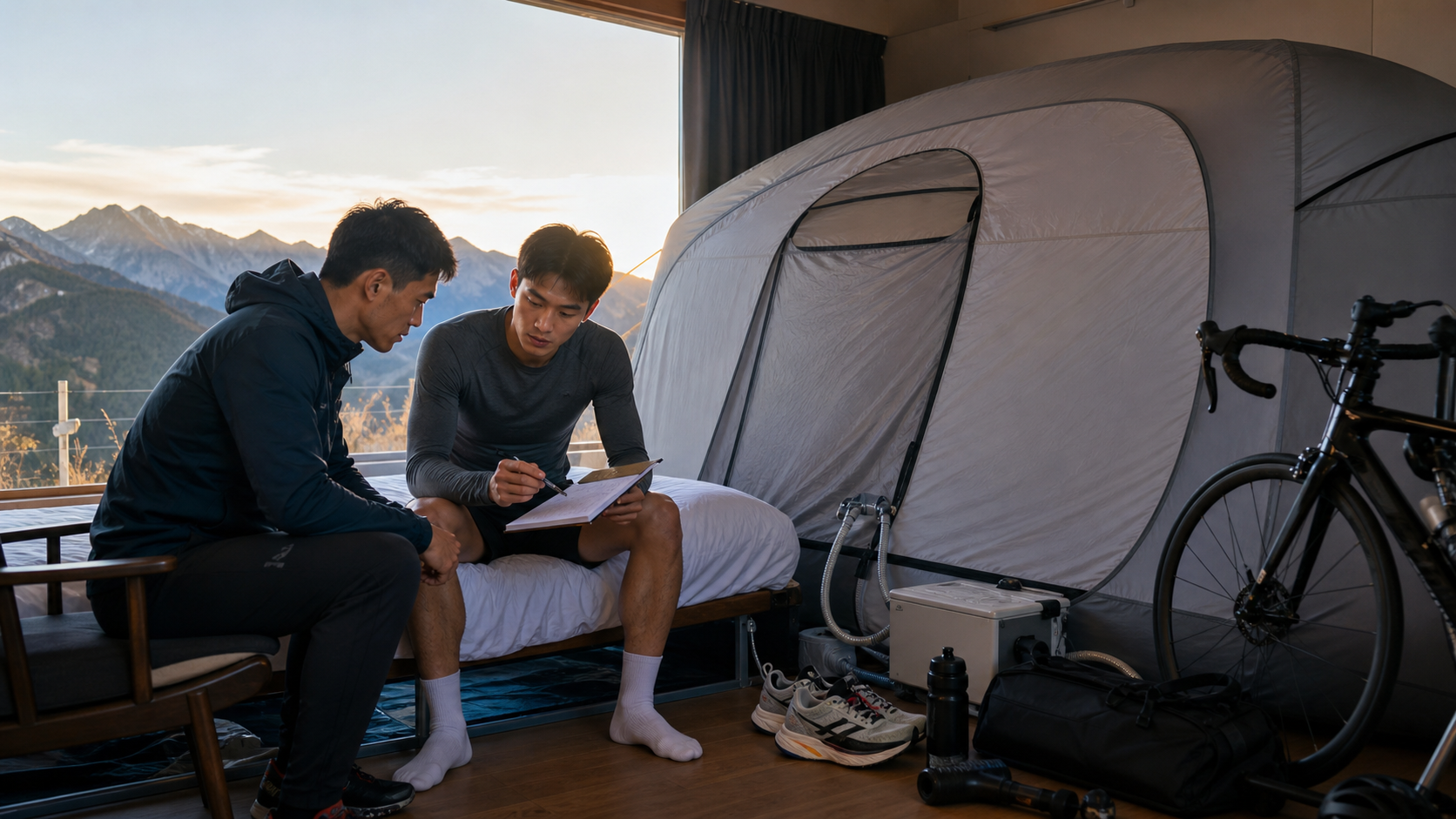
Coach’s Opening: That Rented Altitude Tent — Is It Worth It?
In my fifteen years of coaching athletes, every so often someone messages me asking the same thing. It usually starts like this: “Coach, I see this pro athlete sleeping in an altitude tent—should I rent one too?” One year, a student named A-Zhe, who was preparing for a 113 half-ironman and aiming for a Taiwan age-group national team spot, was even more direct—he had already ordered a used altitude tent, slept in it for three nights, and came to ask me why he “felt no difference at all, and still got just as winded on climbs.”
I didn’t scold him on the spot, but I sighed inwardly. Because the problem wasn’t whether the altitude tent works—it was that he had zero concept of “how high, how long, and how to combine it.” He thought that just by sleeping in that tent, his red blood cells would automatically multiply like inflating a balloon. This is the most common misconception I’ve seen, and it’s exactly what this article aims to clarify.
Altitude training isn’t mysticism—it’s backed by solid physiology. But it’s also not a miracle cure, nor something that works after a few nights of sleep. It’s a question of dosage—altitude is the intensity of the dose, time is the length of the dose, and it’s the product of the two that determines whether your body actually responds. Today, from a practical coaching perspective, I’ll walk you through Live High Train Low (hereafter LHTL) from the scientific foundation, practical methods, and common mistakes, all the way to what athletes at different levels should do, and finally give Taiwanese athletes an honest set of action recommendations.
Let me give the conclusion first for the impatient: For the vast majority of Taiwanese age-group athletes, the return on investment from an altitude tent is far worse than getting your sleep, iron intake, and training consistency dialed in first. But if you’ve already perfected the fundamentals and are chasing that last 1% on race day, then we need to seriously discuss how to use this tool correctly.
Concepts and Scientific Foundation: Why Does “Living High” Make You Stronger?
A Cascade of Reactions Triggered by Hypoxia
When you go to altitude, the partial pressure of oxygen in the air drops. The higher the elevation, the less oxygen you take in with each breath. When the body detects a drop in blood oxygen levels, the kidneys secrete a hormone called erythropoietin (EPO) . EPO’s job is to command the bone marrow to accelerate red blood cell production.
With more red blood cells, the blood’s oxygen-carrying capacity increases. On the same ride or run, your muscles get more oxygen, giving your aerobic metabolism more fuel. That’s the core logic of altitude training—through hypoxic stimulation, you cultivate more red blood cells and a higher total hemoglobin mass (Hbmass) .
Here, I want to emphasize a key concept: the truly valuable metric isn’t “hemoglobin concentration,” but “total hemoglobin mass.” In the first few days at altitude, a blood test might show rising concentration, but that’s mostly a “concentration illusion” caused by reduced plasma volume, not actual new red blood cells. Real adaptation takes weeks to show up in total mass. Many people go to the mountains for a week, see their concentration rise on a blood test, and get overjoyed—but that’s mostly just dehydration.
What Problem Is LHTL Solving?
The old-school approach was “Live High Train High”—entire training camps spent at high altitude. Here’s the issue: at altitude, with thinner air, you simply can’t maintain the training intensity you’d have at sea level. Intervals feel impossible, climbing power drops, and pacing falls apart. The result? You get the benefits of hypoxia, but you sacrifice training quality, and over time your speed and neuromuscular capacity actually regress.
That’s where the clever idea of Live High Train Low comes in: sleep and spend non-training hours at altitude to accumulate hypoxic stimulus and build red blood cells, but execute your key workouts at lower elevation to maintain the necessary intensity and speed. This way, you get both “hypoxic adaptation” and “high-quality training.” This is currently the most highly regarded model in sports science for endurance sports.
The Two Critical Thresholds: How High, How Long
This is the most important part of the entire article, so please commit it to memory. Whether altitude training works isn’t about whether you “went to the mountains”—it’s about how much hypoxic dose you accumulate—that is, “sleeping altitude × exposure time.”
Based on a review of sports science literature, to achieve a meaningful increase in total hemoglobin mass, you generally need to meet the following conditions:
- Sleeping altitude: Generally considered optimal in the range of approximately 2000 to 2500 meters. Too low (below roughly 1800 to 2000 meters) and the stimulus is insufficient; too high, and it disrupts sleep, recovery, and training, making it counterproductive.
- Daily exposure hours: Different studies use different durations, some around 12 to 18 hours per day, emphasizing that longer exposure yields more consistent results. The core question is “how much of your day are you spending in a hypoxic environment.”
- Duration in weeks: Typically requires approximately 3 to 4 weeks of continuous exposure. Less than three weeks, and the body doesn’t have time to produce new red blood cells.
- Total accumulated hours: A commonly cited practical benchmark is approximately 300 hours of hypoxic exposure, roughly corresponding to about 14 hours per day for three weeks, which can be expected to yield an average increase of approximately 3% to 5% in total hemoglobin mass.
I’ve organized these thresholds into a table you can use to check against your own plan:
| Parameter | Recommended Range | Coach’s Plain-Language Interpretation |
|---|---|---|
| Sleeping altitude | Approximately 2000–2500 meters | Too low and you feel nothing, too high and you can’t sleep—this is the sweet spot |
| Daily exposure hours | Approximately 12–18 hours | Sleep plus most of your leisure time needs to be spent in a hypoxic environment |
| Duration in weeks | Approximately 3–4 weeks | Less than three weeks is almost wasted effort—red blood cells don’t have time to develop |
| Total accumulated exposure hours | Approximately 300 hours | This is the most useful checkpoint for “is the dose enough” |
| Expected Hbmass increase | Approximately 3–5% | A meaningful improvement, but not a transformation |
Looking at this table, you should now understand where A-Zhe’s problem lay—he slept in it for three nights. Three nights adds up to maybe 20-some hours of exposure, which is nowhere near the 300-hour threshold. It’s like someone eating vegetables for three days and complaining their weight hasn’t dropped—the dose isn’t even close, so how could there be a response?
Responders and Non-Responders
There’s another harsh truth that must be told: Not everyone responds to altitude training. Studies categorize athletes into “responders” and “non-responders.” Interestingly, some non-responders actually see their EPO rise, but their total hemoglobin mass and VO2max don’t follow suit.
The reasons are numerous—insufficient iron stores are the most common killer (without iron, the bone marrow can’t produce red blood cells even when it receives EPO’s command); there are also genetic individual differences; plus sleep quality, inflammation status, and whether training load is appropriate. This means that even if you execute LHTL perfectly, there’s a certain probability your body just won’t cooperate. That’s not your fault—it’s physiological variation. That’s why I never guarantee athletes that “a trip to altitude will definitely make you stronger.” All I can say is, “If you get the conditions right, the odds will be in your favor.”
Beyond Red Blood Cells: What Else Does Altitude Change?
Many people assume altitude training is just about “growing red blood cells,” but that’s not the case. The hypoxic environment triggers a whole suite of compensatory responses in the body, and red blood cells are simply the most emphasized and easily quantifiable one. In practice, I’ve also observed several other levels of adaptation worth knowing about:
- Ventilatory efficiency and respiratory control: After prolonged exposure to a low-oxygen environment, your respiratory center’s sensitivity to hypoxia increases, and your breathing pattern becomes more efficient. Some athletes report “feeling more composed in their breathing rhythm” after coming down from altitude—that’s the ventilatory adaptation at work.
- Metabolic adaptations at the muscle level: Hypoxia prompts adjustments in muscle tissue related to energy metabolism and capillaries, smoothing the pathway for oxygen to be “delivered and utilized.” These adaptations are subtle and harder to measure than hemoglobin, but they’re a net positive in the long run.
- Buffering capacity: Some research and coaching experience suggest that altitude exposure may improve the body’s ability to handle lactate and acid-base buffering. This is valuable for high-intensity endurance events—like the run leg surge in an Olympic-distance triathlon.
I mention these specifically to help you understand—the value of altitude training cannot be measured solely by “how many percent your hemoglobin went up.” Some athletes see modest hemoglobin gains yet still improve in overall feel and race performance; that could be these “invisible” adaptations at work. Conversely, don’t overstate these secondary adaptations either—they’re supporting players, while red blood cells remain the lead.
The “Hypoxic Dose” Concept, Explained Further
Earlier I said dose equals “altitude × time,” which is a handy simplification, but in practice you need to add a few more dimensions so you don’t misuse it.
First, higher altitude isn’t always better—there’s a ceiling. Beyond roughly 2,500 meters, you hit diminishing returns or even negative effects: sleep is severely disrupted, recovery worsens, training quality drops, and appetite declines. The hypoxic stimulus does get stronger, but the recovery cost you pay could eat up all the benefits. That’s why altitudes above 3,000 meters, like Wuling at 3,275 meters, are suitable for a “one-day climbing stimulus” but not for “long-term residence to build blood cells.”
Second, continuity of exposure matters a lot. If you accumulate 300 hours, doing it as three consecutive weeks of daily, steady exposure will yield far better results than stretching it out over three months with interruptions. That’s because the body’s response to hypoxia has a rhythm—EPO rises noticeably early in exposure, then settles back to a new equilibrium; red blood cells are produced in batches under sustained stimulus. If you break the chain, that hematopoietic signal loosens, and you’re essentially restarting the warm-up each time.
Third, your starting point determines your ceiling. An elite athlete who already has high red blood cell levels and is well-trained might only squeeze out another 2% to 3%; someone with more room to improve might gain 5% or more. So “it works for others but I don’t feel it” isn’t always a flawed method—it might just be that your starting points differ.
Practical Approaches: What Can Taiwanese Athletes Actually Do?
With the science covered, let’s talk about Taiwan’s reality. Taiwan’s biggest geographical challenge is—we don’t have the terrain convenience for “live high, train low.” European athletes can live in a town at 2,200 meters in the Alps and drive 20 minutes down to a valley at 1,000 meters for intervals. American athletes have entire plateaus in Colorado and Utah. What about us? Wuling on Hehuan Mountain is 3,275 meters—too high, with insufficient lodging and daily amenities, and high enough to disrupt recovery; Taiwan has almost no high-altitude towns suitable for long-term residence with complete living infrastructure.
So for Taiwanese athletes to do altitude training, there are practically three paths.
Path One: Real-Altitude Training Camp (Most Ideal, but Most Expensive)
Spend three to four weeks at an overseas high-altitude training base. This is the most effective approach because it’s real-environment exposure—sleeping, walking, and eating all happen in hypoxia, so accumulated hours add up quickly. The downsides are obvious: high time and financial costs, plus dealing with visas, training venues at the camp, dietary adaptation, and a host of logistical hassles. It’s worth it for professional or semi-professional athletes, but for a typical office-worker age-grouper, frankly, the barrier is too high.
Path Two: Altitude Tent / Hypoxic Room (Simulation Tool, Feasible at Home)
This is the path A-Zhe wants to take, and it’s the only realistically feasible simulation option for most serious age-group athletes in Taiwan. An altitude tent is a sealed canopy that covers your bed, paired with a hypoxicator that lowers the oxygen concentration inside, simulating a low-oxygen environment equivalent to a certain altitude. You sleep in it, accumulating exposure through sleep time.
The benefit is that you’re in Taiwan, in your own home—no travel needed. Sleep 8 hours a night, and you bank 8 hours of exposure per day. The downside is—8 hours a day still falls short of the ideal 12 to 18 hours. So altitude tent users typically need to extend the total number of weeks, or find ways to spend more time inside during the day (like reading or working in the tent) to make up the dose. Also, sleeping in a sealed tent brings heat, noise, and restricted space to turn over, which can easily compromise sleep quality. Poor sleep means poor recovery, which can offset the benefits of altitude. This is a hidden cost many overlook.
Path Three: Intermittent Hypoxic Training (IHT, Weakest but Most Convenient)
Wearing a hypoxic mask while doing intervals on a trainer or treadmill, or briefly breathing hypoxic gas. Each session lasts only a few dozen minutes, so the accumulated dose is very low, and the effect on building red blood cells is quite limited. It’s more of a stimulus for respiratory muscles and local metabolism—don’t expect it to grow your hemoglobin. My take on this path: it’s fine as a supplement, but not as a main course.
I’ve summarized the trade-offs of the three paths in a comparison table:
| Method | Daily Accumulated Exposure | Red Blood Cell Building Effect | Money/Time Cost | Suitable For |
|---|---|---|---|---|
| Overseas Real-Altitude Camp | 24 hours (all day) | Strongest | Very High | Professional/Semi-pro, age-group elites with long vacations |
| Altitude Tent / Hypoxic Room | ~8–12 hours | Moderate (needs longer total weeks) | Medium-High (equipment rental/purchase) | Serious advanced age-group athletes |
| Intermittent Hypoxic Training (IHT) | Dozens of minutes per session | Weak | Low | Those curious to try it, or as a supplementary stimulus |
A Sample Practical Altitude Tent Schedule (Illustrative Only)
If you do decide to go with an altitude tent, here’s a framework I’d give you. This is a sample plan—adjust it based on your iron panel, sleep response, and training status; it’s not a formula to copy blindly.
| Week | Tent Simulated Altitude | Nightly Exposure | Training Focus (Outside Tent, at Sea Level) | Monitoring Focus |
|---|---|---|---|---|
| Adaptation Week (Week 1) | ~2,000 meters to start | 7–8 hours | Maintain aerobic base, slightly reduce intensity | Sleep quality, morning heart rate, subjective fatigue |
| Accumulation Week (Weeks 2–3) | ~2,200–2,500 meters | 8–10 hours | Key intervals and tempo sessions at sea level | Morning heart rate, HRV, ferritin |
| Accumulation Week (Week 4) | ~2,500 meters | 8–10 hours | Maintain intensity, watch for over-fatigue | Fatigue accumulation, sleep |
| Descent/Race Prep (Week 5 onward) | Stop using tent | — | Taper, open up speed, find rhythm | Find your optimal days before race day |
Here are several practical points that must be addressed:
- Increase simulated altitude gradually. Don’t set the tent to 2,500 meters from day one—that will severely disrupt sleep. Start around 2,000 meters, and once your body adapts, then move up.
- All key workouts are done outside the tent, at sea level. This is the essence of LHTL—live high, train low. You wouldn’t wear a hypoxic mask for intervals; that would just make you slow and miserable, defeating the purpose of LHTL.
- Iron is the foundation. I require athletes using an altitude tent to get bloodwork done first, checking ferritin levels. Without sufficient iron, all the EPO in the world is meaningless. I’ll expand on this below.
Daily Monitoring Checklist During Altitude Training
The biggest fear with altitude training is “just grinding through it and waiting for results.” I require athletes to spend five minutes each day during this period on basic monitoring, and to adjust immediately once the body sends out warning signals. The table below is the check card I give my athletes:
| Monitoring Item | How to Measure | Red-Flag Signal | How to Respond |
|---|---|---|---|
| Morning pulse | Measure resting heart rate (bpm) right after waking up | More than about 5–8 bpm above normal | Lower intensity, focus on recovery for the day |
| HRV (Heart Rate Variability) | Measure with watch or chest strap upon waking | A clear decline over several consecutive days | Reduce volume, check sleep and stress |
| Sleep quality | Subjective 1–10 scale or wearable device data | Consistently poor sleep, frequent nighttime awakenings | Lower simulated altitude, improve tent ventilation |
| Subjective fatigue | Self-assess 1–10 every morning | Fatigue keeps accumulating without relief | Insert a full rest day |
| Body weight | Weigh at the same time every day | Rapid short-term drop | Possible dehydration or insufficient calorie intake; hydrate and eat more |
| Ferritin | Blood draw before camp and during the period | Low levels | Seek medical evaluation for iron supplementation; don’t self-medicate |
The spirit of this table is—treat your body like an instrument and read the numbers daily. The altitude environment is inherently a stressor; you’re training under stress, and monitoring is your safety net. I’ve seen too many people skip monitoring, and by the time something feels clearly wrong, they’ve already fallen into the overtraining pit, wasting the entire training camp.
Practical Details on Calorie Intake and Hydration in the Tent
There are two more easily overlooked details. The first is calories: in a hypoxic environment, basal metabolic rate rises slightly, and combined with training expenditure, many people actually don’t eat enough during altitude exposure. For Taiwanese athletes who eat out, you need to be conscious about pulling total daily calories up—one bento box may not be enough; add a tea egg, a serving of blanched greens, or a cup of unsweetened soy milk to fill the gap. A prolonged calorie deficit suppresses blood production and recovery—it’s like pressing the accelerator and pulling the handbrake at the same time.
The second is hydration: in a low-oxygen environment, breathing rate increases, and combined with dryness, you lose more fluid than you think. Dehydration concentrates the blood, impairs recovery, and also interferes with your interpretation of “hemoglobin concentration” numbers. So during altitude exposure, pay more attention to hydration than usual; keeping urine color a light yellow is a simple, useful indicator.
Common Mistakes and Fixes: Pitfalls I’ve Seen Too Many People Fall Into
Having coached so many athletes, I’ve seen all kinds of disasters in altitude training. Here are the most common ones.
Mistake 1: Severely Underdosing and Still Thinking It’s Altitude Training
This is A-Zhe’s pitfall. Sleeping three nights, or two to three nights a week sporadically, with accumulated hours far below the threshold, yet expecting the body to respond. Fix: Recognize the numbers—300 hours, 3 to 4 weeks, and extending exposure as long as possible each day. Either do it seriously, or don’t waste money renting a tent. Half-hearted altitude training is just throwing money down the drain.
Mistake 2: Ignoring Iron, Leaving the Foundation Hollow
The raw material for red blood cells is iron. You provide the hypoxic stimulus, EPO rises, but if ferritin is very low, the bone marrow simply has no material to produce blood. A significant proportion of Taiwanese athletes—especially female athletes, vegetarian athletes, and long-distance runners with high mileage—have low ferritin. Fix: Get ferritin tested before starting an altitude program; if insufficient, supplement under the guidance of a physician or nutritionist. Don’t self-medicate with large doses of iron—excess iron is toxic and causes gastrointestinal discomfort. This requires professional assessment.
Mistake 3: Going All-Out at Altitude and Ruining Recovery
Some people get fired up the moment they arrive at altitude, thinking, “Since I’m up here, I might as well train hard.” But in a hypoxic environment with poor sleep quality, increasing training volume means the body can’t recover—immunity drops, colds and overtraining follow in succession. Fix: Actively reduce volume in the first few days at altitude to let the body adapt to hypoxia first. Treat altitude as “blood-building time,” not “volume-crushing time.” Leave intensity sessions for sea level.
Mistake 4: Bad Timing After Coming Down, Falling Flat Before the Race
Altitude training has a subtle effect—after descending, your performance doesn’t explode immediately; there’s a period of fluctuation. In the first few days after coming down, the body is still readjusting to sea level (plasma volume restoration, ventilation pattern shifts), and some people feel “why am I more breathless and sluggish after descending?” This is a normal transition period. Fix: Leave enough planning between altitude training and the target race, and use past experience to find the optimal number of days for your performance to rebound after descent. This is highly individual—there’s no one-size-fits-all answer; you can only find your own rhythm through repeated logging. For your first altitude camp, never place it right before your most important A-priority race as an experiment; use a secondary race to test and learn.
Mistake 5: Treating Altitude Training as a Substitute for Fundamentals
This is the most fundamental error. Altitude training is “icing on the cake,” not “a lifeline in a crisis.” If your weekly training volume is inconsistent, sleep is chronically insufficient, and nutrition is a mess, what you need to fix is those fundamentals—not splurge on an altitude tent. Fix: Ask yourself first—is my training consistency good enough? Is my sleep sufficient? Is my iron status normal? Only if all three answers are a solid “yes” should you consider altitude. Get the order wrong, and no tool, no matter how expensive, can save you.
Mistake 6: Judging Success by Short-Term VO₂max Fluctuations
Some athletes, after finishing altitude training, rush to the lab to measure VO₂max, see only a small increase, and dejectedly declare “altitude training doesn’t work.” There’s a cognitive trap here: a total hemoglobin mass increase of about 3% to 5%, translated into actual gains in VO₂max or race performance, is inherently on the order of “a few percentage points”—not the kind of leap that shows up dramatically in a single test. Moreover, the early post-descent period is a transition phase, so numbers naturally fluctuate. Fix: Evaluate with a longer time window and more stable metrics—such as power or pace on a familiar route—rather than judging success or failure by a single lab number. Progress in endurance sports is compound interest, not a lottery ticket.
Mistake 7: Treating a One-Day High-Altitude Ride Up Wuling as “Altitude Training”
Taiwanese athletes love to say, “I train altitude by riding up Wuling.” Honestly, Wuling is an excellent climbing training ground, and the hypoxic stimulus at 3,275 meters is real—but that’s a one-time, few-hour exposure, and the accumulated dose is nowhere near enough to build red blood cells. Its value lies in the immediate training stimulus and mental toughness from “high-intensity climbing plus high-altitude hypoxia,” not long-term blood production. Fix: Distinguish between the two. Wuling is a “climbing workout,” not “LHTL residential exposure.” Put it in its proper place; don’t mistake a few Wuling rides for having done altitude training.
Actionable Advice for Athletes at Different Levels
Altitude training is something that athletes at different levels should approach with completely different attitudes. I’ll divide athletes into three groups.
For Beginner to Intermediate Age-Group Triathletes: Don’t Touch It Yet—Build the Foundation First
If you’re still at the stage of finishing your first triathlon, or working toward a 113 half-ironman, honestly—an altitude tent is not where your money should go right now. The room for improvement from your current training volume and daily habits far exceeds that 3% to 5% hemoglobin gain. And your training isn’t stable enough yet to precisely perceive the difference that 3% makes.
At this stage, I’d suggest putting your resources into:
- Training consistency: Being able to reliably complete your scheduled swim, bike, and run sessions every week, without being hit-or-miss.
- Sleep: Getting a full, quality night’s sleep every night—this is the cheapest, most effective, and most underrated “legal blood booster.” Sleep’s impact on recovery is far more tangible than an altitude tent.
- Iron and basic nutrition: Getting regular checkups and learning how to eat enough as someone who eats out. Taiwanese convenience food is easy but prone to imbalance—add an extra serving of dark leafy greens, red meat, or soy products at the bento shop; over the long term, it does wonders for blood production.
- Climbing and aerobic base: Taiwan is full of good climbs. Fengguizui and Yangjin Highway in the north, Wuling in the center, Alishan in the south—these long climbs are the best aerobic engine builders. The training stimulus you get from one ride up Wuling is far more substantial than sleeping three nights in an altitude tent.
For Advanced Age-Group Athletes (Chasing National Team Qualification or Personal Bests): Consider It, But Do It Right
If you’ve already maxed out the fundamentals above—consistent training volume, sleep and nutrition on track—and you’re looking to squeeze out those last few percentage points on race day, altitude training is a reasonable tool. My advice:
- Check ferritin first to confirm your foundation.
- Choose an altitude tent/hypoxic chamber as a practical option, and plan a full 3- to 4-week accumulation block.
- Maximize exposure hours: beyond sleep time, spend as much time in the tent as possible, aiming for close to 10 to 12 hours per day.
- Do all key workouts at lower altitude (sea level) to maintain intensity.
- Test with a minor race, record your post-descent performance curve, and find your optimal pre-race days—don’t use an A-priority race as a guinea pig.
- Monitor everything: morning heart rate, HRV, sleep quality, subjective fatigue—if any red flag appears, adjust.
For Elite/Professional Athletes: Real Altitude Camps Are the Ceiling
If your goal is to compete on the international stage, such as a Kona-level event, the altitude tent is just the entry point. The real ceiling is training at a genuine high-altitude location abroad—full-time environmental exposure, a professional training setup, and team-based medical and nutritional support. This goes beyond the scope of this article; what you need is an entire professional team tailoring a program for you, not a blog post.
A Common Questions FAQ
Having coached athletes for a long time, some questions come up over and over. I’ve compiled them all here.
Q1: Will sleeping in an altitude tent make my workouts worse the next day?
Yes, especially the first few nights. Hypoxia can disrupt deep sleep and may also wake you up in the middle of the night. So during the adaptation week, reduce intensity and let your body get used to it first. If sleep is severely disrupted and you feel terrible during the day, lower the simulated altitude—better to take it slow.
Q2: How long do the effects of altitude training last?
New red blood cells don’t last forever; they gradually decline after returning to sea level. Generally, the benefits last for several weeks, but the exact duration varies from person to person. This is why the timing of your post-descent race is so important—you want to compete within the window while the benefits are still present.
Q3: I can only sleep in the altitude tent on weekends, not on weekdays. Will that work?
Almost certainly not. Intermittent exposure won’t accumulate enough dose, and the hypoxic stimulus won’t maintain continuity. Altitude training relies on “consistency.” If you do it sporadically, your body will keep oscillating between adaptation and regression, never receiving a stable signal.
Q4: What should female athletes pay attention to with altitude training?
Female athletes have a higher risk of iron loss (due to menstruation, dietary patterns, etc.), and the proportion with low ferritin is higher. So checking and managing iron is even more critical for women. This absolutely requires professional medical and nutritional assessment—don’t improvise on your own.
Q5: Can intermittent hypoxic training with a mask replace sleeping in an altitude tent?
No. Each mask session is too short, and the accumulated dose is far from enough to stimulate red blood cell production. It’s more of a supplementary stimulus, not the main driver of hematopoiesis. Don’t be fooled by marketing hype.
Q6: Taiwan summers are very hot. Will sleeping in an altitude tent be too stuffy?
This is a very practical question. A sealed tent combined with Taiwan’s humid summer nights can make the heat and stuffiness severely impact sleep. You need to manage ventilation and room temperature (air conditioning) properly; otherwise, sleep quality collapses and all the altitude benefits are negated. This is why I often say the hidden costs of using an altitude tent in Taiwan are higher than people think.
Q7: Will altitude training make me feel “out of place” when racing at low altitude?
No. The entire design philosophy of LHTL is “live high, train low”—your high-intensity workouts are already performed at low altitude, so your neuromuscular coordination and pacing feel remain at sea-level standards. Sleeping in an altitude tent at night won’t make you unaccustomed to low-altitude racing. This is precisely why LHTL is superior to “live high, train high.”
Q8: Can I do altitude training while cutting fat at the same time?
Highly not recommended. Producing red blood cells requires sufficient energy and raw materials. The caloric deficit during a fat-loss phase will directly suppress red blood cell production and also impair recovery. These two goals conflict with each other. Either fix your body composition first before entering an altitude block, or at least eat at energy balance during the altitude period—don’t stack a deficit on top of it.
Q9: When should altitude training be placed in the annual plan?
Generally, it’s placed in the specific preparation phase, with enough buffer before your target race, allowing time to complete the 3- to 4-week accumulation, then taper and rebuild speed after descent, and finally peak for the event. Absolutely don’t cram it in two weeks before a race—your body will still be in transition, and it could actually hurt your performance.
Q10: Do I need to do altitude training every year?
Not necessarily. Altitude training is one card in periodization, not something you must play every season. For most age-group athletes, treat it as a “bonus tool for key target races”—one to two blocks per year aligned with major events is enough. Forcing it every year can cause you to neglect the fundamentals that deserve more attention.
Conclusion: Tools Are Static, Judgment Is Dynamic
Back to A-Zhe’s story. I asked him to put the altitude tent away, and we spent three months reworking his sleep, iron status, and training consistency. His ferritin was on the low side; once we fixed that, his climbing feel noticeably improved even before he seriously used the altitude tent. That year he completed his target race successfully and improved his age-group result.
The point of this story isn’t that “altitude tents don’t work”—it’s that many people think they need advanced tools when what they really need is to solidify the fundamentals. Altitude training is a real, scientifically supported tool, but it has clear thresholds (approximately 2000 to 2500 meters, 3 to 4 weeks, accumulating around 300 hours), clear prerequisites (iron status, sleep, training base), and clear individual variability (not everyone responds).
It’s not magic. It’s a tool that only works when you use the right dose, in the right order, at the right time. For Taiwanese athletes, the reality is that we don’t have naturally advantageous terrain, so we rely on simulation tools like altitude tents—and we also have to battle the humid, hot climate and sleep quality. So before you place that order for a tent, honestly ask yourself: Is my foundation truly ready?
If the answer is still “not sure,” then my advice remains the same—first, get your sleep right, manage your iron, and keep your training consistent. These three things will make you stronger than any altitude tent, and they’re free.
This article is educational content and cannot replace individual assessment by a physician, physical therapist, or nutritionist. Altitude training and iron supplementation involve personal health conditions; please consult professional medical personnel before implementation.
References
- Live high-train low for 24 days increases hemoglobin mass and red cell volume in elite endurance athletes(Journal of Applied Physiology): https://journals.physiology.org/doi/full/10.1152/japplphysiol.01284.2005
- A three-week traditional altitude training increases hemoglobin mass and red cell volume in elite biathlon athletes(PubMed): https://pubmed.ncbi.nlm.nih.gov/15895317/
- Altitude Exposure at 1800 m Increases Haemoglobin Mass in Distance Runners(PMC): https://pmc.ncbi.nlm.nih.gov/articles/PMC4424472/
- The Modifications of Haemoglobin, Erythropoietin Values and Running Performance While Training at Mountain vs. Hilltop vs. Seaside(PMC): https://pmc.ncbi.nlm.nih.gov/articles/PMC8466982/
Related Reading
- Altitude Training Live-High Train-Low: The Golden Combination for Red Blood Cell Benefits
- High-Altitude Training: Live High Train Low and the Real Benefits of Hemoglobin
- Altitude Training Live-High Train-Low: The Secret of Red Blood Cells
- Altitude Training Live-Low Train-High: The Time Economy of Hypoxic Intervals
沉浸室內單車練功房開箱! 100吋大畫面,最便宜的花費? 居然還能K歌!? | 公路車 | CT Yeh
3 年前
一個測試有沒有認真練車的方法😂 #公路車
10 個月前
FTL 與 SYB 車隊專訪 西進武嶺 實用攻略分享! 2小時 如何練?!你不知道的眉角!新手準備武嶺必看 EP1 | 實力派女車友 | 精華版 | 公路車 | CTYeh
4 年前
CT 喇低賽) 武嶺牽車 才是王道 西進牽車四小時內秘訣 攝手位置 如何判斷 防抽筋小秘訣
7 年前
單車AI教練!全新 ChatGPT4o 幫你分析訓練成果!排武嶺課表,分析騎車姿勢! 太神了! / 公路車 / CT Yeh / feat. 緯緯
2 年前
#公路車 北部貼地飛行 週六特快車 黃文忠高鐵團 首次體驗! 石碇小七到公車站前 直接開高高
7 年前
CT暗黑廚房) 車友必備 宇宙無敵鮮蚵湯 幫助訓練恢復 天然食補 好市多 超肥鮮蚵 破PR
7 年前
中秋團練!GoPro Hero 9 拍攝絲般順滑,ft. 新竹某校隊 公路車
5 年前