Blood Oxygen-Carrying Capacity: Hemoglobin, Hematocrit, and Your Performance — A Coach's Complete Breakdown
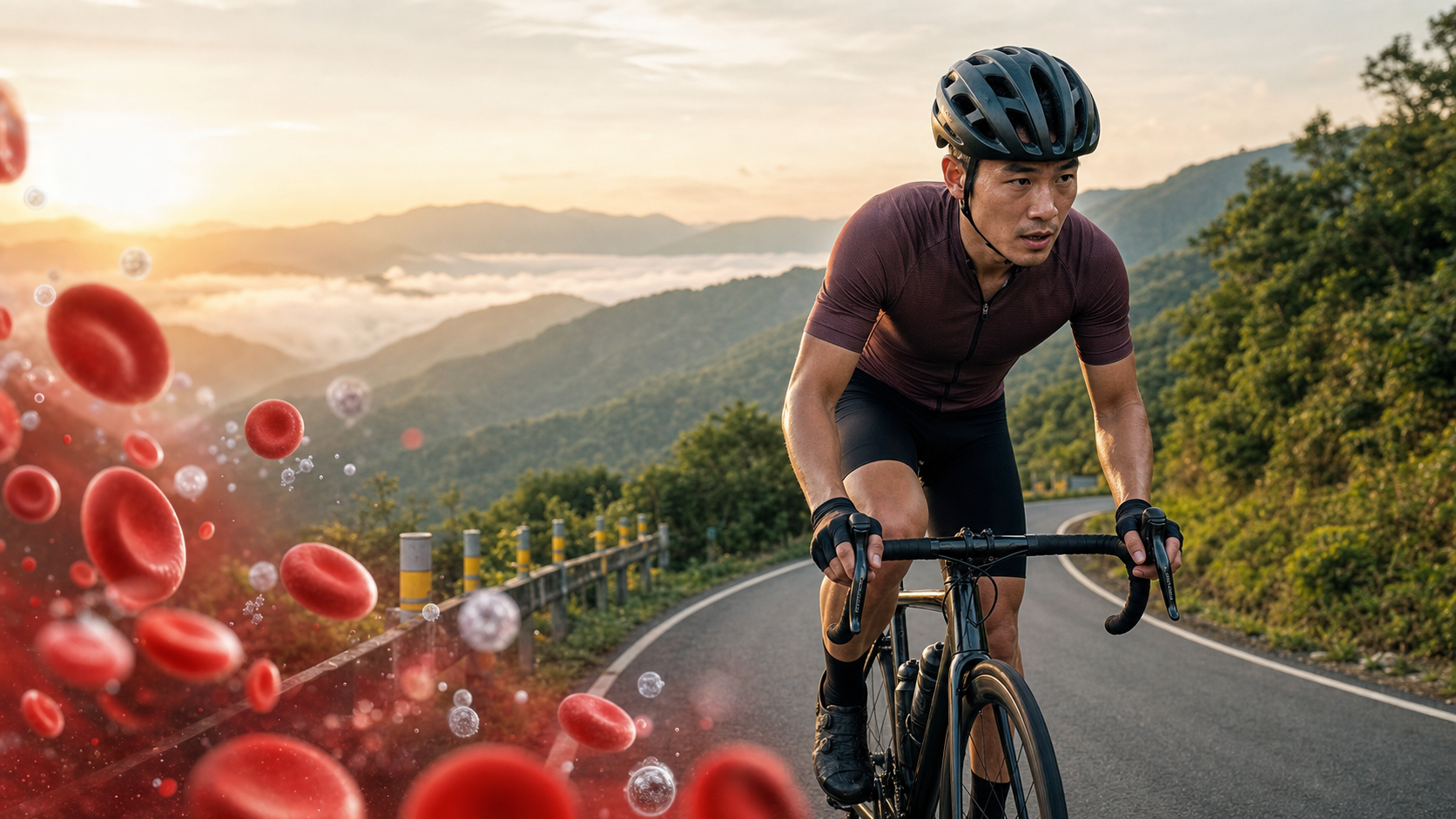
Starting with a Student’s Question
I once coached a female student in her early forties; let’s call her A. She had been cycling for five years, her training volume was consistent, and her power had been steadily improving. But that spring, she hit a plateau. She told me, “Coach, my FTP hasn’t dropped, but lately, whenever I push hard on a climb, I get especially breathless. My legs aren’t tired yet, but my whole body gives out first, and my heart rate spikes more easily than before.”
I asked her to get a complete blood test. The results showed her hemoglobin at 11.4 g/dL and ferritin at only 14. This wasn’t a training problem; her blood’s “oxygen-carrying capacity” had dropped. After three months of iron supplementation and dietary adjustments, her hemoglobin returned to around 13. The suffocating feeling on climbs disappeared, and her heart rate on the same climbs dropped by nearly ten beats per minute. Her comment—“So I wasn’t getting weaker; my blood just got worse”—made me decide to write this article properly.
Endurance sports, at their core, are a competition of “getting oxygen to the muscles.” The oxygen you breathe in needs to be carried by hemoglobin inside red blood cells, transported through the bloodstream to the working muscles, where it’s used to burn fat and glycogen to produce the watts you need for pedaling. If any link in this delivery chain fails, your performance suffers. Hemoglobin and hematocrit are the two most easily overlooked yet most critical numbers in this chain.
In this article, I’ll use my perspective as both a coach and a consultant to explain the physiology of oxygen transport, how anemia eats away at your performance, and the legal ways to improve your oxygen-carrying capacity—all in one go. It’s a long read, but worth your time.
The Physiology of Oxygen Transport: How Oxygen Gets Moved to the Muscles
What Exactly Are Hemoglobin, Hematocrit, and Red Blood Cells?
Let’s clarify the terms first so you won’t be confused when interpreting your blood test results later.
- Red Blood Cells (RBC): The most numerous cells in your blood, shaped like dimpled donuts, packed with hemoglobin. Their job is to carry oxygen and, along the way, remove some carbon dioxide.
- Hemoglobin (Hb): The iron-containing protein inside red blood cells. One hemoglobin molecule can grab four oxygen molecules. It’s the true star of “oxygen carrying.” On blood test reports, it’s usually written in g/dL.
- Hematocrit (Hct): The percentage of your total blood volume made up of red blood cells. Simply put, it’s the proportion of your blood that is “red blood cells,” with the rest being plasma (water, proteins, etc.).
Think of your blood vessels as a highway, red blood cells as trucks carrying oxygen, hemoglobin as the shelves on the trucks, and iron as the hooks on the shelves that actually hold the oxygen. Not enough trucks, not enough shelves, or rusty hooks—and the cargo (oxygen) won’t reach its destination (the muscles).
Why Oxygen-Carrying Capacity Directly Determines Your VO2max
Maximal oxygen uptake (VO2max) is one of the ceilings on endurance performance. It can be broken down into two parts: how much blood your heart pumps per minute (cardiac output) × how much oxygen the blood can carry and how much the muscles can extract.
Low hemoglobin means each unit of blood can carry less oxygen. Even if your heart is strong and pumps a large volume of blood each minute, if the trucks are empty, the total oxygen delivered to the muscles still drops. This is why people with anemia see a noticeable drop in VO2max and get especially breathless on climbs—it’s not that their heart and lungs aren’t trying; it’s that the blood itself can’t carry the load.
Conversely, this also explains why endurance athletes universally pay attention to hemoglobin and iron stores: with cardiovascular and muscular capacity held constant, pushing up the oxygen-carrying capacity per unit of blood directly raises your aerobic ceiling.
I often use this analogy with my students: VO2max is like a restaurant’s capacity to serve meals. The heart is the front-of-house delivery speed, hemoglobin is how many dishes each tray can hold, and the muscles’ extraction ability is the kitchen’s efficiency at preparing the food. Low hemoglobin means a smaller tray. Even if the front-of-house runs fast and the kitchen is powerful, the number of dishes that can be served per trip is still reduced. You can train the front-of-house to be lightning fast (stronger cardiovascular system), but if the tray is too small, the overall output is capped. That’s why many people with decent cardiovascular fitness can’t seem to progress—the problem is the tray, not the running.
Oxygen Delivery Is a “Serial” Chain
Let’s go a bit deeper. Oxygen travels from the air to the muscle mitochondria through several stages, often called the “oxygen transport chain” in exercise physiology: alveoli hand oxygen to the blood → hemoglobin grabs the oxygen → the heart pumps the blood out → capillaries deliver the blood to the muscles → hemoglobin releases the oxygen at the muscle → muscle cell mitochondria burn it to produce energy.
This chain is serial—if any link is a bottleneck, the whole system is held back by that link. Hemoglobin is especially critical because it determines both “grabbing oxygen” and “releasing oxygen after delivery to the muscle.” Interestingly, hemoglobin’s oxygen-releasing efficiency adjusts to the environment—when muscles become more acidic, hotter, and have more carbon dioxide during high-intensity exercise, hemoglobin is more willing to “unload” oxygen to the muscles working hard. This is a clever automatic regulation by the body. But the prerequisite is that you have enough hemoglobin in your blood to grab oxygen and unload it. Without enough raw material, even the smartest regulation is like trying to cook without rice.
An Easily Confused Key Point: Athlete’s “Dilutional Pseudoanemia”
Let me clear this up for many people. Regular endurance training increases plasma volume (the body “adds water” for heat dissipation and circulatory efficiency). With more plasma, the blood is diluted, making hemoglobin and hematocrit numbers look low on a blood test. But this is actually a healthy adaptation—the total number of red blood cells hasn’t really decreased. In sports science, this is called “sports anemia” or “dilutional anemia.”
This means you can’t just look at a single hemoglobin value and conclude you’re anemic. You need to interpret it alongside ferritin, symptoms (unusual breathlessness, fatigue, elevated heart rate), and whether you’re experiencing a training plateau. What you should truly worry about is anemia caused by “insufficient iron, a shortage of raw materials for blood production,” not the benign phenomenon of training-induced blood dilution.
Normal Ranges and Anemia: How to Read the Numbers
The World Health Organization (WHO) has clear definitions for normal hemoglobin ranges and anemia thresholds. I’ve compiled them into the table below so you can compare with your own blood test report. Please note these are reference values for the general adult population; actual interpretation should still be left to a physician, as individual differences, ethnicity, and pregnancy can all affect the numbers.
| Population | Normal Hemoglobin Reference Range (g/dL) | WHO Anemia Threshold (g/dL) |
|---|---|---|
| Adult males | Approximately 13–18 | Below 13.0 |
| Adult females (non-pregnant) | Approximately 12–16 | Below 12.0 |
| Pregnant females | Lower limit usually relaxed | Approximately below 10–11 |
Numbers are just a starting point. For athletes, I care more about trends and iron stores. Here are the indicators I look at together in practice and what they mean:
| Indicator | General Meaning | Why Athletes Should Care |
|---|---|---|
| Hemoglobin Hb | Main oxygen carrier in blood | Directly related to oxygen uptake and climbing performance |
| Hematocrit Hct | Proportion of red blood cells in blood | Too low affects oxygen carrying; too high makes blood viscous and increases circulatory strain |
| Red Blood Cells RBC | Number of red blood cells | Basic indicator of whether blood production is sufficient |
| Ferritin | The body’s iron “savings” | Iron stores drop first, then hemoglobin follows; it’s the earliest warning light |
| MCV | Average red blood cell volume | Usually smaller with iron deficiency, larger with B12/folate deficiency; helps determine anemia type |
Key concept: Ferritin is like your savings account; hemoglobin is like your cash flow. Savings run out first, and only later does cash flow become a problem. Many endurance athletes already have low ferritin while their hemoglobin is still “normal”—at this point, they start feeling fatigued, recovery slows, and training feels flat. By the time hemoglobin drops to the anemia threshold, the iron deficiency has often been going on for a long time. So I always tell my students: Don’t wait for the hemoglobin red light to take action. Low ferritin is a yellow light—start paying attention.
Look at ranges and trends, not decimal points. 13.2 today and 13.0 next month is normal fluctuation, not a decline.
How Anemia Eats Away at Your Performance
Symptom Checklist: How Many Do You Have?
In endurance athletes, the symptoms of iron deficiency or anemia are often very “non-specific” and easily mistaken for just being overtrained. Here’s a common checklist for you to compare against:
- More breathless than before at the same intensity; feeling like you “can’t catch your breath”
- Heart rate runs high at low-to-moderate intensity (resting or exercise heart rate inexplicably elevated)
- Legs quickly go weak when pushing hard on climbs; lactate sensation comes on early
- Slower recovery after training; especially tired the next day
- Poor daytime energy, difficulty concentrating, dizziness
- Pale complexion and lower eyelids; brittle nails
- Noticeably more fatigued after menstruation in women
A single symptom doesn’t mean much, but if you hit several of these and your training has plateaued, it’s worth getting a blood test.
A Real Case Comparison
Going back to student A from the beginning, I’ve put together a comparison of her subjective and objective changes before and after iron supplementation to give you a better feel (values are her personal before-and-after comparison, not a universal standard):
| Aspect | Before Iron Supplementation | After ~3 Months of Iron Supplementation |
|---|---|---|
| Hemoglobin | 11.4 g/dL | Approximately 13 g/dL |
| Ferritin | 14 | Clearly recovered |
| Heart rate on same climb | High, easily maxed out | Dropped by approximately 8–10 bpm |
| Suffocating feeling on climbs | Noticeable, couldn’t catch breath when pushing | Greatly improved |
| Recovery | Still tired the next day | Returned to normal |
Did you notice—her power (FTP) barely changed before and after iron supplementation. The muscle strength was always there. What really changed was that “at the same wattage, she felt much more comfortable, and her heart rate was much lower.” This is the classic sign of improved oxygen-carrying capacity: not becoming stronger, but the same output now costs less. For endurance sports, this kind of efficiency gain is often more valuable than purely adding watts.
Another Case: A Vegetarian Male Cyclist
Many people think iron deficiency is a women-only issue, but that’s not true. Another student of mine, let’s call him B, was in his thirties and had been fully vegetarian for two years, with regular weekend group rides on Beiyi Highway and Fengguizui. His complaint when he came to me was typical: “Coach, I haven’t been slacking in training, but the second half of long rides completely falls apart. The last 20 kilometers feel like I’ve been drained dry.”
His hemoglobin was actually at the low end of normal, but his ferritin was very low. The problem was that he was vegetarian but hadn’t been deliberate about his food combinations—he ate plenty of non-heme iron from beans and dark leafy greens, but often paired them with tea or coffee, and didn’t pay attention to vitamin C. In other words, he was “eating iron but blocking its absorption at the door.”
I didn’t tell him to give up vegetarianism—that’s his value choice, and it’s entirely compatible with athletic performance. The adjustments we made were simple: deliberately pair iron-rich plant foods (red amaranth, dark leafy greens, beans, black sesame) with vitamin C-rich fruits, separate tea and coffee from meals by an hour, and after a doctor’s assessment, take a short course of iron supplements. A few months later, the “drained dry” feeling in the latter part of long rides had noticeably improved. B’s example shows us: Being vegetarian isn’t the problem; being vegetarian without knowing how to combine foods is.
Why Women, Vegetarians, and Heavy Sweaters Are at Higher Risk
Several groups are especially prone to iron deficiency, and they’re common among Taiwan’s athletic population:
- Women of childbearing age: Menstruation causes monthly iron loss; over time, this is the largest high-risk group.
- Vegetarians/plant-based eaters: Plant-based non-heme iron has lower absorption rates; without deliberate pairing, levels can stay low long-term.
- Endurance athletes who sweat heavily and for long periods: Iron loss and impaired absorption can result from sweat, minor gastrointestinal bleeding, and exercise-induced inflammation.
- Growing adolescent athletes: Growth plus training demands create especially high iron needs.
If you fall into any of these categories and have the symptoms mentioned earlier, moving iron supplementation up your priority list makes sense.
I also want to add a mechanism that’s easy for endurance athletes to overlook: prolonged, high-impact exercise (especially running, but long rides also count as prolonged exercise stress) increases iron loss or reduces absorption through several pathways—including trace iron lost in sweat, red blood cell destruction from repeated foot strikes, minor gastrointestinal bleeding, and a temporary inflammatory response that makes the body “lock away” iron and prevent its absorption and use. Each of these alone is small, but accumulated over time, combined with high training volume and insufficient dietary intake, iron stores can be slowly depleted. This is why “I’m eating iron, but I’m still deficient” isn’t uncommon among endurance athletes—your losses are greater than you think. Taiwan’s summers are hot and humid, and a two-to-three-hour long ride leaves you drenched in sweat; this loss effect shouldn’t be underestimated.
Hematocrit Isn’t the Higher the Better: Balance Is Key
I’ve been emphasizing that hemoglobin and hematocrit need to be sufficient, but let me balance that out so you don’t overcorrect. Hematocrit that’s too high—blood that’s too “thick”—actually backfires: the blood becomes viscous, flow resistance increases, the heart has to work harder to pump, microcirculation efficiency can actually drop, and health risks rise. So what we’re after is never “higher is better,” but rather maintaining hemoglobin and hematocrit within a healthy normal range with adequate iron stores.
This is also why attempts to “thicken” the blood with banned substances or extreme methods aren’t just against the rules—they can push you into danger. The body has its own optimal balance point. Our job is to provide enough raw materials and good recovery so the body naturally maintains that sweet spot, not to forcibly break it.
Legal Ways to Improve Oxygen-Carrying Capacity
This is the main event of the article. First, the most important principle: everything we discuss is legal and healthy. Blood doping methods like exogenous erythropoietin (EPO) or blood transfusions are prohibited at all times under World Anti-Doping Agency (WADA) rules. Getting caught can lead to multi-year bans, and they carry real health risks. This article won’t touch them at all. What we’re going to do is use diet, training, and lifestyle to maximize the body’s own ability to produce blood.
Method 1: Eat Enough Iron, and Eat It Right (A Practical Guide for Taiwan’s Eating-Out Crowd)
There are two types of iron, with very different absorption rates:
- Heme iron: From animal sources, such as red meat, pork liver, duck blood, pork blood, clams, and oysters. High absorption rate.
- Non-heme iron: From plants, such as dark leafy greens, beans, red amaranth, and black sesame. Lower absorption rate, but can be significantly improved with proper pairing.
Tips for boosting absorption—totally doable in Taiwan’s eating-out environment:
- Pair with vitamin C: Research shows that consuming about 50–100 mg of vitamin C in the same meal significantly improves iron absorption. In practice, this means having a guava, a serving of cherry tomatoes, a glass of orange juice, or some kiwi after a meal with iron-rich foods.
- Avoid inhibitors: Tannins in tea and coffee, as well as calcium (dairy products, calcium supplements), inhibit iron absorption. The habit is—avoid strong tea, coffee, and large amounts of milk/calcium supplements for one hour before and after iron-rich meals. Taiwanese people love a hand-shaken tea after meals; this habit works against iron absorption. At least separate the timing.
I’ve put together a list of easily accessible iron sources for people who eat out, all available at convenience stores, buffet restaurants, and street food stalls:
| Food | Type | Notes for Taiwan Context |
|---|---|---|
| Beef, pork (lean) | Heme iron | Easy to get as a main dish at buffets or bento shops |
| Pork liver, duck blood, pork blood | Heme iron | Common at mala hot pot and street food stalls; high absorption |
| Clams, oysters | Heme iron | Clam soup, oyster omelet |
| Red amaranth, spinach, sweet potato leaves | Non-heme iron | Must-order blanched greens at buffets; remember to pair with C |
| Black sesame, red beans, black beans | Non-heme iron | Good for breakfast or sweet soup supplements |
| Guava, tomato, orange, kiwi | Vitamin C | Eat with iron-rich meals to boost absorption |
Looking at a food list can still feel abstract, so let me turn it into a “full-day eating-out example,” all with combinations easily found in Taiwan. This isn’t a strict prescription; it’s to help you grasp the rhythm of “iron with C, avoid inhibitors”:
| Time | Eating-Out Combo | Oxygen-Carrying Focus |
|---|---|---|
| Breakfast | Tuna egg crepe + unsweetened soy milk + a guava | Guava provides C, boosting plant iron absorption |
| Morning | Drink hand-shaken tea if you want, but separate it from breakfast by one hour | Avoid tea tannins blocking breakfast iron |
| Lunch | Buffet: lean meat main dish + blanched red amaranth/sweet potato leaves + tomatoes | Heme iron as the base, tomatoes provide C |
| Afternoon | If you want coffee, keep it separate from meals, don’t take with iron supplements | Both coffee and calcium suppress iron absorption |
| Dinner | Clam soup or mala hot pot with duck blood + dark leafy greens + orange | High-absorption heme iron + C |
| Before bed | If taking iron supplements, follow medical advice; avoid large amounts of milk at the same time | Calcium and iron compete for absorption; best to separate |
The logic of this arrangement is simple: put easily absorbed iron in main meals, pair vitamin C right alongside the iron, and move tea, coffee, and large amounts of calcium away. You don’t need to obsess over every meal; getting the big picture right already puts you ahead of most people.
Method 2: When Needed, Supplement Iron Under Professional Guidance
For people who’ve been deficient for a long time, diet alone may be too slow. According to general sports nutrition and sports medicine recommendations: when ferritin is low (many sources use below 30 as a threshold for concern), iron supplementation is often considered. Supplementation strategies in the literature generally fall in the range of tens of milligrams of elemental iron per day, and courses often need six to twelve weeks to effectively replenish iron stores and hemoglobin—iron replenishment is inherently slow; it’s not something that works in two days.
But please remember two things:
- Get a blood test first, then supplement. More iron isn’t better. Excess iron can accumulate, cause harm, and even lead to toxicity. Whether you need supplementation, how much, and for how long should be determined by a physician or nutritionist based on your blood values. Don’t self-prescribe and gulp down high doses.
- The principles of pairing with vitamin C and avoiding calcium, strong tea, and coffee apply equally to iron supplements.
In Taiwan, this is actually quite convenient. Under National Health Insurance, getting blood tests for hemoglobin and ferritin isn’t difficult; family medicine or hematology clinics can arrange it. If you have symptoms, don’t put it off. One blood draw covering a CBC plus ferritin gives you the most complete picture.
Method 3: Altitude/Hypoxic Stimulation of Blood Production (Principles and Reality)
The body has a clever mechanism for dealing with low oxygen: at high altitude, where the air is thinner and oxygen concentration is lower, the kidneys secrete natural erythropoietin (EPO), stimulating the bone marrow to produce more red blood cells, thereby increasing the blood’s oxygen-carrying capacity. This is the physiological basis of “altitude training.”
Key points:
- Altitude training itself is not against the rules. It relies on the body’s natural response and involves no external substances or blood manipulation, so it’s a legal, natural method under sports regulations—fundamentally different from EPO injections or blood transfusions.
- After exposure to a hypoxic environment, hemoglobin and total hemoglobin mass typically begin to rise within a few days to one or two weeks. The actual magnitude is related to the “hypoxic dose” (altitude × duration), and individual variation is large. It’s not a guarantee of getting stronger just by staying there for a few days.
- A common strategy is “live high, train low”: sleep at altitude to accumulate the blood-production stimulus, and train at lower altitude to maintain training quality.
For the average Taiwanese cyclist, long-term altitude training camps aren’t realistic. But you can understand the principle and benefit indirectly in a more grounded way: regular endurance training itself promotes long-term adaptations in plasma and red blood cells. Rather than chasing altitude, it’s better to first take care of your iron stores, build training volume steadily, and get enough sleep and recovery—these are the real bottlenecks for most people.
Method 4: Don’t Neglect Sleep, Recovery, and Overall Nutrition
Blood production isn’t just about iron. Vitamin B12 and folate are also important raw materials for red blood cell production, and protein is the structural framework of hemoglobin. Long-term inadequate calorie intake (especially for those who severely restrict calories while training heavily for weight loss) means the raw materials for blood production are all in short supply, making it hard to maintain hemoglobin.
So the overall strategy is: eat enough total calories and protein, get iron and blood-building vitamins in place, and get enough sleep so the bone marrow can work properly. When these fundamentals are all covered, oxygen-carrying capacity will steadily rise.
I especially want to say something to those students who are “training hard while aggressively cutting weight.” In recent years, sports science has placed great emphasis on the concept of “low energy availability”—when your calorie intake chronically falls short of training expenditure, the body enters energy-saving mode, prioritizing resources for life-sustaining functions. Blood production, hormones, bones, and immunity can all be sacrificed. In this state, no matter how diligently you supplement iron, the overall pool of raw materials for blood production is still empty, and hemoglobin will struggle to stay at good levels. This is why I dislike seeing students severely restrict their diets for weight loss: you think you’re getting faster by getting lighter, but you might actually be quietly undermining your oxygen-carrying capacity and recovery—a losing trade-off. Eating enough is the foundation of all progress.
Common Mistakes and Corrections
In all my years coaching, I’ve seen too many people go down wrong paths when it comes to “oxygen-carrying capacity.” Here are the most common ones:
Mistake 1: Supplementing Iron Heavily Without a Blood Test
Many people hear “iron supplementation can make you stronger” and immediately buy iron pills and start taking them. The problem is—you don’t even know if you’re deficient. Excess iron can accumulate, cause gastrointestinal discomfort, and even more serious problems.
Correction: Get a blood test first (CBC + ferritin), then decide based on the data. Supplement only if deficient, and follow up after supplementing.
Mistake 2: Panicking Over Exercise-Induced Dilution and Thinking It’s Anemia
After regular training, hemoglobin numbers drop slightly, and many people panic, thinking they’re anemic, and start randomly supplementing or cutting back on training.
Correction: Understand that dilutional pseudoanemia is a benign adaptation. Interpret it alongside ferritin and symptoms. If numbers are slightly low but iron stores are normal and there are no symptoms, usually no action is needed.
Mistake 3: Pairing Iron-Rich Meals with Coffee, Strong Tea, or Milk
A Taiwanese daily habit: bento with black tea, a latte after a meal. This is exactly what suppresses iron absorption.
Correction: Avoid tea, coffee, and large amounts of calcium for one hour before and after iron-rich meals. Instead, pair with vitamin C-rich fruits.
Mistake 4: Giving Up After Only Two or Three Weeks of Supplementation
Rebuilding iron stores is inherently slow, often requiring six to twelve weeks. Many people stop after two weeks because they don’t feel anything, which makes all their effort pointless.
Correction: Complete the full course as prescribed by your doctor, and get a follow-up blood test midway and after completion. Don’t rush to judge whether it’s working.
Mistake 5: Ignoring Symptoms and Pushing Through Training
When you’re already abnormally breathless, recovering poorly, and your heart rate is elevated, but you blame it on “training too hard lately” and keep adding volume, you end up getting worse and worse, even pushing yourself into deeper fatigue.
Correction: If you experience persistent, noticeable fatigue and declining performance, first rule out physiological causes (including oxygen-carrying capacity and iron) before simply adding more training volume.
Actionable Advice for Readers at Different Levels
General Exercise Enthusiasts Just Starting Out
The last thing you need to worry about right now is advanced topics like altitude training. Your homework is:
- Eat three balanced, sufficient meals a day, and deliberately include good iron sources like red meat, duck blood, or clams a few times a week.
- Pair blanched greens with a vitamin C-rich fruit to boost plant iron absorption.
- Separate hand-shaken tea and coffee from iron-rich meals.
- If you persistently feel abnormally fatigued or especially breathless on climbs, go to a family medicine clinic for a blood test. Don’t scare yourself, and don’t randomly self-supplement.
Advanced Cyclists with a Significant Training Load
You’re already pursuing progress, and oxygen-carrying capacity deserves your serious attention:
- At least once a year, get a full CBC plus ferritin to establish your baseline and track trends.
- During high-volume training seasons or after menstruation for women, pay special attention to fatigue and recovery signals.
- Low ferritin is a yellow light. Discuss dietary adjustments or supplementation strategies with a doctor or nutritionist. Don’t wait for the hemoglobin red light.
- Treat sleep, total calories, and protein as the foundation of blood production.
Those with Chronic Conditions or Special Circumstances
If you have gastrointestinal diseases, chronic conditions, are taking medication, or suspect anemia has another underlying cause (e.g., persistently low hemoglobin of unknown origin), this goes beyond the scope of coaching and dietary adjustment. Anemia can be a sign of other health issues. It must be evaluated comprehensively and managed individually by a physician to find the root cause—don’t just mask it with iron supplementation. For people with chronic conditions like diabetes, heart disease, or hypertension, exercise and nutrition plans need to be individualized and coordinated with your medical team. The general principles in this article cannot replace your primary care physician’s judgment.
Frequently Asked Questions (FAQ)
These are the questions I get asked most often by my students. Here they are, all in one place.
Q1: How Often Should I Get a Blood Test?
For serious endurance athletes, my general rule is at least once a year for a complete CBC plus ferritin, as part of your annual health check. If you’re in a high-risk group (women of childbearing age, plant-based eaters, very high training volume), or if you’ve previously tested low and are tracking iron supplementation, the frequency goes up—for example, testing again after completing an iron supplementation course to confirm effectiveness. People without symptoms and consistently stable values don’t need frequent blood tests to scare themselves.
Q2: Will Donating Blood Make Me Weaker?
Donating blood does temporarily lower your hemoglobin and iron stores, and your body needs time to replenish the red blood cells and iron. For generally healthy people, this is recoverable, and donating blood is a meaningful act of kindness—don’t stop doing it out of fear. But if you’re preparing for a race, or your iron stores are already low, time your donations to avoid important events and give your body enough recovery time. If in doubt, get a blood test first and then decide.
Q3: Isn’t Eating Red Meat Bad for My Health? I’m Hesitant to Eat More.
Red meat is a highly absorbable iron source, but it’s true that you shouldn’t eat it in unlimited quantities. Balance is key: moderate red meat combined with duck blood, clams, dark leafy greens, and beans gives you diverse sources, allowing you to cover both iron needs and overall dietary health. If you truly don’t eat red meat, you can still manage well with seafood, organ meats, and “plant iron + vitamin C” combinations—it just requires more deliberate pairing.
Q4: Is Higher Hemoglobin Always Better? I Want to Push It to the Max.
No. Hemoglobin that’s too high, and hematocrit that’s too high, make the blood more viscous, increasing circulatory strain and risk. What we’re after is “returning to and maintaining a healthy normal range,” not pushing it upward without limit. Being within a healthy range with adequate iron stores is the ideal state. Trying to artificially push hemoglobin to abnormally high levels has no benefit and risks crossing into doping territory and health hazards.
Q5: What If Iron Supplements Cause Stomach Discomfort or Constipation?
Gastrointestinal discomfort, constipation, and dark stools are common reactions to iron supplements. Dark stools are usually harmless, but GI discomfort makes many people give up. What you should do isn’t stop on your own or randomly adjust the dose, but go back and discuss it with the prescribing doctor or pharmacist—adjusting the formulation, dosage, timing, or switching to every-other-day dosing are all options they can evaluate for you. Iron supplementation is a long-term effort, and finding a way you can stick with it is important.
Q6: Do Commercial “Iron Drinks” or “Health Supplements” Work?
Some iron-containing supplements or functional drinks are indeed convenient, but two principles remain unchanged: First, confirm you’re actually iron deficient—supplementing without deficiency is pointless and risks excess. Second, check the actual elemental iron content and other ingredients carefully; don’t be swayed by marketing hype. Rather than spending money on a pile of questionable supplements, it’s better to nail down the iron-with-C pairing in your daily diet. For significant deficiencies, let a doctor evaluate and use proper pharmaceutical iron. Natural food is always the first line; supplements are support, not the main act.
Q7: I Ride Regular Routes in Taiwan. Do I Need Altitude Training?
For the vast majority of amateur cyclists, the answer is no. Altitude training camps are costly, variable, and the effects vary by individual—and your performance bottleneck is almost certainly not there. Get the fundamentals—iron, sleep, total calories, training volume—solid first. The gains you can achieve there are far greater and more practical than chasing altitude.
Conclusion: Pushing Up the Invisible Ceiling
I often say that training is about refining the “engine,” but oxygen-carrying capacity determines how much “oxygen fuel” you can feed that engine. You can build beautiful power numbers, but if your blood can’t carry the oxygen, those watts won’t hold up on long climbs.
The good news is that for most people, improving oxygen-carrying capacity comes down to the most down-to-earth things: eating enough iron and eating it right, supplementing under professional guidance when needed, sleeping well, eating enough, and training consistently. No banned substances, no expensive trips to altitude—you can steadily push up this invisible ceiling.
Thinking back to student A from the beginning, she later told me that the most meaningful change wasn’t getting faster, but “finally not having that panicked feeling of not being able to catch my breath on climbs.” When your body’s oxygen delivery flows smoothly, exercise itself becomes enjoyable again. That, more than anything, is what I want to bring to every student.
If you’ve read this far and are starting to wonder if you’re stuck at the oxygen-carrying stage—don’t guess. Go get a blood test and let the data speak. Eat enough iron, take care of your blood, and leave the rest to your dedicated training to shine. See you on the next climb.
This article is educational content and cannot replace individual diagnosis and treatment advice from a physician, physical therapist, or nutritionist.
References
- Normal Hemoglobin Ranges and WHO Anemia Definitions: StatPearls, NCBI Bookshelf
- Iron Supplementation for Athletes, Ferritin, and Vitamin C Absorption Enhancement: Australian Sports Commission – Iron
- Altitude/Hypoxia and Hemoglobin Response, EPO and Anti-Doping Regulations: USADA – Blood Doping and EPO FAQ, Frontiers in Sports and Active Living – Altitude and Erythropoietin
Related Reading
- Blood Physiology for Cyclists: The Science of Hemoglobin, Red Blood Cells, and Altitude Training
- Sports Anemia and Blood Health: A Coach’s Guide to Understanding the Mechanisms, Identification, and Management of Exercise-Induced Anemia
- Iron Nutrition: The Most Overlooked Key Micronutrient for Endurance Athletes
- Exercise-Induced Anemia: The Complete Guide to Iron Management for Endurance Athletes
CT 喇低賽) 武嶺牽車 才是王道 西進牽車四小時內秘訣 攝手位置 如何判斷 防抽筋小秘訣
7 年前
FTL 與 SYB 車隊專訪 西進武嶺 實用攻略分享! 2小時 如何練?!你不知道的眉角!新手準備武嶺必看 EP1 | 實力派女車友 | 精華版 | 公路車 | CTYeh
4 年前
西進武嶺 8000名單車友數據分析 PART1 | 從新手到高手數量/瓦數/推力比/FTP推力比/功率計使用率 大解析 | 公路車 | CTYeh
5 年前
CT 喇低賽) 單車 比賽總是沒照片? 攝影師的觀點大公開 姿勢就是力量! 請加速1.25倍收看
7 年前
Never Stop 西進武嶺 前後雙機 完整全程錄影 訓練台 實境
8 年前
#公路車 #Vo2Max #最大攝氧量 測驗 體驗 | 心肺測試
6 年前
西進武嶺 免費訓練分析服務 Intervals | 練不夠還是練過頭?你哪一種類型選手?AI模型告訴你! | 備戰神器 | 公路車 訓練 | CT Yeh
4 年前
西進武嶺 自製新版AI配速表產生器 x 賽前攻略 抱佛腳! 沒有功率計也可以產生配速表嗎?有什麼其他眉角賽前要注意的呢? | 西進武嶺 / 東進武嶺 KOM 攻略 | 公路車 | CT Yeh
4 年前