Thermoregulatory Physiology: How the Body Dissipates Heat During Exercise, and the Fine Line Between Heat Exhaustion and Heatstroke
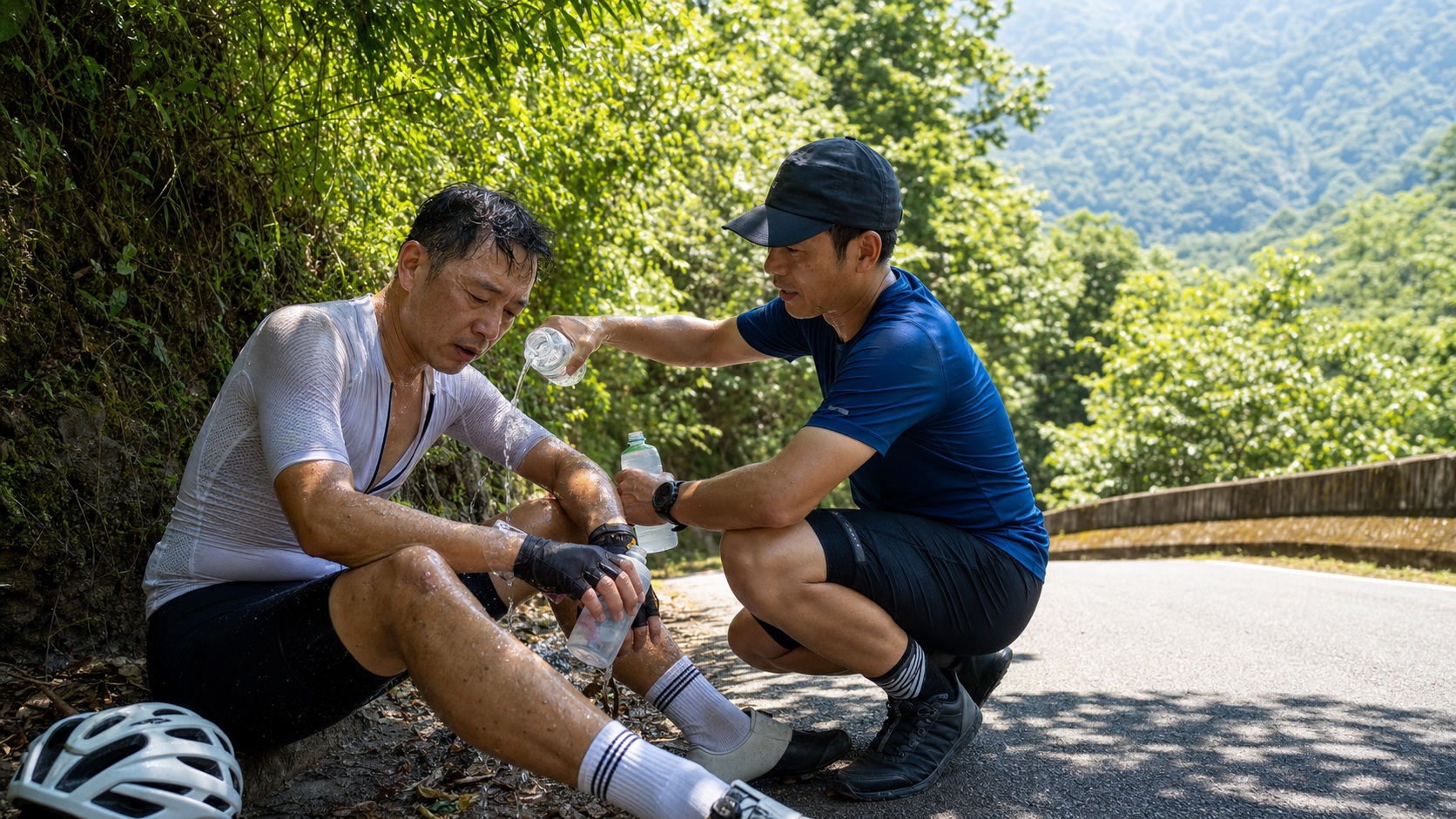
First, an Afternoon I’ll Never Forget
It was an early Saturday morning in early July. I was taking a student in his early forties, weighing about 82 kg, to ride the Yangjin Road (Yangmingshan–Jinshan). He trained regularly at the gym, had solid muscle mass and good explosive power, and believed, “I sweat a lot, which means I’m great at cooling down.” That day, the temperature was around 33°C with humidity near 80%. We climbed steadily from the base of the mountain. About halfway up, I noticed he was talking less, his pedaling rhythm was falling apart, and his water bottle had barely been touched. Not long after we continued climbing, he suddenly said, “Coach, I’m really dizzy, and I think I just felt like throwing up.” His face was pale, and his skin felt cold and clammy to the touch.
The first thing I did wasn’t telling him to push through, nor telling him to chug a sports drink and finish the last stretch. Instead, I had him stop immediately, sit down in the shade, take off his helmet, pour water over his body, and start rehydrating with small, frequent sips of water and sodium. Twenty minutes later, he recovered. Afterwards, I told him: Today you were very close to heat exhaustion, and one step past heat exhaustion is heat stroke, which can be fatal. Sweating a lot doesn’t mean you’re great at cooling down—it means you’re rapidly losing water and electrolytes.
In this article, I want to explain clearly how the body actually cools itself during exercise. Because in Taiwan’s hot, humid environment, understanding thermoregulatory physiology isn’t an academic interest—it’s the foundation of survival and performance. I’ll start with how core temperature is regulated, then discuss what sweating actually does, then draw the line between “heat exhaustion” and “heat stroke” that so many people get confused about, and finally give concrete action recommendations for different levels of athletes.
Foundational Concept: Your Body Is a Machine That Cares Deeply About “Core Temperature”
Why Core Temperature Matters So Much
The human body has one stubborn goal: keeping core temperature (the temperature of vital organs like the brain, heart, and viscera) within a narrow range around 37°C. Skin temperature can fluctuate widely with the environment, but once core temperature deviates too far, enzyme activity, nerve conduction, and cell membrane stability all start to break down.
During exercise, there’s a harsh truth: the energy efficiency of muscle contraction isn’t actually high—only about 20% to 25% of the energy becomes mechanical work (the force that actually moves you forward), and the remaining 75% or more is all converted to heat. In other words, when you’re putting out 250 watts of mechanical power on a climb, your body is simultaneously generating heat far exceeding that number. If that heat can’t be dissipated, core temperature keeps climbing.
So exercise cooling is, at its core, a balance sheet of “heat production vs. heat dissipation.” When the balance is maintained, core temperature stabilizes at a level slightly above resting (e.g., 38 to 38.5°C, which is actually normal and acceptable); once heat production consistently exceeds dissipation, core temperature rises out of control—and that’s the common starting point of all heat injuries.
The Four Pathways the Body Uses to Dissipate Heat
The body gets rid of heat through four physical mechanisms. Understanding them is the only way to grasp why Taiwan’s humid heat is so difficult to deal with.
| Cooling Mechanism | Principle | Role During Exercise | Effectiveness in Taiwan’s Humid Heat |
|---|---|---|---|
| Radiation | Body surface releases heat outward as infrared | Primary mechanism at rest and in cool environments | Nearly ineffective when ambient temperature approaches or exceeds skin temperature |
| Conduction | Heat transfers directly to objects in contact | Minor contribution (unless soaking in cold water) | Significant only with ice packs, dousing, or immersion |
| Convection | Moving air or water carries heat away from the skin | Relative wind speed helps a lot when cycling | Helpful, but greatly diminished in muggy, windless conditions |
| Evaporation | Sweat absorbs large amounts of heat as it turns into vapor | The absolute primary mechanism during high-intensity exercise | The less effective as humidity rises—Taiwan’s biggest weakness |
Here’s the key point: when ambient temperature approaches or exceeds skin temperature (about 33 to 35°C), three of the four pathways—radiation, conduction, and convection—nearly shut down entirely, because heat doesn’t flow from a cold place to a hot place. At that point, the body is left with almost only evaporation (i.e., sweating) as its cooling pathway. And evaporation efficiency depends heavily on air humidity—the more humid the air, the harder it is for sweat to evaporate, and the worse the cooling efficiency.
This is why summer in Taiwan feels so “toxic.” The same 33°C in a dry inland region versus the Taipei Basin at 80% humidity puts completely different levels of stress on your body’s cooling system. When training in Taiwan, you absolutely must factor “humidity” into your judgment—don’t just look at the number on the thermometer.
The Hypothalamus: Your Body’s Thermostat
Behind this entire cooling system is a master controller: the hypothalamus in the brain. Think of it as the thermostat control unit of your home air conditioner—it constantly receives signals from skin temperature receptors and blood temperature. Once it detects core temperature drifting upward, it issues two commands: first, dilate blood vessels in the skin to bring more warm blood to the surface for cooling; second, activate sweat glands to begin perspiring.
Here’s a trade-off many people overlook: cooling and athletic performance are competing for the same pool of blood. When the body diverts large amounts of blood flow to the skin for cooling, the blood returning to the heart—and thus available to be sent to working muscles—decreases. This is why, when exercising in hot conditions, you feel like the same pace feels more breathless and your heart rate is higher—your circulatory system is being forced to “supply oxygen to muscles and supply blood for cooling at the same time,” burning the candle at both ends. Understanding this, you won’t try to hold the same power or pace on a hot day as you would on a cool day, because physiologically, that’s simply an unfair comparison.
The Sweating Mechanism: A Precision Cooling System That Can Overdraw
Sweat Isn’t Water—It’s Fluid Containing Electrolytes
Many people think sweating is just losing water, but sweat actually contains electrolytes like sodium, chloride, potassium, and magnesium, with sodium being the most heavily lost and the most impactful. Sweat composition varies from person to person—it’s an individual trait determined by both genetics and heat acclimatization.
According to sports science data, athletes’ sweat rates vary widely, roughly falling between 0.75 and 2 liters per hour; around 1 liter per hour is common in mild conditions, but when temperatures exceed 30°C, sweat rates can exceed 2 liters per hour. The sodium concentration in sweat varies even more dramatically between individuals, ranging from about 200 mg per liter to over 2000 mg per liter. (Sources cited at the end: USA Cycling and related references.)
Multiply those two variables together and you’ll see the point: an athlete with a high sweat rate who is also the “salty sweat type” (high sodium concentration in sweat) will lose sodium at an alarming rate during prolonged exercise in hot conditions. This also explains why some people drink plenty of plain water yet still cramp, feel dizzy, or even feel worse the more they drink—because they’re replacing water, but what they’re losing is “water plus large amounts of sodium,” which dilutes their blood sodium concentration further and further.
Why “White Salt Crystals on Your Jersey” Is Worth Noting
If, after a ride or a run, you see rings of white salt residue on your dark-colored jersey, or your skin around the eyes and temples feels salty and gritty to the touch, that means you’re likely the “salty sweat type.” These individuals need to be more aggressive with sodium replenishment in their fueling strategy—water alone isn’t enough.
I often remind my students of one concept: the sensation of thirst typically lags behind the actual level of dehydration. By the time you feel really thirsty, your body has often already been in a dehydrated state for a while. And in high heat, dehydration creates a vicious cycle—blood volume drops, the heart pumps less blood per beat, heart rate is forced up to compensate (you’ll notice your heart rate inexplicably spiking at the same intensity), and blood flow to the skin for cooling decreases, causing core temperature to rise faster.
The Real Performance Impact of Dehydration
Dehydration isn’t just “uncomfortable”—it directly eats into your power output and decision-making. According to sports science data, even just 2% dehydration (roughly 1.4 kg of body weight loss for a 68 kg person) can reduce power output by about 10%, while heart rate, core temperature, and perceived exertion all rise. This is especially dangerous on technical descents that require focus, in the fight for position in the peloton, and during sprints—you’re not just riding slower; your reactions and judgment are also dulled.
This is why I require my athletes to develop a habit: weigh yourself before and after long, high-intensity rides or runs. For every 1 kg lost after exercise, you can roughly consider it as about 1 liter of fluid lost. That number will tell you whether your hydration and sodium intake today were sufficient.
I also want to add a detail many people don’t realize: dehydration makes your “cooling capacity” even worse. As mentioned earlier, cooling relies on blood carrying heat from the core to the skin, and on sweat evaporation. Dehydration reduces total blood volume, makes the blood thicker, reduces the blood flow that can be directed to the skin for cooling, and may also decrease sweat output. So you fall into a vicious cycle: the more dehydrated you are, the less heat you can dissipate, the higher your core temperature rises, the more you sweat, and the more dehydrated you become. Once this cycle gets going, willpower alone won’t pull you out of it—only stopping, cooling down, and refueling can break it. So hydrating and replacing sodium isn’t just about “replenishing what was lost”; it’s also about keeping your cooling system itself operational.
The Line: What’s the Real Difference Between Heat Exhaustion and Heat Stroke
This is the part of the article I most want to make clear, because it involves the judgment between “when you can handle it yourself” and “when you must call an ambulance immediately”—it’s a matter of life and death.
Heat Illness Is a Continuous Spectrum
Heat-related problems aren’t black and white; they form a continuous spectrum from mild to severe: from the mildest heat cramps (muscle cramping during exercise), to heat exhaustion, and finally to the most severe, potentially fatal heat stroke/exertional heat stroke. They all share the same underlying cause—the body’s cooling can’t keep up with heat production—but the severity and treatment are vastly different.
The Key to Distinguishing: Mental Status and Core Temperature
According to the medical data I’ve verified, the two most critical indicators for distinguishing heat exhaustion from heat stroke are central nervous system (consciousness/mental status) and core temperature:
- Heat exhaustion: Core temperature rises due to significant fluid loss from heavy sweating, but it’s usually still below 40°C, and the person is generally conscious—they feel very unwell, dizzy, nauseous, weak, with cool and clammy skin, but they can still converse normally and know where they are.
- Heat stroke: Core temperature is higher (medical data indicates it’s commonly 41 to 42°C; newer diagnostic perspectives emphasize a core temperature above roughly 40.5°C combined with central nervous system dysfunction). The key distinguishing feature is altered consciousness/mental status—confusion, incoherent speech, erratic behavior, disorientation, seizures, or even coma. This is a bona fide medical emergency.
Please pay special attention to a common misconception: many people think “someone with heat stroke must have hot, dry skin and not be sweating.” In exertional heat stroke (the kind that occurs during exercise), the person is often still sweating heavily and their skin may be wet. So don’t use “whether they’re sweating” to determine if it’s heat stroke—look at whether their “consciousness/mental status has changed.” Miss this, and you may miss the golden window for rescue.
Separating Them with a Table
| Feature | Heat Cramps | Heat Exhaustion | Heat Stroke (Emergency) |
|---|---|---|---|
| Consciousness/Mental Status | Clear | Generally clear, may be fatigued or irritable | Altered: confusion, incoherent speech, coma |
| Core Temperature | Roughly normal or slightly elevated | Elevated, usually below 40°C | Very high, often above 40.5°C |
| Skin | Sweating | Cool, clammy, pale | May still be sweating (exertional type), or may be hot and flushed |
| Main Symptoms | Severe muscle cramping | Dizziness, nausea, weakness, headache, rapid heart rate | Disorientation, seizures, abnormal behavior, possible collapse |
| Treatment Principle | Stop and rest, hydrate and replace sodium, stretch | Stop exercising, move to shade, cool down, hydrate and replace sodium | Call an ambulance immediately + aggressive whole-body cooling |
On-Site Treatment Principles for Heat Stroke: Cool First, Then Transport
If you determine a companion may have heat stroke (extremely high core temperature + altered consciousness), the golden on-site principle is “cool first, transport second”—begin aggressive whole-body cooling while waiting for or en route to medical care: move to a shaded area, remove excess clothing, pour copious cold water over the entire body, apply ice packs to the neck, armpits, and groin where major blood vessels are, and increase air circulation (fanning). The goal is to bring core temperature down as quickly as possible, because the longer organs are exposed to excessive temperatures, the greater the damage.
Let me say this in the most conservative and responsible tone possible: these are general principles for on-site management, not instructions for you to treat the patient yourself on the mountain. Any case of suspected heat stroke (altered consciousness) requires immediately calling 119 for transport to the hospital, while continuing to cool the person during the wait. Taiwan’s health insurance and emergency system responds quickly—when it’s time to go to the hospital, don’t hesitate, and don’t delay because you “don’t want to ruin the fun” or “don’t want the hassle.”
Practical Methods: How to Train Safely in Taiwan’s Hot, Humid Environment
Now that the concepts are covered, here’s the practical advice you can apply directly. I’ll break it into three parts: heat acclimatization, hydration and sodium replacement, and planning your routes and intensity.
1. Heat Acclimatization: “Getting Used to the Heat” Is Scientifically Proven
The body can be trained to handle heat. When you exercise in a hot environment for one to two weeks straight, a series of physiological adaptations occur: plasma volume increases, the sweating threshold lowers (you start cooling earlier), sweat rate increases, sodium concentration in sweat decreases (you become better at “saving sodium”), and both heart rate and core temperature at the same intensity drop. This is why training at the start of summer feels especially miserable, but after pushing through two to three weeks, you’ll clearly feel “more heat-tolerant.”
Practical principles for heat acclimatization:
- Progress gradually, using about 10 to 14 days, accumulating a manageable amount of exercise time in the heat each day.
- Keep intensity low for the first few days, letting your body adapt to the “heat” itself first, rather than challenging “heat + high intensity” at the same time.
- When transitioning from an air-conditioned room, or from a cooler season into midsummer, proactively lower your expected performance—don’t hold your winter power numbers against your summer self.
Below is a progressive example for the general athletic population, aimed at “safely building heat tolerance.” Intensity is expressed in Rate of Perceived Exertion (RPE, 1 to 10), and you can apply it to cycling or running:
| Phase | Frequency | Duration in Heat per Session | Target Intensity (RPE) | Key Reminders |
|---|---|---|---|---|
| Acclimatization Days 1-4 | Daily | 30-45 minutes | 3-4 (easy, can hold a conversation) | Focus is on “being in the heat,” not training intensity |
| Acclimatization Days 5-9 | Daily or every other day | 45-60 minutes | 4-6 (slightly breathless, can speak short sentences) | Gradually extend duration, closely monitor body signals |
| Acclimatization Days 10-14 | Every other day | 60-90 minutes | 6-7 (clearly breathless) | Begin incorporating segments close to normal training |
| Maintenance Phase | Several times per week | Per training plan | Per plan | Taking more than a week off causes heat tolerance to regress; you’ll need to rebuild it |
2. Hydration and Sodium: Customized, Not Copied
There is no one-size-fits-all formula for fueling, because sweat rates and sweat sodium concentrations vary enormously between individuals. But I can give you a reasonable operational framework.
First, here’s a simple way to estimate your own sweat rate: Weigh yourself after emptying your bladder before exercise, do a fixed-duration (e.g., 60 minutes), fixed-intensity workout, record how much water you drink during it, then dry off and weigh yourself again afterward. The calculation is:
Hourly sweat rate (liters) ≈ (pre-exercise weight − post-exercise weight + fluid consumed) ÷ exercise duration in hours
For example: 70.0 kg before exercise, 68.8 kg after (a loss of 1.2 kg), 0.5 liters of water consumed during, over 1 hour. Your sweat rate would be approximately (1.2 + 0.5) ÷ 1 ≈ 1.7 liters/hour. This number is highly individual and serves as the baseline for planning your fluid intake.
Here is a reference framework for fueling for general to advanced athletes. These are ranges and starting points—you should fine-tune them based on how you feel and the results of the weigh-in method above:
| Scenario | Recommended Fluid Intake | Recommended Sodium Intake | Notes |
|---|---|---|---|
| Cool, under 1 hour, low-to-moderate intensity | Drink to thirst | Usually no need for extra supplementation | Plain water is usually sufficient |
| Hot and humid, 1-2 hours, moderate intensity | About 0.5-0.8 liters per hour | About 300-600 mg sodium per hour | Time to start using electrolyte drinks |
| Hot and humid, over 2 hours, moderate-to-high intensity | About 0.5-1.0 liters per hour | About 500-1000 mg sodium per hour | Salty sweaters can aim for the upper end |
| High heat, long distance (e.g., summer century rides) | Adjust dynamically based on sweat rate | Some may need over 1000 mg per hour | Practice this in training beforehand—never try it for the first time on race day |
Common reference values in sports science: for prolonged, high-intensity cyclists, sodium loss typically falls around 1000 to 1200 mg per hour, and can be higher in intense or hot conditions. Organizations like USA Cycling commonly recommend about 1 gram (1000 mg) of sodium per hour as a reference starting point. But remember—this is a “starting point,” not a “decree.” Salty sweaters may need more, while those with less salty sweat may feel uncomfortable with too much.
A few practical reminders:
- Small, frequent sips beat chugging a whole bottle at once. Downing 500 ml in one go often overwhelms the gut’s absorption capacity, leaving it sloshing around in your stomach and making you feel nauseous.
- Don’t rely on plain water alone for hot, humid exercise lasting over 1 hour. Heavy sweating combined with only pure water carries the risk of over-diluting blood sodium (hyponatremia), which can be dangerous in severe cases.
- Taiwanese who eat out a lot should note that “hidden sodium” is actually helping you. People whose regular diet is on the saltier side (braised foods, noodles, bento boxes) typically have decent daily sodium intake, which can sometimes be an advantage. But this doesn’t mean you can skip sodium during exercise—the sodium lost through heavy sweating during activity is a separate matter.
3. Route and Intensity: Treat Taiwan’s Weather as a Training Variable
- Avoid the most brutal hours. In Taiwan’s summer, radiant heat from the ground is fiercest around midday. Switch to early morning or evening if you can. Early morning isn’t just cooler—humidity may be high, but solar radiation is weak, making the overall heat load much smaller.
- Look at the “heat index,” not just the temperature. On high-humidity days, even if the temperature isn’t extreme, heat dissipation becomes much harder. Proactively dial back intensity and duration.
- Use routes with aid stations, shade, and convenience stores. Taiwan’s high density of convenience stores is a unique advantage for fueling. Plan long-distance routes as corridors where you can “buy ice water and electrolytes anytime,” rather than stubbornly challenging remote mountain roads with no support.
- For gear, choose breathable, light-colored, quick-drying clothing. The relative wind while cycling aids convective cooling, but don’t forget that cooling efficiency drops on hot, windless stretches.
Common Mistakes and Corrections
Having coached students for years, I’ve seen countless injuries caused by misconceptions. Here are the most common ones that absolutely need correcting.
Mistake 1: “Sweating a lot means I’m good at cooling down”
Correction: Sweating a lot doesn’t equal good cooling, especially in high humidity. If sweat drips off without evaporating, it isn’t carrying away much heat—you’re just losing water and sodium for nothing. True cooling depends on whether sweat evaporates, not whether it flows. The student mentioned at the start of this article is a perfect example.
Mistake 2: “I’ll just drink when I feel thirsty”
Correction: The thirst signal lags behind actual dehydration. The right approach is to drink regularly, in small amounts, rather than waiting for your body to sound the alarm. During long exercise, set a reminder to take a sip every 15 to 20 minutes.
Mistake 3: “Feeling unwell is a willpower issue—just push through”
Correction: Dizziness, nausea, alternating chills and heat, cold clammy skin, or a suddenly spiking heart rate are your body’s alarm bells, not a lack of mental toughness. The correct response is to stop, cool down, and refuel, not grit your teeth and push on. Pushing through is the most common script for heat exhaustion escalating into heatstroke.
Mistake 4: “Judging heatstroke by whether you’re sweating”
Correction: As mentioned earlier, people with exertional heatstroke are often still sweating. The key indicator is changes in consciousness or mental status. If there’s slurred speech, confused behavior, or altered awareness, treat it as an emergency—seek immediate medical help and cool the person down.
Mistake 5: “Plain water only—the more I drink, the safer I am”
Correction: During prolonged heavy sweating, drinking only plain water without sodium can over-dilute blood sodium, which carries its own health risks. Water and electrolytes need to be taken together, adjusted to your individual sweat profile. “More is safer” is a dangerous intuition—whether it’s water or sodium, both excess and deficiency are bad. The key is always a tailored balance, not blindly consuming more.
Mistake 6: “I should maintain my winter power numbers in summer too”
Correction: As discussed in the hypothalamus section, in hot environments your circulatory system must simultaneously supply oxygen to muscles and blood to the skin for cooling. The same output is physiologically more demanding. Trying to replicate cool-season power or pace in summer not only fails to produce training gains but significantly raises the risk of heat illness. The smart approach is to accept that “summer performance naturally takes a discount,” adjust training goals toward heat adaptation and endurance maintenance, and chase breakthroughs when the weather cools.
A Real-World Scenario Deep Dive: Fueling Practice for a Summer Century Ride
Let me tie the concepts together with a more complete case study. A student was preparing for a summer event of about 100 km, estimated to take 4 to 5 hours, with a forecast of 32°C and 75% humidity. He asked me how to plan his fueling.
First, we did our homework: his sweat rate test showed about 1.5 liters per hour, and his clothes often had white salt stains, marking him as a salty sweater. Over 4.5 hours, with zero intake, he’d theoretically lose about 6.75 liters of fluid—for a 75 kg person, that’s far beyond the 2% dehydration red line (about 1.5 kg). His body would have fallen apart long before.
So here’s how we structured the strategy:
| Time Period | Fluid Goal | Sodium Goal | Execution |
|---|---|---|---|
| 30 minutes before start | About 400-500 ml | Small amount | “Pre-load” ahead of time—don’t start on an empty stomach |
| Each hour during riding | About 0.7-1.0 liters | About 800-1000 mg | Electrolyte drink in small, frequent sips—one sip every 15 minutes |
| Convenience store stops | Buy cold drinks, apply ice for cooling | Salt tablets as needed | Leverage Taiwan’s convenience store density |
| After finishing | Replenish based on weight difference | Sodium with meals | Weigh in afterward to verify |
The point isn’t how impressive the numbers look—it’s that all of this was rehearsed in training. I always emphasize to my students: never try your fueling strategy for the first time on event day. Your gut needs to adapt to drink concentration, salt tablets, and fueling rhythm. Trying it cold on the day is experimenting on your own body, risking GI distress or worse. That day, he finished smoothly and lost less than 1 kg post-race—proof that the strategy worked.
Frequently Asked Questions (FAQ)
Q: Is drinking sports drinks enough, or do I still need to take salt tablets?
A: It depends on the concentration and your sweating profile. The sodium concentration in commercial sports drinks is usually not very high. For people with high sweat rates who are salty sweaters, it may not be enough during prolonged exercise, which is where salt tablets become a practical supplement. But for those who sweat lightly or exercise for shorter durations, sports drinks are usually sufficient. The key is tailoring it to your individual needs.
Q: Is it useful to “store up” water by drinking a lot before exercise?
A: Moderately hydrating in advance (topping up before you head out) is a good habit, but drinking until your stomach is bloated and you’re constantly running to the bathroom is pointless—excess water just gets flushed out. Rather than chugging everything at once, it’s better to maintain good hydration status on a daily basis and replenish regularly during exercise.
Q: Is cramping always caused by sodium deficiency or dehydration?
A: Not necessarily. The causes of exercise-associated muscle cramps are still debated. They may be related to electrolytes and dehydration, but they could also be linked to muscle fatigue and neuromuscular control. Replenishing fluids and sodium often helps, but if you experience recurrent severe cramps, you should also consider whether your intensity prescription or training load is the issue.
Q: Does drinking cold water harm your body or affect performance?
A: For most people, consuming moderately cold fluids during exercise is not only harmless, but may actually make you feel more comfortable and able to keep going thanks to “internal cooling.” Taking advantage of cold drinks from convenience stores in Taiwan’s summer is perfectly reasonable. Of course, if you have a particularly sensitive stomach, adjust the temperature to your own comfort.
Actionable Advice for Readers of Different Levels
For Beginners Who Are Just Starting to Exercise and Don’t Usually Sweat Much
- Start with early morning or indoor sessions in summer—don’t jump straight into challenging long outdoor rides at noon.
- Learn to recognize your body’s warning signs: dizziness, nausea, cold clammy skin, and abnormally fast heart rate are all signals to stop.
- Keep fueling simple: for low-intensity exercise under 1 hour, just bring a bottle of water and take small regular sips; for sessions over 1 hour or in very hot conditions, switch to an electrolyte drink.
- Don’t compare yourself to others. Your heat tolerance takes time to build—progress gradually and stay safe.
For Advanced Athletes With Regular Training Who Want to Maintain Performance in Summer
- Seriously do a sweat rate test (the weigh-before-and-after method) to quantify your fluid and sodium needs instead of relying on feel.
- Check whether you’re a salty sweater (white salt stains on your clothes, salty-tasting sweat)—if so, be more aggressive with sodium intake.
- Proactively schedule a 10 to 14-day heat acclimatization period, especially before race season or when transitioning from cooler seasons into peak summer.
- During summer training, treat an abnormally elevated heart rate as an early warning sign that your core temperature may be too high, and reduce intensity accordingly.
For Coaches, Ride Leaders, and Event Organizers
- Check the heat index, not just the air temperature, before heading out. In hot and humid conditions, proactively adjust the route, duration, and intensity—cancel or postpone if necessary.
- During group rides, actively check on riders who are dropping off the back, becoming quiet, or moving strangely—these are often precursors to heat exhaustion.
- Have ice water, electrolytes, shade, and cooling measures readily available on site. Establish a decisive consensus that “if consciousness or mental status changes, seek medical attention immediately”—don’t let pride or schedule delays delay getting help.
- Verify in advance the availability of convenience stores, medical resources, and 119 access along the route.
A Self-Checklist You Can Carry With You
During exercise, if you’re unsure how you’re doing, quickly run through these questions:
- Have I been drinking water regularly? Is my bottle barely touched?
- Is my heart rate inexplicably higher than usual at the same intensity?
- Do I have dizziness, nausea, alternating chills and heat, goosebumps, or cold clammy skin?
- Has my judgment and focus deteriorated?
If you check off two or three of these, stop immediately, find shade, cool down, and replenish fluids and sodium. When it comes to heat injury, stopping early is always the smart choice—pushing through never is.
Conclusion: Understanding Heat Dissipation Is What It Really Means to Understand Exercise
Thermoregulatory physiology sounds heavy, but its core concept is actually quite straightforward: your body is constantly balancing “heat production and heat dissipation,” and exercise, environment, and fueling are all variables that affect this equation. In Taiwan’s hot and humid environment, heat dissipation is inherently harder than in dry regions, and evaporation (sweating)—your primary cooling pathway—is further hampered by high humidity. So we need to proactively help our bodies fight this battle through heat acclimatization, smart fueling, and sensible scheduling.
Back to the athlete I mentioned at the beginning. He eventually did a serious sweat rate test and discovered he was a high-sweat, salty-sweat type, and completely rewrote his fueling strategy. The following summer, he climbed the same route again, stayed steady the whole way, and told me with a smile, “Turns out it wasn’t that my fitness was poor—I just wasn’t cooling myself properly.”
That’s the takeaway I want to leave you with: Learn to listen to your body and respect the line between heat exhaustion and heat stroke, and you’ll be able to enjoy exercise safely and sustainably under the Taiwan sun.
This article is educational content and does not replace individual diagnosis and treatment advice from a physician, physical therapist, or nutritionist. If you have cardiovascular disease, diabetes, hypertension, or other chronic conditions, your heat tolerance and fueling needs will be more individualized. Please consult your doctor before exercising, and call 119 immediately in any suspected case of heat stroke (altered consciousness or mental status).
References
- Exertional heat stroke: pathophysiology and risk factors (PMC): https://pmc.ncbi.nlm.nih.gov/articles/PMC9978764/
- What’s the difference between heat exhaustion and heat stroke? (The Conversation): https://theconversation.com/whats-the-difference-between-heat-exhaustion-and-heat-stroke-ones-a-medical-emergency-240992
- Why and How to Calculate Your Athlete’s Sweat Rate (USA Cycling): https://usacycling.org/article/why-and-how-to-calculate-your-athletes-sweat-rate
- How Much Sodium Per Hour Cycling? (ROUVY): https://rouvy.com/blog/how-much-sodium-per-hour-cycling
Related Reading
- Preventing Heat Exhaustion While Cycling: Thermoregulation and Hydration Strategies for Summer Rides
- Body Temperature and Athletic Performance: The Overlooked Code of Core Temperature
- Thermoregulation in Running: The Science of Sweat Mechanisms and Heat Acclimatization Training
- Core Temperature Regulation in Running: Heat Balance Mechanisms Under Taiwan’s Summer Heat
水金九不厭五分 10度寒流冷到不願停!feat. 卡卡 / 公路車 / CT Yeh
6 個月前
CT暗黑廚房) 車友必備 宇宙無敵鮮蚵湯 幫助訓練恢復 天然食補 好市多 超肥鮮蚵 破PR
7 年前
單車 一日北高 ( 雙城 ) 肥宅雙人瘋狂行 紀錄片 REACTO
10 年前
#公路車 #Fitting 靠人工智慧APP 幫你調整單車
6 年前
西進武嶺 免費訓練分析服務 Intervals | 練不夠還是練過頭?你哪一種類型選手?AI模型告訴你! | 備戰神器 | 公路車 訓練 | CT Yeh
4 年前
[防寒衣體驗] 鐵人魂 三鐵 防寒衣試穿會 於松運 深水游泳池 鯨魚池
8 年前
4K 東眼山 x 水蜜桃冰沙 百人單車約騎! 操完再吃冰 多爽快
7 年前
西進武嶺 自製新版AI配速表產生器 x 賽前攻略 抱佛腳! 沒有功率計也可以產生配速表嗎?有什麼其他眉角賽前要注意的呢? | 西進武嶺 / 東進武嶺 KOM 攻略 | 公路車 | CT Yeh
4 年前