Youth and Adolescent Sports Science: Training Principles During Development—Growth Plates, Early and Late Maturation, and the Safety of Youth Strength Training
/no_think
Starting with a Father’s Question
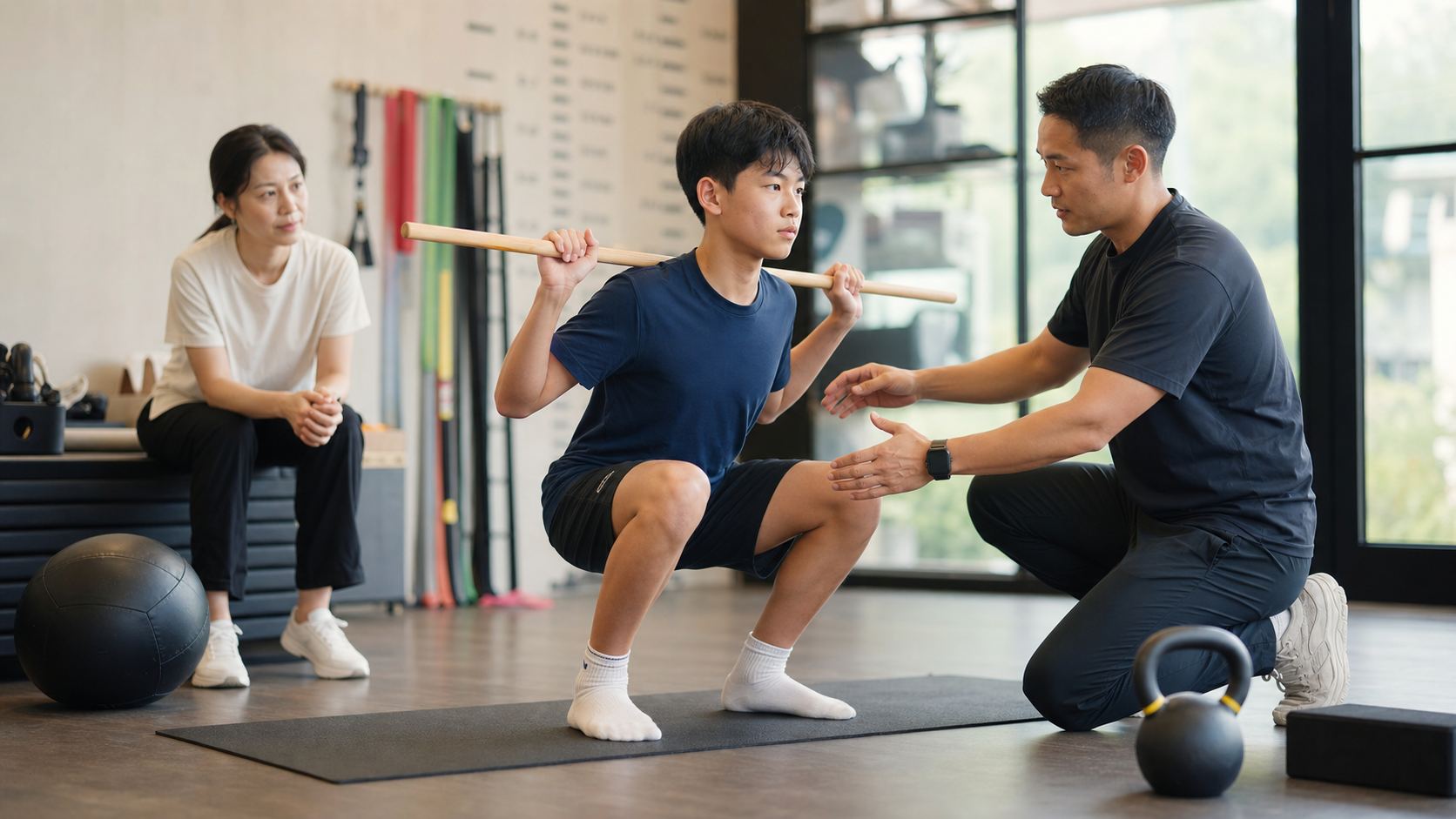
A few years ago, on a Saturday morning, I was coaching at a fitness center in Taichung when a father pushed his son—a seventh grader whose height had just shot past my shoulder—in front of me and asked bluntly: “Coach, the internet says kids who lift weights won’t grow tall and their growth plates will be damaged. Is that true? My son wants to train, but I’m terrified of hurting him.”
The boy kept his head down, but his eyes clearly showed he wanted to give it a try—he was just held back by his father’s anxiety. I asked them to sit down and spent half an hour explaining “training during growth” clearly. When I finished, the father let out a sigh of relief, and the boy smiled. Three years later, that kid had grown nearly 20 centimeters, was squatting his own bodyweight with solid form, never injured his knees or lower back, and—most importantly—he had fallen in love with exercise.
This article is my way of laying out that half-hour conversation, combined with my years of experience coaching countless parent-child pairs and youth athletes, plus verifiable sports science literature, all laid bare for you. Whether you’re a worried parent, a coach just starting to work with adolescents, or a teenager who wants to train yourself, I hope you finish reading with a clear framework for judgment: during growth, how do you train safely and effectively?
Let me put the most important sentence up front: Well-designed resistance training with proper instruction and supervision currently shows no evidence of damaging growth plates, stunting height, or harming the cardiovascular system. This isn’t just my personal opinion—it’s the consensus position reached by organizations like the American Academy of Pediatrics (AAP) and the National Strength and Conditioning Association (NSCA) after years of reviewing the literature. What actually causes problems is never the “weight” itself, but poor technique, uncontrolled intensity, and no adult supervision.
Concept 1: First, Understand What the Growth Plate Really Is
When discussing training during growth, you can’t avoid the growth plate (醫學上稱骺板 physis).
The growth plate is a layer of cartilage located at both ends of long bones (femur, tibia, humerus, etc.), near the joints. Children grow taller because this cartilage continuously proliferates, calcifies, and is replaced by bone, “pushing” the bone longer segment by segment. Once puberty ends and hormones cause the growth plates to fully calcify and close (in girls, roughly 2 to 3 years after their first period, at a bone age of about 15 to 17; in boys, usually 1 to 2 years later), height is largely set.
The key point is this: the growth plate is cartilage, which is slightly “softer” than the surrounding bone, ligaments, and tendons. This means that in a growing child, it’s a relatively vulnerable link in the skeletal system. So “protecting the growth plate” is itself a correct instinct—the problem is that the public misinterprets “protection” as “absolutely no load whatsoever.”
The truth is the opposite. Bones, like muscles, need appropriate mechanical stimulation to become stronger and denser. Bones that never move and never bear load are actually more fragile. The growth plate truly fears two things:
- Acute high-impact trauma: Falling from a height, collisions during sports, or a single point of force from a fall can cause growth plate fractures (Salter-Harris fractures).
- Chronic repetitive overuse: The same area, the same movement, done every day, in excessive volume, without recovery, accumulating into overuse injuries (e.g., pitchers’ shoulders and elbows, gymnasts’ wrists, jumpers’ knees).
Note that neither of these is “regular, progressive, supervised strength training.” What’s actually high-risk is unsupervised single-sport specialization and pushing for maximal reps with heavy weights (1RM max testing). This is also why studies on adolescent resistance training with proper programming and qualified supervision have recorded no growth plate fractures caused by training.
A Table to See “What to Fear vs. What Not to Fear” at a Glance
| Real risks to the growth plate | Often mistaken as risks (actually relatively safe) |
|---|---|
| Acute trauma like falls from height or collisions in sports | Progressive bodyweight strength training |
| Repetitive overuse of a single area without recovery | Loaded training with coach supervision and correct technique |
| Maximal weights without guidance (going for 1RM) | Low-to-moderate intensity, controlled sets and reps |
| Premature, excessive single-sport specialization | Diverse movement learning and physical development |
So that father’s concern had the right direction but the wrong conclusion. What should actually be done isn’t “forbid the child from training,” but “make sure he trains correctly.”
Concept 2: Early vs. Late Maturation — Same Age, Different “Bodies”
The most common mistake when working with adolescents is using “age” as the sole basis for training prescription. This works reasonably well for adults, but it often goes badly wrong with growing children.
The reason is that each child’s biological maturity varies enormously. Two boys standing in front of you—both in eighth grade, both 13 years old—one might be just entering puberty, voice unchanged, growing less than 4 centimeters a year; the other might already be in a growth spurt, shooting up 9 to 10 centimeters a year, starting to grow facial hair. The former is a late maturer, the latter an early maturer. Their bones, muscles, and hormonal environments are at completely different stages, yet they’re often put on the same training plan.
Here’s a very practical concept called Peak Height Velocity (PHV)—the point in time when a child grows the most centimeters in a year. Sports science commonly uses it to divide maturity into three stages:
- Pre-PHV: Not yet in the growth spurt. At this stage, neural plasticity is high, making it the golden period for building “movement technique foundations.”
- Circa-PHV: In the middle of rapid height gain. Bones grow faster than muscles and tendons, coordination may temporarily “regress” (commonly called adolescent clumsiness), and injury risk is relatively elevated—extra caution is needed.
- Post-PHV: Growth slows, hormones rise (especially testosterone in boys), and this is the stage of rapid gains in strength and muscle mass.
Based on the literature I’ve found, the approximate timing of PHV is: girls typically begin between 11.6 and 12.1 years old, and boys between 13.8 and 14.1 years old, but individual variation is large—girls can fall anywhere from 9 to 15, and boys from 11.5 to 17, and it’s all still normal. So don’t panic if your child is shorter or develops later than classmates—that’s often just a different timeline.
How Should We View the “Training Window”?
In the past, the “golden training window” concept from the Long-Term Athlete Development (LTAD) model was very popular—for example, the idea that 12 to 18 months after PHV is the optimal period for strength development in boys. This concept has some reference value, but in recent years, sports science has leaned toward the more conservative term “periods of accelerated adaptation”—meaning: these stages offer greater room for progress, but it doesn’t mean you can’t develop if you miss them, and there’s no single critical period that “only comes once in a lifetime and is ruined if missed.”
My practical approach is simple: every ability (coordination, speed, strength, endurance) can be trained at any age—it’s just that training at the right maturity stage gives a higher return on investment. Don’t force heavy weights on a child who isn’t ready just because you’ve heard the “window theory,” and don’t give up just because a certain age has passed.
/no_think
Practical Comparison of Early and Late Maturation
| Aspect | Early-Maturing Child | Late-Maturing Child |
|---|---|---|
| Short-Term Advantage | Greater strength and speed, often dominant in same-age competition | Often at a disadvantage among peers, easily overlooked |
| Potential Pitfall | Wins through physical attributes; technique may be neglected and not solidified | Confidence suffers; may quit sports prematurely |
| Coach’s Focus | Emphasize technique and movement quality; don’t just rely on physical gifts | Encourage more, take the long view; don’t judge based on current results |
| Parent’s Mindset | Don’t overdo volume or specialize too early just because they’re strong now | Be patient; late bloomers often surpass early developers |
Many parents and grassroots coaches in Taiwan, seeing that a child is “currently stronger,” push extra volume and early single-sport specialization. This essentially trades the short-term dividends of early maturation for long-term injury and burnout risks. Conversely, too many talented late-maturing kids get abandoned because their results aren’t impressive during junior high—which is a real shame.
Concept 3: How Safe Is Youth Strength Training, Really
This is the area parents care about most and misunderstand the most. Let me lay out the verifiable key points clearly.
First, strength training does not stunt growth. The consensus among mainstream medical and sports science organizations is consistent: well-designed, properly supervised resistance training has no significant negative effects on height, growth plate health, or the cardiovascular system in children and adolescents. The claim that “lifting weights stunts growth” is not scientifically supported. This myth likely stems from observing that children involved in heavy labor or gymnastics tend to be smaller, mistaking “correlation” for “causation”—when in fact it’s more related to genetics, nutrition, and excessive single-sport training.
Second, strength training has many benefits. For this age group, regular and correct resistance training can: improve strength and power, increase bone density, enhance body composition, improve movement coordination and athletic performance, and even reduce the incidence of sports injuries—because stronger kids with better movement control are less prone to strains and sprains on the field.
Third, the key to safety lies in “how you train,” not “at what age you start.” The literature repeatedly emphasizes: safety depends on whether the program is tailored to the child’s emotional and developmental stage, not just chronological age. With qualified supervision, proper technique, and reasonable intensity, youth resistance training studies have not documented growth plate fractures.
Six Safety Bottom Lines for Parents and Coaches
- Master the movement first, then add load. Use bodyweight and light loads to perfect squats, hip hinges, pushes, pulls, and core stability before adding weight.
- Absolutely avoid max testing. Do not perform 1RM (one-repetition maximum) tests during development; instead, use the “leave 2 to 3 reps in reserve” concept to control intensity.
- Qualified adult supervision on site. This is the most important of all safety prerequisites.
- Progress, progress, and progress again. Keep increments small (e.g., add 2.5 to 5 kg or a few reps) so the body has time to adapt.
- Prioritize recovery and sleep. Adolescents should aim for 8 to 10 hours of sleep per night; without adequate recovery, any training becomes a breeding ground for overuse.
- Stop if there’s pain; seek medical attention when necessary. Especially for “persistent, localized” pain around joints or growth plates—don’t push through it.
Practical Approach: Training Frameworks and Sample Programs by Stage
Now that we’ve covered the concepts, let’s look at how to actually structure things. I’ve mapped developmental stages to training priorities in the summary table below—this is the core logic I use when coaching adolescents.
Training Priority Summary by Developmental Stage
| Developmental Stage (Reference) | Approximate Age | Primary Training Goal | Resistance Training Format | What to Avoid |
|---|---|---|---|---|
| Pre-PHV | Girls ~8-11, Boys ~9-13 | Foundational movement skills, coordination, fun | Bodyweight, light equipment, gamified | Heavy loads, single-sport specialization |
| During PHV | Girls ~11-13, Boys ~13-15 | Maintain movement quality, control injury risk | Low-to-moderate loads, technique emphasis | Sudden volume spikes, neglecting flexibility |
| Post-PHV | Girls ~13+, Boys ~15+ | Strength, power, muscle mass | Can progress to moderate-to-heavy loads | Ignoring recovery, chasing maximal weights |
Treat “approximate age” as a reference only; actual maturity level should guide decisions.
Sample Program A: Pre-PHV Children (Movement Learning Phase)
At this stage, I barely use weight plates. The focus is on helping kids “learn to control their own bodies”—and making it fun. Here’s a sample: 2 sessions per week, about 40 minutes each:
| Exercise | Sets × Reps | Coaching Focus |
|---|---|---|
| Bodyweight Squat | 3 × 10 | Squat to thigh-parallel, knees don’t cave inward |
| Split Squat (Stationary Lunge) | 3 × 8 (each side) | Front foot stable, torso upright |
| Push-Up (Kneeling or Wall Variation) | 3 × 6-10 | Body in a straight line, core engaged |
| Dead Bug Core | 3 × 8 (each side) | Lower back flat on floor, slow and controlled |
| Farmer’s Carry (Light Kettlebell or Water Bottles) | 3 × 20 meters | Shoulders stable, walk in a straight line |
| Jump Rope / Agility Ladder | 5 minutes | Rhythm and landing cushioning |
Sample Program B: Post-PHV Adolescents (Progressive Loading)
Once movement quality is solid and the child is past PHV, I systematically introduce barbells and dumbbells. Here’s a full-body sample for 2 to 3 sessions per week:
| Exercise | Sets × Reps | Intensity Guidelines |
|---|---|---|
| Barbell (or Goblet) Squat | 4 × 6-8 | Leave 2-3 reps in reserve, not to failure |
| Romanian Deadlift | 3 × 8-10 | Focus on hip hinge, back flat |
| Dumbbell Bench Press / Advanced Push-Up | 3 × 8-10 | Fully controlled throughout |
| Pull-Up (Assisted with Band if Needed) | 3 × 2 reps shy of failure | Initiate with scapulae |
| Loaded Split Squat | 3 × 8 (each side) | Even load distribution between front and back leg |
| Core (Plank / Side Plank / Anti-Rotation) | 3 sets | Quality over duration |
The difference between these two programs captures the essence of “training during development”: it’s not about scaling down an adult program for kids, but giving the right content based on maturity.
Practical Notes for Taiwan
- Facilities: Not every community in Taiwan has a youth-friendly gym. But school tracks, park pull-up bars, and living rooms can all accommodate bodyweight training. Equipment isn’t the priority—guidance and progression are.
- Climate: Taiwan’s summers are hot and humid. Adolescents regulate body temperature less efficiently than adults and often neglect hydration. For outdoor training, avoid the midday heat; schedule sessions in the early morning or evening, and remind them to drink water regularly.
- Eating Out and Nutrition: Taiwanese kids eat out frequently, and post-training protein and overall calorie intake often fall short. The growth period inherently requires adequate nutrition to support both height gain and training recovery. There’s no need for deliberate dieting—the focus should be on balanced meals, sufficient protein (beans, fish, eggs, meat), and plenty of fruits and vegetables. Developing adolescents don’t need—and aren’t advised to—use muscle-building supplements or protein powder as a “meal replacement.” Whole foods come first.
Common Mistakes and Corrections
After years of coaching, here are the most common—and most damaging—mistakes I’ve seen, each with a correction.
Mistake 1: Specializing in a Single Sport Too Early and Too Narrowly
Many parents want their kids to “get ahead from the starting line,” so in elementary school they only swim, only play baseball, or only play soccer—training the same sport six days a week. This early single-sport specialization is the number one culprit for overuse injuries in adolescents, and it also leads to mental burnout and early dropout from sports.
Correction: Before puberty, prioritize “multi-sport participation”—expose kids to different activities and movement patterns to build a broad movement vocabulary. Specialization can wait until after PHV, when the child genuinely wants to commit, and then be introduced gradually.
/no_think
Mistake 2: Directly Applying Adult Weights and Intensities
Some coaches or parents, seeing that a child is quite strong, directly have them go for heavy weights, or even test a 1RM. This is a high-risk behavior during the growth years.
Correction: Instead, use repetitions in reserve (not training to failure) and movement quality as the intensity ceiling. The principle is, “Better to go lighter and execute beautifully than heavier and let form break down.”
Mistake 3: Using Height and Body Type as Training Criteria
A tall, sturdy early-maturing seventh grader doesn’t necessarily have the skeletal, tendon, or cardiorespiratory maturity of a high schooler. Judging by appearance can easily lead to overloading early-maturing kids and being overly harsh on late-maturing ones.
Correction: Base the training plan on maturity (whether they’ve passed PHV, whether movement control is mature) rather than height and weight. Within the same team, kids of different maturity levels should naturally have different prescriptions.
Mistake 4: Ignoring Sleep and Recovery
Taiwanese teenagers face heavy academic pressure, often attending cram school late into the night and getting severely insufficient sleep. Add training on top of that, and it’s a recipe for chronic burnout. When recovery is inadequate, growth, immunity, and athletic performance all suffer.
Correction: Treat sleep as “part of the training plan,” aiming for 8 to 10 hours per night. Training volume should be considered holistically alongside schoolwork and sleep, and be decisively reduced during exam weeks.
Mistake 5: Treating Pain as “Not Trying Hard Enough”
“Just push through it” is the most dangerous phrase. Persistent, localized pain near growth plates or joints could be a warning sign of overuse or even epiphyseal injury.
Correction: Teach kids to distinguish between “normal post-training soreness” and “pain that feels wrong.” If pain lasts more than 2 weeks, gets worse with training, or has a specific tender point, they must rest and seek medical evaluation. With Taiwan’s accessible National Health Insurance, don’t delay on these concerns—getting assessed by a rehabilitation or sports medicine specialist is well worth it.
Three Realistic Case Studies (Scenarios for Teaching Demonstration)
No matter how much theory is discussed, nothing beats looking at a few typical scenarios. The following cases are teaching demonstrations I’ve adapted from common situations I’ve encountered over years of coaching clients. The scenarios are fictional, but the principles and decision-making logic they reflect are real.
Case 1: The Early-Maturing “Giant” Seventh-Grade Guard
Xiao Yu (pseudonym) was already 172 cm and nearly 65 kg in seventh grade, completely dominating his peers on the school basketball court. The coach was thrilled and arranged for him to practice five days a week, plus his own heavy squat sessions. Three months later, he started complaining of persistent soreness below his knee (at the tibial tuberosity), with sharp pain on landing from jump shots.
This is a classic case of early-maturation dividends being over-withdrawn: his physical attributes were ahead of schedule, but his bones and tendons were still growing rapidly, and the area around the growth plate couldn’t handle the sudden spike in volume. When I stepped in, I did three things—first, reduced the volume; second, swapped heavy squats for moderate-to-low loads focused on movement control; third, added landing cushioning and hip-knee-ankle coordination training, and referred him to a rehabilitation specialist to rule out apophyseal issues. Six weeks later, the pain subsided, and crucially, we filled in the technical gaps in “how to jump and how to land.” Xiao Yu eventually understood: right now, winning relies on his physical advantages, but whether he can keep playing long-term depends on skill and health.
Case 2: The Underestimated Late-Maturing Distance Runner Girl
A Qian (pseudonym) was in eighth grade, among the shortest in her class, and hadn’t gotten her period yet. She always finished in the middle or back of the pack in school cross-country runs. Her PE teacher thought she “had no talent” and nearly persuaded her to give up. But I observed that her running economy, pain tolerance, and mental toughness were strong—her body just hadn’t hit its developmental spurt yet. I asked her parents not to rush her or force her to compete head-to-head with early-maturing classmates on results. The training focus was on technique, aerobic base, and enjoying running, with volume kept very conservative.
After entering high school, A Qian had her growth spurt, her development caught up, and her performance skyrocketed. Within two years, she went from the back of the pack to a varsity team mainstay. Being a late bloomer isn’t a lack of talent; it’s just a later timeline. If she’d been written off based on her middle school results back then, Taiwan would have lost one kid who loves running. This is what I keep reminding grassroots coaches: don’t use a single moment’s performance to write the final verdict on a child who is still developing.
Case 3: The Parent Too Afraid to Let Their Child Move
The last type is the parent who’s been scared by internet rumors and outright bans their child from any exercise. One mother, having heard that “lifting weights stunts growth,” not only forbade her eighth-grade son from strength training but also wanted to exempt him from PE class activities. As a result, the kid had poor fitness, bad posture, and started developing lower back discomfort from prolonged sitting with poor alignment.
I spent considerable time helping her understand: appropriate load isn’t the harm—lack of activity is. We started with the simplest bodyweight movements, having the child exercise twice a week, progressing gradually. Six months later, the kid’s posture, energy, and confidence had all improved, and the mother became the biggest advocate for exercise. Overprotection can sometimes be another form of harm.
Advanced: How to Roughly Estimate Maturity Without a Hospital Visit
Parents and grassroots coaches don’t have access to bone-age X-rays, so how do you determine whether a child is before, during, or after PHV? I’ll offer a few practical indicators—note these are only “estimates,” not medical diagnoses:
- Track height velocity: Measure and record height regularly (e.g., every 3 months). If there’s a noticeable recent growth spurt (well over 6 cm per year), the child is likely approaching or in the middle of PHV.
- Watch shoe size: Extremities typically grow first. If shoes suddenly need to be replaced with bigger sizes frequently, it’s often a precursor to a growth spurt.
- Observe secondary sexual characteristics: Voice changes in boys, first menstruation in girls, etc., are signals of ongoing puberty and can roughly correspond to around PHV.
- Assess coordination: Kids in the middle of a rapid growth spurt often show a temporary “clumsiness” in movement—this is exactly a sign that bones are growing faster than neuromuscular control, and a reminder to prioritize movement quality and hold off on increasing load.
Recording these observations on a simple growth tracking sheet is far more useful than looking at age alone. The table below helps you map signals to training adjustments:
| Observed Signal | Possible Maturity Stage | Training Adjustment Recommendations |
|---|---|---|
| Height increasing steadily and slowly, no obvious spurt | Pre-PHV | Heavy investment in movement skills and coordination, gamification |
| Rapid height increase in a short period, frequent shoe size changes, clumsiness | During PHV | Maintain technique, pause load increases, emphasize flexibility and landing mechanics |
| Growth spurt slowing, secondary sex characteristics evident, rapid strength gains | Post-PHV | Can systematically progress load, develop strength and power |
Aerobic Fitness and Bones: Two Often Overlooked Pieces of the Puzzle
When discussing youth training, everyone tends to focus only on “strength” and “growth plates,” but two other things are equally important.
The first is aerobic fitness. Children aren’t just miniature adults; their aerobic metabolism and thermoregulation are still developing. Moderate aerobic activities (cycling, jogging, swimming, ball sports) benefit cardiorespiratory and metabolic health, and kids are naturally suited to accumulating activity through “play.” The key is variety, enjoyment, and not overdoing it—there’s no need to drill kids with the strict heart rate zones used for adults. Many Taiwanese families take their kids cycling along riverside paths or hiking suburban hills on weekends—these are all excellent aerobic activities. Just remember to avoid peak heat hours in summer and keep them well-hydrated.
The second is the long-term investment in bone health. Adolescence is the golden window for bone mass accumulation, and a large proportion of one’s lifetime peak bone density is established during this phase. Weight-bearing and impact activities (jumping, running, supervised strength training) combined with adequate calcium and vitamin D are the key to helping kids fully “bank” their bone reserves. This again shows that appropriate mechanical loading doesn’t harm bones—it’s actually the necessary stimulus for bones to become stronger. Taiwanese children often don’t get enough sunlight or outdoor activity, so moderate sun exposure and spending more time moving outdoors are very beneficial for skeletal development.
A Reference Framework for Weekly Activity Volume
International recommendations for children and adolescents generally suggest: accumulate at least 60 minutes of moderate-to-vigorous physical activity daily, with at least 3 days per week including muscle- and bone-strengthening activities (such as jumping, climbing, supervised resistance training). This framework doesn’t need to be followed rigidly—the point is “moving on most days, with enough variety in what you do.” Given the current situation for Taiwanese kids, excessive sitting and screen time are the bigger problems to address.
Actionable Advice for Different Readers
If You’re a Worried Parent
- Let go of the fear that “lifting weights stunts growth,” but hold the line that “qualified supervision is non-negotiable.”
- Prioritize quality over quantity: rather than sending your child to chase results, make sure they learn correct movement patterns and build a consistent exercise habit.
- Take care of three small things: enough sleep, enough food, and don’t overschedule their calendar. These three factors often have a bigger impact on development than any training plan.
- Ask professionals when in doubt: coaches, pediatricians or rehab physicians, and nutritionists are all more reliable than internet rumors.
If You Are a Grassroots Coach or PE Teacher
- Group by maturity, not age: Children in the same cohort can differ by 2 to 3 years in maturity, so prescriptions need to be flexibly adjusted.
- Technique before load: Treat movement quality as the threshold for increasing volume—if the movement isn’t mastered, don’t add weight.
- Record and communicate: Pay attention to each child’s reports of pain, fatigue, and mood, and maintain communication with parents.
- Resist the temptation to “win now”: Don’t sacrifice a child’s long-term development and health for short-term competition results.
If You Are a Teenager Who Wants to Train
- Learn the movement before adding weight—don’t rush to match your friends’ weights or the numbers you see on social media.
- Don’t train to the point of injury: Stop any movement the moment your form breaks down; it’s better to do fewer reps.
- Sleep enough and eat well: This is the most powerful “legal enhancement” at your stage.
- Enjoy the process: The movement foundation and exercise habits you build now will stay with you for life.
Frequently Asked Questions (FAQ)
Q: At what age can a child start strength training?
A: There is no hard minimum age. Generally speaking, as long as a child can understand and follow instructions and focus on completing basic movements (most children around school age), they can start with bodyweight and light-load exercises. The key is not age, but instruction and progression.
Q: Do we have to go to a gym or buy equipment?
A: Not at all. Bodyweight squats, push-ups, planks, pull-ups, and jump rope can build a great foundation at home or in the park. Equipment is an option, not a necessity.
Q: My child is much shorter than classmates and developing slowly—should we see a doctor?
A: In most cases, it’s just late maturation, and they’ll catch up in time. But if growth velocity is clearly abnormal, or parents are very concerned, medical access in Taiwan is convenient—you can see a pediatrician or pediatric endocrinologist for a bone age assessment and let the professionals decide. Don’t scare yourself unnecessarily.
Q: Should children supplement with protein powder or muscle-building supplements after training?
A: For growing children, natural food comes first; balanced meals plus adequate protein (beans, fish, eggs, meat, dairy) are usually sufficient. Self-prescribing muscle-building or fat-burning supplements is not recommended; for special nutritional needs, consult a dietitian or physician.
Q: Can a child with asthma, heart disease, or other chronic conditions still exercise?
A: In most cases, moderate and individualized exercise is actually beneficial for children with chronic conditions, but you must discuss with the primary physician first and obtain individualized exercise recommendations, control intensity per medical advice, and have necessary medications ready. Never self-judge or stop medication—in such cases, always defer to the medical team’s assessment.
Q: How many times a week is about right?
A: For strength training, 2 to 3 times per week with recovery days in between is sufficient for growing children—no need to train daily. The key is consistency and progression, coordinated with school PE classes, team practices, academics, and sleep to avoid overloading the total volume.
Conclusion
Back to the father’s question at the beginning. Three years later, that child who once hung his head has not only grown taller and stronger—more importantly, he has learned how to live with his own body and how to find balance between effort and rest. This is what I believe is most precious about “training during growth”—we are not manufacturing a stronger middle schooler; we are laying the foundation for a healthy, active adult.
Here’s the core of this article condensed into a few sentences for you:
- Well-designed, supervised strength training will not damage growth plates, will not stunt growth, and is actually beneficial.
- The real risks are acute trauma, overuse, early specialization, and lack of supervision—not the “weight” itself.
- Plan training by maturity, not age; early or late maturation is just a different timeline, not a difference in talent.
- Sleep enough, eat enough, progress gradually, and investigate pain—these simple principles beat any fancy program.
Growth happens only once. Don’t bind children with fear, and don’t harm them with impatience. Finding that middle path that is “safe and effective” is actually not hard at all.
Disclaimer: This article is educational content and cannot replace individual diagnosis and treatment advice from physicians, physical therapists, or dietitians. If a child has concerns about growth, pain, injury, or health, please seek individualized assessment from qualified medical and professional personnel.
References
- American Academy of Pediatrics — Strength Training by Children and Adolescents: https://publications.aap.org/pediatrics/article/121/4/835/70927/Strength-Training-by-Children-and-Adolescents
- National Strength and Conditioning Association — Youth Resistance Training: Updated Position Statement Paper: https://www.nsca.com/globalassets/about/position-statements/position_stand_youth_resistance_training---2009.pdf
- Resistance training for children and adolescents (PMC / NIH): https://pmc.ncbi.nlm.nih.gov/articles/PMC5532191/
- Peak Height Velocity (PHV) concept explanation — Science for Sport: https://www.scienceforsport.com/peak-height-velocity/
- The Effect of Peak Height Velocity on Strength and Power Development of Young Athletes: A Scoping Review (PMC): https://pmc.ncbi.nlm.nih.gov/articles/PMC12101259/
Related Reading
- The Growth Plate Myth in Youth Strength Training: What the Research Actually Says
- Youth Running Safety: Training Volume, Intensity, and Long-Term Development During Growth
- Youth Strength Training: Safety Guidelines and Exercise Selection for Starting Weights After Age 12
- Adolescent Bone Development and Running Volume Limits: How to Avoid Growth Plate Injuries
一日北高/長距離團騎 常見問題補充篇 / 組團或跟團的眉角 / 壯車友容易被瘦車友慢性拉爆 / 原來屁股痛可能是這個原因...? / 風場配速法 / 公路車 / CT Yeh
2 年前
一日北高常見問題大集合 | 攻略 | 路線 | 訓練 | 補給 | 自行車 單車 | 一日雙城 | 雙塔 | TWB北高360 | 屁股痛
6 年前
一個測試有沒有認真練車的方法😂 #公路車
10 個月前
滑雪新手們慘摔學習全紀錄(請開字幕),滑雪好好玩 | Snowboard + Ski | 岩原 スキー場 | 滑雪APP使用 | GoPro Max
6 年前
訓練台體驗) 2019台北自行車展 三大家 訓練台體驗 Tacx Neo Flux 2 Xepdo Apx Wahoo Kickr
7 年前
昇陽SYB車隊 & Fuji 菁英選手們的趣味經驗分享,長知識了!市民車友必看~ 一路被拉爆後才給問 | 戀戀197 武嶺 凸台經驗分享 | 公路車 | CT Yeh
4 年前
實景訓練台) 彰化經典百K 高強度喵團 90分鐘 跟著一起練功 2019 Indoor workout Changhua Classic 100 Taiwan
7 年前
西進武嶺 免費訓練分析服務 Intervals | 練不夠還是練過頭?你哪一種類型選手?AI模型告訴你! | 備戰神器 | 公路車 訓練 | CT Yeh
4 年前