The Complete Guide to Training Load Monitoring: The Debate Over Internal Load, External Load, and the Acute-to-Chronic Workload Ratio
It All Started with an Overtrained Athlete
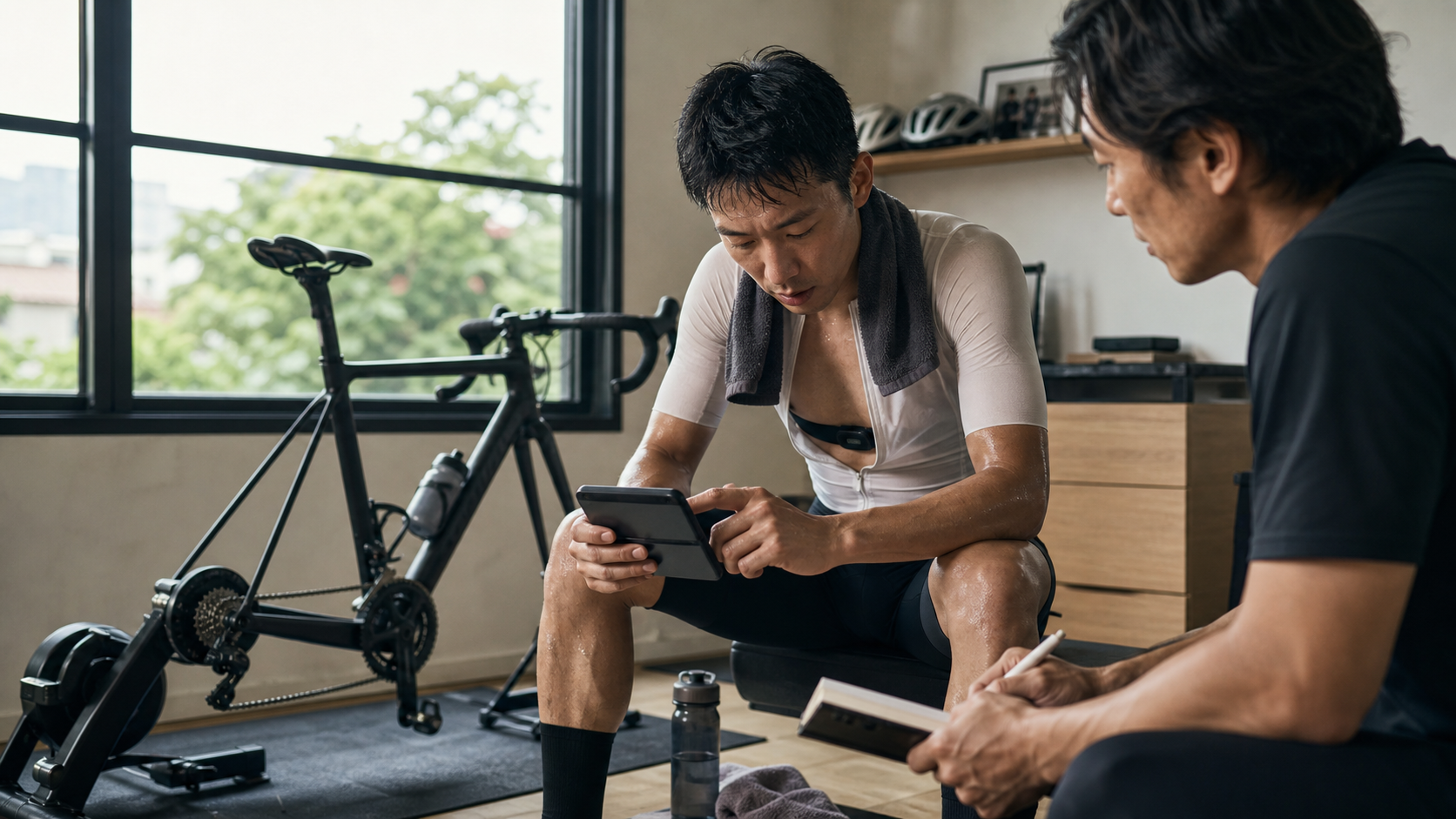
I still remember coaching a cyclist in his thirties, an office worker, a few years ago—let’s call him A-Kai. A-Kai was the typical “the more I train, the more addicted I get” type of athlete. He signed up for the Wuling Challenge, and with three months until race day, he jumped from riding twice a week straight to five times a week, adding two days of strength training on top. For the first two weeks, he excitedly told me he felt fantastic, and his climbing power hit a personal record. In the third week, his messages became fewer. In the fourth week, he sent me this: “Coach, lately no matter how much I sleep, I’m still exhausted. My morning heart rate is ten beats higher than usual, and the outside of my knee is starting to hurt.”
This wasn’t an accident; this was his body protesting. A-Kai did one thing right—he increased his training. But he did something else wrong, something more important: he didn’t monitor how the load was stacking up, and he ignored the signals his body was sending. He only focused on “how many kilometers I rode this week, how many meters I climbed,” completely overlooking “how much stress my body is actually under.”
This is exactly what we’re going to talk about today: training load monitoring. This seemingly academic term is actually a fundamental concept that every serious athlete—whether you’re a competitor chasing a new PB or a weekend rider just looking to stay healthy—should understand. In this article, I’ll walk you through two core concepts: external load and internal load. Then I’ll introduce you to the hottest, yet most controversial, quantification tool in the industry right now—the Acute:Chronic Workload Ratio (ACWR). Finally, I’ll give you practical methods you can implement in the real-world context of Taiwan.
Let me state my position upfront: training load monitoring isn’t about turning your sport into a bunch of cold, hard numbers. It’s about helping you train smarter, train for the long haul, and get injured less. That’s what really matters. I’ve seen too many talented, passionate people lose—not to others, but to themselves, through repeated overuse injuries—knees, IT bands, lower backs. One injury can sideline you for weeks, or even destroy your confidence in training altogether. A large proportion of these injuries can be avoided with basic load monitoring principles.
Foundational Concepts: External Load vs. Internal Load
To understand training load, the most important first step is to break it down into two dimensions. Both are essential; looking at only one will lead to misjudgment.
What is External Load
External load refers to “how much work you did”—it’s the objectively measurable training volume and intensity indicators from the outside, independent of how your body feels. Using cycling as an example, external load includes:
- Distance ridden (km)
- Elevation gain (meters)
- Power output (watts)
- Normalized Power (NP), Training Stress Score (TSS)
- Time ridden (minutes)
- Cadence (rpm)
These numbers share a common characteristic: they describe “external work done.” If you push 250 watts on your power meter, whether you’re feeling great or terrible today, it’s still 250 watts. This is the strength of external load—objective, repeatable, and unaffected by subjective factors.
What is Internal Load
Internal load refers to “the actual physiological and psychological cost your body pays to accomplish that work.” Riding at the same 250 watts, you might feel relaxed and comfortable if you’re well-rested. But if you only slept four hours the night before, just recovered from a cold, and it’s a sweltering 35-degree Taiwanese summer day, those 250 watts could be an enormous stress on your body. This “actual stress your body experiences” is internal load. Common internal load indicators include:
- Heart rate (bpm), heart rate zone distribution
- Heart rate variability (HRV)
- Rating of Perceived Exertion (RPE)
- Training Impulse (TRIMP, combining heart rate and time)
- Blood lactate concentration
- Subjective fatigue, soreness, and sleep quality questionnaires
Here’s a key concept to remember: the same external load can produce completely different internal loads depending on each individual’s current physical and mental state, environment, and recovery level. This is why only looking at “how many kilometers I rode” is dangerous. This was A-Kai’s problem—his external load numbers looked great, but he had no idea his internal load was already off the charts.
The table below helps you see the differences at a glance:
| Aspect | External Load | Internal Load |
|---|---|---|
| Definition | Objective work completed | Physiological and psychological cost to the body |
| Affected by physical/mental state | No | Yes |
| Common cycling indicators | Power, TSS, distance, elevation | Heart rate, HRV, RPE, TRIMP |
| Primary tools | Power meter, GPS computer | Heart rate strap, HRV app, subjective questionnaires |
| Advantages | Objective, repeatable | Reflects individual true stress |
| Disadvantages | Ignores individual differences and recovery status | More subjective, requires disciplined logging |
| In one sentence | How much you did | How much it cost you |
Why You Must Look at Both Together
This is a point I emphasize repeatedly with my athletes. External load tells you “whether the training stimulus is sufficient,” and internal load tells you “whether your body can handle it.” The relationship between the two is itself an extremely valuable signal:
- If your external load stays the same (still riding at 250 watts), but your heart rate keeps climbing and RPE feels heavier—this is called “decreased efficiency,” and it usually means you’ve accumulated fatigue and aren’t recovering enough.
- Conversely, if the same external load results in a lower heart rate and feels easier—congratulations, your fitness is improving.
This technique of “holding external load constant and observing changes in internal load” is known in sports science as the Efficiency Factor, and it’s one of the most practical methods for assessing training effectiveness and fatigue status. You don’t need expensive equipment—just a heart rate strap and a power meter.
Load Quantification Models: How to Turn Training into a Number
Now that you understand the concepts, the next question is: how do you turn “how hard I trained today” into a number that can be recorded, compared, and accumulated? That’s what load quantification models are for. Here are a few of the most classic and practical methods.
The Session-RPE Method: The Simplest and Most Underrated Tool
If you only learn one method, learn this one. The Session-RPE (Session Rating of Perceived Exertion) method, developed by sports scientist Foster and his team, is almost unbelievably simple to implement, yet backed by solid validation research. According to a methodological review published in Frontiers in Neuroscience, this method has demonstrated good validity and reliability across multiple sports, genders, and age groups (children, adolescents, and adults).
It’s just two steps:
- About 30 minutes after training, rate “how hard the session was overall” on a scale of 0 to 10 (0 is complete rest, 10 is maximal effort).
- Multiply that number by the training duration in minutes.
The formula:
Training load (AU, arbitrary units) = Session-RPE (0–10) × Training time (minutes)
For example: you rode for 90 minutes, and afterward you felt the overall intensity was about a 7. The internal load for that session would be 7 × 90 = 630 AU.
That’s it. Its beauty lies in the fact that it combines the two dimensions of “intensity” and “duration” into one, using your body’s subjective feeling—which is itself a form of internal load. No power meter, no heart rate strap needed; a phone is all it takes to log it. When I work with beginners who have no equipment at all, this is the first thing I teach them.
Training Stress Score (TSS): The Workhorse of the Power Meter Era
For cyclists with a power meter, TSS (Training Stress Score) is currently the most mainstream external load quantification tool. Based on your Functional Threshold Power (FTP), it converts the intensity and duration of a ride into a single score. A rough reference baseline is:
- Riding at FTP intensity for 1 hour ≈ 100 TSS
- An easy recovery ride for 1 hour ≈ 30–40 TSS
- A hard, long climbing race ≈ 200–300+ TSS
The advantage of TSS is that it weights intensity—every minute at high intensity is “worth more points,” making it far more precise than simply looking at time or distance. The downside, as mentioned earlier, is that it’s purely external load; it doesn’t know how well you’ve recovered today.
How to Combine the Two Quantification Methods
My recommendation is: if you have the equipment, use both; if you don’t, master Session-RPE first. The table below summarizes the positioning of common quantification methods:
| Quantification Method | Type | Equipment Needed | Suitable For |
|---|---|---|---|
| Session-RPE × Time | Internal load | None (just a phone) | Everyone, especially beginners |
| TRIMP (Heart rate × Time) | Internal load | Heart rate strap | Those wanting objective physiological data |
| TSS / NP | External load | Power meter | Advanced cyclists, competitive athletes |
| Distance / Elevation | External load | GPS computer | Basic logging; shouldn’t be relied on alone |
| Morning HRV | Recovery status | HRV app + heart rate strap | Those wanting fine-tuned recovery management |
The Acute:Chronic Workload Ratio (ACWR): The Once-Hyped Injury Prediction Tool
When discussing training load monitoring, we can’t ignore the Acute:Chronic Workload Ratio (ACWR), which has become incredibly popular in the sports world in recent years. It’s a clever concept, but also a highly controversial one. I’ll do my best to honestly present both sides.
The Core Logic of ACWR
ACWR was popularized by sports scientist Gabbett and colleagues, with its theoretical foundation rooted in Banister’s “fitness-fatigue” model. The concept works like this:
- Acute Load: Usually the sum of training load over the “last 7 days,” representing current fatigue.
- Chronic Load: Usually the average weekly load over the “last 28 days,” representing your long-term accumulated fitness base.
- ACWR = Acute Load ÷ Chronic Load
The meaning of this ratio is intuitive: it asks, “Compared to what your body is used to over the long term, has this week’s training volume spiked?”
According to a synthesis of the relevant literature, the model’s assumption is that if chronic load (fitness) is steadily built to a high level, and acute load stays near or slightly above chronic load (i.e., ACWR falls roughly between 0.8 and 1.3, often called the “sweet spot”), the athlete is adequately prepared. Conversely, if acute load far exceeds chronic load (ACWR ≥ 1.5), the athlete is considered underprepared, and the risk of acute or overuse injuries increases.
Let’s look back at A-Kai’s example: he jumped from twice a week to seven training days a week, causing his acute load to multiply instantly, while his chronic load (the average over the past month) was still at a low level. His ACWR had probably blown past 1.5, or even higher. Knee pain, poor sleep, elevated morning heart rate—these are all typical reactions of a body “forced to absorb a massive load while underprepared.”
The ACWR Sweet Spot and Danger Zone
The table below shows the ACWR reference ranges commonly cited in practice. Please note: these are reference zones, not ironclad rules, and I’ll explain why in the next section.
| ACWR Range | Common Interpretation | Practical Advice |
|---|---|---|
| < 0.8 | Training volume is low; possibly “undertraining” | Fitness may be declining; can increase progressively |
| 0.8 – 1.3 | “Sweet spot”; load matches fitness | Ideal training zone; maintain progression |
| 1.3 – 1.5 | Load is elevated; be alert | Watch recovery signals; avoid adding more volume |
| ≥ 1.5 | “Danger zone”; too rapid an increase | Injury risk rises; reduce volume and focus on recovery |
In practice, this leads to a very useful training principle—the principle of progressive overload: try not to increase weekly training volume too drastically. The traditional advice you often hear about “not increasing weekly volume by more than 10%” is consistent with the spirit of ACWR: take it slow, and give your body time to adapt.
The Injury Prediction Controversy: Can ACWR Really Predict Injuries?
This is the part of the article where I want to be most honest. ACWR is often touted on social media and in coaching circles as a magic tool, but the sports science community has been highly critical of it in recent years. As a consultant, I have a responsibility to explain the controversy clearly, rather than sell you an oversimplified cure-all.
Controversy One: Correlation Does Not Equal Causation
Early studies linking ACWR to injury risk certainly caused a stir, but according to subsequent systematic reviews and methodological critiques, most of these studies were correlational, not causal. Interestingly, even the authors of the original research later publicly stated that they regretted using the word “predicts” in their paper titles and text—because correlation doesn’t equal prediction, let alone causation.
This is an important point of scientific honesty. The fact that people with high ACWR get injured more often doesn’t mean “high ACWR causes injury.” It could also be that some people who are inherently more injury-prone happen to train harder, or there are other confounding factors at play.
Controversy Two: Calculation Methods Vary Widely, Making Conclusions Hard to Compare
Systematic reviews have pointed out that one major problem with ACWR is the lack of a standardized calculation method. Just considering how “chronic load” is calculated, there are two camps: “coupled” and “uncoupled.” The coupled method includes the acute load in the denominator of the chronic load, while the uncoupled method does not—and the two can produce different numbers and conclusions. Additionally, whether you use a rolling average or an exponentially weighted moving average (EWMA) also affects the results. When every study uses a different algorithm, it’s naturally difficult to compare conclusions across studies, and it’s no wonder some question its scientific rigor.
Controversy Three: Not All Studies Support It
The evidence is actually mixed. Some reviews (such as systematic reviews of professional team sports) have expressed reservations about whether ACWR can be associated with “time-loss injuries.” However, other studies (such as Myers et al. on the sRPE version of ACWR) suggest it has value as a tool for preventing non-contact injuries in elite athletes. In other words, this is not a settled issue.
So How Should We View ACWR?
My position is this—treat ACWR as a “reference dashboard” that reminds you not to spike your training, not as a crystal ball that can precisely predict when you’ll get injured.
Its most valuable contribution isn’t that magical 1.5 threshold; it’s that it quantifies a simple but important principle: don’t let this week’s training volume far exceed what your body is accustomed to over the long term. This principle itself is sound, has physiological basis, and aligns with the clinical experience of most coaches. As for that “1.5 means danger” line, treat it as a yellow light signaling “time to hit the brakes and pay more attention to recovery,” not a red light meaning “I’m definitely going to get injured.”
Numbers are servants, not masters. When ACWR conflicts with how your body actually feels—for example, the ratio is in the sweet spot but you feel exhausted—trust your body. And vice versa.
A Step-by-Step Guide to Calculating ACWR
We’ve covered a lot of theory; now let me walk you through a concrete example so you can see it’s not difficult at all. We’ll use the easiest-to-learn Session-RPE version—as long as you’ve been logging “RPE × minutes” for each session, you can calculate it.
Let’s say we have an athlete named Xiao-Mei. I’ve organized her daily training load (in AU) for the past four weeks. For convenience, I’ve already summed up the total load for each week:
| Week | Weekly Training Summary | Weekly Load Total (AU) |
|---|---|---|
| Week 1 (farthest back) | Two easy rides + one interval session | 1,200 |
| Week 2 | One long ride + two recovery rides | 1,400 |
| Week 3 | Deload week, only three easy rides | 900 |
| Week 4 (current week) | Suddenly signed up for an event, trained hard five days | 2,600 |
Step one, calculate acute load (last 7 days): That’s this week’s (Week 4) load, which is 2,600 AU.
Step two, calculate chronic load (average weekly load over the last 28 days): Add all four weeks together and divide by 4.
Chronic load = (1,200 + 1,400 + 900 + 2,600) ÷ 4 = 6,100 ÷ 4 = 1,525 AU
Step three, calculate ACWR:
ACWR = Acute load ÷ Chronic load = 2,600 ÷ 1,525 ≈ 1.70
1.70 falls far into the “≥ 1.5 danger zone.” What does this tell us? Xiao-Mei’s training volume this week, relative to what her body has been used to over the past month, has increased too rapidly. If she tries to add even more at this point, her chances of injury or over-fatigue rise significantly.
If Xiao-Mei wanted to bring her ACWR back to the upper edge of the sweet spot (around 1.3), roughly what should her weekly load be? Simple: 1,525 × 1.3 ≈ 1,983 AU, meaning she should reduce this week’s volume from 2,600 to around 2,000 to be safer. This is where ACWR is most practical—it’s not just an alarm; it can also work backward to tell you “how much you should train this week.”
One more reminder: this calculation uses a simplified version of the “uncoupled” concept, and the sweet spot boundaries vary by individual and sport. Treat it as a sense of direction, not a prescription precise to the decimal point.
Common Mistakes and Corrections
In my years of coaching, I’ve seen all sorts of misconceptions about load monitoring. Here are the most common ones, along with how to fix them.
Mistake One: Only Looking at External Load, Ignoring How Your Body Feels
This was A-Kai’s mistake. His mind was full of “I need to ride 200 kilometers this week,” completely ignoring whether his body was already crying for help.
Fix: Develop the habit of logging internal load daily using Session-RPE, and pair it with a simple morning self-check (sleep, energy, soreness, morning heart rate). When external load stays the same but internal load keeps rising, that’s a signal to back off.
Mistake Two: Treating ACWR as an Ironclad Rule and Being Controlled by the Numbers
Some athletes, after learning about ACWR, become neurotic, calculating the ratio daily and panicking to the point of not training if it exceeds 1.3. This defeats the purpose and strips the enjoyment and flexibility out of training.
Fix: ACWR is a trend reference, not a daily gauge. Look at “whether there’s a spiking trend over the past few weeks,” not a single day’s number. Allow yourself to have races or big training days that temporarily push the ratio up; what matters is overall progression and recovery.
Mistake Three: Chronic Load Is Too Low, Then Rushing to Spike It
Many people are “weekend warriors”—they don’t have time to train during the week, then ride hard all weekend. In this pattern, chronic load stays chronically low, so any serious ride sends ACWR through the roof, naturally increasing injury risk.
Fix: Instead of spiking on the weekend, spread your training across the weekdays. Even just commuting by bike or doing 30 minutes on the trainer during the week can raise your chronic load and build your “fitness foundation,” making your body more resilient to big weekend sessions.
Mistake Four: Ignoring Non-Training Stressors
The most overlooked point in training load monitoring: your body doesn’t distinguish between “training stress” and “life stress.” Working overtime, poor sleep, family obligations, Taiwan’s scorching summer heat—all of these deplete your recovery capacity. The same training plan that’s easy to complete when work is normal can become the straw that breaks the camel’s back after a week of continuous overtime.
Fix: Factor life stress into your planning. During high-stress periods, proactively reduce training load. Morning HRV measurements are particularly useful here—when life stress is high, HRV often reflects it before you even realize it yourself.
Mistake Five: Not Adjusting Load in Summer
This is especially important in Taiwan. Taiwan’s summers are hot and humid. At the same power output, riding in a 35-degree afternoon can push your heart rate 10 to 20 bpm higher than in cooler conditions, significantly increasing internal load.
Fix: During summer training, use heart rate and RPE rather than power to control intensity. If you notice your heart rate soaring at the same power, that’s your body telling you “today’s internal load is heavier than the numbers suggest,” and it’s time to ease off. In Taiwan’s summer, schedule training for early morning or evening to avoid the midday heat, and pay extra attention to hydration and electrolytes.
Actionable Advice for Different Levels of Readers
Load monitoring isn’t just for elite athletes, but different levels of athletes should use it at different depths. Here are concrete starting points based on your level.
Beginners (Just starting regular exercise, no specialized equipment)
You don’t need any expensive instruments. Start with these three things:
- Log Session-RPE × time after every session, in a phone note or a simple spreadsheet.
- Spend 10 seconds every morning on a self-check: Did you sleep well last night? How’s your energy? Any soreness? (A simple 1–5 scale is fine.)
- Follow the principle of progression: Keep weekly training volume increases moderate; don’t spike just because you’re feeling motivated.
Remember: for beginners, “consistency” matters far more than “high volume.” Slowly building up your chronic load is the path to long-term success.
Intermediate Athletes (Have a regular training routine, may have a heart rate strap or power meter)
- Track both external and internal load: Use TSS or distance/elevation for external load, and Session-RPE or heart rate for internal load.
- Monitor the Efficiency Factor: Pick a fixed route or trainer workout and track “heart rate changes at the same power.” This is the most practical indicator for assessing fitness gains and fatigue.
- Roughly track ACWR trends: No need to calculate daily, but review weekly whether this week’s load has spiked relative to the past month, as a reference for scheduling recovery weeks.
- Schedule a recovery week every 3–4 weeks, proactively reducing load to let your body absorb the training gains.
Competitive Athletes (Pursuing performance, detail-oriented)
- Build a comprehensive load database: Track external load, internal load, ACWR, and HRV over the long term to find your own “sweet spot”—everyone’s optimal load range is different, so don’t copy someone else’s numbers.
- HRV-guided training modulation: Use morning HRV trends to decide whether to train hard or take it easy that day.
- Periodize your season: Steadily build chronic load during the base phase, strategically raise acute load during the build phase (accepting temporarily elevated ACWR), and proactively reduce acute load while preserving fitness during the taper before races.
- Work with a professional team: If you have an injury history or special physiological conditions, seek individualized assessment from sports medicine physicians, physical therapists, or sports nutritionists.
Special Note: Those with Chronic Conditions
If you have a history of chronic conditions such as cardiovascular disease, hypertension, or diabetes, training load planning must be more conservative, and you should prioritize consulting your primary care physician. The internal load response in this population may differ from the general population, and certain medications (such as beta-blockers) can affect heart rate, rendering heart-rate-based load monitoring inaccurate. In such cases, individualized professional assessment is even more critical—don’t just apply generic online training plans. Taiwan’s National Health Insurance makes medical access relatively convenient, so take advantage of rehabilitation, cardiology, or sports medicine clinics and let the professionals guide you.
Frequently Asked Questions from My Athletes (FAQ)
Over the years, these questions come up almost every month, so here they are, all answered in one place.
Q1: I don’t have a power meter or a heart rate strap. Can I still do load monitoring?
Absolutely, and I strongly recommend you start here. Session-RPE (post-training perceived exertion × minutes) requires no equipment—just a phone to log it—and its validity as an internal load indicator is supported by numerous studies. Many people think load monitoring requires expensive instruments, but the most effective tool is already within you: your subjective perception. Equipment is a bonus, not a ticket to entry.
Q2: Should ACWR use 7 days vs. 28 days, or some other number of days?
The 7-day (acute) vs. 28-day (chronic) setup is the most common, but it’s not the only standard; different sports and different studies have used various day counts. For the average cyclist, 7:28 is more than sufficient. The key isn’t whether the day count is perfect, but whether you consistently and uniformly track trends using the same standard. Using 7:28 today and switching to 5:21 tomorrow—that’s what creates chaos.
Q3: Is it worth buying a watch to measure HRV (Heart Rate Variability)?
If you’re already an advanced athlete who seriously analyzes data and is willing to measure consistently every day, HRV is an excellent recovery indicator that can detect fatigue accumulation earlier than you can feel it yourself. But if you haven’t even built the habit of logging Session-RPE yet, don’t rush into HRV—mastering the fundamentals is more important. HRV is “the icing on the cake,” not “a lifeline.”
Q4: If I’m really sore the day after training, does that mean I trained well?
Not necessarily. Moderate muscle soreness (DOMS) is normal after new stimuli, but “soreness level” is not proportional to “training effectiveness.” Persistent, severe soreness that affects daily activities is actually a warning sign of overloading. Log soreness as one signal of internal load, but don’t chase soreness.
Q5: Do I really need to adjust my training schedule for Taiwan’s summer weather?
Absolutely. Taiwan’s summers are hot and humid, and thermoregulation itself significantly raises internal load—at the same power, your heart rate can be 10 to 20 bpm higher. Forcing yourself to complete a “by-the-numbers” workout in the midday heat is secretly adding extra load to your body, while also increasing the risk of heat exhaustion and heat stroke. Moving training to early morning or evening, using heart rate and RPE to control intensity, and staying properly hydrated with electrolytes is the smart approach.
Conclusion: Let the Numbers Serve You
Let’s go back to A-Kai’s story. What we did afterward wasn’t complicated—first, we had him rest completely for a few days to bring down the inflamed knee and excessive fatigue. Then we replanned, spreading his training across the weekdays to build up his chronic load, and taught him to log Session-RPE daily and do a simple body check every morning. Three months later, he not only completed the Wuling Challenge pain-free, but told me, “Coach, it turns out training smart is way more satisfying than training hard.”
That’s the true essence of training load monitoring. It’s not about turning your sport into a bunch of numbers on a spreadsheet; it’s about giving you a pair of “glasses to see your body’s signals.” External load tells you how much you did; internal load tells you whether your body can handle it. The gap between the two is the most honest health dashboard you have. As for tools like ACWR, use them to remind yourself not to spike, but never let them override your body’s true sensations.
Science will evolve, models will be revised, but one principle stands the test of time: listen to your body, challenge it progressively, and recover it fully. Treat numbers as servants, not masters, and you’ll train smarter, longer, and enjoy every pedal stroke more.
Wishing you health and happiness on every mountain road and every stretch of highway in Taiwan. See you out there.
This article is for educational purposes and does not replace individual diagnosis or treatment advice from physicians, physical therapists, or nutritionists.
References
- Session-RPE Method for Training Load Monitoring: Validity, Ecological Usefulness, and Influencing Factors (Frontiers in Neuroscience): https://www.frontiersin.org/journals/neuroscience/articles/10.3389/fnins.2017.00612/full
- Is the Acute:Chronic Workload Ratio (ACWR) Associated with Risk of Time-Loss Injury in Professional Team Sports? A Systematic Review (PubMed): https://pubmed.ncbi.nlm.nih.gov/32572824/
- The Relationship Between Acute:Chronic Workload Ratios and Injury Risk in Sports: A Systematic Review (PMC): https://pmc.ncbi.nlm.nih.gov/articles/PMC7047972/
- Editorial: Acute:Chronic Workload Ratio: Is There Scientific Evidence? (HAL): https://hal.science/hal-03245985/document
Related Reading
- The ACWR Acute:Chronic Workload Ratio in Training Load Monitoring: The Latest Validity and Reliability Research
- Training Load Management and ACWR: Using the Acute:Chronic Workload Ratio to Prevent Overuse Injuries
- Recognizing and Recovering from Athletic Burnout: A Coach’s Guide to Reading Your Body’s Distress Signals
- Feeling More Tired the More You Train Isn’t a Lack of Effort: A Complete Coach’s Guide to Identifying Chronic Fatigue, Overtraining, and Recovery
西進武嶺 免費訓練分析服務 Intervals | 練不夠還是練過頭?你哪一種類型選手?AI模型告訴你! | 備戰神器 | 公路車 訓練 | CT Yeh
4 年前
單車AI教練!全新 ChatGPT4o 幫你分析訓練成果!排武嶺課表,分析騎車姿勢! 太神了! / 公路車 / CT Yeh / feat. 緯緯
2 年前
一個測試有沒有認真練車的方法😂 #公路車
10 個月前
2026 車錶排行榜!誰是最多車友正在使用?練家子最愛哪款?🏆 (2萬名車友數據) / 公路車 / CT Yeh
5 個月前
西進武嶺 8000名單車友數據分析 PART1 | 從新手到高手數量/瓦數/推力比/FTP推力比/功率計使用率 大解析 | 公路車 | CTYeh
5 年前
一日北高 11小時 賽後心得分享篇 | TWB北高360 | 一日雙城 | 單車 | 公路車
6 年前
FTL 與 SYB 車隊專訪 西進武嶺 實用攻略分享! 2小時 如何練?!你不知道的眉角!新手準備武嶺必看 EP1 | 實力派女車友 | 精華版 | 公路車 | CTYeh
4 年前
大禹嶺 到 武嶺牌樓 全程前後實況錄影 | 北進武嶺 | 東進武嶺 | KOM | 訓練台 | 坡度分析 | Taiwan KOM Last 10 km HARD | 公路車
6 年前