The Science of Massage and Foam Rolling: Mechanisms, Effect Sizes, and the Overlooked Placebo Component
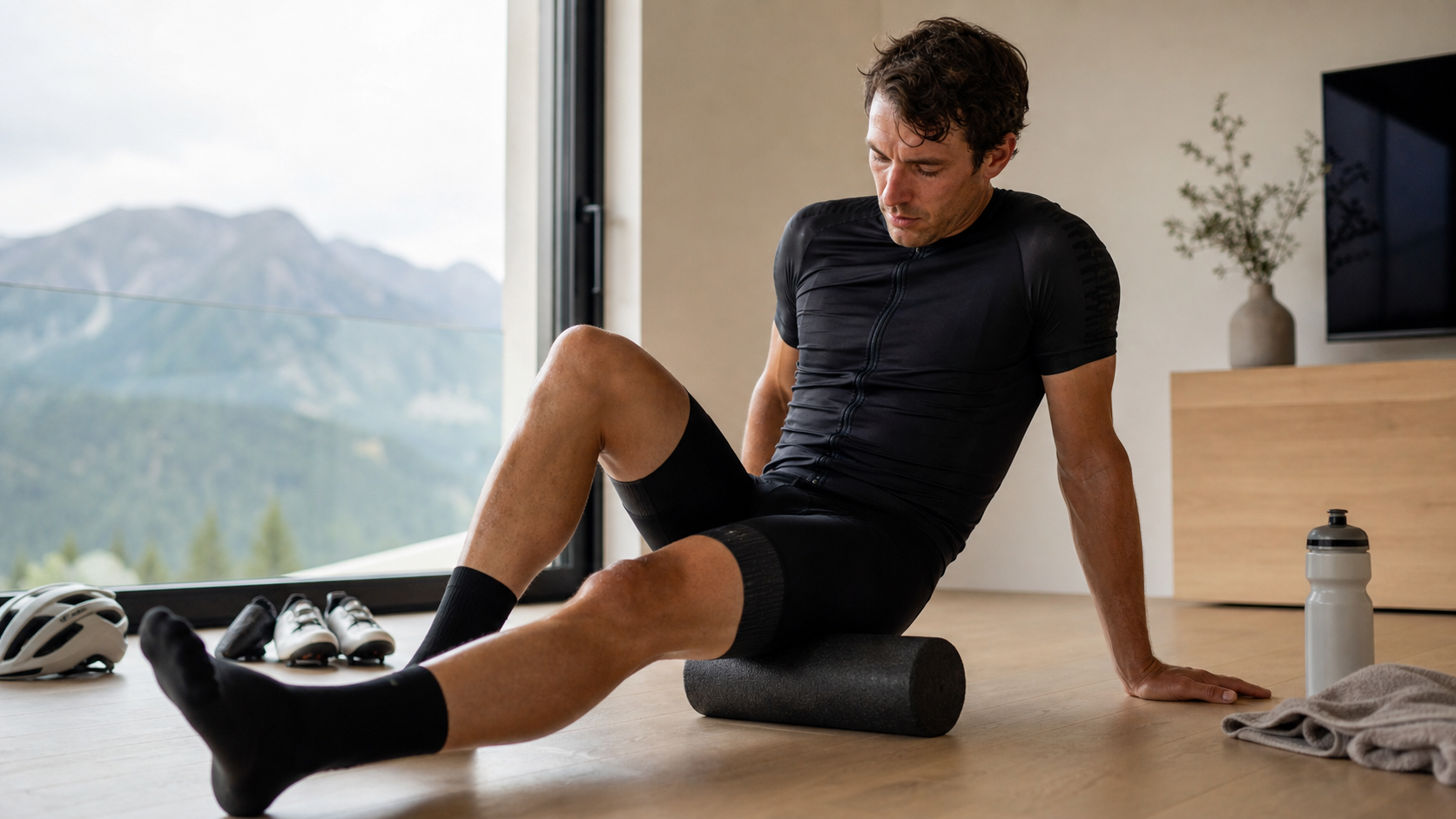
Starting with One Athlete’s Foam Rolling Dependence
I once coached an amateur mountain biker—let’s call him A-Kai. Every time he finished a long climb up Wuling, the first thing he did when he got home wasn’t refueling or stretching; it was sitting on the floor and rolling out his quads, hamstrings, and calves with a foam roller, one after another, for a full forty minutes. He told me, “Coach, if I don’t roll, I can’t even ride the next day.”
I’ve heard that sentence for fifteen years, from different athletes, and the gist is always the same. Some rely on foam rolling, some can’t do without massage, and some absolutely need someone to walk on their back. I completely understand that feeling of “once I’m relaxed, my whole body lets out a sigh of relief”—it’s real, and the body genuinely responds. But as a coach who has to look at both training outcomes and the scientific literature, I have to separate two questions:
First, do massage and foam rolling make you “feel better”? That’s true. Yes.
Second, do they help you “recover faster and perform better the next day”? That’s also true? That’s much more complicated.
In this article, I want to break these two things apart with you. Because in Taiwan, foam rollers and massage guns are practically standard equipment in every serious cyclist’s home, and sports massage clinics are popping up everywhere. We spend a lot of money and time on them. Rather than just following the crowd, let’s lay out the evidence and see what we’re actually buying—which parts are genuine physiological benefits, and which parts are placebo components (though placebo doesn’t mean worthless, as I’ll explain later).
Here’s the conclusion for those in a hurry: The evidence for massage and foam rolling on “subjective soreness” and “short-term range of motion” is relatively solid, with small-to-moderate effect sizes; the evidence for “accelerating actual muscle repair and improving next-day power output” is much weaker. Their most stable and worthwhile value actually lies in the “feeling” and “habit” layer—and that layer is not unimportant.
Conceptual Foundation: Soreness, Recovery, and What We’re Actually Measuring
To discuss whether massage works, we first need to break down the vague term “recovery.” In sports science, recovery is divided into several distinct lines, and they don’t move in sync.
What Delayed Onset Muscle Soreness (DOMS) Actually Is
The soreness you feel the day after training—or even two days later—is called Delayed Onset Muscle Soreness (DOMS). It typically peaks between 24 and 72 hours after exercise and is especially common after movements involving a lot of eccentric contractions—downhill running, braking control on long descents, or the lowering phase of a barbell in weight training.
People used to think DOMS was caused by “lactic acid buildup,” but that idea has long been debunked. Lactic acid is mostly cleared within about an hour after exercise ends; it can’t possibly last until your next-day soreness. The currently more accepted explanation is that eccentric contractions cause micro-mechanical damage to muscle fibers and surrounding connective tissue, triggering a local inflammatory response that sensitizes sensory nerve endings. So DOMS is more like a “pain sensitization” phenomenon, not exactly equivalent to the severity of muscle damage.
This distinction is crucial, because many recovery modalities can reduce your “pain perception” without necessarily changing the underlying repair progress. Massage is a prime example of this type of modality.
The Multiple Lines of Recovery That Need Separate Measurement
I usually use the table below to explain to athletes that “whether you’ve recovered” actually has several dimensions:
| Recovery Dimension | Common Measurement Methods | Evidence Strength for Massage/Foam Rolling |
|---|---|---|
| Subjective soreness | 0–10 soreness scale, pressure pain threshold | Stronger, small-to-moderate effect size |
| Subjective fatigue and mood | Fatigue scale, mood questionnaire | Stronger (includes a large placebo component) |
| Joint range of motion | Goniometer, sit-and-reach test | Moderate, mostly short-term effects |
| Muscle damage markers | Blood CK, LDH levels | Weak to moderate, inconsistent studies |
| Strength and power recovery | Maximal isometric strength, peak power | Weak, most studies show no significant difference |
| Autonomic nervous system status | Heart rate variability, resting heart rate (bpm) | Moderate, leaning toward a relaxation response |
Once you understand this table, you’ll see why the question “does massage actually work?” can’t be answered in one sentence. It works on some lines, and the evidence is weak on others. When someone flatly declares “massage definitely speeds up recovery” or “foam rolling is completely useless,” they’re usually only looking at one line.
The Mechanisms of Massage: Blood Flow, Nerves, and That Relaxed Brain
The proposed mechanisms of sports massage can be broadly grouped into three categories. Let me explain them in a way my athletes can understand.
Mechanism One: Blood Flow and Metabolic Waste Clearance
The most intuitive explanation is that massage kneads the muscle open, promoting local blood and lymphatic return, helping to carry away inflammation-related substances. Systematic reviews have indeed observed a trend toward lower blood creatine kinase (CK, a muscle damage marker) after massage, suggesting it may reduce the degree of muscle damage or inflammation (Frontiers in Physiology, 2017).
But here I need to be honest: the magnitude of increased blood flow, and whether it truly translates into “faster repair,” is not consistently supported by evidence. Massage’s effect on local blood flow is actually smaller than many people imagine, and “increased blood flow” doesn’t simply equal “accelerated recovery.”
Mechanism Two: Neural and Autonomic Nervous System Regulation
The second mechanism is the one I find most interesting, and it may be massage’s most genuine point of action. Massage is thought to lower sympathetic nervous system tone and increase parasympathetic activity—in plain terms, it shifts the body from “fight mode” to “rest and repair mode.” You can observe that some people’s resting heart rate drops after a massage, their breathing slows, and they go completely limp.
This neural pathway also explains why massage is particularly effective for “pain.” Through pressure stimulation and the pain gate mechanism, massage can inhibit pain signal transmission at the spinal cord level, making you subjectively feel less sore. This is a genuine neurophysiological effect, not an illusion.
Mechanism Three: Psychological and Expectation Effects
The third mechanism, and the one most often skipped over, is psychological and expectation. Someone spends twenty minutes focusing on your body, you lie there relaxing, and you “believe” this helps recovery—the entire context itself lowers stress, improves mood, and even changes how you interpret soreness.
I want to emphasize: this is not “fake.” Psychological relaxation affects the body through real neuroendocrine pathways. The problem is only that when we attribute all of massage’s benefits to “it kneaded the muscle open,” we may overestimate the mechanical effect and underestimate the neural and psychological effects. Understanding this ratio is how you know where to spend your money and time.
The Effect Sizes of Foam Rolling: What Science Says
Foam rolling is the representative tool of “self-myofascial release.” Because it’s cheap and can be done at home, it has exploded in popularity over the past decade. Its research base is also relatively large, so we can be more specific.
On Range of Motion: Effective Short-Term, But Don’t Misunderstand
Systematic reviews and meta-analyses have found that foam rolling has a positive effect on joint range of motion, and this is a relatively consistent finding (Journal of Bodywork and Movement Therapies, 2020). After rolling, your sit-and-reach test does improve slightly.
But there are two things to note. First, this range of motion improvement is mostly transient, lasting perhaps a few minutes to ten-plus minutes. Second, importantly, it does not seem to simultaneously reduce your muscle strength—which differs from prolonged static stretching (too much static stretching can slightly reduce short-term explosive power). So using a foam roller in warm-ups as a way to improve range of motion without losing strength is a reasonable application.
On Soreness: Prevention Over Treatment, and Timing Matters
Regarding foam rolling and soreness, a newer meta-analysis offers an interesting detail: using a foam roller after exercise has a certain preventive effect on soreness, but the effect is very small immediately after exercise and only becomes more apparent 24 hours after the intervention (Journal of Bodywork and Movement Therapies, 2024).
This matches my observations on the sidelines. When athletes roll immediately after training, the subjective improvement is actually limited; what really makes them feel “rolling makes a difference” is that the soreness the next morning isn’t as severe. So if you treat foam rolling as a “magic tool to instantly eliminate fatigue right after a race,” your expectations may be disappointed; treating it as “daily maintenance to lower the next-day soreness peak” is more consistent with the evidence.
On Muscle Stiffness and Strength: Maybe Not as Amazing as You Think
Here’s a bucket of cold water. Some meta-analyses indicate that foam rolling has no significant effect on “myofascial tissue stiffness,” nor does it significantly change isometric strength, eccentric torque, or rate of force development (PubMed, 2022).
In other words, the common claim—“foam rolling releases adhered fascia and softens tight muscles”—does not receive stable support from objective tissue hardness measurements. The “looseness” you feel after rolling likely comes mainly from the nervous system’s response to stretch and pressure (increasing your tolerance to stretching) and decreased pain sensitivity, rather than your fascia structure actually being “pressed open.” This brings us back to the core theme: subjective feelings are real, but the mechanism is often not what we think it is.
Comparing Effect Sizes Across Tools
I’ve compiled a comparison table of common self-relaxation/recovery tools, using relative descriptions for effect sizes (not giving false precision, since studies vary widely):
| Tool/Method | Benefits Supported by Main Evidence | Effect Size (Relative) | Proposed Primary Mechanism |
|---|---|---|---|
| Standard foam roller | Short-term range of motion, reduced next-day soreness | Small to moderate | Neural reflex primarily |
| Vibration foam roller | Reduced soreness, increased pressure pain threshold, reduced subjective fatigue | Moderate (some studies superior to standard roller) | Neural + vibration stimulation |
| Manual sports massage | Reduced soreness, improved subjective fatigue, slight CK decrease | Moderate | Blood flow + neural + psychological |
| Massage gun (percussive) | Reduced soreness, short-term range of motion | Small to moderate | Neural + vibration |
| Static stretching | Improved range of motion | Moderate (range of motion); weak recovery benefits | Stretch tolerance |
Regarding vibration foam rollers, a systematic review indicates positive effects on reducing delayed onset muscle soreness, increasing pressure pain threshold, and reducing subjective fatigue, with some studies even showing it to be more effective than standard foam rollers (MDPI Healthcare, 2025). If you’re planning to buy one anyway, the vibration model has a slight edge in the evidence, but don’t expect a night-and-day difference.
A More Complete Case Study: Xiao-Min’s Massage Anxiety
Let me share another case study, because it illustrates the gap between “feeling” and “evidence” particularly clearly. Xiao-Min is a woman in her thirties, an office worker who swims and cycles weekly, preparing for her first triathlon. When she came to me, her biggest issue wasn’t fitness—it was recovery anxiety. She believed she “absolutely needed massage to recover,” so she regularly booked two sessions a week at an expensive sports massage clinic, one hour each, and even scheduled three sessions in the week before her race. The problem was that her budget was tight, her time was fragmented, and she was still sore the day after every massage, which made her increasingly anxious and convinced her body was especially weak.
I asked her to run an experiment: for the next four weeks, reduce massage to once every two weeks, and use the saved time for two things—increase her sleep from an average of about 6 hours to over 7.5 hours, and properly execute carbohydrate-plus-protein refueling within 30 to 60 minutes after training. I also asked her to record her next-day subjective soreness and fatigue on a 0 to 10 scale every day.
The results after four weeks were interesting. Her average next-day soreness score did not get worse, subjective fatigue even decreased slightly, and her self-rated sleep quality improved noticeably. Her own conclusion was: “I thought massage was saving me, but what I was actually missing all along was sleep.” This isn’t to say massage is useless—Xiao-Min still keeps her once-every-two-weeks massage, because it genuinely has value for her psychological relaxation and sense of ritual. The difference is that she no longer stakes her entire recovery success on massage, and her anxiety loosened along with it. This is exactly the state I want to help every athlete reach: when you know what each tool can truly give you, you won’t misdirect your effort, and you won’t be held hostage by fear.
The Placebo Component: Not Deception, But Honest Pricing
At this point, the word “placebo” needs to be explained clearly, because it’s too easily misunderstood.
The Placebo Effect Is a Real Physiological Response
In recovery research, the placebo effect is particularly powerful because the primary outcome variables (soreness, fatigue, feeling) are inherently subjective. When you believe a modality works, when someone attentively works on your body, when you lie down and rest for twenty minutes—all of these change your pain perception and mood through real neural and endocrine pathways. So in many recovery intervention studies, the “placebo group” also improves, just to a different degree.
Let me emphasize again: the placebo effect is not a “fake effect”; it’s a “non-specific effect.” You genuinely feel better, but the reason may not be the mechanism the researchers claim. For athletes, “feeling better, having more confidence, and being more willing to continue training” has value in itself. The problem is only—whether the price you pay is worth what you’re getting.
How to Estimate the Ratio You’re Buying
I often do a mental exercise with my athletes. Suppose the “total benefit” you get from foam rolling or massage is 100 points. You can roughly split it into three parts (the ratio varies by person; this is just a framework to help thinking):
| Source of Benefit | General Nature | Reminder for You |
|---|---|---|
| Neural relaxation + pain modulation | Real physiological effect, but short-lived | This part is most stable, worth using |
| Blood flow/tissue mechanical effects | Exists but magnitude may be overestimated | Don’t overpay for it |
| Psychological expectation and ritual | Real but non-specific | Acknowledge it, use it wisely |
The key point is: if you’re spending big money on high-end equipment, booking expensive massages three times a week, and feeling pre-race anxiety that you absolutely must do it—all in pursuit of the “mechanically releasing fascia” effect that is probably overestimated—then you may be allocating resources in the wrong place. The three things that truly affect recovery the most—sleep, nutrition, and training load management—are the main course. Massage and foam rolling are side dishes. You can order side dishes, but don’t treat them as the main meal.
Practical Methods: How to Use Them in Line with the Evidence
After all this mechanism talk, here’s something you can use directly. These are the practical principles and sample schedules I give my athletes.
Foam Rolling Technique Points
- Go slow: Roll each area slowly, pausing and lingering, rather than rapidly brushing back and forth like painting. Slow rolling with moderate pauses near tender points is more effective for neural relaxation.
- Tolerable discomfort, not severe pain: Keep pain levels within a range where you can breathe normally and your muscles stay relaxed. If you’re grimacing, holding your breath, and your muscles are reflexively tensing, it’s counterproductive.
- Don’t overdo the time: About 1 to 2 minutes per major muscle group is enough, with the total session kept within 10 to 15 minutes. For someone like A-Kai rolling for forty minutes, the marginal benefit of the extra time is extremely low.
- Either warm-up or bedtime works: Rolling during warm-up improves range of motion without losing strength; rolling before bed helps neural relaxation for sleep. Both timings are reasonable.
Sample Weekly Recovery Schedule
Here’s a recovery framework I designed for a Taiwanese office-worker cyclist who rides four days a week and has a part-time job. Use it as a reference and adjust:
| Day | Training Content | Recovery Arrangement |
|---|---|---|
| Mon | Intervals (high intensity) | 10-minute foam rolling before bed + adequate sleep |
| Tue | Rest or easy ride | General stretching, normal routine |
| Wed | Tempo ride | Short foam rolling + adequate hydration and electrolytes |
| Thu | Rest | Optional sports massage session (not necessary) |
| Fri | Strength training | Light foam rolling post-training + protein refueling |
| Sat | Long climb (e.g., Yangmingshan, Fengguizui) | Post-race refueling first, foam rolling the next day |
| Sun | Complete rest | Focus on sleep and diet, not massage |
Note the spirit of this table: the backbone of recovery is always sleep, nutrition, and training load management; massage and foam rolling are garnish. I placed massage on Thursday, a relatively light day, as an “optional” item precisely to remind you that it’s not a daily requirement.
Practical Considerations for the Taiwan Context
Taiwan’s summers are hot and humid, and long climbs cause heavy sweating and dehydration. Poor recovery is often due to inadequate fluid and electrolyte replenishment, not “fascia not being released.” Instead of aggressively foam rolling after training, prioritize replacing fluids, sodium, potassium, carbohydrates, and protein first. A simple guideline: after long rides, replenish approximately 1.0 to 1.2 liters of fluid per kilogram of body weight (adjust based on sweat loss), and consume carbohydrates and protein early after exercise.
For those who eat out frequently, note that Taiwan’s convenient ready-made meals tend to be high in sodium and low in fruits and vegetables, which affects recovery and overall health long-term. Rather than pinning all your recovery hopes on massage, fixing your daily diet and getting 7 to 9 hours of sleep offers a much higher return on investment.
Putting Recovery Resources in the Right Place: A Return-on-Investment Ranking
I often sketch a “recovery ROI” ranking with my athletes to help them decide where to prioritize limited time and money. Here’s the general priority order (individual differences exist, but this broad direction rarely has exceptions):
| Priority | Recovery Method | Impact on True Repair | Relative Cost | Coach’s Notes |
|---|---|---|---|---|
| 1 | Adequate sleep (7–9 hours) | High | Low (free) | Biggest impact and cheapest; do this first |
| 2 | Sufficient protein and total calories | High | Moderate | Reference: approximately 1.4–2.0 g protein per kg body weight daily |
| 3 | Training load and periodization | High | Low | Cut volume when needed; don’t push through |
| 4 | Hydration and electrolytes | Moderate to high | Low | Especially critical in Taiwan’s hot, humid climate |
| 5 | Light active recovery (easy spin, walking) | Moderate | Low | Promotes blood flow without adding load |
| 6 | Foam rolling/self-relaxation | Small to moderate (mostly perceptual) | Low | Useful, cheap side dish |
| 7 | Sports massage | Small to moderate (includes psychological benefits) | High | Psychological and ritual value is high; mechanical benefits are overestimated |
The message this table conveys is straightforward: the things at the top that truly determine how well you recover are almost all cheap or even free; and the massage we’re most willing to spend big money on ranks near the bottom. This isn’t telling you not to get massages; it’s reminding you not to put the cart before the horse. I’ve seen too many people who don’t sleep enough, don’t eat enough, and have blown-up training plans, yet spend a fortune on massage for comfort—that’s the classic case of treating a side dish as the main course.
Here’s a practical anchor for your protein reference: a 65 kg rider with moderate training volume should aim for roughly 90 to 130 grams of protein per day, distributed across three meals plus snacks. That’s far more substantial for recovery than a few extra massage sessions.
Common Mistakes and Corrections
Over years of coaching, I’ve seen countless examples of foam rolling and massage being used the wrong way. Here are the most common ones:
Mistake One: Using the Foam Roller Like Painkillers and Rolling Frantically
Some people get injured or have a particularly painful spot, then frantically roll that spot until it bruises. If it’s an acute strain, inflammation, or persistent pain of unknown cause, foam rolling won’t help and may even make it worse. The correct approach is to first distinguish between “normal training soreness” and “possible injury.” If pain persists beyond a week, is severe on one side, or is accompanied by swelling or weakness, see a doctor or physical therapist—don’t just roll it yourself.
Mistake Two: Holding Your Breath and Force-Rolling Painful Areas
When you roll to the point of pain and hold your breath, your muscles reflexively tense, which is the exact opposite of the relaxation you want. The fix is simple: maintain a breathing rhythm that allows you to speak normally while rolling. If you can’t, you’re pressing too hard—ease off.
Mistake Three: Using Massage to Replace Necessary Training Adjustments
This is the most invisible mistake. Some people train to exhaustion every time, recover poorly, and rely on massage to push through, without examining whether “the training load was unreasonable to begin with.” Massage can’t save a broken training plan. If you need heavy massage just to barely get through each week of training, what really needs fixing is the training load, not adding more massage.
Mistake Four: Heavy Massage Right Before a Race
Going for a deep, heavy massage on race morning can actually leave your muscles in a slightly irritated, even mildly sore state before the event. If you want to relax before a race, use light, short self-relaxation only. Don’t do untested high-intensity massage on a key day.
Mistake Five: Believing “Pain Means It’s Working”
Many people have the intuition that foam rolling or massage is “more effective the more it hurts,” and only feel they got their money’s worth when they’re sweating from pain. This idea needs correcting. As mentioned earlier, excessive pain triggers reflexive muscle tightening, breath-holding, and elevated sympathetic activity—all of which run counter to the relaxation you’re after. Moderate, tolerable pressure is the sweet spot. Think of it as “comfortable with a slight ache,” not “a teeth-gritting ordeal.” You’re pursuing neural relaxation, not a pain tolerance contest.
Quick Q&A: The Questions Athletes Ask Me Most
These are the questions I’ve been asked to death over the years. Here are my consolidated answers:
Q: Can foam rolling actually “press open” fascial adhesions?
A: Based on current objective measurement evidence, it’s unlikely. The “looseness” you feel after rolling comes mainly from the nervous system’s response to pressure and stretch (increased tolerance) and decreased pain sensitivity, not from your connective tissue structure being physically deformed by your body weight. This doesn’t mean foam rolling is useless; it just means its “purpose” differs from the marketing claims.
Q: Which should I choose, a massage gun or a foam roller?
A: Both have similar mechanisms (primarily neural and vibration stimulation). Choose the one you’ll use consistently and find convenient. Massage guns are good for small areas and can be used while seated; foam rollers cover large areas and incidentally train core stability. There’s no magic tool—only whether you’ll keep using it.
Q: Should I roll immediately after training, or the next day?
A: Either works, but don’t expect rolling immediately after training to “instantly eliminate fatigue.” Evidence shows foam rolling’s benefit for soreness is more apparent after 24 hours, so treating it as maintenance to lower the next-day soreness peak is more realistic.
Q: How do ice baths and cold water immersion compare to massage?
A: That’s another big topic. Briefly, cold water immersion also helps with “subjective feelings,” but long-term it may interfere with strength and muscle hypertrophy adaptations, so use it cautiously during muscle-building or strength phases. This article focuses on massage and foam rolling; cold therapy details deserve a separate article. But the principle is the same: first clarify whether you want “to feel better” or “to maximize training adaptations.”
Q: So should I spend money on massage or not?
A: If your budget and schedule allow, and massage gives you genuine relaxation and motivation to keep training, then it’s a reasonable expense—treat it as an investment in psychological and neural relaxation, not as a “necessity for accelerated recovery.” But if it causes anxiety, strains your budget, or crowds out sleep and nutrition, then it’s time to reallocate resources.
Q: How often should I use a foam roller?
A: There’s no hard rule. For daily maintenance, 10 minutes before bed works, or use it only after high-intensity or high-eccentric-load training sessions. The key is “consistent and not excessive”—1 to 2 minutes per area is enough. Bruising or rolling to the point of breath-holding are signs you’ve overdone it. Turning it into a comfortable bedtime ritual is more sustainable than forcing yourself to grind through forty minutes daily.
Actionable Advice for Readers at Different Levels
If You’re a Beginner Just Starting to Ride
Don’t rush to spend money on a bunch of equipment. First, get three things right: sleep enough, eat enough, and progress training gradually. Buy a basic foam roller (an entry-level one for a few hundred NT$ is enough), learn the slow, tolerable-discomfort technique, and roll for 10 minutes before bed to help relax and fall asleep. Pronounced DOMS in beginners is normal and will lessen as your body adapts to training. You don’t need expensive massage to force it down.
If You’re an Advanced Rider with a Meaningful Training Load
You can “instrumentalize” recovery modalities:
- Use a foam roller in warm-ups to improve range of motion (the no-strength-loss advantage is perfect here).
- After high-intensity days or sessions with heavy eccentric loads (e.g., long descents, strength training), schedule foam rolling or vibration tools for that day or the next, with the primary goal of lowering the next-day soreness peak.
- Sports massage once every 1 to 2 weeks as maintenance and psychological relaxation, not as a daily requirement.
- Always ensure sleep and nutrition are in place first, then talk about the side dishes.
If You Have a Chronic Condition or Are in Rehabilitation
This requires extra caution. If you have chronic conditions such as diabetes, hypertension, or heart disease, or peripheral sensory deficits, circulatory problems, or coagulation-related issues, massage and aggressive foam rolling are not something you should do casually on your own. Areas with reduced sensation can’t properly signal “that’s too painful, stop,” making injury more likely. In such cases, consult your physician and physical therapist first for an individualized assessment. Don’t just follow online videos and apply deep pressure yourself. Taiwan has convenient healthcare with accessible National Health Insurance—if you have concerns, go see a professional. Don’t skimp on this.
Conclusion: Separate Feeling from Evidence, and You’ll Use It More Wisely
Back to A-Kai at the beginning. In the end, I didn’t tell him to quit foam rolling—that would be inhumane, and rolling genuinely has “perceptual value” for him. What I did was help him reallocate resources: cut the forty-minute rolling session down to fifteen minutes, and use the saved time to get sleep up to 8 hours and execute post-race refueling properly. Three months later, his next-day soreness hadn’t worsened, and his training quality was actually more consistent. Because we got the order of main course and side dish right.
This is what I hope you take away from this article:
- Massage and foam rolling genuinely make you “feel better”—this comes from neural relaxation, pain modulation, and psychological effects, and these effects have value in themselves.
- The evidence for them “accelerating true repair and improving next-day power” is much weaker, especially the mechanical claim of “releasing adhered fascia,” which is often overestimated.
- The placebo component is not a scam, but something that needs honest pricing—what you’re buying is real relief and confidence, just don’t overpay for an overestimated mechanism.
- The main course of recovery is always sleep, nutrition, and training load management; massage and foam rolling are bonus side dishes.
By separating “feeling” from “evidence,” you won’t come to hate foam rolling—you’ll actually use it more wisely, more economically, and more effectively. That’s what I, as a coach, most want to help you achieve.
Finally, here’s a practical observation: if you have a heart rate monitor or sports watch, consider tracking your resting heart rate and sleep over the long term. You’ll find that the days when your next-day resting heart rate looks great and your body readiness is high are usually the days you slept well, not the days you got a massage. Data from your own body is more convincing than any marketing rhetoric. Treat tools as tools and the main course as the main course, and your training will go further and more steadily.
This article is educational content and does not replace individualized diagnosis and treatment advice from physicians, physical therapists, or nutritionists. If you have a chronic condition or persistent pain, seek medical attention early and receive an individualized assessment.
References
- Massage Alleviates Delayed Onset Muscle Soreness after Strenuous Exercise: A Systematic Review and Meta-Analysis — Frontiers in Physiology (2017):https://www.frontiersin.org/journals/physiology/articles/10.3389/fphys.2017.00747/full
- A systematic review and meta-analysis of the effects of foam rolling on range of motion, recovery and markers of athletic performance — Journal of Bodywork and Movement Therapies (2020):https://pubmed.ncbi.nlm.nih.gov/32825976/
- Preventive effect of foam rolling on muscle soreness after exercise: A systematic review and meta-analysis — Journal of Bodywork and Movement Therapies (2024):https://pubmed.ncbi.nlm.nih.gov/39593540/
- Foam Rolling Acute Effects on Myofascial Tissue Stiffness and Muscle Strength: A Systematic Review and Meta-Analysis — PubMed (2022):https://pubmed.ncbi.nlm.nih.gov/36227232/
- Effects of Vibration Foam Rolling on Pain, Fatigue, and Range of Motion in Individuals with Muscle Fatigue: A Systematic Review — Healthcare / MDPI (2025):https://pubmed.ncbi.nlm.nih.gov/40565417/
Related Reading
- The Real Benefits of Massage for Sports Recovery: Which Claims Are Supported, Which Are Exaggerated, and How to Use Foam Rollers and Massage Guns Correctly
- A Scientific Examination of Recovery Tools: Massage Guns, Ice Baths, Compression, and Foam Rolling—Which Actually Work?
- The Scientific Basis of Foam Rolling: Is It Really Effective or Just a Placebo?
- Massage, Foam Rolling, and Fascial Release: The Mechanism Is Neural Modulation, Not ‘Kneading Out Lactic Acid’
如果Pogačar騎西進武嶺可以多快?會破2嗎?各種情況深度推估探討 / 公路車 / CT Yeh
2 年前
詳測) 小米 電動打氣筒 公路車胎要充多久? 值得買嗎? 米家充氣寶 小心燙手!
7 年前
大禹嶺 到 武嶺牌樓 全程前後實況錄影 | 北進武嶺 | 東進武嶺 | KOM | 訓練台 | 坡度分析 | Taiwan KOM Last 10 km HARD | 公路車
6 年前
一個測試有沒有認真練車的方法😂 #公路車
10 個月前
西進武嶺 免費訓練分析服務 Intervals | 練不夠還是練過頭?你哪一種類型選手?AI模型告訴你! | 備戰神器 | 公路車 訓練 | CT Yeh
4 年前
FTL 與 SYB 車隊專訪 西進武嶺 實用攻略分享! 2小時 如何練?!你不知道的眉角!新手準備武嶺必看 EP1 | 實力派女車友 | 精華版 | 公路車 | CTYeh
4 年前
昇陽SYB車隊 & Fuji 菁英選手們的趣味經驗分享,長知識了!市民車友必看~ 一路被拉爆後才給問 | 戀戀197 武嶺 凸台經驗分享 | 公路車 | CT Yeh
4 年前
摔車後補裝備: 好市多新款單車安全帽& Specialized Romin 北高整路屁股都不痛的坐墊 | 一千元居然有MIPS | CT Yeh | 公路車
4 年前