The Science of Vibration Training: Neuromuscular Effects, Evidence Quality, and Suitable Populations for Whole-Body Vibration
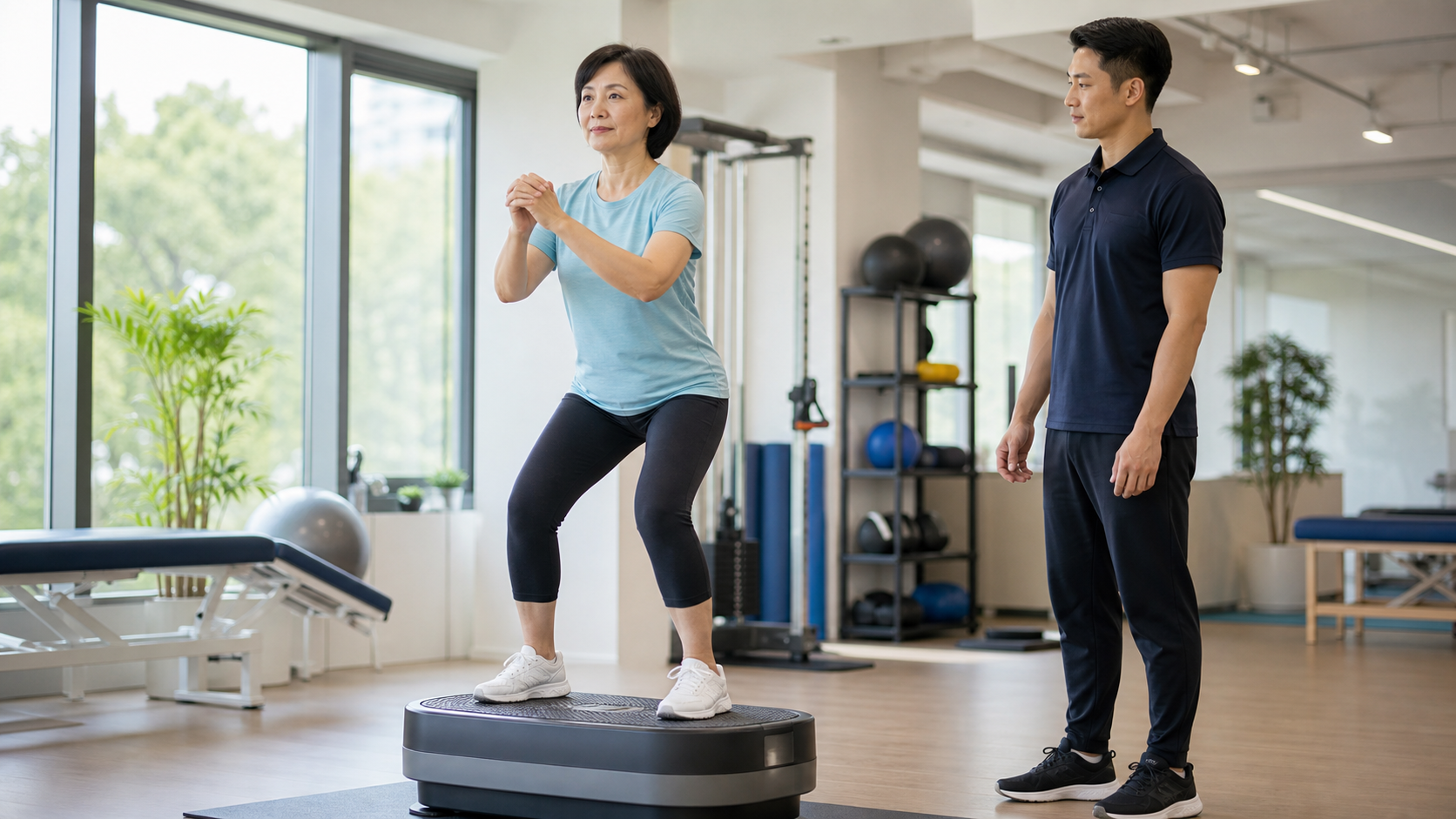
Starting with a Shaky Platform
A few years ago, a 55-year-old female client—let’s call her Sister Lin—burst into my studio holding her phone, the screen paused on a YouTube video: a person standing on a vibrating platform, with subtitles reading, “10 minutes a day, replaces one hour of weight training.” Her eyes lit up as she asked me, “Coach, is this for real? My knees are bad and I’m afraid of weight training. Just standing and shaking to build muscle—that sounds too good to be true, doesn’t it?”
At that moment, what surfaced in my mind were the two extremes I’ve repeatedly encountered over the past fifteen years: one camp treats Whole-Body Vibration (WBV) as an ineffective tax on the gullible, while the other treats it as a no-sweat miracle cure. Both views, in fact, are wrong.
I later had Sister Lin sit down, brewed a cup of tea, and spent half an hour explaining the whole thing to her clearly. This article is the full-length version of that half-hour—I want to use the lens of exercise science to honestly tell you: what actually happens inside your body during vibration training, how solid the current research evidence really is, and who might genuinely benefit from it. No hype, no ridicule—just laying things out plainly.
If you’ve ever spotted that shaking machine in the corner of a gym, seen an elderly relative step onto one in a rehab clinic, or been bombarded by exaggerated marketing videos online, this article is written for you.
Conceptual Foundations: What Vibration Actually Does to the Body
How Mechanical Vibration Becomes Neural Signals
Let’s start with the most core mechanism. When you stand on a platform that vibrates vertically or in an alternating side-to-side motion, moving up and down rapidly at dozens of times per second, your body isn’t passively shaking along—your muscles must continuously make tiny contractions at an extremely high frequency to maintain postural stability.
The key player in this process is a sensor inside your muscles called the muscle spindle. The muscle spindle detects rapid changes in muscle length. When vibration repeatedly and rapidly stretches the muscle, the spindle is triggered, eliciting a reflex contraction through a spinal reflex. This reflex has a formal name: the tonic vibration reflex (TVR). Simply put, the vibrating platform works by “tricking” your nervous system, causing your muscles to contract passively and repeatedly even without you actively exerting effort.
That’s why some people feel their thighs get a bit sore and warm after standing on it for 10 minutes—that’s not an illusion; the muscles really are working at a high frequency.
Neuromuscular Effects: What the Evidence Says
According to a recent systematic review of acute neuromuscular responses in healthy individuals, WBV does indeed produce a variety of immediate effects on muscle activity, and these effects vary significantly depending on the anatomical location of the muscle and the vibration parameter settings. The researchers confirmed via surface electromyography (surface EMG) that vibration stimulation can indeed enhance neuromuscular activation. On a physiological mechanism level, this holds up.
In other words, the claim that “muscles really are being activated when you stand on it” is supported by the evidence. But please note—“muscles are activated” and “how much strength and muscle mass you can build long-term” are two different things. The gap between these two is exactly where this field is most prone to marketing exaggeration and where honesty is most needed.
Why Angle and Posture Matter
Many people just stand on the vibration platform stiffly, knees locked straight, body rigid—this essentially cuts the effect in half.
Research indicates that the angle of knee flexion significantly affects neuromuscular activation. Data shows that when the knee is bent at approximately 60 degrees, the elicited neuromuscular activity is higher than in postures with smaller flexion angles. The reason isn’t hard to understand: when the knees are locked straight, vibration energy travels directly up the bones to the spine and head, not only failing to activate the lower-limb muscles but also increasing impact on the joints and head. Moderate knee flexion allows the muscles to “absorb” the vibration and bear the load, which is when the spindle reflex is effectively triggered.
This is also why, when coaching clients, I always keep an eye on their knees—slightly bent knees, engaged core, and evenly distributed body weight are completely different from just standing there stiffly.
Beyond the Spindle Reflex: What Else Is Happening
If you want a more complete understanding of vibration, the spindle reflex alone isn’t enough. In practice, I explain to clients several other pathways that operate simultaneously—these mechanisms intertwine to form the overall effect of WBV:
- Re-education of Proprioception and Balance: Vibration is a strong perturbing stimulus. To stay upright on an unstable platform, the body must continuously fine-tune its center of gravity and recruit the stabilizing muscles of the ankle and hip joints. For elderly individuals with declining balance, this process of “being constantly mildly perturbed and constantly correcting” is actually a highly valuable form of neural retraining.
- Changes in Blood Flow and Local Metabolism: Vibration alters blood flow in the lower limbs, which is why many people feel warmth or a slight tingling in their legs after stepping on. This may help with warm-up and promoting local circulation, but don’t overinterpret it as “detoxification” or “fat burning”—those claims lack evidence.
- Motor Unit Recruitment and Synchronization: High-frequency vibration may improve the efficiency of motor unit recruitment and the synchronization of activation. At the acute level (e.g., as a warm-up or for briefly enhancing explosive performance), the evidence is more noteworthy than for long-term muscle hypertrophy.
- Hormonal and Metabolic Responses: Some studies have explored the acute effects of vibration on certain hormones, but the results are scattered and the magnitudes small. I wouldn’t use this as a reason to recommend it, and you don’t need to buy into it either.
Putting these together, you can see why the effects of WBV are “visible but hard to pin down”—it simultaneously engages the nervous, circulatory, and muscular systems, each contributing only a small amount, and even combined, they’re difficult to cleanly quantify in a single experiment. This is precisely the root of the evidence challenge we’ll discuss in the next section.
Honestly Facing the Quality of Evidence: This Is the Most Important Section
In this section, I want you to read more carefully than any other. Because the most precious thing in exercise science isn’t the word “effective”—it’s “how trustworthy is this effectiveness.”
A Harsh but Necessary Fact
Although many studies examining the acute neuromuscular responses to WBV have methodological quality ranging from moderate to high, when researchers used the GRADE system—an internationally recognized framework for rating evidence—to comprehensively assess it, the overall quality of evidence was rated as “very low.” The reason is that serious concerns exist across multiple GRADE domains, including risk of bias, inconsistency of results, indirectness, imprecision, and publication bias.
I know this sounds like a buzzkill. But as an honest advisor, I must tell you: this means our current confidence in the long-term effects of WBV is not as high as those marketing videos suggest. The parameter settings across studies vary wildly, the subject populations differ greatly, and sample sizes are often small, making it difficult to “package” the conclusions into a single definitive statement.
Which Effects Are Relatively Credible
Looking at the many studies together, a few directions are fairly consistent and hold up relatively well:
- Lower-limb muscle strength: WBV has relatively positive evidence supporting improvements in lower-limb strength. In some meta-analyses targeting older adults, vertical sinusoidal vibration showed a moderate effect on isometric maximal voluntary contraction and dynamic strength compared with non-training control groups (effect sizes roughly in the 0.4 to 0.5 range). This is arguably the most solid finding in this field.
- Upper-limb strength, lower-limb power, and overall muscular endurance: Current evidence does not support WBV as an effective means of improving these. This matters—if someone tells you that standing on a vibrating platform will build power or whole-body muscular endurance, that goes beyond what the evidence shows.
- Balance and walking ability: There are some positive signals in older adults and certain special populations (e.g., post-stroke rehabilitation), but again limited by evidence quality. It can only be described as “worth trying,” not “guaranteed to work.”
The table below is one I often use to help my clients set realistic expectations:
| Outcome | Evidence Direction | My Clinical Interpretation |
|---|---|---|
| Lower-limb strength | Relatively positive (moderate effect size) | Can be used as an adjunct, especially for those unable to do resistance training |
| Upper-limb strength | Evidence does not support | Don’t expect it; train your upper body with actual upper-body work |
| Lower-limb power | Evidence does not support | Power requires sport-specific training |
| Overall muscular endurance | Evidence does not support | Not its strength |
| Balance / walking | Positive signals in some populations | Worth trying in geriatric rehabilitation |
| Bone density | Inconsistent; needs individual assessment | Don’t rely on it as a primary treatment for osteoporosis |
My Stance
To put it plainly: WBV is neither junk nor a miracle tool—it is a tool with value “as an adjunct in specific populations and specific situations.” The last thing it should do is replace real resistance training. If you are healthy, can squat properly, and can push and pull well, the marginal benefit of a vibrating platform is actually quite limited—your time is far better spent on barbells and dumbbells.
A Direct Comparison Between WBV and Traditional Resistance Training
The most common question my clients ask is: “So should I train with vibration or with weights?” I usually lay out the comparison table below so they can see for themselves how the two differ in role. This isn’t about putting WBV down; it’s about helping you put your resources where they count:
| Comparison Aspect | Whole-Body Vibration (WBV) | Traditional Resistance Training |
|---|---|---|
| Muscle hypertrophy (muscle gain) | Limited; not its strength | Clear and substantial; the primary tool |
| Lower-limb strength improvement | Relatively positive (moderate effect size) | Strong, with continued progress possible |
| Upper-limb training | Barely possible | Full coverage |
| Entry barrier | Low; suitable for those with physical limitations | Moderate; requires learning movement patterns |
| Cardiovascular and calorie expenditure | Very low | Moderate (depending on programming) |
| Controllability of progress | Limited parameters; low ceiling | Long-term progressive overload possible |
| Risk to bones and joints | Higher with poor posture | Controllable with proper technique |
| For older adults / rehabilitation populations | Worth trying as an adjunct | Requires individualized adjustment |
Once you understand this table, you can probably make your own judgment: If you can do resistance training properly, it should always be the main course; WBV is at best a side dish. Only when “traditional resistance training is clearly difficult” does WBV become a genuinely serious option worth considering.
A Special Note for Cyclists
Because this article is part of the sports science series, I want to say a few extra words to fellow cyclists. Riders often ask me: “Can a vibrating platform help me pedal harder or climb more easily?”
My answer is: Don’t get your hopes up too high. Cycling performance is built on aerobic capacity, lactate threshold, power output (measured in watts), and pedaling economy—these are primarily improved by riding itself, interval workouts, and targeted lower-limb resistance training. WBV cannot effectively improve power, and it has almost no effect on your VO₂max. If there is any small use for cyclists, it might be as a mild activation or recovery aid for the lower limbs after long rides, or as a stopgap to maintain neuromuscular activity in the lower limbs during injury or a period when normal training isn’t possible. But it will absolutely not be the key to improving your power-to-weight ratio—that still comes down to solid riding and weight training.
Practical Approach: Designing Dose, Frequency, and Programming
Alright, if you’ve weighed the options and decided to use WBV, let’s make sure you use it correctly. This section gives you concrete parameters and programming.
Dosing: Frequency and Amplitude
Vibration platforms come in two main types: vertical sinusoidal vibration (the entire platform moves up and down in sync) and side-alternating vibration (like a seesaw, with left and right alternating up and down). Their parameter ranges differ:
- Vertical sinusoidal vibration: frequency roughly 25 to 40 Hz, amplitude (peak-to-peak displacement) roughly 2 to 4 mm.
- Side-alternating vibration: wider frequency range, about 2.5 to 35 Hz, and amplitude varies widely, from 0.05 to 12 mm.
The signal from pooled research indicates that the most pronounced strength gains occur at frequencies around 30 to 40 Hz, and combinations of higher frequency with higher amplitude tend to yield relatively greater strength improvements. But I should caution: the higher the frequency and amplitude, the greater the impact on joints, the spine, and the head—“more intense” is not necessarily “better.” For older adults or those with bone or joint issues, I actually prefer starting with gentler parameters.
Below is a reference table I commonly use for starting doses. Please note that this is a general operating range, not a medical prescription; actual parameters should be adjusted based on individual conditions and machine specifications:
| Level | Recommended Frequency | Hold Time per Set | Total Time per Session | Sessions per Week | Posture Focus |
|---|---|---|---|---|---|
| Beginner / older adult | 20–25 Hz | 30–45 sec | 5–8 min | 2–3 | Slight knee bend ~30°, hold the handle |
| Advanced / general adult | 25–35 Hz | 45–60 sec | 8–12 min | 3 | Knee bend ~60°, add half-squats |
| Athletic adjunct | 30–40 Hz | 30–45 sec | 6–10 min | 2–3 | Dynamic movements, single-leg variations |
A Beginner Program You Can Follow
For a general adult who is new to this and aiming to strengthen the lower limbs and improve balance, here is a typical ~10-minute vibration platform routine I would set up:
- Warm-up stance (1 minute): 20 Hz, feet shoulder-width apart, slight knee bend at 30°, letting the body adapt to the vibration.
- Static half-squat (3 sets of 40 seconds, 20 seconds rest between sets): 25–30 Hz, knee bend around 60°, core braced, feeling the front of the thighs working.
- Calf raises (3 sets of 30 seconds): Slowly rise onto your toes on the platform to train the calves and ankle stability.
- Single-leg stance (2 sets of 20 seconds per side): For those who are more advanced, this challenges balance and proprioception. Hold the handle if you are unstable.
- Cool-down stance (1 minute): Drop the frequency back to 20 Hz and finish relaxed.
The point of this routine is not “the longer you stand, the better,” but maintaining proper posture under vibration and keeping the target muscles engaged. Ten minutes of shaking with poor form throughout is far less valuable than five minutes done properly.
How to Progress: Don’t Let the Body Adapt Too Quickly
Like all training, the body adapts. Parameters that feel stimulating at first will produce diminishing results over time. My progression principle is “change only one variable at a time”:
- Extend duration first: Gradually increase from 5 minutes per session to 10 minutes.
- Then increase postural difficulty: Progress from bilateral half-squats to single-leg stance, then add slow dynamic squats.
- Adjust frequency last: Only after the body and joints have adapted do you make small increases in frequency (e.g., from 25 Hz to 30 Hz).
Remember, increases in amplitude and frequency should be very conservative, especially for older adults. Better slow than fast. I’ve seen too many people crank the parameters to maximum from day one, only to feel dizzy or have knee discomfort the next day, which ends up interrupting their training. Progression isn’t about stalling—it’s about giving the body the chance to build adaptation safely.
How to See Through Marketing Hype
Home fitness equipment ads in Taiwan—especially on TV shopping channels and short-form social media videos—love to make grand claims about vibration platforms. Here are a few rules I use to instantly spot exaggerated claims:
- When you hear “replaces weight training,” “lose weight while lying down,” “detox,” or “shatters fat”—take it with a huge grain of salt. These all go beyond what the evidence supports.
- When you hear “clinically proven” or “medically validated” but they can’t specify which population, what parameters, or how big the effect was—it’s usually just talk. Real evidence has boundaries (e.g., “moderate effect on lower-limb strength in older adults”), not all-encompassing promises.
- When you see people in the video standing with locked knees doing nothing and “easily toning their whole body”—the demonstration itself is wrong.
Remember this: Real science tells you its limitations; only marketing claims to be a cure-all.
Practical Reminders for the Taiwan Context
In Taiwan, you’re most likely to encounter WBV in three settings: as auxiliary equipment in gyms, in physical therapy clinics or rehab departments, and as personal platforms purchased for home use.
- Gyms: Treat it as a supplement between your main exercises—for example, using it for lower-body activation or cool-down after weight training, not as the main event.
- Rehab settings: If you’re rehabbing from surgery, joint degeneration, or nerve damage, WBV may be part of your therapist’s overall plan—follow your physical therapist’s instructions completely and don’t increase the parameters on your own.
- Home use: Taiwan’s summers are hot and humid, and many people don’t want to go out, so they treat home vibration platforms as “exercise without sweating.” This is the myth I most want to clear up—standing on the platform barely raises your heart rate, and the calories burned are far lower than what marketing claims. For weight control and cardiovascular health, you still need regular aerobic exercise and dietary adjustments. A machine that shakes won’t rescue you from the oil and sugar in restaurant food.
Common Mistakes and Corrections
Having trained clients for so many years, I’ve compiled the most common mistakes below, each with a correction:
Mistake 1: Treating It as a Miracle Replacement for Weight Training
This is the most fundamental error. WBV’s role is supplementary, not substitutive. For healthy adults who can exercise normally, real resistance training (bodyweight, resistance bands, dumbbells, barbells) far outperforms vibration platforms in terms of strength and muscle mass gains. Correction: Position WBV as a “supplement,” not the “core.”
Mistake 2: Standing with Locked Knees
As mentioned earlier, standing with locked knees sends the vibration straight up through your spine and head—ineffective and riskier. Correction: Always keep a slight bend in your knees so your muscles absorb and resist the vibration.
Mistake 3: Chasing Maximum Frequency and Long Duration
“Crank the frequency to max and stand for half an hour” is many people’s instinct, but this won’t double the results and may cause dizziness or joint discomfort. Correction: Start with gentle parameters and short sessions, then progress gradually as your body adapts. Keeping total session time around 10 minutes is usually sufficient; more provides no extra benefit.
Mistake 4: Ignoring Your Own Contraindications
This is the point that deserves the most serious attention. The following groups must consult a physician or physical therapist before using WBV—do not try it on your own:
- Pregnant women
- Those with a pacemaker or other implanted electronic device
- History of acute thrombosis or deep vein thrombosis
- Recent fractures or post-joint-replacement surgery without physician approval
- Severe osteoporosis, retinopathy, or epilepsy
- Uncontrolled hypertension or heart disease
For friends with chronic conditions like diabetes, hypertension, or heart disease, I want to emphasize: Any new exercise intervention, including WBV, should only be undertaken after your primary care physician is informed and has assessed you individually. Everyone’s condition, medications, and complications differ. Online videos and this article cannot replace a physician’s judgment about your specific situation. Taiwan’s NHI makes doctor visits convenient—spending a small registration fee to ask your family medicine or cardiology doctor first is a worthwhile investment.
Mistake 5: Expecting It to Burn Fat and Aid Weight Loss
Let me say it again, because so many people misunderstand: standing on a vibration platform burns far fewer calories than regular aerobic exercise. If you want to lose fat, go back to the fundamentals of “calorie deficit plus regular exercise.” Expecting to lose weight just by standing and shaking will only lead to disappointment.
Mistake 6: Ignoring Your Body’s Immediate Warning Signs
This last one is the most important for safety. If vibration training causes any dizziness, nausea, blurred vision, joint or lower-back pain, or heart palpitations, that’s not a sign of “a good workout”—it’s your body telling you to “stop.” Don’t push through with a “I’ll get used to it if I endure” mindset. Correction: Stop immediately if you feel any discomfort, and seek medical attention if symptoms persist. Especially in Taiwan’s muggy summers, if you’re training indoors with poor ventilation, watch out for dehydration and heat discomfort. When seniors train, someone should always be present, and a sturdy support within easy reach is essential. Safety always comes before any training effect—this is a principle I’ve never compromised on in fifteen years of training clients.
Actionable Advice for Readers at Different Levels
Everyone starts from a different place, so I’ve split my advice into three typical reader profiles:
If You’re a Healthy Average Adult or Fitness Enthusiast
Honestly, WBV offers you limited marginal benefit. My advice: Focus your training on resistance exercise and cardio. At most, treat WBV as a small post-workout aid or a novelty for variety. If your gym happens to have one, spend 5 to 8 minutes on activation after lower-body training—but don’t take it too seriously. Your progress comes from the barbell, not from that shaking platform.
If You’re an Older Adult or a Senior Experiencing Muscle Decline
This is one of the groups where WBV offers the most value. For seniors who find traditional resistance training difficult due to joint degeneration, poor balance, or limited physical capacity, WBV provides a lower-barrier alternative that may offer real benefits for lower-limb strength and balance.
My recommendations:
- Start with the gentlest parameters (20–25 Hz, 5–8 minutes per session, 2–3 times per week).
- Have someone accompany you throughout, and make good use of the handles for safety.
- Incorporate it into a more complete plan—pair it with walking, simple sit-to-stand exercises, and nutritional support (especially adequate protein intake). You’ll get far better results than from vibration alone.
- Most importantly: Have a physician or physical therapist assess your bone density, cardiovascular health, and joint condition before you start.
Here I’d like to add a local observation from Taiwan. Taiwan is rapidly becoming an aged society, and sarcopenia and fall risk are very real concerns. Many seniors live in older walk-up apartments without elevators, and when the weather gets hot or rainy, they simply don’t go out—resulting in severely insufficient activity levels. For such seniors, WBV’s low barrier genuinely is an entry point that “gets them moving at home”—but it should be “a door into exercise,” not “the only exercise.” The ideal approach is to use WBV as a gateway, gradually guiding seniors toward a more complete program: regular walking, sit-to-stand training, resistance band exercises, plus adequate protein (Taiwanese seniors often have insufficient protein intake—soy milk, eggs, and fish are all convenient sources). A vibration platform alone cannot cure sarcopenia; but if it gets a senior who was previously completely sedentary to start moving, then it has already accomplished its most meaningful task.
If You’re Rehabilitating or Have a Chronic Condition
Hand the reins to your medical team. WBV has been studied in certain rehab contexts (such as post-stroke or some neuromuscular conditions), but this falls entirely within the realm of individualized medicine. Follow your physical therapist’s and physician’s plan—don’t go buy a machine online and add more on your own. Professionals will adjust the parameters based on your recovery stage, and that’s something online information can never replace.
A Comparison of Two Real-Life Scenarios
To give you a clearer picture, I’ll share a comparison of two scenarios with clients (these are illustrative; the values are general ranges).
Scenario A: 72-year-old retired Mr. Chen with knee osteoarthritis. Because of his knee pain, squatting down and standing up is difficult. Traditional squats and loaded training are too high a barrier for him. After discussing with his physical therapist, I had him start with the gentlest parameters (20 Hz, about 6 minutes per session, twice a week), holding onto the handles the entire time with someone accompanying him, and paired this with sit-to-stand exercises and daily walks. A few weeks later, he said, “It’s less effort to get up from the sofa now.” For Mr. Chen, WBV is a low-threshold entry point that “gets him willing to move and able to move.” That’s where its value lies.
Scenario B: 34-year-old healthy office worker Xiao Zhang who wants to build muscle. He got a gym membership, saw the vibration platform, thought he’d found a shortcut, and wanted to use it to replace weight training. I told him directly: given your physical condition, that machine will do very little for muscle gain. Your time should be spent learning proper squats, deadlifts, and bench presses. He then trained seriously with resistance training for six months, and the gains in muscle mass and strength are something a vibration platform could never give him.
The contrast between these two scenarios perfectly illustrates that the same tool can have vastly different value for different people—the key is always “can this person do traditional resistance training?”
A Quick-Fire Q&A on Common Questions
Q: Is it good to stand on a vibration platform every day?
A: No need for daily use. Two to three times per week, about 10 minutes per session, is sufficient for most goals. More frequent use won’t speed up results; proper form and progressive overload are what matter.
Q: Can a vibration platform improve osteoporosis?
A: Research findings in this area are inconsistent, so it shouldn’t be considered a primary treatment for osteoporosis. Managing osteoporosis requires a physician to create an individualized plan based on bone density tests, possibly with medication and weight-bearing exercise.
Q: Is it normal to feel a tingling or numb sensation when standing on it?
A: Mild tingling or numbness is common in the early stages and is usually related to changes in blood flow. However, if you experience dizziness, joint pain, vision problems, or any other discomfort, stop immediately and seek medical evaluation.
Q: Can I train with it at home by myself?
A: Healthy adults can, provided they understand the contraindications, maintain proper form, and use gentle parameters. But if you have any of the aforementioned contraindications or chronic diseases, you must first get a professional assessment.
Q: Can vibration training replace a warm-up?
A: It can be part of a warm-up; brief low-frequency vibration might promote lower-limb blood flow and activation, but don’t treat it as a complete warm-up. Dynamic stretching and sport-specific warm-ups that progressively increase intensity are still essential.
Q: What’s the difference between machines costing a few thousand and tens of thousands of dollars?
A: The main differences lie in vibration stability, the controllability of frequency and amplitude, and safety construction. Cheap models often have unstable vibrations, unclear parameter labeling, and actual frequencies that differ greatly from what’s stated. If you really want to buy one, choose a model with transparent parameters and a sturdy build; but before that, I’d rather you ask yourself, “Do I really need it?”
Q: Should I wear shoes when standing on it?
A: It’s generally recommended to wear supportive, cushioned athletic shoes. Standing barefoot on a high-frequency vibration platform provides more direct stimulation to the soles of the feet and joints, which should especially be avoided by older adults.
Q: Can I look at my phone while standing on it?
A: Not recommended. Distraction will cause your posture to break down and your knees to lock out, reducing effectiveness and increasing risk. If you’re going to do it, maintain proper knee flexion and core engagement. Ten minutes of focus is far better than thirty minutes of zoning out.
Conclusion: Putting the Tool Back in Its Proper Place
Back to Sister Lin from the beginning. My final advice to her was: first, go to a family medicine doctor to check her knee and cardiovascular condition, and then—rather than spending money on a home vibration platform—start with basic bodyweight training, resistance bands, and regular walking with me. Once her lower body has a foundation and her posture is stable, if she’s still curious, we can play with the vibration platform as a small supplement.
Three months later, what brought her the most progress was consistent resistance training and dietary adjustments, not any machine that shakes.
This is the core concept I want to leave you with: Vibration training is an auxiliary tool with a scientific basis and clear limitations. It has value worth trying for specific populations—especially older adults who struggle with traditional resistance training; but it has never been a shortcut to replace solid training. Understand its mechanisms, see clearly the quality of its evidence, and put it in the “supplement” rather than “main character” position. You won’t be led around by marketing videos, nor will you miss out on a tool that might suit you due to bias.
The most fascinating thing about exercise science is that it teaches us to be both open and cautious—willing to try new tools while insisting on testing them with evidence. May you carry this honesty and clarity on your own training journey.
Finally, I want to say: whether or not you ever step on that shaking platform, what truly determines your health and fitness has never been some magical piece of equipment, but rather the regular exercise and balanced nutrition you can sustain day after day. The vibration platform can be an aid, a primer, a door for specific populations, but the main character is always your own determination to move and to persist. Use tools in the right place, spend your time on the training with the best returns—that is the destination all exercise science knowledge wants to lead you to.
This article is educational content and cannot replace individual diagnosis and treatment advice from a physician, physical therapist, or nutritionist. If you have any chronic diseases, implanted medical devices, are pregnant, or have other special health conditions, please consult your healthcare team before starting any new exercise intervention.
References
- Acute neuromuscular responses to whole-body vibration in healthy individuals: A systematic review — ScienceDirect: https://www.sciencedirect.com/science/article/abs/pii/S1050641124000324
- Impacts of Whole-Body Vibration on Muscle Strength, Power, and Endurance in Older Adults: A Systematic Review and Meta-Analysis — PMC: https://pmc.ncbi.nlm.nih.gov/articles/PMC10342949/
- Effects of whole-body vibration on proxies of muscle strength in old adults: a systematic review and meta-analysis on the role of physical capacity level — PMC: https://www.ncbi.nlm.nih.gov/pmc/articles/PMC4748331/
- Does Frequency of the Mechanical Vibration Matter? Whole-Body Vibration Training on Older Adults Strength, Balance, and Gait Performance: A Systematic Review and Network Meta-analysis — ScienceDirect: https://www.sciencedirect.com/science/article/abs/pii/S0003999325008226
Related Reading
- Whole-Body Vibration (WBV) as a Post-Training Recovery Tool: An Evaluation of Randomized Controlled Trials
- The Relationship Between Runner’s Vertical Oscillation and Energy Waste: A Study on Optimal Vertical Movement Range
- Exercise Science for Older Adults: Sarcopenia, Frailty, and Exercise Prescription—A Practical Guide to Resistance Training, Balance, and Fall Prevention
- The Science of Recovery: Adaptation Happens When You Rest
Insta 360 One 超級防手震技術實測
7 年前
西進武嶺 免費訓練分析服務 Intervals | 練不夠還是練過頭?你哪一種類型選手?AI模型告訴你! | 備戰神器 | 公路車 訓練 | CT Yeh
4 年前
一日北高常見問題大集合 | 攻略 | 路線 | 訓練 | 補給 | 自行車 單車 | 一日雙城 | 雙塔 | TWB北高360 | 屁股痛
6 年前
單車AI教練!全新 ChatGPT4o 幫你分析訓練成果!排武嶺課表,分析騎車姿勢! 太神了! / 公路車 / CT Yeh / feat. 緯緯
2 年前
大禹嶺 到 武嶺牌樓 全程前後實況錄影 | 北進武嶺 | 東進武嶺 | KOM | 訓練台 | 坡度分析 | Taiwan KOM Last 10 km HARD | 公路車
6 年前
[教學] Premiere 影片 手震 修正 教學 防抖 單眼 影像 GoPro 穩定 Video Stabilization
8 年前
一個測試有沒有認真練車的方法😂 #公路車
10 個月前
邁金 T500 訓練台開箱!有下坡輔助、路感模擬、不用插電、直驅電機 !兩萬級距頂規享受新選擇!/ 公路車 / 室內訓練 / CT Yeh
1 年前