Cognitive Fatigue in Exercise: When the Brain Tires, the Legs Go Soft—How Mental Fatigue Steals Your Endurance and How to Train It Back
Opening: The Athlete Who “Wasn’t Getting Worse, Yet Kept Riding Worse”
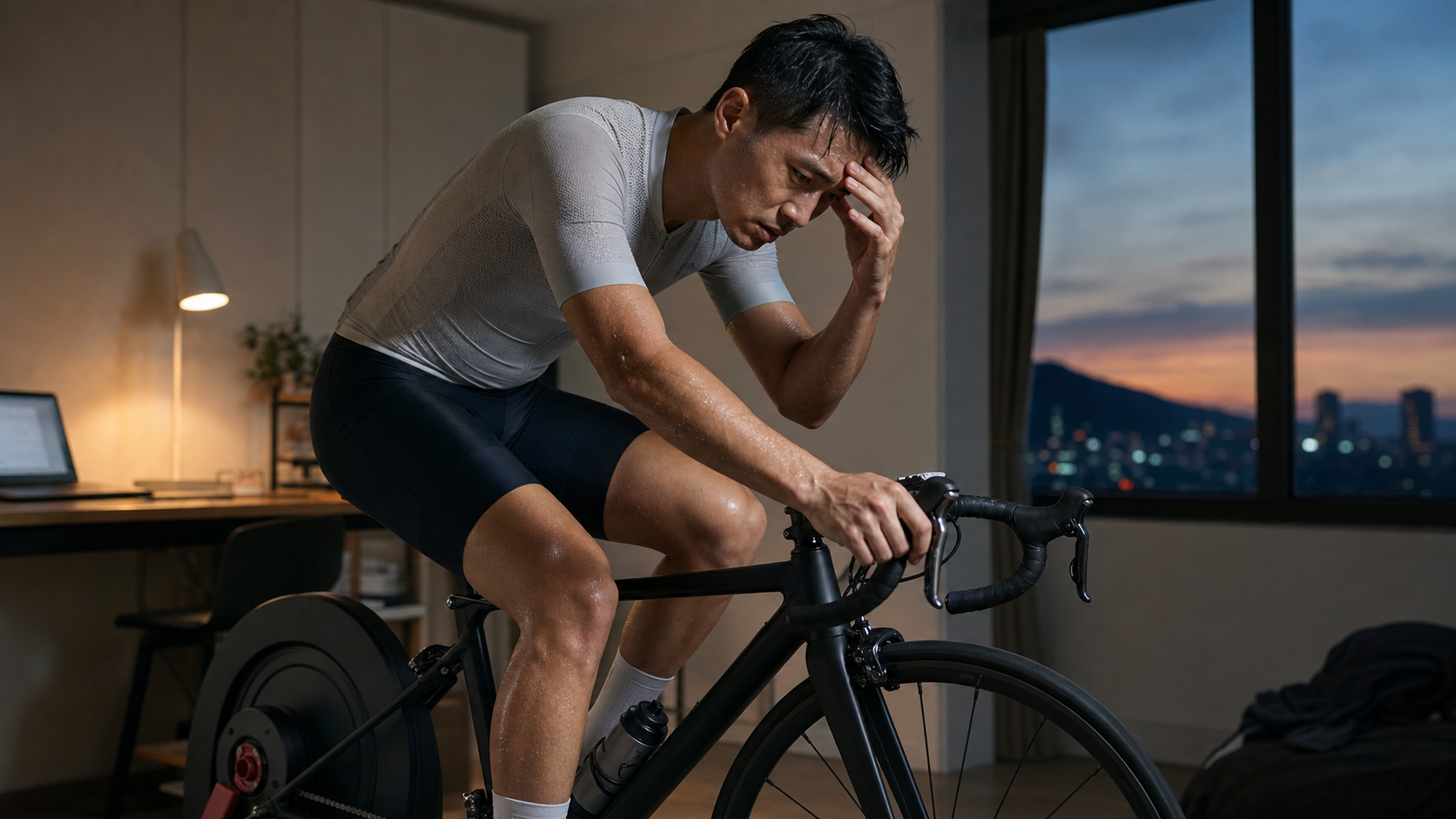
I once coached an engineer, let’s call him A-Kai. He was 34, weighed about 72 kg, had a Functional Threshold Power (FTP) of around 245 watts, and regularly climbed Fengguizui on weekends, occasionally joining group rides on the Yangjin P-word route. By the numbers, his fitness was steadily improving—his resting heart rate dropped from 62 bpm to 55 bpm, and his estimated VO2max looked great. But for a while, his Wednesday evening trainer sessions kept “falling apart.” On the same 4×8-minute threshold intervals, with power set in a range he could normally hold comfortably, he’d give up by the second set, complaining, “Coach, my legs feel dead today, like I just can’t turn the pedals.”
Initially, I looked for physiological answers: sleep? nutrition? hydration? iron? Then I asked him to keep a simple training log, including his “work situation that day.” The pattern became obvious: the sessions he blew up on were all days he’d spent in meetings all day, coding all day, with his brain completely drained. The times he felt great and set PRs were often on rest days or weekends when his mind was clear.
A-Kai’s legs were fine; his brain was tired first. That’s the main subject of this article—mental fatigue in sport. It won’t show up on your power meter, heart rate strap, or lactate data, yet it can genuinely steal a significant chunk of your endurance. And more importantly: this is something that can be trained. In recent years, sports science has developed a method called “Brain Endurance Training (BET),” which allows us to train the “mental fatigue-resistant brain” just like we train the cardiovascular system or muscles.
In this long-form article, I’ll take a practical coaching perspective to walk you through the concepts, the science, practical workouts, common mistakes, and action plans for different levels.
Concepts and Scientific Foundations: Part of the Endurance Limit Is Determined by “Feelings”
What Is Mental Fatigue? It’s Different from Being “Tired”
Let’s clarify the terms first. What we usually call “tiredness” actually mixes several things:
- Physical fatigue: An actual decline in muscles, energy systems, and cardiorespiratory function, such as glycogen depletion, lactate accumulation, and reduced neuromuscular transmission efficiency.
- Mental fatigue: A subjective state of “brain feeling foggy, not wanting to move, lacking motivation” that arises after prolonged engagement in cognitive tasks requiring focus, decision-making, and impulse inhibition.
The source of mental fatigue isn’t exercise; it’s using your brain. A full day of meetings, staring at a screen debugging, handling customer complaints, or helping kids with homework until you’re at your wit’s end—these all accumulate mental fatigue. The key point is: mental fatigue sets the stage before you even start exercising.
Core Finding: Mental Fatigue Raises “Perceived Exertion,” Not Physiological Breakdown
The most important research in this area comes from exercise physiologist Samuele Marcora and his team. Their classic experimental design goes roughly like this: subjects first perform a long, mentally demanding computer-based cognitive task (about 90 minutes) to induce mental fatigue, then do a cycling time-to-exhaustion test; the control group does an easy, non-mentally demanding activity before cycling.
The results were crucial:
- The group that was “brain-drained first” had a significantly shorter time to exhaustion on the bike (various studies show a decline ranging roughly 10–20%).
- However, their heart rate, lactate, oxygen uptake, and other physiological markers showed no significant difference compared to the control group.
- The only significant difference was—at the same power output, they perceived it as “more effortful” (higher RPE, Rating of Perceived Exertion).
In other words, mental fatigue doesn’t break your engine; it makes your “perceived exertion throttle” more sensitive. You still have the same engine, but the throttle feels like it’s about to blow with just a slight press, so you choose to give up earlier or unconsciously slow down during self-paced efforts.
I must honestly note here: the numbers above are a “range,” not an exact guarantee. Different studies use different populations, task durations, and exercise intensities, so the magnitude of decline varies. You don’t need to memorize a specific percentage. The key is to grasp the direction—mental fatigue primarily impairs endurance by “raising perceived exertion,” not by directly breaking down physiological function.
This mechanism has been repeatedly discussed in subsequent studies and review articles. One physiological explanation is that prolonged mental exertion causes substances like adenosine to accumulate in the brain, which raises perceived exertion and dampens motivation—this also conveniently explains why “caffeine” (an adenosine receptor antagonist) often feels particularly effective under mental fatigue.
Why This Matters Especially for Endurance Athletes
The essence of endurance sports is “how long can you maintain pace while feeling increasingly uncomfortable.” Since perceived exertion is a key variable determining when you give up or slow down, anything that raises perceived exertion—including mental fatigue—directly erodes your performance.
For a Taiwanese amateur cyclist who works a regular job and only squeezes in training after hours, this happens almost every day:
- Your hardest interval sessions are often scheduled on weekday evenings, when your brain has already been drained by work.
- In long-distance challenges (like Wuling, Twin Towers, or the Huadong Round), the latter half involves not just tired legs but also traffic judgment, nutrition decisions, and communication—these cognitive loads themselves accumulate mental fatigue.
- Race-day nervousness, anxiety, and poor sleep are also forms of mental depletion.
So, understanding and managing mental fatigue has practical value for amateur athletes that rivals adding a few more interval sets.
Going Deeper: How the Brain “Turns Up” Perceived Exertion
Many athletes ask, “Coach, how exactly does the brain turn up perceived exertion?” Let me use an easy-to-understand analogy. Think of “perceived exertion” as a gauge inside the brain. This gauge integrates many input signals—feedback from muscles, breathing rate, your current motivation, and the brain’s own “level of system lag.”
The key is: this gauge is not a purely physiological reading; it’s a subjective interpretation by the brain. When you use your brain for extended periods, the prefrontal cortex (the area responsible for focus, decision-making, and impulse inhibition) gradually “tires,” and along with this fatigue, certain neurochemicals (like the adenosine mentioned earlier) accumulate. The net effect of these changes is that the same power output or pace gets “tagged” by the brain as more effortful.
This also explains several everyday phenomena:
- Why caffeine works. Caffeine blocks adenosine’s effects, essentially pushing that elevated perceived-exertion gauge back down a bit, which is why coffee often feels especially effective under mental fatigue.
- Why “motivation” can temporarily offset fatigue. When the finish line is in sight or someone is cheering you on, your motivation spikes, and at the same perceived exertion, you’re more willing to keep pushing—this is why some people can produce power in races they can’t in training.
- Why warming up and getting into it often helps. Once you actually start moving, the rhythm and focus of exercise partially “take over” the brain, pulling attention away from that scattered, irritable state.
I want to reiterate a conservative stance: the above is a simplified mechanistic model for easy understanding. The real brain is far more complex, and researchers are still studying the details. You don’t need to memorize these neuroscience terms. Just remember one practical takeaway: perceived exertion is computed by the brain, and the brain can be trained and managed.
Signals of Mental Fatigue: How to Tell “Today It’s Brain Fatigue, Not Leg Fatigue”
In coaching, I teach athletes to use a few clues for quick self-assessment. The comparison table below can help you determine which type of “tiredness” you’re dealing with:
| Observation Clue | Leans Toward Physical Fatigue | Leans Toward Mental Fatigue |
|---|---|---|
| When it appears | After accumulated training load, late in long distances | After mentally draining workdays, exams/presentations, poor sleep |
| Heart rate response | Heart rate higher or blunted at same intensity | Heart rate roughly normal at same intensity |
| Subjective perceived exertion (RPE) | High, and consistent with physiological markers | High, but “doesn’t match” heart rate/power |
| Muscle sensation | Clearly sore, tight, weak | Muscles actually feel fine, just “don’t want to move” |
| Motivation and mood | Want to rest but not anxious | Lack of drive, easily irritated, scattered attention |
| Change after warm-up | Often still heavy after warm-up | Often improves noticeably after warm-up and getting into it |
The most practical assessment method: the warm-up test. If you suspect mental fatigue, don’t rush to cancel your workout. Do a 15-minute progressive warm-up to “get into the zone.” Mental fatigue often eases considerably once you actually start moving and the brain gets taken over by the exercise itself; pure physical fatigue usually remains heavy even after warming up. I’ve used this trick for years, and it’s saved many workouts that were “almost talked out of by a bad mood.”
Practical Methods: How to Train with Brain Endurance Training (BET)
The Core Logic of BET: Getting the Brain Used to “Staying Focused Under Fatigue”
If mental fatigue raises perceived exertion and steals endurance, then the reverse logic applies: if we can make the brain more resilient, so that perceived exertion rises more slowly under fatigue, can we preserve performance? That’s the core hypothesis of BET.
BET essentially involves “deliberately making the brain work continuously under fatigue” through progressive training. Two common modes exist:
- Independent mode (brain-drain first, then exercise): Do a mentally demanding cognitive task before training, then exercise while carrying mental fatigue. This simulates the real-world scenario of “riding after overtime work,” deliberately practicing maintaining performance in the worst state.
- Concurrent mode (Concurrent-BET, brain-drain while exercising): While riding a trainer or treadmill, simultaneously perform cognitive tasks requiring focus, reaction, and inhibition. This approach has been used in literature for training programs lasting up to 12 weeks, progressively increasing both physiological and cognitive loads (progressive overload) over the weeks.
In a 12-week study by Marcora’s team, the group that added BET on top of physical training showed significantly greater improvements in cycling time-to-exhaustion compared to the group doing only physical training (the former’s improvement was several times that of the latter). The same direction has been observed in cyclists—BET improved not only endurance performance but also cognitive performance. This gives us an appealing message: the brain’s fatigue resistance can be systematically trained.
Again, to be conservative: this is still a relatively new research area. Sample sizes, populations, and task designs vary, so the magnitude of effects shouldn’t be treated as a guaranteed number for everyone. Treat BET as “a training stimulus with theoretical and preliminary evidence supporting its inclusion,” not a miracle cure.
What “Brain-Draining Tasks” Are Commonly Used
The cognitive tasks commonly used in research share common features: “sustained focus + impulse inhibition + quick reaction.” You can achieve similar effects at home using phone apps or online tools:
- Stroop task: The screen shows the word “red” but in green font; you must answer the color, not the word, forcing the brain to suppress intuition.
- AX-CPT / Sustained attention task: Stare at a screen for a long time, responding only when a specific sequence appears, testing sustained focus and inhibition.
- Serial mental arithmetic: For example, continuously subtract 7 from 1000, maintaining accuracy over time.
- N-back memory task: Remember stimuli from N steps back, testing working memory.
The point isn’t how fancy the task is, but that it’s boring enough, sustained enough, and requires constant “resisting distraction”—that feeling of “I want to check my phone but can’t” is precisely the source of mental fatigue, and precisely what we’re training.
A 6-Week Beginner BET Add-On Plan (Cycling Example)
Below is a beginner-level plan I’ve designed for amateur cyclists, adding BET on top of existing cycling training. Assume you have 3 structured sessions per week. Cognitive tasks can be done with a phone app.
| Week | Cognitive Task Duration/Mode | Paired Cycling Session | Weekly Focus |
|---|---|---|---|
| Week 1 | 10 minutes each, done “before” exercise | Regular Z2 aerobic 60 minutes | Get the body used to “brain-drain first, then ride” |
| Week 2 | 15 minutes each, before exercise | Z2 aerobic + 2×8 min threshold | Enter intervals after cognitive task; observe RPE changes |
| Week 3 | 20 minutes each, before exercise | 3×8 min threshold intervals | Start recording “perceived exertion at same power” |
| Week 4 | 15 minutes, switch to “while riding” | Z2 aerobic 60 min with cognitive task in the middle | First attempt at concurrent mode; lower intensity first |
| Week 5 | 20 minutes, while riding | Z2 + 2×10 min Sweet Spot | Concurrent mode + moderate intensity |
| Week 6 | 25 minutes, while riding | 3×10 min Sweet Spot | Final test; compare feelings to Week 1 |
Operational reminders:
- Start with low doses; err on the side of lighter, not heavier. BET is an additional fatigue stimulus. When doing concurrent mode for the first time, definitely drop the cycling intensity a notch to avoid blowing up both physiological and psychological load simultaneously, which could lead to injury or overtraining.
- Do it on only some sessions, not every session. I typically recommend adding BET at most 1–2 times per week; keep other sessions clean so the body can focus on absorbing physiological adaptations.
- Record subjective perceived exertion (RPE). Progress from BET isn’t easily seen directly in power; instead, it’s qualitative changes like “at the same power, it feels less effortful” or “I can still hold pace after brain-draining.” Develop the habit of rating your RPE on a 0–10 scale after each session.
Beyond BET: Daily Mental Fatigue Management
BET is about “actively training the brain,” but more often, smart mental fatigue management is equally important—and often more immediately useful:
- Schedule workouts to avoid times of high cognitive drain. If you know Wednesday is a full day of meetings, don’t put your hardest intervals on Wednesday evening. Schedule quality sessions on days when your mind is relatively fresh (for many office workers, that’s weekend mornings).
- Reduce “cognitive drain” the day before an important race. Don’t fill the day before a race with decisions—pack early, plan routes and nutrition in advance, limit phone scrolling, and avoid stressful work matters. You need to preserve not just your legs, but also your brain.
- Use caffeine wisely, but understand its role. Caffeine can counteract the rise in perceived exertion caused by mental fatigue, which is one reason it’s widely used in endurance sports. Convenience store coffee is extremely accessible in Taiwan, but pay attention to personal tolerance, avoid affecting sleep, and remember it can’t replace real rest. Those with cardiovascular conditions should consult a physician first.
- Sleep is the master switch for mental fatigue. Without enough sleep, your baseline perceived exertion is elevated across the board the next day. Instead of obsessing over workout details, prioritize sleep—it often offers the highest return on investment.
How to Use Caffeine: A Reference Dosage Table
Since caffeine is often used to counter the perceived exertion of mental fatigue, I’ve compiled an “educational” reference range for your understanding. Please note this is a general principle, not a prescription. Actual amounts vary by individual. Those with chronic conditions, caffeine sensitivity, or sleep issues should consult a physician or nutritionist first.
| Scenario | Common Reference Range | Timing | Notes |
|---|---|---|---|
| General alertness/daily training | Lower dose (e.g., one convenience store coffee) | About 30–60 minutes before training | Observe your own tolerance; avoid excessive amounts on an empty stomach |
| Key race/long event | Moderate dose | Split doses before and during the race | Test it in training first; never try it for the first time on race day |
| Evening/night training | Minimize or avoid | — | Avoid affecting that night’s sleep; not worth the trade-off |
Three practical principles:
- Test before using. Any nutrition strategy should be validated in training first; don’t try it for the first time on race day.
- Protect sleep. Caffeine has a long half-life; using it after mid-afternoon can easily backfire on your next-day condition, creating a vicious cycle.
- It’s a bonus, not a baseline. Caffeine helps push the elevated perceived exertion back down a bit, but the real foundation is sleep, nutrition, and training itself.
Again, this is educational information. Before taking any supplement, if you have cardiovascular disease, hypertension, anxiety disorders, are pregnant, or have other health conditions, please consult a physician or nutritionist for individualized advice.
Another Case: The Marathoner Who “Always Slowed in the Second Half”
Let me share a running case to show this concept isn’t limited to cycling. A trainee, Xiao-Min, 40, was targeting a sub-4-hour marathon. Her training paces and long-run mileage were on track, but in every race she slowed dramatically after 30 km, to the point where even she was puzzled—because in training, she could run the same distance.
I asked her to recall her “mental state” in the latter part of races. She described it vividly: “After 30 km, I get really irritable and want to quit. I lose track of where the aid stations are, whether to take a gel, my stride rhythm falls apart—my mind is a mess.” This is a classic case of late-race mental fatigue: prolonged focus, anxiety, and decision-making, combined with physical fatigue, pushed her perceived-exertion gauge to the max, so she “chose” to slow down.
Our prescription wasn’t more mileage but three things: first, deliberately add cognitive tasks to the final 8–10 km of long runs (mental pace calculations, planning virtual nutrition stops) to practice staying clear-headed when tired; second, write all race nutrition and pacing decisions on a small card in advance to reduce in-race decision-making load; third, deliberately reduce cognitive drain in daily life the week before the race. Three months later, she ran 3:57. After the race, she told me, “This time, after 30 km, my mind was still clear. I knew what I was doing, so I held steady.”
The key takeaway from this case: slowing down isn’t always a fitness issue; it might be the brain crashing first. And that brain hurdle can be prepared for and trained in advance.
Common Mistakes and Corrections
In coaching, I’ve seen too many people half-understand BET and use it incorrectly. Here are the most common pitfalls:
Mistake 1: Misjudging “Brain Fatigue” as “Fitness Decline,” Then Blindly Adding Volume
Many dedicated athletes, when a session falls apart, have the first reaction, “Am I not training enough?” and add more sessions and volume. But if the root cause of the collapse is mental fatigue (e.g., a seasonal work surge), adding more training volume only causes double depletion, heading toward overtraining.
Correction: Use the comparison table and warm-up test above to determine the fatigue type first. If you highly suspect mental fatigue is the main driver, the right move is adjusting scheduling and recovery, not adding volume.
Mistake 2: Loading BET Dosage Too High at Once, Burning Yourself Out
Some people, upon hearing “you can train your brain too,” immediately stack a 60-minute brain-draining task on top of their hardest interval day. That’s like draining both the physiological and psychological fuel tanks at once. The next day, not only is there no improvement, but you might feel flat for days.
Correction: Follow progressive overload. Start cognitive tasks at 10–15 minutes. In the early stages of concurrent mode, definitely lower exercise intensity. Limit to 1–2 times per week.
Mistake 3: Training Only Physiology, Ignoring Race-Day Cognitive Load
Many cyclists prepare for long events like Fondo or Wuling entirely through fitness and nutrition, overlooking that the heavy judgment, communication, and focus required in the latter stages of an event are themselves mental depletion. The result: fitness is still there, but the brain crashes first—pace judgment deteriorates, nutrition gets forgotten.
Correction: In long-distance training, deliberately simulate “having to think in the late stages” (e.g., doing pace decisions or mental nutrition calculations in the final 30 minutes of a long ride), getting the brain used to “staying alert when tired” in advance.
Mistake 4: Treating Caffeine as a Panacea While Sacrificing Sleep
Using caffeine to push through mental fatigue works short-term, but if it comes at the cost of sleep, creating a vicious cycle, it actually raises your baseline perceived exertion over the long term.
Correction: Caffeine is a “tactical tool”; sleep is the “strategic foundation.” Don’t use tactics to overdraw strategy.
Mistake 5: Ignoring the “Invisible Cognitive Tax” of Emotions and Life Stress
Mental fatigue doesn’t only come from work. Family pressure, financial worries, interpersonal conflicts, and chronic anxiety are all “invisible cognitive taxes” that continuously drain brain resources. Some athletes have great training data but are in a prolonged slump; at the root, life stress is stealing their endurance.
Correction: Treat life stress as part of your training load. During high-stress periods, proactively lower training intensity; don’t fight yourself. If emotional distress persists and affects daily life, seek professional psychological help—most regions in Taiwan have psychiatric and counseling resources, and the National Health Insurance covers related services. Seeking help is not a sign of weakness.
Action Plans for Readers at Different Levels
Everyone starts from a different point. Here are three levels of plans you can start “today.”
Beginners (Just Starting Regular Exercise, No Structured Plan Yet)
What you need most right now is not to rush into BET, but to build the ability to “identify fatigue types”:
- Start a simple training log with three entries: daily work/life cognitive load (1–5 scale), sleep quality, and subjective perceived exertion of the session.
- Practice the “warm-up test.” Don’t let a bad mood easily talk you out of a session, but also learn to recognize days when you genuinely need rest.
- Schedule the session you want to train hardest for during the time when your mind is freshest.
Intermediate (Have a Structured Plan, Chasing PRs as an Amateur Cyclist/Runner)
You can formally introduce BET as a training variable:
- Use the 6-week beginner plan above, adding it 1–2 times per week, strictly following the principles of progression and “lighter rather than heavier.”
- Design BET around your target race scenario. For long events like Wuling or the Huadong Round, deliberately add cognitive tasks in the latter part of long sessions to train “staying focused when tired.”
- Build your own RPE database. Observing the qualitative change of “perceived exertion at the same power decreasing over weeks” shows BET’s effects better than staring at power numbers.
Competitive/Advanced (Race-Oriented, with Ample Training Time)
What you need to do is periodize cognitive load and integrate it into overall training stress management:
- Treat BET as additional training load and include it in your fatigue monitoring (don’t let it silently push up your overall stress without realizing it).
- During the taper before a race, don’t just reduce physical load—actively reduce cognitive drain so the brain recovers to its best along with the legs.
- Do scenario-specific focus training for key race moments (like decisive climbs or group attacks), so the brain can still make good decisions when most fatigued.
Here’s a table summarizing the key points for the three levels:
| Level | Primary Task | BET Introduction | What to Avoid Most |
|---|---|---|---|
| Beginner | Identify fatigue types, keep a log | Don’t introduce yet; build the foundation first | Blindly adding volume |
| Intermediate | Introduce the 6-week beginner BET | 1–2 times per week, progressive | Loading dosage too high at once |
| Advanced | Periodize cognitive load | Scenario-specific, integrated monitoring | Neglecting pre-race cognitive taper |
Taiwan-Specific Context: Applying This to Your Daily Life
Finally, I want to ground these concepts in the real lives of Taiwanese cyclists and runners.
- Climate: Taiwan’s summers are hot and humid, which itself raises perceived exertion and psychological burden. The impact of mental fatigue is amplified in hot, humid conditions. During such seasons, pay extra attention to scheduling and hydration. Don’t force your hardest sessions on sweltering weekday evenings when your brain is at its dullest after work.
- Eating out and nutrition: Eating out is convenient in Taiwan, but be mindful before races to avoid overly greasy or heavy meals that affect your condition. For long events, convenience stores are great for nutrition planning (tea eggs, bananas, rice balls, sports drinks are all easy to get). “Thinking ahead and writing down” your nutrition decisions reduces in-race cognitive load.
- Terrain: Classic routes like Fengguizui and the Yangjin P-word in the north, Wuling in the central region, and County Road 185 in the south all require traffic judgment and pacing in their latter stages—perfect natural training grounds for “thinking while tired.”
- Medical and health resources: If you have chronic conditions like cardiovascular disease, diabetes, or hypertension, any adjustments regarding caffeine use or exercise intensity must be discussed with a physician for individualized assessment. Don’t blindly copy online training plans. Taiwan’s National Health Insurance makes medical access convenient, and sports medicine clinics, psychiatric departments, and nutrition consultations are all quite accessible—use them.
FAQ: Questions Athletes Ask Most Often
Q1: Will doing BET make me more tired and affect my main sessions?
A: You’ll definitely feel more tired at first—that’s a normal training stimulus. The key is dosage control and progression, and not stacking it on every session. If you experience several consecutive days of low energy, poor sleep, or irritability, that means the dosage is too high—reduce it.
Q2: I don’t have a trainer. Can I still do BET?
A: Yes. Independent-mode BET (doing a brain-draining task before exercise) doesn’t require a trainer; you can use it before outdoor rides, runs, or swims. Concurrent mode is better done on a trainer/treadmill for safety.
Q3: Are phone focus/brain training apps effective?
A: BET’s effect comes from “sustained, boring, distraction-resisting” cognitive load. Many focus-training or reaction-training apps on the market can provide similar stimuli. The tool doesn’t need to be fancy; the key is whether you’re genuinely “persisting while resisting distraction.”
Q4: Can BET replace physical training?
A: No. BET is an additional stimulus stacked on top of physical training, aimed at strengthening mental fatigue resistance. The cardiovascular, strength, and technical training you need for fitness is still essential.
Q5: How long until I see results?
A: Training programs in the literature typically span several weeks. For amateurs, give yourself a 6-week observation window. Focus on whether there’s a qualitative improvement in “perceived exertion at the same intensity” and “ability to hold pace after brain-draining,” rather than expecting power to skyrocket in a few days.
Q6: Will BET make me more prone to overtraining?
A: If dosage isn’t controlled properly, there is a risk, because it’s an additional source of fatigue. That’s why I keep emphasizing “lighter rather than heavier, at most 1–2 times per week, and lowering exercise intensity initially.” Include BET in your overall fatigue monitoring. Watch for changes in sleep, mood, and resting heart rate; if anything seems off, reduce the dose.
Q7: My job is already mentally demanding. Do I still need to do extra BET?
A: Great question. If your job inherently involves high cognitive load, you’re already “passively” experiencing mental fatigue every day to some degree. In that case, rather than deliberately adding more BET, what you need more is management—schedule quality sessions when your mind is relatively fresh, protect sleep, and reduce drain before races. Once your foundation is solid, consider introducing BET in small, planned doses.
Q8: Does mental fatigue affect strength training or technical movements?
A: Yes. Mental fatigue doesn’t only affect endurance; it can also affect movement performance and decision-making that require focus and inhibition. So technical sessions requiring high concentration, or movements with higher risk, are best not scheduled during your dullest mental periods, for safety.
Q9: So should I completely avoid training when fatigued?
A: No. Training “under fatigue” in a controlled manner is precisely the principle of BET and mirrors real race conditions. The key is planned exposure to manageable fatigue, not unconscious long-term grinding. Planned exposure is training; unconscious grinding is chronic depletion. The two are very different.
Conclusion: Train Your Brain Like a Muscle
Back to A-Kai’s story. Afterward, we did two things: first, we moved his hardest interval session from brain-draining Wednesdays to Saturday mornings when his mind was clear; second, we introduced beginner BET so he could deliberately practice “maintaining pace in a mentally fatigued state.” About six weeks later, he told me, “Coach, now even if I get on the trainer after overtime, I can hold on better. I don’t sit down and want to quit right away.” His power didn’t skyrocket, but his ability to “hold on” clearly improved—and in endurance sports, holding on is often the difference between winning and losing.
Endurance has never been just about the heart, lungs, and legs. When you give up, when you slow down, is largely determined by “how the brain interprets perceived exertion.” Understanding mental fatigue, learning to manage it, and using BET to actively strengthen your fatigue-resistant brain gives you an extra card that many people overlook.
Next time you feel “my legs are dead today,” first ask yourself: are the legs tired, or did the brain get tired first? Answer that question correctly, and you’re already ahead of most people.
This article is educational content and cannot replace individualized diagnosis and treatment advice from physicians, physical therapists, or nutritionists. If you have chronic diseases, cardiovascular conditions, or emotional distress, please seek professional individualized assessment and assistance.
References
- Mental Fatigue Impairs Endurance Performance: A Physiological Explanation (Sports Medicine, Springer): https://link.springer.com/article/10.1007/s40279-018-0946-9
- Drive in Sports: How Mental Fatigue Affects Endurance Performance (Frontiers in Psychology): https://www.frontiersin.org/journals/psychology/articles/10.3389/fpsyg.2018.01383/full
- Fatigue Induced by Physical and Mental Exertion Increases Perception of Effort and Impairs Subsequent Endurance Performance (Frontiers in Physiology): https://www.frontiersin.org/journals/physiology/articles/10.3389/fphys.2016.00587/full
- Brain Endurance Training improves endurance and cognitive performance in road cyclists (Journal of Science and Medicine in Sport): https://www.jsams.org/article/S1440-2440(23)00088-9/fulltext
- Prior brain endurance training improves endurance exercise performance (European Journal of Sport Science): https://onlinelibrary.wiley.com/doi/10.1080/17461391.2022.2153231
- Brain endurance training as a strategy for reducing mental fatigue (Frontiers in Psychology): https://www.frontiersin.org/journals/psychology/articles/10.3389/fpsyg.2025.1616171/full
Related Reading
- The Impact of Cognitive Fatigue on Physical Performance: Declining Exercise Capacity After Mental Work
- Mental Fatigue: The Brain Is Tired, the Legs Aren’t, Yet Performance Collapses First
- The Impact of Cognitive Fatigue on Cycling Power Output: A Study on Performance Loss After Mental Work
- Overtraining and Mental Burnout in Cycling: Identification and Recovery Strategies
西進武嶺 免費訓練分析服務 Intervals | 練不夠還是練過頭?你哪一種類型選手?AI模型告訴你! | 備戰神器 | 公路車 訓練 | CT Yeh
4 年前
西進武嶺 8000名單車友數據分析 PART1 | 從新手到高手數量/瓦數/推力比/FTP推力比/功率計使用率 大解析 | 公路車 | CTYeh
5 年前
一個測試有沒有認真練車的方法😂 #公路車
10 個月前
西進武嶺 自製新版AI配速表產生器 x 賽前攻略 抱佛腳! 沒有功率計也可以產生配速表嗎?有什麼其他眉角賽前要注意的呢? | 西進武嶺 / 東進武嶺 KOM 攻略 | 公路車 | CT Yeh
4 年前
FTL 與 SYB 車隊專訪 西進武嶺 實用攻略分享! 2小時 如何練?!你不知道的眉角!新手準備武嶺必看 EP1 | 實力派女車友 | 精華版 | 公路車 | CTYeh
4 年前
ThinkRider 智騎 XXPRO 訓練台,高階機種功能 只要 1/3價格!? 實測功率對比、噪音實測 / 公路車 / CT Yeh
1 年前
Fitting訓練兩用功率車 ! Thinkrider ST900 完整實測!/ 坡度升降 / 鄰居測試/ smart bike/公路車/ CT Yeh
2 年前
雨戰! 西進武嶺員工旅遊 加料 各路段大數據分析 | 同事端出5公斤的公路車來挑戰!? EP1
4 年前