A Complete Guide to Environmental Factors in Athletic Performance: How Altitude, Temperature, Humidity, and Air Pollution Affect You, and How to Respond
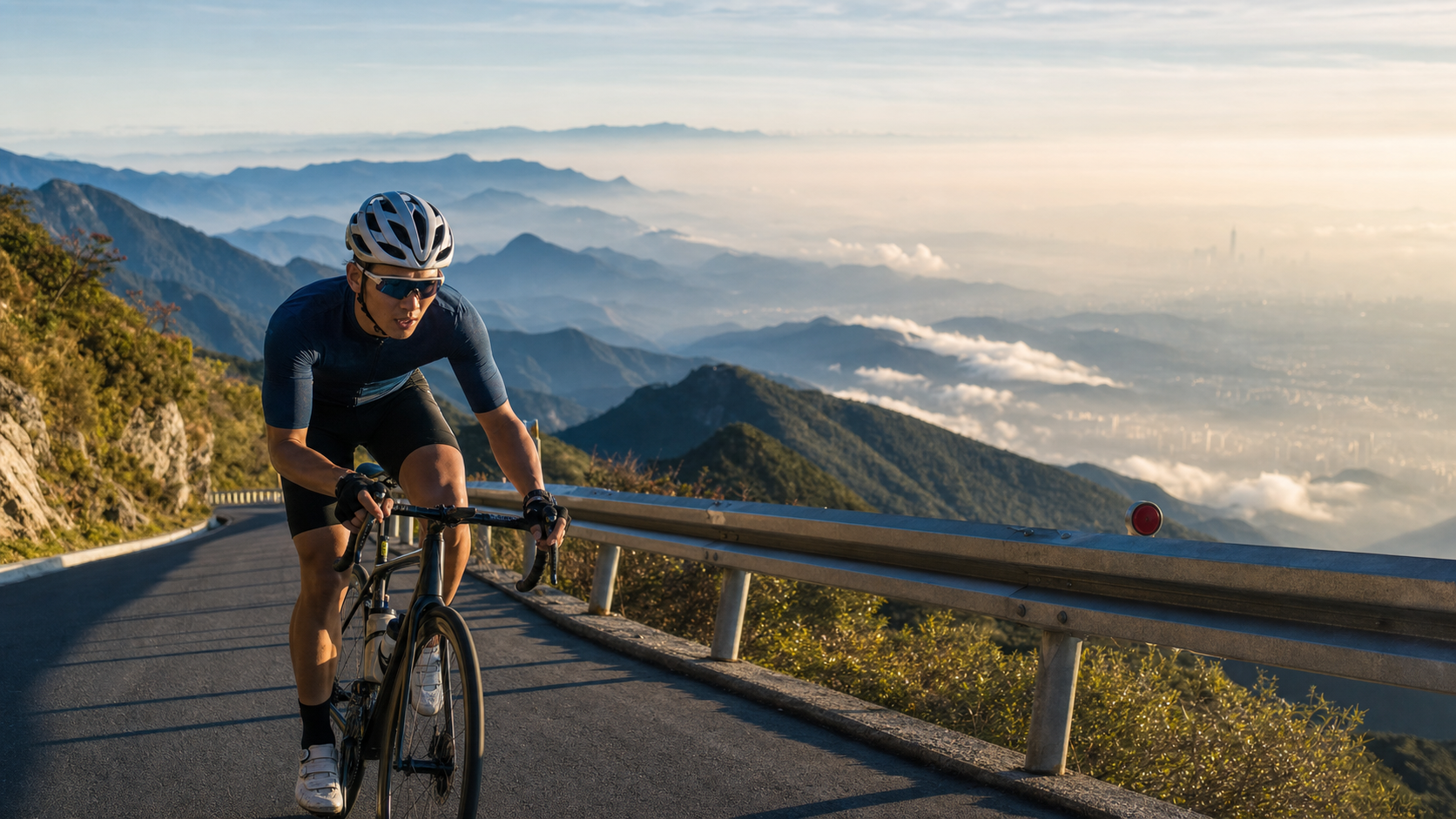
Opening: That Time on Wuling, When I Truly Started Taking “Environment” Seriously
I still remember years ago taking a student who had trained exclusively at low altitude up Wuling. His power data in Taipei was impressive—stable FTP, great feel, even better mood. But when the group climbed from Cingjing past 3,000 meters, his power dropped nearly 20%, while his heart rate was over ten beats higher than usual at the same pace. His face turned pale, and his speech became short. He kept muttering: “I’m clearly stronger than everyone else—how can this be?”
I didn’t explain much, just asked him to drop his pace another level and slow his breathing. After we descended that day, I told him something I now say to every student: Your body doesn’t train in a vacuum. Every watt you push is re-priced by the current air density, temperature, humidity, and air quality.
In this article, I want to compile the insights I’ve accumulated over the years coaching athletes of all levels and general fitness enthusiasts, along with the sports physiology and sports medicine literature I continuously read, into a proper “Environmental Factors User Manual.” Altitude, temperature, humidity, and air pollution—these four factors are especially important in Taiwan because we simultaneously have the towering Central Mountain Range, subtropical muggy humidity, and air pollution that drifts north and south in autumn and winter. Understanding them means you not only train safer but can also squeeze out performance at the right moments.
Conceptual Foundation: How the Environment “Re-prices” Every Watt You Produce
Before discussing each factor individually, let’s establish a unified framework. When the human body exercises, it’s essentially doing two things: converting chemical energy into mechanical work and dissipating the heat generated in the process. Environmental factors interfere with one or both of these pathways:
- Altitude primarily interferes with “oxygen supply”: the air is thinner, so the same breath delivers less oxygen, lowering the ceiling of the aerobic system.
- Temperature and humidity primarily interfere with “heat dissipation”: the hotter and more humid the environment, the harder it is for the body to keep core temperature within a safe range, forcing the body to slow down in self-preservation.
- Air pollution has both chronic and acute effects: short-term respiratory irritation, increased inflammation and oxidative stress; long-term impacts on cardiopulmonary health and training adaptations.
I often tell my students that these four factors aren’t a question of “whether they affect you,” but “how much they affect you, and whether you’ve priced them in advance.” Let’s break them down one by one.
Altitude: Diluted Oxygen and a Lowered Ceiling
Physiological Mechanisms
As altitude increases, atmospheric pressure drops. Although the “proportion” of oxygen in the air remains unchanged (still about 21%), the partial pressure of oxygen decreases, reducing the efficiency with which the alveoli can push oxygen into the blood. The result is lower blood oxygen saturation, less oxygen delivered to muscles, and limited aerobic metabolism.
The body initiates a cascade of compensatory responses: breathing becomes faster and deeper, heart rate rises, and the kidneys secrete erythropoietin (EPO) to stimulate blood cell production. But these adaptations take time. In the short term, what you feel is “the same intensity suddenly feels much harder and more breathless.”
Quantification: How Much Do You Lose?
Based on general rules compiled from multiple sports physiology studies, for well-trained endurance athletes, VO2max drops approximately 6–7% for every 1,000 meters of altitude gain, with the decline becoming roughly linear from about 1,500 meters upward (ResearchGate study summary, iRunFar explainer). For recreational amateurs, the decline is usually slightly smaller.
Notably, the decline in actual race performance is usually smaller than the decline in VO2max—at 1,500–2,000 meters, middle-distance race times are roughly 2–4% slower (Mysportscience summary). Additionally, very high-intensity efforts lasting under about two minutes (such as short sprints) are barely affected by altitude, as they rely primarily on the anaerobic system.
The table below is an estimation reference I often give students preparing for mountain rides. Please remember: this is a range estimate, not a precise formula, and individual variation is large.
| Altitude | Approximate VO2max Decline | Perceived Effort at Aerobic Endurance Pace | Corresponding Taiwan Scenarios |
|---|---|---|---|
| 0–500 m | Negligible | Normal | Taipei, Tainan urban areas |
| 1,000–1,500 m | ~3–8% | Starting to feel breathless; need to reduce intensity | Yangmingshan, Lala Mountain |
| 2,000–2,500 m | ~10–16% | Clearly difficult; significant pacing adjustment needed | Cingjing, lower Hehuan Mountain |
| 3,000–3,275 m | ~18–23% | Power/pacing needs to drop a full level | Wuling, Hehuan Main Peak |
Acclimatization
The good news is that the body adapts. The general rule from the literature is: spending 1–2 weeks at altitude recovers about one-third of the initial VO2max loss; staying 3 weeks or more yields even greater recovery (iRunFar). This is why many elite teams go up early for altitude training camps.
But for most Taiwanese cyclists, Wuling is a “single-day assault” with no time to acclimatize. In that case, I give a few practical principles:
- Drop your pace from the very first meter: Don’t use your sea-level power as a target; the power ceiling is naturally lower in the mountains. I’ve seen too many people blow all their energy by 1,500 meters, then cramp up and suffer from hypothermia on the descent from 3,000 meters.
- Sleep well the night before and eat enough carbs that day: High altitude already stresses the body; don’t stack sleep debt and fasting on top of it.
- Watch for signs of acute mountain sickness: headache, nausea, severe dizziness, altered consciousness. These are signals to descend, not to push through. Medical resources in Taiwan’s mountains are limited; proper medical facilities are only at lower elevations. Safety always comes before performance.
Temperature: When Heat Dissipation Can’t Keep Up with Heat Production
Physiological Mechanisms
During exercise, only about 20–25% of energy is converted into mechanical work; the remaining 75–80% becomes heat. The body dissipates heat through skin blood flow and sweat evaporation. When ambient temperature rises, the temperature gradient between skin and environment narrows, reducing the efficiency of “conduction, convection, and radiation,” and the body becomes increasingly reliant on sweat evaporation.
Once heat production consistently exceeds heat dissipation, core temperature rises, and the body activates protective mechanisms: it actively reduces exercise intensity (central regulation), diverts blood to the skin for cooling rather than to muscles, and heart rate rises to supply both skin and muscles simultaneously (this is the so-called “cardiac drift”). Performance naturally declines.
Quantification and Danger Thresholds
For assessing hot environments, sports science commonly uses WBGT (Wet Bulb Globe Temperature) rather than simple air temperature, because it incorporates humidity, solar radiation, and wind speed. A frequently cited reference is that the danger zone for strenuous exercise begins around a heat index of 40°C, corresponding to a WBGT of approximately 31°C (CORE body temperature explainer).
The table below is a “hot environment traffic light” I’ve compiled for my students. The numbers are practical reference ranges; the key point is the behavioral response:
| WBGT Range | Risk Level | Training Adjustment Recommendations |
|---|---|---|
| < 23°C | Green light | Normal training |
| 23–28°C | Yellow light | Intensity workouts feasible; increase hydration, shorten interval sets |
| 28–31°C | Orange light | Reduce intensity, increase rest, avoid midday sun, supplement electrolytes |
| > 31°C | Red light | High-intensity outdoor training carries high risk; move indoors or train early morning/evening |
On summer afternoons in Taiwan, especially on windless riverside bike paths or urban asphalt roads, WBGT exceeding 30°C is routine. My iron rule for students is: schedule quality workouts (intervals, threshold) in July and August for 5:30–7:00 AM, or move them to an air-conditioned trainer. It’s not about fearing the heat—it’s that heat makes your high-intensity sessions “look done but deliver reduced stimulus,” while also increasing heatstroke risk.
Humidity: The Invisible Amplifier That Makes Heat Worse
Why Humidity Matters So Much
If temperature is the lead actor, humidity is the behind-the-scenes force that amplifies its power. That’s because the body’s primary cooling mechanism in high heat is sweat evaporation, and evaporation rate depends on how much more moisture the air can absorb. The higher the humidity, the closer the air is to saturation, and the less your sweat can evaporate—you’re drenched in sweat but can’t cool down, just losing water and electrolytes for nothing.
Research shows that at a fixed ambient temperature (around 30°C), higher relative humidity shortens the time needed to reach a given target core temperature—meaning you “heat up faster.” Time-trial power in very high humidity is significantly lower than in low-to-moderate humidity, with time-trial performance impaired by approximately 3.4%, and peak core temperature also higher (Elevated Humidity study, Temperature-humidity differentiation study).
This is the core pain point of Taiwan’s summer. Taiwan’s summer relative humidity routinely hits 75–90%. At the same 32°C, a dry inland desert and the Taipei Basin are completely different experiences physiologically and in perceived effort. I often tell students: Looking at the thermometer isn’t enough; you need to look at humidity. At the same 30°C, 60% humidity and 90% humidity are two different workouts.
Practical Strategies in Humid Conditions
- Actively create airflow: Always use a strong fan on an indoor trainer to simulate riding wind. Airflow dramatically improves sweat evaporation efficiency and is the cheapest, most effective cooling method.
- Wear less: Use breathable, moisture-wicking clothing; wear a jersey or vest when necessary to expose more skin surface for evaporation.
- Actively cool down: On long outdoor rides, pour ice water over your neck, back, and wrists at aid stations, or hold ice in your mouth; pre-cooling with an ice vest before competition are all literature-supported strategies (Heat alleviation guide).
- Be more aggressive with fluids and electrolytes: In high humidity, you might think you’re not sweating much (because sweat clings to your skin without evaporating), but actual losses are large and easily underestimated.
Hydration and Electrolyte Reference in Hot-Humid Conditions
Many students ask me “how much should I drink?” My answer is always: there’s no standard answer—the most accurate method is to measure yourself. It’s simple: weigh yourself before and after exercise (ideally after emptying your bladder, in a dehydrated state), and record how much fluid you consumed in between. The difference in body weight plus what you drank equals your sweat loss for that period. In Taiwan’s hot-humid conditions, many people lose over 1 kg per hour without realizing it.
The table below is a rough starting reference I give students; adjust based on your own sweat testing (values are general ranges, not precise prescriptions):
| Exercise Duration | Hydration Rhythm (Reference) | Sodium (Electrolyte) Supplementation | Notes |
|---|---|---|---|
| < 60 minutes | Drink when thirsty, small amounts frequently | Usually no extra sodium needed | Water is fine on cool days |
| 60–150 minutes | One sip every 15–20 minutes | ~300–600 mg sodium per hour | Aim toward the upper end on hot-humid days |
| > 150 minutes | Regular small amounts, adjust by feel | ~500–800 mg sodium per hour | Higher for heavy sweaters |
A common blind spot for Taiwanese cyclists is “only drinking plain water.” During prolonged hot-humid exercise, replacing fluids without sodium can actually dilute blood sodium, causing dizziness and weakness. Commercial sports drinks, salt tablets, or electrolyte packets all solve this. The key is don’t wait until you cramp or feel faint to think about it.
Air Pollution: The Invisible Opponent, Especially in Taiwan’s Autumn and Winter
Physiological Mechanisms and Why It’s Worse During Exercise
Air pollution is particularly tricky for athletes for a straightforward reason: during exercise, your minute ventilation increases dramatically, so the air you inhale (along with its PM2.5 and other pollutants) increases proportionally; moreover, forceful breathing increases airflow velocity, driving fine particulate matter deeper into the respiratory tract. Thus, at the same pollution concentration, athletes receive a far higher actual dose than the general population (Systematic review of air pollution and endurance exercise).
Inhaling these pollutants irritates the respiratory tract, raises blood pressure, affects vascular function, increases oxidative stress and inflammatory responses, and over the long term may offset the health benefits of exercise itself (Study on air pollution effects on trained cyclists).
Quantification Reference
The WHO’s annual average recommendation for PM2.5 is quite strict (WHO PM2.5 guidance). For exercise specifically, one study using a 60-minute moderate-intensity run as an example estimated that when PM2.5 reaches approximately 55 μg/m³, the additional health benefits of exercise approach zero; at approximately 95 μg/m³, the harms of exercise begin to outweigh the benefits (Study on air pollution’s impact on running performance). These numbers aren’t absolute truth, but they give us a useful mental anchor.
Below is the outdoor training decision table I give students, based on Taiwan’s common AQI (Air Quality Index) color categories:
| AQI Level (Color) | Status | General Population | Those with Respiratory/Cardiovascular Conditions |
|---|---|---|---|
| Green (0–50) | Good | Normal training | Normal training |
| Yellow (51–100) | Moderate | Sensitive individuals should be cautious | Reduce volume, watch for symptoms |
| Orange (101–150) | Unhealthy for sensitive groups | Reduce intensity, shorten duration | Move indoors |
| Red (151–200) | Unhealthy | High-intensity outdoor training not recommended | Avoid outdoor exercise |
| Purple/Maroon (>200) | Very unhealthy | Switch to indoor trainer | Stop outdoor exercise; seek medical care if necessary |
Taiwan’s autumn and winter (especially in the central and southern regions) often bring consecutive red and orange pollution days. My advice is direct: on poor air quality days, move workouts to an indoor trainer, or switch to core, strength, and stretching training that doesn’t require high ventilation. Don’t force an outdoor ride just because “it’s on the schedule.” One day of training isn’t that precious; your lungs are.
Interactions Among the Four Factors: The Real World Is Never a Single-Choice Question
Here’s an important reminder: these four factors often occur simultaneously in reality and multiply each other’s effects.
- The classic Wuling westbound route: altitude (reduced oxygen supply), large diurnal temperature swings (cold mornings, intense daytime sun), and hypothermia risk on the descent all at once.
- Summer riverside long rides: a triple whammy of high heat + high humidity + near-ground urban air pollution.
- Autumn/winter early morning mountain rides: low temperatures plus possible temperature inversion accumulating air pollution.
So I never make decisions based on a single number. Instead, I ask: “Which factor is most limiting today?” On altitude days, I manage with pacing. On hot-humid days, I manage with cooling and fueling. On air pollution days, I simply move indoors. First identify the primary limiting factor, then apply the targeted remedy—this is the core environmental management philosophy I’ve developed over years of leading teams.
Let me give another example familiar to Taiwanese cyclists: a late-autumn weekend westbound Wuling ride. Starting from Puli in the early morning, it might be only around 10-something degrees with fairly clean air; by midday in the Hehuan Mountain area, the sun might be blazing with extreme UV, but altitude is already near its limit and temperatures aren’t high; on the descent, wind speed picks up, wind chill drops sharply, and soaked cycling clothing rapidly increases hypothermia risk. Within a single day, you’ll be tested sequentially by four different scenarios: “insufficient warm-up in cold → sun exposure and dehydration → insufficient oxygen → hypothermia on descent.” So I always remind students: environmental management isn’t something you check once before leaving—it’s dynamic adjustment throughout the day—add layers when needed, hydrate when needed, slow down when needed. Think of it like driving: you watch the road conditions; you don’t just set the navigation and ignore everything else.
Common Mistakes and Corrections
After years of coaching students, I see the same mistakes repeated over and over. Here are the most common ones:
Mistake 1: Using sea-level power as a target in the mountains.
Correction: Altitude lowers the aerobic ceiling. Sticking to your sea-level numbers will only cause you to blow up early. In the mountains, use “perceived effort + heart rate” as your primary guide, treat power as a reference, and proactively drop your pace one level.
Mistake 2: Scheduling high-intensity workouts at noon in summer.
Correction: Heat reduces the actual stimulus of high-intensity sessions while increasing risk. Move quality workouts to early morning or an indoor trainer—you’ll find the same workout is much higher quality.
Mistake 3: Only looking at temperature, ignoring humidity.
Correction: Taiwan’s mugginess comes primarily from humidity. Learn to check humidity and WBGT. Don’t be fooled by “it’s only 30 degrees.”
Mistake 4: Riding outdoors regardless on polluted days, thinking “exercise detoxifies.”
Correction: During exercise, ventilation increases dramatically, so you inhale more pollutants. Exercising on poor air quality days doesn’t detoxify—it doubles your intake. Switch indoors or reduce intensity.
Mistake 5: Underestimating fluid loss in high humidity and not hydrating enough.
Correction: Sweat not evaporating doesn’t mean you’re not losing fluid. In high humidity, prolonged exercise requires more aggressive, planned fluid and electrolyte replacement.
Mistake 6: Ignoring the body’s warning signs of altitude sickness and heatstroke.
Correction: Headache, nausea, altered consciousness (altitude sickness); cessation of sweating, hot dry skin, dizziness and confusion (heatstroke)—these are signals to stop and seek medical care, not matters of willpower. Taiwan has convenient medical access; don’t push through.
Actionable Recommendations for Readers at Different Levels
Beginners Just Starting to Exercise
You don’t need to memorize all the numbers. Just remember three habits:
- Check two things before heading out: the weather’s “feels-like” temperature (including humidity) and the AQI. If it’s in the red, switch to indoor or rest.
- On hot and humid days, change your goal from “hitting the pace” to “finishing safely.” Slowing down isn’t shameful; heatstroke is what harms you.
- Your first time in the mountains, ride slowly the whole way, take plenty of breaks, and drink plenty of water. Treat it as a sightseeing trip, not a time trial.
Intermediate Athletes with Regular Training
- Incorporate the environment into your periodization: schedule quality workouts in summer for early morning or indoor trainer; schedule long outdoor rides for relatively cooler times.
- Use active cooling and pre-cooling: pour water over yourself at aid stations on long rides, hold ice in your mouth, use an ice vest before competition.
- Learn to read WBGT and humidity, and use the traffic light table above to adjust set counts and intensity rather than rigidly following your workout plan.
- Prepare indoor alternative workouts in advance for pollution season, so your training rhythm isn’t disrupted by poor air quality.
Competitive Athletes Preparing for Key Events (e.g., Wuling, Summer Ultramarathon-Style Long Distances)
- If conditions allow, arrive several days to a week early for altitude acclimatization, allowing the body to recover part of the VO2max loss.
- Do heat acclimation: 1–2 weeks of regular training in hot environments before the event improves sweat efficiency and plasma volume (Heat acclimation guide).
- Individualize your hydration and cooling strategy, ideally rehearsing it during training rather than trying it for the first time on race day.
- Write your “environmental withdrawal criteria” into your pre-race plan: decide in advance under what conditions you’ll voluntarily abandon or race conservatively, so adrenaline doesn’t cloud your judgment on the day.
A Case Study: Managing All Four Factors in a Single Event
Let me share a composite scenario (for teaching illustration; data are general ranges). An intermediate student signed up for a summer long-distance climbing event in central Taiwan, with a route climbing from flatland to about 2,000 meters. Here’s how we managed the environment:
- Flatland segment before the climb (high heat and humidity): deliberately conservative pacing, pouring water over ourselves at every aid station for cooling, frequent small electrolyte intake—keeping core temperature in check to avoid heat exhaustion before the climbing even began.
- Mid-altitude climbing segment (gradually decreasing oxygen, dropping temperature): proactively revised the power target down one level, controlled by breathing rhythm and heart rate ceiling to avoid spiking heart rate in thin air.
- Approaching 2,000 meters (lower temperature, possible wind): prepared a windbreaker to prevent hypothermia on the descent, and continuously monitored for altitude sickness signs like headache and nausea.
That day he completed the entire event smoothly. His post-race feedback was: “For the first time in a long-distance event, I wasn’t gritting my teeth through willpower—I felt like every segment was within the plan.” That’s the value of environmental management: it doesn’t make you a superhero, but it lets you consistently deliver your existing strength instead of having it stolen by the environment.
FAQ
Q: I normally train on an indoor trainer in an air-conditioned room. Will I be more prone to heat exhaustion in outdoor races?
A: Possibly. Training only in cool environments long-term means your body lacks heat acclimation. If your event is in a hot environment, schedule several heat exposures (or trainer sessions without air conditioning) 1–2 weeks beforehand to prepare your body in advance.
Q: Does wearing a mask while cycling on polluted days help?
A: Regular cloth masks have limited filtration of fine particulate matter, and the high ventilation during exercise makes wearing one uncomfortable and increases breathing resistance. Rather than forcing a ride with a mask, switching indoors is more effective and reliable.
Q: How much water should I drink in high humidity?
A: There’s no one-size-fits-all number; it varies by individual, intensity, and duration. The principle is regular small amounts, don’t wait until you’re thirsty, and include electrolytes for prolonged exercise. The most accurate approach is to measure your pre- and post-exercise weight difference during training to estimate fluid loss.
Q: Can altitude training really improve sea-level performance?
A: For some elite athletes, appropriate altitude training camps can indeed provide benefits, but the methods, dosage, and individual responses vary greatly. It requires an experienced coach and sufficient planning time—just spending a few days in the mountains doesn’t guarantee results.
Q: I have mild asthma. Can I still ride outdoors on moderate (yellow light) air quality days?
A: Asthma falls under the respiratory-sensitive category, and reactions to air pollution and cold air vary by individual. This question can’t be decided for you in an article. Please discuss it with your primary care physician first, and make an individualized assessment based on your control status, medication, and symptoms. As a principle, sensitive individuals should be more vigilant at yellow light and above, carry a rescue inhaler at all times, and stop and seek medical care immediately if you experience chest tightness or wheezing. Don’t push through.
Q: Is cold winter temperature also an environmental factor? Why does this article cover it less?
A: Low temperatures do affect performance and injury risk (insufficient warm-up, hypothermia, reduced peripheral blood flow). Taiwan’s lowland winters are mostly within a manageable range, but hypothermia is a real danger on high-mountain descents and long rides during cold snaps. The principles are layered clothing, carrying a windproof layer, adding layers before descents, and immediately warming up and seeking help if you feel shivering or slowed reactions.
Conclusion: Treat the Environment as a Teammate, Not an Enemy
Back to that student whose power dropped 20% on Wuling. After he understood that “the body doesn’t train in a vacuum,” he actually rode better, safer, and enjoyed it more. Because he stopped fighting the environment head-on and learned to read the environment, price it in advance, and adjust accordingly.
Altitude, temperature, humidity, and air pollution—these four factors affect us every day across Taiwan’s mountains and seas, through muggy heat and pollution seasons. You can’t change the weather, but you can completely change your preparation and decisions. May you, before your next ride, take an extra look at the temperature, humidity, and AQI—and then calmly make the right choice.
Training smart matters more than training hard. See you on the road.
This article is educational content and does not replace individual diagnosis and treatment advice from physicians, physical therapists, or nutritionists. If you have cardiovascular, respiratory, or other chronic conditions, please consult your primary care physician and undergo individualized assessment before engaging in exercise at high altitude, in hot environments, or in polluted air.
References
- Linear decrease in VO2max and performance with increasing altitude in endurance athletes (ResearchGate abstract)
- Into Thin Air: The Science of Altitude Acclimation (iRunFar)
- Altitude effects on endurance performance (Mysportscience)
- How Hot is it Really? (CORE body temperature explainer)
- Heat alleviation strategies for athletic performance: A review and practitioner guidelines (PMC)
- Elevated Humidity Impairs Evaporative Heat Loss and Self-Paced Exercise Performance in the Heat (PMC)
- Delineating the impacts of air temperature and humidity for endurance exercise (PMC)
- Air Pollution and Endurance Exercise: A Systematic Review (PMC)
- Effects of air pollution exposure on inflammatory and endurance performance in recreationally trained cyclists (American Physiological Society)
- Impact of air pollution on running performance (PMC)
- Air quality standards and WHO’s guidance on PM2.5 (PMC)
Related Reading
- The Effect of Altitude on Anaerobic Power: An Analysis of Wingate Test Performance at High Altitude
- Riding Strategies Under Air Pollution: The Impact of PM2.5 on Athletic Performance and Self-Protection Guide
- Performance Differences Between Maritime and Continental Climates: A Taiwan Case Study
- A Study on the Acute Benefits of Air Pollution (PM2.5) Exposure on Endurance Cycling
西進武嶺 免費訓練分析服務 Intervals | 練不夠還是練過頭?你哪一種類型選手?AI模型告訴你! | 備戰神器 | 公路車 訓練 | CT Yeh
4 年前
西進武嶺 自製新版AI配速表產生器 x 賽前攻略 抱佛腳! 沒有功率計也可以產生配速表嗎?有什麼其他眉角賽前要注意的呢? | 西進武嶺 / 東進武嶺 KOM 攻略 | 公路車 | CT Yeh
4 年前
風櫃嘴時間 預測西進武嶺時間?13000名車友統計數據分析告訴你 !
5 年前
TBA 北高360 逆風爆熱再送空汙 苦行挑戰賽全記錄 4K沈浸式臨空畫質| 公路車 | CT Yeh
3 年前
#公路車 #西進武嶺 配速配瓦實驗 坡度分析 四小時內攻略 建大盃 NeverStop #西進武嶺攻略
6 年前
雨戰! 西進武嶺員工旅遊 加料 各路段大數據分析 | 同事端出5公斤的公路車來挑戰!? EP1
4 年前
單車AI教練!全新 ChatGPT4o 幫你分析訓練成果!排武嶺課表,分析騎車姿勢! 太神了! / 公路車 / CT Yeh / feat. 緯緯
2 年前
FTL 與 SYB 車隊專訪 西進武嶺 實用攻略分享! 2小時 如何練?!你不知道的眉角!新手準備武嶺必看 EP1 | 實力派女車友 | 精華版 | 公路車 | CTYeh
4 年前