The Science of Motivation: Intrinsic vs. Extrinsic Motivation—Why Rewards Can Sometimes Make You Quit Riding
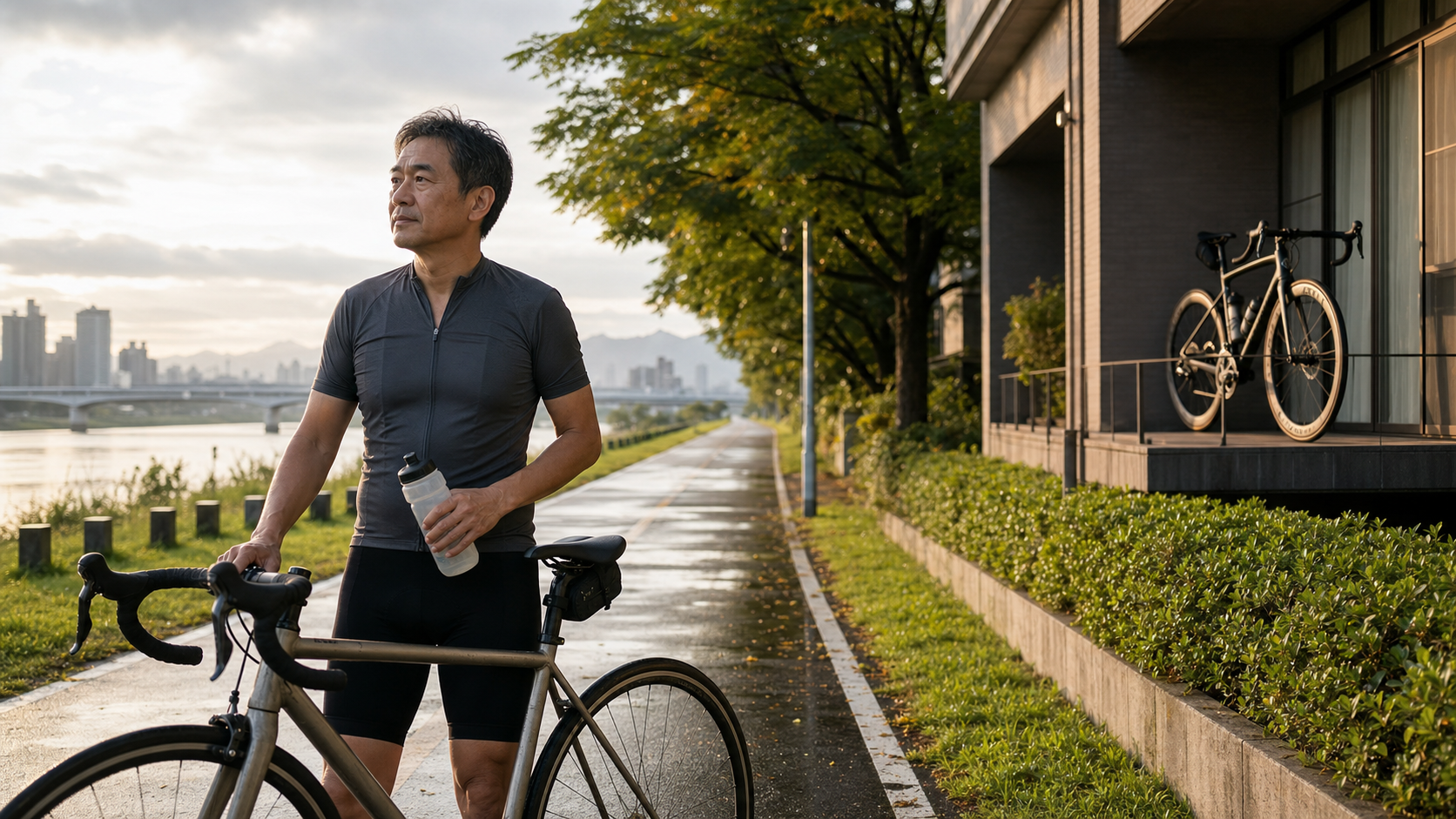
Opening: The Student Who Bought a Top-Tier Road Bike but Stopped Riding in Three Months
I’ve been coaching athletes and everyday riders for about fifteen years now. Over all that time, if I had to pick the single most common and most heartbreaking failure mode, it wouldn’t be insufficient fitness or an overly demanding training plan—it would be motivation aimed at the wrong target.
I remember one case vividly: a tech executive in his early forties, let’s call him Mr. A. When he came to me, he had just spent nearly the price of a budget compact car on a top-tier carbon road bike, complete with a power meter and a full drivetrain upgrade. He told me, “Coach, this time I’m serious. I’ve already thrown the money down—I can’t just let the bike gather dust, right?”
Sounds determined, doesn’t it? But alarms were going off in my head. Because in everything he said, what was driving him was all extrinsic: the money spent, saving face, “can’t waste it.” I’ve seen this kind of motivation too many times. It burns hot, and it burns out fast. Sure enough, a little over three months later, that beautiful bike was hanging on the balcony, turning into a very expensive clothes rack.
Around the same time, I was also working with another client—a woman in her early fifties, a retired elementary school teacher, let’s call her Sister M. She rode a second-hand folding bike, the kind you’d use for grocery runs. But she’d been riding for over three years, rain or shine, and had even rallied a group of neighbors to join her for morning rides along the riverside. Isn’t that strange? Their gear was worlds apart, yet the outcomes were completely reversed.
In this article, I want to have a proper conversation with you about the “science of motivation.” This isn’t feel-good inspiration—it’s psychology backed by decades of research: Self-Determination Theory (SDT). I’ll walk you through the difference between intrinsic and extrinsic motivation, why rewards are a double-edged sword, and the most practical part: how to gradually shift from “I have to train” to “it feels weird if I don’t ride today.”
The Scientific Foundation: What Self-Determination Theory Is Really About
Self-Determination Theory, developed by psychologists Edward Deci and Richard Ryan since the 1980s, is one of the most comprehensive and most-cited frameworks for studying motivation today. Its core claim sounds simple, yet it carries enormous power:
People are not passive machines waiting to be “pushed.” Humans have an innate tendency to want to grow, to engage, and to do things well. What you need to do is not force motivation into them, but rather stop blocking this innate drive.
Three Basic Psychological Needs
SDT holds that to keep this intrinsic drive running, you need to feed three innate psychological needs. These needs are universal and inborn:
- Autonomy: I feel like this is something “I want to do myself,” not something I’m forced or required to do. I have choice and a sense of control over my own actions.
- Competence: I feel like I’m improving, I can do it, I can master this. The challenge is a bit hard but within reach, and I feel myself getting stronger.
- Relatedness: In this activity, I feel connected to others, a sense of belonging—not fighting alone.
Looking back at Mr. A and Sister M, the answer becomes crystal clear. All three of Sister M’s needs were fed: she decided to ride on her own (autonomy), she felt herself able to ride a bit farther every week (competence), and she’d gathered a group of neighbors (relatedness). And Mr. A? He was forced to ride by “can’t waste the money” (autonomy = zero), he started with routes that were too hard and kept getting crushed (competence frustrated), and he always rode alone (no relatedness). All three needs were starved—no bike, no matter how expensive, could save him.
Motivation Isn’t “Have” or “Have Not”—It’s a Spectrum
Many people think motivation only comes in two flavors: “motivated” and “unmotivated.” The most elegant part of SDT is that it lays motivation out as a continuous spectrum, arranged from least autonomous to most autonomous:
| Motivation Type | Your Inner Voice | Degree of Autonomy | How Long It Lasts |
|---|---|---|---|
| Amotivation | “Why ride? Too lazy.” | None | — |
| External Regulation | “The doctor told me to exercise; I have to ride.” | Lowest | Very short |
| Introjected Regulation | “If I don’t ride, I’ll feel guilty and worthless.” | Low | Short, and mentally draining |
| Identified Regulation | “Regular exercise is important for my health; I identify with this goal.” | Medium-high | Long |
| Integrated Regulation | “Riding is part of who I am; I’m just a person who rides.” | High | Very long |
| Intrinsic Motivation | “I just love the feeling of riding; it feels great.” | Highest | Longest |
This table deserves a second look. The point isn’t “extrinsic motivation is always bad, intrinsic motivation is always good.” Rather: the further down the spectrum you go, the more autonomous the motivation, the longer it can sustain you, and the less mental energy it drains.
True masters aren’t born with only intrinsic motivation—they know how to push their motivation down the spectrum—from “the doctor forces me” gradually to “I identify with health being important,” then to “exercise is part of who I am,” and finally to “I simply enjoy this.” That process of pushing is exactly what the second half of this article will teach you in practical terms.
The Double-Edged Sword of Rewards: Why Giving Rewards Sometimes Hurts You
This is the section I most want to explain clearly in the entire article, because it’s the most counterintuitive and the place where the most people step on landmines.
The Overjustification Effect
Intuitively, we all think: giving rewards, right? That’s bound to increase motivation—who doesn’t love rewards? But psychological research has uncovered a surprising phenomenon called the Overjustification Effect, also known as the Undermining Effect.
It means this: when something is already interesting to you, and you already have intrinsic motivation to do it, if you then start receiving extrinsic rewards for doing it (money, prizes, points), your intrinsic motivation actually gets undermined.
Here’s the mechanism: once you receive a reward for doing something, your brain secretly reinterprets your motivation—“Oh, so I was doing this for the reward.” You stop believing you do it because you like it, and start believing you do it to get the reward. When the reward eventually disappears, so does the motivation.
In 1999, Deci, Koestner, and Ryan published a meta-analysis in Psychological Bulletin, reviewing 128 controlled experiments on the effects of extrinsic rewards on intrinsic motivation. The conclusion was remarkably consistent: when rewards are “contingent”—that is, tied to whether you participated, completed, or performed well—tangible rewards (money, prizes, points) significantly undermine intrinsic motivation.
What does this look like in practice?
Let me give you some super common examples from Taiwanese cyclists:
- Check-in events with freebies: It feels great at first—you ride just for that badge or that tech tee. Once the event ends, many people simply stop riding—because in their minds, cycling has become tied to “getting free stuff.” No freebies, no reason to ride.
- Leaderboards in group chats comparing distance and elevation: For some, it’s motivating; for others, cycling shifts from “enjoying the scenery” to “I have to beat so-and-so this week.” The day their ranking drops, or someone leaves the group, riding becomes dull and pointless.
- Rewards offered by family members: “If you get down to 70 kg, I’ll buy you a set of wheels.” The day you hit the goal feels great, but once the wheels arrive, your drive to ride goes with them.
Note: I’m not saying rewards are always off-limits. Rewards are a double-edged sword—used right, they help; used wrong, they’re poison. The key is in the table below:
| Situation | Effect of rewards | Why |
|---|---|---|
| Something you already dislike or find boring (e.g., core training when you’re just starting) | Usually helpful | There’s no intrinsic motivation to undermine; rewards help you get past the initial hurdle |
| Something you already enjoy and find fun (e.g., your beloved long weekend rides) | Likely backfires | It swaps “enjoyment” for “doing it for the reward,” weakening your original passion |
| Rewards are an “unexpected surprise,” given afterward | Less harmful | You weren’t doing it for the reward beforehand, so you’re less likely to reinterpret your motivation |
| Rewards are “agreed upon in advance, tied to performance” | Most harmful | Motivation is tied to the reward from the very start |
| Rewards carry a message of “affirming your ability” (e.g., specific progress feedback) | Often helpful | It feeds your sense of competence rather than buying you off |
Once you understand this table, you’ve got the instruction manual for rewards: Don’t use rewards to buy something you already enjoy. If you do use rewards, apply them to the boring grunt work that helps you cross the starting threshold, and frame them as “affirming progress” rather than “buying behavior.”
Practical approach: gradually turning extrinsic motivation into intrinsic motivation
Okay, enough theory—here’s something you can use right away. The core of this whole method is feeding those three psychological needs: autonomy, competence, and relatedness. I’ve organized it into a practical checklist you can follow directly.
Feed autonomy: make riding “your choice”
- Plan your own schedule, or at least participate in planning it: Even if you have a coach, understand the purpose of each workout. “Knowing why you’re doing it” sustains you far more than “being told to do it.”
- Keep choices available: Instead of mandating “ride 30 km every day,” give yourself a menu: today you can do an easy 20 km along the riverside, climb a small hill, or do 40 minutes on the spin bike—pick one of three. With choice, autonomy stays alive.
- Connect it to values you truly care about: Not “I want to lose weight,” but “I want to be able to hike with my grandkids when I’m sixty” or “I want an outlet for work stress.” Tying exercise to life goals you genuinely identify with is what pushes you down the spectrum toward identified regulation.
Feed competence: make yourself “feel the progress”
This is the piece I think gets overlooked the most, yet it’s the easiest to work with. When people feel themselves getting stronger, they get hooked. The key is cutting goals small and making progress visible.
| Level | Example starting goal | Visible progress indicators |
|---|---|---|
| Complete beginner | Ride continuously along the riverside for 20 minutes without stopping | From 20 minutes → 30 → 45 minutes |
| Some foundation | Complete a fixed 15 km route | Average heart rate on the same route drops (e.g., from 155 bpm to 145 bpm) |
| Advanced | Challenge a familiar climb | Time and average power (watts) on that climb improve month over month |
Tip: track it. Whether it’s a phone app, a cycling computer, or paper, write the numbers down. When you look back and see “three months ago this climb took me 12 minutes; now it takes 9:30,” that sense of competence is something no prize money can buy. This is also why a power meter or heart rate strap, used well, can be magic—they turn the abstract “getting stronger” into concrete numbers. But used poorly (staring at them daily to compare with others), they become a source of anxiety. You have to find the balance yourself.
Feed relatedness: don’t grind it out alone
- Find a riding buddy or form a small group: Even two or three people is enough. Humans are social animals—“someone’s waiting for you” is far more powerful than an alarm clock. The reason M (the woman I mentioned) has kept riding for three years? Her neighborhood morning-ride group deserves the credit.
- Join a local community: Every city and county in Taiwan has plenty of friendly cycling clubs and easy riverside riding groups. Find one where people share your vibe and won’t drop you on every climb.
- Share your achievements with people who care about you: Not to show off mileage, but the kind of sharing like “Rode to Tamsui today and watched the sunset—it was beautiful.” Relatedness comes from “having someone who cares about this with me.”
What’s happening in the brain: dopamine and “habituation”
A lot of people mistake dopamine for the “happiness molecule,” thinking it only floods out the moment you achieve a goal or get a reward. But research suggests a more precise description: dopamine is more closely tied to “anticipation” and “pursuit” than to “satisfaction.” It drives you to chase and to expect, rather than simply giving you a rush after you get something.
This explains a very important phenomenon: extrinsic rewards “habituate.” The first time you get that event tech tee, the first time you top the leaderboard, your brain gives you a hit of excitement. But the second, third time, the same reward delivers less and less stimulation—your brain has already factored it into “expected.” So you need bigger and bigger rewards to maintain the same excitement—that’s why motivation propped up by extrinsic rewards gets weaker and more expensive the longer you play.
The clever thing about intrinsic motivation is that its “fuel” is self-generated and nearly inexhaustible. When what you enjoy is the process of riding itself—the feel of the wind, the smoothness of your body in motion, the flow of being fully present—that pleasure doesn’t require constant external top-ups. It doesn’t habituate as quickly as rewards do. This is also why, from a neuroscience perspective, building motivation on “enjoying the process” lasts far longer than building it on “rewards for outcomes.”
I often tell my clients: If you can find one thing in the process of riding that you simply enjoy for its own sake, you’re already halfway there. Some people love the stillness of the riverside at dawn, some love the rush of finishing a climb, some love the feeling of their body getting lighter and more agile. Find it, protect it, and don’t let any reward contaminate it.
A real case study: from “riding for the red flags on my health check” to “riding for myself”
Let me share another case—let’s call him Brother K, 45 years old, a sales rep in manufacturing. When he first came to me, his motivation was extremely extrinsic: his company health check was full of red flags, and his doctor warned him his blood pressure, lipids, and weight all needed attention. He was “scared into it.” In SDT terms, this is the outermost form of extrinsic regulation—moving to avoid punishment (worsening health, worrying his family).
This kind of motivation isn’t bad—it’s a great “ignition point.” The problem is it doesn’t last—fear dulls, and the image of those red flags fades. So what I did with Brother K wasn’t pushing him harder; it was deliberately helping him step down the spectrum, stage by stage:
- Stage one (external regulation): Don’t talk about enjoyment yet; just aim for consistency. I had him choose his own times and routes (feeding autonomy), with an extremely low bar—three times a week, 30 minutes of easy riverside riding. Completing it counted as a win.
- Stage two (identified regulation): Around six weeks in, he started feeling it—no more huffing on stairs, his waistband loosened, he slept better. I seized that moment and shifted the conversation from “health check red flags” to “what kind of 50s and 60s do you want for yourself?” He gradually moved from “I have to” to “I agree that health matters to me.”
- Stage three (integrated/intrinsic): About six months later, one rainy weekend he didn’t ride and texted me: “Coach, I didn’t ride today and I feel off.” That’s when I knew he’d made it. Cycling had grown into who he is.
Brother K’s health check numbers did improve significantly afterward (on that front, I’ll defer to his doctor’s orders and regular follow-ups—I won’t quote any figures here). But what truly made me happy wasn’t the numbers—it was that his source of motivation had been completely transfused, from outside to inside.
Common mistakes and corrections
After coaching clients for this long, I’ve compiled the most common motivation mistakes. Check whether any of these apply to you:
Mistake 1: Goals Set Too Big, Too Far, Too Vague
“I want to ride Wuling,” “I want to lose ten kilograms”—these goals aren’t wrong in themselves, but if they’re your only goals, you’ll constantly feel the frustration of “still so far from the goal” during the long process, and your sense of competence stays perpetually underfed.
Fix: Keep that big dream as your North Star, but drive daily progress with a series of “reachable this week” small goals. Every small goal achieved feeds your sense of competence a bite.
Mistake 2: Relying on Guilt and Willpower to Grind Through
“I didn’t ride today, I’m so useless,” “I slacked off again”—this is classic introjected regulation, pushing yourself through self-shaming. It might work short-term, but long-term it’s psychological burnout, and it links exercise with “pain and guilt,” eventually making you instinctively avoid it.
Fix: Change your language. Not “I have to ride,” but “I choose to ride because I care about my health and mood.” At the same time, be more forgiving with yourself—missing a day or two isn’t failure, it’s normal life.
Mistake 3: Using Rewards to Bribe Yourself for Things You Already Enjoy
This is the overjustification effect mentioned earlier. You’re happily doing your long weekend rides, then you start setting “must ride X kilometers to earn a big meal,” and riding gradually becomes “grunt work for a meal.”
Fix: Keep the things you love pure. Save rewards for the grunt work you really can’t be bothered to do but that benefits you (like stretching, core work).
Mistake 4: Betting Everything on Gear
Rider A is the classic case. Gear brings brief excitement, but it’s the most extrinsic motivation—once the thrill fades, it’s gone.
Fix: Treat gear as a tool, not a motivational engine. The real engine is those three psychological needs.
Mistake 5: Falling Apart Completely When the Weather Changes
Taiwan’s summers are hot and humid, often exceeding 32°C with oppressive mugginess, plus frequent afternoon thunderstorms; in winter, when the northeast monsoon arrives, riverside winds are bone-chilling. Many people stop when the weather turns bad, and once they stop, they never pick it back up.
Fix: Prepare a “bad weather Plan B” in advance. If it rains, switch to indoor spinning or a trainer; if it’s too hot, head out at 5–6 AM or after 6 PM to avoid the midday heat, and stay on top of hydration and electrolytes. With a backup plan, your consistency won’t break.
Change the Wording, Change the Engine: Autonomy-Supportive Language
When researching motivation in exercise and education settings, there’s a highly practical concept called “autonomy-supportive” communication—whether it’s coaches with athletes, parents with children, or your own self-talk. Simply switching from controlling language to autonomy-supportive language changes the quality of motivation. The difference looks subtle, but the cumulative effect is enormous:
| Controlling (undermines autonomy) | Autonomy-supportive (feeds autonomy) |
|---|---|
| “You must ride a full 30 km today.” | “How would you like to arrange today? Pick one of these options.” |
| “If you don’t train, you’re doomed.” | “I know this isn’t easy. Where do you feel most confident starting?” |
| “Everyone else can do it, why can’t you?” | “Compared to last week’s you, you’ve already improved. Let’s keep moving forward.” |
| “You’re just lazy, no perseverance.” | “It’s fine you didn’t ride today. Is something blocking you? Let’s look at it together.” |
The common thread in the right column is “offering choice, offering understanding, affirming progress”—not “giving orders, giving threats, giving comparisons.” Most importantly, the way you talk to yourself needs to change too. That inner voice constantly scolding you with “so useless, slacking off again” is the number one culprit undermining your motivation. Try replacing it with a voice like a good coach—one that understands you, gives you choices, and sees your progress. This small shift has a far bigger impact on long-term persistence than you’d imagine.
Motivation in Action: Taiwan-Specific Contexts
For theory to take root, we have to consider our actual living environment. A few reminders:
Humid Heat and Fueling
Taiwan’s summer heat and humidity mean heavy sweating during rides, with faster fluid and electrolyte (e.g., sodium) loss than in dry, cool regions. For longer rides (e.g., over an hour), beyond just water, you should also replenish electrolytes and carbohydrates to avoid dizziness, cramping, or bonking that create negative associations with riding. When your body feels good, motivation holds up. Actual fueling amounts vary greatly by person, weather, and intensity—give yourself a range and adjust gradually, rather than copying a single precise number from the internet.
The Reality of Eating Out
Eating out is convenient in Taiwan, but it can easily undermine the health goals you’re trying to achieve through exercise, which in turn hits your sense of competence (“I rode, but my weight hasn’t budged”). The point here isn’t to tell you to diet strictly—it’s: don’t let the scale be your only report card. Weight fluctuates with hydration, sleep, and diet. Use more capability-related metrics like “that climb got faster” or “I’m no longer gasping after the ride”—that’s what keeps competence stable.
Choosing Your Terrain
Riverside bike paths in Taiwan’s major cities (like the Tamsui River, Xindian River, and Keelung River systems in Greater Taipei, or paths in other counties and cities) are the friendliest starting point for beginners—flat, car-free, scenic, and ideal for building early competence and connection. Once your foundation is solid, gradually progress to suburban areas and mountain roads. Step by step, you taste the sweetness of progress at every stage.
Health Conditions and Medical Care
If you have cardiovascular disease, hypertension, diabetes, or other chronic conditions, or if you’re older or have been inactive for a long time, be sure to consult a physician before starting regular riding for proper assessment and an individualized exercise prescription. Taiwan’s National Health Insurance makes medical access easy—don’t skip this step. If you experience chest tightness, chest pain, unusual breathlessness, dizziness, or other warning signs during exercise, stop immediately and seek medical attention as soon as possible. No matter how strong your motivation, it must be built on a foundation of safety.
Actionable Advice for Readers at Different Levels
If You’re a Complete Beginner
- Seek “consistency” first, not “intensity”: Set your goal as “exercise three times a week, 20 to 30 minutes each.” Being able to sustain it matters a hundred times more than riding hard.
- Choose the friendliest terrain: Riverside paths, flat roads—build the “I can do this” sense of competence first.
- Find a companion: Even if it’s just getting a family member to walk with you, connection can dramatically raise your odds of getting through the first eight weeks.
- Track it: Use a phone app to log distance and time. Two weeks later, look back—you’ll be moved by your own progress.
If You Have Some Foundation but Keep Hitting Plateaus
- Check your motivation source: Go back to that spectrum and ask yourself, “Why am I riding?” If the answer leans extrinsic (face, rewards, guilt), find ways to shift it intrinsic.
- Break big goals into smaller pieces: Keep dreams like Wuling or the Twin Towers, but advance through a series of monthly and weekly goals.
- Introduce quantifiable progress metrics: Heart rate, power, and time on a fixed route—give your competence some numbers to lean on.
- Check if you’ve been bribing your passion with rewards: If so, dismantle it and let what you love return to being pure.
If You’re a Veteran Looking to Avoid Long-Term Burnout
- Rotate your menu regularly: Riding the same route gets stale. Switch routes, switch formats (long distance, climbing, gravel, bikepacking) to keep competence challenges fresh.
- Shift from “participant” to “contributor”: Mentor newbies, organize group rides, be the core of a small community—connection will take your motivation to a whole new level.
- Accept the ups and downs: Even the most seasoned riders have low periods. A low isn’t failure—it’s a signal that your body and mind need a breather. Allow yourself to slow down; don’t punish yourself with guilt.
A Ready-to-Use Four-Week Motivation Rebuilding Plan
If you’re in that “I know I should ride, but I just can’t muster the energy” state, here’s a simple four-week framework for you. The focus is entirely on feeding the three needs, not on forcing yourself:
| Week | Autonomy (Choice) | Competence (Visible Progress) | Connection (People) |
|---|---|---|---|
| Week 1 | Pick one friendly route you most want to ride, with no distance pressure | Record your first time and how it felt | Tell one friend “I’ve started cycling” |
| Week 2 | Choose from a menu of three options to decide how you’ll ride that week | Try the same route and aim to make it slightly easier than last week | Arrange one group ride, or join a club |
| Week 3 | Add one new thing you’re curious about (a small climb or a new route) | Note changes in your heart rate or time | Share a photo from the road with someone you care about |
| Week 4 | Look back on the four weeks and decide your next direction yourself | Compare with Week 1 and write down three improvements | Invite a new friend to ride together |
This plan has no hard targets like “you must ride X kilometers,” because the point has never been to force short-term results, but to let cycling gradually shift in your mind from “I have to” to “I want to.”
FAQ: The Questions Trainees Ask Me Most About Motivation
Q: I only have motivation when I use races as goals. Is that okay?
It’s fine—races are great external incentives that can help you structure your training and get past the laziness threshold. But watch out for two things: first, don’t let racing become your only motivation, or you’ll risk collapsing entirely afterward (many people disappear after finishing a marathon or a big race); second, during the preparation process, deliberately cultivate enjoyment and a sense of competence in “the training itself.” Use races as the ignition, intrinsic motivation as the long-lasting fuel—combining both is the most stable approach.
Q: I rely entirely on willpower to push through. Does that mean my willpower is too weak?
It’s not your fault—it’s a strategy problem. Willpower is like a muscle: it gets tired and runs out. People who truly sustain long-term effort don’t rely on superhuman willpower; they design their environment and motivation so that “going for a ride” becomes the path of least resistance. Instead of scolding yourself for weak willpower, go feed those three needs.
Q: Can rewards actually be used? You’ve made me afraid to set any rewards.
They can be used, just in the right places. Use them to help you get past the boring grunt work of starting (like stretching or core work); try to use them in ways that “affirm progress” (like “I completed 12 sessions this month, awesome”) rather than “bribing behavior”; and don’t attach them to things you already enjoy. Master these points, and rewards become a helping hand.
Q: How do I know if I’m intrinsically or extrinsically motivated?
Ask yourself one simple question: “If no one knew, if there were no rewards, and if no one pushed me—would I still want to ride?” If the answer is yes, congratulations—intrinsic motivation is already there. If the answer is no, don’t panic—that’s exactly the starting point where you can begin pushing yourself down the spectrum.
Q: I really hated exercise from the start. Does that mean I’m doomed and have no intrinsic motivation?
Not at all. Intrinsic motivation isn’t something you’re born with or without—it can be “cultivated.” K哥 was scared into it at first too, but six months later he felt restless if he didn’t ride. The key is: first use external incentives to get past the threshold, then deliberately feed autonomy, competence, and connection along the way. Many people’s inner passion comes from “doing it first, then slowly falling in love,” not “falling in love first, then doing it.” So don’t wait for motivation to start—start with the lowest possible threshold, and motivation is often built by doing.
Q: What about community leaderboards and mileage apps—should I use them or not?
It depends on how you use them. If they help you feel your progress (comparing with your past self), that feeds competence—great; if they drag you into endless comparison with others and turn riding into a source of anxiety, they’re harming your intrinsic motivation and you should turn them off. The same tool can have completely opposite effects on different people, or even on the same person at different stages. Periodically ask yourself: “Does this thing make me enjoy riding more, or make me more anxious?” Answer honestly, then adjust.
Q: My family wants to encourage me to exercise with rewards (like giving me a gift if I hit a goal). Should I accept?
Your family’s intentions are precious, but you can gently steer the direction. Rather than performance-linked rewards like “I’ll give you XX if you lose five kilograms” (which can trigger overjustification), ask your family to support you with “companionship” and “affirmation”—for example, riding with you, listening to you share today’s route, or sincerely praising you when they see your progress. These feed your sense of connection and competence, last far longer than material rewards, and won’t backfire and weaken your passion.
Conclusion: Make Motivation a Part of You
Back to the two trainees from the beginning. A大’s top-tier road bike ended up being sold at a loss. M姊’s secondhand folding bike is still being ridden, and last month she messaged me to say their morning ride group had gained three more people.
The difference between them was never equipment, budget, or who had stronger willpower. The difference is this: M姊’s cycling fed her autonomy, competence, and connection; A大’s cycling was bound by external things from start to finish.
The science of motivation, in the end, comes down to one sentence: Don’t chase the external spark that burns bright and brief—nurture the inner flame that burns slow and long. Let cycling go from “I have to” to “I want to,” and then to “This is who I am.” When you reach that point, you won’t need to force yourself at all—because by then, not riding will feel wrong.
That’s the motivation that can ride with you for a lifetime.
One final reminder: there’s no standard answer to cultivating motivation—everyone is ignited differently. Some are moved by scenery, some by companions, some by the feel of their body getting stronger. Your task is to experiment, to observe, to find your own inner flame, and then guard it well. It’s okay to be slow—riding far is what makes you a true winner.
This article is educational content and cannot replace individual diagnosis and treatment advice from a physician, physical therapist, or nutritionist. If you have a chronic condition or special health situation, please consult a qualified medical professional before starting or adjusting an exercise plan.
References
- Ryan, R. M., & Deci, E. L. — Self-Determination Theory and the Facilitation of Intrinsic Motivation (original PDF): https://selfdeterminationtheory.org/SDT/documents/2000_RyanDeci_SDT.pdf
- Self-determination theory — Wikipedia: https://en.wikipedia.org/wiki/Self-determination_theory
- Self-Determination Theory of Motivation — University of Rochester Medical Center: https://www.urmc.rochester.edu/community-health/patient-care/self-determination-theory
- Self-Determination Theory Of Motivation — Simply Psychology: https://www.simplypsychology.org/self-determination-theory.html
Related Reading
- Self-Determination Theory of Motivation: Why Intrinsic Motivation Lets You Train for Ten Years Without Burning Out
- Maintaining Motivation in Cycling Training: Psychological Techniques and Strategies for Long-Term Persistence
- Sustaining Long-Term Motivation: Why We Always Lose Interest Quickly, and How to Design an Exercise System That Doesn’t Rely on Willpower
- The Science of Habit Formation: How to Automate Your Training and Stop Relying on Willpower
一個測試有沒有認真練車的方法😂 #公路車
10 個月前
碟煞公路車 優缺點?換車一年半實際經驗分享 / 公路車 / CT Yeh
2 年前
JJSC南台灣單車走春三日行 DAY 1 / 強度 x 美食 x 節慶體驗 / 公路車 CT Yeh
5 個月前
#公路車 #西進武嶺 配速配瓦實驗 坡度分析 四小時內攻略 建大盃 NeverStop #西進武嶺攻略
6 年前
多到選擇障礙... 換個單車把帶想一個小時 / BTP / 編織&軟木特有材質超吸睛! / 公路車 / CT Yeh
1 年前
FTL 與 SYB 車隊專訪 西進武嶺 實用攻略分享! 2小時 如何練?!你不知道的眉角!新手準備武嶺必看 EP1 | 實力派女車友 | 精華版 | 公路車 | CTYeh
4 年前
昇陽SYB車隊 & Fuji 菁英選手們的趣味經驗分享,長知識了!市民車友必看~ 一路被拉爆後才給問 | 戀戀197 武嶺 凸台經驗分享 | 公路車 | CT Yeh
4 年前
再一組! 全碳幅條 碟煞/無內胎輪組 開箱! 到底好騎嗎? UNAAS X40 | 公路車 | CT Yeh
4 年前