Reaction Time and Athletic Performance: A Complete Coach's Guide from Neural Components to Sport-Specific Training
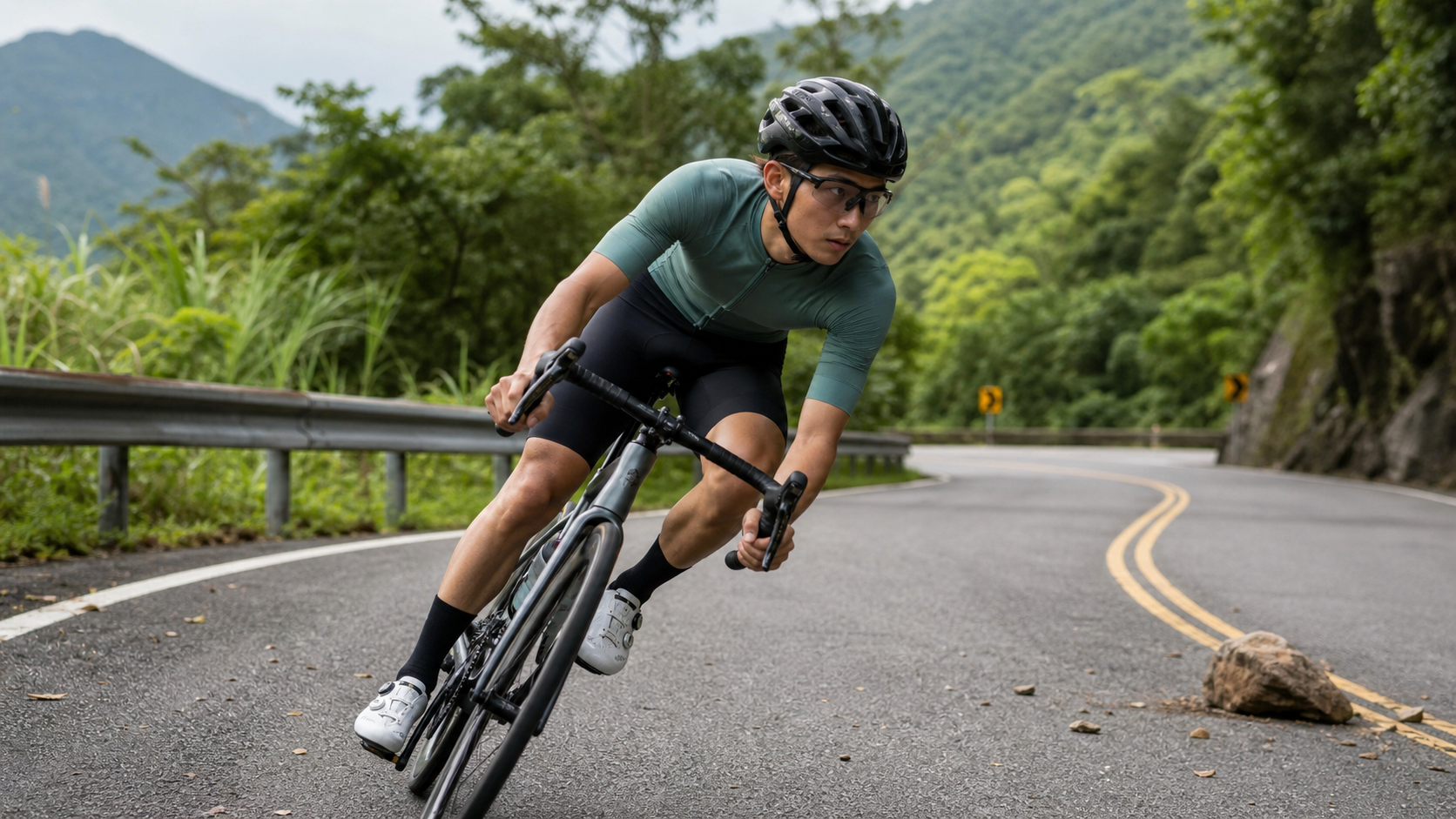
It All Started with a Close Call on the Kongding Descent
That afternoon, I was riding with a student, Xiao-Qun, who had just been promoted to the advanced group, on the stretch from Muzha to Kongding. Before a corner on the descent, a dog suddenly darted out from the roadside. Xiao-Qun froze for half a second before grabbing the brakes, and the front wheel wobbled—almost losing control. Afterwards, he asked me dejectedly, “Coach, am I just too slow to react? Can this kind of thing even be trained?”
In my 15 years of coaching, I’ve been asked this question hundreds of times. Some athletes give up on certain disciplines because they think they’re “naturally slow to react,” while many recreational exercisers assume reaction time is pure genetics and unrelated to training. In fact, reaction time is neither mysticism nor destiny—it’s a chain of neural and motor processes that can be broken down, understood, and partially trained.
In this article, I want to explain reaction time from a coach’s perspective, from the ground up: what components it consists of, which parts can be trained and which can’t, how it relates to your sport, and how you should structure your training in Taiwan’s actual training environment. I’ll give you training plans you can follow directly, and I’ll also honestly tell you which things are over-marketed and actually have limited effectiveness.
Let me start with a conclusion that will put many people at ease: Most of Xiao-Qun’s half-second “freeze” wasn’t naturally slow reaction time, but a lack of anticipation and practice in that specific situation. That’s exactly what we’re going to break down today.
What Exactly Is Reaction Time? Let’s Clarify the Terms First
In sports science, we often break down “from stimulus appearance to movement completion” into several distinct concepts. Many people lump them together, which is why they think it can’t be trained.
- Reaction Time (RT): The time from when the stimulus appears to the instant you begin producing a movement. Note: it’s “beginning the movement,” not completing it.
- Movement Time: The time from when the movement begins to when it’s completed. For example, from the moment your hand starts reaching for the brake lever to when you actually grip it firmly.
- Response Time: The sum of the two above—the complete time from when the dog darts out to when you actually pull the brakes.
These three concepts matter because they differ in trainability. Many people complain about being “slow to react,” but what’s actually slow is their movement time or decision-making, not the most primitive neural transmission response.
Simple Reaction, Choice Reaction, and Discrimination Reaction
Breaking it down further, reaction time itself comes in three types, which greatly influences training design:
| Type | Definition | Typical Scenario | Approximate Range |
|---|---|---|---|
| Simple Reaction Time | Single stimulus, single predetermined movement | Sprinting off the blocks at the gunshot | About 150–300 ms |
| Discrimination Reaction Time | Multiple stimuli, but only respond to one specific one | A group charges at you, but you only track the target athlete | About 250–400 ms |
| Choice Reaction Time | Multiple stimuli correspond to multiple movements, requiring judgment | An opponent might cut left or right, and you have to pick a side | About 300–500 ms or more |
Based on the data I’ve found, the simple visual reaction time of a typical healthy adult is roughly 200 to 250 milliseconds—around a quarter of a second. Trained athletes or esports players can push it below 200 ms, with extreme cases even reaching 100 to 120 ms. Meanwhile, choice reaction time is typically noticeably slower than simple reaction time, because there’s an added cognitive processing stage of “deciding which movement to make.”
This also explains why reactions in real sports situations (those requiring judgment) “feel” much slower than pressing a button in a lab—because real-world scenarios are almost always choice reactions, not simple ones.
A Frequently Misused Term: Reflex
I want to specifically clarify a word people often confuse: reflex. Knee-jerk reflexes, hand-withdrawal reflexes—those movements “processed directly by the spinal cord without going through the brain”—are what we call reflexes. They’re extremely fast, around a few tens of milliseconds, and essentially untrainable, because they bypass the brain’s judgment. In contrast, the “reactions” we talk about in sports almost all require brain involvement for judgment, so they’re much slower—but precisely because they involve the brain, they have room for training.
I often remind my athletes: if someone tells you “I can make your reflexes faster,” you can reasonably suspect they’re selling gimmicks—what can actually be trained is “reaction,” not “reflex.” Once you keep these two terms straight, you won’t be fooled by exaggerated marketing talk.
The Four Components of Reaction Time
To know what can be trained, you first need to understand what this neural circuit looks like. I often use a simplified model with my athletes, breaking the entire reaction into four stages:
Stage One: Sensory Input (Stimulus Detection)
Light enters the eyes, sound enters the ears, and both are converted into neural signals. This stage is interesting: auditory reactions are typically faster than visual reactions. Research consistently shows that auditory stimuli take only about 8 to 10 milliseconds to reach the brain, while visual stimuli take 20 to 40 milliseconds, because light signals must pass through the retina and then multiple layers of processing in the visual cortex. Overall, auditory reaction time is often about 20 to 50 milliseconds faster than visual reaction time.
That’s why track starts use a “gunshot” rather than a “light signal,” and why when I lead group rides, I give critical commands by shouting or using a whistle, not just hand signals.
Stage Two: Sensory Processing and Perception (The Brain Makes Sense of It)
Once the signal reaches the brain, it must be “interpreted” into something meaningful—this is a dog, this is an opponent about to cut across, this is the rider ahead braking. This stage is where athletes differ the most and where training can yield the biggest improvements. Elite athletes aren’t faster at neural transmission than you; rather, their brains have built “pattern recognition” through massive experience, allowing them to understand what’s happening more quickly.
Stage Three: Decision-Making (Choosing What Movement to Make)
After understanding, you decide how to respond. The more options there are, and the less familiar they are, the slower this stage is. A big part of why veterans “react fast” is that they’ve drilled “what to do in this situation” to near-automaticity, so decision-making takes almost no time.
Stage Four: Motor Output (The Muscles Actually Move)
The brain sends the command through motor neurons to the muscles, which contract to produce movement. This stage relates to your strength, power, and neuromuscular recruitment efficiency, and is also highly correlated with fatigue and body temperature.
Laying these four stages out, you’ll see a key coaching insight: the “pure hardware speed” of stages one and four has limited room for improvement; what can truly improve dramatically is the perceptual recognition in stage two and the decision-making automation in stage three. This determines how we should design training.
What Can Be Trained? What Can’t? An Honest Breakdown
I’ve put together a table of common training targets based on my years of practical experience coaching athletes at various levels, to help you put your effort where it counts.
| Component | Trainability | Notes |
|---|---|---|
| Pure nerve conduction velocity | Very low | This is hardware, largely determined by genetics and age; hard to improve |
| Simple reaction time | Low to moderate | Repetitive practice yields small gains, but the ceiling is clear |
| Perception/pattern recognition | High | Built through sport-specific experience; the biggest room for improvement |
| Decision speed (choice reaction) | High | Can be heavily automated through contextualized training |
| Anticipation/prediction ability | High | Reading cues and opponents is the veteran’s biggest advantage |
| Motor output efficiency | Moderate | Improved through power and neuromuscular training |
| Maintaining reactions under fatigue | Moderate to high | Built on an aerobic base and sport-specific endurance training |
Research literature generally indicates that targeted reaction and visual training can produce roughly 5% to 25% improvements in reaction-related performance, but a key caveat: these gains mostly occur in the “perception–decision” phase, and they are highly sport-specific—speed developed in one context does not automatically transfer to a completely different one. This is one of the most important practical principles in this article, and I’ll return to it when discussing common mistakes.
The mechanism behind these improvements is the brain’s neuroplasticity. Repeated sport-specific practice makes the relevant neural circuits more efficient and closer to automatic, so “reading the situation” and “making the decision” become faster. This is why experienced veterans, even as their raw hardware speed declines with age, still make sharper in-game decisions than younger novices—they use accumulated neural efficiency to compensate for the slight loss in hardware speed. Understanding this, you’ll realize: the essence of reaction training is actually “feeding the brain with experience,” not “making nerve conduction faster.”
Reaction Time and Its Relationship to Sport Specificity
Different sports have very different demands on reaction time, and training priorities should differ accordingly. I’ll explain using a few common categories.
Open Skills vs. Closed Skills
Sports science divides skills into two broad categories, and this distinction is particularly useful for understanding reaction time:
- Closed skills: Stable, predictable environments, relying mainly on simple reactions and movement execution. Examples: javelin, weightlifting, track time trials, swimming starts.
- Open skills: Variable environments requiring real-time judgment, heavily dependent on choice reactions and anticipation. Examples: tennis, basketball, road race positioning, off-road descending.
For closed skills, reaction training focuses on “making a single reaction extremely stable and fast”; for open skills, the focus is on “reading situations, deciding quickly, and adapting across multiple contexts.” Get the direction wrong, and you’ll train for hours without it being useful.
Cycling as an Example
Cycling actually spans both ends. A track time trial start is a closed-skill simple reaction; but road race positioning in the pack, breakaway reactions, avoiding crashes, and off-road/descending terrain judgment are all open-skill choice reactions and anticipation.
When I work with road racers, I always train these two blocks separately. Start reactions are drilled repeatedly with fixed signals; pack reactions, on the other hand, must be built through actual group riding to accumulate the ability to “read the pack”—when someone is about to attack, when traffic is about to jam up ahead, where the apex of a corner is. This cannot be developed by training against an app at home; it has to be honed in real or highly realistic situations.
Reaction Demands Across Different Sports
To help you see more clearly where your sport’s priorities lie, I’ve put together a comparison table of reaction demands across common sports. This isn’t precise data, but a practical judgment of training priorities.
| Sport/Situation | Primary Reaction Type | Training Focus | Importance of Anticipation |
|---|---|---|---|
| Track time trial start | Simple reaction | Fixed-signal surge, explosive movement | Low |
| Swimming start block | Simple reaction | Gun reaction, entry movement | Low |
| Road race pack positioning | Choice reaction | Reading the pack, anticipating attacks | Very high |
| Off-road/descending terrain | Choice reaction | Reading the surface, avoidance decisions | Very high |
| Tennis return of serve | Choice reaction | Reading opponent’s racket face, anticipating placement | Very high |
| Weightlifting attempt | Movement execution primarily | Movement stability, force output | Low |
| Sprint start | Simple reaction | Gun reaction, explosive start | Low |
Looking at this table, you’ll notice a pattern: the more variable the environment (open skills), the more critical anticipation becomes; the more stable the environment (closed skills), the more important raw reaction speed and movement execution are. Figure out which box you fall into, and your training won’t waste effort.
Case Study: A Misguided Triathlete
I once coached an amateur triathlete, A-Zhe, who spent a considerable amount of money on reaction light devices and drilled them diligently in his living room every day for two months. His reaction light numbers did indeed improve impressively. But when he came to me, he was confused: why was he still fumbling during bike pack positioning and avoidance in races?
I understood immediately. He was training “light-flash, hand-slap”—a decontextualized simple reaction—which is fundamentally different from the choice reactions and anticipation he actually needed: “reading opponents in the pack and judging road conditions.” His improved reaction light numbers did not transfer to sport-specific performance.
So I completely overhauled his reaction training: the reaction lights were relegated to warm-ups only, and the main work became weekly group rides, with a deliberate focus on “reading the shoulders and center of gravity of the rider ahead.” Three months later, he reported that in the pack he could “finally see what everyone was about to do.” A-Zhe’s story is the perfect cautionary tale for the principle of “training specificity.”
Practical Training Methods (Including Specific Sessions)
Now that the concepts are covered, here’s something you can put into practice directly. I’ve divided reaction training into four levels, progressing from basic to advanced.
Level 1: Basic Neural Activation (Warm-up)
These drills aren’t meant to make you “faster,” but to wake the nervous system up to a state of readiness. They’re well-suited for warm-ups before formal training or competition.
- Ruler drop test and practice: Have a partner hold a 30 cm ruler vertically and release it without warning; catch it as fast as you can. This both measures and trains reaction.
- Clap-catch drills, rebound ball catches.
- Rhythmic agility ladder (quick footwork), focusing on foot cadence and rhythm.
Level 2: Simple Reaction Training
For closed situations like starts and launches.
- Sound/visual signal starts: A partner gives random signals (make sure the signals are irregular, otherwise you’ll train “rhythm guessing” rather than true reaction).
- Reaction light training boards (e.g., commercial reaction light devices): tap whichever light lights up.
Level 3: Choice Reaction and Decision Training
This is the area with the most room for improvement, and the key is “adding judgment.”
- Color/direction rule reactions: Green light means go left, red light means go right, forcing you to decide.
- Opponent simulation: A partner makes random movements, and you respond accordingly.
- Small-sided games: Any 2-on-2 or 3-on-3 transition game is excellent choice-reaction training.
Level 4: Sport-Specific Contextualized Training
This is where you put all the above elements back into your sport’s real context. This step is the most important and the most often neglected. For cyclists, this means pack positioning drills in group rides, breakaway reactions to designated signals, and avoidance practice in safe environments.
I want to emphasize a principle here: the closer the training context is to competition, the better the transfer. In motor learning theory, this is called the “specificity principle.” The context of tapping lights in your living room is vastly different from being in a pack at 40 km/h, with riders around you and undulating road surfaces—so the speed you develop tapping lights is hard to apply. Conversely, if your reaction training happens within sport-specific movements, intensities, and environments, it directly strengthens the abilities you actually need in competition.
That’s why I often tell athletes: rather than treating reaction as a “separate training item,” weave it into your existing sport-specific training. Pay more attention to reading the pack during group rides, use random signals to surge during interval sessions, deliberately practice reading corners early on descents—these are all ways to train reaction “on the side,” without needing to carve out extra time.
Advanced: Adding Cognitive Load
For competitive athletes, I add a layer of “cognitive load” training. This means giving the brain an additional task while performing sport-specific movements, forcing it to maintain reaction quality under distraction. For example, during group rides, I ask riders to report road conditions ahead or count jerseys of a specific color while riding. This “dual-task” training enhances an athlete’s ability to react quickly in the information-overloaded, attention-dividing environment of real competition. However, this is advanced content; don’t rush into this step if your foundation isn’t solid.
A Sample Weekly Training Schedule
Below is a reaction-strengthening weekly schedule I often give to “advanced amateur, can train 4 to 5 times a week” students. Reaction training is integrated into existing specific training, not an extra two hours added on.
| Day | Main Workout | Reaction Training Insertion Point | Duration |
|---|---|---|---|
| Monday | Aerobic Base Ride | Drop ruler + agility ladder during warm-up | 8–10 minutes |
| Tuesday | Intervals/Explosive Power | Audio signal start before each set | Integrated into main workout |
| Wednesday | Recovery Day | Rest or easy walk | — |
| Thursday | Group Ride | Position fighting, reading the pack in practice | Integrated throughout |
| Friday | Technique/Agility | Choice reaction games, directional rules | 15–20 minutes |
| Saturday | Long Distance | Simple reaction test in the fatigued later stage | 5 minutes |
| Sunday | Complete Rest | — | — |
Key reminder: Reaction training should be done when your nervous system is fresh (after warm-up, before you’re tired), not when you’re about to collapse. Otherwise, you’re training “barely reacting under fatigue,” which is poor quality. The only exception is Saturday’s “fatigued late-stage test,” which is deliberately designed to observe how much your reaction drops when tired—it’s an assessment, not training.
Key Variables Affecting Reaction Time
Reaction time isn’t a fixed value; it fluctuates with many factors. Understanding these helps you know how to optimize yourself at critical moments.
Age
Reaction time peaks between the teens and twenties, then slowly declines with age. But don’t be discouraged—the perceptual and anticipatory advantages from training and experience often compensate for the loss of raw hardware speed. That’s why many veteran athletes still have sharp decision-making on the field.
Sleep and Fatigue
This is the most underestimated variable in my opinion. The damage of sleep deprivation to reaction time is very obvious. After one bad night’s sleep, reaction can slow by tens of milliseconds—potentially fatal in sports requiring split-second decisions. Many Taiwanese office-worker athletes are severely sleep-deprived during the week and only train hard on weekends; their reaction quality is actually compromised.
Body Temperature and Warm-up
Muscles and nerves operate fastest at appropriate body temperatures. On Taiwan’s winter mornings, riding along the riverside without a proper warm-up before sprinting will make both reactions and movements sluggish. This is one reason I insist on thorough warm-ups.
Caffeine
Moderate caffeine does modestly improve alertness and reaction—this is fairly consistent in the literature. But dosage varies by individual; excessive amounts cause hand tremors, heart palpitations, and disrupt sleep, which backfires the next day. With bubble tea and convenience store coffee so easily accessible in Taiwan, I often remind students to watch their total daily intake. Before races, test with the dosage you’ve used in practice—don’t randomly increase it on race day.
Hydration and Blood Sugar
Mild dehydration and low blood sugar both slow reaction and decision-making. During long rides (e.g., Taiwan’s summer mountain training that easily lasts 3–4 hours), if fluid and sugar intake doesn’t keep up, deteriorating reaction in the latter half is inevitable.
Summary of Variable Effects on Reaction Time
I’ve organized the variables above into a table for you to check item by item on your pre-race checklist. The values here represent general directions from the literature, not precise guarantees; actual results vary by individual.
| Variable | Effect on Reaction | Practical Countermeasure |
|---|---|---|
| Sleep deprivation | Noticeably slower | Regular sleep for a week before race; don’t try to catch up last minute |
| Insufficient warm-up | Slower, sluggish | Warm up properly until lightly sweating |
| Environment too cold | Slower | Stay warm, extend warm-up |
| Moderate caffeine | Slightly faster, more alert | Use practiced dosage; don’t add more before race |
| Excessive caffeine | Hand tremors, anxiety backfire | Control total daily intake |
| Dehydration | Slower, worse judgment | Hydrate on schedule; don’t wait until thirsty |
| Low blood sugar | Noticeably slower, spaced out | Regular sugar intake during long exercise |
| Fatigue accumulation | Slower, more errors | Schedule recovery days; don’t force volume |
I recommend advanced-level students print this table and stick it on the wall, checking each item before races. You’ll be surprised to find that many cases of “poor on-the-spot reaction” aren’t ability issues—they’re failures to manage these fundamentals.
Common Mistakes and Corrections
This is the section I most wanted to write, because too many people (including some coaches) go down wrong paths in reaction training.
Mistake 1: Assuming Reaction Training “Transfers” Universally
Many people spend a lot of money on reaction apps or reaction lights, obsessively practicing button-pressing, thinking they’ll get faster on the field. But as mentioned earlier, reaction improvement is highly specific. No matter how fast you press buttons, it’s a completely different thing from reading opponents’ movements in a pack.
Correction: Spend most of your reaction training time in sport-specific contexts. Use general tools only as warm-up or supplementary—not as the main course.
Mistake 2: Signals Too Regular, Training Becomes “Guessing”
If you give start signals at a fixed rhythm, your body learns to predict the rhythm. You’ll test fast, but that’s “anticipation,” not “reaction.”
Correction: The timing of stimuli in all reaction training must be randomized so you can’t predict them.
Mistake 3: Training Reaction in a Fatigued State
Putting reaction training at the very end of a session, when you’re already exhausted, trains bad movement patterns.
Correction: Schedule reaction training in the early part when your nervous system is fresh.
Mistake 4: Only Training Speed, Not Anticipation
Continuously trying to make “pure reaction” faster while ignoring that a veteran’s real advantage lies in “anticipation”—reading cues before the stimulus fully appears to predict what will happen next.
Correction: Do more “cue-reading” training. In cycling, this means learning to watch the shoulders, cadence, and body weight shifts of riders ahead, predicting their next move in advance. This is far more useful than chasing a 10-millisecond faster button press.
Mistake 5: Ignoring Recovery, Forcing Volume
Reaction is highly correlated with nervous system state. If you don’t sleep enough or overtrain, reaction quality will definitely drop.
Correction: Treat sleep and recovery as part of reaction training, not an optional extra.
Actionable Advice for Readers at Different Levels
If You’re a Complete Beginner / General Exerciser
Don’t rush to buy any reaction equipment. The three most effective things you can do:
- Warm up properly: Get your nervous system and muscles activated. This alone can improve your current reaction performance.
- Sleep enough: This is the cheapest, most effective reaction enhancer.
- Play sports that require decision-making: Badminton or small-court ball games are more useful than pressing lights on a screen.
If You’re an Advanced Enthusiast / Have a Clear Sport
- Integrate reaction training into your existing sport-specific schedule, as shown in the weekly schedule above. Two to three insertion points per week is enough.
- Focus on choice reaction and anticipation, not simple reaction.
- Consciously practice “cue-reading” in your sport—read opponents, road conditions, and the pack.
- Record your reaction differences before and after fatigue as a reference indicator for fitness and recovery.
If You’re a Competitive Athlete / Coach
- Reaction training must be highly contextualized and sport-specific, using stimuli closest to competition.
- Implement randomization thoroughly to avoid training anticipation.
- Manage sleep, nutrition, and caffeine strategy as a systematic project for reaction performance. Use practiced plans before races; don’t change things last minute.
- For older athletes, shift focus from “chasing hardware speed” to “amplifying experience and anticipatory advantages.”
How to Self-Assess Reaction Time
Many students ask me: “How do I know if my reaction is fast or slow?” You don’t need expensive equipment. You can do a few simple self-assessments at home. The key is to use a consistent method and regularly compare against yourself, not to compare absolute values with others.
Ruler Drop Test (Simplest, Most Practical)
Have a partner hold a 30 cm ruler vertically, with the zero mark aligned between your open thumb and index finger. Without warning, your partner releases the ruler, and you catch it as quickly as possible. Check where you catch it—the closer to the zero mark, the faster your reaction. Do this 5 to 10 times and take the average, record the number, then retest in a few weeks to compare against yourself.
The advantage of this method is that it costs almost nothing and can double as training. The downside is that it measures simple visual reaction time, which doesn’t fully correspond to the choice reaction time in your specific sport, so it should only be used as a rough tracking indicator.
Phone or Online Reaction Tests
There are many reaction test tools online that measure how quickly you click after seeing the screen change color. Note: these tests tend to show inflated numbers due to screen and touch latency, so don’t focus too much on the absolute values. The key is to use the same tool, on the same device, and regularly compare against yourself.
Sport-Specific Situational Self-Assessment
For those pursuing performance, the most meaningful measure is actually subjective self-assessment within your sport: after a group ride, honestly ask yourself, “Did I read the group smoothly today? Was I a step slow?” and record it. When viewed alongside sleep and fatigue levels, this often reflects your true reaction state in real situations better than any instrument data.
FAQ
Q: Can reaction time really be trained, or is it purely genetic?
A: Part of it can be trained, and part is genetic. The raw neural conduction speed is hard to change, but the “reading the situation” and “rapid decision-making” phases have significant room for training—and these two phases happen to be the most critical in real athletic settings. So the answer is: it’s worth training, but you need to train the right aspects.
Q: Are reaction lights or reaction apps useful?
A: Somewhat useful, but don’t make them the main course. They’re good for warming up and activating the nervous system, but the “speed” you develop is highly tied to that tool’s context and won’t automatically transfer to your sport. Spend most of your time on sport-specific contextual training for far greater benefits.
Q: My reactions have slowed with age. Is there still hope?
A: Raw hardware speed does decline with age, but the advantages of experience and anticipation often compensate. That’s why many veteran athletes still have sharp decision-making. For older athletes, the training focus should shift from “chasing hardware speed” to “amplifying the advantages of experience and reading cues.”
Q: Can drinking coffee make my reactions faster?
A: Moderate caffeine does modestly improve alertness and reaction time, and the literature is fairly consistent on this. But dosage varies by individual—too much can cause tremors, palpitations, and disrupt sleep, which backfires. Coffee is extremely accessible in Taiwan, so be mindful of your daily total. Before competitions, always use a dose you’ve practiced with; don’t add more at the last minute.
Q: My reactions are normally fine, but they slow down when I’m tired. Is that normal?
A: Very normal. Fatigue, sleep deprivation, dehydration, and low blood sugar all slow reaction time—this is a physiological norm. Rather than pushing through, focus on recovery and fueling. If you frequently have issues in the latter part of your sessions, that’s a signal that your fitness and nutrition strategy need strengthening.
Q: How many times a week should I do reaction training?
A: For advanced amateurs, 2 to 3 “insertion points” per week is enough, and these should be woven into your existing training plan, not added as extra sessions. Reaction training values quality over quantity—the key is quality (fresh nervous system, random stimuli, sport-specific relevance), not volume.
A Note on Seeking Medical Care
If you or your athletes experience sudden, noticeable, unexplained slowing of reactions or deterioration in coordination that can’t be attributed to fatigue—especially if accompanied by dizziness, visual disturbances, unilateral weakness, or slurred speech—this is not a training issue. Don’t try to “train your way back.” Seek medical attention promptly. Taiwan’s National Health Insurance makes it easy to see a doctor; a neurology department or emergency room can provide an initial assessment. Early testing is always better than regretting it later. If an athlete has sustained a head impact (e.g., crashing and hitting their head) and then shows changes in reaction or judgment, be especially vigilant.
Similarly, if you have chronic conditions such as diabetes, hypertension, or heart disease, the intensity of reaction and fitness training must be individualized and discussed with your primary care physician first—don’t just copy a generic training plan. If a diabetic with unstable blood sugar control experiences cold sweats, tremors, or confusion during training, it could be hypoglycemia, which requires immediate attention and will also cause a rapid decline in reaction and decision-making ability.
Conclusion: Fast Reactions Can Be “Cultivated”
Back to the small group that nearly lost control at Kongding at the start of this article. Over the following months, we did repeated downhill avoidance drills in a safe environment and had him join more group rides to accumulate experience in “reading road conditions.” Six months later, on the same stretch of road, when something stirred at the roadside, his reaction was noticeably more composed—not because his nerves had suddenly gotten faster, but because his brain had already “seen” this situation and could recognize it earlier and decide faster.
This is the core principle of reaction time training: you likely can’t change the few milliseconds of hardware limit in neural transmission, but you can absolutely shorten the time between “recognizing” and “deciding” through experience and contextual practice. For the vast majority of athletic scenarios, the latter is what determines the outcome.
So, if you’ve ever felt that you were “born with slow reactions” and held back from certain sports, I want to tell you: that’s mostly not innate—it’s just not yet trained. Put your effort in the right places—sport-specific contexts, anticipation, and adequate recovery—and you’ll find that reactions can be “cultivated.”
This article is educational content and does not replace individual diagnosis and treatment advice from physicians, physical therapists, or nutritionists. If chronic disease, head trauma, or any sudden neurological symptoms are involved, please seek professional medical evaluation and individualized guidance.
References
- Simple vs Choice Reaction Time: https://cognitivetrain.com/simple-vs-choice-reaction-time/
- Can You Actually Improve Reaction Time? (Evidence Review): https://cognitivetrain.com/can-you-improve-reaction-time/
- What Is the Average Human Reaction Time? https://brainrivals.com/blog/average-human-reaction-time
- Average Reaction Time by Age, Gender & Activity: https://www.reaction-time-test.io/average-reaction-time
- Comparison between Auditory and Visual Simple Reaction Times: https://www.scirp.org/html/4-2400003_2689.htm
- Auditory vs Visual Reaction Time: Which Is Faster and Why: https://cognitivetrain.com/auditory-vs-visual-reaction-time/
Related Reading
西進武嶺 免費訓練分析服務 Intervals | 練不夠還是練過頭?你哪一種類型選手?AI模型告訴你! | 備戰神器 | 公路車 訓練 | CT Yeh
4 年前
FTL 與 SYB 車隊專訪 西進武嶺 實用攻略分享! 2小時 如何練?!你不知道的眉角!新手準備武嶺必看 EP1 | 實力派女車友 | 精華版 | 公路車 | CTYeh
4 年前
一日北高/長距離團騎 常見問題補充篇 / 組團或跟團的眉角 / 壯車友容易被瘦車友慢性拉爆 / 原來屁股痛可能是這個原因...? / 風場配速法 / 公路車 / CT Yeh
2 年前
CT 喇低賽) 單車 比賽總是沒照片? 攝影師的觀點大公開 姿勢就是力量! 請加速1.25倍收看
7 年前
Live) 備戰2019彰化經典百K 賽前攻略 (已完賽請看新影片
7 年前
單車AI教練!全新 ChatGPT4o 幫你分析訓練成果!排武嶺課表,分析騎車姿勢! 太神了! / 公路車 / CT Yeh / feat. 緯緯
2 年前
戰略) Zwift Race 如何咬在第一集團 如何評估自己要開多少推力 (請開1.5倍速看)
7 年前
福隆鐵人團練隨拍
8 年前