The Science of Elite Athletes: How to Maintain Peak Performance and Get Stronger Smarter After 40
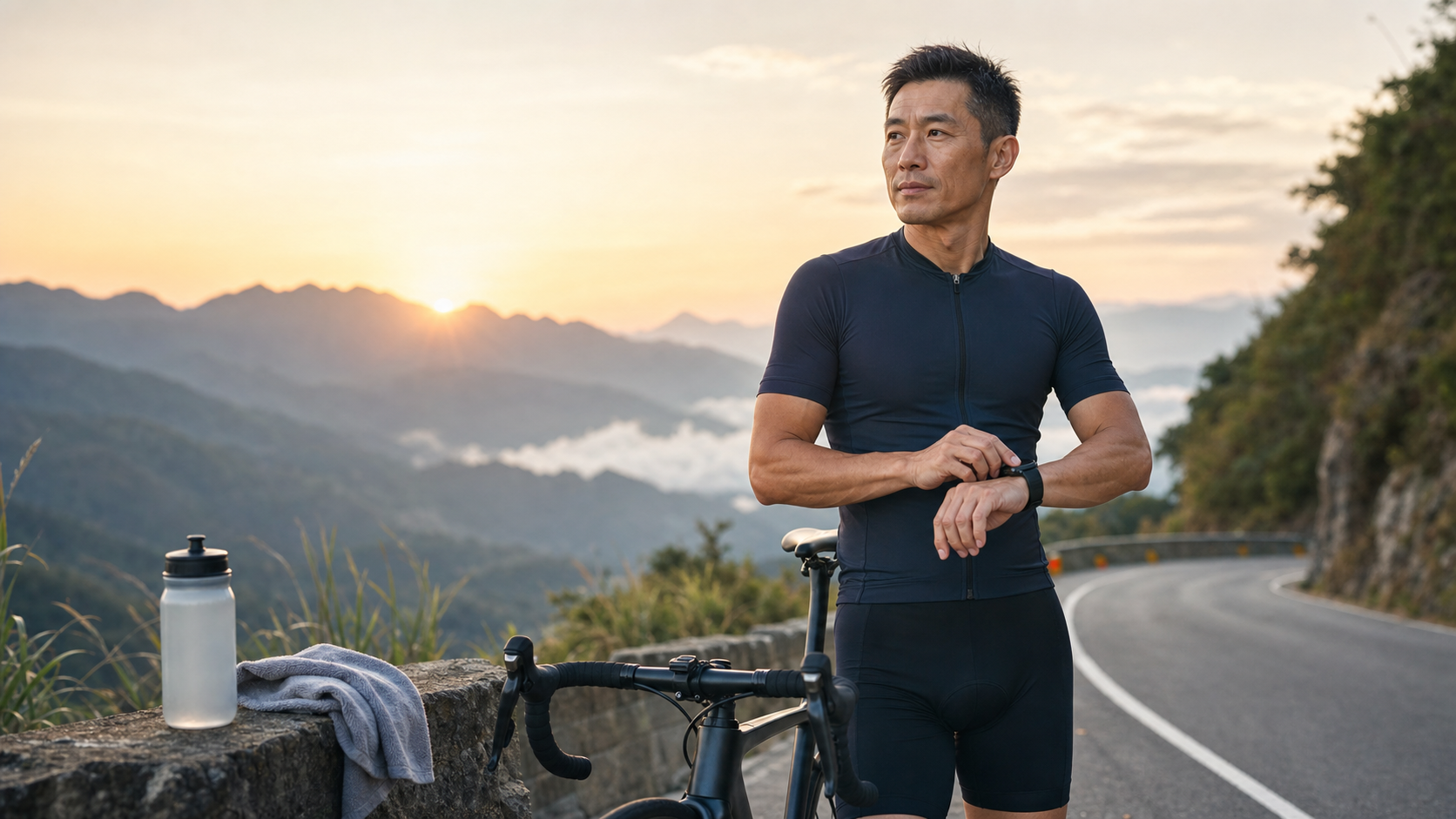
Opening: The 47-Year-Old Who Got Back on the Bike
A few years ago, a 47-year-old tech executive came to see me. He had played on his school team when he was young, and in recent years had gotten back on the road bike for his health—only to find himself increasingly frustrated with his training. He told me: “Coach, I followed those training plans online that young people use—three high-intensity interval sessions a week—and all I got was colds and knee pain, and I still can’t lose the weight. Am I just too old, is this it?”
I laughed at first. Because this is almost the exact same question every client over 40 has asked me over the past fifteen years. Aging is real—I won’t lie to you about that—but “how fast you decline” and “how much stronger you can still get” are largely in your own hands. That executive spent eight months adjusting his training load, prioritizing recovery, and eating enough protein. The following year, his climbing time up Wuling was nearly twenty minutes faster than when he had first come back.
In this article, I want to organize the concepts, science, and practical experience I’ve accumulated over the years coaching Masters athletes (typically referring to those 35 to 40 and older). Whether you’re a middle-aged cyclist starting over, a veteran looking to keep competing, or simply someone who wants to ride healthily into your eighties, I hope that after reading this, you’ll have a better understanding of “the body after 40”—and a little less anxiety.
Let me start by debunking a myth I really want to eliminate. Many people assume that “Masters sport” is just “a scaled-down version of young sport”—take your younger training plan, cut it by 20%, and follow it. But the truth is: the science of exercise after 40 isn’t about “how much training you can tolerate,” but “how much training you can absorb.” When you’re young, the bottleneck in training is often “whether you dare to push hard”; after 40, the bottleneck almost always becomes “whether you can recover.” This mental shift from a “training-oriented” to a “recovery-oriented” mindset is, in my opinion, the single most important thing every middle-aged athlete should internalize. Once you understand this, all the training adjustments, nutrition strategies, and expectation management that follow will actually make sense.
Concepts and Scientific Foundations: What Actually Happens to the Body After 40
To train smart, you first have to honestly face the physiological reality. The changes below are ones nearly everyone encounters after 40. Understanding them is how you know where to put your effort.
The Aerobic Engine (VO2max) Declines, But the Pace Is Controllable
VO2max (maximal oxygen uptake) is the core metric of endurance performance, representing how much oxygen your body can utilize per minute during maximal exercise. Research generally indicates that after age 40, VO2max declines by roughly 10% to 12% per decade for the average person. But the key point is: this rate is not predetermined.
Masters endurance athletes who maintain consistent high-intensity training can slow that decline to about 5% to 6.5% per decade—roughly half that of sedentary individuals. In other words, what ages you quickly is often not age itself, but “stopping training because you’re getting older.” Studies also show that a substantial portion of VO2max decline can be explained by “changes in training volume”—train less, and the engine naturally shrinks.
Here’s a hugely important practical takeaway for those over 40: switching entirely to slow riding and just piling on mileage actually accelerates the aging of your aerobic engine. Preserving some high-intensity intervals (e.g., 4-to-5-minute efforts) is one of the most effective ways to slow VO2max decline.
I often use an analogy with my clients: VO2max is like the “horsepower ceiling” of an engine. When you’re young, you have a large-displacement engine; even if it idles for a long time, you still have reserves. After 40, the engine naturally shrinks a bit—but more critically, if you only ever drive it at low RPMs from then on, that engine will “use it or lose it” much faster. Conversely, as long as you rev that engine to high RPMs a few times each week (even just for a few minutes), it remembers it can still perform, and the shrinkage slows considerably. That’s why, for my middle-aged clients’ training plans, I’d rather cut some “moderate-intensity junk miles” than sacrifice that one or two truly high-intensity sessions.
The table below helps you quickly grasp the general trends in VO2max decline across different groups (values are approximate ranges meant to illustrate relative differences, not personal predictions):
| Group | Approximate VO2max Decline per Decade | Key Difference |
|---|---|---|
| Completely sedentary individuals | About 10–12% | Lack of stimulus; muscle mass and cardiorespiratory fitness decline together |
| Those doing only low-intensity slow exercise | In between | Has a foundation but lacks high-intensity stimulus; engine shrinks faster |
| Masters athletes maintaining high-intensity training | About 5–6.5% | Preserving high intensity is the key to slowing decline |
Once you understand this table, you’ll see: what truly determines your rate of aging isn’t the number on your ID card, but how you plan to treat your body over the next decade.
Muscle Mass and Strength Loss (The Prelude to Sarcopenia)
From age 30 to 40 onward, muscle mass and strength gradually decline year by year. If left unaddressed, this process accelerates into your sixties and seventies—what we commonly hear called “sarcopenia.” For athletes, muscle isn’t just a source of strength; it’s also critical for blood sugar metabolism, postural stability, and joint protection.
What makes it trickier is “anabolic resistance”: older muscles respond more sluggishly to the same meal of protein or the same training session, requiring a stronger stimulus (more protein, sufficient resistance training) to maintain the same rate of muscle synthesis. This is why for endurance athletes over 40, strength training goes from “optional” to “mandatory.”
Slower Recovery: The Most Underestimated Change
If I had to pick just one “concept that most needs adjusting after 40,” it would be recovery. When you’re young, you can push hard three days in a row and bounce back after one night’s sleep. After 40, the same training plan may take one to two extra days to truly absorb. This isn’t a willpower issue—it’s the combined result of changes in hormones, sleep architecture, and tissue repair rates.
Many middle-aged athletes who get injured, overtrain, or plateau aren’t suffering from “not training enough,” but from “not recovering enough while constantly adding volume.”
Hormones, Bone Density, and Other Changes
- Hormones: Testosterone in men and estrogen in women decline with age, affecting muscle synthesis, recovery, and mood. The changes are especially pronounced for women around menopause, requiring more individualized training and nutrition strategies.
- Bone density: Bone loss accelerates in postmenopausal women. Impact sports (like running) and resistance training actually help maintain bone density—an aspect endurance athletes often overlook.
- Tendons and connective tissue: Blood flow and collagen metabolism slow down, making tendons “drier” and more brittle. This is why Achilles tendon, patellar tendon, and rotator cuff issues become more common in middle age, making warm-ups and progressive loading even more important.
- Thermoregulation and cardiovascular system: Taiwan’s summers are hot and humid. Older adults have reduced sweating and heat-dissipation efficiency, raising the risk of heatstroke and cardiovascular events, so hydration and intensity management need to be more conservative.
Practical Methods: How to Structure Training and Recovery After 40
Now that we’ve covered the science, let’s talk about how I actually structure training for my clients. The core principle is just one sentence: Keep the intensity, get enough recovery, add strength work, and set the right expectations.
1. Training Structure: Polarized Training + Adequate Recovery
My top recommendation for masters endurance athletes is to adopt the spirit of “polarized training”: spend most of your time at an easy, conversational low intensity, a small portion of time doing genuinely hard high-intensity work, and minimize as much as possible that middle “gray zone” that is neither here nor there—tiring but ineffective.
Below is a typical weekly example I give to a 50-year-old road cycling client who can train 6 to 8 hours per week (illustrative only; actual plans must be adjusted individually):
| Day | Session | Intensity | Duration | Purpose |
|---|---|---|---|---|
| Monday | Complete rest or walking/stretching | Very low | — | Active recovery |
| Tuesday | High-intensity intervals (4×4 min VO2max efforts, 4 min rest between) | High | 60–75 min | Maintain aerobic engine |
| Wednesday | Easy ride | Low | 60 min | Recovery + aerobic base |
| Thursday | Strength training (lower body + core focus) | Moderate | 45–60 min | Counteract muscle loss |
| Friday | Complete rest | — | — | Recovery |
| Saturday | Long endurance ride | Low to moderate | 2.5–3.5 hours | Aerobic base, fat metabolism |
| Sunday | Easy ride or slow ride in the countryside | Low | 60–90 min | Recovery + enjoyment |
Please note especially: this plan has only one truly high-intensity day per week, yet two complete rest days. For many people coming from their younger years and accustomed to “three high-intensity sessions a week,” this will at first glance seem “too easy.” But I want to be very honest: after 40, a plan that you can consistently absorb, stay injury-free, and make long-term progress on is often “lighter” than you think. Better to train a little less but be able to get on the bike every week than to blow yourself out once and be laid up for two weeks.
2. Recovery Is Active “Training,” Not Passive Empty Time
I often tell my clients: “Recovery isn’t the day you don’t train; recovery is the day you’re making progress.” Here are the recovery factors I believe deserve the most investment after 40, ranked by importance:
- Sleep (number one, no contest): Aim for 7 to 9 hours per night with a consistent schedule. Growth hormone and tissue repair occur primarily during deep sleep. If sleep is poor, all other recovery measures are half as effective.
- Nutrition and protein: See the next section for details.
- Training load management: Use simple perceived exertion (RPE), morning resting heart rate, sleep quality, and mood to judge whether you should push hard today. Tools like heart rate variability (HRV) can be referenced, but don’t let the numbers dictate everything.
- Active recovery: Easy rides, walking, swimming, stretching, yoga—promote blood circulation without adding burden.
- Stress management: Work, family, and financial stress all consume your “recovery budget.” For middle-aged athletes, training is essentially competing with the rest of life for recovery resources.
3. Nutrition and Protein: Eat Smarter After 40
This is the section I most want to emphasize. As mentioned earlier regarding “anabolic resistance,” athletes over 40 need to be more deliberate about protein.
Research on protein recommendations for masters athletes generally falls in the range of 1.2 to 2.0 grams per kilogram of body weight per day; some researchers believe older athletes may need to lean toward the higher end (approximately 1.6 to 2.0 g/kg/day) to support post-training muscle repair and long-term adaptation. Equally important is “distribution”: rather than loading up one meal and skimping on others, it’s better to consume roughly 25 to 40 grams of protein per meal, spread across about 4 meals a day—this is most efficient for stimulating muscle protein synthesis.
Using a 70 kg athlete as an example, here’s how I typically frame it:
| Item | General adult reference | Endurance athlete after 40 reference | Conversion for 70 kg person |
|---|---|---|---|
| Daily protein | ~0.8–1.0 g/kg | ~1.4–2.0 g/kg | ~98–140 g/day |
| Protein per meal | No specific requirement | ~25–40 g | ~25–40 g per meal |
| Meal frequency | 3 meals | 3–4 meals evenly distributed | Every 3–4 hours |
| Post-training timing | Flexible | Meal containing protein within 1–2 hours after training | Example: soy milk + chicken breast rice |
Practical advice for Taiwan: With our convenient food options, hitting these targets isn’t actually difficult. A chicken leg bento, a serving of braised snacks with tofu and seaweed, a bowl of beef noodle soup, or a cup of unsweetened soy milk with tea eggs are all decent protein sources. The thing to watch out for with eating out is that it’s generally low in vegetables, high in sodium, and heavy on refined carbohydrates. You can bring your own fruit, yogurt, and nuts to fill the gaps, and watch your salt intake (especially if you have high blood pressure). Older adults may also experience reduced appetite and digestion, so spreading protein across every meal and using easily absorbed sources (eggs, dairy, fish, soy products, whey) is more practical than forcing yourself to eat a huge amount in one sitting.
Other nutritional points:
- Carbohydrates: Don’t fear starches. Long-distance and high-intensity days still require sufficient carbs for fuel—just adjust total intake according to activity level.
- Fluids and electrolytes: Taiwan is hot and humid, and long rides mean heavy sweating. Hydration and adequate electrolytes (sodium) are important—don’t wait until you’re thirsty to drink.
- Vitamin D and calcium: Important for bone and muscle function. Indoor workers and older adults are prone to deficiency; if concerned, discuss testing and supplementation with your doctor.
- Supplements: Creatine has relatively solid evidence for maintaining strength and muscle mass, typically around 3 to 5 grams per day; but for any supplement, confirm your personal health status first and prioritize building a solid foundation with “real food.”
4. Strength Training: The Core of Anti-Aging After 40
Let me emphasize again: after 40, strength training isn’t a bonus question—it’s a mandatory one. It simultaneously combats muscle loss, protects joints and tendons, maintains bone density, and improves cycling economy.
Strength training for endurance athletes doesn’t need to look like bodybuilding. The focus should be on large muscle groups, multi-joint movements, and progressive overload. Twice a week for 45 minutes per session is plenty. Foundational movements can revolve around: squat patterns, deadlift/hip-hinge patterns, upper-body push and pull, and core stability. Older adults especially need to prioritize movement quality and progression—start with light weights, bodyweight, or resistance bands, and build up gradually to avoid pulling something by going too heavy too soon.
The following beginner strength menu is the starting point I often give middle-aged clients with no weight-training experience (can be done at home or in the gym; choose a weight where you can still do 2 to 3 more reps after the last one):
| Movement Category | Beginner Options | Sets × Reps | Primary Purpose |
|---|---|---|---|
| Lower-body dominant | Bodyweight/dumbbell squats, sit-to-stand | 2–3 sets × 8–12 reps | Quads, glutes, pedaling power |
| Hip hinge | Banded deadlifts, glute bridges | 2–3 sets × 8–12 reps | Posterior chain, lower-back protection |
| Upper-body push | Push-ups (can be against a wall), shoulder press | 2 sets × 8–12 reps | Upper body and postural muscles |
| Upper-body pull | Banded rows, pull-downs | 2 sets × 8–12 reps | Balance the forward-leaning cycling position |
| Core stability | Plank, side plank, dead bug | 2–3 sets × 20–40 sec | Trunk stability, lower back |
5. Season Periodization: Don’t “Go Hard” All Year Round
Many veteran athletes’ problem isn’t a lack of effort, but rather “going hard all year” without clear peaks and valleys. After 40, your body needs a clearer rhythm: when to build, when to push, when to rest. Here’s the annual periodization framework I commonly use:
| Phase | Duration Reference | Training Focus | Recovery Arrangement |
|---|---|---|---|
| Base Phase | 8–12 weeks | Low-intensity aerobic volume, strength foundation | Schedule 1 deload week every 3–4 weeks |
| Intensity Phase | 4–8 weeks | Gradually introduce VO2max and threshold intervals | Deload weeks must be executed |
| Taper | 1–2 weeks before race | Reduce volume, not quality; retain a small amount of high intensity | Maximize sleep and nutrition |
| Post-Race Recovery | 1–2 weeks | Complete rest or very easy activity | Both physical and mental recovery needed |
Special note: After 40, the “deload week” (that week every 3 to 4 weeks when you cut training volume by about 30%) isn’t optional—it’s the key to letting your body truly absorb the training and avoid cumulative fatigue. I’ve seen too many middle-aged athletes unwilling to deload, stacking hard weeks back-to-back, only to get injured or seriously ill a month before their race. It’s a real shame.
Common Mistakes and Corrections
Over the years, I’ve seen too many middle-aged athletes fall into the same traps. Here are the most common ones, along with my correction suggestions:
Mistake 1: Using a 25-year-old’s training plan for a 50-year-old body
This is the most common mistake, and it’s the same problem the manager mentioned at the start of this article had. Popular online training plans are mostly designed for younger demographics—high volume, dense scheduling, few recovery days. Correction: Reduce the frequency of high-intensity sessions (1 to 2 times per week is sufficient for most people), add more complete rest days, and treat “feeling too easy” as normal rather than a sign of regression.
Mistake 2: Treating recovery as laziness
Many ambitious middle-aged athletes feel guilty, as if not training equals slacking off. Correction: Redefine recovery as part of training. Write rest days, sleep, and nutrition into your plan and execute them with the same seriousness as your workouts.
Mistake 3: Switching entirely to slow riding and mileage stacking
Some people overcorrect. They hear they should protect their body and completely drop intensity. As mentioned earlier, this actually accelerates the decline in VO2max. Correction: Retain a moderate amount of high-intensity intervals scheduled when recovery is adequate. Quality over quantity.
Mistake 4: Ignoring strength and flexibility
Only cycling without strength training leads, over time, to muscle loss, muscular imbalances, and chronic pain. Correction: 2 strength sessions per week plus regular stretching/mobility work. The return on investment is extremely high.
Mistake 5: Not eating enough protein, or eating it unevenly
Many people have a slice of toast for breakfast, a bowl of noodles for lunch, and only eat meat at dinner—protein intake is severely skewed toward the end of the day. Correction: Include a protein source at every meal, especially breakfast (eggs, soy milk, yogurt).
Mistake 6: Ignoring warning signs and pushing through
Persistent fatigue, abnormally elevated resting heart rate, poor sleep, unexplained low mood, nagging minor injuries—these are all signs of overtraining or insufficient recovery. Correction: Learn to hit the brakes. After 40, “I’ll skip training today” is often the smartest training decision you can make. If you experience chest tightness, unexplained chest pain, unusual shortness of breath or dizziness during exercise, please seek medical evaluation—don’t tough it out on your own.
Actionable Advice for Readers at Different Levels
Everyone starts from a different point. Here are concrete first steps based on three common situations.
For Middle-Aged Beginners Getting Back into It
- Prioritize consistency over intensity: For the first 8 to 12 weeks, focus on easy, conversational intensity to let your body, tendons, and cardiovascular system readapt.
- 2 to 3 sessions per week is enough: No need to train daily. Consistency matters more than volume.
- Start strength training simultaneously: Begin with bodyweight or light weights, 2 times per week.
- Get a health check-up first: If you have high blood pressure, high blood sugar, high cholesterol, a family history of cardiovascular disease, or haven’t exercised in a long time, it’s recommended to get a health check-up and discuss with your doctor before starting. Taiwan’s NHI adult preventive health services and related screenings are very useful resources.
For Veterans Who Want to Keep Racing
- Accept expectation management: Comparing absolute results with your 30-year-old self will get increasingly difficult. Shifting your goals toward “age-group rankings,” “personal relative improvement,” and “finishing injury-free” will be healthier and more sustainable.
- Periodize your season: Don’t do high intensity year-round. Plan clear base, intensity, taper, and post-race recovery phases.
- Treat recovery as a weapon: The biggest gap between you and younger competitors isn’t ability—it’s recovery. Get sleep, nutrition, massage, and deloading right, and you can sustain yourself longer than you think.
- Monitor regularly: Resting heart rate, body weight, sleep, and simple fitness tests help you detect overtraining early.
For Seniors Who Just Want to Ride Healthy for Life
- Just moving is a win: Regular moderate-to-low-intensity exercise has enormous benefits for cardiovascular health, metabolism, mood, and cognition.
- Prioritize strength and balance: 2 simple strength and balance sessions per week to prevent falls and disability is the most cost-effective investment at this stage.
- Safety first: Taiwan’s summers are hot and humid. Avoid the midday heat, stay hydrated, and choose routes with less traffic and smoother roads (like riverside bike paths).
- Chronic conditions require individualization: For diabetes, hypertension, heart disease, joint degeneration, etc., exercise prescriptions need to be discussed individually with your doctor and physical therapist. Don’t copy someone else’s plan.
Taiwan-Specific Context: Heat, Humidity, Eating Out, and Healthcare Access
Sports science is universal, but to make it work in Taiwan, several local realities must be factored in. These are things I specifically emphasize with my local athletes.
Hot, Humid Climate: The Hidden Risk for Middle-Aged Athletes
Taiwan’s summers are hot and humid, with apparent temperatures often exceeding 35°C. As mentioned earlier, older individuals have reduced sweating and heat-dissipation efficiency, and the cardiovascular system’s buffer against heat stress is smaller. Middle-aged athletes actually face a greater risk of heatstroke and cardiovascular events during summer outdoor rides than younger people. My practical advice:
- Avoid midday heat: In summer, schedule rides for early morning or evening. 11 AM to 3 PM is the high-risk window.
- Hydrate proactively, don’t wait for thirst: On longer rides, take small sips every 15 to 20 minutes. When sweating heavily, supplement with moderate sodium-containing electrolytes.
- Adapt to heat gradually: At the start of summer, or if you haven’t exercised in the heat for a while, reduce intensity and duration for the first week or two to let your body adapt slowly. Don’t immediately challenge yourself with a long climb like Wuling.
- Use indoor options: On days with extreme heat or poor air quality, a trainer (rollers/smart trainer) is a great alternative—controllable intensity and unaffected by weather.
- Watch for heatstroke signs: Dizziness, nausea, abnormal skin conditions (no sweating or feeling cold), and confusion are all danger signals. Stop immediately, cool down, and seek medical help if necessary.
Protein and Sodium for Those Who Eat Out Frequently
Eating out in Taiwan is incredibly convenient, and hitting your protein targets isn’t actually hard—the challenge is “balance.” Restaurant food is generally lacking in vegetables, high in sodium, and heavy on refined carbs. I usually advise athletes: at every meal, first confirm “is there a clear protein centerpiece” (a piece of meat, a serving of fish, a few eggs, a serving of soy product), then supplement with your own fruit, unsweetened yogurt, and nuts to cover fiber and micronutrients. For athletes with high blood pressure, be moderate with soups and sauces—braised foods, hot pot, and processed meats are particularly high in sodium.
Healthcare and Health Check-Up Resources
The accessibility of Taiwan’s National Health Insurance is a huge advantage. For middle-aged people returning to exercise, or before adjusting training, if you have high blood pressure, high blood sugar, high cholesterol, a family history of cardiovascular disease, or haven’t exercised in a long time, I always recommend getting a health check-up first (adult preventive health services, ECG, etc.) to understand your baseline before starting. When your body has issues, rehabilitation, orthopedics, cardiology, and sports medicine clinics are relatively easy to access. Don’t just look up symptoms online and tough it out. Treat medical professionals as teammates, not as a fire brigade you call only as a last resort—that’s a fundamental skill of a smart, master-level athlete.
Second Case Study: A 52-Year-Old Menopausal Female Runner
Let me share another case to show that “individualization” is more than just a buzzword. A 52-year-old female client, who was a regular at community marathons in her younger years, had spent the past two years feeling like “no matter how I train, I have no energy, I sleep poorly, I’m gaining weight, and I keep getting minor injuries.” She even began to wonder if it was time to retire from running.
The adjustments we made together weren’t complicated, but they were all tied to her stage of life:
- Accepting the reality of hormonal changes: Around menopause, declining estrogen affects recovery, thermoregulation, bone density, and mood. I first helped her understand that “this isn’t about you not trying hard enough—your body is entering a new phase.” Simply shifting this mindset relieved a huge amount of psychological pressure.
- Making recovery the top priority: She originally ran five days a week with almost no rest days. We changed it to 3–4 times per week, added complete rest days, and made sleep the number one priority.
- Filling the gaps in protein, calcium, and vitamin D: Her breakfast originally had almost no protein. We increased protein to about 25–30 grams per meal and discussed bone density and vitamin D assessment with her family physician.
- Adding strength training: Twice a week, focusing on the lower body and core, to protect bone health and running form simultaneously.
- Collaborating with medical professionals: For menopause-related discomfort, I asked her to discuss it with her OB/GYN or family medicine doctor as well—training and medical care working in tandem.
Six months later, her sleep, energy, and weight had all improved significantly, and she signed up for another full marathon—not to break her personal best, but because she said, “I’ve rediscovered that running is something to enjoy, not endure.” This is the power of expectation management and individualization: When you shift your goal from “beating your past self” to “taking care of your present self,” you often end up going further and lasting longer.
FAQ: The Questions Clients Ask Me Most
Q: Is it inevitable that my performance will decline after 40?
A: In absolute terms, performance does tend to trend downward over the long run, but many people who start fresh or train smarter can still keep improving for years afterward, because their past training “capital” was insufficient and there’s plenty of room for improvement. Instead of asking whether you’ll decline, ask “how can I slow that decline to a crawl and fully capture the gains that are still available?”
Q: How many times a week should I do high-intensity training?
A: For most endurance athletes over 40, 1–2 truly high-intensity sessions per week is plenty, and they should always be scheduled when you’re well recovered. Rather than forcing in three sessions of poor quality, do one or two high-quality ones.
Q: Can I still train if my joints are starting to hurt?
A: It’s important to distinguish between “muscle soreness” and “joint/tendon pain.” Mild, symmetrical soreness that eases the day after training is usually normal. But if a specific joint has persistent pain, swelling, or limited range of motion, cut back and seek medical evaluation—don’t push through and turn it into a chronic injury. In Taiwan, rehabilitation medicine, orthopedics, and sports medicine clinics are all available for help.
Q: Do I need to buy a bunch of supplements?
A: First, get the fundamentals right—sleep, protein, vegetables, and hydration—which will do far more than any supplement. Creatine, vitamin D, and others have their value in specific situations, but assess your individual needs first; don’t put the cart before the horse.
Q: What should female athletes around menopause pay attention to?
A: Hormonal changes at this stage are significant and can affect recovery, thermoregulation, bone density, and mood. Training and nutrition (especially protein, calcium, and vitamin D) need to be more individualized. I recommend consulting medical or nutrition professionals familiar with female exercise physiology.
Q: Do I have to buy a heart rate variability (HRV) monitor or wearable device?
A: Not mandatory, but helpful. Data like HRV, sleep tracking, and morning resting heart rate can help you more objectively judge “whether to push or hold back today.” But I want to caution: Data is a reference, not the master. Some clients end up being held hostage by the numbers and anxious every day. The most reliable instrument is actually your own body awareness—whether you slept well, whether you have energy, whether your legs feel strong. When data and how you feel conflict, trusting how you feel is usually the right call.
Q: I was strong when I was young, and now I can’t get back to my old times. I feel frustrated. What should I do?
A: This is the core issue of expectation management, and I really want to answer it well. Comparing absolute numbers with your 20-year-old self is almost guaranteed to disappoint, because it’s a comparison you can’t win. But if you switch your comparison to “last year’s self,” “competitors in my age group,” or “the version of myself that finishes races injury-free,” exercise becomes meaningful and sustainable again. The happiest and longest-lasting veterans (in terms of athletic careers) I’ve coached all share one thing: they let go of their obsession with the past and shifted to enjoying the process and relative progress. In the end, sport isn’t about who was fastest in their youth—it’s about who can ride (or run) the longest, healthily and happily.
Q: Is it too late to start exercising in middle age? Does it even matter?
A: It’s not too late at all, and it matters enormously. Research consistently shows that even starting regular exercise in middle age—or even later—brings significant benefits to cardiovascular health, metabolism, strength, mood, and cognition. Your body will always reward you positively for “starting to move.” The key is to progress gradually, get a health check-up first if needed, and don’t get injured by rushing to catch up.
An Easily Overlooked Key: Psychology and Expectation Management
We’ve covered a lot of the technical side, but I want to spend some space on the “psychological” aspect at the end, because I believe it’s the true deciding factor in whether you can sustain exercise after 40 and actually enjoy it.
The biggest enemy of middle-aged athletes is often not the body, but the obsession with comparing yourself to your past self. This obsession creates three problems: first, anxiety—self-negation when you see performance decline; second, overtraining—pushing hard to reclaim past times and getting injured as a result; third, loss of enjoyment—turning exercise into a doomed chase.
I often tell my clients: look at the long arc of time. The real reward of exercise has never been the placing in any single race—it’s that it lets you move freely, get sick less, have the energy to be with your family, and keep a clear mind at 50, 60, and 70. From that perspective, every “smart, injury-free” training session after 40 is depositing the most cost-effective health asset for your future self. This mindset shift isn’t just consolation—it’s the underlying logic that lets you sustain this for a lifetime.
Conclusion: Stretch Out the Timeline, and You Win
After all these years coaching athletes, my deepest takeaway is this: Training after 40 is a long game of patience and wisdom. In your youth, you could push through on talent and brute force. After 40, the ones who truly keep getting stronger are those who know how to listen to their bodies, treat recovery as a weapon, and train with just the right dose.
Let me return to the 47-year-old executive from the opening of this article. He later told me something I loved: “I finally stopped comparing myself to my 20-year-old self and started comparing myself to last year’s self. As a result, I enjoy riding more—and I’ve gotten faster too.”
That’s the message I want to send to everyone over 40 who still loves to move: Aging isn’t the finish line—it’s a new phase that requires you to treat your body more intelligently. Adjust your training, shore up your recovery, eat right, manage your expectations—you won’t just maintain; you can find a whole new peak in the second half of your life.
Let’s get on the bike. Together, let’s age smartly and grow stronger with grace.
This article is for educational purposes and does not replace individual diagnosis or treatment advice from a physician, physical therapist, or nutritionist. If you have a chronic condition (such as diabetes, hypertension, or heart disease) or any physical discomfort, please consult a qualified medical professional before starting or modifying an exercise program, and adjust it to your individual circumstances.
References
- The Impact of Training on the Loss of Cardiorespiratory Fitness in Aging Masters Endurance Athletes (PMC): https://pmc.ncbi.nlm.nih.gov/articles/PMC9517884/
- Decline in VO2max with aging in master athletes and sedentary men (PubMed): https://pubmed.ncbi.nlm.nih.gov/2361923/
- Protein Requirements for Master Athletes: Just Older Versions of Their Younger Selves (PMC): https://www.ncbi.nlm.nih.gov/pmc/articles/PMC8566396/
- Protein Requirements Of Master Athletes (Gatorade Sports Science Institute): https://www.gssweb.org/sports-science-exchange/article/protein-requirements-of-master-athletes-do-they-need-more-than-their-younger-contemporaries
Related Reading
西進武嶺 免費訓練分析服務 Intervals | 練不夠還是練過頭?你哪一種類型選手?AI模型告訴你! | 備戰神器 | 公路車 訓練 | CT Yeh
4 年前
單車AI教練!全新 ChatGPT4o 幫你分析訓練成果!排武嶺課表,分析騎車姿勢! 太神了! / 公路車 / CT Yeh / feat. 緯緯
2 年前
#公路車 #Vo2Max #最大攝氧量 測驗 體驗 | 心肺測試
6 年前
一個測試有沒有認真練車的方法😂 #公路車
10 個月前
一日北高/長距離團騎 常見問題補充篇 / 組團或跟團的眉角 / 壯車友容易被瘦車友慢性拉爆 / 原來屁股痛可能是這個原因...? / 風場配速法 / 公路車 / CT Yeh
2 年前
宇老大滿貫 拉拉山 員工旅遊 有如爬了一座東進武嶺 #公路車 4K高畫質
6 年前
FTL 與 SYB 車隊專訪 西進武嶺 實用攻略分享! 2小時 如何練?!你不知道的眉角!新手準備武嶺必看 EP1 | 實力派女車友 | 精華版 | 公路車 | CTYeh
4 年前
2021 96聯賽 桃園市長盃 4K多視角實況 當天選手瓦數/推力比/均速/時間 即時數據分析 | 公路車 | CT Yeh
5 年前