The Future of Sports Technology: AI, Sensors, and Personalization — Opportunities and Pitfalls Through a Coach's Eyes
Opening: The Watch That Told Me “Don’t Train Today”
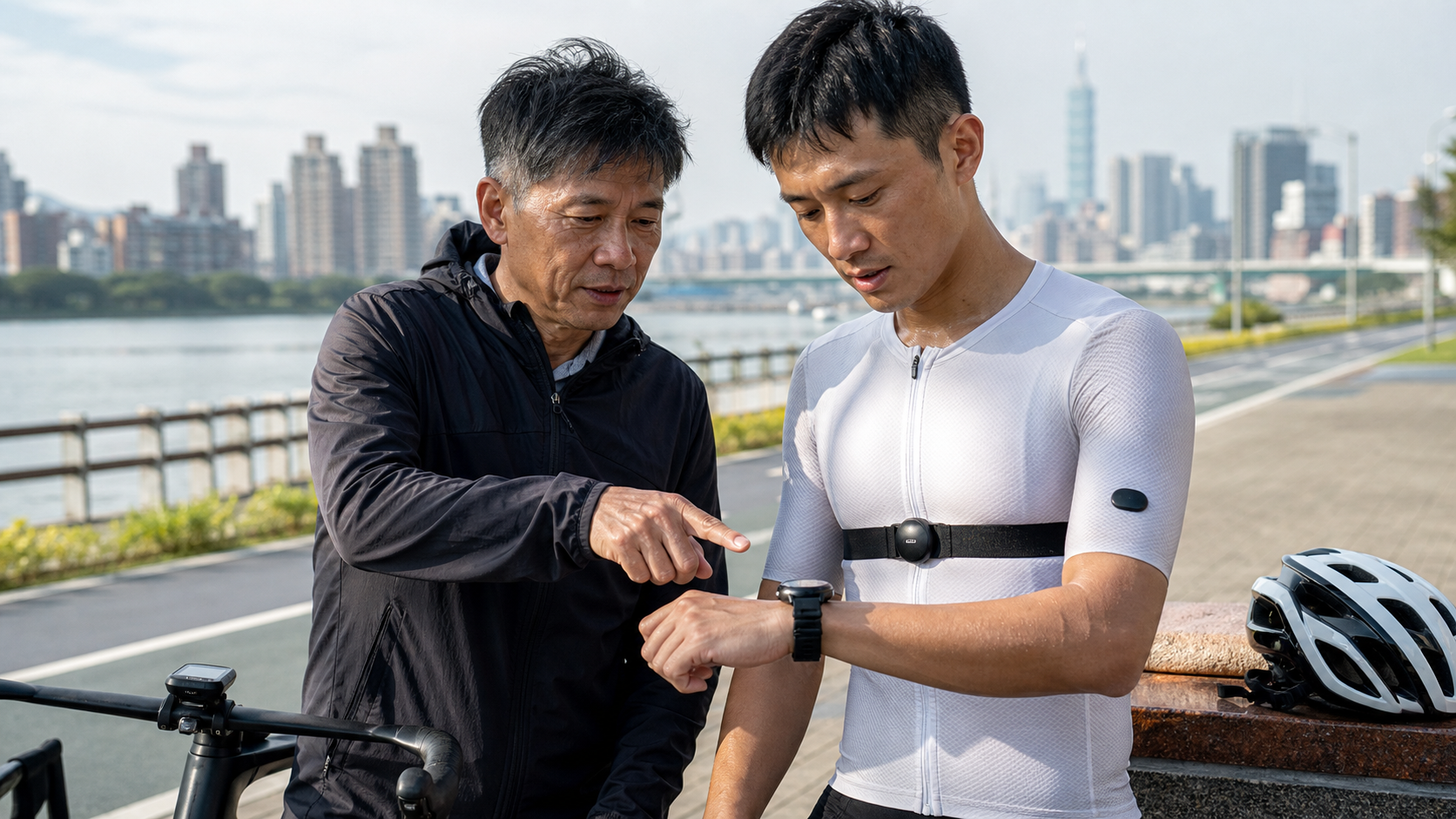
A few months ago, a citizen racer I’d been coaching for three years, Xiao Lin (pseudonym), messaged me with a slightly panicked tone: “Coach, my watch flashed red today, saying my ‘recovery score’ is only 28 and recommending I rest. But today is my scheduled interval day—should I train anyway or not?”
I first asked how he slept and what he’d done the night before. He said he’d been drinking with clients until late, getting less than five hours of sleep. I laughed: “Then you don’t actually need a watch to tell you to rest—your body already told you. The watch just quantifies that feeling into a number.”
That little exchange sums up the deepest lesson I’ve learned from coaching over the years. Sports technology—from wearable sensors and power meters to the AI coaching apps that have exploded in popularity over the past two years—has genuinely put physiological monitoring, once available only to pro teams, into the hands of every citizen athlete riding along the riverside or running on the track. That’s a good thing. But at the same time, I’ve seen too many people become “slaves to the data”: feeling perfectly fine physically, yet afraid to train because their watch shows a red flag; or conversely, exhausted to the bone, yet pushing through hard sessions because an app says “today is good for high intensity”—and ending up injured.
In this article, I want to talk to you as a coach who has worked with athletes at every level and who keeps up with sports physiology and sports medicine literature, about three things: how far sensing technology has actually come and how accurate it is; what so-called “AI coaches” can do, and what they can never replace; and a question everyone tends to overlook, but which I believe you’ll regret not paying attention to earlier ten years from now—where exactly your physiological data is flowing.
1. Conceptual Foundations: What Sports Technology Measures and Why It Distorts
To judge whether a piece of sports technology is trustworthy, you first need to understand “what it measures” and “how it measures it.” That determines when it’s accurate and when it will deceive you.
Direct Measurement vs. Estimation
I often tell my athletes that sports data can be roughly divided into two categories:
- Direct measurement: The sensor directly captures a physical signal. For example, a power meter measures torque and cadence on the pedals or crank, converted into watts; a chest strap heart rate monitor measures the electrical signal of heart contractions (essentially a simplified ECG). This type of data is usually the most reliable.
- Estimation/inference: The device captures a proxy signal, then uses algorithms to “guess” what you actually want to know. For example, optical heart rate (the green light on the back of a watch) actually measures blood flow changes in the microvessels beneath the skin, then infers heart rate; many watches’ claimed “VO2max,” “recovery time,” and “training load” are products of layer upon layer of estimation.
This distinction is crucial. The closer a metric is to the estimation end, the larger the error margin and the more susceptible it is to individual differences and environmental interference. When you see a clean, precise number (e.g., “your VO2max is 52.3”), remember that the precision after the decimal point is often an illusion created by the algorithm, not physiological reality.
Why Optical Heart Rate Is Especially Inaccurate on the Bike
This is one of the concepts I most want to help my athletes build. Many people think an inaccurate watch heart rate means it’s “broken,” but this is actually an inherent limitation of optical sensing (PPG, photoplethysmography).
According to a study that compared chest straps, optical watches, and ECG (the gold standard) side by side, the chest strap showed extremely high agreement with ECG (correlation coefficient around 0.996, where 1 is perfect agreement), but wrist-worn optical devices dropped to between roughly 0.67 and 0.92—a wide gap; and these watches were especially inaccurate in cycling and elliptical trainer contexts (source listed in the references at the end).
Why is cycling an optical heart rate nightmare? Based on my coaching experience, I’d summarize several reasons:
- The wrist stays fixed on the handlebars, muscles remain constantly tense, compressing blood flow in the wrist and weakening the signal.
- Road vibration causes micro-displacements between the sensor and the skin, drowning the optical signal in noise.
- Gripping the handlebars restricts local blood flow, reducing the change in microvessel blood volume, making it harder for the algorithm to track.
- Heart rate changes rapidly while cycling (spiking during intervals), and optical algorithms have latency, often “lagging behind”—sometimes even producing a false heart rate “locked onto cadence.”
So my advice to serious riders has always been straightforward: when cycling, especially during intervals, use a chest strap or an upper-arm optical band—don’t rely solely on wrist heart rate from a watch. For running and daily monitoring, wrist heart rate is sufficient. It’s not that the watch is bad; it’s about using it in the right context.
HRV: The Most Mythologized and Most Easily Misused Metric
The biggest trend in the past two years is “heart rate variability (HRV)” and the various apps’ “recovery scores” and “readiness scores.” In plain terms, HRV is the subtle variation in the time interval between each heartbeat. Generally, when the parasympathetic nervous system (the rest-and-relax branch) is active, HRV is higher, indicating the body is in a better recovery state; under stress, overtraining, poor sleep, or before illness, HRV often drops.
Sounds impressive, but I have to pour some cold water on it. The problems with HRV are:
- Huge individual differences: Your “normal HRV” can’t be compared to anyone else’s—only to your own baseline.
- Highly sensitive measurement conditions: Breathing, posture, time of measurement, your last meal, caffeine, and alcohol all affect it.
- Device accuracy varies widely. A validation study of multiple consumer wearable devices, using ECG as the reference across hundreds of nights, found that different devices’ HRV accuracy varied greatly: some ring-type devices showed high agreement with ECG (concordance up to 0.97 to 0.99), but some watches and sports watches only reached “moderate” or even “low” agreement (source listed in the references at the end).
In other words, on the same night, wearing different brands of devices could give you very different HRV numbers. That’s why I tell my athletes: for metrics like HRV, look at trends, not single-day absolute values. A seven-day or fourteen-day moving average trending downward is worth taking seriously; a single day’s red flag—first ask yourself what you did last night, and the answer is usually in your lifestyle.
2. What AI Coaches Can and Cannot Do
Okay, sensors covered—now let’s talk about what everyone is most curious about: “Can AI coaching apps actually replace a human coach?”
My answer: It can do part of my job well, and that part it might do faster and cheaper than me; but there’s another part it can’t do, and that part is often the key to whether you improve or get injured.
What AI Coaches “Can” Do
To be fair, today’s AI training apps are genuinely impressive. Based on my direct observation, they excel at:
- Automated training plan generation: Automatically creating periodized plans based on your target race date and current fitness, dynamically adjusting as you complete workouts. In the past, this was the most time-consuming routine part of a coach’s job.
- Quantifying training load: Converting each session’s intensity and duration into metrics like “training stress score” to help you avoid over-accumulation.
- Real-time feedback: Telling you what power zone to hold while riding, how many seconds remain in an interval—these real-time prompts might not even be more precise than a human coach shouting from the sidelines.
- Integrating massive data: It can tirelessly lay out every workout, sleep, and heart rate data point from the past two years to find patterns—something the human brain can’t do.
For citizen athletes with limited time, limited budget, and clear goals (e.g., finishing a half marathon or Wuling in six months), a good AI app is actually a cost-effective starting point. I’ve never opposed my athletes using them; what I oppose is “blindly accepting everything and switching off your own judgment.”
What an AI Coach “Cannot” Do
This is what I really want to emphasize. Here are the areas where I’ve repeatedly seen AI fail, or simply be powerless, over the years:
1. It can’t read “feelings” or life context. Back to the example of Xiao Lin at the beginning. The app gave him a red score of 28, but it didn’t know it was because he had been drinking at a social event the night before—it only follows its algorithm to suggest rest or maintaining the training plan, but it cannot determine whether this is a “temporary life disruption” or a “true sign of overtraining.” The handling for these two situations is completely different: the former just needs a good night’s sleep, while the latter requires reducing volume for two weeks. Making this distinction requires asking questions and understanding context—this is currently AI’s weakest link.
2. It doesn’t watch your form. A running gait compensation or an incorrect saddle height, accumulated over time, leads to iliotibial band syndrome or knee pain. AI apps can see your power and pace, but they can’t see your knee caving inward or your pelvis rocking side to side. These biomechanical issues still require a real human eye (or professional movement analysis).
3. It easily misjudges “abnormal signals.” Once sensors provide dirty data (e.g., optical heart rate locking onto cadence, GPS drift causing pace spikes), AI will take it at face value, calculate load and recovery, and then give you a wrong recommendation. A human coach seeing “this data looks weird” will simply ignore it; AI won’t necessarily do that.
4. It cannot take on medical judgment. I want to be blunt about this one. If you have arrhythmia, chest tightness, or unexplained heart rate spikes, no app’s “recovery score” can replace seeing a doctor. I once coached a student whose watch kept alerting him to abnormally high resting heart rate. He initially wanted to “keep observing,” but I strongly advised him to see a cardiologist. It turned out to be a thyroid issue. Technology can be a sentinel that “reminds you to see a doctor,” but it can never be the “doctor” itself.
The table below is a “division of labor chart” I often show my athletes, to help you decide what to leave to AI and what needs a human:
| Task | AI Coach App | Human Coach / Professional | My Recommendation |
|---|---|---|---|
| Generating a base period training plan | Strong | Moderate | Beginners can start with AI |
| Real-time intensity / pace guidance | Strong | Moderate | Delegate to the device |
| Quantifying training load, preventing overtraining | Strong | Moderate | AI assists, human makes the final call |
| Interpreting “should I train today or not” | Weak | Strong | Must incorporate life context |
| Form / posture / injury prevention | Weak | Strong | Rely on human eyes and movement analysis |
| Handling injuries, pain, illness | Cannot | Requires physician / physical therapist | Refer to professionals immediately |
| Psychology, motivation, race strategy | Weak | Strong | This is where human value lies |
Once you understand this table, you won’t ask binary questions like “Will AI replace coaches?” The right question is: “What should I let AI handle, and what should I keep for myself and professionals?”
三、Practical Methods: How to Use Sports Technology “Correctly”
Now that the concepts are covered, let’s get to actionable steps. I’ve organized this into a process I actually use with my athletes.
Establish Your Own “Data Baseline”
All estimated metrics (HRV, recovery scores, VO2max) are only meaningful when compared to yourself. So the first step is always to establish a baseline:
- Measure under fixed conditions: for example, every day after waking up, after using the bathroom, before drinking coffee, measure HRV and resting heart rate in the same posture.
- Accumulate at least two to four weeks of data before you can calculate your “normal range.”
- After that, focus on the degree and trend of deviation from baseline, not absolute numbers.
Use a “Subjective + Objective” Dual-Track Assessment—Don’t Rely on a Single Number
This is the principle I emphasize most. Before each training session, I have my athletes do a quick cross-check:
| Indicator | Green Light (train as planned) | Yellow Light (reduce volume or modify content) | Red Light (rest or see a doctor) |
|---|---|---|---|
| Subjective feeling (sleep, energy, muscle soreness, self-rated 1–10) | 7 or above | 4–6 | 3 or below and persistent |
| HRV / recovery score trend | At or above baseline | Slightly below baseline | Significantly below baseline for multiple consecutive days |
| Resting heart rate | Close to usual | 5–10 bpm above usual | More than 10 bpm above usual with no obvious cause |
| Life factors | Normal routine | Late nights / high stress / mild cold symptoms | Fever, chest tightness, significant discomfort |
Interpretation principle: When subjective and objective data agree, the decision is easiest; when they conflict, I always default to the more conservative side. If you feel terrible but your watch says green light, listen to your body; if you feel fine but your watch shows red for several consecutive days, treat it as a reminder—swap the intensity session for an aerobic one, don’t push through.
Sensor Selection and Placement
This is where many people spend money but don’t get accurate data. My practical advice:
- For heart rate zone training, especially cycling intervals: use a chest strap or upper-arm optical band. Leave the wrist watch for daily wear and running.
- For power training: a power meter is one of the most worthwhile investments in cycling training because it’s a direct measurement, unaffected by heart rate lag. But remember to perform regular zero offset calibration.
- For HRV monitoring: a ring or a dedicated morning-measurement app is usually more stable than a sports watch. The key is measuring under the same conditions every day.
- Don’t obsess over decimal points: For estimated values like VO2max and body fat percentage (especially bioelectrical impedance from watches or body composition scales), just look at broad trends, and don’t get anxious over a 0.5 fluctuation.
Practical Adjustments for the Taiwan Context
Most sports technology recommendations come from Europe and the US, so applying them in Taiwan requires some local adjustments:
- Hot and humid climate: Taiwan’s summers are hot and humid, and heat dissipation is poor, so at the same pace your heart rate will be higher than in cooler weather. This means your heart rate zones and recovery scores will naturally look “worse” in summer—this is normal, don’t misread it as overtraining. Research has shown that ambient temperature and humidity can affect the heart rate measurement performance of several optical devices (see references at the end), so in extreme heat, cross-reference with subjective feeling even more.
- Nutritional gaps for those who eat out: Eating out is convenient in Taiwan, but refined carbohydrates are plentiful while vegetables and quality protein are often lacking. No matter how sophisticated an app is at calculating calories, it can’t calculate the hidden oils and sodium in your bento box. Data can be a reference, but “whether you’re eating balanced enough” still requires you to look at your food, not your numbers.
- Terrain: Riverside bike paths, track fields, and riverside running trails are most people’s home turf. GPS tends to drift under bridges and near elevated roads, making pace fluctuate—don’t be alarmed by single data points.
- Healthcare accessibility: Taiwan’s National Health Insurance makes seeing a doctor highly accessible, which is actually our advantage. When wearable devices repeatedly flag abnormalities (persistently elevated resting heart rate, abnormal chest tightness or palpitations during exercise), don’t just search online, don’t just trust the app—make an appointment directly. This is something we’re luckier about than many countries, so use it.
4. Where Does Your Data Go? The Overlooked Privacy Issue
This section is one I believe people will be grateful we addressed early, ten years from now.
Have you ever wondered, when you upload your heart rate, sleep, location, weight, and menstrual cycle data to an app every day, where does that data actually go?
Exercise and health data are highly sensitive personal information. It’s not just “how many kilometers you ran today”—it can reveal your health status, daily routines, home and work locations (which can be inferred from your regular cycling routes), and even your emotional and stress levels.
According to relevant privacy analysis reports, fitness apps collect an average of about 15 data points each, with the most “data-hungry” ones collecting over 20. Moreover, many apps share data with third parties—which may include data brokers, advertisers, insurance companies, and more. What’s particularly noteworthy is that surveys show consumer trust in big tech companies safeguarding their digital health data is actually quite low (fewer than 15% of consumers express trust); some major manufacturers have also reached substantial settlements in recent years over device privacy disputes (sources listed in the references at the end).
I’m not telling you to panic and throw away your watch. I’m telling you to use it with awareness. Here’s the privacy self-protection checklist I give my athletes:
| Action | Why It Matters | How To Do It |
|---|---|---|
| Read the “data sharing” section of the privacy policy once | Know who can access your data | Search for keywords like “third party / sharing / advertising” |
| Turn off unnecessary permissions | Reduce the dimensions of data collected | Disable non-essential permissions like constant location, contacts, microphone |
| Be cautious with “public activities” and route sharing | Public routes = publicizing your home and office locations | Set a privacy radius around your home, turn off auto-publication |
| Regularly review authorized third-party apps | Many integrations secretly read your data long-term | Revoke connections you no longer use in account settings |
| Think twice before uploading sensitive data (e.g., menstrual cycle) | The consequences of this data leaking are more severe | Evaluate whether cloud sync is truly necessary |
| Remember to delete data from old accounts you no longer use | An inactive account means your data stays in someone else’s hands | Request account and data deletion, not just logging out |
I especially want to say something to two groups of people. Female athletes: menstrual cycle tracking has great training value, but this is extremely sensitive data—be sure to carefully review how the app handles your data before uploading. People with chronic conditions or family medical history: if your health data falls into the wrong hands, it could long-term affect your interests in certain commercial contexts, so be even more cautious.
This isn’t about throwing the baby out with the bathwater—it’s a reminder: while enjoying the convenience of technology, keep the power of “informed consent” in your own hands.
5. In-Depth Case Study: How One Commuter Cyclist Went From “Data-Bound” to “Data-Driven”
Enough theory—nothing beats a complete case study. This is the real journey of one of my athletes from last year, A-Zhe (pseudonym) (the scenario has been organized for clarity, but the process and decision-making logic are real).
A-Zhe, 42, a tech industry engineer, sedentary during the week with a mostly eat-out lifestyle, wanting to train seriously on weekends with a goal of completing a long-distance mountain challenge by year-end. He’s your classic “tech enthusiast”: watch, power meter, HRV ring, AI training plan app—he has them all. But his problem when he came to me was typical—he was anxious and stagnant, held hostage by his own data.
Diagnosis
I first reviewed two months of his data and identified three core problems:
- His first action every morning was checking his recovery score, letting that number dictate his mood for the entire day. Green meant happy, red meant anxious—he’d even cancel workouts he really wanted to do because of a red score. Over time, training stimulus became insufficient and progress stalled.
- He used wrist-based heart rate during intervals, causing his heart rate to “lock near cadence” during every climb and sprint, distorting the numbers. His AI app then calculated training load from this dirty data, making the entire load curve wrong.
- He followed the AI training plan to the letter, never reporting subjective feedback. The app didn’t know his work stress was through the roof and he was only sleeping five hours a night, yet it still scheduled high-intensity sessions—he ended up training hard with zero results.
My Adjustments
I didn’t tell him to throw away any devices. I only made three changes:
- Changed the order of measurement and interpretation: First, self-assess “today’s condition on a 1–10 scale” each morning, write down last night’s sleep and stress levels, and only then look at the watch numbers. The order is critical—establish your own feelings first, then validate with numbers, rather than letting numbers hijack your emotions from the start.
- Sensors back in their proper place: On interval days, he switched to a chest strap; wrist-based heart rate was reserved for daily use only. The power meter was zero-calibrated before every ride. Block the dirty data at the source, and all downstream calculations become meaningful again.
- Established a dual-track subjective/objective decision framework: Applied the traffic light table from earlier. He learned that when “feeling good but watch shows red,” the answer isn’t to cancel—it’s to convert the high-intensity session into moderate-to-low intensity aerobic work, maintaining training consistency without interruption.
Results and Takeaways
Three months later, A-Zhe’s transformation wasn’t about impressive numbers—it was that his relationship with data became healthy. He told me something I really liked: “Before, the watch was deciding for me. Now, I’m using the watch.” He completed his year-end challenge successfully, and at one point during the ride his power meter malfunctioned—he finished steadily using the feel-based pacing he’d developed through training. This is exactly what I want to teach every athlete: technology is meant to enhance your judgment, not replace it.
A-Zhe’s Actual “Sensor Division of Labor” Setup
Here’s his adjusted device configuration for your reference:
| Scenario | What He Uses for HR/Intensity | Why |
|---|---|---|
| Daily, sleep, morning HRV | Band/ring (wrist optical) | Optical is accurate enough at rest, and convenient for long-term wear |
| Flat-road aerobic riding | Wrist or upper arm both fine | Intensity is stable, optical delay impact is minimal |
| Mountain/intervals high-intensity riding | Chest strap (electrical signal) | Heart rate changes rapidly, needs the most accurate real-time value |
| Power training | Power meter (direct measurement) | Not affected by heart rate lag, reflects true output |
| Running cross-training | Wrist optical or chest strap | Wrist optical performance during running is generally acceptable |
6. Putting Technology Into “Periodization”: How to Use Data Across Different Training Phases
The biggest blind spot for most people using sports technology is looking at data the same way every single day. But training is periodized—the data you should focus on differs by phase. Here’s how I guide athletes through a training cycle, with corresponding data priorities:
| Training Phase | Primary Goal | Most Important Data | Less Important / Relax About |
|---|---|---|---|
| Base Phase (aerobic foundation) | Accumulate aerobic mileage, build endurance | Heart rate zones (low-intensity percentage), weekly training volume | Single-session max power, instantaneous pace |
| Build Phase (increasing intensity) | Raise threshold, develop specific abilities | Power/pace zones, accumulated training load | Daily HRV minor fluctuations |
| Peak/Taper Phase (pre-race) | Eliminate fatigue, sharpen form | HRV trend, subjective freshness, resting heart rate | Training volume (should be decreasing anyway) |
| Post-race Recovery Phase | Full recovery, avoid overtraining | Sleep quality, HRV recovery, subjective fatigue | Any intensity metrics |
The spirit of this table: data should serve your training goals, not the other way around—making you anxious by staring at every metric daily. During the base phase, focus on stacking low-intensity mileage without worrying about daily HRV fluctuations; by the pre-race taper, HRV trends and freshness become your primary focus. Look at the right data at the right time, and you won’t be drowned in noise.
An Often-Overlooked Detail: When Data “Lies”
There are several situations where your data is especially prone to deceiving you. Let me list them so you have a heads-up:
- Early stages of a cold or inflammation: HRV may drop first and resting heart rate may rise. This is actually your body warning you—training hard while “feeling okay” is highest risk at this point.
- Measuring HRV right after coffee or alcohol: Values will be distorted. Avoid measuring beforehand.
- Travel, jet lag, changes in sleep environment: Data will be erratic. Don’t rush to interpret it as declining fitness.
- Training in extreme weather: In Taiwan’s humid summer heat, high heart rates and low recovery scores are mostly environmental—not signs of regression.
7. Frequently Asked Questions (FAQ)
Over the years of coaching athletes, there are a few questions that almost everyone asks. Let me answer them all at once.
Q1: Should I really buy an expensive power meter / HRV ring?
It depends on your stage. If you’re still building the exercise habit, a basic watch is enough. Only when you start to have “goals, a training plan, and a desire to break through your limits” should you invest in devices that measure directly (cyclists should prioritize a power meter). Build the habit of looking at data first, then upgrade your hardware. Don’t do it the other way around.
Q2: Between AI training plan apps and a human coach, do I have to choose just one?
It’s not an either/or choice. Many of the athletes I coach use a hybrid model—“AI handles the daily plan, I make the key judgment calls and technique corrections.” This is often the most cost-effective and practical approach.
Q3: My watch says my VO2max has improved. Does that mean I’ve actually gotten stronger?
That’s an estimated value. It’s fine for looking at the big picture, but don’t treat it as precise proof of fitness. Real fitness improvement is shown by whether you can achieve better performance at a lower heart rate under fixed conditions (the same climb, similar weather). That’s far more honest than your watch’s estimate.
Q4: My HRV has been consistently low. Is something wrong with my body?
HRV varies greatly between individuals. Looking at the absolute value alone isn’t very meaningful—what matters is comparing it to your own baseline and looking at the trend. However, if you also have persistent fatigue, poor sleep, heart palpitations, or other symptoms, that’s beyond what an app can assess—please seek medical evaluation.
Q5: Is data privacy really that serious?
In the short term, you might not notice anything. But health data is sensitive information that accumulates and can be pieced together. Spending ten minutes to review your permissions and sharing settings is a low-cost, worthwhile form of insurance. Be especially cautious with data related to women’s menstrual cycles and chronic conditions.
8. Common Mistakes and Corrections
In all my years coaching athletes, the mistakes I’ve seen can almost all be grouped into the categories below. See if any of them apply to you.
Mistake 1: Treating device numbers as gospel and ignoring how your body feels.
Correction: Always use the “subjective + objective” dual-track approach. Numbers are a reference; body sensation is first-hand evidence. When the two conflict, listen to the more conservative one.
Mistake 2: Using optical wrist-based heart rate for cycling intervals.
Correction: Switch to a chest strap or upper-arm strap for cycling intervals. Wrist-based heart rate can be off by 10 to 15 bpm during high-intensity cycling, which will throw off your entire zone-based training session.
Mistake 3: Being so anxious about a single day’s red HRV reading that you’re afraid to train, or going all-out when you see a green reading.
Correction: Look at the trend of HRV over seven days or more using a moving average, not single-day absolute values. If a single day is abnormal, first check last night’s lifestyle factors (sleep, alcohol, stress).
Mistake 4: Obsessing over the decimal points of derived metrics like VO2max or recovery time.
Correction: These are the products of layer upon layer of estimation. Just look at the big picture. Don’t question your existence because your score went from 51 to 50.
Mistake 5: Completely handing over your training plan to AI and never recalibrating.
Correction: AI-generated plans need to be regularly recalibrated against your actual completion rates, injury status, and life changes. It’s the co-pilot; you’re the pilot.
Mistake 6: Ignoring privacy—agreeing to everything and making everything public.
Correction: Do a permissions and data-sharing review at least once, and set a privacy radius around your home.
Mistake 7: Treating device warnings as “I’ll deal with it later” and delaying medical care.
Correction: For persistent, unexplained abnormalities (chronically elevated resting heart rate, chest tightness or palpitations during exercise, dizziness), don’t put it off any longer. Medical care is easily accessible in Taiwan—just book an appointment with a cardiologist or a family medicine doctor.
9. Actionable Advice for Readers at Different Levels
Finally, here’s a checklist you can start today, based on where you currently are.
If you’re a beginner (just starting with sports technology)
- Don’t buy a bunch of devices right away. A watch or band that measures heart rate is enough to get started.
- Spend two to four weeks establishing your resting heart rate and subjective feeling baseline. Get to know yourself first.
- Learn the habit of rating “today’s condition on a scale of 1–10.” It matters more than any app score.
- Do a basic privacy settings review and turn off unnecessary permissions.
If you’re an intermediate athlete (training consistently, looking to break through)
- Invest in one key device that measures directly: cyclists should consider a power meter; runners should consider a chest-strap heart rate monitor.
- Implement a “subjective + objective” dual-track assessment. Spend 30 seconds cross-checking before each training session.
- Watch HRV trends and use them alongside training load monitoring to plan periodized deloads.
- You can use AI apps for planning, but recalibrate every two to four weeks.
- Do a privacy and third-party authorization cleanup every quarter.
If you’re an advanced athlete or a team coach
- Position technology as decision support, not a decision replacement. Your eyes (for observing technique) and your questioning (for uncovering context) remain core value.
- Establish a team-wide consensus on data interpretation to prevent athletes from being held hostage by a single number.
- For athletes with health concerns, develop the reflex to “refer when referral is needed.” Don’t let app scores delay medical care.
- Help your athletes understand privacy policies—that’s also part of caring for them.
Conclusion: Technology Is the Co-pilot; You Are the Pilot
Let’s return to Xiao-Lin from the beginning. That day, I asked him to change his interval day to easy aerobic work and get a good night’s sleep. The next day, his recovery score was back up to the 70s, and we doubled up on the intervals as originally planned. That season, his personal best improved significantly. The watch wasn’t wrong—it faithfully reflected his state from the night before. But what truly made the decision was that he had learned to treat data as a reference, treat his body as evidence, and keep the judgment call for himself.
The future of sports technology will only get smarter: sensors will be more accurate, AI will be better at planning, and personalization will be more refined. But I’m increasingly certain of one thing—the more powerful technology becomes, the more precious your own judgment, body awareness, and critical thinking about data become. They aren’t meant to be replaced by technology; they’re meant to be better utilized by you, thanks to technology.
Treat AI as your co-pilot. It helps you read the instruments, reports on road conditions, and reminds you not to drive too fast. But the steering wheel will always be in your hands. That is my most sincere hope for the future of sports technology.
This article is for educational purposes and does not replace individual diagnosis and treatment advice from physicians, physical therapists, or nutritionists. If you experience arrhythmia, chest tightness, dizziness, or any physical discomfort, please seek medical attention promptly and discuss individualized training and health plans with professionals.
References
- Wrist-worn optical and chest strap heart rate comparison (wrist optical vs. chest strap heart rate comparison, using ECG as the reference): https://www.ncbi.nlm.nih.gov/pmc/articles/PMC5984393/
- Validation of nocturnal resting heart rate and heart rate variability in consumer wearables (validation study of nighttime resting heart rate and HRV across multiple consumer wearables): https://www.ncbi.nlm.nih.gov/pmc/articles/PMC12367097/
- Accuracy of Optical Heart Rate Measurements in Different Climate Conditions and Activities (accuracy of optical heart rate measurement under different climates and activities): https://www.ncbi.nlm.nih.gov/pmc/articles/PMC12912460/
- Wrist-Worn Heart Rate Monitors Less Accurate Than Standard Chest Strap (American College of Cardiology: wrist heart rate less accurate than chest strap): https://www.acc.org/about-acc/press-releases/2017/03/08/14/02/wrist-worn-heart-rate-monitors-less-accurate-than-standard-chest-strap
- Privacy in consumer wearable technologies: a living systematic analysis of data policies (systematic analysis of data policies for consumer wearables): https://pmc.ncbi.nlm.nih.gov/articles/PMC12167361/
Related Reading
- The Future of AI and Training: From Data to Personalized Plans, Coaches Show You What AI Coaching Platforms Can Really Do
- The Future of Sports Science: Precision Sports Medicine, AI Coaches, and Wearable Tech in 2030
- The Science of Exercise Testing: How to Assess Fitness, Choose the Right Lab Tests, and Track Progress
- The Science of Wearables: How Accurate Is the Data on Your Wrist?
西進武嶺 免費訓練分析服務 Intervals | 練不夠還是練過頭?你哪一種類型選手?AI模型告訴你! | 備戰神器 | 公路車 訓練 | CT Yeh
4 年前
單車AI教練!全新 ChatGPT4o 幫你分析訓練成果!排武嶺課表,分析騎車姿勢! 太神了! / 公路車 / CT Yeh / feat. 緯緯
2 年前
2026 車錶排行榜!誰是最多車友正在使用?練家子最愛哪款?🏆 (2萬名車友數據) / 公路車 / CT Yeh
5 個月前
如何用 AI 寫車錶 App? Hammerhead Karoo 自行車錶 近期大改版 / 官方App Store來了 / 公路車 / CT Yeh
1 年前
2025 自行車錶排行榜 兩萬車友大數據 / Garmin Bryton 排名會大洗牌嗎? / 全新的碼表前身分析 /公路車 / CT Yeh
1 年前
#公路車 #Fitting 靠人工智慧APP 幫你調整單車
6 年前
全台首發神車錶! iGPSPORT iGS630 兩趟一日北高的續航! 超強導航、功率訓練、超人性APP! Garmin & Bryton 有對手了嗎? | 公路車 |CT Yeh
3 年前
2022 前十五大自行車錶 !? 兩萬名車友大數據統計 | 你的上榜了嗎? | 菁英車友都用哪些錶? | Bryton Garmin 誰能拔得頭籌?| 車錶推薦 | 公路車 CT Yeh
4 年前