Sports and Environmental Sustainability: Green Sports Science for a More Earth-Friendly Training Routine
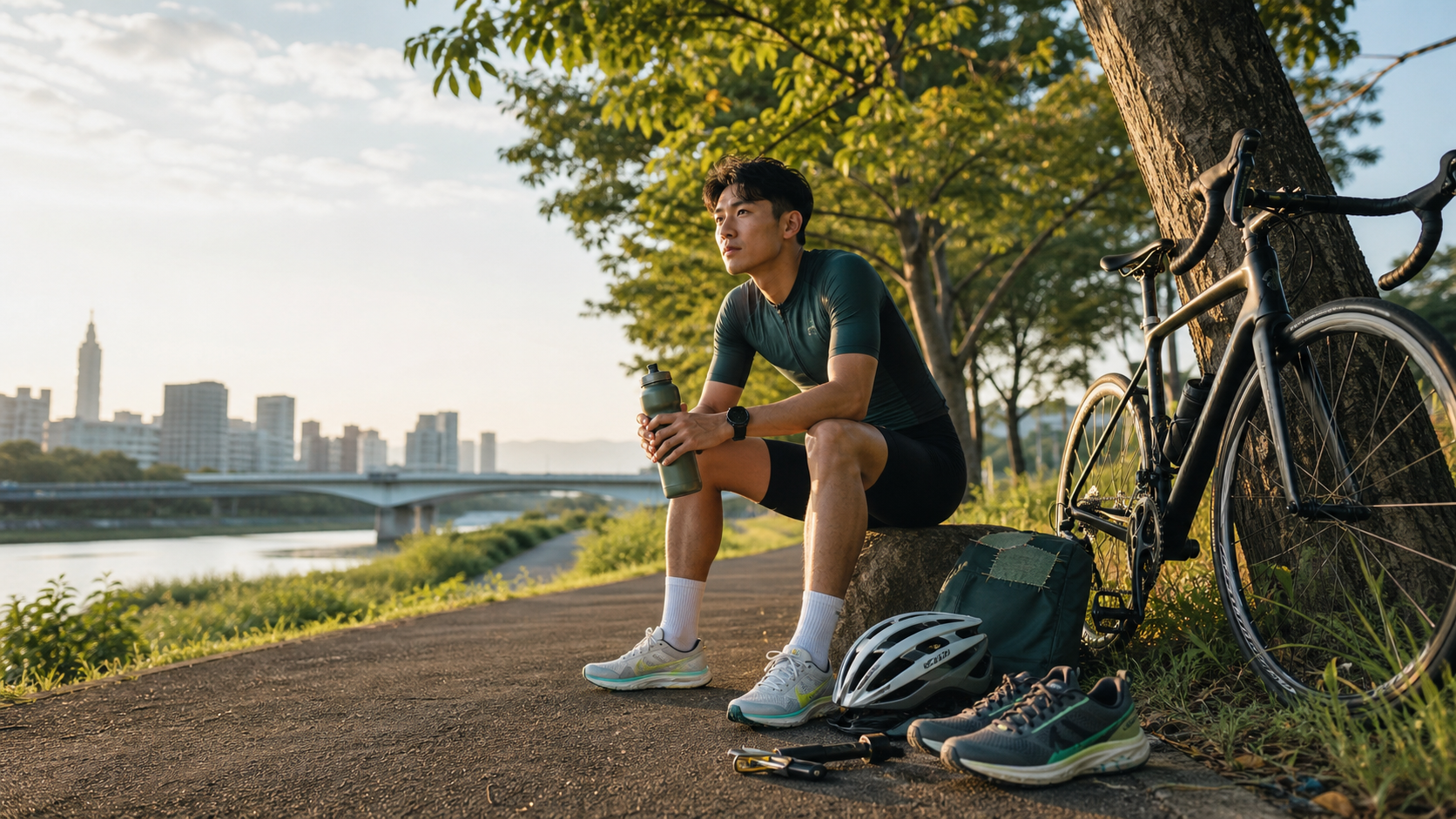
A Conversation That Starts with a Pair of Running Shoes
A few years ago, I coached a very dedicated athlete named A-Zhe. He ran three full marathons a year and would fly to Tokyo and Berlin just to “collect” medals from different cities. Once, during a casual chat after class, he half-jokingly asked me: “Coach, I love sports and I’m so healthy—doesn’t that mean I’m also pretty eco-friendly? I mean, I don’t drive to the gym; I run on my own two feet.”
I didn’t answer right away. Instead, I asked him back: “So, when you flew to Berlin last month for the marathon, how much carbon do you think that round trip emitted?” He was stunned. Later, we calculated it together: the carbon emissions from that one international flight far exceeded the total carbon footprint accumulated from his entire year of training, wearing out several pairs of shoes, and consuming countless energy gels.
This is what Green Sports Science aims to discuss: exercise itself is usually a low-carbon, even environmentally beneficial activity, but the “lifestyle built around exercise”—transportation, gear turnover, event consumption, and packaging of nutrition products—is where the real carbon footprint lies. As a coach who has trained athletes for fifteen years, I increasingly believe that a mature athlete should not only understand training and nutrition but also know how to make their passion gentler on the planet.
In this article, I want to speak in the tone I use with my athletes, laying out the carbon footprint of sports, sustainable gear, and the interplay between the environment and health—all in one go—and give you an action checklist you can implement right away.
Foundational Concepts: Where Does the Carbon Footprint of Sports Actually Come From?
Many people think “sports emitting carbon” sounds absurd—“I’m not a factory.” But once you expand “exercise” into “a whole sporting lifestyle,” the sources of emissions become clear. I usually break it down into five major categories so my athletes can see it at a glance.
The Five Major Sources of Carbon Emissions
- Transportation (usually the biggest chunk): Driving to the mountains for hill training, flying to compete elsewhere, or taking the high-speed rail south for a race.
- Gear manufacturing and replacement: Running shoes, bike frames, cycling jerseys, helmets, and sports watches all generate emissions from raw material extraction, manufacturing, and shipping.
- Events and venues: Supplies for large races, medals, single-use items, paper cups at aid stations, and electricity consumption.
- Nutrition and fueling: Packaging and transport of energy gels, bars, and sports drinks—especially imported items.
- Digital and peripherals: Cloud computing for training apps, social media sharing, and repeat gear purchases. This category is usually the smallest in scale, but it reminds us—even uploading a workout record or streaming a training video has servers consuming electricity behind it. This isn’t meant to make you anxious, but to help you realize that “almost no behavior is zero-carbon,” and in turn, to cherish every choice of movement and consumption.
One study focused on marathon runners found that if you exclude “race travel,” a seriously training marathoner’s annual carbon footprint is actually quite low. But the same study emphasized that as soon as long-haul flights are involved, transportation emissions instantly dwarf the sum of all other categories. The study cited an example: a single transatlantic flight for a race can correspond to several tonnes of CO₂ equivalent—accounting for the vast majority of one person’s entire annual carbon footprint (source at the end of the article).
Another study on “actively participating athletes” also found that the average athlete’s annual carbon footprint falls in the range of several hundred kilograms of CO₂ equivalent, and individual sports (like running, cycling, and mountaineering) tend to emit more than team or racket sports, mainly because pursuing natural settings requires greater transportation costs.
Looking at a Piece of Gear from a Lifecycle Perspective
I love using the concept of a “life cycle” to help athletes understand gear emissions. The carbon footprint of a pair of running shoes or a bicycle isn’t just the time it spends on your feet or under you—it’s the entire journey from “cradle to grave”:
- Raw material extraction: Rubber, petroleum-derived synthetics, metals, and carbon fiber—extraction itself consumes energy.
- Manufacturing and processing: Factory electricity, heat, and chemical treatments.
- Transport and distribution: Shipping from overseas factories across the ocean to Taiwan stores, then to your hands.
- Use phase: Washing, maintenance, and charging (for electronic gear).
- End-of-life disposal: Landfill, incineration, or recycling.
This concept leads to a crucial conclusion: a piece of gear’s true “carbon efficiency” is its total lifecycle emissions divided by the actual mileage or hours you use it. The same pair of shoes—if you toss them after 300 km versus retiring them at 700 km—has a per-kilometer carbon footprint that more than doubles. So “using your gear to its full potential” is itself the most effective way to cut carbon, and it doesn’t cost you a single extra dollar.
A Key Concept: Don’t Save Carbon on the Small Stuff While Ignoring the Big Stuff
I often remind my athletes of a principle I call “catch the elephant first, then the ants.” You might put a lot of effort into “whether to use biodegradable energy gel packaging,” but then fly abroad for four races a year—that’s catching ants while letting the elephant go. The top priority in carbon footprint management is always transportation, followed by gear and consumables.
A Comparison of Carbon Footprints Across Sports and Lifestyle Behaviors
To give you a concrete sense of scale, I’ve put together a “relative magnitude comparison table.” Here, I need to be completely honest: these figures are general estimates of magnitude from various sources, and they can vary greatly depending on vehicle type, electricity source, diet, and product origin. Treat them as an intuition for “relative size,” not as precise measurements.
Table 1: Relative Carbon Emission Magnitudes of Common Sports-Related Behaviors (Conceptual Comparison)
| Behavior | Relative Carbon Magnitude | Coach’s Plain-Language Explanation |
|---|---|---|
| Running/cycling training starting from your front door | Extremely low | Almost only food and gear amortized—the greenest choice |
| Taking public transit to a sports venue | Low | Shared across many people, per-capita cost is very small |
| Driving alone 20-40 km to the mountains for training | Medium | Solo long drives are a hidden emission source many cyclists overlook |
| Taking the high-speed rail domestically to another city for a race | Medium-low | Better than driving, especially with carpooling |
| Short domestic flight for a race | Medium-high | Unless necessary, replace with land transport whenever possible |
| Long-haul international flight for a race | Extremely high | One trip can exceed the total carbon of a year’s training |
Once you understand this table, you’ll notice something counterintuitive: both people “love sports,” yet a community runner who trains locally from home every day may have a carbon footprint that’s a tiny fraction of a “medal collector” who travels around the island and flies everywhere. Whether sports are green isn’t about how dedicated you are—it’s about how you move.
Table 2: Gear Categories, Carbon Emissions, and Durability Considerations
| Gear Category | Main Carbon Emission Source | Ways to Extend Lifespan/Reduce Impact |
|---|---|---|
| Running shoes | Manufacturing of rubber, EVA midsoles, synthetic uppers | Rotate by mileage, don’t replace too early, recycle old shoes |
| Bicycle frames | Manufacturing of aluminum/carbon fiber/steel | Choose durable frames, upgrade components instead of replacing the whole bike |
| Cycling jerseys and bibs | Manufacturing of synthetic fibers (polyester) | Choose durable, wash-resistant options; wash in cold water to extend lifespan |
| Helmets | EPS foam, plastic shells | Replace after any crash (safety first); avoid sun exposure to prevent aging |
| Sports watches | Batteries, electronic components, rare metals | Extend replacement cycles; update firmware instead of buying new |
Practical Methods: Building a “Low-Carbon Training System”
Now that we’ve covered the concepts, let’s talk about how to do it. When I plan low-carbon training for my athletes, I use a simple framework: mobility, gear, consumables, and events—four levers, optimized one by one from largest to smallest.
Lever 1: Redesign Your “Movement”
This is the step with the highest return on investment.
- Routes starting from your doorstep: Instead of driving to the riverside, design several routes that start directly from your home or office for running or cycling. Taiwan’s urban areas are actually well-suited for this—like the riverside bike paths in Greater Taipei, the Central Ring Road network in Taichung, and the Love River and Cijin in Kaohsiung—many can be connected to where you live.
- Active Commuting: Combine “exercise” with “commuting.” Commute by bike, or get off one or two stops early and run the rest of the way. This solves two problems at once: lack of time for exercise and transportation carbon emissions. This is also the concept of “active soft mobility” mentioned in research.
- Carpooling for race travel: When heading south or north for a race, organize a carpool with fellow cyclists or take the high-speed rail. Four people sharing one car immediately cuts per-person carbon emissions by more than half.
- Local first: Reconsider, “Do I really need to fly abroad to race?” Taiwan’s main island, from north to south, from the plains to Wuling, has a high density of races and challenge routes. Exploring and riding the local routes thoroughly first is the most carbon-saving and cost-effective choice.
Lever 2: Make Your “Gear” More Durable and Longer-Lasting
The biggest misconception about sustainable gear is thinking that “buying a new pair of shoes marketed as eco-friendly” counts as sustainability. In reality, extending the life of your existing gear is almost always greener than buying new eco-products. Because the carbon emissions from manufacturing a new item are typically far greater than what you’d save by wearing an old one for one more year.
My equipment principles for athletes:
- Buying right matters more than buying green: Rather than chasing shoes touted as sustainable but that don’t fit well, choose a pair that truly fits, is durable, and that you’ll be willing to wear until they’re worn out.
- Repair before replace: This is especially true for bicycles. Drivetrain components, brake pads, chains, and tires are all consumables. With regular maintenance and timely replacement of consumables, a good frame can last you over a decade.
- Shoe rotation and mileage management: The cushioning lifespan of a pair of running shoes is on the order of several hundred kilometers (varying greatly by weight, running form, and shoe model). Instead of wearing one pair until it’s completely flattened and then replacing it, rotate between two pairs and monitor midsole rebound and outsole wear. This is more durable and kinder to your knees.
- A second life for old gear: Retired running shoes can become everyday or commuting shoes; old jerseys can become home workout clothes. If they’re truly unusable, find a channel with a recycling program rather than just throwing them in the trash.
Lever 3: Streamline Your “Consumables”
- DIY your nutrition: For long-distance training, you don’t always need to buy imported energy gels. Taiwan’s food culture and convenience stores are actually very useful—sweet potatoes, bananas, rice balls, and soy milk are all cheap, local, low-packaging sources of carbohydrates. I often have my athletes save “imported energy gels” for race day and use local foods for everyday training.
- Bottles over bottled water: Bring your own water bottle and electrolyte powder instead of single-use bottled sports drinks. The number of plastic bottles you save over a year is significant.
- Less is more: Many supplements aren’t actually necessary for the average athlete. A balanced diet and adequate sleep often outperform a whole cabinet full of bottles and jars.
Lever 4: Choose More Environmentally Friendly “Races”
- Prioritize races with environmental initiatives: bring-your-own-cup policies, paperless check-in, medal recycling, and reduced single-use materials.
- Bring your own cup, towel, and nutrition to races to reduce reliance on single-use items at aid stations.
- Replace “collecting many races across different cities” with “participating in one meaningful local race.”
A Practical Example of a “Low-Carbon Training Week”
Many athletes ask after hearing this: “Coach, so what does an actual week look like?” I often give them a template. The point isn’t how impressive the workout schedule is, but that each session starts from your doorstep and is completed nearby, minimizing transportation carbon emissions. Here’s an example for an advanced runner with a weekly mileage of about 40-50 km.
| Day | Workout Content | Key Green Arrangement |
|---|---|---|
| Monday | Rest or easy walk | Completely local, doubles as commuting |
| Tuesday | Easy run 8 km | Fixed route starting from your doorstep |
| Wednesday | Tempo run 10 km | Nearby riverside or neighborhood roads, no driving |
| Thursday | Cross-training/Core | At home or a nearby gym, walk there |
| Friday | Easy run 6 km | Get off one stop early after work and run home |
| Saturday | Long run 18-20 km | Local long-distance route, bring your own water bottle |
| Sunday | Recovery jog or rest | Nearby park, family activity together |
You’ll notice this schedule has absolutely no “driving to some faraway venue.” This isn’t about sacrificing quality for the sake of cutting carbon; it’s that when you design your training to be closely integrated with daily life, low carbon is a natural outcome. The commuting time you save can be used for an extra half hour of sleep or more stretching, which is better for recovery.
A quick reminder here: many athletes think “I have to go to some famous mountain or Instagram-worthy route” to be training seriously. But for the fitness development of the vast majority of people, that route near your home that you’re tired of is more than enough to build great results. Save the famous mountains and routes for occasional rewards.
How the Environment, in Turn, Affects Your Performance and Health
Green sports science isn’t one-way—you care about the environment, and the environment deeply affects your training effectiveness and health. Taiwan is an environment of high heat, high humidity, and urban air pollution, and these factors affect every single one of your workouts daily.
Heat and Humidity: Taiwan’s Invisible Summer Opponent
Taiwan’s summers often feel like 33-36°C or more, with humidity frequently at 70-90%. High heat and humidity significantly reduce the body’s cooling efficiency. At the same pace, your heart rate will be noticeably higher (commonly in the range of 10-20 bpm more), core body temperature accumulates more easily, and the risk of heat exhaustion and heatstroke rises.
My principles for athletes are simple:
- Avoid the hottest hours: Train in the early morning or evening during summer, avoiding 10 AM to 4 PM.
- Use heart rate, not pace, as your ceiling: On hot days, your heart rate drifts upward. If you force your usual pace, you’re secretly adding intensity. Use a heart rate ceiling to protect yourself.
- Hydration and electrolytes go hand in hand: Heavy sweating loses both water and sodium. During prolonged exercise, drinking only plain water can actually lead to hyponatremia.
- Gradual heat adaptation: If you’re preparing for a summer race in Taiwan, don’t plan on hiding in air conditioning until race day. Training moderately and progressively in the heat allows your body to develop better cooling capabilities (earlier sweating, lower sweat sodium concentration, increased plasma volume), but this takes one to two weeks of gradual progression—it’s definitely not something you force in a single brutal session.
I want to specifically highlight a point where environment and health intersect: extreme heat is also one of the manifestations of climate change. Taiwan’s summers get harder to endure year after year, and the risk of heat-related injuries rises accordingly. This is the deeper meaning of green sports science—on one hand, we need to learn to train safely in a warming environment; on the other, we should use more sustainable lifestyles to do our part in preventing the environment from worsening further. It’s an interconnected cycle.
Air Quality: The Invisible Training Variable
Central and southern Taiwan often have poor air quality days in winter. When the air quality index is high, outdoor high-intensity training causes you to inhale more particulate matter. My advice:
- Develop the habit of checking air quality before heading out. On days with hazardous levels (purple alert), move high-intensity workouts indoors (trainer, treadmill) or switch to an easy day.
- Athletes with respiratory sensitivities or a history of asthma have lower tolerance to poor air quality and must be more conservative.
Table 3: Training Adjustment Recommendations for Common Environmental Scenarios in Taiwan
| Environmental Scenario | Main Risks | Training Adjustment Direction |
|---|---|---|
| Summer high heat and humidity (feels like 33°C+) | Heat exhaustion, dehydration, elevated heart rate | Move to early morning/evening, reduce intensity, use heart rate as ceiling, increase water and sodium intake |
| Winter poor air quality (purple alert) | Inhalation of particulate matter, respiratory irritation | Move indoors, reduce intensity, sensitive individuals rest entirely |
| Plum rain/typhoon season slippery conditions | Falls, sprains, hypothermia | Switch to indoor training, pay attention to traction, prepare warm and changeable clothing |
| Mountainous low temperatures/large temperature swings | Hypothermia, cramping | Layer clothing, bring a windbreaker, refuel and stay warm before descents |
The core spirit of this table is: green exercise doesn’t mean stubbornly pushing through outdoor training in harsh conditions. Knowing how to adjust flexibly based on the environment, and intelligently combining indoor and outdoor sessions, is the approach that protects your body and is practical.
The Win-Win of Green Exercise: Shared Benefits for Health and the Environment
The most inspiring aspect of green exercise science is that “being good for the planet” and “being good for your body” are often the same thing—what researchers call co-benefits. This isn’t just a slogan; it’s backed by concrete logic.
Active Mobility: One Action, Multiple Gains
In research, getting around on foot or by bike is called “active soft mobility.” Think about it: when you swap “driving to the gym” for “commuting by bike while getting your workout in,” you gain all of the following at once:
- More daily physical activity: The World Health Organization and national guidelines generally recommend that adults accumulate at least 150 minutes of moderate-intensity physical activity per week. Turn your commute into exercise, and you’ll hit that target almost effortlessly.
- Lower transport emissions: One less car trip means direct carbon reduction.
- Lower costs: You save on fuel, parking, and gym membership fees.
- Better mental health: Regular, nearby, outdoor activity helps with mood and stress regulation.
This leverage of “one behavior, multiple benefits” is what I believe every athlete should prioritize. You don’t need to become an environmental activist—just design your training to fit more naturally into daily life, and both health and sustainability will follow.
Table 5: Co-benefit Comparison—High-Carbon Lifestyle vs. Green Exercise Lifestyle
| Aspect | High-Carbon Pattern (Driving to venues/races) | Green Pattern (Local, active mobility) |
|---|---|---|
| Carbon emissions | High | Low |
| Daily activity volume | Lower (relying on cars for transport) | Higher (movement is exercise) |
| Cost | High (fuel, flights, parking) | Low |
| Time efficiency | Often eaten up by commuting | Commuting and training combined |
| Training consistency | Easily disrupted by weather/distance | Local, easy to maintain |
Once you understand this table, you’ll see: green exercise isn’t about becoming an ascetic—it’s a smarter, more efficient, and more sustainable way to train. What’s truly hard to sustain is the training pattern that demands long-distance travel and heavy reliance on external conditions.
Common Mistakes and How to Fix Them
Having coached athletes for so many years, I’ve seen countless people who “want to be sustainable but go about it the wrong way.” Here are the most common mistakes and how I help people correct them.
Mistake 1: Buying “Sustainable New Gear” for the Sake of the Environment
Symptoms: You buy new shoes and apparel the moment they’re marketed as made from recycled materials or ocean-recovered plastic, and your home piles up with “eco-gear” while your old stuff is still in great shape.
Fix: Remember that “extending lifespan > buying new eco-products.” True sustainability means buying less, buying durable, and using things to the end. Only get new gear when the old is truly worn out or when there’s a clear functional need.
Mistake 2: Straining at Gnats, Swallowing Camels
Symptoms: You nitpick over energy gel packaging and bottle materials, yet frequently drive long distances or fly to races.
Fix: Tackle the elephant in the room—transportation first. The carbon saved by “skipping one overseas race this year” is something a hundred small gestures combined can’t match.
Mistake 3: Pushing Hard in Heat and Humidity, Treating Performance as a Sustainability Badge
Symptoms: You insist on doing intervals at noon in extreme heat, thinking “this is what real grit looks like.”
Fix: That’s not willpower; that’s gambling with your health. In high heat and humidity, cap your effort by heart rate, shorten high-intensity sessions, and move indoors when necessary. Surviving heatstroke won’t make you stronger—it’ll just land you in the hospital.
Mistake 4: Treating Supplements as a Staple Food
Symptoms: You eat whatever, whenever, then rely on a pile of supplement bottles to “make up for it”—generating a mountain of packaging and transport emissions without your body actually getting better.
Fix: First, get your meals, sleep, and daily diet in order. Local, seasonal, minimally processed Taiwanese food is kinder to both your body and the planet. Supplements fill “gaps,” not “sloppiness.”
Mistake 5: Neglecting Proper Equipment Maintenance
Symptoms: You don’t maintain your bike, let the chain grind dry, and only replace tires after they’ve aged and cracked—resulting in faster component wear and more frequent full replacements.
Fix: Clean and lubricate regularly, inspect consumables, and let every component live its full life. Maintenance itself is the most practical form of sustainability.
Actionable Advice for Readers at Different Levels
Sustainability isn’t achieved overnight—it’s built step by step. I break it into three tiers. Find where you fit, master your current level first, then climb higher.
Beginners: First, Build the Habit of “Exercising Nearby”
If you’re just starting out, don’t overthink it. You only need to do one thing: start your workouts as close to your front door as possible. Design one or two walking, jogging, or cycling routes that begin from home—no driving, no special trips. That single step already makes you greener than most.
- Plan 2–3 home-based training sessions per week
- Carry your own bottle for hydration; skip bottled water
- Gear that’s good enough is good enough—don’t chase trends or hoard
Intermediate: Optimize Transportation and Equipment Lifespan
If you’re already training consistently and starting to race, focus on “mobility” and “gear management.”
- For races, prioritize public transit or carpooling; reduce driving and flying
- Keep a mileage/usage log for your gear; maintain it when needed, don’t retire it early
- Use local food for everyday training fuel; save imported energy gels for race day
- Review once a year: Do I really need this many out-of-town races?
What Race Organizers Can Do
If you organize or co-organize events, your carbon-reduction leverage is greater than any individual’s. In recent years, several Taiwanese races have already begun experimenting with sustainable practices—encouraging participants to bring their own cups, reducing single-use tableware, cutting back on medals and souvenirs or switching to recyclable materials, paperless check-in, and promoting public-transit shuttles. These may seem trivial, but multiplied by the thousands or tens of thousands of participants, the reduction is substantial.
I often tell my friends in race organizing: an event that “lets people run happily without leaving a trail of trash” is a truly high-quality event. Sustainability isn’t just a responsibility—in the long run, it’s part of an event’s reputation and brand.
Advanced: Be a Low-Carbon Role Model in Your Community
If you’re the veteran in your group, the team captain, or the run-club pacesetter, your influence is the greatest.
- Proactively organize carpools and plan local routes to cut your group’s transport emissions
- Share knowledge on gear maintenance, repair, and secondhand circulation to reduce overall replacement
- Choose and promote races with environmental practices—vote with your participation
- Frame “sustainability” as mature, professional athletic literacy, not moral preaching
Table 4: Quick Reference for the Three-Tier Action Plan
| Tier | Primary Goal | One-Sentence Action |
|---|---|---|
| Beginner | Build the habit of exercising nearby | Start from your front door—don’t drive to work out |
| Intermediate | Optimize transportation and gear lifespan | Carpool to races; use gear to the end |
| Advanced | Be a low-carbon role model in the community | Lead your team in cutting emissions—lead by example |
FAQ
Q1: I only fly abroad to race once a year. Does it really make a difference?
Yes, and a big one at that. The carbon emissions from a single long-haul flight can exceed the total from your entire year of training and gear. This isn’t to say you should never go abroad, but rather to remind you: traveling abroad to race is a “high-carbon choice” that warrants more careful consideration of frequency, and balancing it out elsewhere (such as training locally).
Q2: Is eco-friendly gear worth the extra money?
It depends. If you genuinely need to replace equipment, choosing brands with environmental initiatives is a plus. But if you’re replacing still-functional old gear early just for the sake of “being green,” that’s actually a negative—because the carbon footprint of manufacturing new products usually exceeds what you save by not using the old ones longer. Ask yourself first: Do I really need this, or do I just want to buy it?
Q3: It’s too hot in summer. To be eco-friendly, I don’t want to use AC or go indoors. Is it okay to just tough it out training outdoors?
Please don’t trade your health for sustainability. Taiwan’s summer heat and humidity are extreme, and the risk of heatstroke from pushing hard outdoors is real. The sustainable approach is to be flexible: train outdoors in the early morning or evening, and switch to indoor training or rest during the midday heat. Health is the foundation of all exercise—don’t get your priorities backwards.
Q4: Is local food really enough for fueling? I’m worried about nutrition.
For most recreational athletes and mid-distance training, local carbohydrates like sweet potatoes, bananas, and rice balls are more than sufficient. The advantage of energy gels is that they’re “easy to carry and quick to absorb during races,” but you don’t really need that level of refinement for everyday training. If you have specific needs (ultra-long distances, certain medical conditions, weight management), then adjust on an individual basis.
Q5: I have a chronic condition (like diabetes or hypertension). Are these exercise and dietary adjustments suitable for me?
The general principles (regular exercise, activity close to home, balanced local diet) are usually beneficial, but intensity, fueling, and environmental adjustments must be individualized. If you have a chronic condition, please discuss with your physician and relevant professionals first, and plan according to your medication, management status, and personal circumstances. Don’t just apply general advice directly. Taiwan’s National Health Insurance makes medical access convenient—if you have cardiovascular, metabolic, or respiratory conditions, a medical evaluation before exercising is a worthwhile investment. Don’t skip this step.
Q6: Are e-bikes considered green?
Compared to driving a car, e-bikes are generally a greener choice, and they lower the barrier to commuting, encouraging more people to replace motor vehicles with cycling. From a societal perspective, this may actually promote more active mobility. Of course, they require charging and carry environmental costs from battery manufacturing and disposal, but as long as you’re using one to replace car trips—rather than replacing trips you’d otherwise walk or ride a regular bike—you’re on the right track.
Q7: My area has poor public transit, and I have to drive to get to training venues. What should I do?
Accept reality first, then optimize the details: carpool when you can, combine trips (grocery shopping or school runs on the way), and choose the closest option rather than going far afield. Sustainability isn’t about being perfect; it’s about doing relatively better within your own circumstances. Even if you must drive, swapping “driving to a far-away Instagram-worthy route” for “driving to a decent nearby route” is still progress.
Pre-Purchase Self-Checklist for Green Gear
Finally, here’s a checklist I have my athletes ask themselves before hitting the “buy” button. It’s not about buying nothing, but about buying more consciously:
- Is my current gear truly unusable? (Broken, ill-fitting, or a safety concern → replace; just old or wanting a new color → hold off)
- How long and how often will I use this? (Long-term and frequent use → worth investing in better quality; occasional use → consider second-hand or rental)
- Can I find a durable, easy-to-maintain, repairable model? (Repairable is always greener than non-repairable)
- After buying, how will I handle the old one? (Gift, resell, recycle—not just toss it)
- Do I need this, or has marketing made me think I need it?
These five questions can filter out most impulse purchases. Buying one less unnecessary item is a tangible win for both the planet and your wallet.
Conclusion: Let Your Passion Be Gentle to Both Body and Earth
Let’s return to A-Zhe, the athlete from the beginning. He made a change: cutting international races from multiple trips a year to one carefully chosen trip every two or three years. For everyday training, he started from his own front door and carpooled south with riding buddies for races. Energy gels are now reserved for race days; everyday training uses bananas and sweet potatoes. He told me that after these adjustments, not only did his wallet feel lighter, but he actually enjoyed the “local, consistent, grounded” rhythm of training more—and his performance didn’t suffer.
This is the most fascinating part of green sports science: it almost never requires you to sacrifice performance; instead, it often makes your training more focused, more economical, and more integrated into daily life. Chase a little less, stay closer to home a little more; hoard a little less, use things to the end a little more; tough it out a little less, adapt to the environment smartly a little more. These changes are good for your body, your wallet, and the land you train on every day.
Sport is, at its core, the most direct connection between humans and nature. When we love this passion in a more sustainable way, we’re also protecting the riverside paths, mountain roads, and coastlines you can run or ride from your doorstep every day—so they can keep accompanying us, and all the future athletes who love these activities.
So next time you lace up your shoes or wheel out your bike, consider one more thought: Can this outing start from my front door, skip a car ride, skip a piece of trash, and use old gear one more time? These seemingly small choices, accumulated, are the gentlest and most practical commitment a mature athlete can make to themselves, their community, and this land. Green sports science, in the end, is about making “loving sport” and “loving the world” the same thing. May every outing be healthy, every ride joyful, and may we leave our Earth a lighter, more beautiful footprint.
This article is for educational purposes and does not replace individual diagnosis and treatment advice from physicians, physical therapists, or nutritionists. If you have chronic conditions, existing injuries, or special physiological circumstances, please consult your physician and relevant professionals for individualized assessment before adjusting your exercise, nutrition, or environmental strategies.
References
- The Carbon Footprint of Marathon Runners: Training and Racing (IJERPH):https://pmc.ncbi.nlm.nih.gov/articles/PMC7967273/
- The carbon footprint of active sport participants (ScienceDirect):https://www.sciencedirect.com/science/article/abs/pii/S1441352318300184
- A proposed checklist for climate-friendly sport and exercise programmes (PMC):https://pmc.ncbi.nlm.nih.gov/articles/PMC9421404/
- Editorial: Environmental Sustainability in Sports, Physical Activity and Education, and Outdoor Life (PMC):https://pmc.ncbi.nlm.nih.gov/articles/PMC8899102/
Related Reading
- Cycling and Sustainable Living: The Philosophy of Reducing Your Carbon Footprint on Two Wheels
- Environmental Sustainability and Cycling: How Riding Becomes Action Against Climate Change
- Bikes and the Environment: Data Analysis of How Cycling Lowers Carbon Footprints
- Cycling with Environmental Awareness: Calculating the Carbon Footprint of Two-Wheeled Commuting
大家都在開箱的...單車用藍芽對講耳機真的有幫助嗎? SENA BiKom 20 長距離旅遊 & 海鷗繞圈賽 實際體驗心得 / 公路車 / CT Yeh
9 個月前
半日 小台灣 極限單車路線挑戰實錄
7 年前
4K 東眼山 x 水蜜桃冰沙 百人單車約騎! 操完再吃冰 多爽快
7 年前
靠單車減肥35公斤 心得分享與整理
7 年前
單車 一日北高 ( 雙城 ) 肥宅雙人瘋狂行 紀錄片 REACTO
10 年前
高雄綠園道鐵路自行車道 / 外地人能輕鬆駕馭 還是整路崩潰? / 2025 全線開通 春節實地探索一次!(附GPS連結)/ 公路車 / CT Yeh
1 年前
2025 自行車錶排行榜 兩萬車友大數據 / Garmin Bryton 排名會大洗牌嗎? / 全新的碼表前身分析 /公路車 / CT Yeh
1 年前
2018 田中馬拉松 全程健跑 VR 360 環景錄影 體驗現場狂野加油氣氛! Insta 360
7 年前