Thyroid and Athletic Performance: The Engine Hidden Deep in Metabolism — A Complete Guide to Thyroid Function Every Athlete Should Know
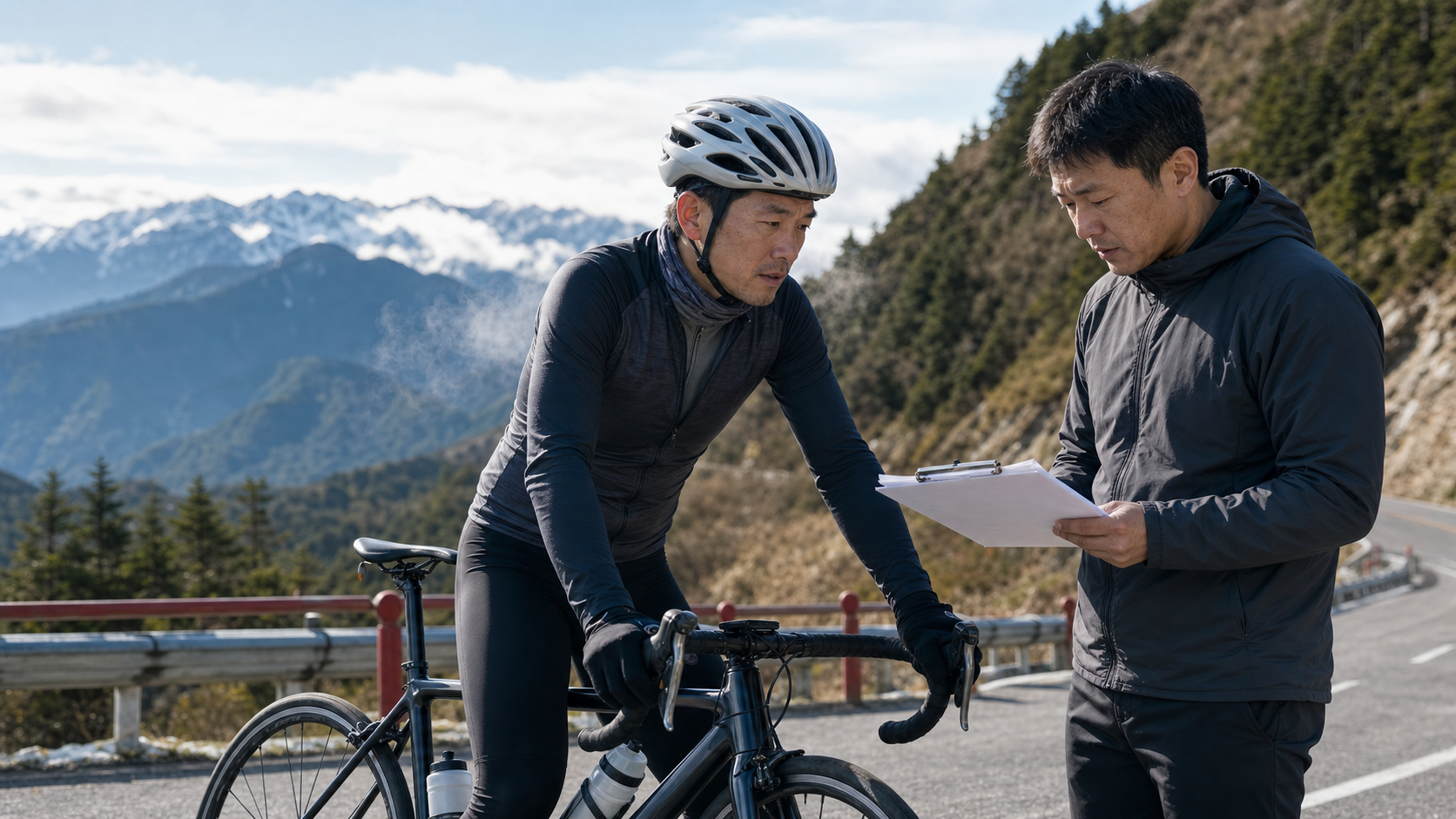
Starting with a Student Who Couldn’t Climb Wuling
I once coached a male student in his early forties; let’s call him A-Zhe. He had been training for three years, his weight held steady at 72 kg, and his FTP had once climbed to 260 watts — a solid mid-pack rider in our team. But after winter set in that year, he seemed like he’d lost a gear. On the same interval workouts, his power dropped by about 10%; on climbs, his heart rate wouldn’t rise — he was gasping for air, yet the watch showed only around 150 bpm; after sessions, his hands and feet were cold, no amount of sleep felt like enough, and his weight inexplicably crept up 3 kg. At first, he thought it was “just age” or “work stress,” but I sensed something was off — a rider who trains consistently doesn’t slide downhill like that.
I asked him to get bloodwork done at a family medicine clinic, including thyroid function. The results showed elevated TSH and low free T4 — mild hypothyroidism. After evaluation by an endocrinologist, medication adjustment, and my help rearranging his training load and carbohydrate intake, two or three months later, the familiar A-Zhe who could stand up and hammer on the pedals was back.
That experience made me especially sensitive to the word “thyroid” ever since. It’s a small gland located at the front of the neck, shaped like a butterfly, weighing only about 20 grams — yet it governs the metabolic throttle of nearly every cell in the body. In this article, I want to explain, from a coach’s perspective, why athletes need to understand the thyroid, how it affects performance, when to be alert, and how to take care of it — all in one go. It’s a long read, but I promise every section relates to your training and health.
A note up front: This is educational content to help you build understanding and know when to seek medical care. It cannot replace individual diagnosis and treatment advice from a physician, physical therapist, or nutritionist. Any thyroid-related testing and medication must be handled by a professional medical team.
What the Thyroid Actually Controls: Think of It as the Body’s Central Metabolic Throttle
If I had to explain the thyroid to a student in one sentence, I’d say: “It determines the idle RPM of your body’s engine.”
The thyroid primarily secretes two hormones: T4 (thyroxine) and T3 (triiodothyronine). T4 is the more abundant but less active “storage form”; it gets converted into the highly active T3 in tissues such as the liver, kidneys, and muscles. It’s mainly T3 that steps on the gas inside your cells.
This entire system is monitored by the hypothalamus and pituitary gland in the brain. The pituitary secretes TSH (thyroid-stimulating hormone), which commands the thyroid to produce more or less hormone. When thyroid hormone is insufficient, TSH rises, pushing hard; when hormone levels are too high, TSH gets suppressed. That’s why TSH is often the first marker looked at in clinical blood tests — it acts like a feedback alarm.
According to clinical data in endocrinology, the common reference range for adult TSH is roughly 0.4–4.0 mIU/L, though ranges vary slightly between laboratories and age groups — interpretation must always be matched against the reference values provided by that specific lab (sources listed at the end). Some perspectives suggest the ideal metabolic range is narrower, but that’s an individualized judgment and shouldn’t be self-diagnosed by matching numbers.
How Thyroid Hormones Specifically Affect Systems Related to Exercise
- Basal Metabolic Rate (BMR) and Energy Expenditure: Thyroid hormones increase cellular oxygen consumption and heat production, making them key determinants of how many kcal you burn at rest daily. When hormone levels are low, BMR drops, making it easier to gain weight on the same diet and causing fatigue.
- Mitochondria and Muscle Adaptation: T3 acts as a “permission factor” for skeletal muscle adaptation to training, supporting mitochondrial function and muscle protein turnover — influencing whether you can translate training stimuli into progress.
- Cardiovascular Response: Thyroid hormones affect heart rate, cardiac output, and vascular tone. In hypothyroidism, maximal heart rate and the heart-rate response during exercise may be blunted, making you feel like you “can’t push harder.”
- Thermoregulation: Reduced heat production leads to feeling cold and cold extremities — especially noticeable in Taiwan’s damp winters.
- Fat and Carbohydrate Metabolism: They influence fat breakdown and the mobilization of glycogen and blood glucose, affecting your fuel efficiency during long rides.
Connect these dots and it becomes clear: one tiny gland simultaneously affects your endurance engine, recovery speed, body weight, and how you feel. That’s why when the thyroid is out of balance, an athlete’s performance often declines “across the board,” rather than a single component failing.
Why “T4 Looks Normal but I’m Exhausted” Sometimes Makes Sense
Many students bring their lab reports to me and ask: “Coach, my T4 looks fine — so why am I still this tired?” This is where a frequently overlooked step comes in — the conversion of T4 to T3. As mentioned earlier, T4 is the storage form with weak activity; it must be converted by deiodinase enzymes in the liver, kidneys, muscles, and other tissues into active T3 to actually take effect. And this conversion efficiency is influenced by many factors: chronic calorie deficit, elevated stress hormones (cortisol), selenium deficiency, illness or inflammation, and even extreme low-carb diets can push the body to convert more T4 into “nearly inactive” reverse T3 (rT3) instead of active T3.
There’s physiological logic behind this: when the body judges that “resources are tight and conditions are harsh,” it deliberately hits the brakes and produces less active hormone to conserve energy. That’s why you’ll see some athletes with high training volume and deliberate calorie restriction whose blood T4 isn’t too bad, yet their overall sensation, body temperature, and heart-rate response all seem turned down. This again echoes the core concept of this article: often the problem isn’t that the thyroid “organ” itself is broken, but that the “signals” you’re giving your body (eating too little, too much stress, poor recovery) cause it to voluntarily close the throttle. Understanding this layer means you won’t just stare at a single number — you’ll step back and examine the whole context of your life and training.
Hypothyroidism vs. Hyperthyroidism: Two Opposite Imbalances
Thyroid problems generally split into two directions, with symptoms that are nearly mirror images. The table below is one I often draw for students to help them understand which side their sensations fall on.
| Aspect | Hypothyroidism | Hyperthyroidism |
|---|---|---|
| Metabolism & Weight | Slower metabolism, easy weight gain, bloated feeling | Accelerated metabolism, weight loss, often feeling hungry |
| Body Temperature | Feels cold, cold extremities | Feels hot, sweats easily |
| Heart Rate | Slower, heart rate won’t rise during exercise | Elevated resting heart rate, palpitations |
| Mental State | Fatigue, drowsiness, slowed reactions, low mood | Anxiety, irritability, insomnia, restlessness |
| Training Performance | Declining power/pace, worse recovery, feeling weak | Initially feels stronger, but easy fatigue, tremors, endurance actually suffers |
| Other Common Signs | Constipation, dry skin, hair loss, menstrual changes | Hand tremors, diarrhea, eye discomfort (in some autoimmune types) |
Here’s a crucial point to emphasize: these symptoms are completely non-specific. Fatigue, feeling cold, hair loss, and weight changes all appear with overtraining, sleep deprivation, iron deficiency, menopause, or simply high stress. That’s why I never — and I ask you not to — self-diagnose a thyroid problem based on a symptom checklist alone. Symptoms are only a trigger for “should I get bloodwork done”; the real answer comes from blood tests and a physician’s interpretation.
The Athlete-Specific Thyroid Trap: Not Illness, but the Body Saving Power
This is the section I think athletes most need to understand and where they’re most easily misunderstood.
Many athletes see changes in their thyroid numbers not because the thyroid itself is “broken,” but because the body, under prolonged energy deficit or excessive training stress, actively turns down the metabolic throttle and enters a “power-saving mode.”
Relative Energy Deficiency in Sport (RED-S) and Adaptive Hypothyroidism
When your energy availability is chronically low—simply put, “after subtracting training expenditure from the energy you consume, the remainder left to sustain bodily functions is insufficient”—your body will intelligently scale back non-essential expenditures. Reproduction, bone health, immunity, and thyroid metabolism may all be down-regulated. This is what sports medicine refers to as Relative Energy Deficiency in Sport (RED-S), which also encompasses the former concept of the female athlete triad.
In this state, a common blood profile is: low active T3, but TSH not necessarily markedly elevated. The body isn’t hypothyroid because of thyroid failure; rather, it is “deliberately” lowering metabolism to conserve energy. Research also indicates that female athletes under chronic low energy availability develop an adaptive hypothyroid state to save energy; the fundamental solution is restoring adequate energy intake, not rushing to supplement thyroid hormone.
This is extremely important because the treatment directions are completely opposite:
- If it’s true thyroid disease (e.g., autoimmune Hashimoto’s thyroiditis), medical evaluation and possible medication are needed.
- If it’s adaptive hypothyroidism caused by energy deficiency, what you need is eat more, train smarter, sleep more. Forcing hormone supplementation would be misguided and even harmful.
Distinguishing between the two is precisely why you must see a physician rather than buying supplements on your own and self-medicating.
I especially want to address endurance athletes who want to lose weight or “be lighter before race day.” Weight loss itself isn’t bad; the problem lies in method and timing. Using extreme dieting or cutting all carbohydrates to drop weight quickly may look good on the scale short-term, but you’re simultaneously sending your body a “resource scarcity” signal, causing metabolism and thyroid activity to be down-regulated. The end result is often “a bit lighter, but weaker, more injury-prone, and sick more often.” When I guide athletes through weight loss, I always do it outside major training blocks, progressively, while preserving adequate carbohydrates and protein—never combining a massive training load with severe calorie restriction. Body weight is an outcome, not a knob you can squeeze indefinitely.
High Training Volume Itself Can Also Cause Fluctuations
Additionally, be aware that during periods of high-intensity, high-volume training, thyroid-related markers may naturally show temporary fluctuations. An ultramarathon, a big volume block, or a pre-race crash diet can all skew current blood test results from baseline. So the timing of thyroid testing also matters—it’s best to avoid testing right after finishing extremely high-load training or extreme dieting, otherwise you risk misinterpreting the results.
Practical Section: How a Coach Helps Athletes Manage Thyroid Health
After all that science, here’s something actionable. Below is the practical process and reasoning framework I use when managing the thyroid aspect with my athletes.
When I Recommend Athletes Get Their Thyroid Checked
I don’t tell everyone to get tested, but when the following “illogical for training” signals stack up simultaneously, I strongly recommend seeing a doctor for blood work:
- Performance noticeably declines for several consecutive weeks without an increase in training volume (power/pace dropping by more than 10%).
- Heart rate response during exercise becomes blunted—hard to push up, or abnormal resting heart rate.
- Noticeable cold intolerance or cold extremities, disproportionate to ambient temperature.
- Extreme fatigue and sluggishness despite adequate sleep.
- Significant weight gain or loss without dietary changes.
- Menstrual irregularities or amenorrhea in female athletes (a very important warning sign).
- Hair loss, very dry skin, constipation occurring together.
Common Tests and Their Meanings
The table below summarizes clinically common thyroid-related tests so you have a baseline understanding before seeing a doctor. Please note: which tests to run and how to interpret them is determined by your physician—this is just a framework to help you understand the report.
| Test Item | Plain-English Meaning | General Direction (For Understanding Only) |
|---|---|---|
| TSH | The pituitary’s “nudge level” to the thyroid | High often indicates hypothyroidism; low often indicates hyperthyroidism |
| Free T4 | The usable T4 reserve in the blood | May be low in hypothyroid states |
| Free T3 | The truly active hormone | May be low in energy-deficient states |
| Thyroid antibodies (e.g., anti-TPO) | Whether it’s autoimmune | Positive is common in Hashimoto’s |
Again, values must be compared against that laboratory’s reference range and interpreted alongside your symptoms and overall condition—a single number doesn’t tell the whole story.
The Practical Path to Seeking Care in Taiwan
This isn’t difficult in Taiwan. You can start with a family medicine or endocrinology and metabolism clinic. Under National Health Insurance, blood tests for thyroid function are routine, affordable, and results are usually available within a few days. If abnormalities are found, the endocrinologist will decide whether further ultrasound, antibody tracking, or medication is needed. Compared to many countries, getting thyroid function tested in Taiwan is very convenient—don’t put it off just because of the hassle.
Two Contrasting Cases: Both “Tired,” but Treatment Directions Are Opposite
To help you understand that “not all fatigue is the same,” I’ll present two typical scenarios side by side. The numbers are illustrative, not exact values from real cases—the key is the reasoning.
Case A (True Hypothyroidism): This is A-Zhe from the beginning. His training volume hasn’t changed and his diet is adequate, yet he’s declining across the board. Blood work shows markedly elevated TSH and low free T4. The direction here is clear—hand it over to the endocrinologist, use medication if indicated, and temporarily reduce training load until values and subjective feelings stabilize, then gradually ramp back up.
Case B (Adaptive Hypothyroidism from Energy Deficiency): A female athlete preparing for a full marathon, let’s call her Xiao-Min. To be “lighter before race day,” she severely restricted daily calories and nearly eliminated carbohydrates, while simultaneously increasing training volume. The result: irregular periods, cold intolerance, dropping pace, and frequent colds. Her blood work shows low active T3 but no significant TSH elevation. If this were mistaken for “thyroid disease” and treated with hormone replacement, it would be completely wrong—what she needs is to eat more, reduce training load, and catch up on sleep. After she resumed normal eating and cut volume for two weeks, her menstrual cycle and subjective feelings gradually returned.
Both are “tired,” but A needs medical intervention while B needs energy restored. You absolutely cannot distinguish between the two yourself—this is exactly why you must see a doctor and have blood work interpreted by a physician.
After Treatment or Recovery, How I Guide Athletes Back to Training
Whether it’s after medication stabilizes or after recovery from energy deficiency, the common principle is “don’t rush.” Below is the phased return-to-training framework I commonly use; actual weeks depend on individual status and physician advice.
| Phase | Approximate Duration | Training Focus | Signals to Advance |
|---|---|---|---|
| Phase 1: Rebuild the Base | About 2–3 weeks | Low-intensity aerobic focus, easy rides/jogs, emphasis on restoring daily routine and sleep | Resting heart rate stabilizes, no longer feeling fatigued all day |
| Phase 2: Add Back Rhythm | About 3–4 weeks | Gradually introduce moderate-intensity tempo rides/runs, volume before intensity | No excessive soreness the day after sessions, heart rate response recovers |
| Phase 3: Regain Intensity | About 4+ weeks | Progressively reintroduce intervals and climbing, stacking intensity in increments | Power/pace steadily recovers, recovery speed normalizes |
The soul of this table is one sentence: volume before intensity, longer before shorter, consistency before intensity. I’ve seen too many people rush their training plan back to pre-illness levels the moment they feel slightly better, only to relapse. The body’s engine has just been repaired—it needs a slow warm-up.
Hypothyroidism, Overtraining, Iron Deficiency: How to Tell These Three Kinds of “Fatigue” Apart
This is the most easily confused triangle in clinical consultations and at the training ground. Their surface symptoms overlap heavily—all can cause fatigue, declining performance, and poor recovery—but the root causes differ, and so do the treatments. I use the table below to help athletes quickly identify their direction (again, final confirmation relies on a physician and blood tests).
| Clue | Hypothyroidism | Overtraining Syndrome | Iron Deficiency / Low Ferritin |
|---|---|---|---|
| Core cause | Insufficient thyroid hormone or poor conversion | Training load chronically exceeds recovery capacity | Depleted iron stores, reduced oxygen-carrying capacity |
| Temperature perception | Clearly feels cold, cold extremities | Not necessarily; may alternate between hot and cold | Not necessarily |
| Heart rate characteristics | Heart rate won’t rise during exercise, feels sluggish | Resting heart rate may be elevated or erratic | Heart rate higher than expected at the same intensity, breathlessness |
| Weight changes | Often gains weight, feels bloated | Can go either way | Usually not obvious |
| Distinctive clues | Dry skin, constipation, abnormal TSH | Low mood, loss of drive, poor sleep | Pale complexion, dizziness, higher risk in women with heavy menstrual flow |
| Main treatment direction | See a doctor, medication if necessary | Reduce volume, rest, replenish energy | See a doctor for iron supplementation, identify the source of loss |
In many cases, all three even coexist—a female runner who has been training too hard and under-eating for a long time may be hit by two or three of these at once. This is exactly why I oppose explaining everything with a single label and advocate for a comprehensive workup: training logs, diet, sleep, and blood work all reviewed together.
The Taiwan Context: Humid Cold Winters, Eating-Out Culture, and the Advantage of NHI
Applying these concepts to everyday life in Taiwan, a few local nuances are particularly worth mentioning.
Humid cold winters amplify the “feels cold” clue. Taiwan’s winters have high humidity, making the perceived temperature lower than the actual reading. Those with hypothyroidism who already feel cold will suffer even more. Conversely, if you’re in the same environment and are clearly colder than the cyclists around you, with extremities freezing to the point of discomfort, that’s a signal worth noting—of course, rule out simple causes like wearing too little or inadequate warm-up first.
The eating-out culture makes “under-eating” and “nutritional imbalance” common. Most Taiwanese athletes eat out, and they tend to fall into two extremes: one is eating blanched vegetables with boiled chicken at every meal to lose weight, pushing calories and carbs too low, which over time forces the metabolism into power-saving mode; the other is eating whatever, with low nutritional density. The purpose of the dietary framework earlier is to help you eat enough and eat a variety of foods even in everyday settings like convenience stores, buffet restaurants, and noodle shops.
NHI makes testing and follow-up easy—don’t waste this advantage. In Taiwan, seeing a family medicine or endocrinology doctor to have your thyroid function checked is low-barrier and affordable, and follow-up testing is convenient. In many countries, people wait a long time and pay a lot for a single test; we are comparatively much luckier. Rather than scaring yourself by matching symptoms online and buying supplements at random, put this convenience to good use—if you have concerns, get tested and let the professionals interpret the results.
Nutrition and Lifestyle: Everyday Care for Your Thyroid
Normal thyroid function requires several key nutrients as raw materials, the most famous of which is iodine. Taiwan’s environment and dietary patterns make this a topic with some local nuances worth mentioning.
Nutrients Related to the Thyroid
- Iodine: The core raw material for thyroid hormones; without it, they can’t be made. Most Taiwanese households use iodized salt, so a typical balanced diet of eating out usually doesn’t lead to severe deficiency. But those who eat very salty food yet switch to non-iodized premium salt, or who restrict salt extremely, should be cautious. Conversely, more iodine is not better—excess (e.g., randomly taking high-dose kelp/konbu tablets or iodine supplements) can actually cause problems, so don’t self-prescribe heavy supplementation.
- Selenium: Participates in the enzyme function that converts T4 into active T3. Nuts (especially Brazil nuts), seafood, and eggs all contain it; a normal diet is generally sufficient.
- Iron: Iron deficiency doesn’t just affect oxygen transport; it’s also linked to thyroid metabolism. This is especially important for female endurance athletes, who commonly have iron deficiency.
- Sufficient total calories and carbohydrates: As mentioned earlier, chronic low energy availability directly suppresses metabolism and thyroid activity. Eating enough is the most basic and most often overlooked piece.
A Daily Diet Framework Friendly to Endurance Athletes
This is not a prescription for treating the thyroid, but a general principle for “supporting overall metabolic health” that athletes can follow within Taiwan’s eating-out environment.
| Meal | Goal | Feasible Options in Taiwan’s Eating-Out Culture |
|---|---|---|
| Breakfast | Protein + carbs as a base | Egg crepe with extra egg, unsweetened soy milk, sweet potato; or tuna onigiri + tea egg |
| Lunch | Balanced, with whole-food starches | Buffet with a variety of vegetables, a serving of fish or chicken, brown rice |
| Around training | Replenish carbs and protein | Banana + soy milk; a bento box or chicken rice after training |
| Dinner | Don’t over-restrict | Noodle soup with blanched vegetables and protein; avoid the “fake health” of eating only blanched vegetables |
| Salt use | Maintain iodine source | Continue using iodized salt at home; no need to deliberately binge on kelp |
The focus is on “eating enough and eating a variety of foods,” not chasing some magical food. I’ve seen too many athletes cut rice to the extreme to get lean, eating blanched vegetables with boiled chicken at every meal, only to see their metabolism drop lower and their performance worsen with training—this is the classic mistake of forcing the body into power-saving mode.
Common Mistakes and My Corrective Suggestions
This section compiles the most common thyroid-related myths and pitfalls I’ve encountered over the years, along with how I would correct them.
Mistake 1: Self-diagnosing with a symptom checklist, then buying supplements on your own.
Correction: Fatigue, feeling cold, and hair loss are “common outcomes of too many causes.” Looking only at symptoms is like guessing in the dark. The right approach is to treat it as a cue that “it’s time to get blood work done” and let a physician interpret it, rather than buying thyroid supplements or high-dose iodine online yourself.
Mistake 2: Blaming every training slump on thyroid issues.
Correction: Most performance declines actually stem from overtraining, poor sleep, iron deficiency, stress, or simply poor periodization. The thyroid is one of many possibilities, not a universal scapegoat. First review training and lifestyle, then decide whether medical testing is needed.
Mistake 3: Trying to fix adaptive suppression caused by low energy with hormone replacement.
Correction: The direction is completely backwards. What’s needed in this case is restoring adequate energy intake, reducing training load, and improving sleep. Forcing thyroid hormone not only treats the symptom rather than the cause, but can also be harmful—this must be evaluated by a physician.
Mistake 4: More iodine is always better.
Correction: Iodine is essential, but excess can also cause problems. A balanced diet using iodized salt in Taiwan is usually sufficient; don’t binge on konbu tablets or seaweed supplements.
Mistake 5: Getting tested during extremely high load or aggressive weight loss, then panicking at the numbers.
Correction: The timing of the blood draw affects the results. Schedule the test during a relatively stable period, not during a pre-race overload or a fasting phase, for the numbers to be representative. If you do get abnormal results during an extreme state, discuss with your physician whether a repeat test after recovery is needed.
Mistake 6: Once diagnosed and on medication, ignoring training adjustments.
Correction: Even after starting treatment, training volume, recovery, and nutrition still need to progress gradually in line with your condition—don’t rush to bring your training plan back to pre-illness intensity. Medication, diet, and training go hand in hand.
Actionable Advice for Readers at Different Levels
Everyone is at a different stage, so what needs to be done differs. Below I give specific advice by group.
General Fitness and Commuter Cyclists
You don’t need to be anxious about your thyroid, but you should know the basics: eating three proper meals, sleeping enough, and exercising regularly is itself the best metabolic maintenance. If you experience multiple illogical signals listed earlier, don’t push through—a quick family medicine visit for blood work is fast. During regular health checkups, thyroid function can also be tested as a baseline.
Serious Amateur Endurance Athletes (Runners, Cyclists, Triathletes)
You are the group that most needs to be alert to “low energy availability” and “overtraining.” Keep energy availability front of mind: during high-volume training periods, you must increase food intake correspondingly, especially carbohydrates. Female cyclists and runners should pay special attention to whether their menstrual cycle is regular—it’s one of the most sensitive early warning signals the body gives. When performance declines long-term, include thyroid and ferritin in your checklist, and discuss it with a physician and a sports nutritionist.
Those with Known Thyroid Issues Who Want to Keep Exercising
The good news is that with proper treatment for thyroid dysfunction, the vast majority of people can maintain an excellent athletic life. The key is working closely with your endocrinologist, tracking your numbers regularly, and adjusting training progressively according to your body’s condition. Once stable on medication, don’t stop or change your dose on your own; when resuming training, follow the principle of “quality before quantity, short before long” to let your body readapt. When in any doubt, defer to your physician’s advice.
Coaches and Team Leaders
Incorporate “thyroid and energy deficiency” into your framework for assessing an athlete’s condition. When an athlete’s performance declines across the board and no training-related cause can be found, proactively suggest they see a doctor for blood work, rather than simply adding more training volume or blaming their lack of effort. A single reminder from you could help an athlete regain their form months earlier—just like A-Zhe back in the day.
A Self-Monitoring Checklist to Post Next to Your Training Log
Finally, here’s a simple, long-term self-observation checklist for you. These indicators require no equipment—just jot down a few notes daily, and the trends will speak for themselves. When several of them trend negatively at the same time and persist for weeks, it’s time to see a doctor:
- Morning resting heart rate: Measure it every day upon waking, and watch for unusually low (or high) readings that persist.
- Temperature sensitivity: Notice if you feel significantly colder than those around you, or if your extremities are colder than usual.
- Sleep quality and fatigue: If you’re sleeping enough but still feel tired all day, record it.
- Weight trends: Noticeable weight gain or loss without changes in diet.
- Menstrual cycle (for women): Whether the cycle is regular—this is one of the most sensitive warning signs.
- Training feel: How well you complete the same workout and how quickly you recover afterward.
Combine these with your power output, pace, and mileage, and you’ll have a long-term dataset that tells a story. The body rarely breaks down suddenly; it usually declines gradually, and the log in your hands is the first place to spot the warning signs.
FAQ
Q: Does exercise harm the thyroid?
A: Moderate, regular exercise is good for metabolic health and does not “harm” the thyroid. The real risk comes from the adaptive metabolic downshift caused by chronic energy deficiency and overtraining. The problem isn’t exercise itself, but the combination of “training too much, eating too little, and sleeping too poorly.”
Q: Can eating kelp or kombu help the thyroid?
A: Iodine is indeed a raw material, but most people in Taiwan get enough from iodized salt. Deliberately consuming large amounts of high-iodine foods or supplements can actually cause problems from excess. Rather than loading up on a single food, a balanced diet is better.
Q: My TSH is slightly off. Do I need to take medication immediately?
A: This is entirely within the physician’s judgment. Slightly borderline values sometimes only require follow-up testing and lifestyle adjustments, not necessarily medication. Leave the numbers to an endocrinologist, who will decide based on your symptoms and overall condition. Don’t scare yourself or self-medicate.
Q: Is my irregular period related to the thyroid?
A: It could be related, or it could be due to energy deficiency or other endocrine factors. Either way, an irregular or absent menstrual cycle is a clear warning sign that you should see a doctor. Don’t dismiss it as “a normal part of training hard.”
Q: After being diagnosed with hypothyroidism, can I still challenge Wuling Pass or a full marathon?
A: Under the premise of physician evaluation and stable treatment, many people can continue or even complete high-intensity challenges. The key is to progress gradually, monitor regularly, and prioritize your body’s condition over performance.
Q: My heart rate won’t go up on climbs anymore. Is it a thyroid problem?
A: It’s possible, but there are many reasons why heart rate won’t rise: accumulated fatigue, sleep deprivation, dehydration, medication, iron deficiency, or even just having a bad day. It’s a signal worth noting, especially when it appears alongside feeling cold, fatigue, and weight gain and persists for weeks—then it’s more reason to get blood work done. If you measure a sluggish heart rate once, don’t scare yourself first.
Q: Can men have thyroid problems too, or is it only something women need to worry about?
A: Men absolutely can. Thyroid disease is indeed more common in women, but men can develop it too—A-Zhe at the beginning of this article is a male case. Furthermore, “adaptive metabolic downshift from energy deficiency” is not exclusive to women; men who train too much and eat too little for long periods can also be affected. Don’t let your guard down or over-anxietize based on gender—if you have clear signals, get tested.
Q: Can I “nourish” my thyroid with supplements to prevent hypothyroidism?
A: For the vast majority of people with a balanced diet, there’s no need to take extra iodine, selenium, or other supplements for “prevention.” In fact, excess iodine can pose risks. Instead of spending money on supplements, focus on the fundamentals: eat enough, eat a variety of foods, sleep well, and balance training with recovery. If you truly have a deficiency or disease, it should be evaluated and managed by a physician, not self-supplemented.
Conclusion: Take Care of That Butterfly
The thyroid is a small gland that works quietly. Normally, you don’t feel it at all, but it silently determines your metabolic idle speed, whether your heart rate can rise on climbs, whether you feel cold to the bone on winter rides, and whether you recover well after training. For athletes, it’s also an honest mirror—when you chronically push your body into energy deficiency, overtrain, and under-eat, the thyroid is often the first to raise its hand in protest.
I often tell my athletes: progress isn’t about squeezing yourself dry, but about knowing how to fuel the engine and listen to your body’s signals. If one day you find yourself declining no matter how you train, tired no matter how much you sleep, and your body feels off in ways that don’t add up, don’t push through it—get blood work done and talk to a doctor. Take care of that butterfly, and you’ll have the foundation to keep flying on the routes you love, year after year.
This article is for educational purposes and does not replace individual diagnosis or treatment advice from physicians, physical therapists, or nutritionists. For thyroid conditions, medication, and testing, please seek individualized evaluation from an endocrinologist or family medicine physician. Do not self-diagnose or self-medicate.
References
- Thyroid Hormone Regulation of Metabolism (NIH PMC): https://pmc.ncbi.nlm.nih.gov/articles/PMC4044302/
- Thyroid disorders in athletes (PubMed): https://pubmed.ncbi.nlm.nih.gov/19142075/
- TSH (Thyrotropin) Test, Normal Reference Range (UCLA Health): https://www.uclahealth.org/medical-services/surgery/endocrine-surgery/conditions-treated/thyroid/tsh-thyrotropin-test
- Normal Thyroid Hormone Levels (UCLA Health): https://www.uclahealth.org/medical-services/surgery/endocrine-surgery/conditions-treated/thyroid/normal-thyroid-hormone-levels
Related Reading
- Can You Still Exercise with Thyroid Problems? A Coach’s Guide to Metabolism, Heart Rate, and Workout Planning
- Exercise and Hormonal Balance: A Coach’s Guide to Understanding Endocrinology and Turning Training into a “Regulatory Switch” Rather Than a Stressor
- The Complete Guide to Exercise and Hormones: Testosterone, Cortisol, and Growth Hormone—Decoding Your Endocrine Signals
- Exercise and the Adrenal Glands: Understanding the HPA Stress Axis—Cortisol Is Not Your Enemy but Your Training Partner
西進武嶺 自製新版AI配速表產生器 x 賽前攻略 抱佛腳! 沒有功率計也可以產生配速表嗎?有什麼其他眉角賽前要注意的呢? | 西進武嶺 / 東進武嶺 KOM 攻略 | 公路車 | CT Yeh
4 年前
CT暗黑廚房) 車友必備 宇宙無敵鮮蚵湯 幫助訓練恢復 天然食補 好市多 超肥鮮蚵 破PR
7 年前
西進武嶺 免費訓練分析服務 Intervals | 練不夠還是練過頭?你哪一種類型選手?AI模型告訴你! | 備戰神器 | 公路車 訓練 | CT Yeh
4 年前
FTL 與 SYB 車隊專訪 西進武嶺 實用攻略分享! 2小時 如何練?!你不知道的眉角!新手準備武嶺必看 EP1 | 實力派女車友 | 精華版 | 公路車 | CTYeh
4 年前
單車AI教練!全新 ChatGPT4o 幫你分析訓練成果!排武嶺課表,分析騎車姿勢! 太神了! / 公路車 / CT Yeh / feat. 緯緯
2 年前
#公路車 #Vo2Max #最大攝氧量 測驗 體驗 | 心肺測試
6 年前
秘境雪場 日本 八甲田 冰樹探險與滑雪體驗 ft. Q老師 & 運動生活
7 年前
如果Pogačar騎西進武嶺可以多快?會破2嗎?各種情況深度推估探討 / 公路車 / CT Yeh
2 年前