Iron and Endurance Sports: The Hidden Killer of Iron Deficiency, Why You Get More Tired the More You Train
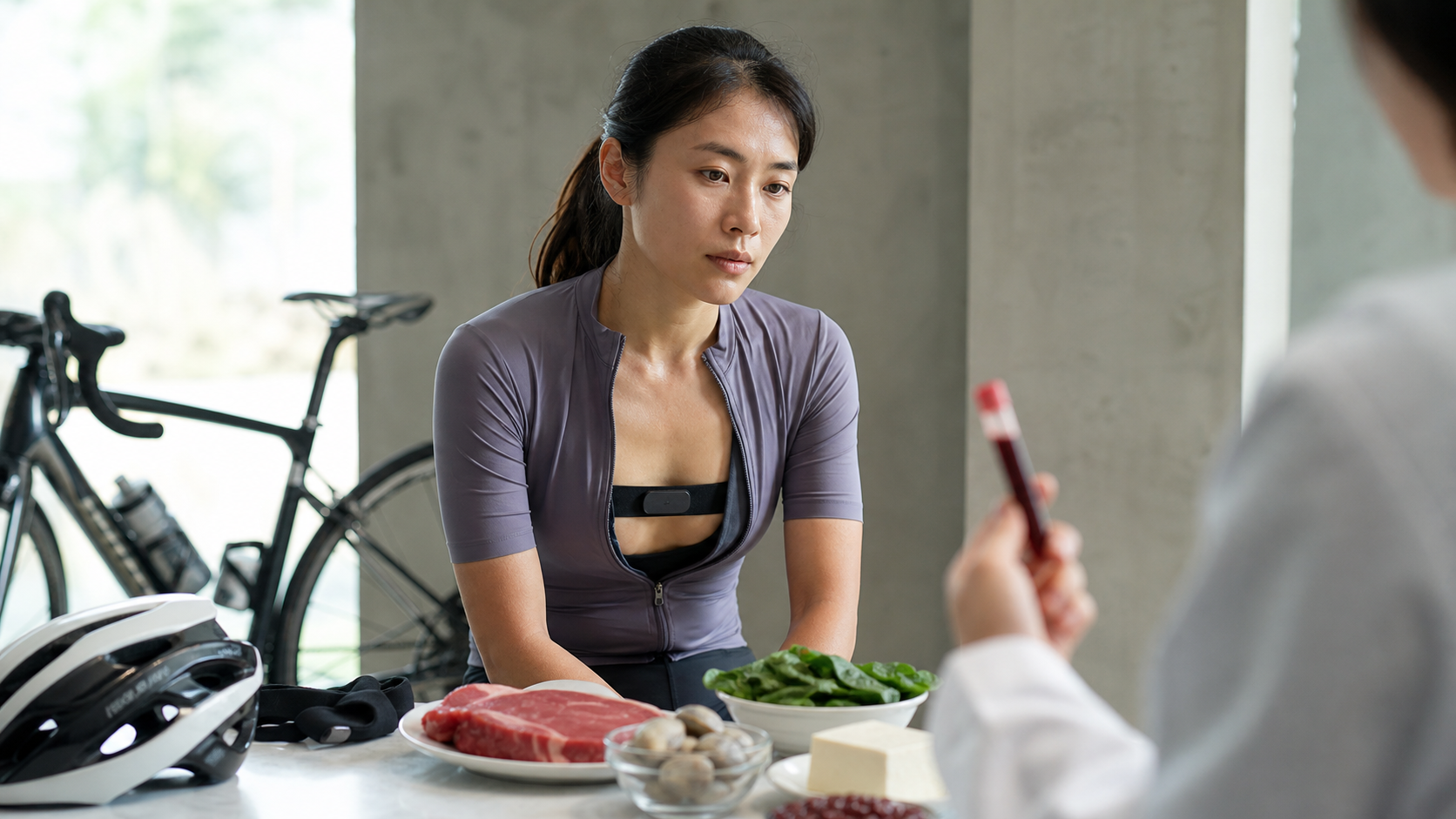
A Case of “Training Hard but Getting Worse” — Let Me Start With This Story
A few years ago, I coached a female amateur cyclist—let’s call her Little P. Her training discipline was so impeccable that even I, her coach, was in awe: a steady 8 to 10 hours per week, solid power meter numbers, and decent sleep management. The problem was—her performance wasn’t improving; it was steadily declining. A climb she could previously hold at 200 watts now had her gasping at 180 watts with her heart rate spiking. Her resting heart rate (morning heart rate) had also inexplicably crept from 52 bpm to over 60 bpm. She came to me and asked, “Coach, am I overtraining? Should I cut back?”
At that moment, most people’s gut reaction would be “training too much, not enough rest.” But after years of working with athletes, I’ve learned one thing: when a disciplined endurance athlete inexplicably regresses, feels fatigued, falls apart on climbs, and has abnormally elevated heart rates, your first thought shouldn’t be overtraining—it should be iron deficiency. I had her get blood work done, and sure enough—her ferritin was only 12 µg/L, with hemoglobin sitting at the lower edge of the normal range. This is a textbook case of “non-anemic iron deficiency,” a hidden killer that’s incredibly good at disguising itself and incredibly easy to miss.
In this article, I want to lay out everything I’ve repeatedly seen in my athletes over the past 15 years—from the mechanisms, to interpreting lab results, to supplementation, and down to practical dietary strategies for Taiwan. Whether you’re a beginner just starting to run or ride, or a seasoned veteran chasing a PB, iron is worth ten minutes of your serious attention. Because it’s cheap, testable, and fixable—yet it’s so often overlooked that it’s truly frustrating.
Why Iron Is So Critical for Endurance Athletes
Iron Isn’t Just About “Boosting Blood”
When most people hear “iron,” their first association is “boosting blood, anemia.” That’s not wrong, but it’s only half the story. Iron plays at least three roles in endurance sports:
- The core of hemoglobin: Iron is a key component of hemoglobin, which is responsible for transporting oxygen from the lungs to muscles throughout the body. When iron is deficient and hemoglobin drops, oxygen-carrying capacity takes a direct hit, and your VO2max ceiling gets suppressed.
- Myoglobin in muscles: Muscles rely on myoglobin to store and release oxygen, and it also requires iron.
- The energy factory of mitochondria: This one is the most overlooked. Iron is an essential component of multiple enzymes in the mitochondrial electron transport chain. Mitochondria are the power plants in your cells that “burn” fat and carbohydrates into energy (ATP). When iron is insufficient, the power plants become less efficient—even if your hemoglobin is still normal, your aerobic metabolism at the muscle level is already quietly hitting a bottleneck.
This is why “non-anemic iron deficiency” is so insidious—your hemoglobin test might still show a green light, a doctor glances at it and says “no anemia, you’re fine,” but the energy factories in your cells are already starving for iron. This also explains why Little P had normal hemoglobin yet still fell apart on climbs.
What the Research Says
Here I’m citing data I’ve actually verified. According to multiple reviews and systematic literature on athletic populations, the prevalence of iron deficiency among runners is approximately 15% to 35% in women and 5% to 11% in men; a 2025 systematic review pooling over 600 female athletes found that endurance performance in iron-deficient individuals was approximately 3% to 4% lower than in those with sufficient iron, and more critically—even when hemoglobin remains within the normal range, iron deficiency still impairs the body’s ability to adapt to endurance training. In other words, the training you work so hard on may not be “absorbed” properly because of iron deficiency. (Sources listed in the references at the end.)
For endurance athletes, 3% to 4% may not sound like much, but that could be the difference between breaking a PB and hitting a plateau—the difference between getting dropped from the group and hanging on.
The Mechanisms of Exercise-Induced Iron Deficiency: Where Does Your Iron Actually Go?
Endurance athletes are particularly prone to iron deficiency—it’s not bad luck; there are clear physiological mechanisms. I usually break it down for athletes into two sides: “increased losses” and “decreased intake.” It’s easy to understand.
Increased Losses: The Pathways of Iron Depletion
- Foot-strike hemolysis: When running, the repeated impact of your feet against the ground mechanically destroys a portion of red blood cells, and iron is lost along with them. This is especially pronounced in runners, while non-impact sports like cycling and swimming are much milder.
- Sweating: Sweat itself contains small amounts of iron. In Taiwan’s hot, humid summers, a single long training session can easily produce one to two kilograms of sweat, and the cumulative effect over time is nothing to sneeze at.
- Gastrointestinal microbleeding: High-intensity, prolonged exercise causes redistribution of gastrointestinal blood flow and mild ischemia, which can lead to trace blood loss in the stool.
- Menstruation: For female athletes, this is one of the largest pathways of iron loss and the primary reason iron deficiency prevalence is far higher in women than in men.
Decreased Intake: The Critical Gatekeeper—Hepcidin
This is the term I most want you to remember from this entire article: hepcidin.
Hepcidin is a hormone secreted by the liver, and it acts as the master gatekeeper controlling the “import and recycling” of iron in the body. When hepcidin rises, it shuts down the intestinal pathway for iron absorption—the iron you eat just doesn’t get absorbed well.
Here’s the problem: exercise—especially high-intensity, prolonged exercise—triggers an inflammatory response (particularly a rise in an inflammatory mediator called IL-6), and IL-6 stimulates hepcidin to rise. According to research I’ve verified, IL-6 rises immediately after exercise, while hepcidin peaks approximately 3 to 6 hours post-exercise. In other words, after every serious training session, for several hours afterward, your body’s iron absorption gate is half-closed.
This is the core vicious cycle of exercise-induced iron deficiency: the harder you train → the more often inflammation and hepcidin rise → the less iron you absorb → the more deficient you become → the worse your performance → you want to train more to compensate → you become even more iron deficient. Little P was trapped in exactly this cycle.
The good news is, once we understand hepcidin, we hold the key to breaking it—and we’ll use that when we get to supplementation strategies later.
How to Read Your Lab Results: Ferritin, Hemoglobin, and TSAT, All Explained
Many athletes bring me their health check reports, and the most common mistake is “only looking at hemoglobin.” Let me make this clear upfront: when assessing iron status in endurance athletes, the single most important indicator is serum ferritin—not hemoglobin.
The Three Core Markers
| Marker | What It Represents | Why It Matters |
|---|---|---|
| Serum Ferritin | The body’s “iron inventory” | Reflects iron deficiency earliest—it drops before hemoglobin does, making it an early warning system |
| Hemoglobin (Hb) | The oxygen-carrying force in your blood | Only declines in the late stages of iron deficiency; once it drops, it means the deficiency has progressed to iron-deficiency anemia |
| Transferrin Saturation (TSAT) | Whether the iron “in circulation” in your blood is sufficient | A supplementary indicator; more accurate when interpreted alongside ferritin |
Here’s an analogy to make it clear: ferritin is the balance in your bank account, and hemoglobin is the cash in your wallet right now. Your savings (ferritin) may be nearly depleted, but your wallet (hemoglobin) can still temporarily look like it has money. By the time even the cash runs out (hemoglobin drops), the iron deficiency is already at an advanced stage. So checking only hemoglobin is like only looking at your wallet without checking your savings—it severely underestimates the problem.
How to Interpret Ferritin Levels
This needs to be discussed very carefully. The “ideal” ferritin value is still debated in sports medicine, and thresholds vary across different studies. Based on verified sources, I’ll give you a range-based reference rather than a falsely precise single number:
| Ferritin Range (µg/L) | General Classification | Plain-Language Interpretation from a Coach’s Perspective |
|---|---|---|
| < 15 to 20 | Clearly low iron stores | The tank is on empty; usually requires active intervention |
| 20 to 40 | Low, gray zone | May already be insufficient for serious endurance athletes |
| 40 to 90 | Generally considered a more ideal range | Most literature recommends endurance athletes maintain this band |
| > 100 to 200+ | High | Higher is not better; excessively high levels may indicate other issues, don’t self-supplement to this level |
Several reviews focused on athletes suggest iron status should ideally be maintained with ferritin between 40 and 90 ng/mL (ng/mL and µg/L are numerically identical). If you’re planning altitude training (e.g., high-altitude stimulus around Wuling or Hehuan Mountain), the literature recommends ferritin be at least 40 before heading to altitude, because altitude stimulates red blood cell production, increasing iron demand. (Sources at the end.)
A critical interpretation pitfall: Ferritin is also an “acute phase reactant.” If you get blood drawn right after a hard training block, during illness, or while your body is inflamed, your ferritin level can be “inflated” and appear higher, masking true iron deficiency. So I always advise athletes to get blood drawn on a rest day, when your body is stable, at least a day or two after the last high-intensity session, and fasted in the morning for reliable results.
How to Get Tested in Taiwan
Taiwan’s healthcare system is actually quite accessible for this. Ferritin, hemoglobin, and serum iron are all standard blood tests. You can see a family medicine or hematology doctor, or visit a hospital offering sports medicine clinics. NHI typically covers tests with clinical indications (e.g., if you have obvious fatigue or anemia symptoms). Paying out-of-pocket for a full “iron panel” is also usually inexpensive. My advice: if you’re a serious endurance athlete, include ferritin in your routine check-ups once or twice a year, especially for female athletes, vegetarians, and those with high training volumes.
Supplementation Strategy: Mastering the Hepcidin Gate
Okay, let’s say your ferritin comes back low. How do you supplement? First, the most important point:Iron is not a supplement you take casually—it’s not “train hard, so supplement more, more is healthier.” Before supplementing iron, you must get tested to confirm a true deficiency, and ideally do it under a doctor’s guidance. Excess iron can be harmful, especially for those with a predisposition to hemochromatosis; reckless supplementation is dangerous. Long-term iron supplementation when your ferritin is normal or even high is not only pointless but potentially harmful.
With that premise established, let’s look at how to supplement smartly.
Key Principle 1: Every Other Day May Absorb Better Than Daily
This is one of the most important updates in sports nutrition in recent years, directly tying back to hepcidin. Research shows:After you take a dose of iron, hepcidin rises, suppressing the gut’s ability to absorb iron for about the next day. So if you take it daily, or even split into multiple doses per day, hepcidin stays elevated, and each dose’s absorption rate drops.
Verified sources indicate:A single 200 mg dose taken every other day results in roughly double the total absorption compared to 100 mg taken daily. In other words, concentrating the dose and spacing out the intervals allows hepcidin to drop, making absorption more efficient. This is also good news for those who fear gastrointestinal side effects from iron pills (constipation, nausea, stomach pain)—fewer doses mean less GI burden.
However, a balanced counterpoint: for most adults with iron deficiency anemia, “daily” vs. “every other day” ultimately raises hemoglobin and iron stores to a similar degree; daily might even be slightly faster. The advantage of every other day lies in “higher single-dose absorption” and “fewer side effects.” So in practice, dosage, frequency, and duration should be individualized by your doctor based on your deficiency severity—don’t self-prescribe based on internet numbers.
Key Principle 2: Time It Right—Use the Post-Exercise Absorption Window
Remember that hepcidin peaks 3 to 6 hours after exercise? That gives us a window of opportunity:
- Hepcidin is typically lowest in the morning, so studies generally recommend iron supplements absorb better in the morning on an empty stomach.
- Some studies observe that in the short window right after exercise (roughly within 30 minutes before or after), supplementing before hepcidin spikes leads to better absorption; conversely, if you wait until 2 hours post-exercise, iron absorption drops by about 36%.
So a practical combination is:Schedule iron supplementation in the morning, or shortly after finishing a workout, while the gate is still open. Avoid supplementing sluggishly a few hours after training when hepcidin is high.
Key Principle 3: Pair with Vitamin C, Avoid Inhibitors
Iron absorption is very “picky” about its environment. Some things help, some things hinder:
| Enhances Absorption (Promoters) | Inhibits Absorption (Avoid) |
|---|---|
| Vitamin C (about 100 mg, or a glass of citrus juice) | Polyphenols/tannins in coffee and tea |
| Heme iron from animal sources already has high absorption | High-calcium foods like calcium supplements or milk taken simultaneously |
| Empty stomach (more stomach acid) | Phytates in whole grains and legumes |
| — | Antacids, stomach medications (reduced stomach acid decreases absorption) |
Practical approach: Take iron with a glass of orange juice or a vitamin C tablet for better absorption; but don’t take it with coffee, tea, milk, or calcium supplements, as these significantly reduce absorption. Taiwanese people often pair breakfast with milk tea or coffee—if you’re supplementing iron, remember to separate your iron dose from these drinks by at least one to two hours.
What If Oral Supplementation Doesn’t Work
A minority of people truly cannot tolerate oral iron, or have severe deficiencies needing rapid correction (e.g., close to a major race). In such cases, a doctor may evaluate intravenous iron infusion. This is effective but constitutes a medical procedure—it must be done under a doctor’s assessment and monitoring, absolutely not something you decide to do on your own. And as mentioned earlier, getting an iron infusion when ferritin is already normal or high is pointless and even harmful.
Dietary Strategy: How Taiwanese Eating Out Can Get Enough Iron
Supplements are for “when deficient,” but daily diet is the foundation for maintaining iron long-term. I always tell athletes: if you can get it steadily from food, don’t rely entirely on pills. Here are practical tips tailored to Taiwan’s eating environment.
Heme Iron vs. Non-Heme Iron
Iron in food comes in two forms with vastly different absorption rates:
- Heme iron: From animal sources, such as red meat, pork liver, duck blood, pig’s blood cake, and shellfish (clams, oysters). Absorption is much higher and less affected by other foods.
- Non-heme iron: From plant sources, such as dark leafy greens (spinach, sweet potato leaves), legumes, red amaranth, black sesame, and seaweed. Absorption is lower and easily hindered by phytates and tannins, but pairing with vitamin C can significantly enhance absorption.
Quality Iron Options in Taiwan
Taiwan actually has many convenient and easily accessible iron-rich foods, and even people who eat out all the time can manage:
| Scenario | Local Recommendations |
|---|---|
| Night markets, street food | Pig blood cake, duck blood, oysters, clam soup, sesame oil pork kidney |
| Bento shops | Choose red meat as the main dish (beef, lean pork), add a serving of dark green vegetables, and finish with guava or citrus for vitamin C |
| Buffet restaurants | Red amaranth, sweet potato leaves, pork liver, braised beef shank, paired with a serving of tomato or fruit |
| Vegetarians | Red beans, black beans, tofu, seaweed, black sesame, dark green vegetables—be sure to pair with a vitamin C source (such as guava, kiwi, bell peppers) |
Special note for vegetarian athletes: Because plant-based iron absorption is lower, vegetarian endurance athletes already have a higher risk of iron deficiency. This doesn’t mean you can’t be vegetarian or can’t train—it means you need to monitor ferritin more proactively, pair vitamin C more deliberately, and be more careful about avoiding inhibitors. I’ve coached vegetarian cyclists who performed very well; the key was that they were far more intentional about their dietary pairing than the average person.
Additional Reminders for Taiwan’s Climate
Taiwan’s summers are humid and hot, and a long ride or road race can result in staggering sweat loss. More sweat means more iron loss, and training volume tends to increase in the summer—midsummer is the season when endurance athletes are most likely to lose their iron edge. I usually recommend that my athletes get a ferritin check before entering the high-volume summer training block, so they can shore up their foundation rather than waiting until they’re completely wrecked in August or September.
Iron Deficiency Isn’t “You Have It or You Don’t”—It’s Three Stages
Many people think iron deficiency is a switch—you’re either deficient or you’re not. In reality, iron deficiency is a continuous slide divided into three stages, and the earlier you catch it, the easier it is to manage. Understanding these three stages is why “only checking hemoglobin” misses early problems.
| Stage | Name | Body State | Blood Test Characteristics | Impact on Performance |
|---|---|---|---|---|
| Stage 1 | Iron store depletion | Savings are running low, but still holding up | Ferritin drops, hemoglobin still normal | Training adaptation starts to worsen, often without you noticing |
| Stage 2 | Iron deficiency without anemia | Stores are empty, iron transport starts to strain | Low ferritin, low TSAT, hemoglobin still at the lower edge of normal | Fatigue, fading on climbs, elevated heart rate—but often misdiagnosed |
| Stage 3 | Iron deficiency anemia | Not even enough cash on hand | Low ferritin, hemoglobin clearly decreased | Performance drops significantly, obvious breathlessness, pale complexion, dizziness |
The most important takeaway from this table: by the time hemoglobin drops in Stage 3, you’ve been struggling for a long time. What you really want to catch is Stage 1 and Stage 2—and in both of those stages, hemoglobin is still normal; only ferritin gives it away. That’s why I keep emphasizing “check ferritin.” When Little P was caught, he was stuck in Stage 2: hemoglobin was still at the lower edge of normal, ferritin was only 12, and he’d been struggling for weeks.
The Body’s Iron Deficiency Signals: Your Body Has Been Warning You All Along
Iron deficiency symptoms often feel very “everyday” and are easily dismissed as “just being tired lately.” I’ve compiled the most common signals I see in my athletes—check them against your own experience:
- Performance signals: The same workout feels harder, you can’t hold power on climbs, interval recovery gets slower, morning resting heart rate is inexplicably 5 to 10 bpm higher than usual, and heart rate is higher at the same intensity (your heart has to work harder to deliver the same oxygen).
- Daily life signals: Tired all day, winded climbing stairs, difficulty concentrating, worsening memory, pale complexion and pale inner eyelids, cold hands and feet, increased hair loss.
- Less common but worth noting: Pica (an inexplicable urge to chew ice), restless legs (involuntary leg movement when sleeping), brittle or spoon-shaped nails.
I’ll be honest here: none of these symptoms are “exclusive” to iron deficiency. Fatigue could be from lack of sleep, stress, or thyroid issues; elevated heart rate could be from overtraining, dehydration, or illness. So symptoms are only clues that “raise suspicion”—the real answer comes from a blood test. But conversely, if you’re hitting a long list of these signals and you’re in a high-risk group, putting iron deficiency at the top of your suspicion list is absolutely the right call.
Before Altitude Training, Get Your Iron in Order First
This section is written specifically for Taiwan’s cyclists and runners who love heading to the mountains. Taiwan has得天独厚 high-altitude environments—Wuling, Hehuan Mountain, and the Yuanfeng area—where many serious endurance athletes go for altitude stimulus, hoping the hypoxic environment will stimulate more red blood cell production and improve oxygen-carrying capacity.
But there’s a commonly overlooked prerequisite: producing red blood cells requires iron as raw material. The altitude environment stimulates the body to mass-produce red blood cells, which instantly spikes the demand for iron. If your iron stores are already depleted before you go up, your body wants to make blood but has no raw materials—not only will you fail to get the training effect, you might squeeze out what little iron reserve you have left.
This is also why the evidence-based literature recommends: before going to altitude for training stimulus, ferritin should be at least 40 µg/L. So if you have an altitude training plan, be sure to check ferritin a few weeks in advance, and if it’s low, build it back up under a physician’s guidance before heading up. Don’t rush excitedly up to Wuling only to have the entire altitude training block wasted by iron deficiency.
A Sample “12-Week Iron Supplementation and Monitoring” Protocol
Many athletes ask me: “Once I find out my levels are low, how do I actually run a cycle?” Here’s a sample protocol to give you an idea. Again, I want to emphasize: this is an educational example, not a prescription. The actual dosage, frequency, and duration must be individualized by a physician based on your lab results and physical condition.
| Time | What to Do | Key Reminders |
|---|---|---|
| Week 0 | Fasted blood draw on a rest day morning; check ferritin + hemoglobin + TSAT | At least 1 to 2 days after your last hard workout to avoid inflammation skewing results |
| From Week 1 | Begin supplementation after physician evaluation, paired with vitamin C | Separate from coffee, tea, milk, and calcium supplements by at least 1 to 2 hours |
| Weeks 1 to 8 | Supplement regularly at the dose and frequency recommended by your physician | If gastrointestinal discomfort occurs, return for a follow-up to discuss adjusting the dose or switching to every other day |
| Throughout | Simultaneously strengthen dietary heme iron intake and pair with vitamin C | Supplements are the accelerator; diet is the foundation |
| Weeks 8 to 12 | Return for a follow-up ferritin test to see the rebound | Ferritin recovers slowly; it usually takes weeks to months to see a change |
| After reaching target | Stop or reduce dosage, transition to dietary maintenance + regular monitoring | Don’t over-supplement; once ferritin is normal, long-term heavy supplementation isn’t appropriate |
The spirit of this protocol is: get tested clearly → supplement under physician guidance → manage diet and absorption environment while supplementing → re-test to confirm → transition to maintenance once the target is reached. The entire process is measured in “weeks” to “months,” not days—be patient. Ferritin, as a storage marker, recovers slowly, so don’t give up just because you don’t feel anything after a week or two.
FAQ
Q1: I don’t have anemia, and my ferritin isn’t low either, but I’m just tired all the time. Do I need iron supplements?
A: Not necessarily. Fatigue has many causes—sleep, stress, training load, thyroid issues, and more. If your ferritin is within the normal range, blindly supplementing iron is pointless and can even be harmful. I recommend working with a doctor to rule out other causes first. Don’t treat iron as a cure-all.
Q2: Iron supplements give me constipation and stomach discomfort. What should I do?
A: This is a very common side effect. You can discuss with your doctor switching to every-other-day dosing (single-dose absorption is actually higher, with less gastrointestinal burden), trying a different formulation, or adjusting the dosage and timing. Drinking more water and increasing fiber intake also helps. Don’t just stop or increase the dose on your own because of discomfort.
Q3: Can I just buy iron supplements at the pharmacy and take them myself?
A: I strongly recommend getting a blood test first to confirm you’re actually iron-deficient before supplementing, and ideally under a doctor’s evaluation. Iron is not “more is better”—excess can harm your body, and people with a predisposition to iron overload need to be especially careful. This is a medical decision, not a health habit.
Q4: Isn’t it enough to just drink more iron-fortified beverages or take over-the-counter iron supplements?
A: Diet is a good long-term foundation, but if you’re already deficient to the point of needing treatment, the doses in regular food or commercial supplements often won’t bring your levels back up fast enough. Whether you need therapeutic-dose iron depends on how deficient you are—let your doctor make that call.
Q5: Can men also be iron-deficient?
A: Yes, though the prevalence is lower than in women (about 5% to 11% in men). Male runners with high training volume, long-term vegetarians, and men with gastrointestinal issues are all at-risk groups. Don’t dismiss iron deficiency as “a women’s issue” and let your guard down.
Q6: Once my ferritin is back to normal, can I just keep taking iron indefinitely as maintenance?
A: Not recommended. Once ferritin reaches the target, you should transition to “dietary maintenance + regular monitoring” rather than staying on therapeutic-dose iron long-term. Chronic iron overload is harmful.
Common Mistakes and Fixes: Pitfalls I’ve Seen in My Athletes
This section is the meat of it—mistakes I’ve run into repeatedly over the years. Find yourself in here and fix it directly.
Mistake 1: Only looking at hemoglobin and assuming you’re fine if you’re not anemic.
Fix: You must test ferritin. Non-anemic iron deficiency can already be dragging down your performance and training adaptation while hemoglobin is still normal.
Mistake 2: Buying iron supplements and popping them the moment you feel tired, without testing first.
Fix: Test first, then supplement. Iron overload can damage your liver and your health, and it’s especially dangerous for people with a predisposition to iron overload. Iron supplementation is a medical decision, not a health habit.
Mistake 3: Taking it every day, multiple times a day, thinking more frequent is better.
Fix: Understand hepcidin. Consolidating the dose and spacing it out (e.g., every other day) may improve absorption efficiency and reduce side effects, but let your doctor determine the actual frequency based on your situation.
Mistake 4: Taking iron with coffee, milk tea, or calcium supplements.
Fix: Separate these inhibitors and pair iron with vitamin C. Simply spacing your coffee away from your iron dose can noticeably improve absorption.
Mistake 5: Getting ferritin tested right after a hard workout or during illness, when inflammation inflates the number and leads to a false “not deficient” reading.
Fix: Get blood drawn on a rest day, in a steady state, fasted in the morning for reliable numbers.
Mistake 6: Mistaking iron deficiency for overtraining and just cutting volume and resting.
Fix: Cutting volume works for true overtraining, but not for iron deficiency—if you don’t replenish iron, you can rest as long as you want and still fall apart on climbs. Little P wasted several extra weeks this way.
Mistake 7: Once ferritin is normal, never testing again.
Fix: Endurance training continuously depletes iron. Monitor regularly, especially if you’re female, vegetarian, or have high training volume.
Actionable Advice by Training Level
I’ve broken the advice down by level—find where you are and follow it.
For Beginners New to Training
- Your training volume is still relatively low, so iron depletion is limited. Focus on balanced eating: red meat a few times a week, dark leafy greens, moderate seafood, and some fruit after meals.
- If you have noticeable fatigue, pale complexion, easy breathlessness, or poor concentration, don’t guess on your own—go see a family doctor and get ferritin and hemoglobin checked.
- Don’t rush to buy iron supplements. At this stage, diet is usually enough.
For Advanced, Serious Athletes
- Add ferritin to your routine check-ups once or twice a year, especially before entering high-volume summer training or altitude training.
- Learn to read your body’s signals: unexplained performance decline, oddly elevated morning heart rate, or falling apart on climbs faster than usual—all of these should put “iron deficiency” on your list of suspects.
- Be deliberate about pairing vitamin C with iron-rich meals and separating caffeine and calcium to optimize your iron absorption environment.
- If your levels come back low, take the report to your doctor to discuss a supplementation plan—don’t self-prescribe dosages.
For Female and Vegetarian Athletes (High-Risk Groups)
- You have the highest prevalence of iron deficiency—monitor ferritin more frequently.
- Women with heavy menstrual flow lose more iron and need to be more aggressive with both diet and monitoring.
- Vegetarians must master the “plant-based iron + vitamin C” pairing principle and seriously evaluate whether regular supplementation under medical guidance is needed.
- If you have any menstrual irregularities, chronic fatigue, or suspected anemia symptoms, seek medical attention early and get both gynecological and blood issues sorted out together.
A Self-Check Checklist for “Suspected Iron Deficiency”
If several of these apply to you, I strongly recommend getting your ferritin tested:
- [ ] Training discipline unchanged, but performance inexplicably declining
- [ ] Morning resting heart rate noticeably higher than usual
- [ ] Getting unusually breathless and falling apart on climbs and sprints
- [ ] Fatigue all day, poor concentration, pale complexion
- [ ] You are female, vegetarian, or have very high training volume
- [ ] Cutting volume and resting hasn’t helped
Conclusion: Don’t Let a Cheap, Fixable Problem Steal Your Hard Work
Back to Little P’s story. After her ferritin came back at 12 and confirmed iron deficiency, she adjusted her supplementation strategy under her doctor’s guidance, fixed her diet, separated coffee from her iron dose, and smartly supplemented in the morning and post-training windows. About two to three months later, her ferritin was back up to just over 40, and she felt like she had a new engine—on the same climbs, she could hold 200 watts steadily again, her morning heart rate dropped back to the low 50s, and she laughed and told me, “Coach, I thought I was done for. Turns out it was just iron deficiency.”
I want to say this to every serious endurance athlete: Iron deficiency is a master of disguise—a silent killer—but it’s also one of the easiest enemies to deal with, because it’s cheap to test and clearly fixable. One blood draw, from a few dozen to a few hundred NT$, could help you reclaim the 3% to 4%—or more—that’s been stolen from you. Don’t let something this simple waste a full year of your hard training.
If you read this and thought, “That sounds like me,” then don’t put it off. Pick a rest-day morning and go get your ferritin tested. The data will give you your answer, and the answer is usually easier to solve than you think.
This article is educational content and does not replace individual diagnosis or treatment advice from a physician, physical therapist, or nutritionist. Always confirm iron deficiency through a blood test before supplementing, and do so under professional guidance. Iron overload, hemochromatosis, and related conditions require medical evaluation—never self-supplement in large amounts. If you have anemia, chronic fatigue, menstrual irregularities, or other health concerns, seek medical attention promptly and let professionals make individualized judgments for you.
References
- Iron Status and the Acute Post-Exercise Hepcidin Response in Athletes (PLOS One / PMC): https://pmc.ncbi.nlm.nih.gov/articles/PMC3965532/
- Iron deficiency, supplementation, and sports performance in female athletes: A systematic review (ScienceDirect): https://www.sciencedirect.com/science/article/pii/S2095254624001674
- Iron Status and Physical Performance in Athletes (PMC / NIH): https://pmc.ncbi.nlm.nih.gov/articles/PMC10608302/
- Iron absorption from supplements is greater with alternate day than with consecutive day dosing in iron-deficient anemic women (Haematologica): https://haematologica.org/article/view/9379
- Iron Strength: What Endurance Athletes Should Know About Iron Deficiency Anemia and Ferritin Screening (USA Triathlon): https://www.usatriathlon.org/articles/training-tips/what-endurance-athletes-should-know-about-iron-deficiency-anemia-and-ferritin-screening
- Contemporary Approaches To The Identification And Treatment Of Iron Deficiency In Athletes (Gatorade Sports Science Institute): https://www.gssiweb.org/sports-science-exchange/article/contemporary-approaches-to-the-identification-and-treatment-of-iron-deficiency-in-athletes
Related Reading
- Iron Nutrition: The Most Overlooked Key Micronutrient for Endurance Athletes
- Iron, Vitamin D, and Micronutrition for Endurance Athletes: A Complete Guide to Iron Deficiency Symptoms, Blood Test Interpretation, and Bone Health
- Iron and Serum Ferritin: The Most Common Invisible Loss of Performance in Endurance Athletes
- Iron Supplementation for Athletes: When to Supplement? The Principle of Supplementing Only When Deficient, Forms, and Monitoring
福隆鐵人團練隨拍
8 年前
CT 喇低賽) 單車 比賽總是沒照片? 攝影師的觀點大公開 姿勢就是力量! 請加速1.25倍收看
7 年前
一個測試有沒有認真練車的方法😂 #公路車
10 個月前
CT暗黑廚房) 車友必備 宇宙無敵鮮蚵湯 幫助訓練恢復 天然食補 好市多 超肥鮮蚵 破PR
7 年前
西進武嶺 免費訓練分析服務 Intervals | 練不夠還是練過頭?你哪一種類型選手?AI模型告訴你! | 備戰神器 | 公路車 訓練 | CT Yeh
4 年前
靠單車減肥35公斤 心得分享與整理
7 年前
FTL 與 SYB 車隊專訪 西進武嶺 實用攻略分享! 2小時 如何練?!你不知道的眉角!新手準備武嶺必看 EP1 | 實力派女車友 | 精華版 | 公路車 | CTYeh
4 年前
CT 喇低賽) 武嶺牽車 才是王道 西進牽車四小時內秘訣 攝手位置 如何判斷 防抽筋小秘訣
7 年前