Individual Differences and Responders: The Lie of Averages—Why an "Effective Training Plan" May Not Work for You
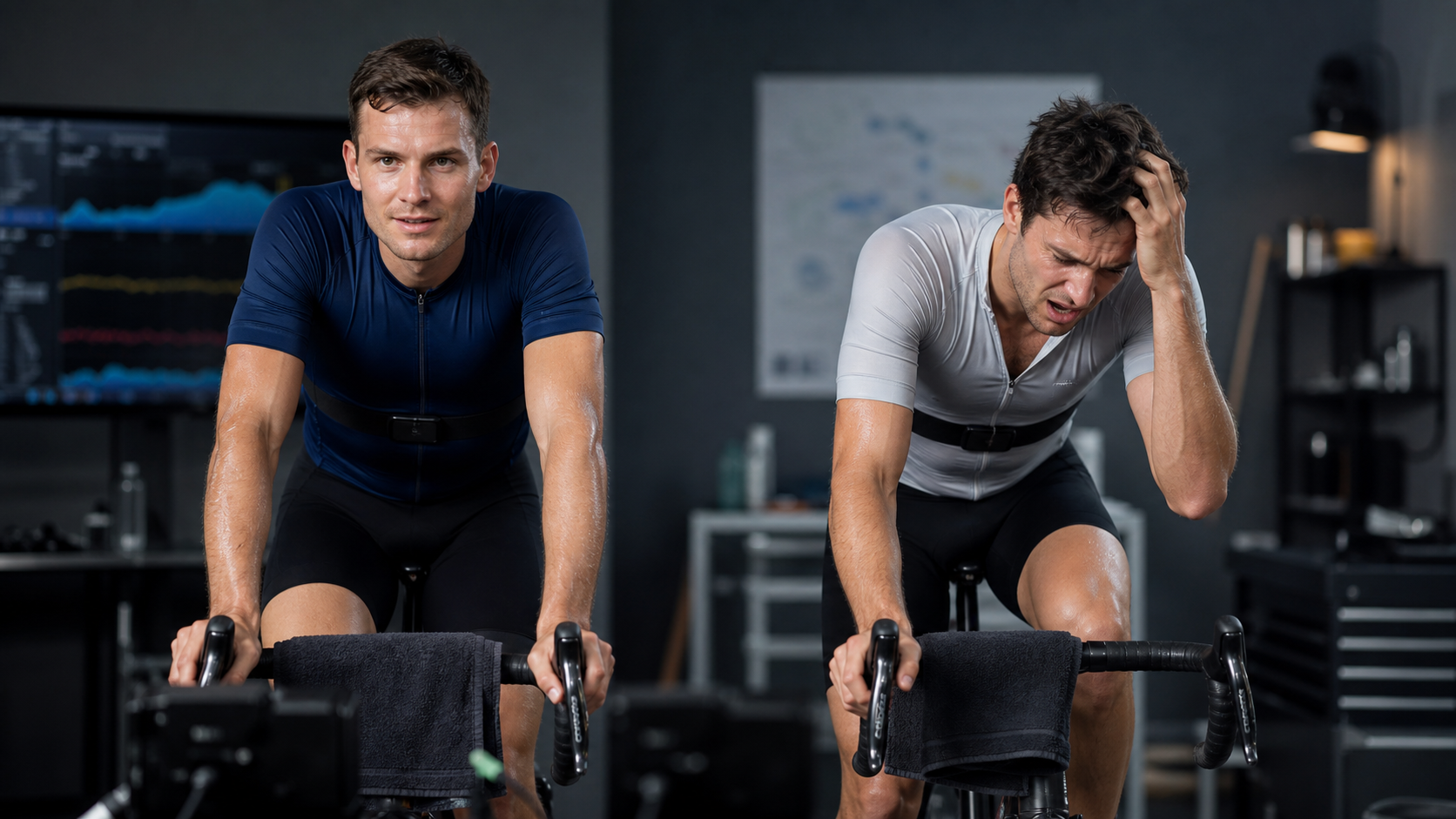
Opening: Two People, the Same Plan, Two Outcomes
I once coached a fascinating pair of training partners—let’s call them A-Zhe and Xiao-K. They were the same age, similar weight (both around 70 kg), used the same trainer, followed the same 12-week cycling endurance plan, and even logged nearly identical weekly riding hours. Three months later, when they came back for FTP (Functional Threshold Power) testing, A-Zhe had jumped from 210 watts to 248 watts, grinning ear to ear. Xiao-K? He went from 205 watts to 212 watts—and nearly listed his bike for sale on a secondhand marketplace.
He asked me a question I still remember to this day: “Coach, is it just that I’m not cut out for this?”
This article is my complete answer to everyone who has ever asked that question. Because the answer is both brutal and full of hope: Yes, people’s responses to training vary wildly; but almost no one is truly “unable to improve”—you just haven’t found the key that fits you yet.
Over the past decade-plus of coaching athletes at all levels and general fitness populations, my deepest realization is this: the “average improvement” in the title of a sports science paper is a well-intentioned but dangerous lie. It makes you think that if you just follow the plan, you’ll get that number. But in the real world, hidden beneath that average is a huge group of people with completely different responses. Today, let’s take that average apart.
Conceptual Foundation: Why Averages Deceive You
What a Classic Study Reveals
There is a very famous large-scale research project in exercise science called the HERITAGE Family Study. It recruited about 720 participants who completed a standardized 20-week aerobic training program, with maximal oxygen uptake (VO2max—the body’s maximum capacity to transport and utilize oxygen, and one of the most core indicators of endurance performance) measured before and after training.
The results were striking: the group’s average improvement was roughly 384 ml of oxygen per minute in aerobic capacity. If you only look at that number, you’d think, “Well, train and you improve—makes sense.”
But when the researchers broke down each individual, the story changed completely:
- Some people improved their VO2max by more than 1000 ml/min—more than double the average;
- Some showed almost no change;
- A small minority even saw their VO2max decline after training.
Same plan, same supervision, same hours—yet the distribution of results ranged from “explosive gains” all the way to “stagnation or even regression.” This is what’s called inter-individual variability.
Even more critically, the HERITAGE study found that this response variability has strong familial clustering: the differences between families were several times larger than the differences within the same family, and the heritability of VO2max training response was estimated at up to about 47%. In plain terms: whether you “feel results right away” is, to a considerable degree, a gift from your parents.
The Spectrum of “Responders” and “Non-Responders”
Exercise science roughly categorizes people into several types:
- High responders: progress rapidly with minimal stimulus;
- Typical responders: improve steadily following the plan;
- Low responders: progress slowly;
- Non-responders: show almost no response on that particular metric.
But please note carefully: the “non-responder” label is very easily misused. It doesn’t mean this person “gets nothing from training”—it means “under this specific metric, this specific dose, and this specific training modality, there is no obvious response.” Those three qualifiers are exactly what we’ll break down next.
The Three Layers of the Average Lie
| Layer | What the Average Tells You | What the Average Hides |
|---|---|---|
| Magnitude of response | Everyone improves by X on average | Some improve 3X, some 0, some regress |
| Speed of response | You’ll improve in 12 weeks | Some feel it in 4 weeks, others need 24 |
| Domain of response | VO2max will increase | What you improve might be strength, lactate threshold, or fatigue tolerance—not VO2max |
This table is the core of the entire article. The next time you see “research shows this training method improves performance by 15% on average,” automatically add in your head: “So where would I fall within that 15%?”
Scientific Foundation: Why You and Others Respond Differently
Let me explain the “sources of response variability” from the perspective of coaching athletes. This isn’t mysticism—there are very clear physiological and lifestyle factors behind it.
1. Genetics and Innate Physiology
As mentioned earlier, genetics explains a considerable proportion of response variability. Some people are naturally born with higher capillary density, higher mitochondrial content, and better hormonal responses, so the same stimulus triggers more adaptation. This is the hand we’re dealt and cannot change—but a bad hand doesn’t mean you lose the round.
2. Training Dose (The Most Underrated Variable)
Here I want to discuss a study that can completely change how you think. Researchers designed a clever experiment around “non-responders”: they first had a group train at different weekly volumes (60, 120, 180, 240, 300 minutes) for 6 weeks, and found—
- Training only 60 minutes per week: about 69% of people showed “non-response” in cardiorespiratory fitness;
- Training 120 minutes per week: non-responders dropped to about 40%;
- Training 180 minutes per week: dropped to about 29%;
- Training 240 and 300 minutes per week: the proportion of non-responders was 0%.
What’s even more striking is the follow-up: they took the people originally classified as “non-responders,” increased their training dose, and ran another round—and their non-response virtually disappeared.
This tells us something extremely important: many so-called “non-responders” are actually just “under-dosers.” You’re not unable to improve; the stimulus you’re giving your body simply isn’t big enough yet to cross your personal adaptation threshold.
3. Training Modality
The same line of research also found that those who responded worst to “aerobic training” actually showed positive responses when switched to “resistance training.” This echoes a gut feeling I’ve had from years of coaching—when one modality doesn’t work, switching to another often unlocks progress. People who plateau on pure aerobic volume often suddenly “unlock” when they add high-intensity intervals or strength training.
4. Recovery, Sleep, and Life Stress
This is a factor underrated by research papers but overrated by coaches (because we see it every day). Training is only the “stimulus”; real progress happens during recovery. Two people on the same plan—one sleeping 7.5 hours a night, the other chronically sleeping 5 hours with rotating shifts and overtime—the latter’s body simply has no capacity left to adapt. Given Taiwan’s work and life rhythms, this variable is often more decisive than genetics.
5. Measurement Error and “Biological Noise”
The last easily overlooked factor: the “no progress” you measured is sometimes just the day-to-day fluctuation of your testing conditions. Numbers like VO2max, FTP, and heart rate inherently vary from day to day. Labeling someone a “non-responder” based on a single measurement is methodologically indefensible. This is why I never judge anyone’s fate by a single test.
Prioritizing the Five Factors
The most common question students ask is: “With so many factors, which one should I tackle first?” The order I usually give is—first ensure recovery is on point, then ensure dosage is sufficient, then consider changing the mode, and only blame genetics last. Because the first three are things you can control with the highest return on investment; genetics is the last thing you should use as an excuse. The table below is my “diagnostic order” when actually coaching students:
| Priority | Check Item | Self-Inquiry | What to Do If Abnormal |
|---|---|---|---|
| 1 | Recovery & Sleep | Am I sleeping 7+ hours every night? Is my morning resting heart rate stable? | Prioritize catching up on sleep and reducing life stress before discussing increasing volume |
| 2 | Training Dosage | Am I truly achieving sufficient weekly hours and load? | Increase volume progressively; don’t rush to change the plan |
| 3 | Training Method | Am I constantly repeating the same stimulus? | Change the mode, add complementary stimuli |
| 4 | Measurement Quality | Am I drawing conclusions from a single data point? | Take multiple measurements to establish a trend, control testing conditions |
| 5 | Genetic Ceiling | Are the first four factors all in place, and for several months? | Accept your personal ceiling, optimize the process rather than obsessing over numbers |
Ninety percent of “non-response” issues can be resolved within priorities 1 to 3. Those who truly hit their genetic ceiling are usually high-level athletes who have trained very seriously for many years, not beginners or intermediates complaining about lacking talent.
In-Depth Case Studies: Real Stories of Four Types of Responders
Theory alone isn’t enough. I’ve compiled stories of several typical responder types I’ve coached; you might very well see yourself in them. (Scenarios are reorganized for teaching purposes, data are typical ranges, not specific individual medical records.)
Case 1: The High Responder with a Fragile Ego—“Ah-Zhe Type”
Ah-Zhe is the one from the beginning who progressed rapidly. His problem wasn’t lack of progress, but progress so fast it led to overconfidence—he doubled his training volume on his own in the second month, and by week 10, he developed anterior knee pain, and his resting heart rate jumped from 52 bpm to 61 bpm. The biggest trap for high responders is “because it works, I’ll keep adding more,” forgetting that structural adaptation (ligaments, tendons, bones) is much slower than cardiovascular adaptation.
My prescription for him: Force weekly volume increases to stay within 10%, insert deload weeks, and add core and hip stability training. He didn’t get injured for the rest of that year, and his FTP steadily climbed to 265 watts.
Case 2: The Aerobic Non-Responder, Strength-Oriented—“Little K Type”
As mentioned earlier, Little K saw almost no response from purely accumulating aerobic work. But when I had him do squats and deadlifts twice a week, plus two short interval sessions, his maximal output and sprint ability improved significantly, and his climbing also got faster. He’s a classic example of “unlocking through changing the mode”—his body responds far better to “strength stimuli” than to “pure endurance stimuli.”
Case 3: The Under-Dosed “Weekend Warrior Type”
A tech industry executive who only rode once each on weekends and was completely sedentary on weekdays. After six months of training, his FTP hadn’t budged. When he came to me, he was convinced he “just didn’t have the talent.” I took one look at his training log and laughed—less than 3 hours per week, concentrated on two weekend days. This wasn’t a talent issue at all; it was a dosage and distribution problem. I had him add two 45-minute indoor trainer sessions on weekdays. Once total volume and frequency went up, he improved 18 watts in two months.
Case 4: The Recovery-Deficient “Grinder Type”
A nurse working rotating shifts with incredible willpower, but the more she trained, the weaker she got. Her problem was very clear: chronic sleep deprivation + high work stress = the body has no capacity for adaptation. The first thing I did wasn’t changing her plan; it was “cutting” her training volume in half to prioritize sleep. Three weeks later, her resting heart rate dropped, her energy improved, and her performance actually rebounded. That’s the most authentic picture of “less is more.”
Comparison of the Four Responder Types
| Type | Surface Symptom | Root Cause | Key Prescription |
|---|---|---|---|
| High Responder, Fragile Ego | Fast progress but recurring injuries | Structural adaptation lags behind cardiovascular | Control volume increases, add stability training |
| Aerobic Non-Responder, Strength Type | No response to aerobic volume | Responds better to strength stimuli | Add strength training and short intervals |
| Weekend Warrior | Trained long, no progress | Insufficient dosage and frequency | Increase total volume, spread out frequency |
| Grinder Type | Gets weaker the more they train | Recovery deficit | Reduce volume, prioritize sleep |
Practical Methods: How to Find the Right Training for Yourself
Alright, enough theory. Let’s get to something you can use immediately. Here’s a set of processes and tools I actually use with my students to “find your own response pattern.”
Step 1: Establish Your “Personal Baseline”
Before adjusting anything, you need to know where you currently stand. Don’t just measure one metric, because you might be progressing in another area. I recommend establishing a multi-dimensional baseline:
| Metric | Measurement Method | Recommended Frequency | What It Reflects |
|---|---|---|---|
| FTP / Threshold Power | 20-minute test × 0.95 or formal FTP test | Every 6–8 weeks | Sustained power output |
| Resting Heart Rate | Measure lying down in the morning upon waking | Daily | Recovery and fatigue status |
| Heart Rate Variability (HRV) | Morning app measurement | Daily | Autonomic nervous system recovery |
| Fixed Route Time Trial | Same climb/riverside time trial | Every 2–4 weeks | Overall real-world performance |
| Subjective Feel (RPE, Sleep, Mood) | Training log score 1–10 | Every training session | Life stress and internal load |
Key reminder: Take at least 2–3 measurements to get a stable value for your baseline; don’t rely on a single number. Taiwanese cyclists love comparing times on fixed riverside routes—this is actually a great real-world metric, just be mindful of wind and traffic light interference.
Step 2: Start with the “Minimal Effective Dose,” Then Increase Progressively
Many people push themselves to the brink from day one, then get injured or burn out by week 3. My approach is the opposite: start with a conservative but real dose, observe the response, then increase. This is the only way to truly find the dosage point where you personally cross the threshold.
Here’s a 12-week progressive example for a typical office-worker cycling enthusiast (weekly hours are for reference only; adjust based on your recovery status):
| Phase | Weekly Training Hours | Focus | Observation Metrics |
|---|---|---|---|
| Weeks 1–4 | 3–4 hours | Build aerobic base, Zone 2 focus | Is resting heart rate stable? Any noticeable progress? |
| Weeks 5–8 | 4–6 hours | Add 1–2 threshold/interval sessions | Is FTP improving? Is HRV maintained? |
| Weeks 9–12 | 5–7 hours | Intensify the most effective stimulus based on response | Fixed route time trial, overall fatigue |
If you see almost no response in weeks 1–4, don’t rush to judge yourself—this is exactly what the research tells us: it might just be that the dose isn’t enough yet. Increase it. But if after increasing you start experiencing poor sleep, a spike in resting heart rate, or low mood, that means recovery isn’t keeping up, and you need to back off.
Step 3: If Response is Poor, “Change the Mode” Instead of “Adding More of the Same”
This is the key decision point. When you’ve accumulated sufficient aerobic volume with no response, don’t blindly add more aerobic work. Change the type of stimulus:
- No progress from pure long slow distance → Add high-intensity intervals (e.g., 4×4 minutes, 40/20);
- No progress from cycling alone → Add strength training (squats, deadlifts, single-leg presses);
- Stalled from constantly training threshold → Go back to building aerobic base volume or add explosive sprints;
- Bored and stagnant on flat roads → Switch to climbing or variable terrain.
My friend Little K, who almost sold his bike, finally unlocked his progress through “significantly adding strength training + two short interval sessions per week.” Six months later, his FTP reached 240 watts. He wasn’t cut out for it; he just needed a different recipe.
Step 4: Turn “Responses” into Readable Trends
A single data point can lie; trends don’t. I ask my athletes to log the indicators above into a simple table or chart, review them every 4 weeks, and ask three questions:
- Which indicator is moving? (It might not be the one you think)
- Is it moving in the right direction? (Resting heart rate down and power up is good; resting heart rate up warrants caution)
- Do subjective feelings match the objective numbers? (If numbers improve but you’re exhausted all day, you might be borrowing from your future)
Step 5: Treat Yourself as a Rigorous n=1 Experiment
This is the core principle I most want to convey. The averages in sports science papers are conclusions drawn by “averaging out” the responses of hundreds of people; but you only have one body, so what you need to do is an n=1 (sample size of just yourself) experiment. A good personal experiment has several key elements:
- Change only one major variable at a time: This way, results can be attributed. Want to increase volume and change your training mode simultaneously? Do them in separate blocks.
- Give it a sufficient observation period: At least 4 weeks; give major conclusions 6–8 weeks to avoid being misled by a single day’s condition.
- Control confounding factors: When testing FTP, do it under similar sleep, at the same time of day, on the same equipment, and in similar weather to reduce noise.
- Record, record, and record again: Training without records is like a business without a ledger—you have no idea where the money went.
- Set clear “success/failure criteria”: For example, “If FTP hasn’t improved by more than 5 watts after 6 weeks, change the stimulus type.” Decide this in advance to avoid self-deception.
I often tell my athletes: The biggest advantage of being an amateur is that you can tailor everything entirely to yourself, unlike pro teams that have to accommodate a group schedule. Use this advantage well, and you can outperform many who merely copy training plans.
A Ready-to-Use 4-Week Personal Experiment Template
| Week | What to Do This Week | Data to Record | Decision Point |
|---|---|---|---|
| Week 0 | Test baseline values 2–3 times | FTP, resting heart rate, time on a fixed route | Establish the starting point |
| Weeks 1–2 | Execute the new stimulus (change only one thing) | RPE each session, sleep, morning heart rate | Any signs of overreaching? |
| Week 3 | Maintain the stimulus, observe the body | Same as above + subjective energy levels | Is recovery keeping up? |
| Week 4 | Retest after tapering | Retest the three baseline indicators | Compare to baseline, decide whether to keep or drop |
Common Mistakes and Fixes
In all my years coaching athletes, I’ve seen that more than half of “poor responses” are actually self-inflicted. Here are the most common pitfalls.
Mistake 1: Treating Someone Else’s Successful Plan as Scripture
Your riding buddy followed some YouTuber’s plan and gained 40 watts in three months, so you copy it exactly. The problem is: he might be a high responder, and you might not be; he might sleep 8 hours a day without kids to look after, and you don’t. Copying a plan can be a starting point, but it should never be the finish line.
Fix: Treat any training plan as a “hypothesis” and use your own data to verify whether it works for you. If you see no response in 2–4 weeks, make bold adjustments.
Mistake 2: Thinking You Have “No Talent” When the Dose Is Insufficient
This is the most regrettable one. The research mentioned earlier is already clear: nearly 70% of people who trained only 60 minutes per week showed no response. If you only ride twice a week for an hour each time and complain about no progress, that’s not a talent problem—it’s a dose problem.
Fix: Before concluding “I just can’t get fitter,” first confirm that you’ve actually given yourself a sufficient dose (and enough recovery to digest that dose).
Mistake 3: Fixating on Only One Indicator
Many people only look at FTP, and if FTP doesn’t move, they panic. But you might have made significant gains in lactate tolerance, late-race fatigue output, or climbing economy—it’s just that this single FTP number didn’t capture it.
Fix: Use multi-dimensional indicators (see the table above). Performance gains often “pop up in a different place.”
Mistake 4: Mistaking Overtraining for Effort
Many in Taiwan’s sports community are the “willpower-through” type. They work overtime until 10 PM, then go ride two hours on the trainer, and then wonder why they’re getting weaker. This isn’t a poor response; this is a recovery deficit.
Fix: Sleep and recovery are part of training, not an optional reward. When resting heart rate stays elevated for several consecutive days, HRV crashes, and mood drops, your body is telling you to stop—it’s time to cut back, not add more.
Mistake 5: Changing Too Many Variables to Interpret Anything
In the same week, you change your training plan, change your diet, buy new cycling shoes, and start taking supplements. If you improve, you have no idea which one worked; if you regress, you don’t know which one caused it.
Fix: Change only one major variable at a time, observe for 2–4 weeks, then adjust the next one. This is what it means to treat yourself as an n=1 experiment.
Quick-Reference Table of Mistakes and Fixes
| Common Mistake | What You Think the Cause Is | The Real Cause | Fix Direction |
|---|---|---|---|
| Copying someone else’s plan doesn’t work | I have no talent | You’re not the same type of responder | Verify and adjust with your own data |
| Training but no progress | I’ve hit my limit | Insufficient dose | Increase volume progressively |
| FTP plateau | Total stagnation | Only looking at one indicator | Track multi-dimensional metrics |
| Getting weaker the more you train | Need to add more volume | Recovery deficit | Cut back, catch up on sleep |
| Don’t know what’s working | Luck | Changed too many variables at once | Change one thing at a time |
Actionable Advice for Readers of Different Levels
For Beginners (Started cycling/exercising within the last 6 months)
You’re actually in the most fortunate phase right now, because almost everything you do will yield progress (the beginner effect). At this stage, don’t worry about responder types. The focus is:
- First build consistency and a base volume—accumulate at least 3–4 hours of steady riding per week;
- Start recording the three simplest things: how long you rode, resting heart rate, and how you felt that day on a scale of 1–10;
- Don’t chase high-intensity intervals from the start; let your body adapt to regular load first;
- Taiwan’s summers are hot and humid, so pay special attention to hydration early on and avoid riding at noon (6–9 AM or early evening is safer).
For Intermediate Riders (1–3 years, hitting your first plateau)
You’re likely someone trapped by the “average-person lie.” Actionable advice:
- Build a complete multi-dimensional baseline (see the table above);
- Honestly examine your dose: Have you really trained enough? Or are you just feeling good about yourself?
- If the dose is sufficient and you’re still plateauing, boldly switch modes: add strength training or change your interval format;
- Treat training as an experiment—change one variable at a time and review the trend every 4 weeks.
For Advanced Riders (3+ years, chasing marginal gains)
Your response curve is already highly individualized. At this stage, it’s all about fine-tuning:
- Find your “high-response stimulus”—some people respond well to high-volume, low-intensity work, while others respond well to polarized training. Use data to find out which type you are;
- Periodize fatigue management and use deload weeks to let adaptations surface;
- Consider more refined monitoring (HRV-guided training, lab lactate testing), but don’t let data anxiety hijack your training;
- Accept a fact: The closer you get to your genetic ceiling, the slower the progress—this is normal, not failure.
Key Comparison Across the Three Levels
| Level | Primary Task | Mistake to Avoid Most | One-Sentence Mantra |
|---|---|---|---|
| Beginner | Build consistency and a base | Overdoing it from the start | Build the habit first, optimize later |
| Intermediate | Find your own response pattern | Clinging to someone else’s plan | Treat yourself as an experiment |
| Advanced | Fine-tune and periodize | Being held hostage by data anxiety | Respect the ceiling, optimize the process |
Practical Reminders for Taiwan’s Local Context
Climate
Taiwan’s summers are hot and humid, and the perceived exertion is much higher than the numbers on paper suggest. If you do the same training plan in July, your heart rate will be higher and you’ll feel more tired than in January—this doesn’t mean you’re getting weaker; it’s an environmental variable. When interpreting your data, factor in the season, and don’t compare summer numbers directly against winter ones.
Eating Out and Nutrition
Eating out is convenient in Taiwan, but the food tends to be high in refined carbohydrates and often lacking in protein. If your recovery nutrition is chronically short on protein, your body won’t have the raw materials for repair and adaptation, and your responses will naturally suffer. A common reference range for active adults is roughly 1.2–2.0 grams of protein per kilogram of body weight per day; adjust based on your individual situation and professional advice. If you have metabolic conditions or special needs, be sure to consult a dietitian.
Medical Care and Health Monitoring
Taiwan’s National Health Insurance makes seeing a doctor easy, which is a huge advantage. Before starting or significantly increasing training intensity—especially if you have a family history of cardiovascular disease, are older, or have a chronic condition (such as hypertension, diabetes, or heart disease)—it is strongly recommended that you get a health check-up and discuss it with your physician. If you experience chest tightness, unusual breathlessness, dizziness, or irregular heartbeats during exercise, don’t push through—stop immediately and seek medical attention. Individual differences apply not only to “how fast you improve” but also to “how much risk you can tolerate,” so always err on the side of caution.
Frequently Asked Questions (FAQ)
Q1: I’ve followed the plan for two months with no progress. Am I really a non-responder?
A: The odds are very low. First check three things: whether the dose is sufficient, whether recovery is sufficient, and whether you’re only fixated on a single metric. Most “non-response” disappears once you increase the dose or switch the training mode.
Q2: If genes determine everything, does effort still matter?
A: It matters enormously. Genetics explains part of the variation in response, but the factors you can control—dose, method, recovery—have an equally huge combined impact. Genes set the height of your ceiling, but the vast majority of people never even come close to touching theirs.
Q3: If I switch training modes, does that mean all my previous work was wasted?
A: No. The aerobic base, muscular adaptations, and movement economy you built earlier are all assets. Switching modes is about “layering on new stimuli,” not “tearing everything down and starting over.”
Q4: How long should I give a training plan before judging whether it works for me?
A: Generally, give it at least 4–6 weeks, and up to 8 weeks before making major changes. Concluding too quickly leaves you misled by biological noise; waiting too long wastes time. Trends matter more than single data points.
Q5: I only have very little time to train. Am I doomed to never improve?
A: When time is scarce, “efficiency” and “quality of intensity” matter even more. Instead of complaining about insufficient dose, use your limited time for high-efficiency intervals and strength work, and nail your recovery. Small but precise—you can still make progress.
Q6: Should I get genetic testing to see if I’m a high responder?
A: Currently, commercially available sports genetic tests have limited practical value for “predicting individual training response.” Don’t treat them as a verdict on your fate. Rather than spending money on genetic testing, put that money and energy into building a complete training log—the feedback your own body gives you is far closer to reality than any report. Genes are the backdrop; your own measured data is the main character.
Q7: After switching modes, I’m afraid my aerobic base will fade. How do I balance that?
A: Switching modes doesn’t mean completely abandoning your original stimulus. I usually keep a portion of base aerobic work (for example, maintaining 1–2 Zone 2 sessions per week) while layering on new stimuli (strength or intervals). This is “adjusting the recipe proportions,” not “throwing out the whole pot.”
Q8: My progress has stalled. Should I take supplements to break through?
A: First, get the three fundamentals—training, recovery, and nutrition—right. The return on investment from these three far exceeds any supplement. Once the fundamentals are solid and you still want to chase marginal gains, any supplement use should first be discussed with a physician or dietitian, especially if you have a chronic condition or are taking medication. Don’t treat supplements as a shortcut for laziness.
Q9: Do women and men respond to training differently?
A: There are indeed physiological differences (such as hormonal cycles and body composition), and female athletes have historically been under-researched. But the core principle that “individual differences are greater than group differences” applies to both sexes—rather than obsessing over average differences between genders, focus on learning to read your own body’s responses. If you have training questions related to your menstrual cycle or hormones, it’s advisable to consult a gynecologist or sports medicine professional familiar with athletic populations.
Conclusion: From “Following the Average” to “Reading Yourself”
Back to the guy at the beginning who almost sold his bike. He later became the student of mine who loved keeping a training log the most, because he finally understood—the question was never “am I capable,” but “which stimulus works for this one-of-a-kind body of mine.”
The average is a starting point, not a verdict. When research says “the average improvement was X,” it’s also telling you: some people far exceed that number, some fall far below, and your job is to find your place on that spectrum through continuous observation, logging, and adjustment—and to find the key that unlocks you.
This takes patience. It means treating yourself as a serious n=1 experiment. It means staying curious rather than despairing when the data doesn’t respond. But I can tell you with full responsibility: in everyone I’ve ever coached, not a single person was truly “unable to improve no matter what.” There were only people who hadn’t yet found the method.
Stop asking, “Am I just not cut out for this?” Start asking: “Which way of cooking haven’t I tried yet?”
This article is for educational purposes and does not replace individual diagnosis or treatment advice from a physician, physical therapist, or dietitian. If you have cardiovascular, metabolic, or other chronic conditions, or experience any physical warning signs during exercise, be sure to consult a qualified medical professional for an individualized assessment.
References
- Familial aggregation of VO2max response to exercise training: results from the HERITAGE Family Study — Journal of Applied Physiology: https://journals.physiology.org/doi/full/10.1152/jappl.1999.87.3.1003
- Refuting the myth of non-response to exercise training: ‘non-responders’ do respond to higher dose of training — The Journal of Physiology: https://physoc.onlinelibrary.wiley.com/doi/10.1113/JP273480
- Do Non-Responders to Exercise Exist—and If So, What Should We Do About Them? — Sports Medicine (PMC): https://pmc.ncbi.nlm.nih.gov/articles/PMC6349783/
Related Reading
- Exercise and Genetics: The Interplay of Innate Talent and Training—The Science and Myths of Heritability, Responders, and Genetic Testing
- Individual Differences in Training Adaptation: Genetic Factors in Performance Changes Under the Same Training Plan
- The Science of Masters Athletes: How to Maintain Peak Performance and Get Stronger Smarter After 40
- The Science of Recovery: Adaptation Happens When You Rest
西進武嶺 免費訓練分析服務 Intervals | 練不夠還是練過頭?你哪一種類型選手?AI模型告訴你! | 備戰神器 | 公路車 訓練 | CT Yeh
4 年前
#公路車 #Vo2Max #最大攝氧量 測驗 體驗 | 心肺測試
6 年前
單車AI教練!全新 ChatGPT4o 幫你分析訓練成果!排武嶺課表,分析騎車姿勢! 太神了! / 公路車 / CT Yeh / feat. 緯緯
2 年前
2026 車錶排行榜!誰是最多車友正在使用?練家子最愛哪款?🏆 (2萬名車友數據) / 公路車 / CT Yeh
5 個月前
一個測試有沒有認真練車的方法😂 #公路車
10 個月前
崇越盃武嶺冠軍高手 賽前JJSC 群峰會精華!對應大數據分析,會有落差嗎?/ feat. JJSC中部公路車約騎 /公路車 / CT Yeh
2 年前
2025 自行車錶排行榜 兩萬車友大數據 / Garmin Bryton 排名會大洗牌嗎? / 全新的碼表前身分析 /公路車 / CT Yeh
1 年前
風櫃嘴時間 預測西進武嶺時間?13000名車友統計數據分析告訴你 !
5 年前