Correlation Is Not Causation: A Coach's Guide to Understanding Sports Science Research—Don't Be Fooled by a Single Headline
It Started with a Question from an Athlete
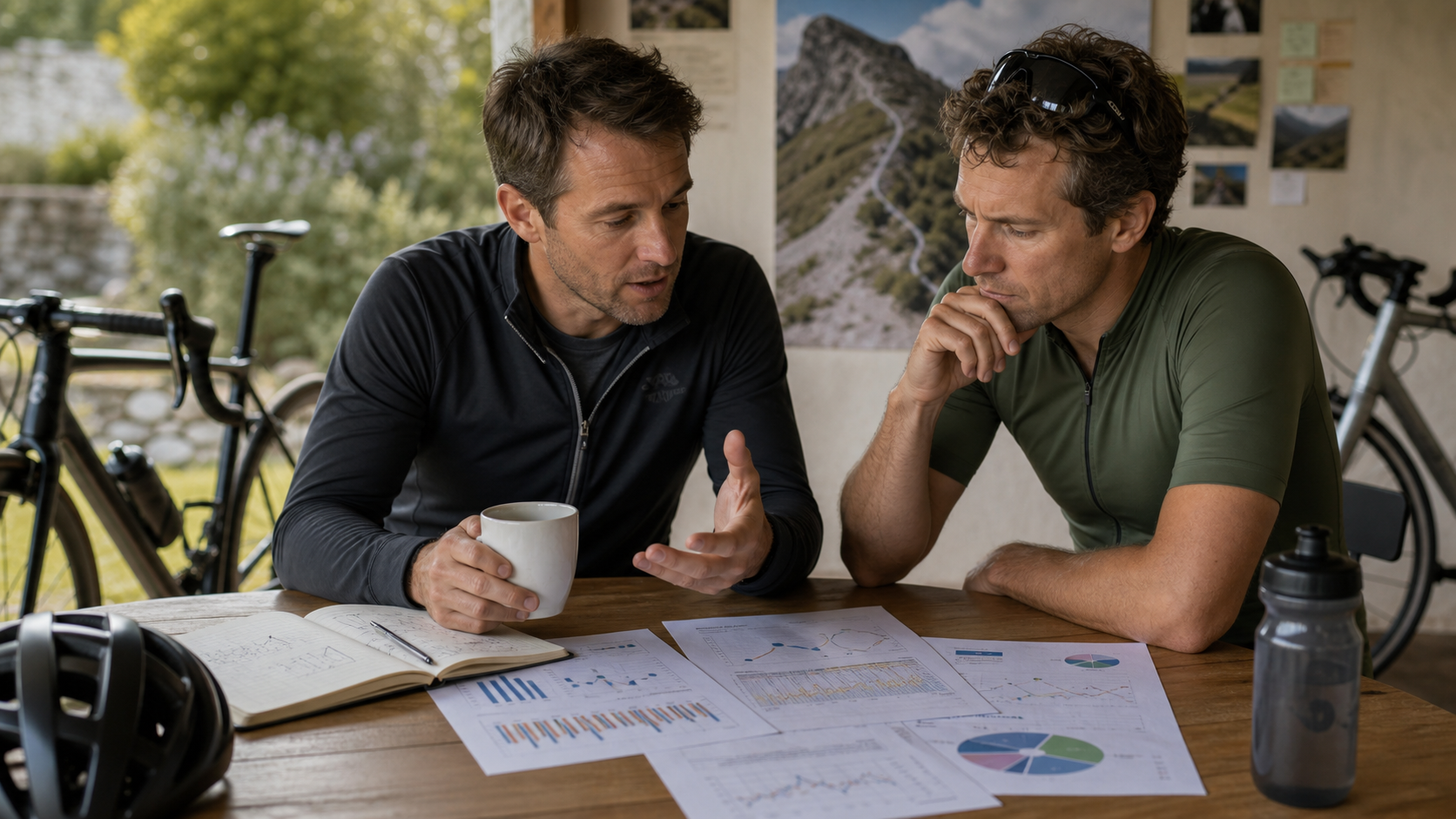
A few years ago, I coached an engineer who worked in the Hsinchu Science Park — let’s call him A-Kai. One day, he sent me a screenshot of a news article with a headline along the lines of “Study Finds: Cyclists Who Drink Coffee Daily Climb Better.” He asked me very seriously, “Coach, so if I down two more Americanos a day, will I finally have a shot at Wuling?”
I laughed. This question was actually excellent, because it hit right on a concept in sports science that is most often misused and most likely to make people waste money and effort — correlation does not equal causation.
Having worked with athletes and general fitness enthusiasts for so many years, I’ve found that the place people get hurt most often isn’t their knees or Achilles tendons — it’s “how they interpret research.” A headline rewritten by the media can make you abandon a training method that actually works, or make you believe in a supplement that does nothing at all. In this article, I want to use a coach’s perspective to help you understand what sports science research is really saying, what you can trust, and what you should take with a grain of salt — so that the next time you see a health headline, you’ll pause and ask a few questions before rushing to change your life.
This will be a bit long, but I promise everything here is practical judgment you’ll actually use. This isn’t about turning you into a statistician; it’s about building a reflex that makes you “pause for one second when you see a health headline.” That one-second pause could save you a lot of wasted money and a lot of unnecessary anxiety. Fill up your water bottle — let’s begin.
Let me start with an observation that left a strong impression on me. Over the years coaching athletes, I’ve noticed that the people who improve fastest and get injured least aren’t necessarily the ones with the most knowledge or the ones who chase the latest research most diligently. Instead, they’re often the ones who “know how to tell which information deserves serious attention and which deserves a chuckle.” They don’t change their training plan today because of one article, only to have it overturned by another tomorrow. That stability comes precisely from judgment — and the starting point of judgment is understanding correlation versus causation.
The Conceptual Foundation: How Correlation and Causation Differ
Let’s start with the core statement: Two things happening at the same time, or changing together, does not mean one caused the other.
Three Situations That “Look Related” but Aren’t Causal
When we see “A and B are related,” besides “A causes B,” there are at least three other common explanations:
- Reverse causation: It’s actually B that causes A, not A that causes B.
- Common cause / confounding: There’s a third factor, C, that causes both A and B, making A and B look like they’re holding hands when in fact each is being led by C.
- Pure coincidence or sampling error: Insufficient data, or just bad luck, makes two completely unrelated things line up numerically.
Let me give you some sports scenarios to make this tangible:
- Reverse causation: A study finds that “people who do more strength training have healthier knees.” Is strength training really protecting their knees? It could also be that “people whose knees were already healthy are the ones willing to do strength training” — people whose knees already hurt would have avoided squats long ago. It’s health choosing behavior, not behavior creating health.
- Confounding: Data shows that “people who wear sports watches have lower body fat percentages.” Does the watch burn fat? Of course not. What’s more likely is that people who spend money on a sports watch are already the kind of people who care more about health, exercise more often, and watch their diet more carefully. The watch is just a marker of “the trait of being exercise-minded,” not a cause.
- Coincidence: A small study might happen to sample a group of people who drink black coffee and also happen to climb fast — but with a different group, the finding wouldn’t hold.
Why Sports Science Is Especially Prone to Pitfalls
Because variables like exercise, diet, sleep, and stress are bundled together in the real world. A person who rides regularly usually also sleeps better, makes more restrained food choices when eating out, and stays up late less often. So when a study says “people who cycle regularly have better cardiovascular health,” it’s very hard to isolate “cycling” and say it’s the sole contributor. This is the inherent limitation of observational studies. According to epidemiological summaries, precisely because most studies are observational in nature rather than experimental, we must rule out several possible “association but not causation” explanations before inferring causality (Health Knowledge).
A Famous Reminder: Absurd Correlations
There’s a classic teaching example in statistics: during a certain period, “ice cream sales” and “drowning deaths” were highly correlated. Does eating ice cream make people drown? Of course not. The real common cause is “summer” — when it’s hot, people both buy ice cream and go swimming. This third variable pushed both up simultaneously, making them look causally linked in the numbers when in fact they have nothing to do with each other.
The sports world is full of these “summer-type” false correlations. For example, “people with higher training mileage get injured more” — is it the mileage’s fault? It could also be that “people who are naturally driven, physically capable, and willing to push hard” both run more and also push their limits more often, leading to injury. The real driver is that invisible “commitment and ambition.” Every time you see a correlation, develop a reflex: first look for the “summer” hiding behind it.
Evidence Strength by Study Type: Not All Studies Carry Equal Weight
Many people don’t realize that the phrase “a study” covers wildly different levels of quality. I often tell my athletes: don’t rush to believe a study — first check what kind it is. The table below is my simplified version, designed for general fitness enthusiasts to understand.
Evidence Strength Comparison of Common Study Designs
| Study Type | Simple Explanation | Can It Infer Causation? | Common Pitfalls |
|---|---|---|---|
| Case report / anecdote | Stories of one or two people, influencer opinions | Almost never | Survivorship bias, placebo |
| Cross-sectional study | Measures A and B simultaneously at one point in time | No | Can’t tell which came first (reverse causation) |
| Cohort study | Follows a group of people for years to see who develops outcomes | Limited, somewhat stronger | Confounders, healthy-user bias |
| Randomized controlled trial (RCT) | Random assignment, controlled variables | Can infer causation more strongly | Small samples, short duration, limited populations |
| Systematic review / meta-analysis | Combines multiple high-quality studies | Strongest | If the original studies are poor, the conclusion is poor too |
Key reminder: Most health news headlines that shock you are actually backed by cross-sectional or observational studies — the levels in the upper half of the table that “cannot infer causation.” What actually changes medical guidelines is usually the RCTs and meta-analyses in the lower half.
Don’t Forget “Survivorship Bias”
Observational research has another sneaky trap called survivorship bias. There’s a classic story from World War II: military inspectors examined the bullet hole patterns on returning fighter planes, intending to reinforce the areas with the most hits. But a statistician pointed out that the areas to reinforce were actually the ones with fewer bullet holes — because planes hit in those areas never made it back. You only saw the “survivors.”
The sports world is full of this bias. “Everyone who’s great using training method X is strong” — you only see the ones who succeeded; those who got injured or quit using the same method are long out of your sight. The same goes for “success stories of diet X” — the failures don’t post photos and check in. So when you see “people who used X are all great,” always add one more thought: where did the people who used X but weren’t great — or even got injured and dropped out — go?
A Practical Rule of Thumb
I teach my athletes a simple mantra: “Was there random assignment?” If the study randomly divided people into two groups (one doing a certain training, one not) and controlled other conditions as much as possible, then the causal strength of the conclusion is much stronger. If it merely “observed people’s existing lifestyles and then looked at who was healthier,” then no matter how impressive the numbers, they can only serve as a reference — not a prescription.
Tools for Causal Inference: How Scientists Determine “This Is Real”
You might ask: does that mean observational studies are useless? Of course not. Important conclusions like smoking causing cancer and prolonged sitting harming health were largely accumulated step by step from observational studies. The key is—the scientific community has a thinking framework to help make judgments.
The most classic is the nine “aspects of association” proposed by Austin Bradford Hill in 1965, later known as the Bradford Hill criteria, one of the most frequently cited causal inference frameworks in epidemiology. It was originally developed from investigating the relationship between smoking and lung cancer (Bradford Hill criteria, Wikipedia).
The Bradford Hill Criteria (Plain-Language Coach Version)
I’ve translated these nine aspects into plain language that anyone can understand, laid out in the table below. You don’t need to memorize it, but once you understand it, your ability to evaluate research will level up immediately.
| Aspect | Plain Meaning | Sports Example |
|---|---|---|
| Strength | The stronger the association, the more credible | Sedentary people’s risk is higher by “a little” vs. “several times” |
| Consistency | Different populations and different studies yield similar results | Data from Taiwan, Europe, and Japan all point to the same conclusion |
| Temporality | The cause must come before the outcome | You start exercising first, then blood pressure drops afterward |
| Dose-response | More leads to a clearer effect (a gradient) | The more days per week you exercise, the lower the risk |
| Plausibility | There’s a physiological mechanism to explain it | Exercise improves insulin sensitivity—that makes sense |
| Reversibility/Experiment | Intervention produces change, which can be verified | Getting people to start exercising actually improves their markers |
Among these, the two I personally find most practical and easiest for self-checking are temporality and dose-response.
- Temporality helps you catch reverse causation: if you can’t tell whether “exercise makes people healthy” or “healthy people are the ones who exercise,” put a big question mark on that association.
- Dose-response helps you judge the authenticity of an association: if a “the more you do, the more pronounced the effect” gradient exists, the odds that the association is real go up.
A Modern Tool: A Brief Introduction to Mendelian Randomization
In recent years, there’s also an advanced method called Mendelian randomization. In simple terms, it uses genes as a “natural random assignment,” because genes are determined at birth and are less influenced by later lifestyle habits, which helps reduce the impact of confounders and reverse causation (PMC article). You don’t need to understand the details—just know that the scientific community keeps inventing smarter methods to get closer to that very difficult answer of “causation.” This also reminds us—if even experts have to be this careful, we should certainly be more conservative when reading headlines.
Common Mistakes and Fixes: The Pitfalls Trainees Fall Into Most
Having coached trainees for many years, I’ve compiled the most common thinking errors people make. See if any of these hit home.
Mistake 1: Treating “Personal Success Stories” as General Rules
“That influencer only ate X and lost 10 kg”—this is an n=1 case, and it may involve selective reporting or other simultaneous changes (eating less, moving more, sleeping better) that weren’t mentioned.
Fix: Treat individual cases as “inspiration,” not “evidence.” If you really want to learn from it, first ask: “Has this approach been validated in multiple people with a control group?”
Mistake 2: Ignoring the “Healthy User Bias”
This is an extremely common confounder in observational studies. People who proactively do something healthy (taking supplements, exercising regularly, getting regular checkups) already have an overall healthier lifestyle to begin with. So “people who take X live longer” may not be thanks to X at all.
Fix: When you see “people who do this healthy behavior are healthier,” ask yourself: “Isn’t it possible that people who were already more health-conscious are the ones who do this in the first place?”
Mistake 3: Being Intimidated by “Significant” and “Relative Risk”
The news loves writing “Risk increases 50%!” But if the original risk was 1 in 10,000, a 50% increase only brings it to 1.5 in 10,000—the actual difference is negligible. This is the difference between relative risk and absolute risk.
Fix: When you see a percentage, follow up with “What’s the original baseline?” Relative numbers are great at misleading; absolute numbers are what actually reflect real life.
Mistake 4: Drawing Big Conclusions from Small Samples and Short-Term Studies
A study with 12 people over 4 weeks can hardly represent where you and I will be a year from now. Training adaptations and health benefits often take months to years to become visible.
Fix: Pay attention to sample size and follow-up duration. As a rough rule of thumb, studies with fewer than a few dozen participants or lasting only a few weeks are worth a glance but not worth changing your life over.
Quick Reference Table: Mistakes and Fixes
| Common Mistake | Question to Ask Yourself | Corrected Attitude |
|---|---|---|
| Believing a single headline | What kind of study is this? Does it have a control group? | Look for systematic reviews or guidelines |
| Being swayed by anecdotal stories | Has it been validated in multiple people? | Treat as inspiration, not evidence |
| Being intimidated by relative risk | What’s the original baseline risk? | Look at absolute risk |
| Ignoring reverse causation | Which came first? | Check temporality |
| Ignoring confounders | Is there a third common cause? | Think about how lifestyle factors cluster together |
Actionable Advice for Readers at Different Levels
After all these concepts, the most important thing is—what you should actually do back in your daily life. I’ll give you concrete action steps based on your level.
If You’re a Beginner Just Starting to Exercise
The last thing you need right now is to change everything based on some study. Honestly, for most people just starting out, “getting moving regularly” is itself the single most impactful step—any fine-tuning comes later.
- Don’t stress over some supplement or a “magic time of day.” First, build the habit of exercising regularly each week.
- When you see a health headline, take a deep breath and ask yourself: “Could this just be correlation, not causation?”
- If you have chronic conditions (high blood pressure, diabetes, heart disease, etc.) or haven’t exercised in a long time, get a physician’s assessment before starting. Individualization matters most.
If You’re an Advanced Athlete
You already have a training foundation and are starting to think about “optimization.” This is where judgment matters even more, because advanced athletes are the easiest to get swept up in various “marginal gain” claims.
- Learn to read the hierarchy of evidence: prioritize RCTs and meta-analyses over single observational studies.
- Use “dose-response” and “temporality” to self-check any new method you want to try.
- Change only one variable at a time and run small experiments on yourself (it’s still n=1, but at least you’re controlling for other conditions).
If You’re a Coach or Team Leader
Your words influence many people, so the responsibility is greater.
- Be honest about limitations when citing research—don’t present observational studies as ironclad rules.
- Stay humble about individual differences among trainees; the same program won’t work equally well for everyone.
- When health and injury are involved, clearly direct people to medical care—don’t overstep into replacing professional treatment.
- Don’t use “a study says” as a sales pitch for courses or equipment—that’s an abuse of trust.
- When a trainee comes to you with an exaggerated headline, treat it as a teachable moment. Walk them through the framework above together—that’s far more valuable than simply dismissing it. What you’re teaching isn’t just an answer; it’s judgment they’ll use for a lifetime.
At the end of the day, the value of a good coach isn’t knowing all the “latest research”—it’s helping trainees sort through the flood of information to tell what deserves serious attention and what’s worth a chuckle. That judgment is often more precious than any single training plan.
A One-Week “Evidence Literacy” Practice Schedule
Here’s a fun little exercise to build your judgment into muscle memory:
| Day | Practice Content | Goal |
|---|---|---|
| Day 1 | Find a health news story and determine what type of study it is | Recognize study types |
| Day 2 | Look for possible reverse causation in the same news story | Practice temporal thinking |
| Day 3 | Identify possible confounding factors (third variables) | Practice finding common causes |
| Day 4 | Convert “relative risk” into an absolute feeling in daily life | Debunk scary numbers |
| Day 5 | Check whether there’s a systematic review on this topic | Find the strongest evidence |
| Day 6 | Ask: does this conclusion apply to “someone like me”? | Practice generalizability judgment |
| Day 7 | Rest, and enjoy a ride without looking at any data | Remember why you started riding |
In Practice: How I Read a Study in Three Minutes
Many trainees think you need to understand statistics to read research. Actually, you don’t. When I quickly scan a study before giving advice, I only do these few things—and you can do them too:
- Look at the design first: Jump to the Methods section and look for words like “randomized,” “controlled,” “cohort,” and “cross-sectional.” Whether there’s randomization and a control group determines the overall strength of the study.
- Look at the sample size and population: How many people? What kind of people? Are the age, sex, and training level similar to yours? A study with only 15 college students is hard to apply directly to a 50-year-old you.
- Look at the follow-up duration: 4 weeks vs. 2 years—the weight of the conclusion differs greatly.
- Look at the effect size: Don’t just look at whether it’s “significant”—look at “how much of a difference.” Statistical significance doesn’t equal practical meaning—a 0.3% improvement might be statistically significant, but you’d never feel it on the bike.
- Look at who funded it: Funding sources and conflict-of-interest disclosures. Industry funding doesn’t mean it’s necessarily fabricated, but it warrants extra caution.
- Look at what the authors themselves say: Good studies honestly list their limitations in the Discussion section. The more absolute the language and the more they avoid mentioning limitations, the more careful you should be.
Once you’re familiar with these six steps, you really can get through them in three minutes. You don’t need to know how p-values are calculated—just asking “Is there a control group, how many people, how long, how big the difference, who funded it, and do they discuss limitations?” can filter out 80% of exaggerated claims.
Statistical Significance vs. Practical Meaning
This point is especially important and deserves its own section. “Statistically significant” only means the difference is unlikely to be pure coincidence—it doesn’t mean the difference is “big enough to matter to you.” With a large enough sample, even trivial differences can become significant. So when you see “significant improvement,” don’t get excited too quickly—ask, “How much did it improve? Is that amount something I’d actually feel in real riding or health?” Separating “significant” from “meaningful” is the intuition advanced readers should most cultivate.
The Taiwan Context: Applying Judgment to Our Daily Lives
These concepts aren’t abstract—they’re especially relevant when applied to life in Taiwan.
Eating out and dietary research: Taiwan has a high rate of eating out. Many overseas dietary studies are conducted on populations with completely different eating patterns, so applying them directly requires a discount. “Mediterranean diet extends lifespan” sounds great, but can we copy that conclusion wholesale into our braised pork rice and fried chicken cutlet environment? The answer is to adapt to local conditions, not take it all at face value.
Climate and exercise: Taiwan’s summers are hot and humid. Many exercise performance studies conducted in temperate climates (e.g., “this training method improves performance”) have limited generalizability to our muggy environment. Thermoregulation and hydration needs are different in heat and humidity—don’t force foreign data onto our situation. A practical reminder: for summer outdoor training, hydration and electrolytes, and avoiding the midday heat—these general principles are more practical than any fancy theory.
Health checkups and medical care: Taiwan’s National Health Insurance is convenient and health checkups are widespread—that’s a good thing, but it also makes “healthy user bias” more pronounced—people who get regular checkups tend to be more health-conscious anyway. So when you see “people who get regular checkups are healthier,” don’t rush to credit the checkup itself. And if you actually have a health concern, medical care is easily accessible under the NHI—please make good use of it, and don’t self-diagnose by matching symptoms online.
Common training venues: Whether you’re on the riverside, in the mountains, or at the gym, when evaluating training advice, remember to ask, “Are the study subjects similar to me in level and environment?” Generalizability is always the first checkpoint.
In-Depth Case Studies: Debunking Three Common Myths
Principles alone are too abstract, so let me walk you through three cases I genuinely encounter again and again with my trainees, going through the full judgment process. You’ll see that once you apply the same thinking framework, the myths quickly reveal themselves.
Case 1: “Cyclists who nap have better training recovery”
This headline is appealing—nappers will probably be happy. But let’s break it down step by step:
Step one, what type of study is this? If it’s just a questionnaire asking “do you nap” plus “how do you feel your recovery is,” that’s cross-sectional and observational—it cannot establish causation.
Step two, reverse causation? Very likely. Think about it—people who already recover well and have a more relaxed life are the ones who can afford to nap; people with poor recovery who are swamped don’t get to nap at all. So is it the nap improving recovery, or does “a relaxed life” produce both napping and good recovery? You can’t tell.
Step three, confounding factors? People who nap may also have more regular routines, better stress management, and greater total sleep. These are all “common causes.”
Coach’s conclusion: Napping may indeed help some people—there’s physiological plausibility (paying off sleep debt, reducing fatigue)—so feel free to try it. But that news headline itself is weak evidence; don’t treat it as an ironclad rule that “if you don’t nap, you’re doomed.”
Case 2: “Cyclists using a certain high-end wheelset have higher average speeds”
This one is funnier, but people really believe it. Equipment manufacturers love this kind of data.
Breakdown: Who can afford high-end wheelsets? Usually veteran riders who are more invested, train more, and have more experience. It’s their legs that make the speed, not the wheels. At most, the wheels provide a tiny marginal difference—the real variable is the “person.” This is a classic confounder—“level of commitment” causes both “buying expensive wheels” and “riding fast.”
Coach’s conclusion: Upgrading equipment is fine, but don’t think swapping wheels equals getting faster based on this kind of data. Spending money on training and rest usually has a better return on investment.
Case 3: “Athletes supplementing with a certain amino acid gained more muscle mass”
Supplement topics require the most caution because commercial interests are often behind them.
Breakdown: For this kind of claim, you have to ask—is it an RCT? Is there a placebo control? How many subjects? How long was the follow-up? Was it industry-funded? Many supplement studies are small-sample, short-term, or even animal- or test-tube-only, yet get marketed as human effects. Moreover, people who diligently take amino acids usually also eat protein diligently and train diligently—healthy user bias again.
Coach’s conclusion: On supplements, my general principle is “get the three pillars of diet, training, and sleep in order before even thinking about supplements.” Most people haven’t reached the stage where they need supplements to squeeze out marginal gains. Treat health claims about supplements with skepticism—better to spend less.
A Quick Reference: Strong Studies vs. Weak Studies
Next time you see a research citation, compare it against this table—you can roughly gauge its strength in five seconds.
| Assessment Aspect | Strong Study | Weak Study |
|---|---|---|
| Design | RCT, meta-analysis | Cross-sectional, case report |
| Sample size | Hundreds to thousands | Single digits to dozens |
| Follow-up duration | Months to years | Days to weeks |
| Control group | Yes, with random assignment | No control group |
| Consistency | Multiple studies across different populations agree | Only this one study |
| Funding source | Independent, publicly disclosed | Industry-funded, undisclosed |
| Tone of conclusions | Conservative, discusses limitations | Exaggerated, claims to cure everything |
This table isn’t meant to turn you into a research reviewer—it’s a “demon-revealing mirror.” The more absolute the headline, the more it claims to “overturn your understanding,” and the more it happens to be selling a product, the more you should hold it up to this table.
Why Even Experts Disagree: Uncertainty in Evidence Is the Norm
Students often ask me: “Why do nutrition and exercise recommendations keep changing—one moment they say don’t eat too many eggs, the next they say it’s fine?”
This isn’t because science is unreliable; it’s because science is inherently a gradual, self-correcting process. Early on, there may only be observational studies, with weak evidence and tentative conclusions; later, as RCTs and meta-analyses accumulate, conclusions are updated and become more robust. When recommendations change, it’s often the result of a higher level of evidence—and that’s a good thing.
So I often remind students of two mindsets:
- Stay flexible with “tentative conclusions”: New observational studies only propose hypotheses; don’t rush to go all in.
- Trust “solid consensus”: Things like “regular exercise benefits health,” “prolonged sitting is harmful,” and “adequate sleep aids recovery” are repeatedly supported by a large body of high-quality evidence and written into guidelines worldwide—follow them with confidence, and don’t be shaken by one anomalous study.
Distinguishing between “tentative hypotheses” and “solid consensus” is the core of evidence literacy. And the difference between the two comes down to the research hierarchy and the Bradford Hill framework discussed earlier.
FAQ
Q: So can I still trust any health advice at all?
A: Of course you can. The point isn’t “doubt everything,” but “trust by levels.” Recommendations consistently supported by multiple high-quality studies and adopted into medical guidelines (e.g., regular exercise benefits cardiovascular health, prolonged sitting is harmful) can be followed with confidence. Conversely, single, observational, or sensationalist studies should be treated as reference only.
Q: Does seeing the words “research confirms” mean it’s credible?
A: No. “Research confirms” is the media’s favorite catch-all phrase, but it doesn’t tell you what kind of study it was, how many people, or for how long. Develop the habit of asking about the source.
Q: Supplement ads often cite research—can they be trusted?
A: Be especially cautious. Many are funded by manufacturers, use small samples, short durations, or even animal or test-tube experiments to claim effects in humans. Supplement topics are particularly prone to exaggeration—take them with a grain of salt.
Q: I tried it myself and it worked—doesn’t that count as evidence?
A: That’s valuable personal experience worth considering, but it’s n=1, and it may be mixed with the placebo effect and other changes you made simultaneously. If it works for you, keep doing it, but don’t rush to tell everyone else to follow suit.
Q: So are RCTs always right?
A: Not infallible either. RCTs have the strongest causal power, but they also have limitations—the sample may not be large enough, the duration may not be long enough, or the participants may differ from you (e.g., all young men, which may not apply to middle-aged women). So when looking at an RCT, you still need to ask, “Are these participants similar to me?”—that’s called generalizability. No single study is absolute truth; the key is always “what does the overall body of evidence say?”
Q: If the news says “correlation,” should I completely ignore it?
A: You don’t need to ignore it entirely. Observational studies are often an important source of hypotheses—many major discoveries started that way. The right mindset is to “treat it as an interesting clue, but not as a conclusion yet,” and wait for stronger evidence before deciding whether to adjust your behavior.
Q: How can I quickly check the credible consensus on a health topic?
A: Rather than reading individual news stories, look for official government exercise/health guidelines or systematic reviews on the topic. These synthesize a large body of research and are far more reliable than scattered headlines. If you’re truly unsure, bring your questions to your doctor or dietitian—don’t draw conclusions on your own.
Conclusion: Be an Athlete Who Isn’t Led by Headlines
Back to A-Kai’s coffee question at the start. My answer to him was: “Caffeine does have some general support for athletic performance. If you drink it in moderation and it doesn’t give you heart palpitations or keep you awake, by all means try it. But the headline ‘coffee drinkers climb faster’ is likely just a correlation—people who love coffee may happen to train more often and be more committed. What actually makes you faster up Wuling is still those old-fashioned but effective things: consistent riding volume, progressive intensity, and adequate rest and sleep.”
He still has his Americano every day, but more importantly, he learned to smile at health headlines first and ask, “Is this correlation or causation?”—a habit worth more than any supplement.
Sports science keeps advancing, and our understanding of the body will keep updating. That’s a good thing—it means we’re getting closer to the truth. Stay open, but stay skeptical; embrace evidence, but recognize its level. When you can distinguish correlation from causation, you’re no longer someone pushed around by media headlines, but a smart athlete making decisions for your own body.
Next time we meet on the riverside path or the mountain roads, remember—move, sleep well, and progress gradually. These old-fashioned things are always the most evidence-based and the ones that will never betray you. Let’s keep at it together.
This article is educational content and does not replace individual diagnosis or treatment advice from a physician, physical therapist, or dietitian. If you have a chronic condition (such as diabetes, hypertension, heart disease, etc.) or physical discomfort, please seek medical attention and receive individualized assessment.
References
- Health Knowledge, Association and Causation: https://www.healthknowledge.org.uk/public-health-textbook/research-methods/1a-epidemiology/association-causation
- Bradford Hill criteria, Wikipedia: https://en.wikipedia.org/wiki/Bradford_Hill_criteria
- Using allele scores to identify confounding by reverse causation (PMC): https://pmc.ncbi.nlm.nih.gov/articles/PMC10114122/
Related Reading
- The Reproducibility Crisis in Sports Science: One Study Doesn’t Decide Everything—How Coaches and Athletes Should Read the Literature
- An Introduction to Sports Science Research Methods: How to Read a Paper (A Coach’s Guide to Seeing Through the Words “Research Confirms”)
- Coffee and Athletes: More Than Just Caffeine—A Holistic Look at Ingredients, Timing, and Sleep
- Caffeine Supplementation Guide: How to Get Dose, Timing, and Sources Right? A Coach Helps You Drink It Right
一日北高/長距離團騎 常見問題補充篇 / 組團或跟團的眉角 / 壯車友容易被瘦車友慢性拉爆 / 原來屁股痛可能是這個原因...? / 風場配速法 / 公路車 / CT Yeh
2 年前
靠單車減肥35公斤 心得分享與整理
7 年前
一日北高常見問題大集合 | 攻略 | 路線 | 訓練 | 補給 | 自行車 單車 | 一日雙城 | 雙塔 | TWB北高360 | 屁股痛
6 年前
CT 喇低賽) 武嶺牽車 才是王道 西進牽車四小時內秘訣 攝手位置 如何判斷 防抽筋小秘訣
7 年前
2025 自行車錶排行榜 兩萬車友大數據 / Garmin Bryton 排名會大洗牌嗎? / 全新的碼表前身分析 /公路車 / CT Yeh
1 年前
單車AI教練!全新 ChatGPT4o 幫你分析訓練成果!排武嶺課表,分析騎車姿勢! 太神了! / 公路車 / CT Yeh / feat. 緯緯
2 年前
西進武嶺 免費訓練分析服務 Intervals | 練不夠還是練過頭?你哪一種類型選手?AI模型告訴你! | 備戰神器 | 公路車 訓練 | CT Yeh
4 年前
下次拍照前要查清楚啦🤣 #cycling
7 個月前