The Dose-Response Relationship of Exercise: How Much Is Enough, How Much Is Too Much—A Coach Uses a Dose Curve to Help You Find the Sweet Spot
Opening: The Student Who Got More and More Tired
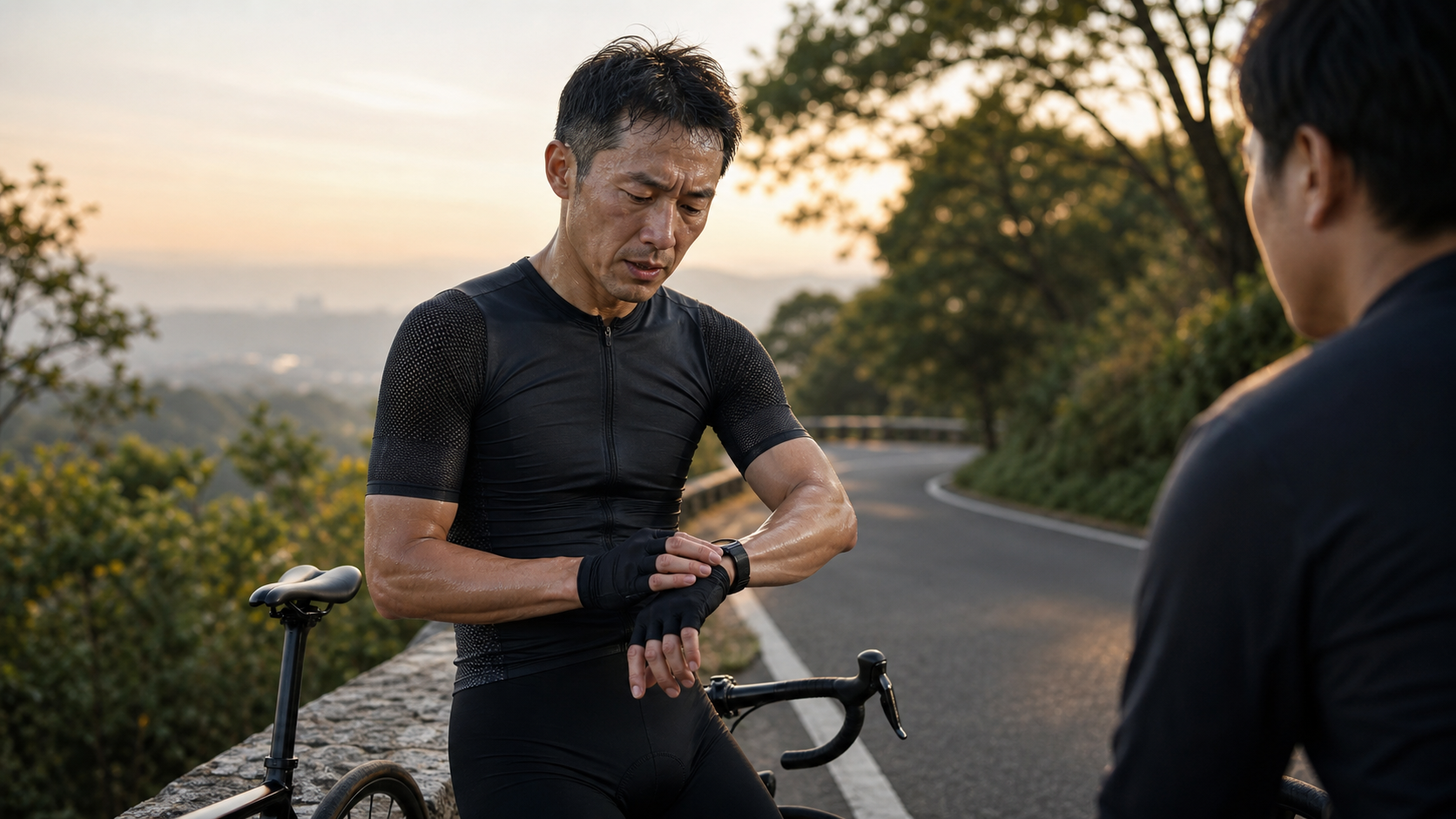
In fifteen years of coaching athletes and the general public, I’ve met all kinds of people, but there’s one case I’ll never forget. His surname was Chen, forty-two years old, working in the Hsinchu Science Park. When he came to see me, he looked anxious: “Coach, I’m really dedicated. I ride an hour and a half every day, and on weekends I push it to over 100 km. So why is my weight stuck, my climbing power going backwards instead of forwards, and my morning heart rate getting higher the more I sleep?”
I looked at two weeks of his records, and the answer was written in the numbers. He was pushing himself in the moderate-to-high intensity zone every single day, rest days were essentially zero, average sleep was barely over five hours, and his resting heart rate had climbed from an original 52 bpm all the way to 61 bpm. He wasn’t training too little—he was training too much and recovering too little. When I cut his weekly training volume by a third and forced him to take two completely rest days per week, his climbing power came back within a month, and his morning heart rate dropped back to around 54 bpm.
This case is exactly what this article is about: exercise has a “dose-response relationship.” It’s like taking medication or supplementing nutrition—it’s not “the more the better,” but rather a curve—too little has no effect, moderate amounts maximize the benefit, and excess actually harms you. In this article, I want to lay out that curve clearly so that whether you’re a complete beginner, an advanced athlete looking to break through, or a fanatic already burning your life training for ultramarathons, you can find your own sweet spot.
I still remember the first time Mr. Chen came in, handing me his phone to show me his training app—the screen was a dense patch of red high-intensity records, like battle merits. He was proud of it, feeling he was “pushing hard enough.” But what I saw was a body soaked in stress hormones for a long time, never given the chance to repair. At that moment, I realized that many dedicated exercisers don’t lack willpower—what they lack is a correct understanding of “dose.” And to understand dose, you first have to understand how the body responds to exercise stress.
Conceptual Foundation: What Is a “Dose-Response Relationship”
A Concept Borrowed from Pharmacology
“Dose-response” originated as a concept in pharmacology and toxicology. The same substance, at different doses, produces wildly different effects: one painkiller can relieve a headache, ten can damage the liver. Exercise physiology borrowed this framework to describe the relationship between “exercise volume” and “health/performance benefits.”
The “dose” of exercise is typically made up of three dimensions, which I often have students memorize as the FIT trio:
- Frequency: How many times per week you train
- Intensity: How hard you’re breathing and working (measured by heart rate, power, pace, or perceived exertion)
- Time: How long each session lasts
Multiply the three together, and you roughly get your total training load. The “response,” meanwhile, might be improved cardiorespiratory fitness, reduced body fat, better blood pressure, improved mood—or it might be fatigue, injury, or a suppressed immune system. The same exercise can respond in either direction, depending on where the dose falls on the curve.
Three Common Shapes of the Dose Curve
Not all benefits follow the same curve. This is where many people get confused. Let me break it down into three typical shapes for you:
| Curve Shape | Plain Meaning | Typical Benefits Represented |
|---|---|---|
| Increasing with a ceiling | More is better, but it plateaus at a certain point | Cardiorespiratory endurance, VO2 max, muscular strength |
| U-shaped / reverse J-shaped | Moderate is best; too little or too much is not ideal | All-cause mortality, certain cardiovascular risks |
| Steep rise then saturation | A little goes a long way, then diminishing marginal returns | Initial health improvements in sedentary people, mood and psychological benefits |
This table is worth pausing on for three seconds. It explains a seemingly contradictory phenomenon: why “a bit more exercise” is life-saving for a sedentary person, yet can be a burden for someone already training at high volume. Because they’re standing at different points on the curve.
How the Body Responds to Exercise Stress: The Supercompensation Principle
To understand the dose curve, you first need to understand a mechanism called supercompensation. This is the underlying logic of all training adaptation, and I draw this diagram for almost every new student I take on.
The process has four stages:
- Apply stress: A training session temporarily lowers your current performance—muscle micro-damage, glycogen depletion, fatigue accumulation.
- Recovery: After training, the body begins repairing, restoring the damage.
- Supercompensation: This is the key. The body doesn’t just bring you back to baseline—it “over-compensates,” making you slightly stronger than before training, to be ready for the same stress next time.
- Detraining: If no new stimulus comes for too long, that “extra strength” gradually fades away.
The art of training is to apply the next stimulus at the peak of supercompensation. Too early (training before recovery is complete) → fatigue piles up deeper and deeper, falling into overtraining; too late (waiting until supercompensation has faded) → spinning your wheels. This diagram tells us one thing: dose isn’t just about “how much,” it’s also about “the interval between doses.” Recovery isn’t the opposite of training—recovery is part of training.
Mr. Chen’s problem becomes crystal clear with this diagram: he applied stress every day but never left room for recovery, essentially stuck forever between stages one and two, so supercompensation never had a chance to occur. He wasn’t lacking effort—he was pushing at the wrong time.
The Scientific Foundation: The Curve That’s “More Valuable at the Lower End”
Segment One: From Zero to Something—The Highest Return
If you ask me which segment of the exercise dose has the best “cost-performance ratio,” I’ll say without hesitation: going from completely inactive to regularly moving a little. This segment has the steepest health return on the entire curve.
The World Health Organization (WHO) updated its physical activity guidelines in 2020, recommending that adults accumulate 150 to 300 minutes of moderate-intensity aerobic activity per week, or 75 to 150 minutes of vigorous-intensity aerobic activity, or an equivalent combination of the two; in addition, adults should do muscle-strengthening activities targeting major muscle groups on two or more days per week (source listed at the end).
Note one easily overlooked point here: the 2020 version specifically provides a range (150–300 minutes) rather than just a minimum threshold like the old version. The message behind this change is—doing a bit more (up to 300 minutes) still brings additional benefits, but the key is first crossing that 150-minute line. For someone who was completely inactive before, simply accumulating 150 minutes of brisk walking per week produces a massive leap in health benefits.
I often use this analogy with students: going from 0 to 60 points takes only a little effort; pushing from 90 to 95 points is the real blood and sweat. The health benefits of exercise work the same way—the front end is the easiest to gain.
Another case I remember vividly was the exact opposite of Mr. Chen’s. A woman in her fifties, Ms. Lin, had been sedentary for years and barely exercised. A check-up full of red flags scared her into coming to see me. I gave her no complicated program—I only asked her to “brisk-walk for twenty minutes after meals every day,” plus two simple sessions of squats and wall push-ups per week. Three months later, her blood pressure, blood sugar, and energy had all improved across the board, and she seemed brighter too. She asked me: “Coach, does this even count as training? It’s too easy!” I told her: “You’re standing at the steepest point of the entire curve. That little bit of dose is buying you health returns that Mr. Chen couldn’t buy even by killing himself.” Put these two cases side by side, and you have the most vivid lesson in dose-response relationships—the same one hour of exercise means vastly different things to different people.
Section 2: Moderate to High Volume — Diminishing Returns, but Still Positive
Once you pass the basic threshold, continuing to increase your training volume will still lead to continued improvements in cardiorespiratory fitness and metabolic health, but the “benefit gained per additional unit of effort” gradually shrinks — what economists call diminishing marginal returns. For those pursuing athletic performance (such as beating your personal best on a century ride or finishing a full marathon), this stage is a necessary path, because performance gains genuinely require higher training volume and intensity stimuli.
Here, I want to say a fair word for “high-volume training”: in recent years, some studies have challenged the notion that “excessive exercise is necessarily harmful,” pointing out that even very high activity levels are not necessarily associated with increased mortality risk, and that exercise intensity may play a more critical role in reducing cardiovascular disease mortality than sheer “total volume” alone (source at the end of the article). So this article isn’t meant to scare you into “not training too much,” but rather to help you understand that the focus of this stage gradually shifts from “health” to “performance,” and it must be supported by recovery.
Section 3: The “Too Much of a Good Thing” Debate at Extremely High Volumes
This is the most talked-about and most easily taken-out-of-context section.
One large observational study tracking over 50,000 adults for approximately 15 years found that people who ran had an all-cause mortality rate about 19% lower than non-runners; however, across running distance, pace, and frequency, a U-shaped mortality curve was observed — roughly speaking, those who ran about 1 to 20 miles per week (approximately 1.6 to 32 km), at a moderate pace, 2 to 5 days per week, had the lowest mortality; beyond that, with higher mileage, faster pace, and more frequent training, that “protective effect” no longer increased and even diminished (source at the end of the article).
I want to be very honest with you about two things:
- This is an observational study; it cannot directly establish causation. The extremely high-volume group may inherently possess other traits or health conditions, so you can’t simply say “running too much will kill you.”
- The academic community is still debating this. Some newer analyses suggest that extremely high activity levels do not significantly raise mortality risk. This is a field that is not yet settled.
So my practical stance is very pragmatic: for the vast majority of people who exercise for health, you will never reach that controversial extreme zone. What you should really worry about isn’t “too much total volume,” but rather “stacking intensity and volume too quickly without adequate recovery” — that’s the breeding ground for injury.
Different Benefits, Different Optimal Doses
Here, I want to break a common myth: there is no single “one-size-fits-all optimal exercise dose.” Because the goals you’re pursuing differ, the optimal dose will land in different places. Let me use a table to make it clear (these are general directions, not precise prescriptions):
| Benefit You Want | Dose Curve Characteristics | Practical Target |
|---|---|---|
| Lower all-cause mortality | Steep rise early, plateau later (with a possible U-shaped debate) | Reaching and slightly exceeding 150 minutes per week captures most of the benefit |
| Improve blood pressure / blood sugar | Regular, moderate intensity works well | Frequency matters more than single-session intensity; spread across multiple days |
| Improve VO₂ max | Requires higher intensity stimuli | Moderate amounts of high-intensity intervals, but paired with recovery |
| Mental health / stress relief | Saturates quickly after a steep rise; threshold is very low | A few outdoor sessions per week at low-to-moderate intensity show clear effects |
| Athletic performance (racing) | Requires high volume + high intensity + periodization | Enters the diminishing returns zone; recovery management is the key to success |
| Bone density and muscle mass | Requires weight-bearing / resistance stimuli | Strength training is essential in addition to cardio |
Once you understand this table, you’ll see why I often say: decide what you want first, then decide how much to train. An office worker who just wants to stay free of chronic disease and a runner chasing a marathon PB have optimal doses that differ by several-fold — if the two copied each other’s training plans, both would run into problems.
Practical Methods: How to Determine Your Own Dose
Now that the science is covered, let’s get to something you can use right away. These are the tools I actually use when coaching my athletes.
Tool 1: Use the “Talk Test” to Gauge Intensity
No heart rate strap, no power meter? No problem. The oldest and most effective method is the talk test:
| Intensity Zone | Speaking State | Approx. Rate of Perceived Exertion (RPE 1-10) | Suitable Scenarios |
|---|---|---|---|
| Easy (Zone 1-2) | Can chat comfortably; singing is slightly challenging | 3-4 | Recovery rides, long endurance base, warm-ups |
| Moderate (Zone 3) | Can speak short sentences, but not long monologues | 5-6 | The mainstay of what the WHO calls “moderate intensity” |
| High (Zone 4) | Can only blurt out a few words | 7-8 | Intervals, threshold workouts |
| Very High (Zone 5) | Barely able to speak | 9-10 | Short sprints, VO₂ max intervals |
Taiwan’s summers are hot and humid, making perceived exertion higher than in dry, cool weather — at the same pace, your heart rate will be higher and you’ll be more breathless. So using “speaking state” rather than staring at your pace is actually safer and more reflective of your true physiological load in Taiwan’s muggy environment.
Here’s a common pitfall Taiwanese athletes often fall into: a hot, humid environment is itself an additional “dose.” The same century ride, done at 32°C with 80% humidity, exacts a far greater physiological toll on your body than in cooler weather. Spiking heart rate, dehydration, electrolyte loss — these are all additional stressors. So when training in Taiwan during the summer, I usually advise my athletes to drop their intensity target down one notch — better to go a bit slower than to risk heat exhaustion. Heading out in the early morning or evening and carrying enough water and electrolytes are basic practices for keeping the “heat dose” within a safe range.
Tool 2: The 80% Easy, 20% Hard Split
The biggest problem for many amateurs isn’t training too little, but rather doing “moderately hard” sessions every single time — too tiring to recover from, yet not hard enough to provide a clear stimulus. This is the “gray zone trap.”
Endurance sports have a widely adopted principle: spend roughly 80% of your training time in the easy zone and 20% at high intensity. Easy days should be genuinely easy — almost “boringly” so — and hard days should be all-out. This polarized distribution allows you to accumulate training volume while preserving recovery.
Tool 3: Use a Weekly Framework to Fit the Dose In
Here are three sample frameworks for different levels (time in minutes). Please adjust according to your own situation — these are not prescriptions:
| Profile | Weekly Aerobic Volume | High-Intensity Days | Strength Days | Complete Rest Days |
|---|---|---|---|---|
| Complete beginner | 150 minutes (split into 5 sessions of brisk walking / easy riding, 30 min each) | 0 (build the habit first) | 1-2 days (bodyweight exercises) | Rest whenever needed |
| Regular exerciser | 200-300 minutes | 1-2 sessions (30-45 min each) | 2 days | At least 1-2 days |
| Advanced / race preparation | 6-10+ hours | 2-3 sessions | 2 days | At least 1 day (non-negotiable) |
Please pay attention to the far-right column. A complete rest day isn’t laziness; it’s part of the training. When I work with advanced athletes, the most common intervention I make isn’t “adding more workouts” — it’s “helping them protect their rest days.”
Using the “regular exerciser” as an example, a typical weekly blueprint I give looks something like this (shift the days to fit your schedule):
| Day | Content | Intensity |
|---|---|---|
| Monday | Complete rest or easy walk | Recovery |
| Tuesday | 45 minutes of aerobic work | Low-to-moderate (can chat) |
| Wednesday | High-intensity intervals, 30-40 minutes | High (can only blurt out a few words) |
| Thursday | Strength training | Moderate |
| Friday | Complete rest | Recovery |
| Saturday | Long, easy ride / run | Mostly low-to-moderate |
| Sunday | Strength training or easy activity | Low-to-moderate |
You’ll notice that in this table, there are really only one or two genuinely “hard” days; the rest are easy or recovery. This is exactly what the “80% easy, 20% hard” principle looks like in a real week. Many people’s first reaction to this table is: “Isn’t this too little?” — and that’s precisely the dose myth at work. A week that looks easy, accumulated over the long term, often produces more steady and lasting progress than someone who grinds hard every single day.
Tool 4, Part 2: Periodization—Letting the Dose Rise and Fall Over Time
If you’re preparing for a race, having just a “weekly distribution” isn’t enough. You need the concept of periodization: letting your training dose rise and fall in a planned way across weeks, months, or even the entire season.
The simplest and most effective model is the “three weeks up, one week down” cycle:
| Week | Relative Training Load | Purpose |
|---|---|---|
| Week 1 | Moderate | Build a foundation |
| Week 2 | Moderate-to-high | Accumulate stimulus |
| Week 3 | High | Apply maximum stress |
| Week 4 | Significantly reduced (about 60%) | Deload, allow supercompensation to occur |
This “three steps forward, one step back” rhythm gives your body the chance to convert the fatigue accumulated over the first three weeks into tangible progress. A deload week isn’t wasted time—it’s the step where you “cash in” on your training gains. I’ve seen too many people who only know how to add and never how to subtract, spending the entire season in a state of semi-fatigue and ending up with dead legs on race day. Truly smart training knows when to “take a step back.”
Tool 4: Quantifying Recovery Too
The dose-response relationship isn’t just about “how much exercise you put in”—it’s also about “how much your body absorbs.” I ask my athletes to spend thirty seconds every morning recording three things:
- Morning resting heart rate: If it’s consistently 5-7 bpm or more above your normal baseline for several days, it’s usually a sign of insufficient recovery or an impending cold.
- Sleep duration and quality: Not getting enough sleep is like throwing your training gains into the water. Under Taiwan’s overtime culture, this is often the first thing sacrificed—and the one thing you should protect the most.
- Subjective feeling: Rate on a scale of 1 to 10 how much you feel like training today and how heavy your legs feel. Consistently low scores mean it’s time to cut back.
These three indicators pair with a phrase I often use: “What makes you stronger isn’t the workout itself, but the recovery that follows it.”
Tool 5: Recognizing the Body’s Warning Signs of “Overdose”
Overtraining doesn’t happen overnight; it comes with a series of signals that progress from subtle to severe. I’ve organized these into a “traffic light” system to help athletes self-monitor:
| Light | Common Signs | What to Do |
|---|---|---|
| Green (normal fatigue) | Legs are a bit sore the day after training, but you recover after a good night’s sleep; morning heart rate is stable | Train as usual |
| Yellow (functional overreaching) | Feeling heavy for several days, performance slightly drops, morning heart rate slightly elevated, sleep quality worsens | Proactively reduce volume for 2-3 days, sleep more and eat more |
| Red (signs of overtraining) | Performance keeps declining, low mood, irritability, disrupted appetite and sleep, recurring minor colds, unexplained injuries | Stop high-intensity work, schedule a longer recovery period, and see a doctor if necessary |
I want to emphasize the yellow light in particular. Most people’s problem isn’t that they don’t recognize the red light—it’s that they push through the yellow light anyway. The yellow light is your body’s most considerate reminder—hitting the brakes here costs the least. If you push all the way to the red light before dealing with it, you’ll often need weeks of time off to pay off the debt. Mr. Chen ignored weeks of yellow lights, and that’s exactly how he ended up with a full-blown performance decline.
One honest observation: many passionate cyclists in Taiwan love to “rally the group for big mileage” on weekends, and the social atmosphere makes it hard to admit you’re tired. But your body doesn’t get stronger just because others are riding. Learning to honestly acknowledge your own light during group rides is one of the most important lessons for advanced riders.
Common Mistakes and Corrections
After all these years of coaching, I’ve compiled the most common dosing errors into a “symptom—cause—prescription” table:
| Common Mistake | Underlying Cause | My Suggested Fix |
|---|---|---|
| Weekend warrior: sedentary all week, then a 100+ km blowout on the weekend | Cramming the entire week’s dose into two days, causing an acute overload spike | Spread the volume across the week; reduce weekend volume, increase frequency |
| Grinding through moderate intensity every day | Stuck in the gray zone, insufficient recovery | Switch to 80% easy, 20% hard |
| Increasing training volume by more than 30% in one week | Mileage/time ramps up too fast, tissues can’t adapt | Keep weekly increases to around 10%, and schedule deload weeks |
| Only doing aerobic work, no strength training at all | Ignoring WHO’s strength recommendations | Do strength training two days a week to protect joints and bone density |
| Never taking complete rest | Mistakenly believing rest causes regression | Take at least 1-2 completely rest days per week |
| Training through injury, masking pain with painkillers | Treating pain signals as weakness | If pain lasts more than a few days or affects movement, see a doctor |
A Special Note on the “Acute-to-Chronic Workload Ratio”
Sports science has a concept that’s intuitively very useful: compare your “training load from the most recent week (acute load)” to your “average training load over the past month or so (chronic load).” When your most recent week is far above what you’ve been habitually doing, your injury risk goes up. This is why “progressive overload” isn’t just a cliché—it’s a guardrail that protects you.
In practice, the rule of thumb I give is simple: “If you want to add volume this week, first ask yourself whether your foundation from the past month can support it.” Someone with a thin foundation who piles on volume is like building a third floor without a foundation.
Two Practical Reminders for the Taiwan Context
Eating out and fueling: Taiwan’s food scene is convenient, but it’s also easy to lose control when “replenishing” after a ride. I’ve seen athletes burn 2,500 kcal on a 100 km ride, then eat a large portion of it back—plus extra—with a bowl of braised pork rice and a bubble tea on the way home. Your training dose needs to be right, but so does your dietary dose—both are dose-response relationships. Exercise isn’t a “license to eat whatever you want.”
The healthcare environment: Taiwan’s National Health Insurance and sports medicine/rehabilitation resources are relatively accessible. If you experience chest tightness, unexplained palpitations, unusual shortness of breath during exercise, or persistent joint swelling and pain, take advantage of this environment and see a doctor. Don’t just brush it off with “I’ll rest a few more days.” Especially if you have a history of chronic conditions like hypertension, hyperlipidemia, diabetes, or heart disease, you must discuss with your physician and get an individualized assessment before starting a new exercise program.
Actionable Advice for Readers at Different Levels
If You’re a Complete Beginner or Sedentary Office Worker
You’re standing at the point on the curve with the highest return on investment—congratulations. Your job isn’t to train hard; it’s to get moving and build the habit first.
- Goal: Accumulate 150 minutes of moderate-intensity activity per week, broken into 20-30 minute sessions if needed.
- Start at a “conversational pace”—brisk walking, easy YouBike rides, or swimming all work.
- Don’t chase 100 km or long distances from day one. Frequency matters more than single-session volume.
- If you have a chronic condition or haven’t exercised in a long time, see a doctor once before you start.
If You’re a Regular Exerciser Looking to Improve
You’ve already passed the health threshold. The next step is using structure to gain efficiency.
- Introduce polarized training: 80% easy, 20% hard.
- Schedule 1-2 truly high-intensity sessions per week (intervals, threshold work); keep the rest easy.
- Add two days of strength training per week to protect joints and boost metabolism.
- Protect at least one full rest day, and start tracking your morning heart rate and sleep.
If You’re an Advanced/Race-Prep High-Volume Athlete
Your risk isn’t “not doing enough”—it’s “recovery not keeping up with the volume.”
- Use progressive overload to control weekly increases, and schedule regular deload weeks (e.g., a light week every 3-4 weeks).
- Manage recovery as a “training” discipline: sleep, nutrition, and rest days—none are optional.
- If you see several consecutive days of elevated morning heart rate, declining performance, low mood, or unexplained injuries, that’s your body telling you to stop—proactively cut back.
- Get regular health checkups. If you experience any cardiovascular-related symptoms, see a doctor immediately. Don’t convince yourself with “I’m healthy.”
Frequently Asked Questions (FAQ)
Q: Is walking only ten minutes a day meaningful?
Yes, and it’s very meaningful. For sedentary people, any activity that goes from zero to something is on the steepest part of the curve. Accumulated “fractional doses” still count—you don’t have to insist on completing a full 30 minutes in one continuous session.
Q: Should I aim for “the more out of breath, the better”?
No. Intensity is a double-edged sword: moderate amounts of high-intensity work can efficiently boost cardiorespiratory fitness, but doing high intensity every day will leave you with poor recovery and stuck in the gray zone. Intensity should be “concentrated firepower,” not “evenly spread out.”
Q: Will taking a rest day cause me to regress?
Short-term, regular rest will not make you regress—it’s actually the key to letting your training “grow in.” What truly makes you regress is excessive fatigue, injury, and long-term detraining.
Q: I have high blood pressure/diabetes. Can I follow this article’s training plan?
This article provides general principles, not a prescription tailored to you. For people with chronic conditions, the type and intensity of exercise, as well as the interactions between medication and exercise, all require individualized assessment. Please be sure to discuss this with your physician first. For example, taking certain blood pressure medications can affect your heart rate response during exercise, making “using heart rate to gauge intensity” unreliable. Blood sugar fluctuations during exercise for diabetics also require professional guidance. These are not things a web article can replace—individualized assessment is very important.
Q: I can only squeeze in two or three sessions a week. Is there still hope?
There is absolutely hope. Research and guidelines all support one thing: consistency matters more than perfection. Rather than planning a perfect six-day-a-week program you can never stick to, it’s better to realistically achieve three sessions a week. Spend your limited dose in the right places—mostly easy, a little high-intensity, plus some strength work. Accumulated over the long term, the results far surpass a short-lived burst of high-intensity training.
Q: I’m getting older. Do I need to adjust the dose?
Yes, but the direction may be different from what you think. As you age, the relative importance of strength and balance training rises, because they protect you from falls and help you maintain independent living. You should still do aerobic work, of course, but don’t neglect strength. At the same time, older adults typically need longer recovery, so you should widen the “interval between sessions.” This is also part of the dose-response relationship.
Q: Can I just do strength training and skip cardio?
The benefits of the two don’t fully overlap. Strength training is great for muscle, bone, and metabolism, but improvements in cardiorespiratory endurance mainly come from aerobic work. The WHO recommends both—this isn’t an either/or choice, but a complementary one. The ideal dose is to fit both types of stimuli into your week.
Conclusion: Find Your Own Sweet Spot
Back to Mr. Chen from the opening. He later told me with a smile, “So I wasn’t training too little—I just didn’t know how to rest.” I’d like to give that sentence to every serious athlete.
The dose-response relationship of exercise, at its core, is a form of humility—acknowledging that the body has its own rhythm, acknowledging that “more” doesn’t equal “better,” and acknowledging that recovery is just as important as training. Too little, and you won’t receive the health gifts exercise offers; too much without enough recovery, and you’ll trade those gifts for fatigue and injury. The true master isn’t the one who trains the most, but the one who knows best how to give the body the right dose at the right time.
Wherever you are on the curve today, may you find your own sweet spot—not too much, not too little, just right—and keep moving for the long haul.
Finally, I’ve condensed the core of this entire article into a one-page cheat sheet. Stick it on your fridge or save it to your phone:
| Core Concept | One-Line Takeaway |
|---|---|
| Dose-response | Exercise isn’t about more being better; there’s a curve |
| Biggest gains up front | Going from zero to something yields the highest health returns; first cross 150 minutes per week |
| Recovery is training | What makes you stronger is the recovery after your sessions, not the sessions themselves |
| 80% easy, 20% hard | Avoid the gray zone; concentrate intensity rather than spreading it out |
| Progress gradually | Increase weekly volume by about 10%; schedule deload weeks |
| Listen to your body’s signals | Yellow light means cut back; don’t push through to the red light |
| Set goals before setting doses | The benefits you want determine how much you should train |
The road of exercise is long. No one builds health and fitness from one week of explosive volume. What truly carries you to the destination is one just-right dose after another, accumulated day by day. Slow and steady wins the race. See you on the road.
This article is educational content and cannot replace individual diagnosis and treatment advice from a physician, physical therapist, or nutritionist. If you have a chronic condition or experience discomfort during exercise, please seek medical attention promptly.
References
- WHO guidelines on physical activity and sedentary behaviour (World Health Organization 2020 physical activity guidelines): https://www.who.int/europe/publications/i/item/9789240014886
- World Health Organization 2020 guidelines on physical activity and sedentary behaviour (guideline summary, PMC): https://pmc.ncbi.nlm.nih.gov/articles/PMC7719906/
- Potential Adverse Cardiovascular Effects From Excessive Endurance Exercise (discussion on very high-volume endurance exercise and cardiovascular health, PMC): https://pmc.ncbi.nlm.nih.gov/articles/PMC3538475/
- The Relationship Between Exercise and Longevity: Challenging the U-Shaped Hypothesis (challenge to the U-shaped hypothesis, American College of Cardiology): https://www.acc.org/latest-in-cardiology/articles/2025/07/02/15/19/the-relationship-between-exercise-and-longevity
Related Reading
- The Dose-Response of Exercise and Longevity: How Much Is the Best Value? Can Overtraining Really Harm You?
- Exercise and Immunity: Moderate Is Best—A Coach’s Guide to the J-Curve and the “Open Window”
- Recognizing and Recovering from Exercise Burnout: A Coach’s Guide to Reading Your Body’s Distress Signals
- Exercise and Appetite: Why Are You Sometimes Hungrier After Training, and Sometimes Not Hungry at All?
西進武嶺 免費訓練分析服務 Intervals | 練不夠還是練過頭?你哪一種類型選手?AI模型告訴你! | 備戰神器 | 公路車 訓練 | CT Yeh
4 年前
一個測試有沒有認真練車的方法😂 #公路車
10 個月前
#雙崎部落 單車挑戰賽 心跳破200 #公路車 Neko's Fun
6 年前
一日北高/長距離團騎 常見問題補充篇 / 組團或跟團的眉角 / 壯車友容易被瘦車友慢性拉爆 / 原來屁股痛可能是這個原因...? / 風場配速法 / 公路車 / CT Yeh
2 年前
4K 東眼山 x 水蜜桃冰沙 百人單車約騎! 操完再吃冰 多爽快
7 年前
2016/4/20 - 中社路 夜騎 半年甩肉14KG 後測
10 年前
靠單車減肥35公斤 心得分享與整理
7 年前
#公路車 #Fitting 靠人工智慧APP 幫你調整單車
6 年前