Exercise and Telomeres: Can Pedaling Produce Younger Cells? A Scientific Look at Exercise and Anti-Aging
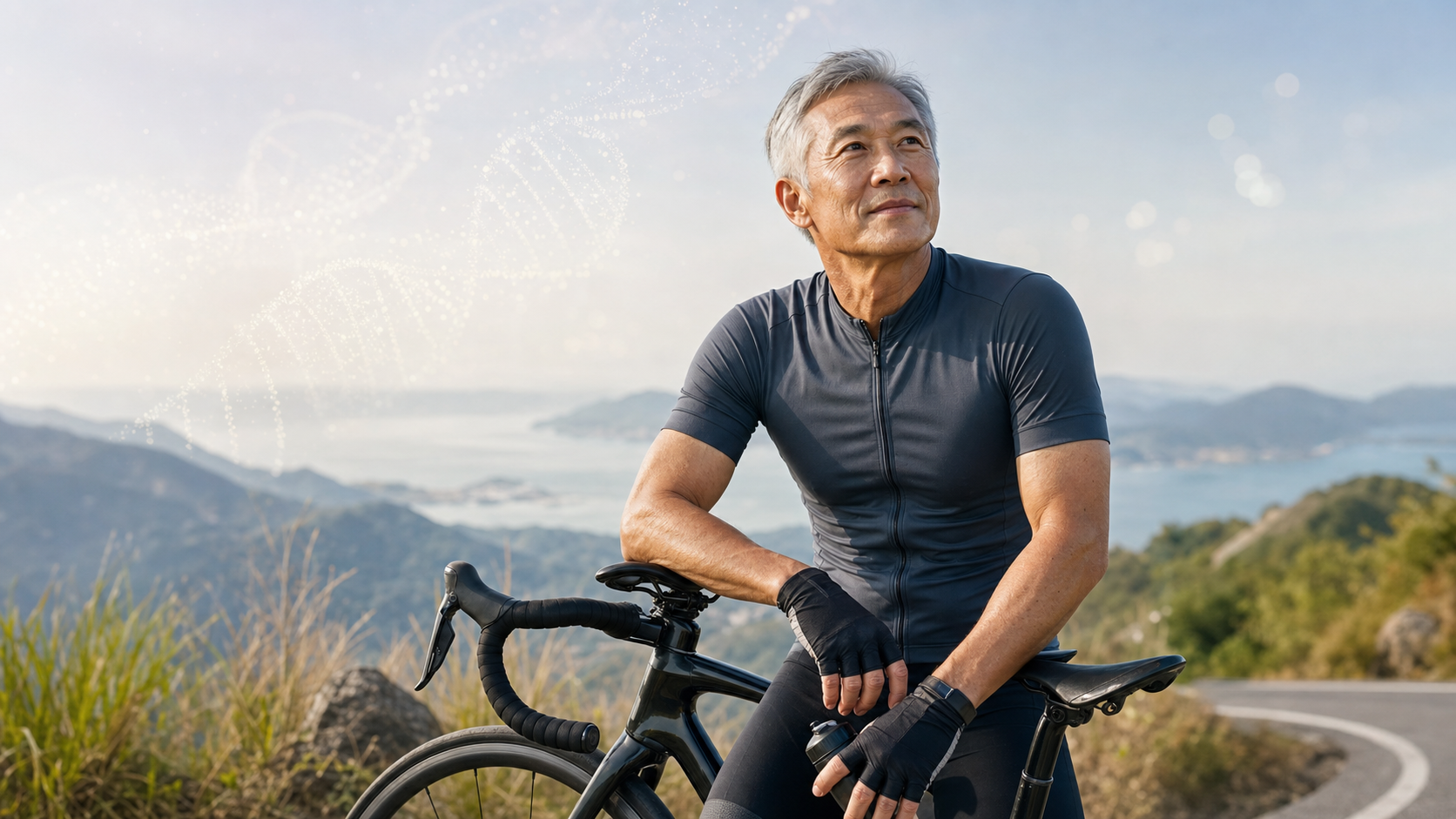
Opening: A Sixty-Year-Old Student’s Blood Test Report
I once coached a student who left a deep impression on me—let’s call him Old Chen. He was in his early sixties, a retired office engineer. The first time he came to me, he got winded climbing two flights of stairs, his knees felt stiff, and his health check report was full of red flags. He said something to me that I still remember to this day: “Coach, I’m not asking to live longer. I just hope I age slower and age with better quality.”
Three years later, Old Chen now rides his road bike three times a week. He started out unable to last ten kilometers on flat ground; now he can climb Yangmingshan with a group of riders twenty years his junior. During a health checkup, he paid out of pocket for a “biological age” related marker. He came back grinning and bragging to me: “The number is younger than my actual age.”
That report contained a term—telomere. In recent years, whenever “anti-aging” or “reversing age” comes up, telomeres are almost always mentioned. Gyms, supplement ads, and even some testing kits all use it as a selling point. As a coach who has trained students for fifteen years and continuously reads exercise physiology and sports medicine literature, I want to use this article to lay it out clearly for you: What exactly are telomeres? Can exercise really keep telomeres from shrinking so fast and make cells younger? Where does the current scientific evidence stand? And more importantly—as a regular exerciser, how do you turn this knowledge into weekly pedaling and training you can actually execute?
Let me give you the conclusion first so you don’t have to read the whole thing: The evidence that exercise delays aging and reduces the risk of age-related diseases is very solid; but the causal chain of “exercise → longer telomeres → you’re younger” is not yet that certain in science. Don’t worry—let’s break it down slowly.
Conceptual Foundation: What Are Telomeres and Why Do They Relate to Aging
Telomeres Are the “Protective Caps” at the Ends of Chromosomes
Think of chromosomes as shoelaces; telomeres are the plastic tips at both ends that keep them from fraying. Telomeres are structures at the ends of chromosomes, made up of a repeating DNA sequence (TTAGGG repeated over and over) plus associated proteins. They don’t encode important genetic information themselves; their function is more like a “buffer pad” and “seal”: protecting chromosome ends from being mistaken for breaks, preventing chromosomes from sticking to each other, and maintaining genomic stability.
The problem lies in cell division. Every time our somatic cells divide, due to the inherent limitation of the DNA replication mechanism (commonly called the “end-replication problem”), telomeres lose a small chunk. A little at a time, day after day, telomeres get shorter and shorter. When telomeres shorten to a certain point, cells activate a protective mechanism and enter cellular senescence—they stop dividing, their function declines, and they may even release pro-inflammatory signaling molecules that affect surrounding tissue.
That’s why in much of the literature, telomere shortening is listed as one of the hallmarks of aging, and it’s often used as a biological marker for “biological age.” This is also why telomeres are so easily marketed as “the cell’s lifespan clock.”
But Please Remember These Three “Buts”
Here I want to pump the brakes, because the mainstream narrative makes telomeres sound almost magical. Based on the literature I’ve read and my stance as a coach, there are three “buts” you must keep in mind:
-
Short telomeres don’t mean you’ll definitely get sick or that you’re about to die. In recent years, researchers have clearly pointed out: telomere length itself can only provide a “rough” estimate of aging rate. Using it as a major clinical indicator for disease risk or mortality risk doesn’t really hold up. It’s “one” marker, not “the” answer.
-
Telomere length is influenced by many factors; exercise is just one of them. Genetics (some people are born with longer telomeres), sex, chronic stress, smoking, obesity, inflammation, sleep, and diet all play a role. You can’t attribute all telomere changes to exercise, for better or worse.
-
Measurement itself has huge variability. Detection methods for telomere length, the cells sampled (most studies measure leukocyte telomere length), and differences between laboratories all vary considerably. If you get tested at Lab A today and Lab B six months later, whether the numbers can be directly compared is actually questionable.
I’ve organized common myths and more pragmatic interpretations into a table so you can establish the right mindset first:
| Common Myth | More Pragmatic Understanding |
|---|---|
| Longer telomeres = younger and healthier | Telomeres are a “rough” aging marker; length alone can’t determine health or lifespan |
| Exercise can “lengthen” telomeres | The more defensible claim is that exercise “may slow telomere shortening,” not lengthen them |
| Testing telomeres can calculate your true age | Biological age is a multi-marker composite concept; testing only telomeres has large error margins |
| Supplements can “maintain telomeres” and reverse aging | Lacks reliable evidence; don’t throw money at products without proof |
| Short telomeres mean you’ll get sick soon | It’s only a risk association; individual variation is huge—don’t scare yourself |
Current Evidence: What Does Exercise Actually Do to Telomeres?
This is the core of the article, and I’ll be as honest as possible. Research on exercise and telomeres broadly falls into two categories, and the strength of evidence differs greatly.
One: Observational Studies—People with Higher Activity Levels Often Have Longer Telomeres
This type of research is “cross-sectional” or “cohort” observation: recruit a large group, measure their physical activity levels, then measure leukocyte telomere length, and see if the two are associated.
Looking at the current literature overall, in observational studies, people with higher physical activity or exercise levels tend to have longer telomeres; athletes also often have longer telomeres than non-athletes. Moreover, this association is especially pronounced in older populations, which hints that exercise may play some role in counteracting “age-related telomere shortening.”
Sounds exciting, right? But observational studies have an inherent flaw you must understand: they can only show “correlation,” not “causation.” People who regularly exercise also tend to smoke less, are less likely to be obese, eat more moderately, have more regular sleep and daily routines, and often have better socioeconomic status and health literacy. These factors themselves affect telomeres. So when “exercisers have longer telomeres,” how much is due to exercise itself versus the overall healthier lifestyle of this group is hard to fully disentangle.
Two: Interventional Studies—If You Actually Make People Exercise, Do Telomeres Change? The Evidence Is Still Thin
To prove causation, the best approach is an “intervention trial”: recruit a group, randomly divide them into an exercise group and a control group, have the exercise group follow a specific program for a period, and then see if telomeres differ.
This is where I’ll be most honest, and where you need to pay the most attention: To date, the number of actual exercise intervention trials is still quite small, and these studies have not fully established a causal relationship between “long-term regular exercise → telomere changes.” In plain terms, “the evidence isn’t enough yet, and it’s not settled.”
So if someone pats their chest and guarantees you, “Follow my program and your telomeres will definitely lengthen and your cells will definitely reverse age,” you can wear your skepticism right on your face. Current science doesn’t have that confidence.
Three: Mechanisms—How Exercise “Might” Affect Telomeres
Although causation isn’t settled, researchers have proposed several plausible physiological pathways explaining why exercise “has a chance” to help telomeres. These mechanisms interact with each other:
- Reducing oxidative stress: Telomere DNA sequences are especially sensitive to oxidative damage; chronically elevated oxidative stress accelerates telomere shortening. Regular moderate-intensity exercise enhances the body’s antioxidant defense capacity, theoretically offering protection.
- Reducing chronic inflammation: Long-term low-grade inflammation (inflammaging) is linked to both aging and telomere shortening. Regular exercise helps improve chronic inflammatory states.
- Modulating telomerase activity: Telomerase is the enzyme that can repair and lengthen telomeres. Some studies have observed that exercise may be associated with telomerase activity, but this area is still being explored.
- Affecting skeletal muscle and satellite cells: Exercise also affects muscle tissue repair and regenerative cells (satellite cells), which may in turn influence telomere biology at the muscle cell level.
Note that I’ve used a lot of “might” and “has a chance.” This isn’t me being evasive—it’s simply the state of the literature. Honestly acknowledging uncertainty is what professionalism looks like.
Why “Dose” and “Type” May Matter
There’s one thing worth discussing further: it’s not that “more exercise” is always better for telomeres. The relationship is more like “doing something is better than nothing, but overdoing it can backfire.” When you’re chronically in a state of extreme training volume with insufficient recovery, your body’s oxidative stress and inflammatory markers tend to run high—which is exactly the kind of environment that could theoretically accelerate telomere shortening. So researchers generally agree that moderate, regular, sustainable activity tends to offer better value for both telomeres and overall health than “occasional blowout sessions” or “long-term overtraining.”
In terms of exercise type, aerobic activities (cycling, running, swimming, brisk walking) are relatively more frequently associated with longer telomeres in observational data. But that doesn’t mean strength training is useless—its anti-aging value in delaying sarcopenia, maintaining metabolism, and preserving bone density is an equally important pathway. The best anti-aging strategy has never been about choosing one over the other; it’s about doing both aerobic and strength work in parallel. I’ve organized several mechanisms and their corresponding practical applications into a comparison table to help translate “theory” into “how to train tomorrow”:
| Possible Mechanism | Plain-Language Explanation | Corresponding Practical Approach |
|---|---|---|
| Reducing oxidative stress | Reducing oxidative damage to telomere DNA | Regular moderate intensity, avoid chronic overtraining, get enough sleep, eat plenty of fruits and vegetables |
| Reducing chronic inflammation | Improving the “inflammaging” state | Control body weight, exercise regularly, reduce refined sugar and excessive alcohol |
| Modulating telomerase activity | Theoretically helps maintain telomeres | Maintain a long-term exercise habit (not one-off sprints) |
| Protecting muscle and regenerative cells | Delaying sarcopenia, maintaining function | Full-body strength training twice a week |
So Why Do I Still Want You to Exercise?
At this point you might be thinking: “If the telomere evidence is still uncertain, is exercise anti-aging just hype?” Not at all. The overall evidence that exercise delays aging and reduces age-related diseases (cardiovascular disease, type 2 diabetes, some cancers, disability, dementia risk) is extremely, extremely solid. Telomeres are just “one mechanism that’s still being clarified.”
In other words: You don’t need to exercise to “lengthen your telomeres.” You exercise to “avoid disability, avoid being bedridden, and age with quality”—and that reason is more than enough. If your telomeres happen to benefit as a bonus, that’s a nice extra. Old Chen’s knees, cardiorespiratory fitness, blood sugar, and mood have all improved—these are things he genuinely feels every day, far more important than some telomere number on a report.
I often use an analogy to explain this to my clients: telomeres are like a car’s “odometer.” They record some signs of aging, but they’re not the engine, the fuel tank, or the brakes. You don’t drive a car to make the “odometer reading look good.” What you maintain is whether the whole car can run smoothly, safely, and durably for many years. Exercise for the body is that comprehensive maintenance—the heart and lungs are the engine, muscles are the chassis, blood vessels are the fuel lines, and sleep and recovery are the scheduled service visits. Whether your telomeres look good is just one possible byproduct that may appear after you’ve done all of these things right.
A Reminder: Don’t Fall into “Anti-Aging Anxiety”
In recent years, there’s been too much marketing around “reversing aging” and “freezing age.” I’ve seen many clients fall into a kind of anxiety because of it—measuring body fat, testing biological age, tracking all kinds of numbers, and constantly feeling like they’re “aging too fast.” I want to be honest: caring about your health in moderation is a good thing, but treating aging as an enemy and fighting a daily battle against numbers—that kind of chronic stress itself is theoretically a factor that accelerates aging and telomere shortening. Relax, enjoy exercise regularly, sleep well, and go climb mountains and share meals with your riding buddies—a lifestyle where both body and mind feel at ease is probably more effective than any anti-aging product.
Practical Approach: Turning “Anti-Aging Exercise” into a Weekly Executable Plan
Okay, enough concepts. Let’s get to something you can actually train. Anti-aging doesn’t rely on any single magical exercise; it requires all three pillars—aerobic, strength, and flexibility/balance—to be covered. Below I’ve designed a plan using the framework cyclists know best, but the principles apply equally to running, swimming, and brisk walking.
Understand Exercise Intensity First: Three Zones
The biggest problem many clients have at the start is “not knowing what intensity they’re training at.” I’ll break it into three zones in the simplest terms, with approximate heart rate and perceived exertion references (heart rate values are conceptual ranges; individual variation is large, and the most accurate approach is to calculate using your own maximum heart rate):
| Intensity Zone | Approximate Heart Rate (% of max HR) | Perceived Exertion / Talk Test | Primary Purpose |
|---|---|---|---|
| Easy Aerobic (Zone 1-2) | ~60-70% | Can easily speak full sentences | Base building, recovery, fat metabolism, reducing inflammation |
| Moderate (Zone 3) | ~70-80% | Speech becomes broken, slightly breathless | Cardiorespiratory endurance, main health benefits |
| High Intensity (Zone 4-5) | ~80-90%+ | Can only utter single words, very breathless | Improving VO₂max, raising cardiorespiratory ceiling |
Let me give you a rough reference number: the common formula for estimating max heart rate is “220 minus age,” but this is only a very rough estimate with an error margin of 10 to 20 bpm per minute. Once you’re exercising regularly, it’s best to get it from actual testing or an exercise test. Using Old Chen (age 60) as an example: his estimated max heart rate is about 160 bpm, so his easy aerobic zone would be roughly 96 to 112 bpm, and moderate intensity roughly 112 to 128 bpm.
WHO’s Minimum Activity Guidelines for Adults
When it comes to “how much should I do,” there’s a widely adopted public health recommendation that can serve as a baseline: adults are advised to accumulate at least 150 to 300 minutes of moderate-intensity aerobic activity per week, or 75 to 150 minutes of vigorous-intensity aerobic activity (or a combination of both), plus strength training involving all major muscle groups at least 2 days per week. For older adults, additional recommendations include balance and functional training each week to prevent falls.
I often tell my clients: this number is the “passing line,” not a “perfect score.” 150 minutes sounds like a lot, but broken down across a week—three commuter or recreational rides of about 40 to 50 minutes each at moderate intensity—and you’ve hit the target. It’s really not that daunting.
Sample Weekly Anti-Aging Training Plan (Cycling-Focused)
Here’s a template I’ve designed for intermediate clients who “have some base, want to age well, and can carve out 4 to 5 days per week.” You can scale it according to your own schedule:
| Day | Content | Intensity | Duration |
|---|---|---|---|
| Monday | Complete rest or walking/stretching | Very light | 20-30 min |
| Tuesday | Easy flat-road ride (recovery + base) | Zone 1-2 | 45-60 min |
| Wednesday | Full-body strength (squats, deadlifts, pushes, pulls, core) | Moderate | 40-50 min |
| Thursday | Steady moderate-intensity ride (can include gentle climbs) | Zone 3 | 50-60 min |
| Friday | Rest or easy swimming/brisk walking | Light | 30 min |
| Saturday | Long endurance ride (Yangmingshan, Beiyi, Eastbound Wuling, etc.) | Zone 2-3 | 90-150 min |
| Sunday | Short intervals (e.g., repeated hill efforts) | Zone 4, with recovery in between | 40 min including warm-up and cool-down |
A few key reminders:
- Aerobic first, strength as support—but strength is non-negotiable. After age 30, muscle mass and strength are quietly declining every year (the prelude to sarcopenia). If your anti-aging plan only includes aerobic work and skips strength, you’re maintaining the engine while ignoring the chassis. Two full-body strength sessions per week are a critical piece of the anti-aging puzzle.
- Use a “pyramid” intensity distribution: spend most of your time in easy to moderate zones, with high intensity only taking up a small portion. Many people do the opposite—moderate to high intensity every day, never easy—and end up exhausted, making slow progress, and getting injured easily.
- Recovery and sleep are part of the plan. Exercise puts “stress” on the body; getting stronger and more resilient happens during recovery. Chronic sleep deprivation and insufficient recovery will themselves accelerate aging and increase inflammation, effectively canceling out the benefits of exercise.
A Simple Starting Menu for Strength Training
Many endurance athletes who cycle or run resist weight training, thinking “that’s for bodybuilders.” Wrong. Here’s a bare-bones, full-body menu you can do at home or in the gym, twice a week:
| Exercise | Target Area | Beginner Sets/Reps |
|---|---|---|
| Squat (can hold a chair) | Lower body, glutes | 2-3 sets × 10-12 reps |
| Split squat / Lunge | Lower body, balance | 2 sets × 8-10 reps per leg |
| Push-up (can do against wall or on knees) | Chest, shoulders, arms | 2-3 sets × 8-12 reps |
| Row (resistance band or dumbbell) | Back | 2-3 sets × 10-12 reps |
| Plank | Core | 2-3 sets × 20-40 seconds |
Form always trumps weight and reps. If you can’t do it properly, regress (hold onto something, go on your knees, reduce weight) rather than pushing through and risking injury. If you have old knee, back, or chronic conditions, consult a physical therapist or an experienced coach before starting.
Don’t Overlook the Hidden Variable of “Daily Activity Level”
Many people think anti-aging is only about “that one hour of exercise,” but your “non-exercise activity” throughout the day matters just as much. Two people might both train five hours a week, but if one sits the rest of the time while the other takes stairs, commutes by bike, does housework, and stands at work, their overall health profiles often differ significantly. Prolonged sitting itself is an independent health risk.
Practical advice is simple: every 60 minutes of sitting, get up and move for 2 to 3 minutes—get a glass of water, walk to the restroom, do a few bodyweight squats. Take the stairs instead of the elevator. For short trips, bike or walk instead of driving. These bits of incidental activity accumulate into a piece of the anti-aging puzzle that’s easy to overlook but well worth it.
Practical Notes on Hydration, Electrolytes, and Taiwan’s Climate
One more very local, very practical detail. Taiwan is hot and humid; an hour of moderate-to-high-intensity cycling can produce significant sweat loss, and long-distance endurance rides even more so. Dehydration doesn’t just hurt performance in the moment—repeated severe dehydration over time is also stress on the body. General recommendations (actual needs vary by person and weather; numbers are reference ranges):
- Hydrate well 1 to 2 hours before exercise; don’t wait until you’re thirsty.
- During exercise, take small sips every 15 to 20 minutes; for sessions over about 60 minutes or with heavy sweating, supplement with an electrolyte drink.
- After exercise, rehydrate based on losses; check urine color (dark urine suggests dehydration).
In summer, schedule training in the early morning or evening, wear breathable, moisture-wicking clothing, and gradually let your body adapt to heat (heat acclimatization)—all of which reduce the risk of heatstroke and excessive cardiovascular strain. If you experience dizziness, nausea, cessation of sweating, or confusion—warning signs of heatstroke—stop immediately, cool down, and seek medical attention if needed. Don’t push through.
Common Mistakes and Fixes: Pitfalls I’ve Watched Students Fall Into for Fifteen Years
Mistake 1: Turning “Anti-Aging” into “Train Until You Drop”
The most common one. Some people hear that exercise fights aging and enthusiastically do long, high-intensity sessions every day, believing the harder they push, the younger they’ll get. Quite the opposite. Chronic overtraining with insufficient recovery keeps the body in a state of chronic stress, high oxidative stress, and high inflammation—which is precisely the environment that theoretically accelerates telomere shortening and aging. Anti-aging requires “regular, sustainable, with recovery,” not “wring yourself dry.”
Fix: Use a pyramidal intensity distribution—80% easy to moderate, 20% high intensity. Take at least one to two true rest days or very light activity days per week.
Mistake 2: Only Doing Cardio, No Strength Training at All
Many runners and cyclists in Taiwan fit this profile. Great cardiorespiratory fitness, but muscle mass, bone density, and metabolic capacity decline with age. A major goal of anti-aging is “delaying disability,” and much disability stems from muscle loss and falls causing fractures.
Fix: No matter how much you love cycling or running, two full-body strength sessions per week are a non-negotiable baseline.
Mistake 3: Relying on Supplements to “Maintain Telomeres” Without Changing Lifestyle
The market offers supplements claiming to “activate telomerase” or “maintain telomeres,” usually at a hefty price. Honestly: there is currently no reliable evidence that such supplements meaningfully improve telomere length or slow aging. Instead of spending money there, invest in a decent pair of running shoes, a professional fitness assessment, or improving your diet and sleep.
Fix: Do the things with real evidence behind them—“quit smoking, control weight, sleep enough, reduce chronic stress, exercise regularly, eat a diet rich in fruits and vegetables.” Their potential benefits for telomeres and overall aging far outweigh any supplement.
Mistake 4: Euphoria or Despair Over a Single Telomere Test
Some students pay out of pocket for a telomere test; if the number looks bad, they’re anxious enough to lose sleep; if it looks good, they slack off entirely. As mentioned, telomere measurements are highly variable, are only a rough indicator, and are influenced by a host of factors.
Fix: Treat it as a “reference point,” not a life sentence. What you should actually track are the modifiable, more health-relevant metrics: blood pressure, blood sugar, blood lipids, fitness, strength, weight, and sleep.
Mistake 5: Ignoring Taiwan’s Climate—Getting Heatstroke or Becoming Inactive
Taiwan’s summers are hot and humid. Forcing a ride or run at noon sends your core temperature soaring, causes dehydration, and strains your cardiovascular system—this kind of acute physiological stress is bad for anyone. In winter, the damp cold makes people skip exercise altogether.
Fix: In summer, move training to early morning or evening, stay on top of fluids and electrolytes, especially on moderate-to-high-intensity days. In damp, cold winters, make good use of indoor trainers, gyms, or sheltered riverside paths—don’t let the weather become an excuse to stop training. Being “consistently active” is more anti-aging than an occasional super-intense session.
Taiwan-Specific Context: Putting Knowledge into Practice in Your Life
As a coach working with students in Taiwan, I’d like to add a few grounded reminders:
- Facilities and resources are actually abundant: Riverside bike paths in Taipei and New Taipei, lake-loop and island-circumnavigation routes, and sports centers in every city/county (with affordable weight-training areas and classes) are all low-barrier venues for anti-aging exercise. No need to spend big from day one.
- Nutritional pitfalls for those who eat out: Eating out in Taiwan is convenient, but food tends to be salty, high in refined carbs, and low in vegetables and quality protein. Over time, that’s unfriendly to inflammation, weight, and metabolism—and these are exactly the factors that influence aging. Practical approach: at every meal, first ask, “Where are my protein and vegetables?” At buffet-style restaurants, load up on greens, beans, eggs, fish, and meat; go easy on the thickened sauces and fried items; cut out sugary drinks if you can.
- Make good use of National Health Insurance and the healthcare system: Taiwan’s easy access to medical care is a huge advantage. If you’re over 40, have chronic conditions or a family history, or haven’t exercised in a long time and want to ramp up significantly, talk to your doctor before starting a more intense new program, and get an exercise ECG or other assessments if needed. That’s not a hassle; it’s being responsible.
- Adult preventive health services for middle-aged and older adults: Taiwan offers adult health check-ups and similar resources. Use them to track blood pressure, blood sugar, and blood lipids—far more practical than paying out of pocket for a telomere test.
- Find training partners: Taiwan has a vibrant cycling and running club culture. Social support not only makes it easier to stay consistent, but strong social connections and lower chronic stress are themselves positive for health and aging. Find a group of peers at a similar level with a healthy vibe (not one that’s a death match every time)—it’s easier to go the distance than grinding alone.
Action Recommendations for Readers at Different Levels
Finally, here’s everything condensed into a “you can start tomorrow” checklist, split into three levels.
Complete Beginners with No Exercise Habit (like Old Chen three years ago)
- Goal: First build the habit of “moving regularly,” not chasing intensity.
- Approach: Start with 3 sessions per week of 20 to 30 minutes of easy cardio (brisk walking, easy cycling, or swimming all work). An intensity where you can comfortably hold a conversation is right.
- Strength: Twice a week, start with 2 sets each of chair-assisted squats, wall push-ups, and planks.
- Mindset: Don’t compare yourself to young people or the beasts on social media. Your only opponent is “last week’s you.”
- Medical: If you have chronic conditions, chest tightness or pain, dizziness, or similar issues, see a doctor before starting.
Intermediate Exercisers Who Already Have a Habit
- Goal: Push your “volume” toward the upper end of WHO recommendations (aim for around 300 minutes of moderate intensity per week) and make sure strength training isn’t missing.
- Approach: Follow the weekly template above, mind the intensity pyramid, and don’t do moderate-to-high intensity every day.
- Self-check: Honestly ask yourself, “Have I done my strength work? Am I sleeping enough? Do I have true rest days?” These three questions are often where intermediate exercisers fall short.
- Advanced: You can add one interval session per week, but be sure to warm up thoroughly and progress gradually.
Senior Endurance Athletes / Advanced Riders
- Goal: Your cardiovascular fitness is likely already up to par; the focus of anti-aging for you is on “not overtraining” and “strengthening weak points.”
- Approach: Check whether your training has long-term recovery deficits, whether you’re neglecting strength and mobility work, and whether you’re accumulating chronic fatigue and sleep debt. These are the aging risk factors at your level.
- Reminder: The more passionate you are about training, the easier it is to overlook that “rest is also part of the program.” Anti-aging isn’t about who trains the most; it’s about who can train healthily and sustainably into their eighties.
Frequently Asked Questions (FAQ)
Over my years of coaching, these are the questions about telomeres and anti-aging I’ve been asked to death. Let me answer them all for you at once.
Q1: Do I need to pay out-of-pocket to get my telomeres tested?
Given the current state of science, I wouldn’t proactively recommend that the average person go out of their way to get tested. Telomere measurements have high variability and are only a rough indicator; the numbers you get are hard to use as direct guidance for adjusting your lifestyle. If you nail your exercise, sleep, weight, and diet, whether your telomeres benefit from it—test or no test—it’s happening regardless. If you want to track your health, spending money on tracking blood pressure, blood sugar, blood lipids, fitness, and strength gives you a much better return.
Q2: Is there one “most anti-aging” exercise?
There’s no single magic bullet. If I had to give an answer, it would be “a combination of aerobic and strength training that you can sustain regularly over the long term.” For many people in Taiwan, cycling, brisk walking, and swimming are easy to pick up and are joint-friendly; add two strength sessions per week, and you have a very complete anti-aging formula. The best exercise is the one you’ll actually keep doing.
Q3: Is it too late to start exercising if I’m older?
It’s not too late. Old Chen is a perfect example of someone who only got serious at sixty. The literature also shows that the association between exercise and longer telomeres is actually more pronounced in older populations, and the overall benefits of exercise in delaying disability and maintaining independence apply no matter what age you start. The key is “progress gradually” and “get a medical evaluation first if needed”—not “age.”
Q4: Is it still meaningful if I can only exercise once or twice a week?
Very much so. Going from “completely sedentary” to “moving regularly” is the single biggest health gain you can make. First, get some activity in; then, aim for better. Two consistent sessions a week far outweigh a flash-in-the-pan seven sessions followed by a month of nothing. The rhythm you can sustain long-term is the rhythm that truly counts.
Q5: What should I eat to take care of my telomeres?
There’s no miracle food, and don’t fall for supplements marketed as “telomere-boosting” (they lack reliable evidence). The practical approach is overall dietary patterns: adequate high-quality protein, plenty of fruits and vegetables, less refined sugar and ultra-processed foods, and moderate alcohol. This kind of diet helps reduce inflammation and control weight, and these are exactly the key factors linked to aging. For people in Taiwan who eat out often, just remembering “prioritize protein and vegetables at every meal” already puts you ahead of the curve.
Conclusion: Telomeres Are a Bonus Question; Living Healthily Is the Main Exam
Back to Old Chen. To this day, he still isn’t sure whether his telomeres actually got longer—honestly, given the current science, no one can give him a definitive answer with confidence. But does it matter? He can climb Yangmingshan now, his knees don’t hurt, his blood sugar looks great, he sleeps better, and he laughs more.
This is the core message I want to leave you with: Whether exercise can “lengthen telomeres” is still being clarified by science, and the evidence isn’t conclusive; but that exercise can slow aging, reduce the risk of disease and disability, and help you age with better quality—that evidence has been rock-solid for a long time. Don’t get anxious over an indicator that’s still under research, and don’t be led around by exaggerated marketing. Put regular, sustainable, strength-inclusive, recovery-adequate exercise into your life, quit smoking, control your weight, get enough sleep, and eat a balanced diet—what you can do for your telomeres and what you can do for your overall health actually overlap to a high degree.
Next time you clip in and push on the pedals, you don’t need to think “I’m lengthening my telomeres.” Just think “I’m making deposits for that future eighty-year-old self who can still ride out the door on their own.” That’s enough.
If this article leaves you with just one sentence, I hope it’s this: Don’t chase anxiety over a number that isn’t settled; put “regular, sustainable, strength-inclusive, recovery-adequate” exercise into your life, and leave the rest to time. Anti-aging isn’t a competition to win; it’s a way of living where you choose to treat your body kindly, day after day. Starting today, starting with the easiest step within your reach, is exactly the right way to go.
This article is for educational purposes and does not replace individual diagnosis and treatment advice from a physician, physical therapist, or nutritionist. If the article involves chronic diseases (such as diabetes, hypertension, heart disease, etc.), please be sure to seek medical attention and receive individualized assessment; do not self-diagnose or adjust treatment based on this article.
References
- Physical activity and telomere length: Impact of aging and potential mechanisms of action (PMC): https://pmc.ncbi.nlm.nih.gov/articles/PMC5546536/
- Physical activity, a modulator of aging through effects on telomere biology (PMC): https://pmc.ncbi.nlm.nih.gov/articles/PMC7377891/
- Telomere Length as a Marker of Biological Age: State-of-the-Art, Open Issues, and Future Perspectives (PMC): https://pmc.ncbi.nlm.nih.gov/articles/PMC7859450/
Related Reading
- The Protective Effects of Exercise on Telomere Length: Molecular Biology Research on Anti-Aging Mechanisms
- The Impact of Aerobic Training on Telomere Length: Molecular Biology Research on Exercise Anti-Aging Mechanisms
- The Anti-Aging Benefits of Cycling: Physiological Research on Long-Term Aerobic Exercise and Cellular Aging
- The Aging Curve of Athletic Performance: When Is the Peak, and How Should You Train After It
#公路車 #Fitting 靠人工智慧APP 幫你調整單車
6 年前
白沙屯媽祖進香在家走!UREVO 坡度自調走步機 / 可連接訓練遊戲APP MyWhoosh / 邊看直播邊走起來 / CT Yeh
11 個月前
大家都在開箱的...單車用藍芽對講耳機真的有幫助嗎? SENA BiKom 20 長距離旅遊 & 海鷗繞圈賽 實際體驗心得 / 公路車 / CT Yeh
9 個月前
西進武嶺 自製新版AI配速表產生器 x 賽前攻略 抱佛腳! 沒有功率計也可以產生配速表嗎?有什麼其他眉角賽前要注意的呢? | 西進武嶺 / 東進武嶺 KOM 攻略 | 公路車 | CT Yeh
4 年前
碟煞公路車 銑面器 !? 原來銑完差這麼多! 降低蹭碟機率! | TIME 公路車 保養小記錄 | CT Yeh
3 年前
西進武嶺 免費訓練分析服務 Intervals | 練不夠還是練過頭?你哪一種類型選手?AI模型告訴你! | 備戰神器 | 公路車 訓練 | CT Yeh
4 年前
一日北高/長距離團騎 常見問題補充篇 / 組團或跟團的眉角 / 壯車友容易被瘦車友慢性拉爆 / 原來屁股痛可能是這個原因...? / 風場配速法 / 公路車 / CT Yeh
2 年前
3D 列印車褲墊 / 舒適改善? / 無痕 x 分區壓縮 / ATK & Decider系列 / JE22黑科技 / #公路車 #CTYEH
11 個月前