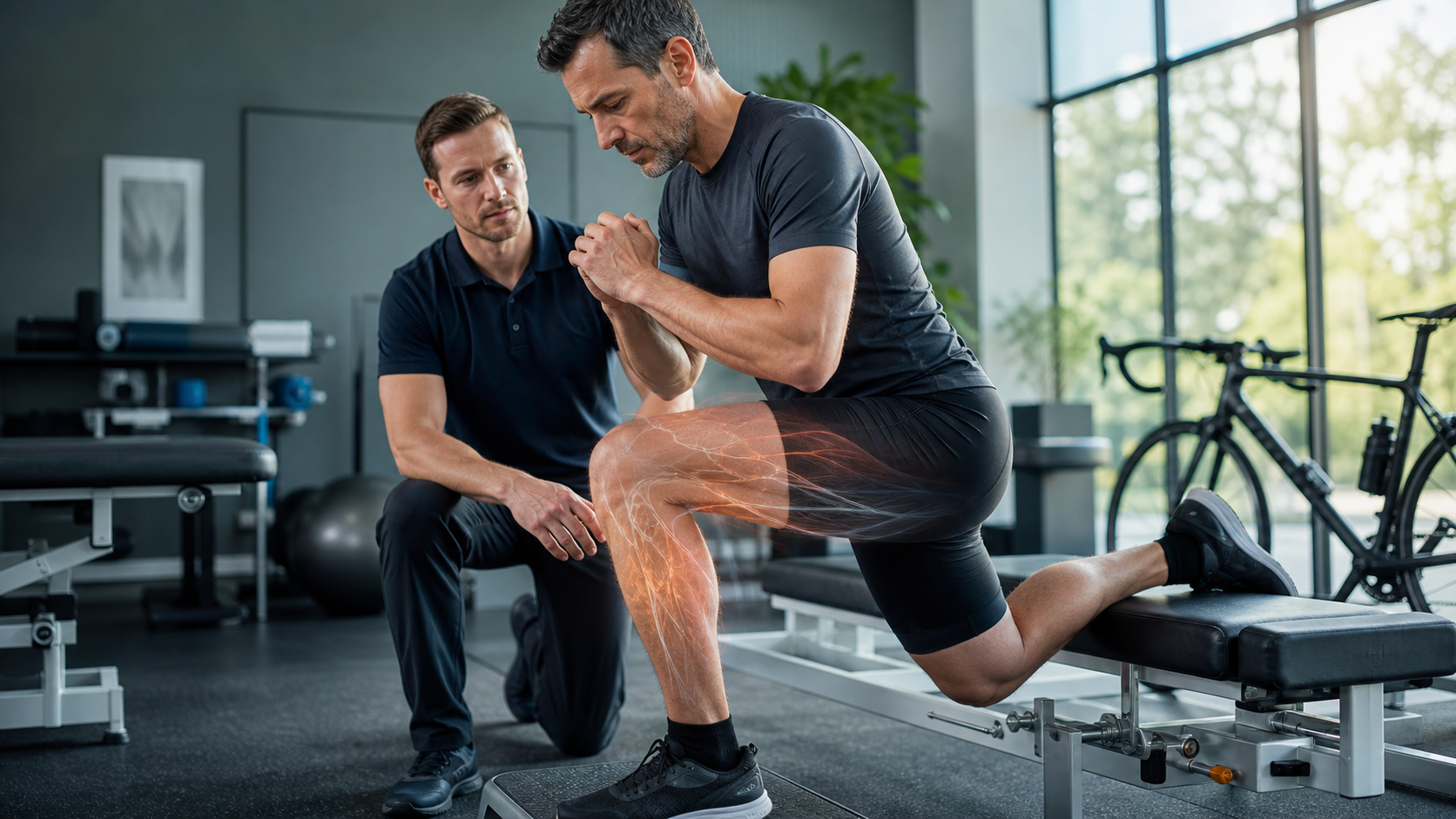
Starting with a Student Who Was Afraid to Ride After a Crash
I once coached an amateur cyclist in his early forties—let’s call him A-Hong. Three years ago, he crashed on a descent on the Beiyi Highway, fracturing his collarbone and suffering a large contusion across his thigh. Surgery, recovery, stitches removed—the whole medical process went smoothly. But when he came to me six months later, he said something that stuck with me: “Coach, the injury healed long ago, but that leg of mine just won’t ‘wake up.’ Every time I push hard, it feels weak, like it’s not even mine.”
That statement captures a frequently overlooked aspect of tissue repair. We tend to assume that “wound healing” equals “functional recovery,” but the body’s repair process is a multi-layered project that runs from cells to tissues to neuromuscular coordination. And in that project, there’s a group of quiet protagonists that rarely make a sound under normal conditions—but the moment the body needs them, they get activated, multiply, and fill in the gaps. Those are stem cells, especially the satellite cells in muscle, and the endothelial progenitor cells (EPCs) in the blood that handle vascular repair.
In this article, I want to explain, in the same tone I use with my students, how exercise triggers the body’s regenerative response. The goal isn’t to turn you into a cell biologist—it’s to help you understand that appropriate exercise is itself a “regenerative prescription” that doctors and physical therapists can write. Once you grasp this, you’ll have more agency when facing post-injury recovery or age-related muscle loss, rather than passively waiting for things to heal on their own.
Let me be clear about my position upfront: this is educational content. I’ll give you the concepts and a practical framework, but when it comes to your specific injuries or conditions, always defer to the diagnosis of your physician or physical therapist.
Conceptual Foundation: The Body’s Three “Repair Crews”
To understand the relationship between exercise and regeneration, you first need to know three key players. I like to think of them as three work crews on a construction site.
Satellite Cells: The Muscle’s On-Site Repair Crew
Satellite cells are the most abundant stem cells in skeletal muscle. Normally, they “nest” between the muscle fiber membrane and the basement membrane, in a dormant (quiescent) state—large nucleus, few mitochondria, barely doing anything. But when the muscle encounters resistance training, eccentric loading, or injury, these dormant satellite cells get activated, enter the cell cycle, and begin proliferating. From there, they take one of two paths: some differentiate and fuse into existing muscle fibers, adding nuclei to the muscle so it can repair and grow; others self-renew, replenishing the stem cell pool for the next time.
Here’s why this matters: muscle fiber hypertrophy is largely achieved by satellite cells adding nuclei to existing muscle fibers. Research consistently shows that resistance training is one of the most effective stimuli for activating and proliferating satellite cells. In other words, every serious weight-training session you do is placing a work order for this on-site crew.
Endothelial Progenitor Cells: The Vascular Repair Team Sent from the Bone Marrow
The second crew travels in the bloodstream. When you exercise, the bone marrow mobilizes endothelial progenitor cells into the peripheral blood. These cells are precursors to endothelial cells; they get attracted to sites of vascular damage or ischemia, where they either stimulate mature endothelial cells to proliferate through paracrine signaling, or directly integrate and differentiate into new endothelial cells—repairing blood vessels and promoting angiogenesis.
Research shows that a single bout of exercise acutely raises the number of circulating endothelial progenitor cells, while regular exercise improves this mobilization capacity over the long term. This is critical for post-injury recovery—for tissue to repair, blood flow must first deliver nutrients, oxygen, and repair cells to the site. Once the blood vessels are fixed, everything else can follow.
Macrophages and Inflammation: Not the Enemy, but the Site Foreman
The third player is often misunderstood: inflammation. Many people try to “eliminate” inflammation the moment they get injured, but moderate acute inflammation is actually the initiating signal for repair. Macrophages move in during the early phase of injury to clear away necrotic tissue, then shift their phenotype and release factors that promote satellite cell activation and tissue remodeling. Without this orderly inflammatory phase, repair is actually delayed. This is why indiscriminately swallowing anti-inflammatory drugs long after an injury isn’t necessarily good for tissue healing—but you must discuss this with your doctor, and never decide on your own to stop or add medication.
The Scientific Chain of Exercise-Induced Regeneration
Tying those three crews together, the regenerative response triggered by exercise roughly follows this chain:
- Mechanical load and metabolic stress: Resistance or endurance exercise places tension on muscle, causing minor, controlled damage and metabolic disturbance.
- Signal release: The loaded muscle releases signaling molecules such as growth factors and myokines, while sympathetic nerve activity and blood-flow shear stress rise.
- Local activation: Satellite cells are awakened, beginning to proliferate, differentiate, or self-renew.
- Systemic mobilization: The bone marrow releases endothelial progenitor cells into the blood, sending them to where they’re needed.
- Remodeling and strengthening: New myonuclei, new capillaries, and reorganized connective tissue make the area more capable of handling load than before training.
This chain illustrates a counterintuitive but crucial idea: moderate “destruction” is the prerequisite for regeneration. If you never give the body any stress, these stem cells have no reason to wake up. This is also why bed rest and complete immobility after injury often lead to slower recovery and faster muscle atrophy. Of course, “moderate” is the key word—too much or too little is equally wrong, and I’ll get into that later.
It’s worth noting that age affects this system. As we get older, the number and activation capacity of satellite cells, as well as the mobilization efficiency of endothelial progenitor cells, all decline—part of the reason middle-aged and older adults experience sarcopenia and slower post-injury recovery. The good news is that systematic reviews of older populations show resistance training can still effectively improve skeletal muscle stem cell-related markers—meaning this repair system remains “callable” even in old age; it just requires more patience and more careful dosing.
Why “Progressive Overload” Isn’t Just a Cliché—It’s a Cellular Necessity
I know you’re tired of hearing “progressive overload,” but if you understand it from a cellular perspective, you’ll see it’s not just a conservative slogan. The journey of satellite cells from dormancy to activation, proliferation, differentiation, and fusion is a biological process that takes time; new blood vessels don’t form in a few days either, from mobilization and recruitment of endothelial progenitor cells to integration and maturation. Collagen fiber remodeling is even slower, often measured in weeks. When your training progression outpaces these biological processes, it’s like adding floors to a building before the rebar is laid—the structure can’t keep up with the load, and re-injury is only a matter of time.
So I often tell my students: your willpower can arrive in a day, but your tissue can’t. The pace of regeneration is set by the body. What we can do is provide the right stimulus, enough raw materials, and sufficient time—then respect its rhythm. This is also why the worst thing for post-injury recovery is “I feel good today, so let’s max it out all at once.” A single day’s subjective feeling can’t fool the remodeling work that’s still unfinished underneath.
Signaling Molecules: Muscles “Talk” During Exercise
Let me add one more interesting concept. During exercise, contracting muscles secrete a group of signaling molecules collectively called “myokines.” They’re like a broadcast from the muscle to the whole body, involved in regulating inflammation, metabolism, and repair. You can think of exercise not just as mechanical movement, but as a systemic endocrine conversation—muscles “talking” to the bone marrow, blood vessels, and immune system, coordinating an environment favorable to repair and adaptation. This is why the benefits of exercise are often systemic, not limited to the muscle you’re training.
The details of these mechanisms are still being studied, and I won’t give you false precision or exaggerated causal claims. But the direction is clear: regular, moderate exercise pushes the body toward a state more conducive to regeneration. That’s a conclusion at the level of principle, and it holds up.
Practical Application: Turning the Regenerative Response into an Executable Training Plan
Now that the theory is covered, let’s talk about how I actually design programs for my students. The core approach is: match the stimulus to the timeline of tissue repair.
The Four Stages of Post-Injury Recovery
The table below is the staging framework I commonly use. Please note that this is a general educational framework; the actual number of days and range of motion must be determined individually by your physician or physical therapist based on your injury.
| Stage | Approximate Period | Repair Focus | Exercise Strategy | Common Mistakes |
|---|---|---|---|---|
| Protection Phase | 0–7 days post-injury | Control bleeding and swelling, avoid secondary injury | Relative rest, gentle joint mobility, maintain training on uninjured areas | Complete immobility, or starting intense training too early |
| Regeneration Phase | Approximately 1–3 weeks | Satellite cell activation, new blood vessel growth | Progressive loading, isometric contractions, low-intensity circulatory exercise to promote blood flow | Training hard once swelling subsides, ignoring pain signals |
| Remodeling Phase | Approximately 3–12 weeks | Collagen reorganization, rebuilding strength and neuromuscular control | Progressive resistance training, eccentric control, sport-specific movement reconstruction | Training only strength without coordination |
| Return-to-Sport Phase | Approximately 3 months and beyond | Tolerating sport-specific high loads, preventing re-injury | Gradually return to cycling/running intensity and mileage | Rushing to max out mileage or climbing all at once |
Ahong’s problem was that he skipped the progressive loading of the “Remodeling Phase” and “Return-to-Sport Phase.” Once the wound healed, he wanted to jump straight back to his original training volume. As a result, his leg had never been “re-taught” how to produce force at the neuromuscular level, which is why he felt it “wouldn’t wake up.”
A Sample Progressive Resistance Program for Middle-Aged and Older Adults After Lower-Limb Injury
For someone like Ahong—who has a lower-limb contusion, has entered the remodeling phase, and has been cleared by a physical therapist for weight-bearing—this is roughly how I would structure the program. Intensity is based on RPE (Rating of Perceived Exertion, 1–10) and manageable pain, rather than chasing heavy weights.
| Week | Main Workout | Sets × Reps | Intensity Guidelines | Purpose |
|---|---|---|---|---|
| Weeks 1–2 | Bodyweight squats, seated knee extensions, bridges | 3×12–15 | RPE 5–6, no sharp pain throughout the full range of motion | Awaken the neuromuscular system, promote blood flow |
| Weeks 3–4 | Loaded squats, single-leg deadlifts, walking lunges | 3×10–12 | RPE 6–7 | Build foundational strength |
| Weeks 5–6 | Slow-eccentric squats, Bulgarian split squats | 4×8–10 | RPE 7, 3–4 second eccentric phase | Strengthen eccentric tolerance |
| Weeks 7–8 | Add light plyometrics (low box jumps, fast pedaling) | 3×6–8 | RPE 7–8 | Bridge to sport-specific demands |
For cycling, I would have him start on an indoor trainer at low wattage and high cadence (e.g., maintaining 50–60% of his FTP, cadence above 90 rpm), using blood flow to “irrigate” that leg, rather than starting with hill climbs and heavy gears. This low-intensity, circulation-promoting riding corresponds exactly to the endothelial progenitor cell mobilization mentioned earlier—keeping the vascular repair crew continuously employed.
Daily Conditions That “Boost” the Regenerative Response
For stem cells to do their work, they need raw materials and the right environment. On this front, I remind my athletes to pay attention to a few things:
- Get enough protein: A common recommendation for adult athletes is approximately 1.4–2.0 grams per kilogram of body weight per day, with post-injury or older individuals leaning toward the higher end. For a 70 kg person, that’s roughly 100–140 grams per day, distributed evenly across three to four meals. For people in Taiwan who eat out frequently, be aware that a pork chop bento may not contain as much protein as you think, and a breakfast of shaobing and youtiao has almost none. Be intentional about adding an egg, a cup of unsweetened soy milk, or a serving of chicken breast.
- Sleep is free anabolism: Much of tissue remodeling happens during deep sleep. Chronically sleeping less than 6 hours will compromise repair efficiency.
- Don’t let chronic inflammation override acute repair: Chronic sleep deprivation, excessive alcohol consumption, and a very high-sugar diet all raise the background level of chronic inflammation, which can interfere with normal repair signaling.
- Taiwan’s climate demands attention to hydration and electrolytes: Summers are hot and humid. A sweaty ride can deplete significant water and sodium. Dehydration impairs blood flow and metabolism, indirectly slowing recovery.
A practical note for people in Taiwan who eat out: I often ask my athletes to use the “palm method” to quickly estimate protein—each meal should include at least one palm-sized, palm-thick serving of whole-food protein (chicken breast, pork tenderloin, fish, tofu, eggs). At a buffet, pick two protein dishes; at a convenience store, add a tea egg or a carton of unsweetened soy milk; at a braised snack stand, order an extra serving of dried tofu or chicken breast—these are all easy additions. For post-injury or older individuals, breakfast is the meal most often overlooked, yet it’s key to widening the recovery gap. As for hydration, outdoor rides in Taiwan’s summer are almost always hot and humid. For longer rides, use a rhythm of “hydrate before, during, and after” rather than waiting until you’re thirsty—by the time you feel thirsty, you’re often already mildly dehydrated.
Here’s a rough daily recovery support reference table. All values are ranges; adjust based on your body weight, medical advice, and dietitian recommendations:
| Item | General Reference Range | Notes |
|---|---|---|
| Protein | 1.4–2.0 g/kg/day | Post-injury and older individuals should aim for the higher end |
| Calories | Maintain or slightly exceed expenditure | Excessive calorie restriction after injury slows repair |
| Sleep | 7–9 hours | Deep sleep is the primary window for remodeling |
| Water | Based on body weight and sweat loss | Extra intake needed for outdoor rides in Taiwan’s summer |
| Sodium and other electrolytes | Replenish with heavy sweating | Especially important during prolonged exercise in high heat |
Common Mistakes and Corrections
Over the years of coaching athletes, I’ve found that almost all the pitfalls fall into the categories below.
Mistake 1: Treating “No Pain” as “Healed”
Many people resume their original training volume once the injury stops hurting. But no pain only means the acute inflammation and pain sensation have subsided—collagen remodeling, strength, and neuromuscular control often aren’t there yet. Correction: Use functional tests rather than pain as the indicator—for example, single-leg stance stability on the affected side, symmetry in single-leg squats, and the strength deficit between the injured and uninjured limbs. If the gap is still large, don’t rush back.
Mistake 2: Complete Immobility After Injury
The other extreme is overprotection—completely not using the injured leg or arm. As a result, satellite cells have no reason to be activated, muscle atrophies quickly, and blood flow deteriorates. Correction: Within the range your physician allows, start training the uninjured areas and performing low-load activity on the injured area as early as possible. Even in a cast, you can train the healthy side, train your core, and maintain cardiovascular fitness—this is called the “cross-education effect,” where training the healthy side also benefits the neuromuscular system of the injured side.
Mistake 3: Using Anti-Inflammatory Drugs Like Supplements
Some people self-administer nonsteroidal anti-inflammatory drugs (NSAIDs) long-term after an injury, thinking “reducing inflammation can’t be wrong.” But as mentioned earlier, moderate acute inflammation is part of the repair signal, and long-term, heavy suppression isn’t necessarily beneficial to tissue healing. Correction: Whether to use medication, the dosage, and the course of treatment should be left to your physician—don’t self-medicate long-term. In Taiwan, seeing a doctor is convenient and NHI coverage is highly accessible; if you have any doubts, go back for a follow-up and ask.
Mistake 4: Chasing Only Weight, Ignoring Eccentric Control and Coordination
Newly regenerated tissue needs to be “taught” how to tolerate sport-specific loads. If you only train concentric force production and skip eccentric control and movement coordination, you’re more likely to be re-injured when you return to cycling or running. Correction: The remodeling phase must include slow eccentrics and sport-specific movement reconstruction, so the neuromuscular system can keep pace with structural repair.
Mistake 5: Treating Systemic Signals as a Local Panacea
Some people hear that exercise mobilizes stem cells and assume “as long as I exercise more, any injury will heal on its own.” In reality, systemic mobilization (e.g., endothelial progenitor cells) does help, but directing repair to a specific site still requires progressive loading targeted at that site. Correction: Combine whole-body aerobic conditioning with site-specific progressive loading—run both in parallel.
How to Read Your Body’s Feedback: Green Light, Yellow Light, Red Light
Your body is constantly sending you signals about whether the regenerative response is healthy—most people just don’t know how to read them. I teach my athletes to categorize these signals using a traffic-light system. It’s simple and easy to remember:
| Light | Typical Signals | Interpretation | Recommended Action |
|---|---|---|---|
| Green | Sore but manageable, function unchanged the next day, normal sleep | Stimulus and recovery are balanced | Maintain or progress gradually |
| Yellow | Fatigue accumulating, resting heart rate slightly elevated, movements feel heavy | Recovery slightly lagging behind | Reduce volume, add more recovery days |
| Red | Persistent swelling, heat, sharp pain at the affected site, function clearly worse, night pain | Possibly overdone or a new issue | Stop training and seek medical evaluation |
Pay special attention to the “Red Light” row—if the affected area shows persistent, worsening swelling, heat, or pain that doesn’t ease with rest, or if the pain wakes you up at night, this is beyond the scope of normal training soreness. Don’t self-diagnose, don’t push through it. Medical care is easily accessible in Taiwan; seeing a doctor early is the responsible choice. The regenerative system is powerful, but it needs you to be an honest observer, not a stubborn risk-taker.
A Practical Self-Questioning Checklist
Whenever it’s time to decide “should I follow today’s plan, or add more volume,” I ask my athletes to consider three questions: First, is the affected area’s function today (e.g., single-leg stand, single-leg squat) the same as yesterday, or worse? Second, how well did you sleep last night, and is your overall fatigue trending up or down? Third, if you move the affected area right now, is it a controllable tightness or soreness, or a sharp pain that makes you wince? If all three answers lean positive, you can usually follow the plan or even make small progress; if even one is clearly negative, that day calls for caution. This self-dialogue is closer to your true current state than any number from a wearable device.
Actionable Advice for Readers at Different Levels
For Beginners / Those Recovering from Injury
- Follow the principle of “no pain, controllable.” Start with bodyweight and low-load work. Better to go slow than to rush adding volume.
- Get the daily fundamentals right first: enough protein, enough sleep, adequate hydration.
- For any decisions related to injury or illness, always consult a doctor or physical therapist first. Treat this article as background knowledge for those conversations.
- Use “training the unaffected areas” to maintain overall fitness—for example, if your upper limb is injured, focus more on lower limb and core work.
For Experienced Amateur Cyclists / Runners
- Plan recovery as part of your training. Schedule low-intensity, circulation-promoting rides (e.g., 50–60% FTP, high cadence) as recovery days, rather than doing nothing or hammering hard every day.
- Prioritize eccentric and unilateral training. Identify and close the strength gap between the affected and healthy limbs.
- Cross-monitor with heart rate (bpm), power (watts), and RPE to avoid pushing intensity before remodeling is complete.
- Periodize your high- and low-intensity work. Give satellite cell activation and remodeling the time they need—don’t keep your body in a state of constant breakdown without enough time to rebuild.
For Middle-Aged, Older Adults, and Those Seeking Lifelong Fitness
- Resistance training is the single best investment you can make. It continuously activates skeletal muscle stem cells and combats sarcopenia.
- Schedule at least two full-body resistance sessions per week, focusing on multi-joint, controlled movements.
- Distribute protein across every meal—don’t save it all for dinner. Breakfast is especially easy to under-eat.
- If you have chronic conditions (e.g., diabetes, hypertension, heart disease), your exercise prescription must be individualized. Confirm intensity and contraindications with your doctor first—never copy someone else’s program.
A “Regeneration-Focused” Weekly Framework You Can Reference Directly
Finally, here’s a comprehensive example for general amateur cyclists who are past the acute injury phase and aiming to promote recovery and long-term health. Intensities are illustrative only—adjust according to your own condition and medical advice.
| Day | Main Content | Intensity | Regenerative Significance |
|---|---|---|---|
| Mon | Full-body resistance training | RPE 7 | Stimulate satellite cell activation |
| Tue | Low-intensity circulation ride, 60 min | 55% FTP, 90+ rpm | Mobilize vascular repair, promote blood flow |
| Wed | Rest or stretching, mobility work | Low | Give remodeling time |
| Thu | Lower-limb-focused resistance + core | RPE 7 | Strengthen eccentric control and stability |
| Fri | Moderate-intensity ride + short intervals | Mixed | Cardiopulmonary and metabolic stimulus |
| Sat | Long endurance ride | Endurance zone | Whole-body mobilization and adaptation |
| Sun | Complete rest | — | Deep recovery |
The point isn’t to copy this table exactly, but to grasp the spirit: breakdown and repair must alternate, hard and easy must rotate, giving your body the chance to truly “grow back” from every stimulus.
Comparing Different Training Modalities for Regenerative Response
The question I get most often from athletes is: “So should I do cardio or weights?” The answer is—it depends on which crew you want to wake up and what your goal is. Different training modalities emphasize different aspects of the regenerative system. I’ve put together the comparison table below so you can mix and match based on your needs.
| Modality | Primary Targets | Significance for Post-Injury Repair | Best Timing | Caution |
|---|---|---|---|---|
| Resistance training | Satellite cells, local strength | Directly strengthens the injured structure and muscle | Remodeling phase, combating sarcopenia | Must be progressive, emphasize eccentric work |
| Low-to-moderate intensity endurance riding | Endothelial progenitor cells, blood flow | Promotes circulation, irrigates the repair site | Regeneration phase, recovery days | Don’t start with climbing or heavy gears |
| High-intensity intervals | Metabolic stress, whole-body mobilization | Improves overall adaptation and cardiopulmonary fitness | After return-to-sport phase, when fitness is stable | Don’t introduce too early if the injury isn’t stable |
| Mobility and stretching | Connective tissue, joints | Maintains range of motion, prevents adhesions | Appropriate at all phases | Don’t force-stretch the injured area |
In practice, I rarely have athletes do “only one” modality. For cyclists specifically, the ideal approach is resistance training to build a strength foundation, low-to-moderate intensity riding for circulation on recovery days, and gradually adding intervals once both fitness and the injury are stable. Rotating through these three corresponds neatly to the three pathways: local satellite cells, the systemic vascular repair crew, and metabolic adaptation.
A Detail Often Overlooked: Eccentric Loading Is Especially Effective at Waking Up Satellite Cells
I want to call this out separately. Many people only care about “pushing the weight up” and ignore the “lowering it down” phase. Slow, controlled eccentric contractions (e.g., the 3–4 second descent of a squat) place a unique tension on the muscle that is often the key trigger for satellite cell activation and controlled micro-damage. This is also why downhill running or long descending rides leave you especially sore—that’s the result of heavy eccentric loading. Used well, eccentric work is a powerful regenerative stimulus; overdone without recovery, it becomes a burden. That fine-tuning is exactly where the value of a coach or physical therapist lies.
Debunking Three Common Myths
Myth One: “Stem Cell Injections or Supplements Will Regenerate Me Quickly”
The market is full of products and treatments claiming to “replenish stem cells” or “accelerate regeneration.” My stance is conservative: any invasive treatment or supplement claiming to promote regeneration should be evaluated within an evidence-based medical context by a physician—not self-administered based on advertising. Your body already has a free, evolutionarily validated regenerative system. Getting the basics right—training, nutrition, sleep—will deliver more real benefit than almost any expensive product.
Myth Two: “The More Aggressively You Ice and Anti-Inflame, the Faster You Heal”
As mentioned earlier, acute inflammation is part of the repair process. In recent years, sports medicine has debated whether aggressive, prolonged icing and anti-inflammatory use after injury is beneficial, with a growing consensus that moderation is key—over-suppressing inflammation may actually interfere with normal repair signaling. In practice, short-term icing to manage swelling and pain in the acute phase is fine, but whether long-term, heavy anti-inflammatory use is warranted should be left to your doctor.
Myth Three: “I’m Too Old—Training Won’t Help”
This is the one I most want to push back on. Yes, satellite cell and endothelial progenitor cell responses become blunted with age, but “blunted” does not mean “unresponsive.” Research in middle-aged and older populations repeatedly shows that resistance training still effectively improves skeletal muscle stem cell-related markers. I’ve worked with people in their sixties who restarted training after injury—with the right dosage and patience, the progress is visible. Age is a variable, not a death sentence.
Another Case: A Runner with a Long-Term Knee Injury Who Barely Moved
Here’s another comparative example. A female student in her early fifties, let’s call her Mei-Hui, had an old knee injury that made her “afraid of pain and barely move” for years. As a result, her thigh muscles visibly atrophied, she lacked strength even for stairs, and her knee became even more unstable and more prone to pain. This is a classic vicious cycle: pain leads to immobility, immobility leads to muscle loss and joint instability, which leads to more pain.
Our approach wasn’t to “tell her to push through the pain and train.” Instead, we first asked her to return to her doctor to confirm there were no structural issues requiring treatment. Then, with the assistance of a physical therapist, she started with isometric contractions at nearly zero load (such as wall sits and seated quadriceps contractions), gradually building the confidence and strength that “moving won’t make it worse—it actually makes it more stable.” After about two months, her thigh circumference had recovered somewhat, and her fear of stairs had greatly diminished.
Mei-Hui’s example reminds us: for the regenerative system to be activated, you must give it a “safe, progressive, and controllable” reason to work. Overprotection and overtraining are equally harmful; the gradual path in between is where true repair happens.
FAQ
Q: How soon after an injury can I start exercising?
A: There’s no one-size-fits-all answer—it depends on the type and severity of the injury and must be determined by a physician or physical therapist. However, “relative rest” usually doesn’t mean “complete immobility”—with professional approval, training the uninjured areas and low-load activity of the injured area can often begin very early.
Q: How low should the intensity be for circulation-promoting rides?
A: A practical reference is the “can still chat easily” effort level. Power should be around 50–60% of FTP, cadence maintained above 90 rpm, and heart rate typically in the low endurance zone. The goal is to promote blood flow, not to create fatigue.
Q: Will eating too much protein damage my kidneys?
A: For healthy adults with normal kidney function, the ranges mentioned earlier are generally considered safe. However, if you have kidney disease or other chronic conditions, you must consult a doctor or dietitian before increasing protein intake—don’t raise it on your own.
Q: Can I train the injured area directly, or should I only train around it?
A: Both. Whole-body aerobic work and training uninjured areas maintain overall fitness, while the injured area receives progressive loading as professionally permitted. Whole-body mobilization alone won’t automatically repair a specific site; local progressive stimulation is essential.
Q: How do I know if I’m recovering just right or overdoing it?
A: Watch the signals the next day—if the injured area shows persistently worsening swelling, heat, sharp pain, or a clear decline in function, you’ve overdone it. Conversely, soreness that’s manageable with no functional decline the next day is usually a reasonable training response. Long-term, watch sleep, resting heart rate, and overall fatigue trends.
Q: Can I maintain muscle without strength training by only cycling?
A: Cycling is excellent for cardiovascular fitness and endurance, but cycling alone provides relatively limited stimulus for maintaining and building muscle or activating satellite cells—especially for the upper body and core, which are barely trained. To combat muscle loss and strengthen post-injury structures, resistance training is hard to replace; I recommend at least two sessions per week.
Q: Is collagen supplementation useful for repairing tendons and ligaments?
A: This is a common question, but the evidence is still evolving, and results vary by individual and context. I won’t give you exaggerated promises. Rather than pinning your hopes on a single supplement, focus on solidifying the fundamentals—overall protein, calories, and sleep—and consult a dietitian or physician for your specific needs.
Q: After I’ve recovered, is this “regeneration-oriented” mindset still useful?
A: Absolutely. Activating satellite cells, mobilizing vascular repair, and combating sarcopenia aren’t just needed after injury—they’re lifelong health investments. Treating exercise as a daily “regenerative prescription” yields greater returns the earlier you start and the longer you sustain it.
Conclusion: Repair Isn’t Waiting—It’s Participation
Back to A-Hong. We spent about ten weeks, from neuromuscular activation and low-wattage circulation-promoting rides, all the way to eccentric strengthening and sport-specific return. He later told me that his leg had finally “come back”—that hollow, unfamiliar feeling when pushing hard was gone. His wound had healed three years prior, but what truly restored function to that leg was systematically getting his body’s internal repair crew back to work.
The core message I want to leave you with is this: tissue repair isn’t passively waiting for it to heal on its own—it’s a process you can actively participate in. Exercise is precious precisely because it’s one of the few “regenerative prescriptions” that can simultaneously activate local satellite cells, mobilize the body’s vascular repair teams, and carry almost no side effects. Understanding this, you can take the initiative back into your own hands—after injury, in midlife, or at any moment you want your body to last longer.
Of course, this initiative must be built on safety. Managing intensity, interpreting injuries, and managing diseases all require professional oversight. May you both know how to awaken your body’s repair capacity and know when to seek professional help.
If you want to remember just one thing today, let it be this: Don’t mistake “rest” for “doing nothing,” and don’t mistake “being proactive” for “training like crazy.” What truly regenerates the body is the path in between—the progressive road that’s planned, patient, and attentive to the body’s signals. Whether you’re someone who just crashed and is afraid to ride again, someone who wants to build a more durable body after midlife, or simply someone who wants every training session to truly “pay back,” this road is open to you. The quiet repair crew inside you has always been there—it’s just waiting for you to give it the right reason and the right rhythm to get to work. You can start with your next workout, your next meal’s protein, your next night’s sleep.
This article is educational content and does not replace individual diagnosis and treatment advice from physicians, physical therapists, or dietitians. If you have an injury or chronic condition (such as diabetes, hypertension, heart disease, etc.), please seek medical attention and receive individualized assessment before adjusting your exercise plan.
References
- Satellite Cells Contribution to Exercise Mediated Muscle Hypertrophy and Repair (PMC): https://pmc.ncbi.nlm.nih.gov/articles/PMC5086326/
- The Resistance Training Effects on Skeletal Muscle Stem Cells in Older Adult: A Systematic Review and Meta-Analysis (PMC): https://pmc.ncbi.nlm.nih.gov/articles/PMC10542207/
- Circulating endothelial and progenitor cells: Evidence from acute and long-term exercise effects (PMC): https://pmc.ncbi.nlm.nih.gov/articles/PMC3530787/
- Exercise Promotes Tissue Regeneration: Mechanisms Involved and Therapeutic Scope (PMC): https://www.ncbi.nlm.nih.gov/pmc/articles/PMC10164224/
Related Reading
- A Scientific Guide to Starting Exercise from Zero: The Complete Approach to Returning After a Sedentary Lifestyle, Progression, and Injury Prevention
- Exercise and Rehabilitation: A Complete Map from Injury to Returning to the Race
- The Complete Guide to Sports Massage and Soft Tissue Therapy: Benefits, Timing, Professional Care, and Self-Care
- Exercise and Osteoporosis Prevention: A Safety Guide for Weight-Bearing Exercise, Bone Density, and High-Risk Groups
摔車後補裝備: 好市多新款單車安全帽& Specialized Romin 北高整路屁股都不痛的坐墊 | 一千元居然有MIPS | CT Yeh | 公路車
4 年前
CT暗黑廚房) 車友必備 宇宙無敵鮮蚵湯 幫助訓練恢復 天然食補 好市多 超肥鮮蚵 破PR
7 年前
一日北高/長距離團騎 常見問題補充篇 / 組團或跟團的眉角 / 壯車友容易被瘦車友慢性拉爆 / 原來屁股痛可能是這個原因...? / 風場配速法 / 公路車 / CT Yeh
2 年前
iPhone內建一秒變長腿🤣 車友必備#cycling
2 年前
西進武嶺 免費訓練分析服務 Intervals | 練不夠還是練過頭?你哪一種類型選手?AI模型告訴你! | 備戰神器 | 公路車 訓練 | CT Yeh
4 年前
#公路車 #Fitting 靠人工智慧APP 幫你調整單車
6 年前
西進武嶺 自製新版AI配速表產生器 x 賽前攻略 抱佛腳! 沒有功率計也可以產生配速表嗎?有什麼其他眉角賽前要注意的呢? | 西進武嶺 / 東進武嶺 KOM 攻略 | 公路車 | CT Yeh
4 年前
昇陽SYB車隊 & Fuji 菁英選手們的趣味經驗分享,長知識了!市民車友必看~ 一路被拉爆後才給問 | 戀戀197 武嶺 凸台經驗分享 | 公路車 | CT Yeh
4 年前