The Iwate Mountain Umakaeshi Short-Climb Training Bible: A Complete Guide to the 3.17 km, 6.8% Power-Building Workout, Power Testing, and Surrounding Route Extensions
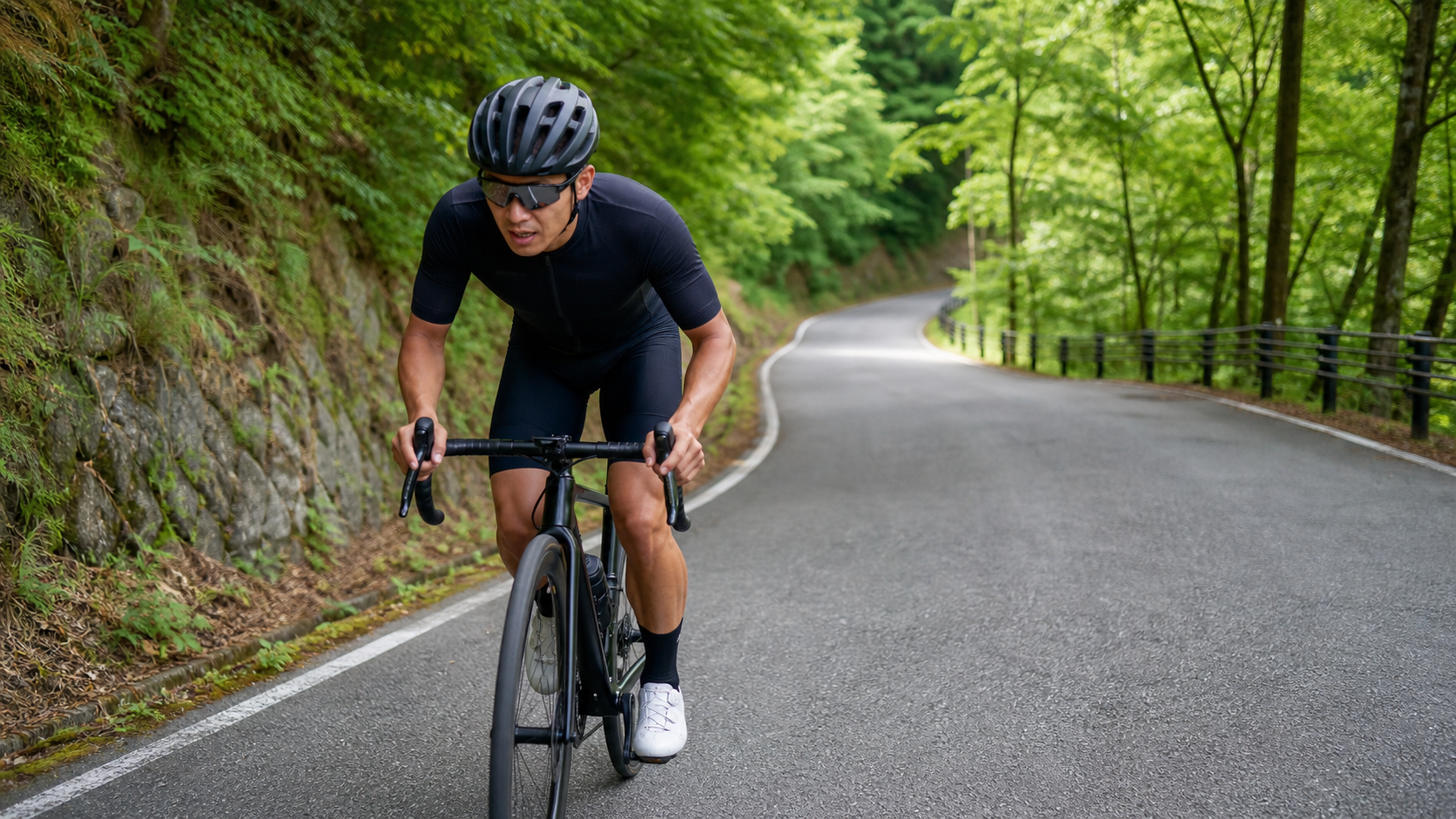
Not every climb worth riding has to be long and brutal. Some climbs derive their value precisely from being “short”—short enough that you can repeat them again and again, short enough that they become the perfect whetstone for honing specific abilities. Iwateyama Makkaeshi is exactly that kind of climb.
In this guide, I won’t tell you to treat it as an epic, long-distance expedition—because it isn’t one. At 3.17 kilometers with 214 meters of elevation gain, a well-trained rider can finish it in just over ten minutes. But precisely because of that, this short climb is an undervalued treasure trove: it’s a gym for building explosive power, a laboratory for testing short-climb power output, and a standard track for designing repeat-climb workouts. The mission of this article is to teach you how to squeeze every last drop of training value out of this short climb.
1. First, Understand the Climb’s Data Profile
As usual, let’s lay out the numbers. The core data for Iwateyama Makkaeshi is as follows:
| Item | Data | Notes/Conversion |
|---|---|---|
| Distance | Approx. 3.17 km | Short climb, suitable for repeats |
| Total Elevation Gain | Approx. 214.4 m | About 200 meters of elevation difference per rep |
| Average Gradient | Approx. 6.8% | Sustained upper-intermediate grade |
| Start/Trailhead Elevation | Approx. 630–633 m | Classic Iwateyama trailhead |
| Location | Toward Takizawa, Iwate Prefecture | Approx. 10 km from Takizawa IC on the Tohoku Expressway |
| Parking Capacity | Approx. 100 cars | Makkaeshi Parking Lot |
Once you understand this table, you’ll see the climb’s character is very distinct: it’s a sustained upper-intermediate climb of “high purity.” An average gradient of 6.8% means there are almost no easy sections to slack off on—from start to finish, you have to put in real effort. And the 3.17-kilometer length falls right in a sweet spot: long enough to settle into a steady high-intensity output and produce meaningful power data, yet short enough that you can repeat it multiple times in a single session without completely falling apart.
To define it in one sentence: Makkaeshi is not a “scenic route” but a “training machine.” Its value lies not in riding it once, but in “how you use it to make yourself stronger.”
To put it in terms familiar to Taiwanese riders, this climb’s length and gradient fall roughly between one of the steeper sections of Fengguizui or some segments of Maokong. Its positioning is very clear: this is an ideal venue for VO2max intervals and threshold climbing training, not an expedition requiring nutrition strategies and long-duration pacing management.
2. Treat Makkaeshi as a Gym: Core Workout Design
Since this is a training machine, let’s use it with training logic. Below are three ready-to-use workouts, each targeting a different training goal. I’ll describe all intensities using FTP (Functional Threshold Power) percentages—the most universal language, unaffected by individual absolute values.
Workout A: VO2max Repeat Climb Intervals (Improve Maximum Oxygen Uptake)
This is Makkaeshi’s most suitable purpose. At 3.17 km and 6.8%, a single rep takes about 8–14 minutes (depending on your level), landing right in the most effective time window for VO2max intervals.
- Warm-up: Ride easily for 15–20 minutes on the flat roads at the base and surrounding areas, gradually raising your heart rate, and do a few short, high-cadence accelerations to wake up the body.
- Main set:
- Ride up Makkaeshi at full (but controlled) effort, targeting an intensity of 106–120% of FTP—this is the VO2max zone.
- Try to maintain a cadence of 85–95 rpm, using “high cadence, sustainable high intensity” rather than “low cadence, grinding hard.”
- After reaching the top, descend slowly back to the start; this descent is your recovery period (about 8–12 minutes), letting your heart rate come down.
- Repeat 3–5 times, tapering based on how you feel.
- Cool-down: Ride easily for 10–15 minutes at the base.
Training benefit: This workout effectively stimulates maximum oxygen uptake and enhances the body’s ability to carry and utilize oxygen at high intensity—one of the key determinants of the ceiling for all climbing performance.
Workout B: Threshold (FTP) Climbing Workout (Improve Sustained Output Ability)
If your goal is to improve your ability to sustain output over a long period (for example, to tackle other long climbs), you can use Makkaeshi as a threshold training venue.
- Warm-up: Same as above, 15–20 minutes.
- Main set:
- Ride up Makkaeshi at 95–105% of FTP, focusing on “steadiness”—keep power as smooth as possible throughout, avoiding spikes and dips.
- At this intensity, you’ll feel hard but manageable; breathing will be heavy but not at the breaking point.
- Recover on the descent between reps, repeating 3–4 times.
- Advanced variation: If fitness allows, try “two consecutive reps without full recovery”—after finishing the first rep, catch your breath briefly at the top, immediately descend, and start the second rep right away to simulate the fatigue state of the latter half of a long climb.
Workout C: Short-Climb Explosive Power/Sprint Workout
Using this climb’s gradient, you can also train short-duration explosive output.
- Pick a section of the climb lasting about 20–40 seconds and sprint out of the saddle at full effort, simulating an attack or surge during a climb.
- Recover fully after each sprint (2–3 minutes of easy riding), repeating 5–8 times.
- This is highly beneficial for improving “gear-changing ability” and neuromuscular recruitment during climbs.
3. Short-Climb Power Testing: Use Makkaeshi as a Laboratory
Beyond serving as a workout venue, Makkaeshi has another excellent use: as a fixed power-testing venue. Because its distance and gradient are fixed and road conditions are consistent, it’s ideal for periodic fitness assessments to track your progress.
How to Conduct a Test
- Control the variables: Each test, try to choose days with similar weather and wind conditions, use the same bike, same tire pressure, and same equipment so the data is comparable.
- Standard warm-up: Do the exact same warm-up routine before each test (e.g., a fixed 20-minute progressive warm-up plus 3 short accelerations) to ensure your body is in a consistent state of readiness.
- Full-effort time trial: Ride from a fixed start point to a fixed finish point at full effort, recording “completion time” and “average power.”
- Build a database: Log the time and power from each session, test every few weeks, and you’ll clearly see the trend in your short-climb ability.
Why Is a Fixed Testing Venue Important?
The biggest challenge in real-world training is “too many variables”—today it’s a tailwind, tomorrow a headwind; today you feel great, tomorrow you didn’t sleep well. Having a standard climb like Makkaeshi with fixed distance and gradient gives you a “fixed ruler.” When you improve your time from 12 minutes to 11 minutes on the same climb, with the same warm-up, that improvement is real and indisputable. This kind of quantifiable positive feedback is the most powerful fuel for sustaining long-term training motivation.
An engineer’s training philosophy: You cannot improve what you do not measure. Part of Makkaeshi’s value is that it’s a stable, reliable measuring stick, making your efforts “measurable, trackable, and verifiable.”
4. Gearing, Equipment, and Pedaling Essentials
Although Makkaeshi is a short climb, the sustained 6.8% gradient combined with high-intensity training demands means gearing and equipment can’t be overlooked.
Gear Ratio Setup
- Since this is high-intensity training, you need gearing that allows you to “maintain high power at high cadence.” Compared to the ultra-light bailout gears needed for long climbs, you might use relatively heavier gears here to sustain 85–95 rpm at VO2max intensity.
- Recommended setup: A compact crank (50/34T) paired with an 11-28T or 11-30T cassette is sufficient for most training needs. When pursuing explosive power training, you can even deliberately use slightly heavier gears for low-cadence strength-training variations.
Equipment and Pedaling
- Weight reduction: If you’re chasing a best time during training, you can remove excess weight and switch to climbing wheels, but for daily training there’s no need to be overly particular—riding with your usual setup actually reflects your true fitness better.
- Pedaling technique: In short, high-intensity climbing, switching between “standing sprints” and “seated pedaling” is a key skill. Seated pedaling maintains steady power output, while standing provides extra force when the gradient steepens or you need a sudden surge. Practicing smooth transitions between the two is an important lesson this climb can teach you.
- Brake check: Since the workout requires repeated descents back to the start, and the descent is a recovery segment where you’re prone to letting your guard down, make sure your brakes are in good working order. Stay focused on the descent and don’t neglect handling due to fatigue.
5. Fitting a Short Climb into a Bigger Ride: Extended Ways to Use Makkaeshi
Ridden alone, Makkaeshi is a training session; but if you embed it into a larger ride, it can play different roles. Below are several extended ways to maximize this short climb’s value.
Option One: A “Climb Accent” on a Long-Distance Ride
If you’re on a long ride starting from the Morioka suburbs, Makkaeshi can serve as a “climbing challenge point” along the way. After cruising dozens of kilometers on flat roads, turn off and hammer up Makkaeshi, adding a burst of intensity to an otherwise flat long ride and giving your trip a clear “conquest goal.” At the trailhead parking lot, take in the majestic view of Mount Iwate, rest and refuel briefly, then continue your journey.
Option Two: A “Climbing Day” Centered on Makkaeshi
If your theme for the day is “climbing training,” you can use Makkaeshi as the core venue and design a “shuttle ride + repeat climbs” training day. Ride from your accommodation (e.g., around Morioka or Takizawa) to the Makkaeshi parking lot (as a warm-up), do several repeat climbs on Makkaeshi as the main set, then ride back to your accommodation (as a cool-down). This way, warm-up, main set, and cool-down flow seamlessly into one another—a well-structured, highly efficient climbing training day.
Option Three: Bike Shuttle for Mountain Hiking
Makkaeshi itself is one of the most iconic trailheads for Mount Iwate, with a parking lot accommodating about 100 cars. For multi-discipline enthusiasts who love both cycling and hiking, you can even plan a “ride up to Makkaeshi, lock the bike, switch to hiking gear, and hike Mount Iwate” hybrid trip—using the bike to cover the final shuttle segment, then using your feet to conquer Mount Iwate, one of Japan’s 100 Famous Mountains. Of course, this requires more thorough equipment and time planning—it’s a romantic endeavor for advanced players.
6. Extended Routes Nearby: Expanding Your Training Radius
Makkaeshi’s location (toward Takizawa, Iwate Prefecture, near the Morioka suburbs, about 10 km from Takizawa IC on the Tohoku Expressway and about 11 km from IGR Iwate Galaxy Railway’s Takizawa Station) is relatively convenient, making it a good node for exploring cycling in Iwate. With Makkaeshi as the center, you can expand your training and touring radius:
- Connect with Morioka suburban routes: The Morioka area has a wealth of suburban cycling routes—flat roads, gentle climbs, and riverside paths—suitable as warm-up and cool-down segments before and after high-intensity training on Makkaeshi, as well as for easy recovery-day rides.
- Mount Iwate loop routes: Mount Iwate (the “Southern Fuji,” elevation 2,038 m) is a landmark of Iwate Prefecture. Roads circling its foothills offer diverse riding options; you can embed the steep Makkaeshi climb into a longer loop around the mountain.
- Link to bigger challenges: If you have energy to spare, Hachimantai Aspite Line (the full climb from the Iwate side is about 19–20 km with over 1,000 meters of elevation gain), also in Iwate Prefecture and a bit farther away, is a long-climb challenge of an entirely different magnitude. You can use Makkaeshi as “short-climb explosive power” training and Hachimantai as the “long-distance endurance” test—one short, one long; one explosive, one enduring—together forming a complete spectrum of climbing ability.
The wisdom of training planning: Short climbs build “intensity,” long climbs build “endurance.” Makkaeshi and Hachimantai are a perfect pair Iwate Prefecture offers to cyclists—a short blade for sharpening explosive power, and a long road for forging endurance.
7. Common Mistakes and Cautions
Even with short-climb training, there are many details Taiwanese riders tend to overlook. Here’s a checklist to help you out:
- Going all-out without a proper warm-up: Short-climb training often starts at high intensity right away. If you haven’t warmed up enough, your muscles and cardiovascular system aren’t ready—performance suffers and injury risk rises. Be sure to do a full 15–20 minute progressive warm-up.
- Inconsistent intensity across reps: The focus of repeat-climb workouts is “quality,” not “quantity.” Rather than grinding out ten reps with fading speed each time, focus on riding three to five high-quality intervals.
- Pushing the next rep without enough recovery: If recovery between VO2max intervals is insufficient, the intensity of later reps will drop off a cliff, diminishing training effectiveness. Respect recovery time—better to do one fewer rep than to compromise the quality of each one.
- Ignoring descent safety: The descent is a recovery segment, where you’re most likely to let your guard down because you’re breathless and tired. On mountain descents, stay focused and control your speed.
- Forcing high-intensity work on unsuitable days: Doing VO2max workouts when sleep-deprived, fatigued, or in bad weather yields poor results and higher risk. Learn to listen to your body and save high-intensity work for days when you’re in good shape.
- Training without testing, or testing without training: It’s a shame to split Makkaeshi’s two great values apart. The best approach is to run “regular training + periodic testing” in parallel, giving your training direction and making your progress visible.
8. Periodized Training: Fitting Makkaeshi into Your Annual Plan
Individual workouts matter, but what truly determines whether a rider keeps improving is “periodized” training planning. Makkaeshi, as a fixed training venue, is well suited to being embedded into a structured annual or quarterly training cycle. Below, using an engineer’s logic, I’ll explain how to use it systematically.
Period One: Base Phase (Building Engine Displacement)
At the start of a training cycle, the focus should be on building aerobic base and strength, not rushing into high-intensity work. In this phase, here’s how to use Makkaeshi:
- Ride up Makkaeshi with “low cadence, moderate-to-high torque,” simulating the effect of weight training to strengthen the muscles needed for climbing. Deliberately drop your cadence to 60–70 rpm and use slightly heavier gears while seated to effectively stimulate muscle recruitment.
- Frequency in this phase doesn’t need to be high—one to two sessions per week is enough. The key is building the foundation to pave the way for later high-intensity training.
Period Two: Progression Phase (Raising the Intensity Ceiling)
Once the base is established, you enter the intensity-building phase. This is where Makkaeshi delivers the most value:
- Focus on “Workout A: VO2max Repeat Climb Intervals” from earlier, scheduling one to two sessions per week, gradually increasing the number of reps or intensity week by week.
- In this phase, you’ll clearly feel your cardiovascular capacity improve—where you once reached the top gasping and unable to speak, weeks later you’ll be able to output higher power in the same time.
- Don’t forget to pair this with the “periodic power testing” mentioned earlier—test on Makkaeshi every three to four weeks and use the data to verify your progress.
Period Three: Peak and Taper Phase (Fine-Tuning to Your Highest State)
If you have a target event or challenge (such as an expedition to Hachimantai or participating in a climbing event), in the pre-event peak phase, Makkaeshi can be used for final intensity sharpening:
- Maintain high-intensity stimulus but reduce training volume, doing a small number of high-quality intervals to keep the body sharp while allowing full recovery.
- Begin tapering one week before the event, letting the body “absorb” accumulated training gains and arrive at peak condition on target day.
The core idea of periodization: Training isn’t “more is better,” but “doing the right intensity at the right time.” Makkaeshi’s fixed nature and measurability make it the most reliable piece of the periodization puzzle.
9. Heart Rate, Power, and Perceived Exertion: Cross-Validating Three Languages
Training on a fixed climb like Makkaeshi is an excellent opportunity to learn to “read your body.” A mature rider should learn to use all three languages—power, heart rate, and perceived exertion—to assess training status.
Power: This is the most objective “output” metric. It tells you “how much force you’re applying to the pedals,” unaffected by fatigue, weather, or mood. On Makkaeshi’s fixed climb, power is your most reliable ruler for tracking progress.
Heart Rate: This is the body’s “cost” metric. It tells you “how much your body is paying to produce that power.” If your heart rate is noticeably higher at the same power, it may indicate fatigue, dehydration, or poor form.
Perceived Exertion (RPE): This is the oldest language and the one that should never be ignored. It integrates all the body’s signals—leg soreness, breathing heaviness, mental focus. Learning to listen to perceived exertion helps you make wiser training decisions beyond the data.
One of the values of repeatedly training on Makkaeshi is that it lets you “calibrate” these three languages together. When you’re on the same climb, producing the same power, yet your heart rate is abnormally elevated and perceived exertion feels unusually hard, that’s your body telling you: “Today is a rest day.” This keen awareness of your own state is a precious ability that no expensive training equipment can buy—it can only be accumulated through repeated practice.
10. Recovery and Injury Prevention: The Hidden Risks of Short, High-Intensity Climbing
Short, high-intensity climbing has an easily overlooked trap: because each rep is short and doesn’t feel “tiring,” many riders unconsciously overtrain, accumulating into chronic fatigue or sports injuries. This section is a special reminder to take recovery seriously.
Prioritize Recovery Between Intervals and Between Sessions
- High-intensity training like VO2max places enormous stress on the body. After each high-intensity session, be sure to schedule adequate recovery days (easy rides or complete rest) to let the body repair, supercompensate, and grow stronger.
- Don’t do high-intensity work every day. Two to three high-intensity sessions per week is sufficient; the rest of the time should focus on easy aerobic riding or rest. “Training more” doesn’t equal “improving more”—real progress happens during recovery.
Protect Your Knees
- In short, high-intensity climbing, overusing low-cadence, high-torque pedaling puts significant stress on the knees. Unless it’s deliberate strength training, try to maintain a higher cadence to reduce joint load per pedal stroke.
- Warming up thoroughly before training and stretching and cooling down properly afterward are the most basic and effective ways to protect your knees and prevent injury.
Listen to Your Body’s Warning Signs
- If you experience persistent fatigue, declining sleep quality, abnormally elevated resting heart rate, or loss of enthusiasm for training—signs of “overtraining”—that’s your body sending a strong warning. The wisest choice at that point is to rest decisively, not push through.
- Remember: The purpose of training is to make you stronger and healthier, not to break you down. Appropriate rest is itself part of training.
A trainer’s maxim: What makes you stronger isn’t training, but “training + recovery.” Training that neglects recovery is laying the groundwork for future injury and regression.
Epilogue: The Big Wisdom of a Short Climb
Iwateyama Makkaeshi is a short climb that long-climb enthusiasts might easily overlook. At 3.17 kilometers, it’s simply too unimpressive for riders chasing epic grandeur.
But riders who truly understand training know: improvement often comes not from one dramatic long expedition after another, but from precise, repeated, measurable deliberate practice. Makkaeshi is exactly such a dojo for deliberate practice. It’s short, so you can repeat it; it’s fixed, so you can measure it; it’s steep enough, so it’s effective.
When you learn to treat this short climb as a gym, a laboratory, and a measuring stick, you’ll find that the explosive power and VO2max foundation it builds for you will translate, on every future long climb, into those extra few watts of power and those few seconds of advantage.
Don’t underestimate short climbs. Ride Makkaeshi thoroughly, train on it thoroughly, test on it thoroughly—it will make you stronger in the most tangible way.
Appendix 1: Quick Q&A
To make planning easier, here are the most common questions from Taiwanese riders, answered in a quick Q&A format.
Q: I’m just an amateur rider. Is Makkaeshi too hard?
A: Not at all. While the 6.8% gradient is on the upper-intermediate side, since it’s only 3.17 kilometers, any amateur rider can complete it by bringing a light enough gear and spinning up slowly in a seated position. Its difficulty is “adjustable”—you can ride it easily if you want, or use it for high-intensity intervals. The difficulty depends on the intensity you choose.
Q: I don’t have a power meter. Can I still do these workouts?
A: Yes. A power meter is the most precise tool, but not the only one. You can substitute with “heart rate” and “perceived exertion”—for example, interpret “106–120% of FTP” as “so breathless you can barely speak, but can still hold on for about ten minutes.” With a fixed climb and a fixed warm-up, tracking progress by “completion time” can still give you highly valuable training feedback.
Q: How many times a week should I train on Makkaeshi?
A: If Makkaeshi is your primary high-intensity training venue, two to three high-intensity sessions per week is sufficient; the rest of the time should focus on easy riding or rest. Remember, progress happens during recovery—don’t hammer high-intensity work every day.
Q: Can a short climb really build the ability to climb long hills?
A: Yes, but it needs to be combined. Short climbs are best at improving VO2max and threshold power—these are the “ceiling” of climbing ability. But the “sustained endurance” and “nutrition and pacing management” required for long climbs still need to be built through actual long-duration riding. The ideal approach is to use Makkaeshi for intensity and long rides for endurance—the two complement each other.
Appendix 2: Write Makkaeshi into Your Training Log
Finally, here’s a practical tip: create a dedicated training log for Makkaeshi.
Each time you visit, record these fields: date, weather, wind direction, bike and gearing used, warm-up content, completion time for each rep, and (if available) average power, plus your subjective feelings that day. Over time, this log will become the most faithful witness to your ability changes.
When one day you open the log and see that, under the same weather and same warm-up, you’ve pushed your single-rep time steadily forward from your initial result and gradually raised the power you can sustain—that sense of accomplishment from “seeing yourself get stronger in black and white” will be the warmest and most powerful fuel sustaining your long-term training.
Training is a long and lonely road, but with a fixed dojo (Makkaeshi), a reliable measuring stick (power or timing), and a faithful record (training log), you’re no longer working blindly. Instead, with direction, feedback, and evidence, step by step, you sculpt yourself into a stronger rider.
This is the greatest gift a short climb like Makkaeshi can offer a serious rider.
Related Reading
- Repeat Climb Intervals: Systematic Mountain Training Workouts and Power Guidelines
- Cycling Mountain Training Methods: Breaking Through Power Limits with Repeat Climb Practice
- Gassan Park Line Climb Guide: Data Analysis of a Short, Steep 4.84 km Climb at 7.8% Average Gradient
- Climbing Endurance: Designing and Executing a 30-Minute Sustained Workout
台北闊瀨陡坡 騎旅 / 日本單車雜誌編輯車友臨時加入!/ 髮香才是最強的 / feat. 北迴歸線小隊 / 公路車 CT Yeh
6 個月前
單車 梅山36灣 坡度介紹 路段介紹 空拍 (相關遊記影片,請參考說明或我的頻道喔,歡迎訂閱)
6 年前
半日 小台灣 極限單車路線挑戰實錄
7 年前
4K單車實境) 舊陽金P字道 第1P 仰德大道至小油坑 誤跟武嶺神人們 被拉爆爽飛天 Taiwan Cycling Climb Route Recommend
7 年前
單車AI教練!全新 ChatGPT4o 幫你分析訓練成果!排武嶺課表,分析騎車姿勢! 太神了! / 公路車 / CT Yeh / feat. 緯緯
2 年前
阿里山塔塔加 兩倍特濃版!全新隧道開通! 進喔!公路車 | CT Yeh
3 年前
西進武嶺 免費訓練分析服務 Intervals | 練不夠還是練過頭?你哪一種類型選手?AI模型告訴你! | 備戰神器 | 公路車 訓練 | CT Yeh
4 年前
ThinkRider 智騎 XXPRO 訓練台,高階機種功能 只要 1/3價格!? 實測功率對比、噪音實測 / 公路車 / CT Yeh
1 年前