The Romance of the Zodiac Bends: Riding from Zhushan Sweet Potato Buns into the Sea of Clouds at Sun Link Sea
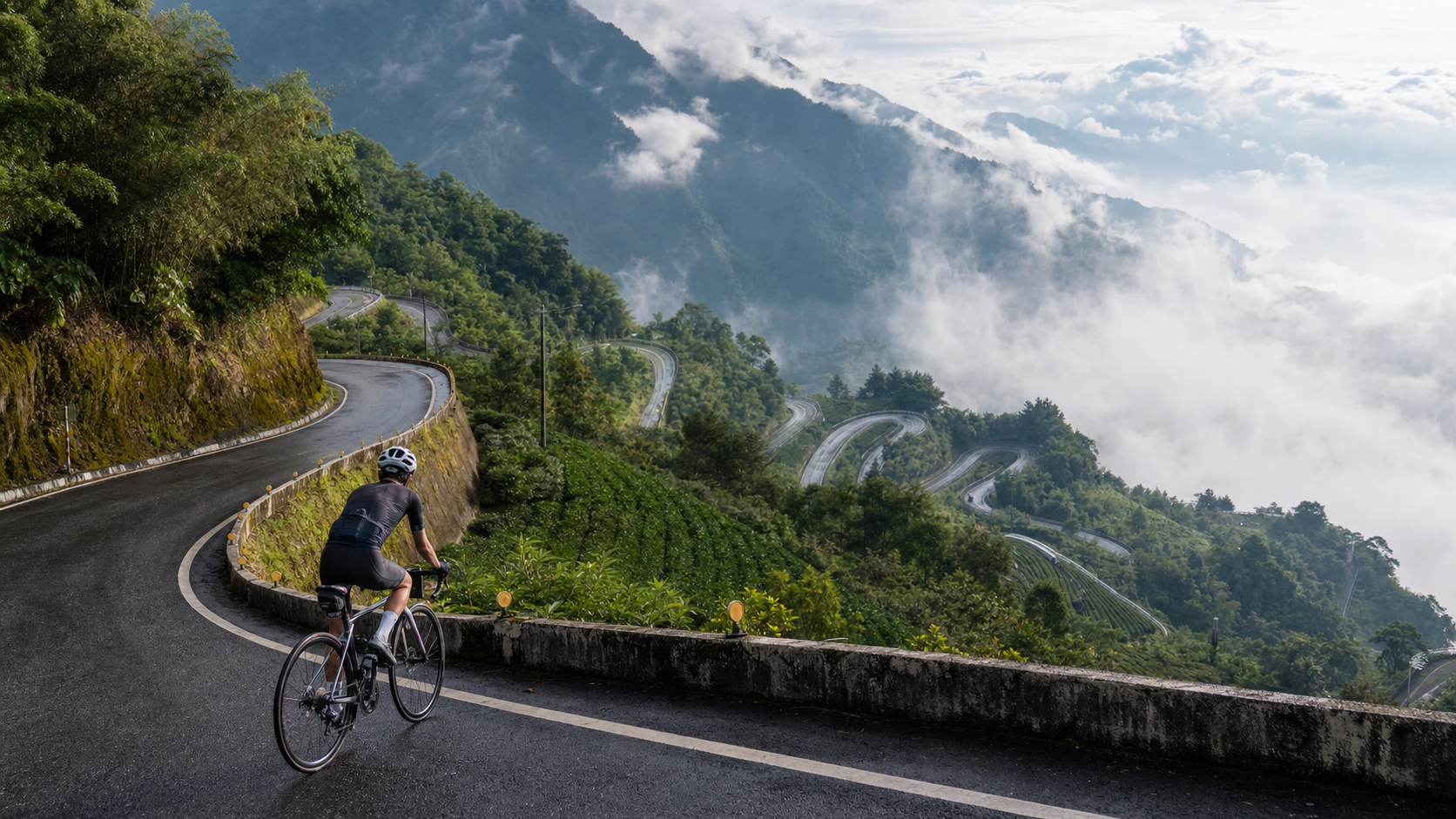
When setting off from Zhushan, the weather was still hot, the asphalt radiating summer heat. Who would have thought that at the end of the same road lies Sun Link Sea, at 1,600 meters above sea level, shrouded in mist and clouds. This road, about 26.9 kilometers long with roughly 1,434 meters of climbing, has its most charming feature in a series of consecutive hairpin bends named after the twelve zodiac animals—Rat, Ox, Tiger, Rabbit, Dragon, Snake, Horse, Goat, Monkey, Rooster, Dog, Pig—one bend after another, spiraling you from the mortal world up into the clouds.
This article isn’t about pacing. The guides have the numbers; what I want to talk about here is why these bends are named after the zodiac, why the tea at Fanzi Tian is so fragrant, what scenery Longfeng Gorge hides, and why cyclists in Taiwan are willing to come back again and again just to count these twelve animals.
The Zodiac Bends: The Romantic Naming of a Road
On the section of the Sun Link Sea Highway commonly known as the “17-kilometer” stretch, every roughly 180-degree switchback has been given the name of a zodiac animal. This isn’t just marketing—it’s a very Taiwanese, very local kind of romance. When a road has so many bends you can’t keep count, people simply use the twelve zodiac animals, so familiar to everyone, to name each turn, letting lost travelers and climbing riders know exactly “which animal they’ve reached.”
And so this climb takes on a wonderful sense of ritual. You’ll hear riders calling out to each other: “Past the Dragon Bend!” “Almost at the Pig Bend, hang in there!” The Pig Bend is one of the later ones in the sequence—when you count to the Pig, you know the hardest part is nearly over. These names turn a cold, grueling climb into a rhythmic journey with something to look forward to. After the “Horse Bend” comes “First Meeting Ridge,” and after the “Pig Bend” comes “Longing Terrace” and Longfeng Gorge—even the place names carry poetry, as if the road itself is writing verse about your effort.
Why “Twelve Zodiac Animals” Instead of Numbers
You might wonder: with a road this full of bends, why not just label them “Bend One, Bend Two”? Over time, I’ve come to understand—numbers are cold, the zodiac is warm. Numbers only tell you “how many are left,” but the zodiac gives each bend a personality—the Dragon Bend is grand, the Snake Bend winding, the Horse Bend spirited, the Pig Bend honest and unassuming. When a bend has a name, it’s no longer just a curve in the asphalt; it becomes a place you remember, anticipate, and savor.
This habit of naming mountain roads hides a certain optimism Taiwanese people carry when facing hardship. Climbing is tough, but the early settlers and later travelers alike insisted on finding joy in the suffering, using the twelve zodiac animals—the most familiar, household names—to tame a grueling long climb into a chant you can recite as you pedal. Past the Rat, Ox, and Tiger, you’ll find yourself smiling without meaning to—even suffering can be so full of human warmth.
From Rat to Pig: A Rhythm That Breathes
What I particularly love about this stretch is the psychological rhythm of “counting the animals”—the rise and fall of it. The first few—Rat, Ox, Tiger, Rabbit—you still have strength, counting them feels light, like taking roll call; by the middle—Dragon, Snake, Horse, Goat—your legs start to weigh heavy, and the counting turns into gritted teeth; by the later stretch—Monkey, Rooster, Dog, Pig—each one feels like a countdown to relief. Passing the Horse Bend, you encounter “First Meeting Ridge,” a name that seems to say “first encounter, and the real test is only beginning”; and when you finally count to the Pig, pass the Pig Bend, and connect to Longing Terrace with Longfeng Gorge in sight, that solid sense of “almost there” is more reassuring than any Strava notification.
Fanzi Tian and Longfeng Gorge: Tea Fragrance Hidden in the Bends
The Sun Link Sea tea region, where the Zodiac Bends are located, is a major producer of Taiwan’s high-mountain oolong tea. The area is dotted with place names full of stories—Yangzai Wan, Ruan’an Bagua, Sanceng Ping, Zhuzai Wan, Longfeng Gorge, Cao Di, Fanzi Tian… behind each name lies a tea plantation nestled into the mountainside.
Among them, the Fanzi Tian tea region, near Zhushan’s Da’an area, is one of the largest tea gardens in the entire greater Sun Link Sea tea region, surrounded by moso bamboo groves and cedar forests. The Sun Link Sea tea produced around Longfeng Gorge and Yangzai Wan is especially renowned—high altitude, wide day-night temperature swings, and nourishing clouds and mist produce that crisp, sweet, high-altitude character Sun Link Sea tea is known for.
Riding this road, you’ll constantly pass through tea gardens. Morning mist drifts over the tea bushes, and the silhouettes of tea pickers bent over their work appear and disappear in the fog. That’s the most life-warmed scene on this road—every meter you struggle to climb is someone else’s daily workplace, a home built on tea. When you’re tired, stop for a cup of this high-mountain tea, and let its fragrance give your legs a second wind.
The Place Names in the Tea Gardens: An Unwritten Local Chronicle
Yangzai Wan, Ruan’an Bagua, Sanceng Ping, Zhuzai Wan, Longfeng Gorge, Cao Di, Fanzi Tian—if you hadn’t ridden this road, you’d probably never hear these names in your life. But each one is like a small seal stamped onto the identity of this land. Some are named for the terrain (Wan, Ping, Gorge—describing the folds of the mountains), others for the memory of early settlers’ reclamation. When you ride past a weathered sign bearing one of these names, you’re riding through the traces of generations of people making a living from this mountain.
I’ve always felt that to truly understand a road, you must first understand its place names. These words aren’t fancy—a little rustic, even—but they’re honestly endearing. They weren’t invented as pretty marketing for tourists; they’re real scenes of daily life: here’s a tea garden, there used to be a home, around the corner is a bamboo grove. Riding on a road like this, you’re not just exercising—you’re flipping through the pages of a local chronicle that was never formally written down.
Mist, Temperature Swings, and the Story Behind a Cup of Tea
The reason Sun Link Sea tea is so fragrant comes down to what this mountain provides: high altitude, wide day-night temperature differences, and year-round nourishment from clouds and mist. For riders, these are the reasons it’s “hard to climb”—the altitude makes you gasp, the mist leaves you damp and cold—but for the tea bushes, they’re precisely the gift that produces excellent flavor. The same clouds that make your climb harder also make the tea here sweeter. With that thought, the mountain fog suddenly becomes a little less bothersome.
So when you stop around Longfeng Gorge and take a sip of the local high-mountain tea, that crisp, sweet, lingering taste actually holds every meter of altitude and every wisp of mist you just climbed through. It’s a flavor you can’t get anywhere else—because you didn’t buy it with money; you earned it with an entire climb.
Zhushan: The Taste of Sweet Potatoes, Bamboo Shoots, and a Small Town
The starting point of this road, Zhushan, is a modest yet bountiful town. It’s known for three things: sweet potatoes, bamboo shoots, and the moso bamboo that supports half of Nantou’s bamboo industry.
Zhushan’s most iconic snack is the “sweet potato bun”—a wrapper made from sweet potato, filled with bamboo shoot stuffing, one bite combining the town’s “three treasures” in a single mouthful. It’s a local flavor many riders insist on tasting before setting off or after finishing. Beyond sweet potato buns, bamboo shoot dishes and caozaiguo (herbal rice cakes) are also everyday delicacies here. Zhushan Old Street and the bustling Zinan Temple commercial area are great spots to visit before or after your ride.
I’ve always believed a good climbing route deserves a “flavorful starting point.” Zhushan is exactly that—it lets you taste the sweetness of the land before you break a sweat climbing, and after you descend exhausted, a hot meal and an old street are waiting for you.
From Summer Heat to Mist: A Vertical Journey
The most magical experience on this road is the “vertical change of seasons.” Setting off from Zhushan, it might still feel like high summer; as you climb meter by meter, the temperature drops degree by degree, the air growing cooler and damper. By the time you ride into Sun Link Sea, the fresh scent of Japanese cedar hits you, clouds drift between the bends, and you’d swear you’ve stepped into a different season.
This experience of “crossing several climates in a single ride” is a magic unique to long mountain routes. And the Zodiac Bends are the stage for this vertical journey—with each zodiac bend you pass, you step closer to the clouds. When you finally look up around Longfeng Gorge and see the sea of clouds churning below your feet, you’ll forget how tiring those bends were, and only remember the view that belongs solely to those who climbed up to see it.
Four Seasons, One Road, Ever-Changing Faces
One of the reasons this road keeps drawing riders back is that it wears a different face in every season. In spring, the tea gardens push out tender green shoots, the voices of the tea-picking season bring life to the valley, and a faint, elusive fragrance drifts through the air. In summer, it becomes a refuge from the lowland heat—you might be drenched in sweat down in Zhushan, but by the time you climb into Shanlinxi, you’ll want an extra layer, the cool of the cedar forest washing over you completely.
In autumn, the mountain light turns gentle; the afternoon clouds roll in early and linger long, and the entire Zodiac Bend feels wrapped in a thin veil of mist, so quiet you can hear your own breath. Winter is the coldest and clearest—if you’re lucky, frost forms at the higher elevations. You grind up the climb in the low temperatures, exhaling white puffs, and when you reach the top, that bone-chilling crispness makes you feel like you’ve climbed into another world. The same Zodiac Bend: lively to count in spring, refreshing in summer, poetic in autumn, and dramatic in winter. It never repeats itself—which is exactly why veteran riders always say this road is “worth riding once every season.”
Linking It All Together: Turning One Day into a Story
A great road shouldn’t be just “the climb up.” What makes Zhushan–Shanlinxi so captivating is that it can be strung together into a full day’s narrative. Before setting out from Zhushan in the early morning, stop by the old street for something warm to eat and drop by Zinan Temple for a bit of good luck. Then count your way up through the Zodiac Bends into the clouds, resting at the tea-growing areas of Longfeng Gorge and Fanzaitian to sip tea and watch the sea of clouds. After descending, return to Zhushan and close out the day with a sweet potato bun and a bowl of bamboo shoot dish.
The climb up is sweaty and focused; the ride down is relaxed and slow. In that rhythm of up and down, tension and release, you’ll find that you haven’t just ridden a road—you’ve truly “walked into” the town of Zhushan, this mountain, its teas, and its snacks. A day like that is worthy of the 1,400 meters of elevation you just spent.
What This Road Means to Riders
What Zhushan–Shanlinxi teaches riders is “to break a long road into small goals.” 26.9 kilometers and 1,434 meters of climbing sounds daunting. But the Twelve Zodiac Bends offer a clever solution—don’t think about how far you have left; just count “the next animal.” Rat, ox, tiger, rabbit… one by one, and before you know it, you’ve climbed the whole mountain.
It’s a wise metaphor for life. When facing an overwhelming goal, the best approach isn’t to stare anxiously at the distant finish line, but to focus on the bend right in front of you, the next zodiac animal. For many Taiwanese riders, the moment they finish counting all twelve animals isn’t just a Strava record—it’s the solid, grounded feeling of “so I really can do this.”
The People You Meet on the Bends
Riding this road, you’re rarely truly alone. The Zodiac Bends are long and winding, and often around some corner you’ll meet another stranger rider, equally out of breath. No one knows anyone, but a nod, a word of “keep going,” or a heads-up like “almost at the Pig Bend” is enough to turn two strangers into temporary comrades on the same slope. This is the warmest part of Taiwan’s climbing culture—the mountain won’t go easy on you just because you ride solo, but the people on the road will be kind to you because they understand your struggle.
I’ve also met tea-picking aunties, road repair crews, and delivery drivers hauling goods up the mountain in their small trucks. When they see you riding up, they usually give you a look that says “why put yourself through this?” mixed with a hint of admiration. That look is fascinating—for them, this mountain is the daily grind; for you, it’s a challenge you came all this way to conquer. The same slope is someone’s everyday and someone else’s distant dream. That crossing of paths is itself a gift you can only receive by riding this road.
The Moment You Reach the Clouds, What Comes to Mind
Everyone who finishes the Zodiac Bends feels something different at the summit. Some remember the thought before departure—“I’m not sure I can make it”—and smile. Some recall the bend where they most wanted to quit and are glad they didn’t get off the bike. Others think of nothing at all, just quietly watching the clouds churn below their feet, letting the mountain wind blow away the fatigue of the climb.
That moment of stillness is precious. In the city, we rarely get the chance to trade two or three full hours of focus and sweat for a view that belongs only to those who climbed up. The sea of clouds won’t linger a second longer for someone who drove up; it’s simply there, waiting for everyone willing to earn this scenery inch by inch on their own two legs. You suddenly understand that what this road truly gives you was never the names of the Zodiac Bends—it’s that quiet pride, after reaching the top, of “I climbed this on my own.”
A Road, and a Practice for Life
Step back and look at this road from a distance—it’s really a miniature of how we face the big things in life. 26.9 kilometers, 1,434 meters, just like those goals we dare not even imagine at first—changing careers, learning a difficult skill, raising a child. If you fix your eyes on the distant finish from the start, its sheer size will crush you. But the method the Twelve Zodiac Bends teach you is clever: don’t think about all of it, just think about the next animal.
Life works the same way—one bend, one animal, one step at a time. You don’t need to see the whole mountain at once; you just need to finish the bend in front of you and trust that the next one will come. And when you look up, you’ll realize you’ve already quietly climbed that mountain you “never dared to imagine.” Perhaps that’s why so many Taiwanese riders keep coming back to this road again and again—they’re not just here to ride; they’re here to practice, once more, “the courage to face something big.”
Side Trips and Reminders
- Twelve Zodiac Bends: The soul of this road. One bend, one animal. Count slowly, climb steadily, don’t rush—let every animal walk a stretch with you.
- Fanzaitian and Longfeng Gorge Tea Areas: The home of high-mountain oolong. When you’re tired, rest in the tea gardens and sip a cup of local tea raised on clouds and altitude.
- Zhushan Sweet Potato Buns: Sweet potato skin with a bamboo shoot filling—three of Zhushan’s treasures folded into one bite. The most heartwarming signature taste at the starting point.
- Zhushan Old Street and Zinan Temple: The supply-and-comfort zone before and after the ride. Snacks on the old street, good luck at Zinan Temple—a human touch to bookend your day of riding.
- Dress Warm and Start Early: This is a journey that cuts vertically through climate zones, from Zhushan’s heat up into Shanlinxi’s clouds and mist. Warm layers are essential; the mountains are prone to fog and changing weather in the afternoon, so be sure to start early and finish early.
For Those Coming for the First Time
If this is the first time you’ve felt the urge to come count these twelve animals, let me share a few words—not about pacing, but about mindset. Don’t be afraid you won’t make it. This road never demands you ride fast; it only cares whether you’re willing to walk it with her, bend by bend. Tired? Stop. The mountain isn’t going anywhere. Thirsty? Have some tea. The mist will wait. Slow down, and you’ll actually see more: that patch of wildflowers blooming just right by the roadside, the bamboo hats of tea pickers in the gardens, the sudden gap in the clouds that opens up after a certain turn.
Anyone who’s truly ridden it knows the best scenery on this road is often not at the finish line, but in that moment you happen to look up. So don’t keep your eyes glued to the bike computer—look up often. By the time you descend that day, what you take away won’t be a string of numbers, but a whole day of clouds, the scent of tea along the way, and the version of yourself that didn’t give up on the Zodiac Bends. That version of you will quietly return in many future moments when you feel like quitting, to remind you: you once climbed an entire mountain, one bend at a time.
Twelve Animals, Twelve Personalities: Getting to Know Each Zodiac Bend
As I count the Zodiac Bends, I’ve gradually developed a habit: not just counting numbers, but imagining a personality for each animal, to give the climb a bit more drama. The Rat Bend comes first—nimble, starting light, like a reminder to “take it easy, this is just the beginning.” The Ox Bend follows—steady, resilient, as if teaching you to climb with an ox’s patience, step by step, unhurried. The Tiger Bend carries a bit of menace; the gradient starts to show its teeth like a tiger’s temper, and you feel for the first time that “this road isn’t playing around.”
Further up, the Rabbit Bend offers a light, easy stretch—a small chance to catch your breath, like a gift from above. The Dragon Bend is grand and winding, the most cinematic name of the whole set; the switchbacks stretch long and the views open wide. The Snake Bend, true to its name, twists and turns, testing your line choice through the corners. The Horse Bend is free-spirited, and right after it comes “First Encounter Ridge”—that name always makes me feel like it’s only here that you truly “first meet” this mountain road; everything before was just a warm-up.
The later section—Sheep, Monkey, Rooster, Dog, Pig—feels like the final legs of a relay race. The Sheep Bend is gentle but grinding; the Monkey Bend is agile but the gradient likes to play tricks. The Rooster and Dog Bends come in quick succession, and riders running low on energy often start muttering encouragement to themselves here. And the Pig Bend is one of the grand finales of this zodiac marathon—past it, you reach Acacia Terrace, and you feel an indescribable sense of solidity. Not because the Pig Bend is the easiest, but because counting all the way to the Pig means you’ve nearly counted the entire zodiac cycle.
The Moment the Sea of Clouds Surges: How Light and Shadow Flow Through Shanlinxi
The sea of clouds at Shanlinxi is never a static scene; it constantly changes its face with time and light. In the early morning, the cloud layer still lies low in the valley, and sunlight cuts obliquely through the cedar forest, dyeing the mist a pale gold, as if the mountains have not yet woken. By the time you ride toward noon, if the clouds begin to rise and surge, you will see the sea of clouds rolling over the ridgeline wave after wave, like tides crashing against an invisible shore—and you are standing on a lone island rising above the sea of clouds.
Experienced riders all know that the most moving moments of the sea of clouds are often fleeting—the clouds may disperse entirely within the ten minutes you stop to take photos, or they may suddenly surge up and swallow the entire road. This unpredictability is precisely what makes every arrival feel like a one-of-a-kind encounter: the sea of clouds you see will not be the same as what yesterday’s rider saw, nor what tomorrow’s visitor will see. This is also why veteran riders always say that the Shanlinxi sea of clouds “is worth seeing many times, because it is different every time.”
Suggested Side Trips: Fitting This Route into a Longer Journey
If time allows, the Zhushan–Shanlinxi route is well suited to a relaxed two-day mini-trip rather than a rushed out-and-back in a single day. On the first day, focus on finishing the Zodiac Bends, and spend extra time around the Shanlinxi park area—watch the sea of clouds, drink tea, and let your body gradually unwind from the intense climbing effort. The next day, descend at a leisurely pace, stop by Zhushan Old Street and take a stroll around Zinan Temple, blending cycling with the everyday rhythm of the town instead of rushing home right after the ride.
As for whether to connect with other nearby mountain routes, actual road conditions, closure periods, and transport connections should be based on the latest on-site information, so I will not offer unverified specific recommendations here to avoid misleading first-time visitors. The safer approach is to devote this trip simply to Zhushan and Shanlinxi themselves—this route already offers plenty, and it deserves to be ridden slowly and understood fully, without rushing the itinerary.
A Note to the Self Coming Back Next Time
Every time I descend this road after a ride, I always leave a note in my mind for the next time: don’t forget the way that sea of clouds surged, don’t forget the solid feeling of “almost there” after Pig Bend, and don’t forget that piping-hot sweet potato bun on Zhushan Old Street. In the busy days ahead, these memories become a quiet reminder—that you once climbed a mountain that looked impossibly far away, bend by bend, steadily and completely.
Perhaps next time the weather will be different, the season different, and the riders beside you different too, but those twelve animals will still be waiting for you in the same spot, in the same order, leading you once more up that road from the mortal world to the clouds. This is probably the most enchanting thing about this route—it never becomes ordinary just because you have been here before. Every fresh start is still a journey worth taking seriously.
Conclusion
These 26.9 kilometers of Zhushan–Shanlinxi form a long road that strings together central Taiwan’s “summer heat and mist, sweet potatoes and high-mountain tea, the mortal world and a fairyland.” Using the names of the twelve zodiac animals, it turns a daunting climb into a journey with rhythm and anticipation; with the tea fragrance of Fanzaitian and the sea of clouds of Longfeng Gorge, it rewards every rider willing to count each bend slowly, one by one. When you finish counting that last pig and look up to see clouds beneath your feet—you will understand why this road is worth returning to again and again. This is the romance of the Twelve Zodiac Bends.
Related Reading
- Zhushan Shanlinxi Twelve Zodiac Bends Guide: Pacing Discipline for a 26.9 km Long Climb
- Between Tea Fragrance and Sea of Clouds: Riding County Road 101 into the Lugu Dalunshan Ginkgo Forest Hidden Gem
- Xitou to Shanlinxi: A Misty Journey Through Japanese Cedar, Monster Village, and Songlongyan Waterfall
- Riding into Southern Taiwan’s Little Xitou: The Mist, Forestry History, and Post-Typhoon Rebuilding of Tengzhi Forest Road
2026紫南宮環線99.9K挑戰Vlog 多視角第一集團 跟看看.. / CT Yeh 公路車
1 個月前
台北闊瀨陡坡 騎旅 / 日本單車雜誌編輯車友臨時加入!/ 髮香才是最強的 / feat. 北迴歸線小隊 / 公路車 CT Yeh
6 個月前
藤枝二集團 單車行 Day1 | 南部小武嶺 | 爬坡爬到罵罵叫 | JJSC | 公路車 | CT Yeh
3 年前
太平山單車員工旅遊 | 這樣玩CP值最高!| 公路車
5 年前
一定要騎一次!阿里山最深處:里佳部落!單車旅行 | 2800m爬升 | 深度部落體驗:嗨翻晚會、螢火蟲、銀河 | feat. JJSC & 廢物伙伴 | 公路車 CT Yeh
9 個月前
嘉義大埔、阿婆灣挑戰賽,美到以為在日本!ft. 環騎5 Cool 西拉雅188 / 公路車 / CT Yeh
7 個月前
爬坡ITT實境)台中 魔王 松鼠坡 首航 6:12 大肚山 大三元 科福路
8 年前
浪漫 #臺三線 #單車 員工旅遊 桃園到台中 老少咸宜 環台賽 路線探索
6 年前