Utsukushigahara Highland Climb Guide: Opening Ramp at 20%+, Straight Up to Nagano's 2,000-Meter Lava Plateau
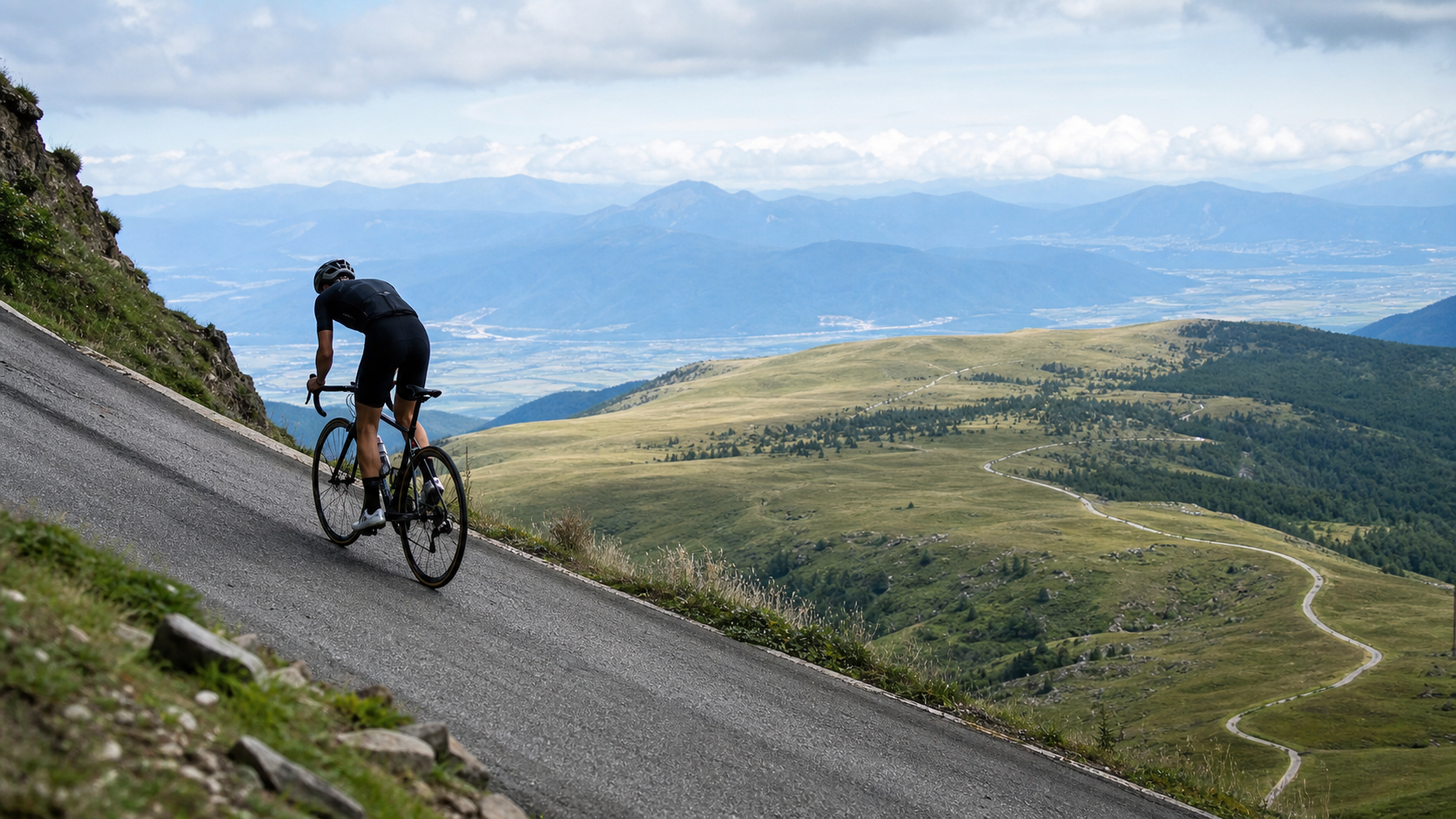
In Japan’s climbing circles, the name “Utsukushigahara” is almost synonymous with “a punch in the face right from the start.” This is the stage of a legendary climbing race that attracts thousands of riders every year, and for many, it’s shorthand for “one of Japan’s hardest climbs.”
Let’s get the numbers straight first. The climb segment featured in this article is approximately 12.28 km long with about 885.8 meters of elevation gain and an average gradient of 6.9% (as measured on the Strava segment). The official course for the annual “Tour de Utsukushigahara” race, on the other hand, is 21.6 km in total length with 1,270 meters of elevation difference and an average gradient of 5.9%, starting from the baseball stadium parking lot in Matsumoto City and finishing at Utsukushigahara Highland. These two sets of figures refer to different scopes—the former is the pure climbing segment, while the latter is the full official course including the approach road from the start. Please keep them distinct when writing or planning. Whichever set you use, the core impression of Utsukushigahara remains the same: the brutal opening ramp will wake you up right away. This wall is what makes Utsukushigahara a legend, and it’s the factor you need to prioritize most when planning this route.
1. Route Overview and Real Data
| Item | Strava Climb Segment | Full Official Course |
|---|---|---|
| Distance | Approx. 12.28 km | 21.6 km |
| Elevation Gain | Approx. 885.8 m | 1,270 m |
| Average Gradient | 6.9% | 5.9% |
| Finish Elevation | Approx. 2,000 m (highland plateau) | Same as left |
| Start Point | — | Matsumoto City Baseball Stadium Parking Lot |
| Signature Challenge | Opening ramp up to 20%+ | Same as left |
An average gradient of 5.9–6.9% might look merely “moderately hard,” but that’s an average diluted by the brutal ramps. Utsukushigahara’s true character lies hidden in that “wall” shortly after the start. Here’s a key concept: when a climb has a modest average gradient but very steep maximum gradients, it means the gradient distribution is highly uneven—it concentrates most of the suffering into a few kilometers, then pulls the average back down with relatively gentler sections. This kind of route doesn’t test your endurance as much as it tests your gear selection and mental management when facing sudden steep pitches. In other words, you can’t let that gentle average number lull you into complacency; instead, you need to prepare your equipment and strategy specifically for that steepest wall. This is the first lesson in understanding and planning for Utsukishigahara.
2. Geographic Location
Utsukushigahara Highland is located in the Matsumoto City / Ueda City area of Nagano Prefecture, a lava plateau at approximately 2,000 meters elevation, centered around the main peak Mount Ushigatake (2,034 m). It’s about a one-hour drive from Matsumoto City, with the city center and Asama Onsen hot spring town at the base. The overall direction of the climb is: start (Matsumoto City Baseball Stadium) → Asama Onsen town → Misuzu Lake → Takeshi Pass → Utsukushigahara Highland parking lot (finishing at Tengu no Roji). This route means you’ll climb from the lowlands of the hot spring area all the way up to the highland plateau, passing lakes and mountain passes along the way, offering a rich variety of scenery.
The “lava plateau” landform is worth highlighting—Utsukushigahara isn’t a sharp mountain peak but a highland platform formed by volcanic lava flows. This is why, after enduring the climb and reaching the plateau, the view suddenly opens up into such a vast, flat expanse—a stark contrast to the steepness of the climb itself.
This combination of “steep climb + flat plateau” also dictates the rhythm of the Utsukushigahara climb: the early section is a hard battle against gravity, while the latter section is a reward of cruising across a grassland in the clouds. Understanding this terrain structure helps you prepare mentally for the entire route—knowing that “after surviving the brutal ramp and the mid-climb, a vast open plateau awaits you” is a powerful motivator to carry you through the most painful sections.
3. Section-by-Section Guide
Section 1: Asama Onsen Start (0–2 km, Very Short Warm-Up)
Starting from the Matsumoto City Baseball Stadium parking lot, you pass through the Asama Onsen town, gradually easing into the climb. This warm-up is extremely short—Utsukushigahara won’t give you much time to get warmed up before hitting you with its most infamous section. So, if conditions allow, do a light warm-up ride before the start (10–15 minutes of easy spinning on flat ground to get your heart rate and muscles ready), which will greatly reduce the pain of “hitting the ramp cold.”
Section 2: The Legendary Brutal Ramp (Approx. 2–5 km After the Start, the Highlight of the Entire Route)
This is Utsukushigahara’s signature. The “brutal ramp” that appears shortly after the start is a nationally famous difficulty in Japan: according to multiple sources, this ramp is about 2–3 km long with an average gradient of over 11% and maximum gradients exceeding 20%. It’s precisely because of this opening wall that the race is called “one of Japan’s representative high-difficulty climbs.”
For this section, the pacing strategy is clear:
- Don’t try to power through it standing up. Use your easiest gear, stay seated, maintain a steady cadence, and keep your heart rate within the limit you can sustain for the entire ride.
- Ride a zigzag line (if road conditions and traffic allow). On the steepest sections, taking a slightly curved line within your lane can marginally reduce the actual gradient you’re pedaling—but always check that there’s no traffic behind you and that you’re not affecting other road users.
- Manage your heart rate ceiling. Many people’s mistake here is burning all their energy at once, causing them to lose speed for the remaining 7–8 km. Remember: this is a long climb, and the brutal ramp is just the appetizer—don’t stuff yourself at the appetizer.
If your heart rate is already maxed out on the ramp and you can barely keep riding, it’s better to briefly stop, catch your breath, take a sip of water, and then restart, rather than pushing on while on the verge of exhaustion—that’s often the starting point of a total collapse in the later stages.
Section 3: Misuzu Lake to Takeshi Pass (Mid-Section, Gradient Stabilizes)
After surviving the brutal ramp, the gradient returns to a relatively “negotiable” range. Passing Misuzu Lake and pushing toward Takeshi Pass, this section is your golden opportunity to re-establish your rhythm and bring your breathing and heart rate back under control. The strategy here is steady output, refueling, and adjusting—replenish the glycogen burned on the brutal ramp and prepare for the final highland section. Along the way, you can enjoy panoramic views of Mount Norikura, a psychological boost.
This section is also when you re-assess how your body is doing: if the brutal ramp drained you too much, lower the intensity here and prioritize finishing; if you’re still feeling okay, maintain a steady pace and make up some time. As you pass Misuzu Lake, the scenery of the lake and mountains offers a rare visual respite—in the middle of a hard battle, letting your eyes and mind take a breather actually helps sustain focus during prolonged efforts.
One thing worth noting: although the gradient stabilizes in the mid-section, the elevation is still accumulating—you’re continuously climbing. Don’t get complacent and hammer just because the gradient eases; that can silently drain your energy. The right mindset for the mid-section is “steady cruising, patiently accumulating elevation”—treat it as a conveyor belt toward the highland finale, not a straightaway where you can accelerate freely.
Section 4: Reaching the 2,000-Meter Highland Plateau (Finale)
Finally, you climb to the Utsukushigahara Highland parking lot (finishing at Tengu no Roji), reaching an elevation of about 2,000 meters. By now, you’re standing on the lava plateau, and the view opens up dramatically. Near the finish line, there are clusters of Japanese azaleas (Renge tsutsuji), which create a spectacular sea of flowers if the season is right. The key point of this section is don’t let up—the 2,000-meter altitude will make you more breathless than you expect, so hold your cadence steady and finish the final stretch.
There’s an easily overlooked trap in the final section: when you see the plateau and think the finish is right ahead, you unconsciously relax mentally, but your body is still working under oxygen deprivation. Many people lose speed or even cramp up in that last kilometer or two when they “think they’re almost there.” The right approach is to set the finish line “a bit further back”—tell yourself “the real finish is still a bit farther away,” using this mental cue to force yourself to maintain output until you actually cross the line. Reaching the plateau and completing this route, hailed as one of Japan’s hardest climbs, the sense of achievement at that moment makes all the pain before it worthwhile.
4. Gearing and Equipment
The gearing choice for Utsukushigahara is almost dictated by that opening steep ramp. Since there’s 20%+ right from the start, your gearing must be prepared for the steepest section, not the average gradient:
- Chainrings: A compact 50/34 is the bare minimum. If you’re not a competitive rider, consider a lighter setup (such as a 46/30 gravel crankset or an even lighter inner ring) for extra margin on the ultra-steep climbs.
- Cassette: An 11–34T is strongly recommended, or even larger if your frame and derailleur allow it. On a 20% grade, one more tooth is one more chance of survival.
- Cadence: On the steep ramp, try to maintain at least 50–60 rpm and avoid dropping into the “about to grind to a halt” death cadence, which will overload your knees and thighs in an instant.
Equipment-wise, remember to stay warm at altitude: temperatures are low at the 2,000 m finish, and Utsukushigahara is notorious for dense fog (the “Utsukushi no Tō” landmark was built as a refuge in the fog). Be sure to put on a windbreaker before descending. When visibility is poor, turning on your lights and slowing down are also necessary for self-protection.
Design Your “Pre-Race Warm-Up” for the Steep Ramp
One often-overlooked reason the opening steep ramp at Utsukushigahara is so punishing is “going hard on a cold engine.” Your muscles and cardiovascular system need time to get up to working temperature. If you hit a 20% wall right off the bike, your body won’t have time to adapt, and it will give you its worst performance exactly when you need power the most.
Therefore, a dedicated warm-up for Utsukushigahara is crucial:
- 20–30 minutes before the start, do easy aerobic riding on flat or gentle terrain, letting your heart rate climb gradually and muscle temperature rise.
- Add a few short sprints (15–20 seconds each) to wake up the neuromuscular system and “preview” the feeling of high-intensity output.
- Don’t let your body cool down after warming up. If you need to wait before the start, put on a jacket to stay warm, then take it off just before rolling out.
A good warm-up lets you face the opening steep ramp with a body that’s already “fired up,” rather than one that’s still “half asleep.” This small preparation is often the dividing line between “getting through smoothly” and “blowing up at the start.”
5. Nutrition and Hydration
The steep ramp will burn through glycogen heavily right from the start, so loading up on carbs before the start and carrying enough fuel on the bike is especially important. It’s recommended to do your main refueling in the middle section (around Misuzu Lake–Takeshi Tōge, where the gradient settles), topping up your blood sugar before the high-altitude final stretch. For hydration, the dry, cold plateau combined with prolonged output makes dehydration a real risk—carrying two bottles (water + electrolytes) is safer. If you’re racing, note the official aid station locations and pace your own supplies with what’s available on course.
On a route like this—“high intensity at the start, long climbing in the back half”—the timing of your fueling matters more than the quantity. The opening steep ramp leaves you no time and no appetite to eat, so the real fueling window is in the middle section when the gradient eases and your heart rate drops. Seize that window to replenish blood sugar and electrolytes promptly, and you’ll have the reserves to sustain output through the 2,000 m finale. Miss that window and wait until the late stages to remember to eat—it’s often too late.
6. Common Mistakes and DNF Risks
- Burning out at the start: Standing and muscling up the steep ramp is the biggest DNF maker at Utsukushigahara. Stay seated, use a light gear, and hold steady.
- Gearing too heavy: Preparing gearing for a “6% average” and then staring in disbelief at 20%. Your gearing must be set up for the steepest section.
- Hitting the steep ramp cold: Insufficient warm-up before the opening climb punishes your knees and muscles.
- Underestimating plateau weather and fog: Sudden drops in visibility and temperature are business as usual on this plateau.
- Ignoring the finish altitude: Thinking you’re safe once the steep ramp is over, only to find the 2,000 m final stretch is another challenge.
7. Target Times by Rider Level
The following are reference times for the full official course (21.6 km, 1,270 m of climbing):
| Rider Level | Reference Finish Time | Key Strategy |
|---|---|---|
| Advanced competitive | Within approx. 1 hr 20 min | Control heart rate on the steep ramp, push in the middle, resist altitude at the end |
| Steady cruiser | Approx. 1 hr 40 min–2 hr | Seek stability over speed on the steep ramp, refuel in the middle |
| Sightseeing challenger | Approx. 2 hr 15 min–2 hr 45 min | Light gearing throughout, walking allowed on the steep ramp, enjoy the scenery |
8. Pedaling Technique on Steep Ramps: How to Climb Without Blowing Up
Facing that 20%+ opening ramp at Utsukushigahara, a light gear alone isn’t enough—pedaling technique also determines whether you get through. Here are some practical points for steep climbs:
Seated first, standing as a supplement. On ultra-steep grades, many instinctively want to stand and grind, but standing produces high power output and burns oxygen fast—on an oxygen-deprived plateau, it will drain you quickly. The right approach is to stay seated with a steady cadence as the primary mode, and only stand briefly when you genuinely can’t turn the pedals and need a short burst of extra force to crest the steepest point. Sit back down immediately after to recover your rhythm.
Shift your weight forward. The steeper the grade, the more the front wheel tends to feel light or even lift as your weight shifts rearward. Deliberately press your upper body forward, keep your elbows slightly bent, and move your center of gravity over the front wheel to maintain steering stability and traction.
Apply power smoothly, avoid jerky strokes. On steep climbs, the worst thing is a “stomp one pedal, coast the other” jerky pedaling style—it causes the rear wheel to slip in an instant and puts explosive load on your muscles. Imagine “pedaling in circles” and keeping smooth power through the entire pedal stroke—that’s the key to saving energy and preventing slips.
Choose your line. On the steepest sections, if road width and traffic allow, taking the outside of a curve can slightly reduce the actual gradient. But always prioritize safety and check for traffic behind you first.
The Conversation Between Climbing and Heart Rate
The steep ramp is dangerous because it pushes your heart rate to its limit zone in a short time. Once your heart rate maxes out and you slip into anaerobic metabolism, lactate builds up fast and your legs “lock up” within tens of seconds. So on the steep ramp, watch your heart rate rather than your speed. Set yourself a heart rate ceiling (e.g., 90% of max HR), and the moment you approach it, immediately shift down and ease off. Better to go slow than to cross the line. Once the steep ramp ends and the gradient eases, your heart rate will naturally come down, and you’ll still have energy left for the rest of the road.
If you don’t have a heart rate monitor, use “can you still talk” as a simple gauge: if you’re so breathless you can’t get a single word out, that’s a sign the intensity is too high—time to back off.
Put “Walking” in Your Backup Plan
Many hardcore riders hate to admit it, but on a route like Utsukushigahara with 20%+ right at the start, listing “dismount and walk” as an official backup plan is actually a smart move. If you find on the steep ramp that your gearing isn’t light enough, your heart rate is maxed out, and one more pedal stroke will bring on cramps, then getting off and walking a few dozen meters over the steepest stretch, letting your heart rate drop, and getting back on is far wiser than pushing through at the edge of exhaustion and then completely collapsing.
Walking is not failure. For riders pursuing a “safe finish,” flexibly switching between “riding” and “walking” and saving your energy for where it counts is true maturity. Of course, if your goal is to set a time or chase a KOM, that’s a different story. But for the vast majority who want to properly experience Utsukushigahara, allowing yourself to get off and catch your breath on the steepest stretch is often the key to reaching the top. Rather than grinding on the steep ramp until you cramp and have to turn back, it’s smarter to conserve your strength and ride the entire road to completion—that’s the most responsible attitude toward this journey.
9. If This Is Your First Time Tackling a Hard Climb Race
For many Taiwanese riders, Utsukushigahara may be their first true “hardcore overseas climbing race.” Here are a few reminders for first-timers:
- Practice steep climbs in Taiwan beforehand. The opening steep ramp at Utsukushigahara will filter out the unprepared. If you can find a few climbs with 15%+ sections in Taiwan before you go (such as some short, steep climbs in the northern suburbs) and practice them repeatedly, you’ll arrive with more confidence.
- Err on the side of lighter gearing. Many people’s biggest regret afterward is not having light enough gearing. One extra large cog gives you more composure, both mentally and physically.
- Accept that “finishing slowly” is also a victory. Not everyone needs to chase a time. For first-timers, “finishing safely and completely” is itself the most beautiful result.
- Do your homework on altitude warmth and fueling. The environment of an overseas climb race (altitude, temperature, aid station locations) is different from your usual training. Thinking through these logistical details in advance will greatly reduce surprises.
10. Treat Utsukushigahara as a Pacing Lesson
If you want to take away more from Utsukushigahara than just a finish record, treating it as a pacing lesson will be highly rewarding. The gradient profile of this road is extreme—the brutal opening ramps and the relatively gentler plateau roads in the latter half are two completely different riding modes. It forces you to learn to “hit the brakes” during the starting phase when your energy is fullest and adrenaline is highest, suppressing the impulse and rationally allocating your effort across the entire climb.
Riders who can achieve “no overexertion at the start, steady progress in the middle, and no collapse at the end” on Utsukushigahara typically perform better on any other climbing race that opens with steep ramps. This is Utsukushigahara’s most valuable training asset: it tests not just your legs, but your head.
A Reference and Preparation Guide for Taiwanese Riders
For Taiwanese riders, Utsukushigahara’s opening steep ramps can be compared to certain short but vicious climbs in Taiwan’s suburban hills—the kind where you have to get out of the saddle the moment you hit them and your heart rate spikes instantly. The difference is that Utsukushigahara places this steep section at the very front of a 20-kilometer climb, followed by more than ten kilometers of sustained ascending, finally ending on a 2,000-meter plateau.
Therefore, pre-ride training should focus on two things: first, practicing explosive power on steep ramps and gear selection, so your body becomes familiar with the feel of 15–20% gradients; second, building endurance and pacing for long climbs, so you still have reserves to complete the latter half after the steep section. If you can combine these two types of training (for example, inserting several steep sprint efforts at the beginning of a long climb), you’ll come quite close to Utsukushigahara’s actual rhythm. Treat Taiwan’s mountain roads as your training ground for Utsukushigahara, and when you arrive, you’ll find that the legendary steep ramps are actually homework you’ve already done.
11. Equipment Checklist
Before departure, use this checklist for your final Utsukushigahara confirmation:
- Gearing: Confirm your front and rear chainrings are light enough to handle the 20%+ opening ramps (34×34 or lighter recommended).
- Thermal layers: A lightweight windbreaker and full-finger gloves to cope with the low temperatures and downhill wind chill at 2,000 meters.
- Nutrition: Sufficient energy gels, food, and at least two bottles of fluid (water + electrolytes).
- Bike condition: Brakes (especially for the long descent), tires, and shifting adjustments all checked in advance.
- Weather information: Check the day’s plateau weather and visibility; in heavy fog, be sure to turn on lights and slow down.
- Lighting: Even during the day, lights in heavy fog greatly increase your visibility to others.
Tick off each item, and you can focus entirely on riding and enjoying the scenery, rather than discovering halfway that you forgot something.
Conclusion
Utsukushigahara is a climb with “a distinct personality”: it puts its harshest section right at the front, forcing you to learn restraint at the moment when your energy is fullest and you’re most likely to overdo it. As long as you stay calm before that 20%+ wall at the start, grinding through with a light gear and steady cadence, the remaining 2,000-meter plateau road will reward your self-discipline with expansive views and rhododendrons carpeting the ground. This is a long climb that will draw out your “pacing wisdom”—conquer it, and your understanding of “how to allocate effort” will rise to another level. Pack your lightest gear, warm up thoroughly, and set your mindset to “steady first, then push”—after you endure the steep ramps, this lava plateau of Nagano will hand you the vastness of the entire highland.
Related Reading
- Cloud Seas, Cattle, and Sculptures on the Grasslands: A Day of Poetry Riding the Utsukushigahara Plateau
- Odaigahara (Route 309) Guide: Pacing, Life-Saving Gears, and Remote Refueling on a 9.9 km Narrow Forest Road That Starts Gentle and Turns Steep
- Tour de Kusatsu-Shirane Practical Guide: Breaking Down a 12.1 km / 957 m Climb with 6.2% Average Gradient in the Late-Snow Season
- Fuji Azami Line Steep Ramp Guide: The Lightest-Gear Survival Manual for Japan’s Steepest Climb
2025 乘鞍岳登山賽 比賽全紀錄篇 / 完整路線攻略介紹 / 日本版武嶺 公路最高點 / 高山空拍絕景 / 明年會開團! / 公路車 / CT Yeh
10 個月前
台北闊瀨陡坡 騎旅 / 日本單車雜誌編輯車友臨時加入!/ 髮香才是最強的 / feat. 北迴歸線小隊 / 公路車 CT Yeh
6 個月前
大武山20%魔王陡坡【JJSC南台灣遊騎Day2】!屁股真的要裂開了...凡士林抹滿也沒用?神秘金教堂還有超便宜夜市
3 個月前
2025 乘鞍 KOM 登山賽挑戰實錄 / 日本公路最高 ! 賽前探路篇 / 比富士山厲害,無敵絕景!/ 40週年 / 中文YT首發 / 公路車 / CT Yeh #乘鞍ヒルクライム
10 個月前
小野田真的存在!日本赤城山爬坡公路賽 台灣首發團完全實錄 | 頭文字D真實賽道! | 看完東奧自行車賽後好想再去騎一次啊! | 公路車 | CT Yeh
4 年前
大武山後門26%歡樂陡坡!JJSC南台灣單車行Day2 / 被颱風追著跑 / 公路車 / CT Yeh
2 年前
崇越盃「西進武嶺」挑戰! / 天堂路史詩空拍 / 秘密爬坡武器/ PGYTECH CapLock MantisPod Power 續航拍攝棒 / 廢物伙伴軍團再次出征 / 公路車 / CT Yeh
2 年前
萬年峽谷! 30% 超激陡坡 里佳部落DAY2 還是很硬! | 公路車 | CT Yeh
3 年前