Xuewunao Complete Guide: A 9.9 km Climb with 1,020 Meters of Elevation Gain and an Average 10.2% Gradient on a Demon-Level Industrial Road
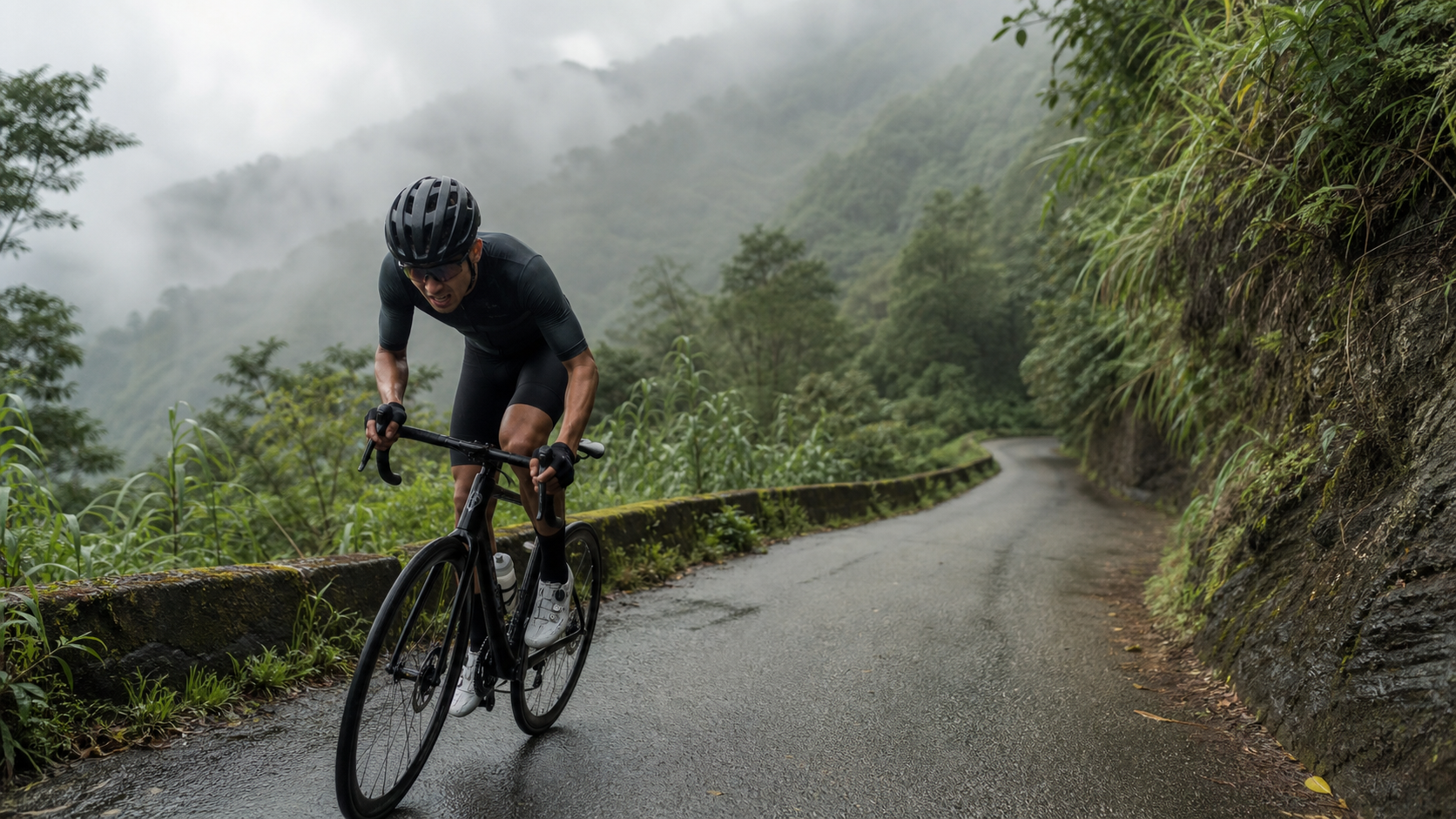
Complete Guide to Xuewunao: 9.9 km with 1,020 m of Climbing, a Demon-Grade Industrial Road with 10.2% Average Gradient
This article is dedicated to all the hardcore riders who have already conquered Wuling and Fengguizui and are looking for their next goal. Xuewunao is not a route you “ride casually on a whim”—it is a signature demon climb in Fuxing District, Taoyuan, that requires dedicated planning and dedicated training to take on.
1. Route Overview and Data Analysis: One of the Hardest Climbs in Taiwan
Xuewunao is located in the mountains of Fuxing District, Taoyuan City, and is a typical industrial road. The officially measured distance is approximately 9,924.3 meters, or about 9.9 km, with a total elevation gain of 1,020.0 meters and a staggering average gradient of 10.2% across the entire route. A quick check of the numbers: 9.9 km multiplied by a 10.2% gradient gives a theoretical elevation gain of around 1,010 meters, which closely matches the official figure of 1,020 meters. This means the route has almost “no flat or gentle sections to catch your breath”—it is a hardman’s route with a solid, consistent gradient distribution and very little in the way of filler.
To understand Xuewunao’s standing in Taiwan’s road cycling scene, we need to compare it with several of Taiwan’s most iconic climbs. Take the western approach to Wuling (starting from Puli, climbing through Renzhiguan and Cingjing all the way to Wuling): the total distance is over 40 km with more than 2,000 meters of elevation gain, but the average gradient sits around 5%. It is an endurance-style climb of “long distance, moderate gradient” that tests long-duration pacing and mental toughness. Fengguizui (starting from Neihu or the Beiyi direction) is about 5–6 km long with an average gradient of around 8%, making it a “short distance, medium-high gradient” power route that many Taipei riders use as their regular weekend climbing training ground. Alishan’s Lulin Front Mountain (via the New Central Cross-Island Highway toward Tataka) is also a well-known long-distance climb, with average gradients mostly in the 6–7% range—likewise a long-distance war of attrition.
Xuewunao, however, is an entirely different level of challenge: nearly 10 kilometers in length while maintaining a 10.2% average gradient, which means there is almost no noticeable flat or gentle section anywhere along the way to let your thigh muscles recover or bring your heart rate down. Compared to Fengguizui’s 8% average gradient, Xuewunao’s 10.2% is a combination of “longer sustained effort and higher intensity”; compared to the western approach to Wuling’s long distance but relatively gentler gradient, Xuewunao cranks the intensity straight to maximum and sustains it for nearly an hour (depending on rider ability, completion times can range from 50 minutes to over 2 hours). Here’s one way to think about it: if Fengguizui is a high-intensity interval session and the western approach to Wuling is a marathon-style endurance race, then Xuewunao condenses the suffering of both into one—a compound ordeal of long duration, high intensity, and almost no respite.
In the oral tradition of Taiwan’s road cycling community, Xuewunao is frequently listed among the “must-conquer once in a lifetime” demon climbs, discussed alongside Xiaowulai on the Northern Cross-Island Highway, Shuangxi’s Yuheng Weir, and certain steep sections of the eastern approach to Wuling. What makes seasoned riders turn pale at the mention of it is not just the high average gradient, but the fact that certain local sections (especially in the middle and later parts) can suddenly spike to 15% or even higher, demanding everything you have in both cardio and muscular strength. This is not a route you can “ride easy and take your time” to finish—any rider who underestimates it is likely to run out of gas long before reaching the top.
2. Section-by-Section Strategy from Start to Finish: Breaking 9.9 km into Manageable Battlefields
Facing a climb of this sustained intensity, breaking the entire route down into smaller segments to understand and execute is a crucial strategy for both mental and physical management. Based on general riding experience, the full 9.9 km can be roughly divided into five to six stages (for actual landmarks and mileage, please refer to roadside signs and official information on site):
Stage 1 (Start to approximately 2 km): The Warm-Up Trap Zone. Many riders mistakenly assume that the early part of a climb should be “saved for later,” but Xuewunao’s first section often jumps straight into gradients of around 7–9% with little opportunity for warm-up. The most important thing in this stage is to control your heart rate—don’t push hard just because you feel fresh at the start, only to suffer a cliff-like drop in energy later. It’s recommended to ride this section at an intensity you feel you “could sustain all day”—better to be conservative than aggressive.
Stage 2 (Approximately 2 km to 4 km): Entering the Sustained High-Gradient Zone. The gradient in this section begins to hold steady around 10%, which is the “average” range for the entire route. This is the critical zone for checking whether your cadence and gear selection are correct. If you find yourself already needing to stand up and stomp on the pedals here, with your heart rate spiking to above 90% of your maximum, then you must immediately adjust your strategy and slow down—because there are even harder sections waiting ahead.
Stage 3 (Approximately 4 km to 6 km): The Most Painful Core Section of the Entire Route. According to accounts from many challengers, the middle section of Xuewunao has the most dramatic gradient changes, with local slopes most likely to spike to 15% or higher. The recommended tactic here is a “short-interval” mental approach: break the road ahead into distances between utility poles or corners and conquer them one by one, avoiding thoughts like “there are still several kilometers to go” that can easily shatter your willpower. At the same time, this section has the highest demand for support supplies—if you have a support vehicle following, this is usually the stretch where water and food hand-ups are most needed.
Stage 4 (Approximately 6 km to 8 km): The Dual Test of Physical Strength and Willpower. By this point, most riders’ glycogen stores have noticeably dropped and muscle soreness is accumulating. This is the section where the “mind wants to ride but the body won’t obey” state most commonly sets in. It’s recommended to lower your pace expectations here, switch to the easiest gear, and do your best to maintain a steady cadence (even if it’s only 50–60 rpm). More important than chasing speed is avoiding having to put a foot down and walk, because restarting on a gradient above 10% consumes far more energy than you can imagine.
Stage 5 (Approximately 8 km to the finish at about 9.9 km): The Final Push and Mental Barrier. The closer you get to the finish, the more many riders are tempted to sprint from overexcitement at “seeing the end in sight”—an impulse that needs to be restrained. If the gradient still hasn’t let up in this final section, it’s recommended to maintain your consistent rhythm and ride out the last climb, then let your emotions release after reaching the top. Overall, breaking the 9.9 km into these five stages, combined with a “conquer it segment by segment” mental strategy, will make it far easier to survive the entire route than thinking “I still have nearly 10 km of climbing to go.”
3. Gear Ratio and Equipment Recommendations: An Ultra-Light Gear Ratio Is Your Ticket In
For a long, high-intensity climb like Xueshui Nao, with an average gradient of 10.2% and sections potentially exceeding 15%, gear ratio selection is arguably one of the deciding factors between finishing successfully or not. A standard road bike setup (e.g., a 50/34 chainset paired with an 11-28 cassette) will be extremely demanding on this route, and most experienced riders recommend at least configuring a lighter combination.
| Rider Level | Recommended Chainset | Recommended Cassette | Lightest Gear Reference | Notes |
|---|---|---|---|---|
| Advanced, Strong-Legged | 50/34 (compact) | 11-30T or 11-32T | Approx. 34x30 | Suitable for those with experience tackling similar gradients multiple times |
| General Advanced Rider | 50/34 (compact) | 11-32T or 11-34T | Approx. 34x32 or higher | A long-cage rear derailleur (GS/long cage version) is recommended |
| Conservative, Steady | 46/30 or lighter inner ring | 11-34T or even larger | Depends on setup | Some riders consider MTB-style cassette configurations |
| Extremely Conservative | Aftermarket ultra-light crankset systems | 11-36T or larger | Depends on system | Must verify compatibility with rear derailleur and chain length |
It’s worth noting that some riders tackling climbs of this extreme duration and intensity even consider adopting MTB-style cassette configurations (e.g., swapping in a larger rear cassette paired with a compatible long-cage rear derailleur) to maintain a workable cadence on the steepest sections and avoid overloading the knees and muscles. While this setup sacrifices some efficiency on flat roads, on a route like Xueshui Nao—nearly 10 kilometers long with almost no flat sections for recovery—it’s often a pragmatic choice for protecting your knees and ensuring you make it to the finish.
Beyond gear ratios, there are several other key equipment recommendations: First, don’t chase ultimate aerodynamics with your wheelset (that’s an investment that only pays off on flats and gentle climbs); instead, prioritize lightweight to reduce rotational weight during the climb. Second, consider slightly lowering tire pressure (adjusted based on your body weight and tire width) to increase grip, as some steep sections may have rougher pavement than city roads. Third, make absolutely sure your braking system (especially for disc brake riders—pay attention to oil temperature and pad condition) is reliable for the descent back down; after a long, high-intensity climb, the braking system is under significant stress on the way down. Fourth, choose cycling jerseys and bibs with superior breathability and moisture-wicking properties, because the long duration and high intensity of the Xueshui Nao climb will produce a massive amount of sweat, and hot, clammy gear will significantly impact your comfort and performance.
4. Nutrition and Hydration Management: The Energy Ledger of a Nearly 10km Sustained High-Intensity Effort
A climb like Xueshui Nao, lasting nearly an hour or more and sustained in the high-intensity zone, demands far more careful energy and hydration management than a routine training ride. It’s recommended that before you set off—that is, near the start of the route—you ensure your water bottles and energy supplies are fully stocked, because once you enter the climb, there may not be many shops or aid stations along the way for last-minute purchases (please refer to the actual on-site conditions and official information for the exact locations of shops and aid stations).
For hydration, based on your body weight and the day’s temperature, it’s recommended to carry at least two bottles (totaling roughly 1000-1500ml or more) of water or sports drink. If the weather is hot or humid, prepare more. At a nearly 10km climb with an average gradient of 10.2%, your sweat rate will be significantly higher than on gentler climbs, and the risk of dehydration should not be underestimated. If conditions allow, consider adding electrolyte supplements to prevent imbalances or cramping from prolonged, heavy sweating.
For energy intake, since the total climbing time could range from 50 minutes to over 2 hours (depending on rider ability), it’s recommended to consume easily digestible carbohydrates like energy gels, energy bars, or bananas every 20-30 minutes. Don’t wait until you “already feel depleted”—by then, your blood sugar and glycogen stores have often dropped significantly, and the effectiveness of replenishment is diminished. Experienced riders suggest a “small amounts, frequent times” fueling strategy rather than consuming a large quantity at one single point, because during a climb, blood flow to the digestive system is heavily diverted to the muscles, and overeating can cause gastrointestinal distress.
Additionally, if you have support vehicles or aid stations arranged, the middle-to-late sections of Xueshui Nao (segments 3 and 4 in the section-by-section guide above) are where energy expenditure is most intense. It’s recommended to allocate your primary fueling resources to these segments, allowing the rider to receive immediate water and energy support at the most grueling points. This provides a substantial boost to your chances of finishing.
5. Weather and Seasonal Recommendations: Choosing the Right Time Makes All the Difference
The mountainous area of Fuxing District, Taoyuan, has a typical mountain climate, where elevation changes and terrain variations create localized microclimates. Combined with a long, high-intensity climb like Xueshui Nao, weather conditions have a huge impact on both riding experience and safety. It’s strongly recommended to check real-time weather forecasts and mountain conditions before your attempt.
In summer (roughly June to September), the biggest challenge on Xueshui Nao is high heat and intense sun exposure. Given the high intensity and long duration of the climb, your core body temperature can rise quickly, and the risk of heatstroke and heat exhaustion should not be taken lightly. It’s recommended to start in the early morning to avoid the strongest sun around midday, and to double up on water and electrolyte supplies. In winter (roughly December to February), pay attention to low temperatures and humidity in the mountains. While the elevation in Fuxing District isn’t extremely high, morning temperatures can still be noticeably cold. Combined with rapid body heat loss from sweating, the risk of hypothermia on the descent needs special attention. It’s recommended to carry a windproof jacket or spare clothing.
Spring and autumn (roughly March-May and October-November) are generally the most comfortable windows for tackling Xueshui Nao, with moderate temperatures and relatively lower rainfall probability. However, it’s still advisable to closely monitor the weather forecast one to two days before your attempt, especially the possibility of afternoon thunderstorms in the mountains. The terrain in the Fuxing District mountains is highly varied, and when afternoon convection is strong, localized heavy rain or even lightning strikes can occur. If a heavy rain advisory or thunderstorm warning is issued for the mountain area, it’s strongly recommended to postpone your attempt—safety is always more important than sticking to a plan. Additionally, wet roads after rain and the potential for falling rocks or landslides on some sections mean that if there’s been a recent record of heavy rainfall, you should confirm the road conditions are passable before your attempt, deferring to actual on-site conditions and official announcements.
6. Common Mistakes and DNF Risks: The Price of a Novice’s Rash Challenge
The combination of average gradient and duration on Xueshawnao makes it a route where many riders who underestimate their abilities end up defeated. Below are the most common mistakes and risks, hoping to help riders planning the challenge take precautions in advance.
Mistake 1: Gear ratios that are too heavy. This is the most common and most fatal mistake. Many riders who usually only ride flats or gentle slopes habitually keep their standard gear ratios when taking on the challenge. As a result, on sections where the gradient consistently exceeds 10% or even 15%, they find themselves completely unable to maintain an effective cadence, forced to power through with brute strength, pushing their knees and muscles to the limit in a short time. With insufficient gearing, they often have to dismount and walk mid-ride, and getting back on the bike and starting again on a steep slope requires far more effort than imagined, easily creating a vicious cycle.
Mistake 2: Losing control of pacing in the early stages. At the start, energy and morale are at their peak, and many riders tend to use too high an intensity in the first or second section. By the time they reach the most painful middle-to-late sections, they no longer have enough energy reserves to cope. Xueshawnao is not a short sprint route; pacing must be conservative in the early stages, saving strength for where it’s truly needed later.
Mistake 3: Poor timing of nutrition. As mentioned earlier, many people are used to “refueling only when they feel depleted,” but by that point it’s often already too late. Once blood sugar and glycogen drop significantly, recovery takes time, and during a continuous climb there’s little opportunity to truly “recover.” This is also one of the main causes of blowing up mid-ride (commonly known as hitting the wall).
On DNF (Did Not Finish) and the mindset for abandoning the ride: Xueshawnao is a route where even many experienced and capable riders may fail to complete it—this is a fact that must be honestly faced. If you experience severe physical discomfort during the challenge (such as chest tightness, dizziness, blurred vision, abnormal heart palpitations, etc.), you must immediately stop riding, safely dismount and rest, and seek help or call emergency contacts if necessary. Abandoning mid-ride or resorting to walking the bike to complete a section is not something to be ashamed of. Knowing your limits and protecting your own safety is always the most important principle in cycling. It is recommended to set your own “stop-loss point” before the challenge—for example, if you cannot maintain a basic riding rhythm at a certain time or mileage, switch to walking or turn back, to avoid sports injuries or accidents caused by stubbornness.
Should novices rashly take on the challenge? The answer is clear: not recommended. Xueshawnao is an advanced, even “boss-level” route, requiring a solid climbing foundation, good cardiorespiratory endurance, and the ability to accurately judge your own physical condition. If you’ve only recently started road cycling, or have not yet completed a route with over 500 meters of continuous climbing and an average gradient above 8%, it is recommended to start with more approachable routes like Fengguizui or Beiyi to build experience and confidence, then gradually take on higher-intensity goals.
7. Reference Target Times for Riders of Different Levels: Even Strong Riders Must Give It Their All
The following time references are for rough assessment only. Actual completion times will vary considerably due to individual fitness, weather conditions, wind resistance, equipment setup, and other factors. Please use these as a reference baseline for training planning, not as absolute standards.
| Rider Level | Estimated Completion Time | Average Speed Reference | Notes |
|---|---|---|---|
| Elite / Competitive Riders | Approximately 40-55 minutes | Approximately 11-15 km/h | Possess excellent power-to-weight ratio, years of high-intensity climbing training |
| Experienced Strong Riders | Approximately 55 minutes - 1 hour 20 min | Approximately 8-11 km/h | Have multiple experiences on hard climbs like Wuling and Fengguizui |
| General Intermediate Riders | Approximately 1 hour 20 min - 1 hour 50 min | Approximately 5.5-8 km/h | Have some climbing experience, above-average fitness |
| Conservative and Steady Riders | Approximately 1 hour 50 min or more, possibly over 2 hours | Approximately below 5 km/h | Recommended to pair with light gearing and a segmented rest strategy |
It is worth emphasizing that even “strong riders” who perform well on other routes will feel a considerable impact from the intensity when facing Xueshawnao’s combination of a 10.2% average gradient over nearly 10 kilometers. Many describe this route as “painful from start to finish,” with almost no section to catch a breath and relax. Therefore, even capable riders are advised to do thorough training and mental preparation before the challenge, and not to underestimate the difficulty of this route—it is enough to make even the most elite competitive riders feel the strain.
8. Pre-Ride Training Recommendations: No Shortcuts, Only Solid Accumulation
Successfully taking on a climb of Xueshawnao’s caliber cannot be achieved through last-minute cramming; it requires systematic training accumulation over at least several weeks to several months. Below are suggested directions across several training aspects.
Interval Training: Since Xueshawnao has almost no gentle sections for recovery throughout, it is recommended to schedule high-intensity interval workouts in regular training, such as multiple 4-8 minute high-intensity climbing intervals on a trainer or on slopes, simulating Xueshawnao’s sustained high-intensity output scenario, training the body to maintain effective output while lactate continuously accumulates.
Long-Distance Climbing Adaptation Training: It is recommended to find slopes near home with gradients above 8% and lengths of 3-5 kilometers or more for repeated training, gradually building the body’s ability to adapt to prolonged high-intensity climbing. If your usual training environment lacks such terrain, you can also use a trainer paired with virtual riding software, setting corresponding gradients and distances for simulated training.
Core and Lower-Body Strength Training: High-gradient climbing places significant demands on core stability and lower-body strength. It is recommended to incorporate weight training or bodyweight training (such as squats, lunges, core planks, etc.) to strengthen the muscle groups needed for climbing, while also helping to reduce the risk of sports injuries.
Segmented Simulation and Mental Preparation: If the training environment permits, it is recommended to find a route with gradient and length relatively close to Xueshawnao (such as an extended ride from Fengguizui) and conduct complete segmented simulation training, allowing both body and mind to become familiar in advance with the feeling of “prolonged high intensity with no recovery points,” giving you more confidence when taking on the real challenge.
Generally, if your goal is to schedule Xueshawnao as a key challenge target in the season, it is recommended to start targeted training at least 6-8 weeks in advance, and taper appropriately 1-2 weeks before the challenge, allowing the body to store sufficient recovery and energy to face the challenge in optimal condition.
9. Quick Q&A on Common Questions
Q1: Can novices take on the Xueshawnao challenge?
Not recommended. Xueshawnao is an advanced, even “boss-level” route, with an average gradient of 10.2% sustained over nearly 10 kilometers, placing high demands on cardiorespiratory endurance, muscular strength, and riding experience. It is recommended that novices first build experience on routes with gentler gradients and shorter distances, and only consider taking on Xueshawnao after establishing a solid climbing foundation (for example, being able to consistently complete sections of 8% gradient over 3-5 kilometers or more).
Q2: Which is harder, Xueshawnao or the west approach of Wuling?
The two have different difficulty profiles and are hard to compare directly. The west approach of Wuling is longer with greater total elevation gain, testing long-duration endurance management and mental resilience; Xueshawnao is shorter but steeper with more concentrated intensity, testing whether you can sustain high-intensity output for nearly 10 kilometers. Many riders who have tackled both routes believe Xueshawnao is tougher in terms of “pain per unit distance,” but Wuling’s west approach has greater overall expenditure and a longer time span—each has its own kind of difficulty.
Q3: Do I need any special equipment?
The most critical factor is gear ratio configuration. It is recommended to prepare at least a light gear combination of 34x30 or lower; riders with more conservative fitness can even consider an even lighter mountain-bike-style cassette setup. Additionally, sufficient water and energy supplies, appropriate tire pressure adjustments, and a braking system in good condition are all preparation points that cannot be overlooked.
Q4: What time of year is best for riding?
Spring and autumn (approximately March-May and October-November) offer more comfortable temperatures and relatively lower chances of rain, making them the ideal time windows for the challenge. In summer, be mindful of the risk of heatstroke; an early morning start is recommended. In winter, pay attention to low temperatures and the risk of hypothermia on the descent back. Regardless of the season, always check real-time weather forecasts and mountain road conditions before setting out.
Q5: What should I do if I feel I can’t continue mid-ride?
Please do not push yourself stubbornly. If you experience severe discomfort (chest tightness, dizziness, abnormal heart palpitations, etc.), immediately stop riding, safely dismount and rest. If it’s simply a matter of running out of energy, walking the bike for a stretch is not embarrassing at all. Protecting your own safety and health is always the top priority—as long as the mountain remains, there will always be another chance to challenge it again.
10. Transportation, Itinerary Planning, and Summary
For the starting point of Xuewunao, riders are advised to plan their transportation and transfer arrangements in advance. The mountain roads in Fuxing District, Taoyuan, are mostly winding mountain routes. If you are not familiar with the road conditions, it is recommended to use a navigation system and confirm the route in advance. It is also advisable to avoid riding the transfer section to the starting point in poor weather or low visibility conditions. If planning a one-day challenge itinerary, it is recommended to schedule Xuewunao during the period when your physical condition is at its best (e.g., early morning), and allow ample time—do not pack the schedule too tightly, as the completion time for this route inherently involves considerable variability.
For itinerary planning, in addition to taking on Xuewunao, you may also consider incorporating other scenic spots or road sections around Fuxing District into a side trip depending on your physical condition. However, be sure to keep the Xuewunao challenge as the main focus, and avoid expending too much energy before the challenge, which could affect your performance in the actual attempt. Additionally, you must remain focused on the descent back down. After a long, high-intensity climb, your body will be quite fatigued, and your reaction time and judgment on the descent may be affected. It is recommended to slow down, maintain proper brake control, and descend safely.
In summary, Xuewunao is a truly worthy demon-level route. The combination of 9.9 kilometers in distance, 1,020 meters of total elevation gain, and a 10.2% average gradient constitutes one of the most recognized hardman tests in Taiwan’s road cycling community. It is not suitable for spur-of-the-moment challenges, nor is it appropriate for beginners lacking a climbing foundation to attempt rashly. However, for advanced riders who have completed thorough training and are eager to push beyond their limits, Xuewunao is absolutely a hard battle worth adding to the list and planning carefully. May every challenger ride within their limits and finish safely, and at the moment of reaching the summit, experience that sense of accomplishment that can only be felt by personally conquering the demon climb.
Related Reading
- On Xuewunao’s 10.2% Gradient, I Learned to Have a Dialogue with My Limits
- Taiwan’s Top 10 Classic Climbing Routes: A Complete Guide from Beginner to Demon Level
- Wujie Industrial Road Climbing Guide: Gear Ratio and Pacing Strategy for 7.8% Sustained Steep Sections
- Complete Analysis of Fengguizui Climbing Technique: Training Secrets from the Northern Training Holy Land
台北闊瀨陡坡 騎旅 / 日本單車雜誌編輯車友臨時加入!/ 髮香才是最強的 / feat. 北迴歸線小隊 / 公路車 CT Yeh
6 個月前
風櫃嘴時間 預測西進武嶺時間?13000名車友統計數據分析告訴你 !
5 年前
#北橫 + #北進武嶺 最硬的員工旅遊 EP1 | #公路車 #拉拉山 | 明池 | 武嶺 | 武陵農場 | 雲海 | Taiwan Cycling Route Wulin
6 年前
大武山20%魔王陡坡【JJSC南台灣遊騎Day2】!屁股真的要裂開了...凡士林抹滿也沒用?神秘金教堂還有超便宜夜市
3 個月前
大禹嶺 到 武嶺牌樓 全程前後實況錄影 | 北進武嶺 | 東進武嶺 | KOM | 訓練台 | 坡度分析 | Taiwan KOM Last 10 km HARD | 公路車
6 年前
雨戰! 西進武嶺員工旅遊 加料 各路段大數據分析 | 同事端出5公斤的公路車來挑戰!? EP1
4 年前
#公路車 #西進武嶺 配速配瓦實驗 坡度分析 四小時內攻略 建大盃 NeverStop #西進武嶺攻略
6 年前
西進武嶺 世界紀錄挑戰!破2:30 ?!一群人推著一個夢上山 直播精華版 / ft. 張翰允 & 台視主播魏于恬 & KPLUS / #cycling 公路車 CT Yeh
2 個月前