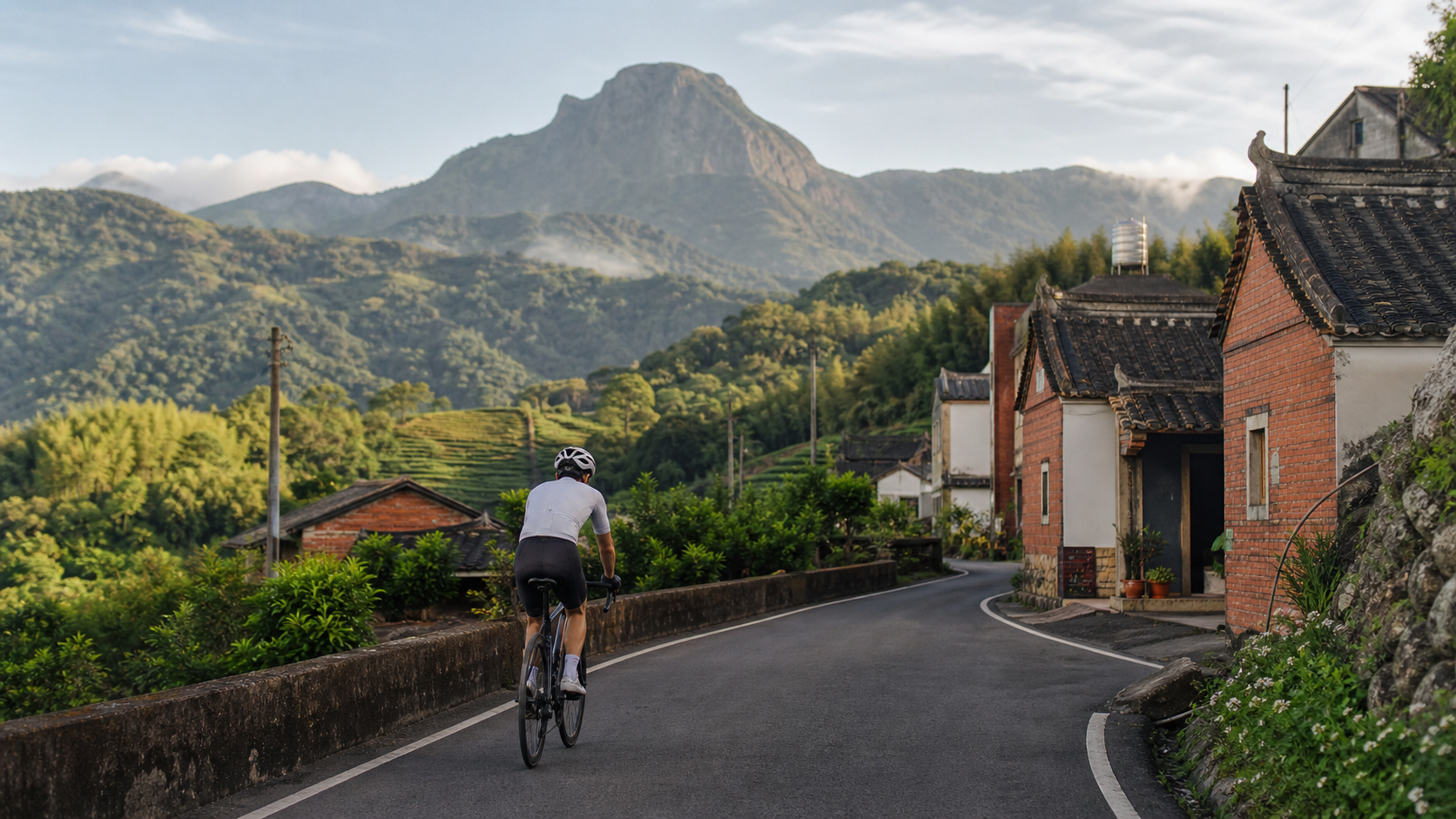
Shitan: A Hakka Mountain Town Forgotten by the Freeway
If you open a map of Miaoli County, you’ll find that Shitan Township is a place easily overlooked. It’s not on the main Provincial Highway 1, nor does it have direct expressway access. To reach Shitan, you have to turn onto Provincial Highway 3 from Gongguan or Dahu, following winding county roads deep into the hilly terrain. This geographical “inconvenience” has actually allowed Shitan to preserve a quality that other Miaoli townships are gradually losing—a slow, quiet rhythm of life characteristic of a Hakka mountain town.
Shitan Township is a typical Hakka settlement. In its early years, due to its inland location, development came relatively late, with residents mostly farming for a living, growing cash crops such as camphor, tea, and citrus. The hilly terrain here is actually a microcosm of how Miaoli’s Hakka ancestors pushed into the mountains during the Qing Dynasty and Japanese colonial period, gradually moving from rice farming in the plains toward planting drought-tolerant, slope-adapted cash crops on the hillsides, step by step pushing their living sphere deeper into the mountains. Today, as you ride through downtown Shitan, you can still see traces of traditional Hakka communal houses—red brick and black tile, with inner courtyards for drying grain. Even though some have been renovated into modern buildings, their layout still retains that understated, practical Hakka architectural aesthetic.
When I first rode into Shitan Township, what caught my attention wasn’t the mountains, but that distinctive “sense of quiet.” There are no chain convenience store signs bombarding you along the roadside; instead, you’ll see dried radish and pickled mustard greens laid out to sun in front of grocery stores. Occasionally a small truck carrying freshly harvested crops passes by, moving so slowly it feels like the entire township is still maintaining the pace of the last century. This quietness will settle your heart before you ride toward Xianshan and prepare for that 8.1% average-grade climb—which is actually a rare psychological preparation process. Unlike urban riders who must first battle through heavy traffic before reaching the mountain foot, you get this moment of calm first.
The origin of Shitan Township’s name is also quite interesting. Legend has it that the area was named for its creek terrain resembling a crouching lion. Because of its many hills and little flat land, transportation was difficult in the early days, which instead fostered a “self-sufficient” mountain-town character. This character persists today—you’ll find that Shitan shows no signs of over-tourism. What you see along the way is mostly the real life of local residents, not deliberately constructed photo-op installations for tourists. This sense of simplicity is perhaps one of the reasons many riders return to this route again and again, unable to forget it.
Xianshan: A Sacred Highland in a Hakka Mountain Town
Xianshan, at approximately 974 meters above sea level, sits on the border between Shitan Township and Nanzhuang Township in Miaoli, and is one of the most representative sacred mountains in the region. The Xianshan Lingdong Temple at the summit draws heavy incense smoke and worshippers, serving as a shared spiritual center for Miaoli’s Hakka community and surrounding ethnic groups. It not only attracts local devotees who make regular pilgrimages up the mountain, but has also gradually become a destination for both hiking enthusiasts and religious pilgrims due to its unique sacred-mountain legends and the beautiful natural ecology surrounding it.
Riding up Xianshan from the Shitan side is essentially climbing along this path of faith. In earlier times, this route was an important passage for local residents to hike up or transport goods by pack animals for worship. As times evolved, it was gradually paved into an industrial road accessible to vehicles, but the atmosphere of “approaching a sacred place” has never disappeared because of the pavement. When you ride this 8.1% average-grade climb, flanked by dense low-elevation broadleaf forests and occasional bamboo groves, the air carries a moist mountain-forest scent. As altitude rises, you’ll clearly feel the temperature drop—this physical sensory change, to some extent, echoes the symbolic meaning of “approaching the sacred site step by step” in religious rituals.
The presence of Xianshan Lingdong Temple makes this mountain more than just a geographical climbing landmark; it carries the spiritual sustenance of the local community. Many residents of Shitan and Nanzhuang have walked this mountain path countless times from childhood to adulthood—whether accompanying elders up the mountain to pray, or simply treating the Xianshan trail as their daily exercise spot. This mountain has become deeply woven into the life memories of local people. As an outsider rider, when you breathlessly grind through that final steep section and reach the stretch near the summit, the feeling—a mix of physical exhaustion and an inexplicable sense of reverence—is hard to measure with mere athletic data.
Scenery and Landmarks Along the Way: From Industrial Roads to Misty Clouds
The scenery along the Shitan side of Xianshan presents distinctly different layers as altitude rises. In the early part of the route, where the gradient is relatively gentle, you’ll see Hakka farmers’ orchards and vegetable plots on both sides, with common crops including citrus, ponkan mandarins, and some tea gardens. Passing through this section in the early morning, you’ll often see farmers already busy in their fields, with an occasional dog bark piercing the mountain’s stillness. That imagery makes you realize you’re riding through a living, breathing community, not a closed-off course built purely for sport.
Once you enter the core climbing section in the middle, the vegetation transitions to denser secondary forests and bamboo groves, and the view on both sides gradually becomes enveloped in greenery. In summer, the forest shade provides a degree of cover, slightly alleviating the stifling heat of high-intensity climbing. This section has more curves, and some parts locally exceed 12% gradient, so your vision is mostly focused on the road surface and gradient changes right ahead, making it harder to spare attention for the scenery. But it’s precisely this state of “total concentration” that makes the Shitan side of Xianshan an excellent climbing route for practicing “present-moment focus.”
Near the summit section, if weather permits, the view suddenly opens up, allowing you to overlook the layered hills of Shitan and Nanzhuang. With luck, you might even see clouds and mist drifting through the valleys. Due to the interaction between terrain and climate in Miaoli’s mountain areas, sea of clouds or misty fog scenes frequently appear in the early morning or after rain. This artistic conception of “lost in the deep clouds,” combined with Xianshan’s own religious atmosphere, gives you the illusion of cycling straight into a traditional Chinese landscape painting. There are also well-maintained hiking trail systems around Xianshan, connecting Lingdong Temple with surrounding observation platforms. If time permits, after completing the climbing challenge, consider parking your bike at a suitable spot and walking a section of the trail to experience another side of this mountain at a different pace.
Local Culture and Culinary Memories
Shitan Township’s food culture inherits the typical Hakka village’s simple style, emphasizing the natural flavors of ingredients and the wisdom of pickling and preservation. Passing through downtown Shitan along the way, you’ll often see local eateries selling Hakka rice noodles, stir-fried pork with ginger and tripe, Hakka stir-fry, and other home-style dishes. Most of these shops have no fancy decor, relying on decades of accumulated regular-customer reputation. If riders are planning a full Xianshan Shitan-side challenge itinerary, consider focusing your “post-ride refueling” on these local eateries—a steaming bowl of rice noodle soup with a plate of Hakka side dishes is the most satisfying reward after burning through 475 meters of climbing.
Shitan is also one of Taiwan’s important production areas for ponkan mandarins and lilies. During specific seasons each year, the hillsides along the way bloom with lilies or hang heavy with orange-yellow citrus. This season-limited visual feast is also why many riders deliberately choose specific months to revisit this route. As for the exact blooming or harvest season schedules, they vary slightly with each year’s climate; it’s recommended to refer to announcements from the local farmers’ association or township office. If you happen to hit the harvest season, you’ll often see farmers’ self-produced, self-sold stalls along the way—the most direct way to experience local life.
Shitan Township also preserves quite a few traditional old streets and commercial districts. While not as well-known as Nanzhuang Old Street, they consequently lack the noise of over-commercialization and retain a more simple, lived-in feel. If you’re not in a hurry, consider slowing your bike down before or after the climbing challenge and weaving through these neighborhoods to experience the genuine daily rhythm of this Hakka mountain town.
First-Person Riding Narrative: A Dialogue with Xianshan
I still remember that early morning, just as dawn was breaking. I parked my bike at the trailhead on the Shitan side, ready to begin a challenge I had rehearsed countless times in my mind. The night before, I’d reviewed the route data and knew that an 8.1% average grade didn’t sound too extreme. But my experience riding several famous hard climbs in northern Taiwan told me that numbers are never the only reference—the actual feeling under your pedals is what truly matters.
The gentle early slopes gave me the illusion that “this route isn’t so scary after all.” The orchards on both sides and the occasional farmers kept the atmosphere somewhat leisurely. But that sense of ease was quickly shattered once I entered the core climbing section in the middle. The gradient shot up without warning; my cadence, which I’d been maintaining, began to drop, and my breathing rhythm shifted from a steady four-count exchange to a hurried two-count or even single-count. At that moment, I truly understood why local riders describe this route as a “hidden hard climb”—it doesn’t wear down your willpower with long distance like Wuling does, but instead tests your physical limits directly with concentrated, relentless gradient.
Around the third kilometer, I began experiencing the classic self-doubt: Should I slow down? Should I just get off and walk a stretch? But just as that thought surfaced, I caught sight of an elderly man working in an orchard by the roadside who nodded at me. That simple gesture inexplicably gave me the strength to keep pedaling. The warmth of mountain people sometimes appears, unannounced, at the exact moment you need it most.
On that stretch of false flat, my body finally had a chance to catch its breath. I deliberately slowed my pace, adjusting my breathing while trying to appreciate the surrounding scenery. At that moment, mist was slowly rising from the valley, brushing across my face with moist moisture. That coolness mixed with the residual heat from the high-intensity climb created a strange physical sensation—one that only those who’ve actually experienced it can truly understand.
On the final finishing climb, the gradient kicked up again. I broke the remaining stretch into small goals, telling myself to hold on for another two hundred meters, then another two hundred meters. When I reached near the summit and saw the roofline of Xianshan Lingdong Temple in the distance, a wave of emotion—fatigue mixed with an inexplicable sense of being moved—welled up inside me. It wasn’t entirely because I’d completed an athletic challenge; it was more of an indescribable feeling, as if I’d truly completed a small pilgrimage.
What This Route Means to Riders
For me, the Shitan side of Xianshan has long surpassed its definition as a mere climbing training route. It’s a path that lets you rediscover Miaoli’s Hakka mountain towns, a physical transition process from the pace of flatland life to the spiritual atmosphere of mountain faith, and an opportunity to honestly confront your own physical limits. This route isn’t long, yet it condenses multiple layers of meaning—geography, faith, culture, and athletic challenge. Every time you take it on again, the experience is completely different depending on your physical state, the weather, and your mindset at that moment.
For riders who spend years riding flat roads or gentle slopes in the city, the Shitan side of Xianshan is a gentle yet firm reminder—the true joy of riding often lies hidden in routes that require you to slow down and truly absorb your surroundings, not just in the accumulation of speed and distance numbers.
Craftsmen on the Mountain Road: The Daily Lives of Tea Gardeners and Fruit Farmers
Riding the Shitan side of Xianshan, if you slow down and observe carefully, you’ll discover that this route is essentially a condensed history of Hakka mountain agriculture. Shitan Township’s hilly terrain, with its soil and climate conditions, was particularly suited to growing tea plants and citrus crops in earlier years. Along the way, you’ll frequently see layered tea terraces—that farming wisdom of adapting to the terrain shares an aesthetic kinship with the road itself, which was built to follow the mountain’s contours.
Local tea farmers mostly maintain traditional tea-picking and processing methods. If you’re lucky in the early morning, you might see tea pickers with baskets moving through the gardens. This traditional hand-picking approach, which emphasizes timing and weather conditions, is completely different from the efficiency logic of modern agriculture—yet it’s precisely one of the most precious cultural assets this land of Shitan has left for future generations. As for the citrus orchards, most are small-scale family farms passed down through generations. They lack the complete visitor facilities of large agritourism orchards, but they’ve consequently preserved the most original rural landscape.
On one of my challenge rides, I passed a citrus orchard where branches were being pruned. The owner, an elderly man around sixty, saw me huffing and puffing as I rode past, smiled, and called out “Keep going!” That kind of encouragement, with no ulterior motive, was more inspiring than any sports science data. This is probably the unique scenery you can only experience riding on local industrial roads rather than closed-off courses built purely for sport—you’re not just riding a climbing route; you’re passing through the living, working landscapes of countless families who have cultivated this land for generations.
The Religious Significance of Xianshan Lingdong Temple and Its Surrounding Ecology
As an important spiritual center for Miaoli’s Hakka community and surrounding ethnic groups, Xianshan Lingdong Temple’s architecture, while not as ornate as large urban temples, possesses its own simple solemnity, built into the mountainside and blending with the natural environment. The area around the temple is lush with trees and rich in ecological resources. Hiking enthusiasts often make special trips here, both to pay respects and to enjoy the phytoncide bath offered by this low-elevation broadleaf forest.
The trail system around Xianshan has been well maintained in recent years by local government and civic groups. Some sections feature observation platforms with views over the hilly terrain of Shitan and Nanzhuang. If you still have energy after completing the cycling climb, I’d suggest parking your bike at a suitable spot and walking a section of the trail to experience this mountain at a completely different speed—when riding, you’re so focused on gradient and pacing that you miss many details, whereas walking slowly allows you to notice the birdsong in the forest and the shifting light through the treetops. These are the delicate, unique scenes of Xianshan.
Regarding the temple’s founding history and detailed worship activity schedules, I’d recommend riders interested in deeper understanding refer to official announcements from the temple management or local government offices. After all, details of religious sites should be authoritatively explained by local devotees and managing bodies, not interpreted based on a visiting outsider’s one-sided observations.
The Mountain Town’s Four Seasons and the Rider’s Shifting Mindset
Visiting the Shitan side of Xianshan in each season brings completely different psychological experiences for riders. In spring, the mountain forest is just awakening from winter’s bleakness, with tender green shoots dotting the branches. Accompanied by occasional wildflowers, the entire route radiates a vibrant, thriving energy, and your mood unconsciously lightens as you ride. Challenging this climb in spring, when your body adapts to temperatures more easily, is the season many riders consider ideal for this trip.
Summer on Xianshan is an entirely different experience. Dense tree shade provides rare cover, but the muggy, humid air combined with heavy sweating from high-intensity climbing makes the whole challenge closer to a battle of willpower against yourself. I personally prefer tackling this route on summer mornings, completing the main climbing section before temperatures spike after sunrise. This avoids the heat, and the morning mountain light is especially enchanting—sunbeams filtering through leaves onto the industrial road is a summer-only visual gift.
In autumn and winter, air quality in Miaoli’s mountain areas typically improves significantly, with greatly enhanced visibility. If you challenge the Shitan side of Xianshan during this time, reaching the open viewpoints near the summit to gaze across the layered hills and mountain ranges often offers the most magnificent views of the year. While the low temperatures add extra cold-weather gear requirements, that feeling of crisp air filling your lungs, combined with the rising body heat from continuous climbing, creates a subtle balance—which is precisely why many experienced riders are especially fond of tackling hard climbs in autumn and winter.
A Local Rider’s Sharing
I once met a local rider at the Xianshan trailhead who has lived in Shitan for years and rides up the mountain every week. He told me that for him, the Shitan side of Xianshan is no longer a “challenge” but a life ritual—as natural as city dwellers habitually having a cup of coffee in the morning. He said this route has accompanied him through many important moments in his life. Whether during periods of immense work pressure or phases when he needed to clear his mind, he would always ride this familiar slope, letting physical fatigue temporarily replace the turmoil in his head.
This kind of “long-term relationship between a local and a route” is something outside riders can hardly fully appreciate in one or two visits. But it’s precisely stories like this that give the Shitan side of Xianshan an extra layer of warmth beyond athletic data—it’s not just a combination of gradient and distance, but countless locals and visiting riders, each carrying different emotions, leaving fragments of their lives on the same stretch of road.
Season-Limited Scenery and Suggested Side Trips
The Shitan side of Xianshan presents completely different faces with the changing seasons. Spring is the season for lilies and tung blossoms. Miaoli’s mountain areas have long been famous for tung blossoms, and Shitan Township is no exception. If your timing is right, you might encounter snow-white tung blossoms dotting the mountain forests along the way. Summer is the season of deepest greenery, with dense shade—though muggy, it offers more covered sections. In autumn and winter, mountain temperatures turn cool, and visibility is typically higher, making it the best time to enjoy sea of clouds and distant views of the hilly terrain.
For side trip suggestions, after completing the Xianshan challenge, consider extending your ride to nearby Nanzhuang Township to explore the old street and Xiangtian Lake, or seek out other Hakka cultural sites within Shitan Township itself. This transforms the ride from a purely athletic challenge into a small journey deep into Miaoli’s mountain-town cultural landscape. Whether you’ve come to conquer the gradient or to feel the warmth of this land, the Shitan side of Xianshan will leave an indelible mark on your heart in its own unique way.
Related Reading
- Miaoli Shitan 100km Challenge: Leg-Endurance Test and Strategy on Hilly Terrain
- Complete Guide to the Shitan Side of Xianshan: 5.89km, 475m Climb, 8.1% Average Grade—Miaoli’s Tough Battle
- Riding into Nanzhuang’s Mountains and Soul: Hakka, Saisiyat, and Cloud-Mist Stories on the Xianshan KOM Route
- Miaoli Touwu to Shitan Yimin Temple Route: A Mountain Riding Guide to Hakka Yimin Culture