Xiangtian Lake Climb Complete Guide: 5.83 km, 418 m Elevation Gain, Strava-Certified Classic Hard Climb in Nanzhuang
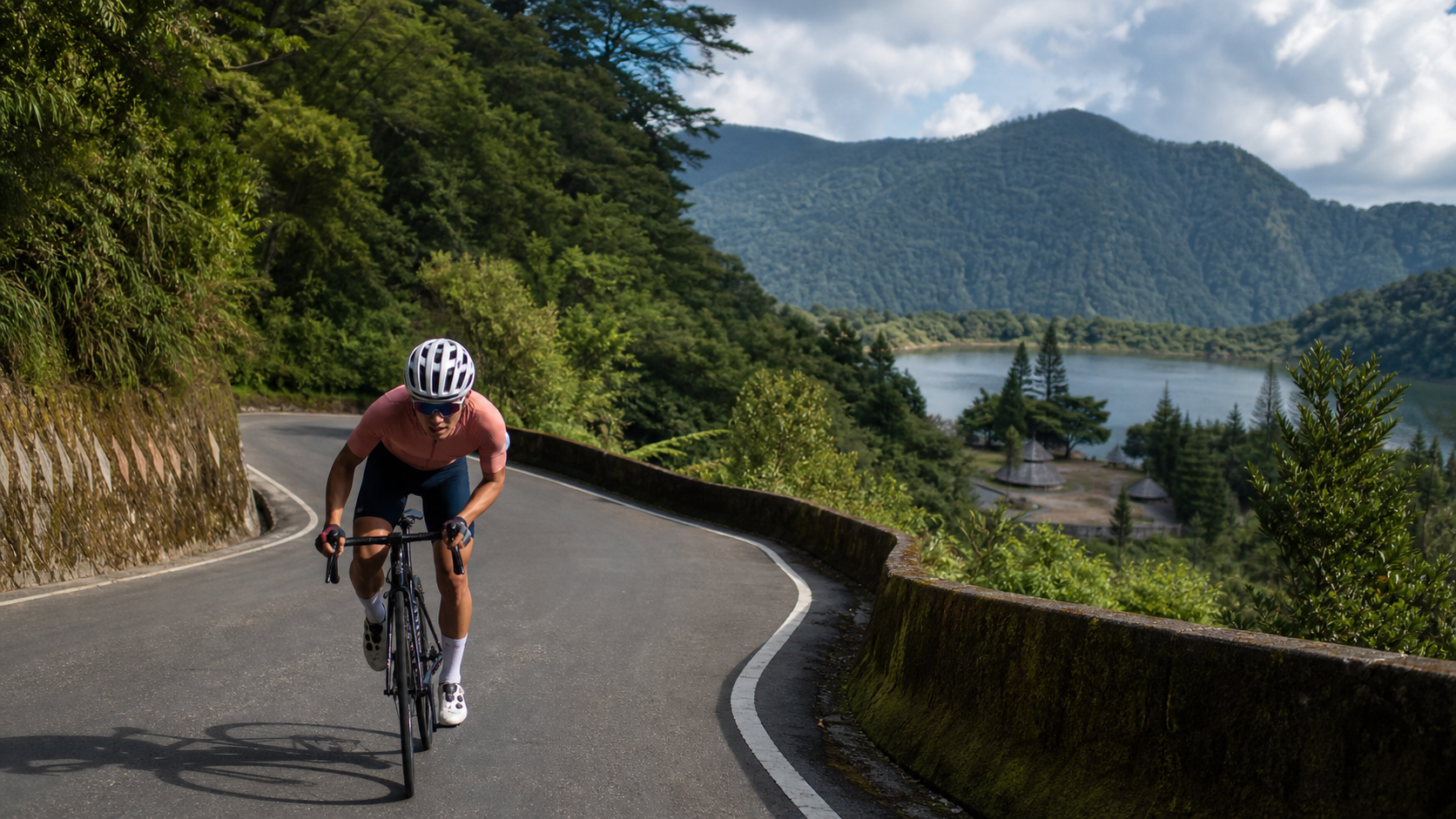
Let the Data Speak: The True Intensity of the Xiangtian Lake Climb
The Xiangtian Lake climb segment stretches 5,830.9 meters in total, which converts to 5.83 kilometers, with a total elevation gain of 418.2 meters and an average gradient of 7.1%. This route is registered as segment 8510398 on Strava, making it a must-visit classic Nanzhuang segment for many riders who enjoy collecting virtual badges. To understand where this route sits in terms of intensity, let’s compare it against several benchmark climbs.
The western approach to Wuling spans over 40 kilometers with more than 2,500 meters of elevation gain, yet the average gradient is only around 5%. It’s essentially a long-duration endurance battle where pacing stability and nutrition planning are the key focus. The eastern approach to Hehuanshan is shorter in distance, with the average gradient pushed up to around 6% to 7%, requiring more sustained power output. The Xiangtian Lake climb’s average gradient of 7.1% falls right in the intensity range of the eastern Hehuanshan approach, but at only 5.83 kilometers, it’s far shorter than the 10-plus-kilometer eastern Hehuanshan segment. This means the perceived intensity of the Xiangtian Lake climb is more concentrated—you must complete all the climbing within a relatively short time frame, with little room to spread out the effort.
Compared to the Xianshan Shitan side, also located in Miaoli’s Shitan Township with an average gradient of 8.1%, the Xiangtian Lake climb is slightly more forgiving in gradient, but the distances are similar (5.83 km vs. 5.89 km) and the total elevation gain is close (418.2 m vs. 475.4 m). If the Xianshan Shitan side is the kind of battle that’s “steep from start to finish with almost no breathing room,” then the Xiangtian Lake climb offers more variation in gradient changes. This variation is a double-edged sword for riders: on one hand, it provides more opportunities to adjust your rhythm; on the other, the fluctuating gradients test a rider’s sensitivity to pace changes and their ability to adapt.
It must be noted that although the Xiangtian Lake climb’s average gradient (7.1%) looks milder than the Xianshan Shitan side (8.1%), don’t let your guard down. An average gradient of 7.1% still ranks as mid-to-high intensity within the distribution of cycling routes across Taiwan. Especially since this route leads to Xiangtian Lake, the terrain along the way is highly varied, with localized sections that can suddenly spike above 10%. This places certain demands on a rider’s gear selection and energy management. Moreover, as an officially Strava-certified segment (number 8510398), this route has long been a battleground where top riders compete for the crown (KOM/QOM), and the actual competitive intensity often exceeds what the paper data suggests.
Segment-by-Segment Strategy from Start to Finish
The following breakdown is compiled based on general gradient variation patterns and rider-reported feedback. Actual mileage and gradient changes should be verified against roadside signage and your personal cycling computer data.
Segment 1 (0–1.5 km): Gentle Warm-Up, Establish Rhythm
The starting section of the Xiangtian Lake climb features relatively mild gradients. The main task on this stretch is to help your body transition smoothly from flat-road riding into climbing mode. It’s recommended to maintain a Rate of Perceived Exertion (RPE) of 5 to 6, keep power between 70% and 80% of FTP, and hold heart rate in the 75% to 82% range of max HR. Since the gradient variation isn’t pronounced yet, this section is ideal for checking whether your cadence stays in the comfortable zone of around 90 rpm, preparing you for the main climbing sections ahead.
Segment 2 (1.5–3.2 km): Mixed Gradient Shifts, Testing Pace Transitions
Entering this section, the gradient begins to alternate between steep and gentle—this is the biggest difference between the Xiangtian Lake climb and the Xianshan Shitan side. Rather than sustained high-intensity pressure, this is an “intermittent” climbing pattern that requires frequent adjustments to power output. It’s recommended that when the gradient steepens, power can be pushed up to 85% to 95% of FTP, and when it eases, recover moderately to 75% to 80%, giving your cardiovascular system periodic relief. This ability to switch pace actually tests a rider’s sensitivity to their own physical state more than pure sustained output capacity. It’s advisable to avoid stubbornly holding a fixed power number and instead adjust flexibly to the road conditions.
Segment 3 (3.2–4.5 km): The Core Climbing Zone, Full Pressure
This is the section with the most concentrated gradients and the greatest physical challenge on the entire route. The gradient will hold steadily around 8% to 10%, with localized sections possibly exceeding 10%. It’s recommended to climb seated with a cadence of 85 to 90 rpm, keeping power between 90% and 100% of FTP, with heart rate approaching 85% to 90% of max HR. This stretch is the critical zone that determines whether you can set a personal best time, and it’s where the real battle for the Strava segment crown begins. If you’re aiming to challenge the top of the leaderboard, power output stability on this section will be the deciding factor.
Segment 4 (4.5–5.83 km): Final Climb, the Last Test Before Xiangtian Lake
The final section isn’t long, but it’s often where both mental and physical fatigue converge. By this point, your body has been sustaining high-intensity output for over 15 to 25 minutes, and muscle glycogen is nearing its threshold. It’s recommended to break this section down into smaller target blocks and push through them one by one. Cadence can drop slightly to 78 to 85 rpm, paired with a slightly larger gear and a more forward torso angle to maintain pedaling efficiency. Power output can be allowed to enter the 100% to 108% range of FTP, cashing in all remaining reserves before reaching Xiangtian Lake. As you approach the finish, the calm waters of Xiangtian Lake and the surrounding mountain ridges gradually come into view—the best psychological reward for the entire challenge.
Gear Ratio and Equipment Recommendations
With an average gradient of 7.1% and localized sections possibly exceeding 10%, the Xiangtian Lake climb’s gearing requirements fall between a moderate climb and a high-intensity hard climb. The following recommendations are organized by rider level.
| Rider Level | Recommended Crankset | Recommended Cassette | Lowest Gear Ratio (Chainring/Cassette) | Notes |
|---|---|---|---|---|
| Advanced/Racing (FTP 4.0 W/kg and above) | 50/34 or 52/36 compact crank | 11-25T or 11-28T | Approx. 1.36-1.21 | Pair with lighter climbing wheels if chasing Strava crowns |
| Intermediate Riders (FTP 3.0-4.0 W/kg) | 50/34 standard compact crank | 11-28T or 11-30T | Approx. 1.13-1.21 | Balances flexible shifting needs for pace-transition sections |
| General Recreational Riders (FTP below 3.0 W/kg) | 50/34 compact crank | 11-32T | Approx. 1.06 | Maintains reserve for localized 10%+ sections |
| Beginner Challengers | 50/34 or lighter setup | 11-34T | Approx. 1.00 | Ensures effective cadence can be maintained throughout |
On equipment details, the road surface along the Xiangtian Lake climb is generally smooth, but since it’s a mountain road, tire pressure should be reduced by about 5 to 8 psi compared to flat-road riding, balancing grip and comfort. For wheel selection, because this route features frequent gradient changes requiring constant pace adjustments, a mid-to-shallow rim (under 30mm) paired with lighter hubs and rims will be more advantageous for acceleration response during gradient shifts than deep-section wheels. If you’re deliberately aiming to challenge the personal record or leaderboard ranking on Strava segment 8510398, it’s recommended to keep the total bike weight (including gear and supplies) as minimal as possible, since on a 7.1% average gradient over 5.83 kilometers, bike weight has a more pronounced impact on overall time than on longer, gentler climbs.
Nutrition and Hydration Strategy
Based on an estimated intensity of 418.2 meters of climbing at a 7.1% average gradient, intermediate riders will need approximately 22 to 32 minutes of sustained high-intensity output to complete this route. Thirty to sixty minutes before departure, it is recommended to consume one serving of easily digestible carbohydrates (approximately 30 to 50 grams), avoiding high-fiber or high-fat foods that may cause gastrointestinal discomfort. During the ride, if the total challenge time falls within 30 minutes, additional carbohydrate supplementation is generally unnecessary, but hydration should still be maintained with small sips every 10 to 15 minutes, totaling between 300 and 500 milliliters.
Electrolyte supplementation is equally important, especially in the mountainous area of Nanzhuang Township where Xiangtian Lake is located, as summer humidity is high and sustained high-intensity output can rapidly accelerate sweat loss. It is recommended that at least one bottle contain an electrolyte drink to reduce the risk of cramping, particularly during the third section’s main climbing core and the fourth section’s finishing climb—these two segments are high-risk zones where cramping is most likely to occur.
If incorporating the Xiangtian Lake climb into a longer Nanzhuang mountain-area itinerary (for example, linking with Luchang, Baguali, or other well-known Miaoli routes), it is recommended to complete a full supply check before reaching the start of the Xiangtian Lake climb, ensuring adequate bottle reserves and sufficient energy gels or portable food. Treat this segment as the key section of the entire ride that requires your “full effort.”
Weather and Seasonal Recommendations
Nanzhuang Township in Miaoli is situated in a mountainous and hilly terrain with pronounced climate variations. Overall, from late autumn to early spring (approximately November to March of the following year) is the best season to challenge the Xiangtian Lake climb, as temperatures are cool and humidity is lower, which is favorable for thermoregulation during high-intensity climbing.
When tackling this route in summer (June to September), special attention must be paid to the risks of afternoon convective showers and mountain fog. Nanzhuang’s terrain features numerous hills and valleys, which readily fosters localized strong convective weather in the afternoon. It is recommended that summer challenges be completed in the early morning hours—this both avoids the peak period of afternoon thunderstorms and takes advantage of cooler morning temperatures to reduce the risk of heat exhaustion. Scheduling the challenge one to two days after rain allows the road surface to dry thoroughly, effectively reducing the risk of slippery sections, especially on the second segment with its alternating gradients, where wet surfaces have a more pronounced impact on bike handling.
Xiangtian Lake sits at a higher elevation, and combined with the lake’s moderating effect on the surrounding microclimate, temperatures near the finish can be several degrees lower than in downtown Nanzhuang even in summer. It is recommended to carry a lightweight windbreaker to avoid catching a chill from the rapid drop in body temperature after arrival—especially when stopping at the summit to rest and take photos while your clothes are soaked with sweat, insulation measures are particularly important.
Common Mistakes and DNF Risks
First, ignoring gradient variations leads to wildly fluctuating power output. The second segment of the Xiangtian Lake climb features alternating steep and gentle sections, which easily tempts riders to push excessively hard on the steep pitches and completely ease off on the gentler ones. This unstable power output pattern ultimately consumes more energy over the long run than sustained, steady output. It is recommended to familiarize yourself with the route’s gradient profile in advance and mentally prepare for rhythm transitions.
Second, overly heavy gear ratios force riders to slow down or even dismount and walk. Although the Xiangtian Lake climb’s 7.1% average gradient is not extremely steep, localized sections can still exceed 10%. If gear ratios are planned based only on the average gradient figure while ignoring the localized steep pitches, cadence can plummet at critical sections, increasing strain on joints and muscles.
Third, chasing the Strava crown leads to excessive effort in the early stages. This route is an official segment, attracting many riders who deliberately gun for leaderboard positions. However, if you sprint at near-maximal intensity in the early sections, you can easily blow up prematurely in the third section’s main climbing core, ultimately hurting your overall time. It is recommended to allocate intensity across the entire climb based on your own FTP data rather than simply going by feel to grab time early.
Fourth, imbalanced hydration rhythm increases cramping risk. Especially in hot, humid summer conditions, failing to maintain a consistent drinking frequency can lead to muscle cramps in the finishing climb, forcing an interruption of the challenge.
Fifth, underestimating the psychological fatigue caused by the elevation gain at the finish. Although the Xiangtian Lake climb is not long in distance, the frequent gradient changes can easily create a nagging sense of “how much farther?” uncertainty. It is recommended to familiarize yourself with the route’s segment breakdown in advance, replacing vague distance perception with concrete milestones to reduce the psychological risk of giving up midway.
Target Times for Riders of Different Levels
The following times are for reference only. Actual completion times will vary depending on fitness condition, weather on the day, and road conditions. It is recommended to adjust based on your own FTP or recent climbing performance.
| Rider Level | Target Completion Time | Average Power Reference (W/kg) | Average Heart Rate Reference (%HRmax) |
|---|---|---|---|
| Pro/Racing Level | Within 14 minutes | 5.0 and above | 87-92% |
| Advanced Rider | 17-21 minutes | 4.0-5.0 | 84-89% |
| Intermediate Rider | 22-28 minutes | 3.0-4.0 | 80-87% |
| Recreational Rider | 29-36 minutes | 2.5-3.0 | 76-84% |
| Beginner Challenger | 36 minutes and above | Below 2.5 | Depends on individual condition |
The Competitive Landscape of Strava Segment 8510398
As an official segment, the Xiangtian Lake climb has accumulated a considerable number of challenge records over the years, and competition at the top of the leaderboard is fierce. To secure a good ranking on a segment like this, beyond basic fitness, familiarity with the route’s gradient changes is often the decisive factor. Many riders who have long held the crown repeatedly ride the same route, gradually figuring out the optimal power allocation strategy at every gradient transition point. This advantage gained through “route memory” is often harder to overcome than mere fitness improvements.
If you are deliberately aiming to challenge your personal record on this segment, it is recommended to first complete at least two to three familiarization rides, recording your subjective feel and actual power data on each gradient section to identify room for optimization in your rhythm transition zones. Then choose a day when you are in peak condition and weather conditions are ideal for an all-out effort. This will be far more efficient at approaching your personal limit than a random “just give it your best” strategy every time.
Practical Interpretation of Power Curves and Rhythm Transitions
The greatest training value of the Xiangtian Lake climb lies in the fact that it forces you to practice power control under “non-steady-state output.” Unlike the sustained-pressure climbing style of Xianshan’s Shitan side, the Xiangtian Lake climb, with its alternating steep and gentle gradients, should produce a distinctly sawtooth-shaped power curve rather than a smooth straight line. This fluctuation is not inherently bad—the key lies in the “reasonableness” of the fluctuation. Pushing power higher on steep sections is a normal response, but if you fail to appropriately dial power back on the gentler sections to give your cardiovascular system and muscles a brief respite, you will exhaust your energy reserves earlier over the long run than with sustained steady output.
For riders equipped with a power meter, it is recommended to pay special attention to the gap between “Normalized Power” and “Average Power” when reviewing data after the ride. If the gap is too large, it indicates that your control during rhythm transitions is not precise enough, and your power swings are too violent. In such cases, even if the average power number looks decent, the actual perceived exertion will be far higher than the number suggests. By repeatedly riding the same route and gradually narrowing the gap between normalized power and average power, you will be addressing the core training direction for improving performance on this type of undulating route.
For riders without a power meter, you can use the “rate of heart rate recovery” to judge whether you are truly achieving effective recovery on the gentler sections. Ideally, after entering a gentler section, your heart rate should begin to show a clear downward trend within 10 to 20 seconds. If your heart rate remains on a plateau without dropping, it means your overall intensity has exceeded your current recovery capacity. In this situation, rather than stubbornly sticking to a rhythm-transition strategy, it is better to switch to a more conservative, steady-output mode, which will actually give you a better chance of finishing.
Planning Connections with Other Mountain Routes in Miaoli
Xiangtian Lake climb is located in the core mountainous area of Nanzhuang Township, and the surrounding road network offers potential connections with well-known routes such as Luchang, Baguali, and the Xianshan–Shitan side. If you place the Xiangtian Lake climb early in your overall itinerary, the advantage is that your body’s energy reserves are fully stocked, making it suitable for riders chasing personal records on Strava. However, note that the rhythm-switching nature of the Xiangtian Lake climb causes muscles to alternate repeatedly between different exertion modes—this type of fatigue accumulation differs from sustained climbing. Even if you feel you still have adequate energy at the moment, microscopic muscle fatigue may already exceed expectations, so it is advisable to reserve a larger energy buffer when planning subsequent sections.
If you place the Xiangtian Lake climb at the end of the itinerary as a finale challenge, you need to pay special attention to the risk posed by insufficient familiarity with the route—on a route with frequent gradient changes, failing to grasp the timing of rhythm switches in advance can lead to poor judgment under fatigue, resulting in imbalanced power distribution. Regardless of which stage of the itinerary you place this route in, it is recommended to familiarize yourself with the gradient profile in advance using GPX tracks or route planning tools to minimize uncertainty.
Nanzhuang Township itself is also an important cycling road network hub in the Miaoli mountain area. After completing the Xiangtian Lake climb, if time and energy permit, consider extending your ride to visit nearby routes such as Luchang Village or Baguali, expanding a single challenge into a complete in-depth cycling itinerary through the Nanzhuang mountain area.
Strategic Differences Between Group Rides and Solo Challenges
Because the Xiangtian Lake climb features frequent gradient changes, group formation management during a group ride is more challenging than on sustained climbing routes. On sections where the gradient eases, stronger riders may unconsciously pull away from the group, while on steep sections, differences in fitness are further amplified. It is recommended that group rides adopt a “segment regrouping” strategy, pausing briefly at several key milestones (such as the junctions between segments) to wait, avoiding the group becoming too strung out and leaving riders at the rear isolated without support.
When tackling the Xiangtian Lake climb as a solo challenge, since this route is a Strava-certified segment, many riders choose to attempt record times in the early morning or on weekdays when traffic is lighter. While road conditions are simpler during these times, it also means that if a mechanical failure or physical discomfort occurs, the wait for rescue or assistance may be longer. It is recommended to inform friends or team members of your challenge plan and carry basic emergency equipment.
Filming and Documentation Recommendations
Along the Xiangtian Lake climb, the varied gradients and terrain make it highly suitable for segment-based filming. The continuous switchbacks in the second segment’s rhythm-switching zone are an excellent vantage point for capturing dynamic riding motion; the third segment’s main climbing core, with its concentrated gradients, allows you to capture the tension of a rider applying full effort; and upon reaching the finish at Xiangtian Lake, the calm lake surface paired with the surrounding mountain scenery is the most memorable moment of the entire challenge worth photographing. If you record the entire ride with a GoPro or action camera, it is recommended to slow down at key rhythm-switching points to confirm the camera angle, so that when reviewing afterward, you can more precisely examine whether your power distribution at each gradient transition matched the strategies suggested in this article.
Training Periodization: How to Prepare for the Xiangtian Lake Climb
If you set the Xiangtian Lake climb as a specific training goal, it is recommended to begin targeted preparation four to six weeks before the challenge day. Since the core challenge of this route lies in “rhythm-switching ability,” your training plan should not consist solely of long climbing intervals at a single intensity. Instead, it should incorporate “variable-pace interval” training—deliberately alternating between high-intensity climbing efforts and moderate-intensity easier gradients within the same ride to simulate the actual gradient variation pattern of the Xiangtian Lake climb.
For specific training recommendations, you can schedule one to two gradient interval sessions per week. For example, on a familiar training climb, perform 3 to 5 sets of 3 to 5 minutes of high-intensity climbing (power at 95% to 105% of FTP), with 2 to 3 minutes of low-intensity recovery on easier gradients between sets (power at 60% to 70% of FTP), thereby allowing your body to adapt to this fluctuating energy output pattern. Combined with one long-distance aerobic ride per week to maintain base aerobic capacity and muscular endurance, this forms a reasonable training framework for building a foundation for the Xiangtian Lake climb.
One week before the challenge day, it is recommended to gradually reduce training intensity and volume, entering a tapering phase so that your body presents its optimal physical condition on challenge day. In the 48 hours before the challenge, avoid any high-intensity training, focusing instead on easy riding or complete rest to ensure muscle glycogen stores and neuromuscular responsiveness are adjusted to their best state. This way, you can deliver stable and efficient performance through every gradient change on the Xiangtian Lake climb.
Conclusion: An Endurance Test on the Road to the Saisiyat Sacred Ground
The Xiangtian Lake climb, with its 5.83-kilometer distance, 418.2 meters of elevation gain, and 7.1% average gradient, forms a classic route combining both intensity and variety. It does not maintain high tension from start to finish like the Xianshan–Shitan side, yet it tests a rider’s adaptability and rhythm-switching skills through its undulating gradients. Whether you have come for a spot on the Strava leaderboard or simply want to experience this road to the Saisiyat sacred ground with your own legs, the Xiangtian Lake climb will respond to every ounce of effort you put in with the most honest data.
Related Reading
- Complete Guide to the Xianshan–Shitan Side: Miaoli’s Tough 5.89 km, 475 m Climb, 8.1% Average Gradient
- Complete Guide to Xianshan KOM: Data Analysis of Nanzhuang’s King of the Mountain, 12.93 km at 3.9% Average Gradient
- Miaoli Tongxiao to Nanzhuang Mountain Route: Complete Guide to Climbing in the Hakka Mountain Town
- Riding to the Saisiyat Sacred Ground: The Distance Between the Xiangtian Lake Climb and the Pas-ta’ai Legend
新竹羅平 x 天湖部落 大禹嶺級變態陡坡! 4K超高畫質 空拍 | 公路車
5 年前
台北闊瀨陡坡 騎旅 / 日本單車雜誌編輯車友臨時加入!/ 髮香才是最強的 / feat. 北迴歸線小隊 / 公路車 CT Yeh
6 個月前
2024 南庄仙山KOM 多視角賽事精華!/ 500元報名費媲美富士山登山賽!/ 公路車 / CT Yeh
1 年前
大禹嶺 到 武嶺牌樓 全程前後實況錄影 | 北進武嶺 | 東進武嶺 | KOM | 訓練台 | 坡度分析 | Taiwan KOM Last 10 km HARD | 公路車
6 年前
#北橫 + #北進武嶺 最硬的員工旅遊 EP1 | #公路車 #拉拉山 | 明池 | 武嶺 | 武陵農場 | 雲海 | Taiwan Cycling Route Wulin
6 年前
#公路車 #西進武嶺 配速配瓦實驗 坡度分析 四小時內攻略 建大盃 NeverStop #西進武嶺攻略
6 年前
超激烈!2025 南庄仙山KOM 賽事精華 / 男菁英A x 女菁英A / 公路車 / CT Yeh
9 個月前
台灣登山王之路 KOM 全程參賽4K臨空錄影 PART1 穿越峽谷地形! #東進武嶺 太魯閣 / 燕子口 / 天祥 / 西寶 PART1 (公路車 / CT Yeh)
3 年前