Luchang Steep Climb Battle Guide: Full Analysis of the Ultimate Challenge — 4.09 km at 9.6% Average Gradient
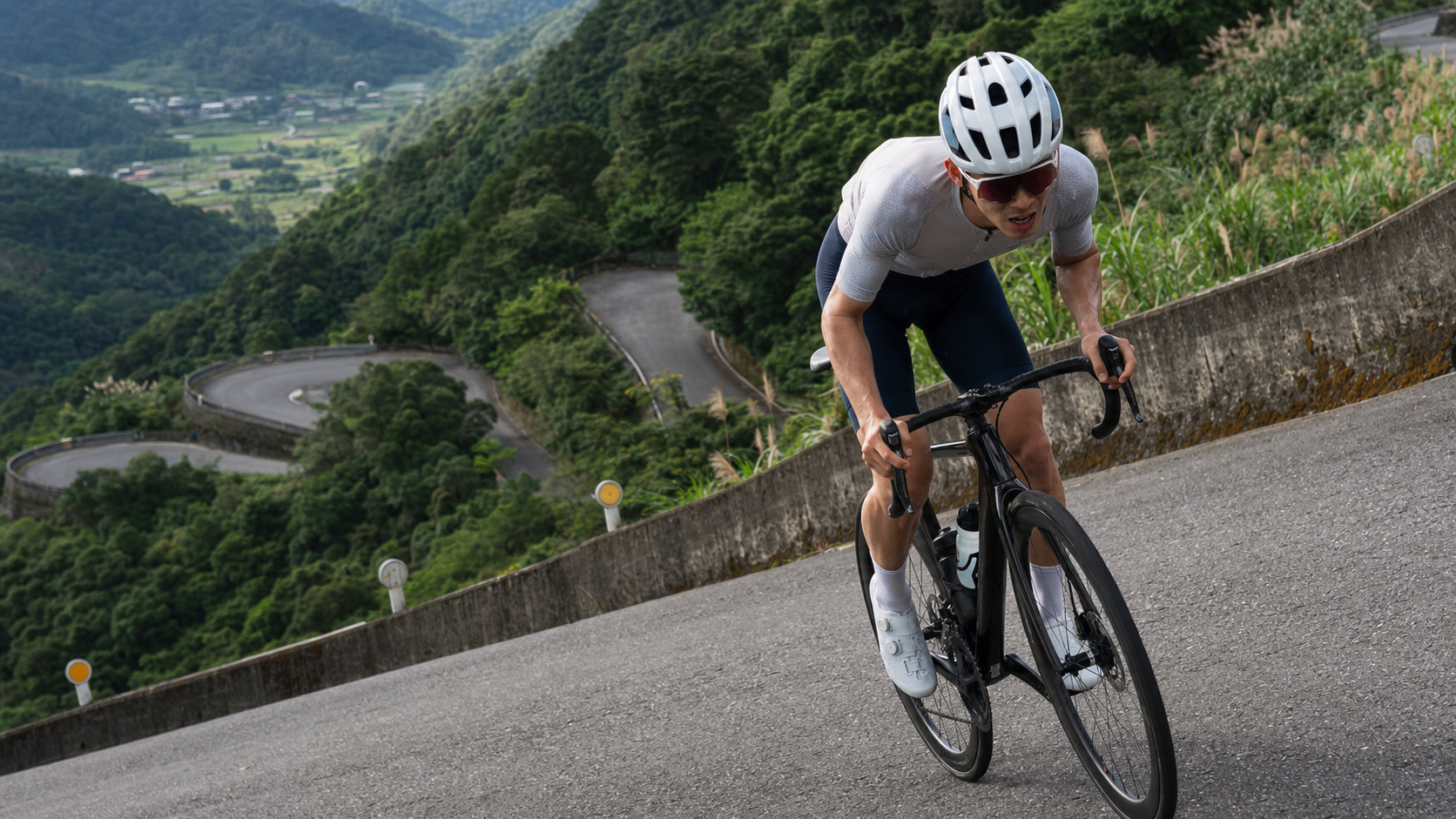
Data Analysis: The Steepest Short Climb on the Entire Route List
To truly understand what a 9.6% average gradient means, we need to start with the relationship between gradient and perceived exertion. Generally speaking, for every 1 percentage point increase in gradient, the power output required tends to rise in a non-linear fashion. This increase becomes especially pronounced once the gradient exceeds 8%, because at that point the rider must not only do work against gravity, but also contend with a cascade of compounding factors: the forward shift of the bike’s center of gravity, increased tire traction demands, and altered pedaling force angles. Luchang Steep Climb maintains a 9.6% average gradient across its entire 4.09 km length, which means riders have virtually no meaningful flat or recovery sections to rely on. From the starting point to the finish, the entire process demands sustained high-intensity power output. This “uninterrupted high intensity” characteristic is precisely the core reason it has earned its reputation as the most challenging standout route in this batch.
If we compare the 9.6% average gradient against other famous hard climbs in Taiwan, Luchang Steep Climb’s difficulty profile becomes quite clear. The Wuling western approach, while often exceeding 2,000 meters of total elevation gain, spreads that climbing over 20-plus kilometers, typically yielding an average gradient of around 5% — a “marathon-style” long-distance attrition battle. Luchang Steep Climb, by contrast, is an entirely different type of challenge — it more closely resembles what in racing is called an “explosive climb” or “sprint climb,” demanding that riders sustain a very high proportion of threshold-or-above power output over a relatively short duration. This intensity distribution is actually quite similar in perceived exertion to the consecutive hairpin switchbacks around the steering-wheel bend section of the Hehuan Mountain highway: localized sections routinely exceed 10% and even approach 12%, leaving riders absolutely no room to adopt a cruising mindset — every section demands full concentration in managing the dual challenge of gradient and bike handling.
Calculating from climbing density, Luchang Steep Climb gains approximately 96 meters per kilometer on average. Converting this figure into the common climb categorization system, it approaches or even exceeds the gradient thresholds for climbs classified as “Category 1” (or HC grade, depending on distance) in many classic European races. Of course, since Luchang Steep Climb’s total distance is under 4.1 km, its absolute total elevation gain cannot rival those European classic climbs that stretch for ten-plus kilometers. But purely on the dimension of “how steep the gradient is,” Luchang Steep Climb is absolutely a hard climb capable of commanding respect even from seasoned riders. This is also why, in the word-of-mouth lore of local Miaoli cyclists, Luchang Steep Climb is frequently used as a “touchstone” route for testing one’s climbing ability and mental fortitude. Many riders will deliberately schedule training blocks and make special trips to challenge this route, using it to gauge the effectiveness of their recent training.
From a sports physiology perspective, a climb with a 9.6% average gradient lasting between 15 and 35 minutes corresponds to a training effect that sits very close to the boundary zone between the so-called “VO2 Max intensity zone” and the “anaerobic threshold intensity zone.” What makes this intensity zone unique is that it simultaneously requires the body to maintain a high percentage of maximal oxygen uptake utilization while also preventing blood lactate accumulation from outpacing the body’s clearance capacity — an intensity type that severely tests the coordinated functioning of the body’s metabolic systems. For recreational riders whose usual training menus lean toward long-distance endurance riding with less exposure to high-intensity interval training, the first attempt at Luchang Steep Climb often produces a frustrating sense of “my body simply can’t keep up with my cardiovascular demands.” This is actually a normal phenomenon, indicating that the body’s anaerobic metabolic system and lactate tolerance have not yet undergone targeted training. Repeatedly challenging this type of high-intensity short climb is one of the most efficient training methods for raising one’s personal climbing ceiling. This is also why many riders seeking to improve their climbing performance incorporate Luchang Steep Climb as a fixed “hard workout” route in their periodized training menus.
Section-by-Section Guide from Start to Finish
Section 1: Entering the Industrial Road (0–1 km)
The starting point of Luchang Steep Climb is located at the entrance to the industrial access road leading to the Luchang tribal community in Nanzhuang Township. From the very beginning, the gradient is already noticeably steeper than what most would consider a “warm-up incline.” This route gives riders almost no room for gradual progression. It’s recommended to mentally prepare from the outset and deploy your heart rate management strategy early. During the initial phase, heart rate should be controlled between 75% and 80% of maximum heart rate, with power output around 75% to 80% of FTP. Be careful not to prematurely deplete your anaerobic reserves by trying to “make an early push.” The road surface on this section is typical industrial-road asphalt. The road width is relatively narrow with limited passing space, so heightened alertness is essential — especially since this is the access road to the famous scenic spot, Shengxian Valley Waterfall Group. On weekends and holidays, there may be considerable car, motorcycle, and tour bus traffic. Safety is always the top priority.
Precisely because this route has virtually no true warm-up section, it is strongly recommended that before arriving at the starting point, you complete a thorough warm-up ride on flatter sections — getting your heart rate elevated into the aerobic zone in advance and ensuring muscle temperature and joint mobility are in a state suitable for high-intensity output. The ideal warm-up approach is to schedule at least 15 to 20 minutes of progressive riding before the formal challenge, interspersed with two to three roughly 30-second moderate-intensity accelerations, allowing both the neuromuscular system and the cardiopulmonary circulatory system to prepare for the high-intensity test ahead. Going into Luchang Steep Climb cold and facing its steep-from-the-start gradient not only forces the body’s adaptation period to be compressed into the most difficult sections, but also significantly increases the risk of muscle strains or cramps. This point is especially important for older riders or those with typically lower training volumes.
Section 2: Gradient Ramps Up Across the Board (1–2 km)
This is the section where Luchang Steep Climb begins to reveal its truly ferocious character. The statistical profile of a 9.6% average gradient means that, after accounting for the relatively gentler start and finish sections, the actual gradient in the middle portion is very likely to hold steady at 10% or even higher. Here, it’s recommended to raise heart rate to 85% to 88% of maximum, with power output reaching 90% to 100% of FTP — formally entering the threshold-intensity plateau. Cadence should be deliberately dropped to 60–70 RPM. While this cadence range may seem low, on such steep gradients it actually allows the muscles to maintain better torque output efficiency, preventing the cardiovascular load from racing ahead of the muscles’ actual work capacity due to excessively high cadence. Gear selection must be planned in advance for this section — make sure the cassette is already shifted to near the lowest gear. Because if you discover mid-climb that your gearing isn’t light enough, shifting under the extreme chain tension of a steep section carries a real risk of chain skip or chain jam.
Section 3: The Core Trial Zone (2–3 km)
If there is one section of Luchang Steep Climb that deserves to be called the “heart of the trial,” it is this one. Based on the 9.6% average gradient and terrain undulations, this is highly likely where the steepest instantaneous gradient on the entire route appears, with values potentially approaching or exceeding 12% to 13%. This level of steepness is comparable in difficulty to certain hairpin switchback sections on the Hehuan Mountain highway’s steering-wheel bend area. The core strategy for this section is “absolute pacing discipline”: heart rate should be controlled near 88% to 92% of threshold heart rate, with power output maintained between 100% and 110% of FTP. This is already an output intensity very close to one’s personal limit, and it can only be sustained through stable breathing rhythm and consistent pedaling cadence. A mixed riding approach is recommended — seated climbing as the primary mode with standing out-of-saddle surges as a supplement. At the steepest instantaneous moments, you can briefly stand and surge, using body weight to assist with force application, but each standing surge should be limited to 10 to 15 seconds before returning to the saddle, to avoid heart rate spiking excessively and causing premature energy depletion in the sections ahead.
On this extreme-intensity section, front-wheel lift (the wheelie effect) is another technical detail that demands attention. When the gradient becomes steep enough, combined with a rider’s center of gravity shifting too far back or improper standing pedaling angles, the traction weight on the front wheel is relatively reduced, which can easily cause steering instability or even slight wheel lift — especially in corners where extra caution is needed. It’s recommended that when passing through the steepest sections, you shift your center of gravity slightly forward, grip the handlebars lightly on the tops or drops (depending on personal preference and gradient), and keep your core muscles steadily engaged. This not only helps maintain front-wheel traction and handling stability, but also allows the upper body to assist in sharing some of the stability demands during pedaling effort. Additionally, the visual focus strategy on this section deserves special mention: due to the dramatic gradient changes, riders are advised to keep their gaze on the road surface 5 to 10 meters ahead, rather than staring fixedly at the front wheel or the distant finish line. This allows for timely reactions to potholes, fallen rocks, loose gravel, or other potential obstacles. After all, on a section this steep and demanding full output, any handling error could have serious consequences.
Section 4: The Final Chapter of Willpower (3–4.09 km)
Entering this final stretch, physical fatigue reaches its highest point of the entire route. Muscle burning, rapid breathing, and even slight vision blurring may all appear at this stage — all normal physiological responses to high-intensity climbing. Here, it’s recommended to shift your focus from “how much farther” to “this one revolution of the pedals right now,” getting through this final stretch with extreme concentration. Heart rate at this point is likely approaching or already at personal maximum. Power output should be maintained at the highest sustainable intensity you can handle — there’s no need to deliberately hold anything back, because the finish line is already in sight. As you approach the finish area, near the Luchang tribal community and Luchang Nursery, the terrain gradually opens up — a visual signal reminding the body that this grueling challenge is nearly complete. The moment you finish, that complex emotion mixing exhaustion and achievement is precisely the most profound physical memory Luchang Steep Climb leaves with every challenger.
Gear Ratio and Equipment Recommendations
Facing a 9.6% average gradient with localized instantaneous gradients potentially exceeding 12%, gear ratio configuration on this route is almost the decisive factor in whether you can complete the climb successfully — not merely a secondary consideration affecting pacing efficiency:
| Rider Level | Recommended Chainring | Recommended Cassette | Lowest Gear (Climbing Gear) | Notes |
|---|---|---|---|---|
| Advanced / Competitive | 50-34T (Standard Compact) | 11-32T | 34×32 | Even strong riders are advised to prepare generous gearing for localized steep sections |
| Intermediate / General Training | 48-32T or 34-24T small-chainring system | 11-34T | 32×34 or 24×34 | Prioritize maintaining controllable cadence; avoid grinding that injures knees |
| Beginner / Recreational | Small-chainring system with large cassette | 11-36T and above | The lighter, the better | Mountain-bike-level gearing strongly recommended to ensure stable cadence to the finish |
It’s worth emphasizing specifically that Luchang Steep Climb’s gradient level exceeds the comfort zone of many standard road bike gear configurations. If you primarily ride flat or gentle-gradient routes and your gearing leans toward a racing-oriented setup, it is strongly recommended that before challenging this route, you confirm whether your cassette’s lowest gear can handle extended output on double-digit gradients. If necessary, you should swap in a wider-range cassette or compact chainrings to avoid being forced into extremely low cadence grinding due to insufficient gearing. Not only is this riding style inefficient, but over extended periods it also significantly increases the risk of damage to knee joints and tendons.
Beyond gearing, tire pressure and tire selection play an equally critical role on this route. While the overall pavement condition of the Luchang industrial road is generally good, as an access road it inevitably has some sections with potholes, patches, or accumulated gravel. Especially on the steepest cornering sections, traction stability directly relates to riding safety. It’s recommended to set tire pressure slightly lower than typical flat-road cruising, and to prioritize training tires with better grip and tread designs suited to rough surfaces, rather than chasing lightweight or low rolling resistance race tires. After all, under this combination of gradient and road conditions, stable, reliable traction matters far more than marginal differences in rolling resistance. Additionally, the reliability of the braking system should be carefully inspected before departure — especially considering that after finishing, you’ll be descending the same road back. Consecutive steep gradients combined with corners will cause descending speed to build rapidly in a short time. Hydraulic disc brakes or high-quality caliper brake systems provide more stable and predictable deceleration performance — a critical safety detail in such steep terrain.
Nutrition and Hydration Strategy
Although Luchang Steep Climb’s total length is only 4.09 km, due to the extreme gradient and dense intensity, actual completion time for most riders will likely fall between 15 and 35 minutes. This high-intensity, medium-short-duration exercise pattern consumes energy and fluid at a rate far exceeding flat cruising over the same time span. It’s recommended that at the rest stop before the start — typically the Nanzhuang town center or the Luchang tribal community entrance where riders usually stop for supplies — you complete a full hydration and carbohydrate refuel, ensuring you depart with your body in optimal energy reserve status. Since the route itself offers little space or time for mid-climb refueling, carrying at least one bottle of sports drink or electrolyte-added water is essential. If you plan to do multiple repeat attempts or combine this with other routes for a long traverse, it’s recommended to carry an extra energy gel as an emergency backup. If you feel a noticeable drop in energy before the core trial zone, you can replenish promptly to avoid the “bonk” caused by a sudden blood sugar crash.
Weather and Seasonal Recommendations
The Luchang tribal community in Nanzhuang Township is located in a mountainous area, where altitude and terrain make the climate far more variable than in the lowlands. In summer, especially, afternoon convective cloud systems frequently develop into thunderstorms. Once mountain roads become wet, handling and traction risks on a route with gradients routinely exceeding 10% increase dramatically. It is strongly recommended to avoid afternoon time slots and instead choose an early morning or late morning departure. Autumn and winter typically bring more stable, drier weather — the better seasons for attempting to break personal PRs. However, morning temperatures are low, and fog may develop in the mountain areas, so be prepared with adequate warmth and contingency plans for poor visibility. Additionally, since this route leads to the famous Shengxian Valley Waterfall Group scenic spot, traffic volume increases noticeably on weekends and holidays. It’s recommended to prioritize weekdays or early morning holiday slots — not only to avoid traffic interference, but also to enjoy a quieter, more pure challenge environment.
Common Mistakes and DNF Risks
The first common mistake is severely underestimating the actual intensity of a 9.6% average gradient. Many riders habitually apply pacing experience from past routes with 5% to 7% average gradients to this route, only to find themselves exhausted before even reaching the halfway point, forced to dismount and walk. This “experience miscalculation” is the most frustrating trap Luchang Steep Climb sets for riders. The second mistake is insufficient gear ratio configuration. As mentioned earlier, this route’s gradient level exceeds the comfort zone of many standard road bike setups. Without confirming and adjusting your cassette and chainring combination in advance, you may find it completely impossible to maintain an effective cadence in the core trial zone. The third mistake is inadequate fluid and energy replenishment. Because the route’s total length is short, it’s easy to assume not much preparation is needed — but high-intensity output consumes energy and fluid far faster than imagined, and insufficient preparation can easily lead to cramping or energy depletion in the latter sections. The fourth mistake is the accident risk from unpolished handling skills, especially on the steepest hairpin corner sections where body weight management and pedaling force angles require more refined technique. Less experienced riders are prone to low-speed falls in steep corners due to balance instability. The fifth risk is insufficient psychological preparation. The intensity density of Luchang Steep Climb can create enormous psychological pressure, and without mentally preparing for “this route is inherently a hard battle,” it’s easy to give up early due to frustration. First-time challengers are strongly advised to adopt a conservative mindset, making completion the sole goal — there’s no need to chase performance results on the first attempt.
Target Times for Different Rider Levels
The following time ranges are reasonable estimates based on comprehensive consideration of route length, elevation gain, average gradient level, and reference to typical completion time distributions for similarly difficult steep climbs:
| Rider Level | Estimated Completion Time | Average Power Output (Approx.) | Average Speed |
|---|---|---|---|
| Elite Competitive (FTP 4.5W/kg and above) | 14–17 min | Above 100% of FTP | Approx. 14–17 km/h |
| Advanced Training (FTP 3.5–4.5W/kg) | 18–23 min | 90–100% of FTP | Approx. 11–14 km/h |
| Intermediate General Rider (FTP 2.8–3.5W/kg) | 25–32 min | 80–90% of FTP | Approx. 8–10 km/h |
| Beginner Recreational Rider | 35+ min, possibly needing segmented rest | Pace by perceived exertion | Approx. 6–8 km/h, including rest time |
It should be specifically noted that given the extremely high intensity level of the 9.6% average gradient, for beginner or recreational riders, stopping briefly mid-climb to rest, catch your breath, and then continue is a completely acceptable and even encouraged strategy. There’s no need to feel defeated by taking a mid-climb break. The value of Luchang Steep Climb lies in providing a real and honest self-testing ground. Regardless of the final completion time, if you can reach the finish under your own leg power, that is already an achievement worth being proud of. This route also serves as an excellent indicator for evaluating training effectiveness. Riders aiming to break through their personal climbing limits are advised to incorporate Luchang Steep Climb into their periodic training as a regular test route, observing their progress trajectory in power output, pacing strategy, and mental resilience through repeated challenges.
Practical Interpretation of Power Curves and Breathing Rhythm
For riders equipped with a power meter, Luchang Steep Climb is an excellent route for examining “extreme intensity tolerance.” With a 9.6% average gradient throughout, theoretically your power output should appear as a relatively smooth plateau curve maintained above 90% of FTP, rather than fluctuating up and down like a rolling-gradient route. If you review your power data after the ride and find multiple pronounced dips in the curve, this typically indicates that on those sections, the localized gradient spiked above 12%, forcing you to slow down or even briefly pause to catch your breath. This is a normal phenomenon, but it also signals that there may be room for optimization in your gearing or energy allocation on those sections. When repeatedly challenging this route, pay special attention to whether the “power dip points” gradually decrease as your training cycles progress — this is a concrete indicator for assessing whether you are truly adapting to this type of high-intensity gradient.
For riders without a power meter, changes in breathing rhythm can serve as a gauge for whether your intensity has exceeded sustainable limits. Because Luchang Steep Climb’s gradient is sustained and steep, breathing rhythm can easily be forced within a short time from a regular four-count breathing pattern into rapid two-count or even one-count breathing. This transition itself isn’t entirely a bad thing — it means you’re drawing on a higher proportion of anaerobic energy systems. However, if the one-count breathing rhythm persists for an extended period accompanied by noticeable chest tightness or dizziness, this is already a clear warning signal from your body. You should immediately reduce speed or even stop to rest rather than pushing through. Learning to recognize the critical threshold of this breathing rhythm transition is a more important self-protection skill than pure physical training when tackling this type of high-intensity short climb.
Route Integration Planning with Other Nanzhuang Routes
Due to its geographic location, Luchang Steep Climb is frequently incorporated by local cycling teams into longer Nanzhuang mountain challenge itineraries, such as linking with the Xiangtian Lake and Xianshan–Shitan side routes. However, it must be specifically cautioned that because Luchang Steep Climb has the highest intensity density among these routes, if it’s scheduled in the middle or latter portion of the overall itinerary — when energy has already been partially depleted by preceding sections — the risk of challenging this route increases significantly. It’s recommended to schedule Luchang Steep Climb as early as possible in the itinerary, ensuring you face this steepest challenge on the entire route list with your body in its most complete reserve state.
If your goal is to make Luchang Steep Climb the grand finale of your itinerary, you must conduct a full nutrition and physical status check before arriving at the starting point, and appropriately lower your expectations for completion time — focusing on “safe completion” rather than “chasing personal records.” After all, in a state of partially depleted energy, forcibly challenging a 9.6% average gradient climb carries significantly higher risks of falls and cramps than when energy reserves are full. Regardless of how you arrange the order, it’s recommended to confirm the total elevation gain in advance using a GPX track, to avoid severe energy depletion in the latter part of the itinerary due to underestimating Luchang Steep Climb’s intensity.
Related Reading
- Zhulu Mountain Battle Guide: 6.89 km, 546.2 m Elevation Gain, 7.9% Average Gradient — Are You Ready for This Hard-Man Long Climb in the Wulai Mountains
- Luye Songlin Battle Guide: 3.8 km, Peaking Over 20% — How to Ride This Short but Explosive Climb
- Shibi Yunling Zhiqiu Battle Guide: The Endurance and Pacing Art of a 10.76 km Long Gentle Climb
- Guguan Uphill Guide: 4.4 km, 11.7% Average — A Textbook Pure Steep Climb
台北闊瀨陡坡 騎旅 / 日本單車雜誌編輯車友臨時加入!/ 髮香才是最強的 / feat. 北迴歸線小隊 / 公路車 CT Yeh
6 個月前
萬年峽谷! 30% 超激陡坡 里佳部落DAY2 還是很硬! | 公路車 | CT Yeh
3 年前
大禹嶺 到 武嶺牌樓 全程前後實況錄影 | 北進武嶺 | 東進武嶺 | KOM | 訓練台 | 坡度分析 | Taiwan KOM Last 10 km HARD | 公路車
6 年前
大武山後門26%歡樂陡坡!JJSC南台灣單車行Day2 / 被颱風追著跑 / 公路車 / CT Yeh
2 年前
新竹羅平 x 天湖部落 大禹嶺級變態陡坡! 4K超高畫質 空拍 | 公路車
5 年前
#公路車 #西進武嶺 配速配瓦實驗 坡度分析 四小時內攻略 建大盃 NeverStop #西進武嶺攻略
6 年前
半日 小台灣 極限單車路線挑戰實錄
7 年前
#北橫 + #北進武嶺 最硬的員工旅遊 EP1 | #公路車 #拉拉山 | 明池 | 武嶺 | 武陵農場 | 雲海 | Taiwan Cycling Route Wulin
6 年前