Climbing Through Coffee Aromas: A Cycling Memory of Gukeng Huashan Dahudi, Riding Through the Birthplace of Taiwan's Coffee
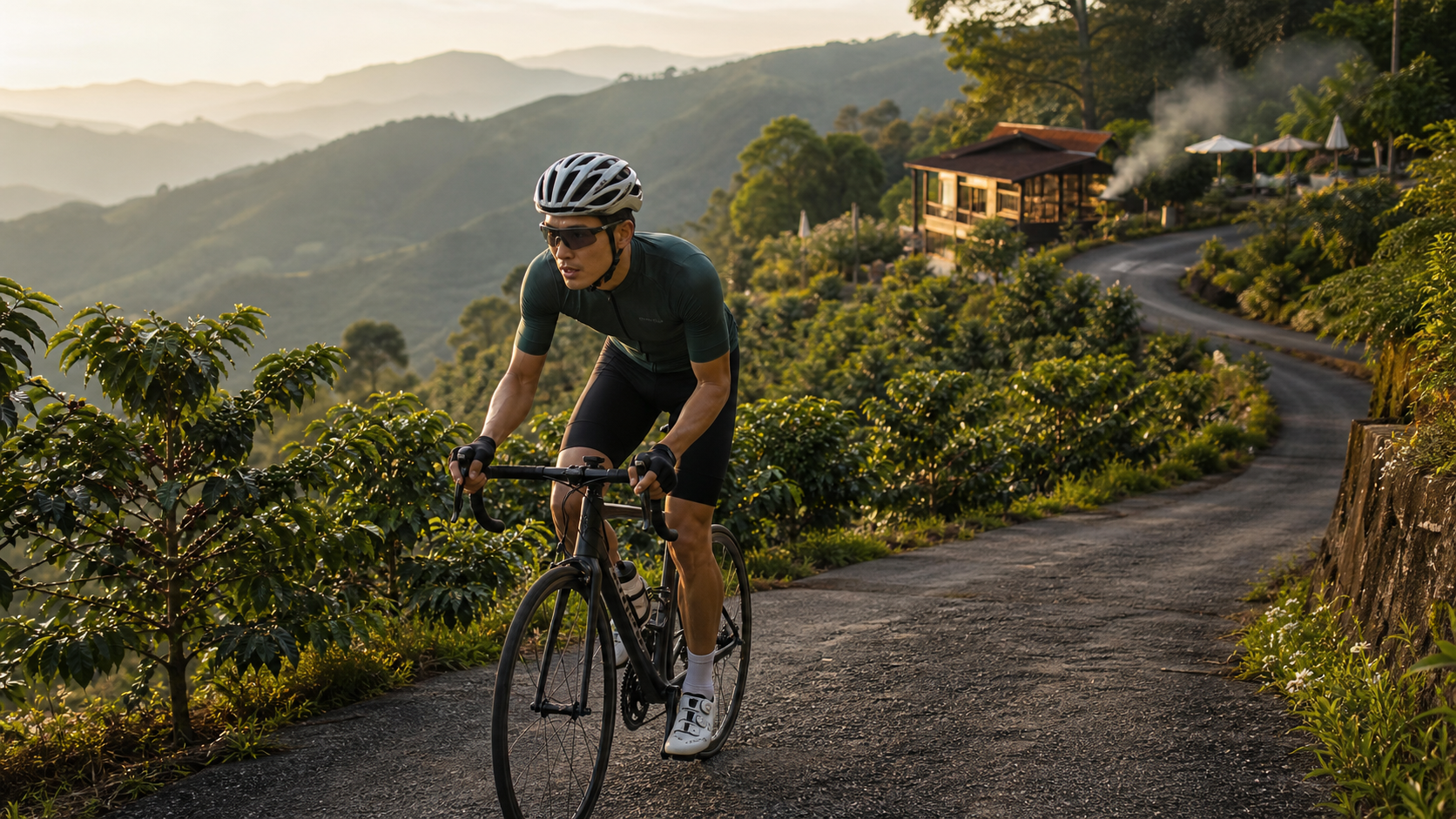
The Hometown of Coffee: An Industrial Memory Once Forgotten, Now Rediscovered
To understand the Huashan area, one must first look back at a chapter in Taiwan’s modern agricultural history. During the Japanese colonial period, the Japanese introduced a variety of cash crops across Taiwan, and coffee was one of them. In the Huashan area of Gukeng, Yunlin, the altitude, climate, and soil conditions happened to match the environment coffee trees need to thrive, making it one of Taiwan’s important coffee-producing regions at the time. The coffee beans produced in that era were even regarded as precious export and tribute-grade goods, and Huashan thus left an indelible mark on the history of coffee development in Taiwan.
However, as times changed and industrial structures shifted, coffee cultivation once declined, and Huashan’s coffee plantations gradually faded from people’s memory for a long period, replaced by other crops with greater economic returns. Yet this quiet period never truly uprooted coffee from this land—years later, with the rise of Taiwan’s specialty coffee consciousness, combined with the joint efforts of local farmers and the county government, the Gukeng coffee industry experienced a wave of revival. The Gukeng Coffee Festival is the most representative manifestation of this revival, restoring the name “Gukeng Coffee” to one of the first impressions Taiwanese people have of locally grown coffee. Today, as you ride through the Huashan area, you can still see numerous coffee estates and cafés scattered along the hillsides and industrial roads, with the aroma of roasting coffee beans drifting through the air from time to time—this is the gentlest and most captivating industrial imprint of this land.
While riding the Dadudi climbing route, I often find myself wondering whether, on some morning nearly a century ago, farmers carrying freshly harvested coffee cherries might have walked along similar slopes on this hillside, now covered in a patchwork of dense forest and coffee trees, heading toward the processing site. Traces of history are not always left on conspicuous monuments or interpretive signs; sometimes they hide in a wisp of fragrance in the air, or in a coffee plantation you happen to glimpse while pedaling, breathless. This experience of “conversing with history while climbing” is what makes the Huashan Dadudi route most unique—a charm that other routes can hardly replicate.
What is even more intriguing is that the trajectory of Gukeng coffee—from its introduction during the Japanese colonial period to its gradual decline—reflects the ongoing transformation of Taiwan’s modern agricultural economic structure. In earlier years, Taiwan’s agriculture was centered on traditional crops such as rice and sugarcane. Cash crops like coffee, which required meticulous management and had not yet matured in market acceptance, struggled to gain a foothold in the industrial environment of that era. As Taiwan’s post-war socioeconomic landscape shifted, many once-thriving cash crops were gradually replaced by more profitable industries, and Huashan’s coffee plantations likewise went through a long period of dormancy under such a macro-historical backdrop. This dormancy was not total abandonment; rather, it was more like a waiting—waiting for a shift in society’s tastes, waiting for the day when the consumer market would once again take an interest in locally grown specialty coffee.
As Taiwan developed a specialty coffee culture over recent decades, with consumers beginning to pursue coffee bean origins, roasting methods, and flavor profiles, this land in Gukeng that once grew coffee was finally remembered again. Local farmers and the county government invested resources to rehabilitate coffee trees, build brand images, and hold festivals, gradually transforming “Gukeng Coffee” from a dusty historical memory into one of the most familiar names for locally grown coffee in Taiwan today. This industrial story—from glory to silence, and from silence to revival—adds a layer of temporal depth to every pedal stroke on this land. You are not merely challenging a gradient figure; you are measuring, with your own two feet, the undulating trajectory of an epic chapter in Taiwan’s agricultural history.
Scenery and Landmarks Along the Way: From Huashan Literature Trail to Taoyuan Er Village
Beyond the historical depth of the coffee industry, the Huashan area itself boasts rich natural and cultural landscapes. The Huashan Literature Trail is one of the area’s most representative attractions. Winding along the creek valley and through the mountains, the trail is flanked by dense shade and is a popular spot for local residents and visitors to take a stroll and connect with nature. Although bicycles cannot directly enter the trail’s core area, riders on the Dadudi route can still catch distant views of this well-preserved mountain landscape along the way, sensing the unique tranquility and freshness of the region.
Venturing deeper into the valley, you will pass through the Huashan creek area known as “Taoyuan Er Village.” Here the terrain becomes more pronounced, with streams gurgling through the valley floor and hillsides and vegetation on both sides forming a typical Yunlin mountain landscape. The name of this area carries a poetic quality, as if hinting to riders that beyond the climb ahead lies a place resembling a paradise. Such an association of place names aptly captures the psychological journey of riding the Dadudi route—the apprehension at the start when facing a 6.3% average gradient, the gritted-teeth struggle through the steeper sections midway, and the exhilarating sense of openness when finally bursting over the summit. The entire process indeed carries a hint of “seeking a hidden path, and finally finding paradise.”
It is also worth noting that the Huashan area is not far from the well-known Janfusun Fancyworld theme park, which is why many cyclists choose to combine the challenge of the Dadudi climbing route with a visit to Janfusun Fancyworld or the nearby Caoling scenic area in the same Yunlin trip. After tackling the climb in the early morning, enjoying a hearty local meal at a restaurant at the foot of the mountain at noon, and then arranging a relaxed sightseeing itinerary in the afternoon—this kind of “exercise plus tourism” planning is a common pattern for cyclists from other regions who make a special trip to Gukeng, Yunlin.
The industrial roads in the Huashan area themselves are well worth savoring. Unlike the straight and monotonous bike paths found on flatlands or around urban areas, these roads wind naturally along the hilly terrain. On either side, you will alternately see layered coffee plantations, natural vegetation where bamboo groves and mixed forests interweave, and occasionally a few farmhouses built into the hillside, with freshly harvested crops drying under the eaves. This road design, which follows the contours of the terrain and coexists with the natural landscape, makes the riding experience itself full of visual variation. With every turn, the composition of the scenery shifts slightly—one of the reasons many riders return to this route time and again without ever growing tired of it.
Local Coffee Culture and Cuisine: A Taste Reward After the Summit
After completing the Dadudi climbing challenge, the most anticipated moment is undoubtedly stopping at a nearby coffee estate or café to enjoy a hard-earned cup of pour-over coffee. Over the years, the Huashan area has gradually developed a considerable number of coffee estates and cafés. Some estates grow their own coffee trees, allowing visitors and cyclists to observe the complete growth process of coffee—from flowering and fruiting to harvesting—up close, and to taste the fresh flavor of coffee with an extremely short distance from origin to cup. This kind of “farm-to-table” coffee experience is uncommon elsewhere in Taiwan, yet it is the unique charm of this land in Huashan.
Beyond coffee, Gukeng and the surrounding mountain areas also nurture a variety of locally distinctive agricultural products and snacks. Mountain-style restaurants often use fresh, in-season local ingredients, prepared with simple yet hearty cooking methods. For riders who have just completed a high-intensity climb and urgently need to replenish calories and electrolytes, such a meal of local flavors is often more healing than any sports supplement. Sitting in the outdoor seating of a coffee estate, drenched in sweat, feeling the mountain breeze on your face while sipping freshly brewed coffee, gazing at the layered ridges in the distance and the road winding below—that feeling of being physically exhausted yet immensely satisfied is one of the most captivating rewards of cycling.
First-Person Riding Narrative: A Dialogue with Gradient and Memory
That morning, I rode up Dahu Bottom alone. The first 1.5 kilometers of the climb were still gentle, and I deliberately kept my cadence and heart rate low, letting my body gradually adapt to the challenge ahead. Along the roadside, early-rising farmers were tending the branches of their coffee trees, occasionally casting glances at me that carried both curiosity and encouragement—on a small mountain road like this, there aren’t many people who take on climbing challenges by bike, and being regarded so kindly by the local residents stirred an inexplicable warmth in my heart. It felt as though I wasn’t just undertaking a solitary physical challenge, but sharing this quiet yet vibrant morning with the people of this land.
Entering the middle section of the route, the gradient began to rise noticeably, and my breathing grew increasingly rapid. It was then that the aroma of coffee became more intense—I was passing through an area of coffee bean drying racks, where the entire gentle slope was covered with coffee cherries, gleaming in the morning light with an interplay of dark red and brown hues. For a moment, I almost forgot the soreness in my legs, wanting only to slow down and take in this scene a little longer. This experience of “temporarily forgetting the pain because of the scenery” is perhaps the most enchanting aspect of climbing routes—the physical pain is real, but so is the beauty before your eyes, and the two intertwine to form the most complex and profound emotional layer of cycling.
As the gradient climbed once more, I entered the most difficult final stretch of the entire route. The burning sensation in my legs grew increasingly pronounced, and my breathing could no longer maintain a steady rhythm. I began motivating myself with segmented goals—first ride to that old tree ahead, then to the next bend in the road. Just as I was about to give out, a breeze swept up from the valley floor, carrying the interwoven scents of coffee and fresh vegetation, as if the land itself were offering me a bit of encouragement. I often feel that the most captivating yet cruel aspect of climbing is that it pushes you to the brink of collapse, and then, at that very edge, lets you rediscover the limits of your body and willpower. And on Huashan Dahu Bottom, because of the scenery and aromas that appear so casually along the way, this exploration of personal limits carries an added layer of human warmth.
The moment I burst over the summit, the view opened up instantly—layered mountain ridges in the distance and scattered coffee farms and farmhouses nearby formed a moving tableau. I stopped my bike, gasping for breath, and gazed at the land before me. Suddenly I understood why so many fellow riders return to this route again and again—not because its gradient is so extreme, but because every time you finish this climb, you are gently embraced once more by this land so full of history and vitality.
The Route’s Significance to Riders: A Dual Dialogue Between Land and Self
For me, the Gukeng Huashan Dahu Bottom route has long transcended mere physical training. Every time I challenge this route, it feels like a ritual of dialogue with the history of this land—from the introduction of coffee cultivation during the Japanese colonial period, through the quiet years of industry decline, to the new vitality brought by the Gukeng coffee revival movement in recent years. This land itself has undergone a long journey of ups and downs and rebirth, and such a trajectory resonates strangely with the physical fluctuations, mental struggles, and eventual breakthroughs a rider experiences during a climb.
Many seasoned riders have shared similar feelings: what truly draws someone back to a route again and again is often not the difficulty numbers of that route, but rather some emotional connection it carries. For riders familiar with the history of the Huashan area, every time they push the pedals up Dahu Bottom, it feels as though they are using their bodies to sense the rise and fall this land has experienced, using their sweat to respond to the resilience and patience this land has shown. This riding experience that weaves physical challenge together with the memory of the land is precisely the core reason Huashan Dahu Bottom is special, and why it deserves repeated visits.
After riding this route many times myself, I gradually developed a habit—every time I reach the steepest section of the climb, I deliberately slow my thoughts and imagine the stories that might have unfolded on this land. I imagine the apprehension and curiosity of farmers during the Japanese colonial era when they first encountered the unfamiliar crop of coffee; I imagine the perseverance of those families who chose to stay and continue guarding these hillsides during the years of industry decline; and I imagine the efforts of local workers who, during the recent revival wave, were willing to reinvest their energy into restoring coffee trees and rebuilding brand trust. These imaginings may carry a somewhat romanticized hue, but they genuinely provide me with psychological support beyond pure physical challenge during the struggle against the gradient and my own fatigue—as if I am not fighting this slope alone, but together with generations of people on this land, jointly confronting the various challenges brought by time and environment.
This psychological connection has also given me a deeper understanding of the concept of a “route.” For many newcomers just starting road cycling, a route might merely be a set of numbers on Strava or a sports watch—distance, elevation gain, gradient, completion time. But as riding experience accumulates, you gradually discover that what truly leaves a deep impression on your heart is often not the numbers themselves, but the scenery, aromas, sounds, and stories related to this land that lie behind those numbers. Gukeng Huashan Dahu Bottom is precisely such a route—its data is solid enough to satisfy riders seeking training results; but its stories are even more moving, making every ride a memory worth revisiting again and again.
Seasonal Scenery and Suggested Side Trips
The landscape of the Huashan area undergoes rich changes with the seasons. The flowering period of coffee trees typically concentrates in specific seasonal windows, with snow-white blossoms covering the trees against the fresh mountain air—a seasonal spectacle that local residents and photography-loving riders alike fondly praise. When the coffee cherries reach their harvest season, you can see farmers busily picking along the way, with an even more intense aroma of coffee fruit permeating the air. If you can time your visit to coincide with the annual Gukeng Coffee Festival, in addition to challenging the climbing route, you can also experience the festive atmosphere of the local coffee industry and taste freshly brewed local coffee—a well-worth-planning itinerary combination.
For riders looking to arrange a complete Yunlin mini-trip, beyond challenging the Dahu Bottom climbing route itself, the nearby Janfusun Fancyworld theme park, Caoling Scenic Area, and the coffee estates and cafés scattered around Huashan are all extension spots worth including. I would suggest scheduling the climbing challenge in the cooler early morning hours, then taking a break at a nearby coffee estate or local restaurant around noon, savoring a cup of Gukeng coffee with the unique flavor of this land, letting the fatigue of your body slowly dissolve in the rich aroma of coffee. Such a cycling mini-trip combining physical challenge, industry culture, and local cuisine is precisely the most captivating and complete way to experience Gukeng Huashan Dahu Bottom.
Every time I finish this route, I always find a café I encountered along the way, sit down, order a pour-over coffee, and gaze at the mountain ridges outside the window, recalling the struggle against the gradient from moments before. The aroma of the coffee in my cup overlaps in memory with the scent of the coffee farms I passed along the way, creating an indescribable sense of satisfaction—not just the achievement of completing a climbing challenge, but something closer to having completed a gentle yet profound dialogue with this land and its industrial history.
I have also brought several friends new to road cycling to visit this route. Watching their expressions as they gasped for breath at the summit yet could hardly hide their excitement while gazing at the distant mountain ridges, I suddenly understood why this route deserves to be introduced to more people time and again, and why it deserves to be one of those privately treasured routes passed by word of mouth among riders in the Yunlin-Chiayi-Tainan region. Its gradient is enough to make you feel the weight of the challenge, yet not so severe as to completely deter newcomers to climbing; its scenery and human stories along the way are enough to imbue every moment of fatigue with deeper meaning. For out-of-town visitors, this might be just one stop among many attractions in Yunlin; but for riders who have truly measured this land with their legs, their sweat, and breath after breath, Gukeng Huashan Dahu Bottom has long ceased to be merely a data route with Strava segment ID 16902667—it is a private story about the memory of the land, the rise and fall of an industry, and dialogue with oneself. It is a story worth returning to continue writing with the next friend, on the next early morning. This, perhaps, is the true reason Gukeng Huashan Dahu Bottom keeps riders coming back again and again, never able to forget it—it tests your legs with its gradient, and gently holds your heart with its aromas and history.
A Glimpse into the Coffee Estate Owner’s Story
Once, after finishing a ride up Dahu Bottom, I stopped briefly at a small coffee estate halfway up the mountainside. The owner was a middle-aged man who looked to be in his fifties, with skin deeply tanned by the sun. As we chatted, I learned that his family had been involved in coffee cultivation since the previous generation, having weathered the most desolate period of the industry. At one point, his parents’ generation had considered giving up and switching to other, more profitable crops, but in the end, they chose to stay and guard the coffee trees on this hillside. He said that during those hardest years, when coffee beans couldn’t fetch a good price, the entire family held on largely through a stubborn conviction of “not being able to bear letting go.” It wasn’t until Gukeng coffee gradually gained recognition that this perseverance finally paid off.
Listening to him describe the years his family and their coffee trees had walked through together, I suddenly felt that the cup of coffee in my hands seemed to carry an indescribable depth. It wasn’t just the flavor layers of the coffee beans themselves; it was more like a resilient quality that this land and this family had slowly brewed over decades. Out of respect for the local business owner’s privacy and the ever-changing nature of their operations, I won’t go into detail about the estate owner’s specific name or the full name of the estate here. But the impression this conversation left on me is something no online food blog or tourism guide could ever fully convey—it’s a warmth of origin that can only be truly appreciated by sitting down, drinking a cup of coffee, and listening to a story.
Advice for the Next Challenger
If you’re also planning a cycling trip to Dahu Bottom in Huashan, Gukeng, my advice to you, beyond the pacing and gear details mentioned in the previous guide, is one more important reminder: be sure to leave some time for the scenery and the warmth of the people along the way. Don’t simply reduce this journey to a “check-in stamp” style gradient challenge. The charm of this route lies precisely in how tightly it weaves physical endurance with the memory of the land. If you only focus on charging ahead while staring at the numbers on your cycling computer, you’re likely to miss those truly unforgettable moments—the dark red sheen of coffee beans drying in the sun, a farmer’s kind glance, the estate owner’s unhurried family stories. These fragments are the precious gifts that Dahu Bottom in Huashan, Gukeng, truly wants to leave for every traveler who rides through.
Related Reading
- A Rolling Road Amidst Coffee Aromas: A Cyclist’s Private Memories of the Dongshan Coffee Road
- Yunlin Douliu to Gukeng Coffee Route: The Complete Climbing Guide to the Coffee Mountain Town
- Finding Cafés by Bike in Taiwan: The Perfect Route Combining Cycling and Coffee Culture
- Yunlin Caoling Historic Trail: A Sanctuary for Northern Taiwan Hikers and Cyclists
大武山後門26%歡樂陡坡!JJSC南台灣單車行Day2 / 被颱風追著跑 / 公路車 / CT Yeh
2 年前
微東進 太魯閣 蘇花 單車兩日遊 ! 颱風過後路況超刺激 行程大亂 | 最狂的鹹酥雞訂單 | CT Yeh | 4K 高畫質空拍絕景!
4 年前
#北橫 + #北進武嶺 最硬的員工旅遊 EP1 | #公路車 #拉拉山 | 明池 | 武嶺 | 武陵農場 | 雲海 | Taiwan Cycling Route Wulin
6 年前
大武山20%魔王陡坡【JJSC南台灣遊騎Day2】!屁股真的要裂開了...凡士林抹滿也沒用?神秘金教堂還有超便宜夜市
3 個月前
新竹羅平 x 天湖部落 大禹嶺級變態陡坡! 4K超高畫質 空拍 | 公路車
5 年前
高雄綠園道鐵路自行車道 / 外地人能輕鬆駕馭 還是整路崩潰? / 2025 全線開通 春節實地探索一次!(附GPS連結)/ 公路車 / CT Yeh
1 年前
鯉魚潭水庫 歡笑單車騎旅,季節限定大景 | 大湖/鯉魚潭水庫/龍騰斷橋/薑麻園 | 公路車 | CT Yeh
3 年前
那瑪夏x茶山 阿里山系深山單車行 Day2 累積爬升6000M | 🥶超陡連續下坡 整路看隊友刷 | 爬升一座西進武嶺 | JJSC | 公路車 | CT Yeh
3 年前