Yangjin Highway Macao Section Practical Guide: A 6.3km High-Intensity Short Climb Interval Training Haven
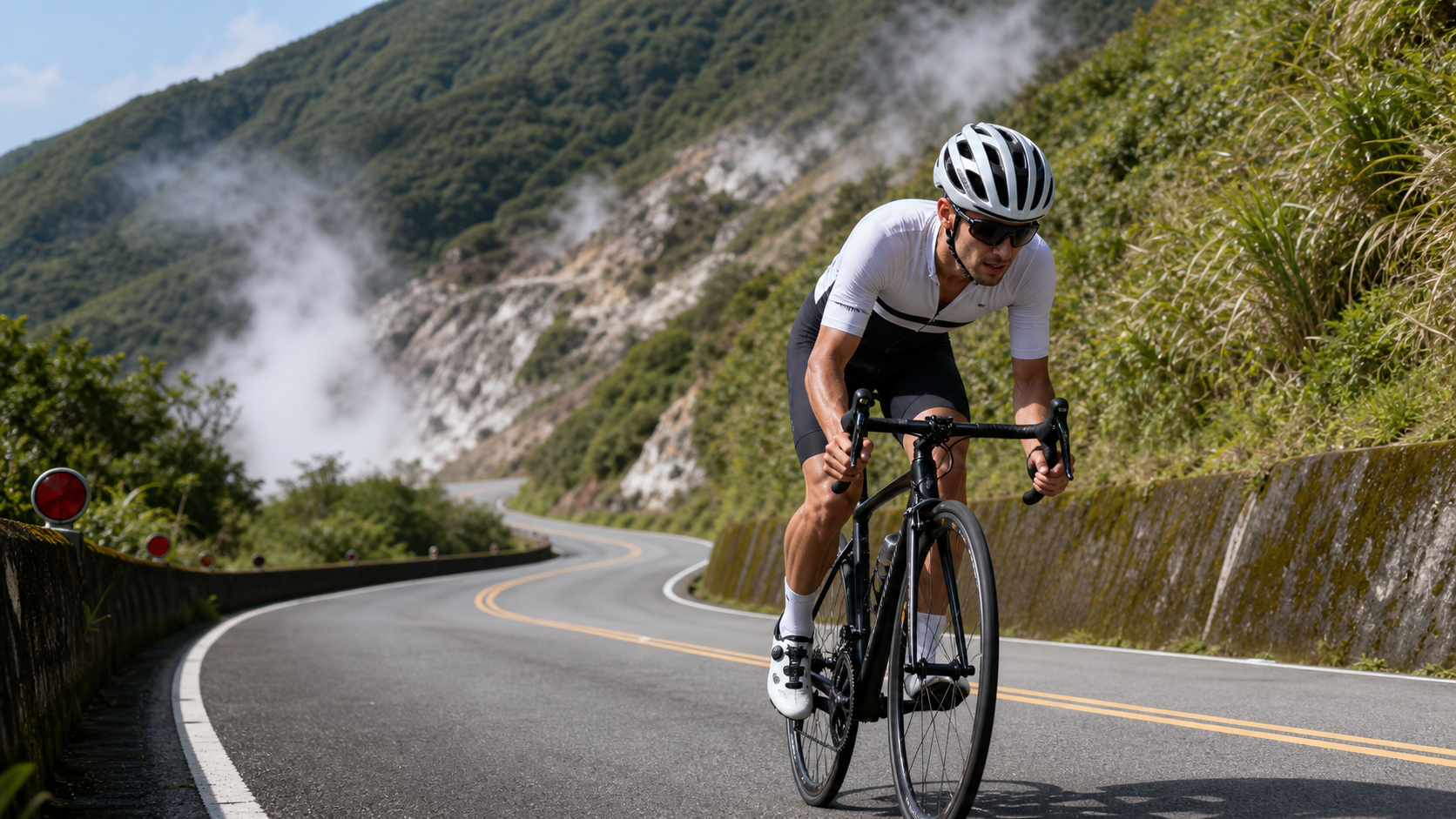
Yangjin Highway Macao Section Practical Guide: A 6.3km High-Intensity Short Climb Interval Training Haven
Summary: The Macao section of Yangjin Highway spans 6.3km with 275m of elevation gain and an average gradient of 4.3%, making it a premium short climb segment adjacent to Macao Hot Springs along the Yangjin Highway. Though short in distance, its gradient is substantial, making it a popular venue for northern cyclists to train threshold power and perform climbing interval workouts. This article breaks down segment-by-segment gradients, gear ratio setups, and training application recommendations.
Within the overall corridor of Yangjin Highway (Provincial Highway 2C), the Macao section is a relatively independent yet highly valuable training segment. This stretch spans 6.3km in total length with 275.2m of total elevation gain and an average gradient of 4.3%—statistically similar to the average gradient of the entire Xiaoyoukeng section of Yangjin Highway, but because the distance is condensed to only about one-third, the “density” of the gradient is noticeably higher and the perceived intensity is more concentrated. For cyclists with limited time who cannot arrange a full long-distance climbing workout, the Macao section is an ideal alternative—using a shorter time to obtain training stimulus nearly equivalent to a long climb.
Macao, as the name suggests, is associated with hot springs. Due to abundant geothermal resources in the area, hot spring resorts have long been established here, making it a famous rest stop along the Yangjin Highway. The Macao section’s route roughly covers the climbing stretch from around Macao Bridge toward Xiaoyoukeng. Topographically, it is a typical valley-to-sunny-slope climb with relatively concentrated gradient distribution and few flat sections for recovery—which is precisely why, despite the short distance, many cyclists still feel “more out of breath than expected” after finishing.
Route Overview and Real Data Analysis
Let’s look at the hard numbers first. The Macao section spans 6.3km in total length with 275.2m of total elevation gain and an average gradient of 4.3%, classified as a moderately easy short climb (Category 2). Compared to the full Xiaoyoukeng section, the Macao section can be viewed as a condensed version of Yangjin Highway’s core climbing zone, with more concentrated gradient distribution and virtually no obvious flat sections—the type of route where “you start climbing the moment you get on the bike and can only catch your breath after you get off.”
| Item | Data |
|---|---|
| Total Distance | 6.3km |
| Total Elevation Gain | 275.2m |
| Average Gradient | 4.3% |
| Classification | Category 2 (moderately easy short climb) |
| Terrain Characteristics | Warm-up in the front section, continuous ramps in the middle, slight easing toward the end |
| Start/End Reference | Around Macao Bridge to the upper section of Yangjin Highway |
The gradient distribution of this route can be roughly divided into three segments: the first 1.5km is a gentle warm-up rise with gradients around 2-3%; the middle 3km or so is the core climbing zone where instantaneous gradients frequently reach 6-7%; the final 1.8km sees the gradient ease slightly to 3-4%, but because energy has been heavily depleted by this point, many riders actually experience their most noticeable speed drop in this section. Overall, although the Macao section is short in distance, its gradient distribution is quite “honest”—there aren’t many deceptive flat sections allowing you to slack off and recover.
Segment-by-Segment Guide: From Warm-Up Ramp to Core Climb (0-4.5km)
The first 1.5km after departure is the warm-up segment with gentle gradients. It’s recommended to use a medium gear ratio (such as 50x17) to maintain a steady cadence of around 85-90rpm, allowing your body to gradually enter climbing mode while keeping heart rate between Zone 2 and Zone 3, avoiding overly aggressive output at the start.
From the 1.5km mark to around 4.5km is the most core and demanding climbing zone of the Macao section, where instantaneous gradients frequently reach 6-7%, with some sections even briefly exceeding 8%. For this stretch, it’s recommended to switch to a 34x23 or 34x25 gear ratio, adjusting cadence to 75-85rpm, using a balance of torque and cadence to counter the continuously rising gradient. Because the distance is short, a relatively aggressive pacing strategy can be adopted here, pushing output close to threshold power (90-95% of FTP) or even briefly exceeding it—after all, the total challenge duration isn’t long, so energy allocation doesn’t need to be as conservative as with long-distance climbs.
Heart rate is recommended to be controlled at around 88-93% of maximum heart rate, which is an intensity zone many amateur riders can sustain for 15-25 minutes—fitting neatly with the duration of the Macao section’s core climbing segment. Be sure to maintain a steady breathing rhythm and avoid unconsciously switching to shallow, rapid breathing due to the steep gradient. You can pair this with a fixed pedaling-cadence breathing method to stabilize your physical and mental state.
Segment-by-Segment Guide: Final Stretch and Gear/Equipment Recommendations (4.5-6.3km)
After passing the 4.5km mark, the gradient eases slightly to around 3-4%, but this is precisely the stage where energy has been heavily depleted. It’s recommended to adjust your mindset to “maintain cadence, don’t chase speed,” using a lighter gear ratio to sustain cadence and avoiding the temptation to shift into higher gears just because the gradient appears to ease—which could lead to increased lactate accumulation or cramping. In this final stretch, the road view gradually opens up, revealing surrounding mountain and forest scenery—a good opportunity to catch your breath and regulate your breathing.
For gear ratio setup, because the Macao section has concentrated gradients with instantaneous gradients reaching 7-8%, a compact crankset (50/34T) paired with at least an 11-28T cassette is recommended. If you train less frequently or carry more body weight, going straight to 34x30 or 34x32 is also a reasonable choice, giving yourself more flexibility to handle sudden steep sections in the core climbing zone. Because the distance is short, this route is also well-suited as a short test-climb segment for evaluating new gear ratio setups or new bike conditions.
Nutrition, Hydration, and Seasonal/Weather Considerations
Since the Macao section is only 6.3km long with estimated completion times typically ranging from 20-35 minutes, nutrition needs are relatively simple—just ensure your water bottle has sufficient water before departure, and mid-ride refueling is usually unnecessary. However, under Taiwan’s hot and humid summer climate, even a short high-intensity climb can cause heavy sweating in a short period. It’s recommended to pay attention to water and electrolyte replenishment before and after the ride to avoid cramping triggered by short-duration high-intensity output.
Seasonal and weather considerations are similar to the overall Yangjin Highway corridor: spring and autumn offer moderate temperatures and the most comfortable riding experience; summer rides are best started in the early morning to avoid afternoon thunderstorms and peak heat; in winter, under the influence of the northeast monsoon, the mountain area is prone to fog and rain, increasing the risk of slippery roads—extra caution is needed for corners and descents. The Macao section is adjacent to the Macao Hot Spring area, so after finishing the ride, you can conveniently stop by for a hot spring soak to relax—an unspoken routine many cyclists have come to enjoy.
Common Mistakes and DNF Risks
The most common mistake on the Macao section is underestimating the intensity of a short climb and sprinting too hard at the start, leading to exhaustion before finishing the core climbing zone in the middle. Because the distance is short, many riders start with a near-sprint mentality, only to experience a noticeable speed drop in the latter part of the core climbing segment around the 4km mark, or even being forced to stop and rest. It’s recommended that even for short distances, you maintain basic pacing discipline—don’t ride too fast during the front warm-up section, and save your energy for the core climbing segment.
Another common issue is underestimating the instantaneous load a short climb places on joints and muscles. Because the gradient is concentrated and the time is compressed, the Macao section’s instantaneous burden on the quadriceps and knee joints is no less than that of a long-distance climb. It’s recommended to perform dynamic warm-ups before riding to avoid challenging a high-intensity climb from a cold state, which increases the risk of sports injuries.
Target Time References for Riders of Different Levels
| Rider Level | Estimated Completion Time | Average Power Reference (FTP Percentage) |
|---|---|---|
| Advanced / Race Level | 15-19 minutes | FTP 100-110% |
| Intermediate / Regular Training | 20-26 minutes | FTP 85-95% |
| General Recreational Rider | 27-35 minutes | FTP 70-80% |
| Beginner / First Attempt | 35+ minutes | Pace by feel |
Training Application: Turning the Macao Section into Your Interval Menu
Because of its moderate distance (6.3 km, 20-35 minute completion time) and concentrated gradients, the Macao section is highly suitable as a natural venue for threshold power interval training. Many cycling coaches in the northern region arrange for riders to repeatedly climb the Macao section 2-3 times, with ample recovery time between efforts (such as easy spinning downhill or resting in place for 10-15 minutes), thereby accumulating training time at threshold intensity. This carries more practical significance than doing structured intervals on flat ground, because the pedaling mechanics during climbing differ significantly from riding on flat terrain, more closely mirroring the situations encountered in real races or long-distance challenges.
For riders preparing to tackle longer climbing routes (such as Wuling or Hehuan Mountain), the Macao section also serves as an excellent pre-race fitness testing venue — using one 20-30 minute high-intensity climb to quickly assess one’s current threshold power and cardiovascular condition, thereby adjusting training intensity and recovery arrangements in the final phase before the race. With its short distance, convenient access, and proximity to the main Yangjin Highway, the Macao section has become a highly cost-effective training route option in the pockets of northern cyclists.
In summary, although the Macao section of Yangjin Highway is only 6.3 km long, it condenses the most essential and challenging gradient combinations of the core climbing zone of Yangjin Highway. Whether you want to quickly test your fitness level or simply arrange a training ride with limited time but sufficient intensity, the Macao section is a highly efficient route worth visiting repeatedly.
Data Comparison with the Full Xiaoyoukeng Section of Yangjin Highway
Comparing the Macao section with the full Xiaoyoukeng section of Yangjin Highway (17.8 km, 793 meters of elevation gain, 4.4% average gradient), one finds that the average gradient values of the two are nearly identical, but the gradient distribution of the Macao section is noticeably more concentrated, with a higher density of perceived intensity. Simply put, if the full Xiaoyoukeng section is a “climbing marathon” that requires carefully calculated pacing, the Macao section is closer to a “climbing sprint” — short in duration, but with almost no room for respite, testing whether you can steadily output power near or even above threshold in a short period.
This difference is also reflected in the rider demographics it suits. For office workers with limited time, it is difficult to arrange a nearly two-hour long climbing training session every time. The Macao section’s characteristic of completing a high-quality training ride in 20-35 minutes makes it an ideal choice for short training windows on weekday evenings or early mornings. Conversely, if the goal is marathon-style long-duration pacing control practice, the full Xiaoyoukeng section remains the more complete option. In fact, the two routes complement each other and can be alternated within a training cycle.
Advanced Power Analysis: A Dual Test of Threshold and Anaerobic Capacity
For riders equipped with power meters who pursue precise training data, the gradient structure of the Macao section simultaneously tests both threshold power and anaerobic capacity. The core climbing segment (1.5-4.5 km) lasts approximately 12-20 minutes, which aligns closely with the traditional threshold power testing time frame, making it well-suited as a reference ride for FTP estimation. Meanwhile, sections with instantaneous gradients exceeding 7-8% require briefly tapping into the anaerobic energy system, posing an additional challenge for riders accustomed to sustained steady output but lacking explosive power.
It is recommended to adopt a “dynamic pacing” approach rather than a rigid fixed-power strategy during the core climbing segment — when encountering sudden steep sections, allow power to briefly exceed threshold by 10-15%, paired with moderate recovery on gentler sections. This fluctuating pacing strategy more closely mirrors the gradient variation scenarios encountered in real races or long climbing routes, and also trains the body’s tolerance and recovery capacity in response to power fluctuations.
Practical Approach to Using the Macao Section for Pre-Race Fitness Testing
Many riders preparing for long-distance, high-difficulty climbing events such as Wuling or Hehuan Mountain incorporate the Macao section as a fixed testing item four to six weeks before the race. The typical approach is to choose a day when condition is stable and free from significant fatigue accumulation, go all-out on one climb of the Macao section, record completion time, average power, and heart rate data, and compare with previous test results to objectively evaluate training effectiveness.
Due to its short distance and relatively simple variables (unlike long-distance routes that are easily affected by wind direction, nutrition strategy, and other factors), the test data from the Macao section has higher repeatability and can more accurately reflect the rider’s current threshold power and cardiovascular adaptation status. It is recommended to choose similar weather and road conditions when testing (such as the same early morning time slot and similar temperatures) to improve comparability between data sets, avoiding misjudging training effectiveness due to variations in external environmental factors.
Simplified Equipment and Pre-Ride Inspection Recommendations
Because the Macao section has a short ride duration, equipment preparation can be relatively streamlined, but basic safety checks should never be omitted. Before departure, confirm that the braking and shifting systems are functioning properly, and carry basic tire repair tools and a small amount of water — there is no need to prepare large quantities of supplies as for long-distance routes. However, given the high intensity density of the Macao section, it is recommended to perform a dynamic warm-up before riding, such as 5-10 minutes of easy spinning combined with joint mobility exercises, to bring the body into an active state in advance and reduce the risk of injury from high-intensity output in a cold state.
If you plan to incorporate the Macao section into a repeated-climb interval training menu, it is recommended to arrange adequate easy-spin recovery time after each effort, and to pay attention to fatigue accumulation in the knee joints and lower back. If noticeable discomfort is felt, training intensity should be reduced immediately or the session ended early, to avoid overtraining-induced injuries that could affect long-term training plans.
Traffic Routes and Connections to the Surrounding Road Network
The Macao section is located in the middle-to-later portion of Yangjin Highway. In practice, few riders set out specifically to ride just these 6.3 km; most treat it as part of the overall Yangjin Highway corridor training, or incorporate it into a more complete riding route using the surrounding road network. A common approach is to warm up by riding from the Jinshan or Beitou direction, connect onto Yangjin Highway, treat the Macao section as the core intensity training zone, and after completion, either continue climbing toward Xiaoyoukeng to form a complete Yangjin Highway challenge, or turn back at the Macao section for a time-controlled short high-intensity training ride.
For advanced riders familiar with the northern road network, the Macao section can also be incorporated into larger loop route planning — for example, combining Yangjin Highway, Balaka Road, and the Beitou hot spring area to design a long-distance training ride covering multiple gradient intensities and terrain variations. This modular route-planning mindset allows the Macao section to be more than just an isolated short climb, but to flexibly integrate into training plans of varying lengths and intensities, demonstrating its high flexibility as a training tool.
Strategies for Rainy and Slippery Road Conditions
The mountainous section of Yangjin Highway where the Macao section is located requires special attention to riding risks in rainy conditions. Because the gradients are concentrated, corner density is not low, and the mountain drainage systems occasionally accumulate fallen leaves or gravel, the risk of slipping on wet roads increases significantly after rain. It is recommended to moderately reduce climbing output intensity when riding in or after rain, avoiding the temptation to chase training data at the expense of road safety. Especially on descents, brake earlier and take corners conservatively to avoid crashes caused by insufficient traction.
If the weather forecast indicates afternoon thunderstorms or lightning risk, it is recommended to adjust the riding time to early morning, avoiding the afternoon period when convection is most active. Mountainous terrain easily triggers localized thunderstorms, and visibility and road conditions can deteriorate rapidly within a short time. Be sure to check real-time weather information before riding, and decisively cancel or shorten the ride if necessary — safety always takes priority over the completeness of a training plan.
Psychological Strategies for Short Climbs: Maintaining Focus Within a Compressed Timeframe
Short, high-intensity climbs demand no less psychologically than the physical challenge of long climbs. Because the entire core climbing segment lasts only 12-20 minutes, many riders tend to become overly tense at the start, focusing on “how much longer” rather than “the current pedaling rhythm,” which paradoxically leads to accumulated psychological pressure and reduced output efficiency. It is recommended to take a few deep breaths to adjust your mental state before entering the core climbing segment, and to break the goal down into smaller stage milestones (such as using every 500 meters as a checkpoint) rather than thinking about the entire 6.3 km distance all at once. This effectively reduces psychological burden and maintains more stable output performance.
Additionally, making good use of a fixed visual focus is a common psychological technique for short climbs. Rather than constantly staring at the gradient or speed data on the bike computer and adding pressure to yourself, it is better to keep your gaze on the road surface 3-5 meters ahead, paired with steady breathing and pedaling rhythm, allowing the body to enter a semi-automatic riding state. This makes it easier to push through the most difficult core climbing section. Many long-time trained riders mention that the final outcome of a short climb often comes down not to leg strength, but to whether one can maintain psychological focus and composure.
Suitable Training Periodization for the Macao Section
From the perspective of periodized training, the Macao section is best placed in training plans from the late base phase through the intensity phase, serving as a specialized tool for threshold power and short-duration climbing endurance. It is recommended to schedule 1–2 Macao repeat-climb sessions per week, with 2–4 repeats per session. The number of repeats and intensity can be flexibly adjusted according to the overall weekly training load, and should not be combined with other high-intensity workouts on the same day to avoid excessive fatigue accumulation.
During the pre-season Peak Phase, a single all-out effort on the Macao section can also be included as one of the final test items to confirm race readiness. By comparing with past data, you can gauge your fitness status in the final stage before competition, adjust training intensity in time, or arrange more thorough tapering and recovery to ensure you arrive at your target event in peak condition. This practice of closely integrating a specific segment with the training cycle is precisely why the Macao section remains a practical, long-lasting training route in the pocket of northern cyclists.
In summary, although the Macao section of Yangjin Highway is only a 6.3 km short climb, its gradient density, training application flexibility, and connectivity with the surrounding road network elevate it far beyond the value of a typical short route. Whether you are an urban commuter with limited time or an advanced cyclist preparing for a race, the Macao section offers just the right intensity and efficiency, and deserves a permanent place on the training route list of northern cyclists—worth revisiting repeatedly to continuously evolve your climbing ability.
Finally, a reminder: short as the Macao section may be, safety protection must never be compromised. A helmet, gloves, and reflective gear are all essential. Especially on mountain roads where light conditions change quickly, be sure to turn on your front and rear lights when visibility is insufficient, so that oncoming vehicles and other road users can notice you early. After all, no training data is more important than completing every ride safely. For intermediate cyclists still exploring the limits of their climbing ability, treating the Macao section as a fixed benchmark for regular testing is highly effective—the data curve accumulated over the long term often reflects training effectiveness and fitness progression more truthfully than any single result. It is recommended to record the time, average power, heart rate, and weather conditions of each attempt. After accumulating data over several months or even an entire season, reviewing your performance curve on this short climb will often tell you more about whether your training has truly translated into improved climbing ability than looking at a single result. This is the most practical and convincing way to bring data discipline into daily training.
Related Reading
- The Short Climb by Macao Hot Springs: The Most Concentrated Sweat and Steam on Yangjin Highway
- Xiaoyoukeng Practical Guide on Yangjin Highway: A 17.8 km, 793 m Climb Test in Taipei’s Backyard
- Macao Mountain Road Practical Guide: A Hidden 9.9 km Rolling Training Route
- Yangjin Highway and Lengshuikeng: A Loop Ride Through Yangmingshan’s Volcanic Landscape
4K單車實境) 舊陽金P字道 第1P 仰德大道至小油坑 誤跟武嶺神人們 被拉爆爽飛天 Taiwan Cycling Climb Route Recommend
7 年前
台北闊瀨陡坡 騎旅 / 日本單車雜誌編輯車友臨時加入!/ 髮香才是最強的 / feat. 北迴歸線小隊 / 公路車 CT Yeh
6 個月前
經典 陽金P字道 | 路線解析 | 魔王親臨指導 | 武嶺備戰訓練營 | NeverStop | 公路車 | 單車
6 年前
單車 梅山36灣 坡度介紹 路段介紹 空拍 (相關遊記影片,請參考說明或我的頻道喔,歡迎訂閱)
6 年前
大禹嶺 到 武嶺牌樓 全程前後實況錄影 | 北進武嶺 | 東進武嶺 | KOM | 訓練台 | 坡度分析 | Taiwan KOM Last 10 km HARD | 公路車
6 年前
一個測試有沒有認真練車的方法😂 #公路車
10 個月前
#東進武嶺 全程實況錄影 5小時半 #夏季KOM #太魯閣 Taiwan KOM Challenge Reality Video Taroko scenery
7 年前
阿里山塔塔加 兩倍特濃版!全新隧道開通! 進喔!公路車 | CT Yeh
3 年前