Shuangxi Buyan Pavilion Practical Guide: Gradient Traps and Pacing Solutions on the 9.7km Rolling Route
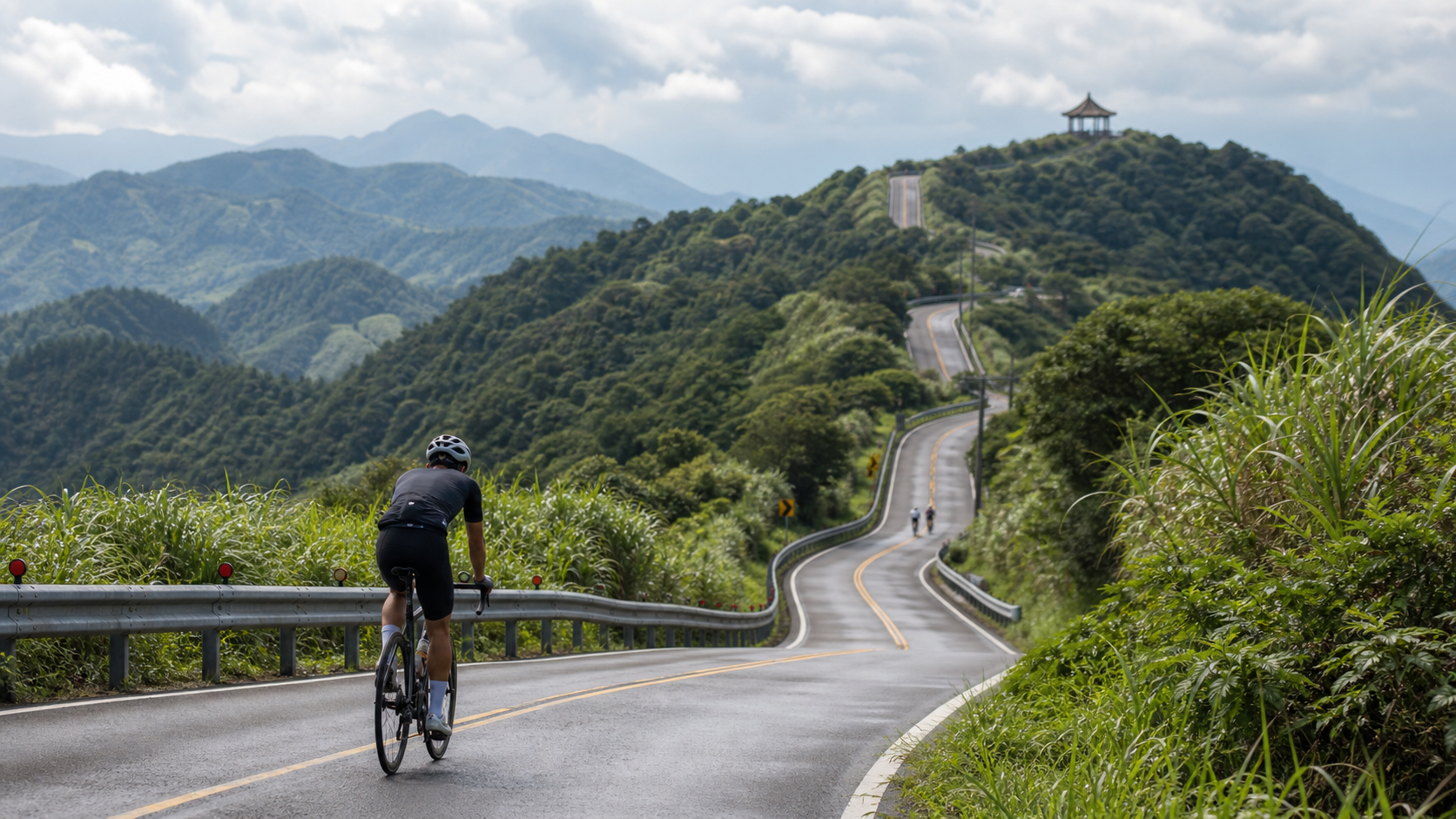
Shuangxi Buyan Pavilion Practical Guide: Slope Traps and Pacing Solutions for the 9.7km Rolling Route
Summary: The Shuangxi Buyan Pavilion route spans 9.7km in total, with a Strava-recorded elevation gain of 939m and an average gradient of 4.7%. The gradient distribution along this route is not a simple, steady climb—data shows the actual elevation gain far exceeds the theoretical value of “distance × average gradient,” indicating significant undulations and multiple repeated climbs. This article breaks down the real gradient changes segment by segment, offering pacing and equipment recommendations.
Shuangxi, located in the mountainous northeastern corner of New Taipei City, is a hidden training ground often mentioned by cyclists familiar with northern mountain routes. The terrain here is dominated by hilly valleys with winding mountain roads, and “Buyan Pavilion” is a well-known hilltop pavilion landmark in the Shuangxi area—also the namesake of this route. According to route data, the Shuangxi Buyan Pavilion route spans 9.7km in total, with a Strava-recorded total elevation gain of 939m and an average gradient of 4.7%.
Before breaking down the route in detail, one key data point must be honestly addressed: calculated from the 9.7km distance and 4.7% average gradient, the theoretical elevation gain should be around 454m, but the actual recorded total gain is as high as 939m—a gap of nearly double. This discrepancy typically means the route is not a simple “climb straight up,” but rather includes considerable undulating sections—riders repeatedly experience cycles of climbing, descending, and climbing again, causing the GPS-accumulated total gain to far exceed the simplified calculation of “distance × average gradient” that assumes a one-way climb. In other words, the true difficulty of this route may be tougher than the surface figure of 4.7% average gradient suggests. Riders must be mentally prepared: this is not a route you can ride through at a steady pace from start to finish, but rather a dual test of technique and endurance that requires constantly adjusting output to handle the rolling terrain.
Route Overview and Real Data Analysis
Let’s lay the data out first. The Shuangxi Buyan Pavilion route spans 9.7km in total, with a Strava-recorded total elevation gain of 939m and an average gradient of 4.7%, classified as moderate difficulty (Category 3). As mentioned earlier, the elevation gain data for this route is significantly higher than the theoretical value calculated from the average gradient alone, indicating multiple continuous undulations along the way rather than a sustained climb in a single direction.
| Item | Data |
|---|---|
| Total Distance | 9.7km |
| Total Elevation Gain | 939m (Strava record) |
| Average Gradient | 4.7% |
| Classification | Category 3 (moderate difficulty) |
| Terrain Characteristics | Multiple undulations, not a one-way sustained climb; actual gain far exceeds the theoretical value of distance × average gradient |
| Landmark Finish | Buyan Pavilion (hilltop scenic pavilion) |
This terrain characteristic of “elevation gain far exceeding the theoretical value” is actually not uncommon in the hilly northeastern corner of Taiwan. The terrain here is fragmented, with streams and ridgelines intersecting, and roads often must continuously traverse ups and downs of varying sizes before reaching the final summit. When riding this type of route, the traditional simple estimation method of “given the average gradient, estimate how long it will take” tends to be inaccurate. Riders are advised to use the actual elevation gain of 939m—rather than the theoretical 454m—to assess the true physical exertion and time required for this route.
Segment Guide: The Undulating Front Section (0-4km)
In the first 4km after departure, the route passes through several noticeable undulations—first a moderate climb, then a brief descent, followed immediately by another climb. This repetitive rhythm is exactly what requires the most adaptation on the Shuangxi Buyan Pavilion route. A “conservative start” strategy is recommended for this section: don’t let your guard down during the descents, because the next climb often appears without warning. If your mindset and fitness aren’t adjusted accordingly, you risk burning excessive unnecessary energy in this constantly rising-and-falling terrain.
For gear ratios, it’s recommended to have at least a 34x28 climbing combination available throughout the ride, because the undulating terrain means you’ll frequently switch between climbing and flat (or even descending) sections. Shifting responsiveness and gear range coverage matter more than simply chasing lightweight components. For heart rate control, it’s recommended to set a target heart rate around Zone 3 (70-80% of max heart rate) for this section, preserving enough reserve to handle the potentially steeper climbs that may appear later.
Segment Guide: Core Climb and Terrain Transition (4-7km)
The 4-7km stretch is typically the core section where the route’s climbing is most concentrated, and it’s also the main reason the actual total elevation gain far exceeds the theoretical value. This section may feature continuous climbing interspersed with short but not insignificant descents—while descending offers a brief respite, the climb that immediately follows often requires rebuilding momentum and rhythm, placing considerable intermittent stress on the cardiovascular system and muscles.
An “intermittent pacing” strategy is recommended for this section: treat each climb as an independent short ascent rather than applying the steady-pace mindset of a long climb. When entering each climb, moderately increase output toward threshold power; when descending or transitioning to flatter terrain, actively relax and recover. This allows your body to maintain relatively stable overall energy expenditure amid this fluctuating rhythm, rather than being passively dragged along by the terrain and suffering a cliff-edge drop in energy later.
Segment Guide: Reaching the Buyan Pavilion Summit (7-9.7km)
In this final stretch, the route gradually approaches the summit where Buyan Pavilion sits. Buyan Pavilion is a well-known scenic landmark in the Shuangxi area—from the top, the view typically overlooks the surrounding hilly valleys and layered mountain ranges in the distance, making it the most anticipated reward point of this route. The gradient in this section may surge once again, so it’s recommended to conserve enough energy for the final push climb. After the repeated undulations earlier, many riders tend to run out of steam in the final stage.
Upon reaching Buyan Pavilion, it’s recommended to pause for a while—both to allow the body to fully recover and to enjoy the open views around this famous pavilion. Buyan Pavilion earned its name for its elevated position and expansive views; on clear days, visibility is excellent, making it one of the few viewpoints in the northeastern hilly region where you can take in layered mountain vistas at a glance. It’s also a key reason many cyclists regard this route as having a “meaningful finish.”
Gear Ratio and Equipment Recommendations
Given the frequent undulations and wide gradient variations on the Shuangxi Buyan Pavilion route, prioritizing broad gear range coverage is recommended. A road bike with a compact crankset (50/34T) paired with an 11-30T or 11-32T wide-range cassette allows for more composed handling of the alternating steep and gentle terrain. For advanced riders already familiar with riding techniques on undulating terrain, a tighter cassette configuration can also be considered to gain higher cadence efficiency on flat and gentle-gradient sections.
For tire pressure and tire selection, these rural mountain roads may not be as smooth as major thoroughfares. Tires in the 25-28C range with better puncture resistance and adequate grip are recommended, with tire pressure moderately reduced based on rider weight and road conditions to increase comfort and traction, handling potential potholes or gravel sections.
Nutrition, Hydration, and Weather/Season Considerations
The Shuangxi Buyan Pavilion route runs mostly through rural mountain roads with relatively scarce supply points. It’s recommended to stock up fully in Shuangxi town before departure, carrying enough water and energy food to cover the physical demands of the 9.7km route with 939m of actual climbing. The northeastern corner of New Taipei City has a humid, rainy climate—even outside the typical rainy season, it’s advisable to keep an eye on weather changes. Afternoon convection in mountainous areas can easily trigger brief showers, and wet roads pose higher risks on the descents of this undulating terrain.
Seasonally, spring and autumn offer more stable weather and are the best times to ride this rolling route. In summer, beyond watching for afternoon thunderstorms, the muggy, humid sensation also amplifies the physical toll of the undulating terrain. In winter, under the influence of the northeast monsoon, rainfall probability in the Shuangxi area rises noticeably; with the damp, foggy weather patterns, it’s advisable to carefully assess road conditions before setting out.
Common Mistakes and DNF Risks
The biggest risk on this route lies in underestimating how the terrain’s undulations affect energy distribution. Many riders habitually use the average gradient figure (4.7%) to estimate difficulty, overlooking the key signal that the actual elevation gain far exceeds the theoretical value. This leads to overly optimistic pacing in the front section and severe energy depletion in the core climbing section later. It’s strongly advised to assess whether your fitness preparation is sufficient based on the actual 939m of climbing, rather than the surface average gradient figure.
Another common mistake is over-relaxing on descents, ignoring the next climb that immediately follows. It’s recommended to maintain moderate alertness and rhythm even during brief descents, avoiding the situation where complete relaxation leaves you caught off guard at the start of the next climb, forcing your heart rate and breathing rhythm to spike dramatically and adding unnecessary fatigue accumulation.
Target Time References for Riders of Different Levels
Due to the complex terrain of this route, the following time estimates are for reference only. Actual performance may vary depending on terrain adaptability and how you feel on the day:
| Rider Level | Estimated Completion Time | Notes |
|---|---|---|
| Advanced / Race Level | 30-38 minutes | Familiar with pacing techniques on rolling terrain |
| Intermediate / Regular Training | 40-55 minutes | Interval-style pacing strategy recommended |
| General Recreational Rider | 55-75 minutes | Conservative pacing, mindful of energy distribution |
| Beginner / First Attempt | 75+ minutes | Recommended to familiarize yourself with the terrain before focusing on pace |
Shuangxi Buyanting is a route that tests terrain adaptability far more than pure climbing endurance. Its value lies not in how intimidating the average gradient numbers look, but in teaching riders how to maintain a stable and efficient energy distribution strategy across undulating, complex terrain. Once you master the rhythm of interval pacing, this route becomes an excellent training ground for honing your terrain-reading and energy management skills.
Interpreting Power Data: Why “Normalized Power” Matters More Than Average Power
For riders equipped with a power meter, Shuangxi Buyanting’s highly undulating terrain is an excellent real-world example for understanding the concept of Normalized Power (NP). Because the terrain rises and falls repeatedly, instantaneous power output fluctuates dramatically—climbing sections may spike to 110-120% of threshold power, while descending or flat sections may drop sharply to 50-60%. If you only look at the average power for the entire ride, it’s easy to underestimate the actual physiological load your body endures.
The calculation of Normalized Power weights the degree of power fluctuation, more accurately reflecting the metabolic cost your body pays in response to constantly shifting output. After completing this type of undulating route, in addition to recording average power, you should also review Normalized Power and the Variability Index (VI = NP ÷ Average Power). If the VI value is noticeably high (e.g., above 1.1), it indicates that power fluctuated very dramatically during the ride, and the actual physical load is much heavier than the average power figure suggests. This also explains why many riders feel significantly more fatigued after completing Shuangxi Buyanting than the average gradient numbers would lead them to expect.
Cornering and Braking Techniques on Rolling Terrain
Along the Shuangxi Buyanting route, the frequent elevation changes mean corners and gradient transition points are also relatively dense. Especially on sections where descending immediately connects to climbing, the timing of braking and acceleration is particularly critical. It’s recommended to moderately use gravity to build momentum on descents, but be sure to brake early to control speed before entering the corner preceding the next climb, avoiding loss of control in corners due to excessive speed, or losing too much momentum from overly aggressive braking, which would increase the physical burden of the subsequent climb.
When cornering, progressive braking is recommended over sudden, single-point braking. Particularly in the Shuangxi area, some sections have narrow roads and limited visibility. When encountering consecutive corners, stay alert and anticipate corner curvature and gradient transitions in advance, so you can maintain a reasonable speed while ensuring riding safety—never sacrifice proper risk awareness for the sake of pacing.
Transportation and Route Network Connections
Riders heading to Shuangxi Buyanting typically gather at Shuangxi town center as the starting point. Shuangxi has a TRA Shuangxi Station, making it one of the important transportation hubs in the northeastern hill region. Riders using public transport can bring a bike bag or bike rack and take the TRA to Shuangxi before starting their ride, saving the physical energy spent on a long warm-up ride and reserving more stamina for the challenging, undulating Buyanting route.
Advanced riders familiar with the northern mountain road network can also incorporate Shuangxi Buyanting into a larger loop route plan—for example, combining rural roads around Mudan, Shuangxi, and Gongliao to create a long-distance training ride covering diverse terrain changes. This modular approach to route planning allows Shuangxi Buyanting—a relatively short but terrain-complex route—to deliver greater training and exploration value.
Equipment Failure Response and Pre-Ride Checklist
The Shuangxi Buyanting route is mostly rural mountain roads with relatively scarce supply and repair resources, making pre-ride equipment checks especially important. Before departure, confirm that the drivetrain shifts responsively—because this route requires frequent switching between climbing and flat gears, any shifting delay or hesitation will directly affect pacing rhythm and pedaling efficiency. The braking system also requires careful inspection; the terrain’s descending-then-climbing characteristics demand higher durability and braking performance from brake pads.
It’s recommended to carry basic tire repair tools, spare inner tubes, and a multi-tool. If a mechanical issue occurs on rural mountain roads, there’s often no convenience store or bike shop nearby for immediate support. Having the ability to independently handle basic mechanical issues is a fundamental requirement for safely completing this type of remote, undulating route challenge.
Training Application: Turning Rolling Terrain into a Specialized Workout Plan
Shuangxi Buyanting’s rolling terrain—with climbing far exceeding theoretical values—is actually an excellent venue for training “terrain adaptability.” For athletes preparing for road races or off-road events, its value even surpasses that of fixed-gradient climbing routes. In real race scenarios, you’ll almost never encounter a section with a perfectly constant gradient; riders must continuously adjust output and rhythm in response to terrain changes, and Shuangxi Buyanting provides exactly this highly realistic training environment.
It’s recommended to incorporate this route into your specialized training plan during the intensity phase, riding it 2-3 times repeatedly, each time trying a different pacing strategy—on the first lap, adopt a conservative pace to familiarize yourself with the terrain changes; on the second lap, attempt to raise overall output intensity, practicing maintaining a higher Normalized Power across the undulating terrain; on the third lap, simulate race conditions, practicing accurate terrain reading and correct pacing decisions even when energy is already partially depleted. This progressive, repetitive training effectively enhances a rider’s on-the-spot adaptability when facing complex terrain—a training philosophy privately endorsed by many Taiwanese road race athletes.
Comparison with Other Northern Rolling Routes
If you compare Shuangxi Buyanting with other well-known rolling routes in the north—such as the Beiyi Highway or the rural roads around Shuangxi-Pinglin—you’ll find that routes in this northeastern hill region commonly feature climbing far exceeding theoretical values, a result of Taiwan’s northeastern special fault terrain and intersecting valley landforms. Compared to Central Mountain Range highways with their relatively unidirectional, sustained climbing, the northeastern hill routes test a rider’s terrain-reading ability and energy allocation flexibility more severely. Both route types have their own training value; riders are advised to alternate between them based on their training goals and race requirements to comprehensively improve their overall ability to handle different terrain challenges.
Psychological Strategies for Energy Management: Facing the “Endless” Rolling Sections
The psychological challenge of rolling terrain often rivals its physical demands. When riders realize that a descent ahead doesn’t mean rest but rather another climb immediately following, frustration can easily set in—even leading to doubts about whether their judgment of the route’s difficulty was correct. Before riding this type of route, it’s recommended to prepare mentally—clearly acknowledging that this route’s climbing figure (939 meters) far exceeds the theoretical value calculated from average gradient alone, meaning you will inevitably experience multiple cycles of “thinking it’s over, but it starts again.” Accepting this rhythm in advance can effectively reduce the psychological exhaustion caused by expectation gaps during the ride.
In practical terms, it’s recommended to mentally break the entire route into several shorter terrain segments, giving yourself a small psychological reward after completing each segment (such as taking a sip of water or a deep breath to reset), rather than focusing on macro-level thoughts like “how much farther to Buyanting,” which easily triggers anxiety. This divide-and-conquer psychological strategy, combined with the interval pacing method mentioned earlier, allows riders facing complex rolling terrain to balance both physiological output efficiency and psychological stability—an indispensable soft skill for completing this type of route.
The Additional Strain of Rolling Terrain on Knees and Core Muscles
It’s worth noting specifically that rolling terrain, because it requires frequent switching between pedaling modes (seated climbing or standing out of the saddle on ascents, coasting and relaxing on descents, and maintaining high cadence on flatter sections), places a distinctly different strain pattern on the knees and core muscles compared to routes with a single sustained gradient. The frequent posture changes and shifts in power output patterns can easily lead to fatigue accumulation in the muscles around the knee joint after long rides, particularly around the patella and the iliotibial band, which are the more commonly reported discomfort areas after riding rolling terrain.
Before riding a route like Shuangxi Buyanting (Bu Yan Ting), it’s recommended to do a thorough dynamic warm-up, including hip mobility stretches and warm-ups for the quadriceps and hamstrings. During the ride, also pay attention to saddle height and cadence stability, to avoid unconsciously adopting poor pedaling posture due to terrain changes. If you feel unusual soreness or discomfort around the knee joint after the ride, it’s advisable to rest adequately, combine it with stretching and ice application, and consult a professional physical therapist if necessary, to prevent minor issues from accumulating into long-term sports injuries.
In summary, the greatest value of the Shuangxi Buyanting route lies not in its distance or average gradient figures, but in how it honestly reflects the true nature of the hilly terrain of Taiwan’s northeast corner—the climbing feels far heavier than the surface data suggests, and the pacing demands far more flexibility than you might imagine. Treat this route as a dedicated training regimen for honing your terrain-reading ability and energy-allocation flexibility, and you’ll find your performance on other routes becomes more solid and composed as a result. This is precisely the core of why Shuangxi Buyanting has long maintained its unique value as a pocket training route in the north, and it’s well worth regular return visits and repeated refinement for every cyclist pursuing comprehensive climbing ability.
Related Reading
- The Wind Over Buyanting: Solitude and Vastness on Shuangxi’s Rolling Roads
- Xiping Highway Practical Guide: 8.3 km, 793 m of Climbing—The Most Solid Climbing Test in New Taipei’s Suburbs
- Buyanting and the Lonely Highway: Taiwan’s Tuscany Between Shuangxi and Ruifang
- Zhu Lu Shan Practical Guide: 6.89 km, 546.2 m of Climbing, 7.9% Average Gradient—Are You Ready for This Hardman-Grade Long Climb in the Wulai Mountains
台北闊瀨陡坡 騎旅 / 日本單車雜誌編輯車友臨時加入!/ 髮香才是最強的 / feat. 北迴歸線小隊 / 公路車 CT Yeh
6 個月前
水金九不厭五分 10度寒流冷到不願停!feat. 卡卡 / 公路車 / CT Yeh
6 個月前
#公路車 #西進武嶺 配速配瓦實驗 坡度分析 四小時內攻略 建大盃 NeverStop #西進武嶺攻略
6 年前
半日 小台灣 極限單車路線挑戰實錄
7 年前
大禹嶺 到 武嶺牌樓 全程前後實況錄影 | 北進武嶺 | 東進武嶺 | KOM | 訓練台 | 坡度分析 | Taiwan KOM Last 10 km HARD | 公路車
6 年前
大武山後門26%歡樂陡坡!JJSC南台灣單車行Day2 / 被颱風追著跑 / 公路車 / CT Yeh
2 年前
單車 梅山36灣 坡度介紹 路段介紹 空拍 (相關遊記影片,請參考說明或我的頻道喔,歡迎訂閱)
6 年前
2016 彰化經典百K - 74號爬坡全程
10 年前