In-Depth Analysis of Cycling Power Meter Pedals: Garmin Rally vs Favero Assioma vs Wahoo Speedplay
In-Depth Analysis of Pedal-Based Power Meters: Garmin Rally vs Favero Assioma vs Wahoo Speedplay
Power meters are one of the most important tools for cyclists who take training seriously. Among the various types of power meters, pedal-based power meters have become increasingly popular due to their ease of installation and the ability to quickly transfer them between different bikes. This article provides an in-depth comparison of the three mainstream pedal-based power meters currently on the market.
Why Choose a Pedal-Based Power Meter?
Power meters can be categorized by their mounting location:
- Crank-based (e.g., Shimano, SRAM, Stages): Accurate but tied to specific cranks
- Spider-based (e.g., SRM, Quarq): Accurate but expensive and cumbersome to replace
- Hub-based (e.g., PowerTap): Now rarely seen
- Pedal-based (e.g., Garmin, Favero, Wahoo): Easy to install and quick to transfer
The biggest advantage of pedal-based power meters is versatility. As long as the thread specification matches (standard 9/16" thread), they can be installed on any crank. For riders who own multiple bikes, just one set of pedals allows them to use a power meter across different bikes.
Specification Comparison of the Three Major Brands
| Specification | Garmin Rally | Favero Assioma | Wahoo Speedplay |
|---|---|---|---|
| Cleat System | SPD-SL / SPD / LOOK | LOOK Kéo | Speedplay |
| Single/Dual-Sided | RS/RK/XC (S/D) | UNO/DUO | Dual-Sided |
| Accuracy | ±1% | ±1% | ±1% |
| Weight (Dual-Sided) | 316g (RS) | 300g (DUO-Shi) | 370g |
| Battery | Replaceable (LR44/SR44) | Built-in Rechargeable | Built-in Rechargeable |
| Battery Life | Approx. 120 hours | Approx. 50 hours | Approx. 75 hours |
| Water Resistance | IPX7 | IPX7 | IPX7 |
| Price (Dual-Sided) | NT$30,000 | NT$22,000 | NT$25,000 |
In-Depth Analysis of the Garmin Rally Series
Version Options
The biggest feature of the Garmin Rally is that it offers three cleat systems:
- Rally RS: Shimano SPD-SL compatible (most common for road bikes)
- Rally RK: LOOK Kéo compatible
- Rally XC: Shimano SPD compatible (for mountain/gravel bikes)
Each version is available in single-sided (S) and dual-sided (D) options, allowing riders to flexibly choose based on budget and needs.
The Advantage of Replaceable Batteries
The Rally uses LR44 or SR44 button cell batteries, which is its biggest difference from the other two models. The advantages of replaceable batteries:
- No worries about charging in remote areas
- Batteries are available everywhere (convenience stores, drugstores)
- No battery degradation leading to reduced battery life over time
- Approximately 120 hours of battery life is very generous
The disadvantages are:
- Accumulated battery costs over long-term use
- Need to pay attention to the waterproof gasket when replacing batteries
- The battery cover screws may allow water ingress if not properly tightened
Advanced Metrics
The dual-sided Rally versions provide a wealth of advanced metrics:
- Left/Right Power Balance: Analyze pedaling efficiency
- Cadence: Accurate cadence data
- Pedaling Dynamics: Includes Platform Center Offset (PCO) and Power Phase
- Cycling Dynamics: Garmin’s proprietary advanced pedaling analysis
Calibration and Accuracy
Auto Calibration: The Rally performs automatic zero-offset calibration at the start of each ride. It is recommended to backpedal a few revolutions before starting to record to allow the sensors to zero out.
Manual Calibration: Manual calibration can be triggered on Garmin head units; it is recommended to do this when there are significant changes in ambient temperature.
Temperature Compensation: The Rally features automatic temperature compensation, but in cases of extreme temperature differences (e.g., moving the bike from an air-conditioned room to outdoors), it is recommended to wait a few minutes for the pedals to acclimate to the ambient temperature before calibrating.
In-Depth Analysis of the Favero Assioma Series
The King of Value for Money
The Favero Assioma has long been hailed as the king of value for money among pedal-based power meters. The dual-sided Assioma DUO is priced lower than both the Garmin Rally and the Wahoo Speedplay, yet its accuracy is in no way inferior.
Latest Version: Assioma DUO-Shi
Favero has launched the Assioma DUO-Shi, which is the first Shimano SPD-SL compatible Assioma pedal. Previous Assioma models only supported the LOOK Kéo system, which had long been a pain point for Taiwanese riders (most of whom use Shimano). The launch of the DUO-Shi perfectly solves this problem.
DUO-Shi Features:
- Shimano SPD-SL compatible
- Sensors located in the pedal axle, without affecting stack height
- Pedaling feel nearly identical to original Shimano pedals
- USB-C charging
Considerations for Rechargeable Batteries
The Assioma uses a built-in rechargeable battery:
Advantages:
- USB-C charging, convenient and fast
- No need to purchase replacement batteries
- Better water resistance (no battery cover)
Disadvantages:
- Battery life is approximately 50 hours, shorter than the Garmin
- Need to remember to charge regularly
- Battery life will degrade as the battery ages
- Need to carry a charging cable for long rides
Accuracy and Consistency
Multiple independent tests have shown that the Assioma’s accuracy is on par with more expensive products. In comparative tests against laboratory-grade power meters such as SRM, the Assioma’s deviation is typically within ±1-2%, with excellent consistency.
In-Depth Analysis of the Wahoo Speedplay Powrlink Zero
The Unique Advantages of the Speedplay System
If you are already a Speedplay cleat user, the Wahoo Powrlink Zero is the only choice and the most seamless upgrade path.
Features of the Speedplay cleat system:
- Dual-sided entry: No need to flip the pedal to find the cleat surface
- Adjustable release angle: Adjustable from 0-15 degrees, offering the best knee protection
- Low stack height: The pedal platform sits closer to the pedal axle
- Lightweight: Cleats are lighter than SPD-SL and LOOK
Power Data and Ecosystem
Wahoo Ecosystem Integration:
- Perfect integration with Wahoo ELEMNT head units
- Manage settings and calibration through the Wahoo App
- Automatic sync to the Wahoo training platform
Compatibility:
- Dual-mode transmission via ANT+ and Bluetooth
- Supports all major head units and training apps
- Compatible with Garmin and Hammerhead head units
Real-World Riding Comparison
Installation Convenience
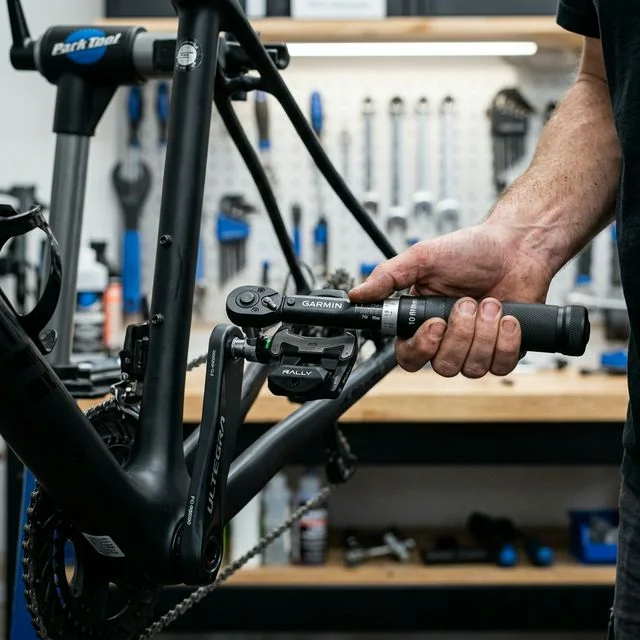
All three pedals are very easy to install — a standard 15mm pedal wrench or 8mm hex key is all you need. However, there are some specific differences:
- Garmin Rally: You need to confirm the correct cleat system version before installation
- Favero Assioma: The lightest option; you barely notice the weight difference after installation
- Wahoo Speedplay: You need to mount the base plates to your shoes first
Daily Use Experience
Charging/Battery Replacement Frequency:
- Garmin: Replace batteries every 2-3 months (based on 10 hours of riding per week)
- Favero: Charge once a week
- Wahoo: Charge every 1-2 weeks
App Experience:
- Garmin Connect: Most feature-rich, but the interface is relatively complex
- Favero Assioma App: Clean and practical; calibration and updates are very convenient
- Wahoo App: Intuitive interface; best integration with Wahoo bike computers
Buying Recommendations
Choosing Based on Cleat System
This is the most straightforward selection criterion:
- Shimano SPD-SL users → Garmin Rally RS or Favero Assioma DUO-Shi
- LOOK Kéo users → Garmin Rally RK or Favero Assioma DUO
- Shimano SPD users → Garmin Rally XC (only option)
- Speedplay users → Wahoo Powrlink Zero (only option)
Choosing Based on Usage Scenarios
Long-distance riding/multi-day races → Garmin Rally (replaceable batteries, no fear of running out of power)
Daily training/budget considerations → Favero Assioma (best value for money)
Speedplay enthusiasts → Wahoo Powrlink Zero (only compatible option)
Sharing across multiple bikes → All three work well, but Favero is the lightest and easiest to swap
Single-Side vs Dual-Side
If your budget only covers a single-side unit, it’s still worth the investment. A single-side power meter measures the power from one pedal and then multiplies it by 2 to get total power. While it’s not as accurate as a dual-side system (because most people don’t have perfectly balanced left and right legs), it’s more than sufficient for monitoring training load and tracking progress.
Upgrade to a dual-side version when your budget allows — this is the most practical path for progression.
A power meter is the most direct tool for improving training quality. Choose a pedal-based power meter that suits your needs and start using data to drive your progress.
Related Reading
- Power Meter Buying Guide 2024: Which Power Meter Best Fits Your Budget and Needs
- Power Meter Buying Guide: Comparing Three Options — Pedal, Crank, and Hub
- Complete Comparison of Road Bike Power Meter Types: Pedal, Crank, Spider, and Hub
- 2025 Ultimate Power Meter Buying Guide: Pedal, Crank, or Hub — How to Choose?
全台首發!邁金P715踏板功率計!市場價格撼動者再出招 / 功率對比實測 / FAVERO ASSIOMA 可參考! / 公路車 / CT Yeh
1 年前
訓練台體驗) 2019台北自行車展 三大家 訓練台體驗 Tacx Neo Flux 2 Xepdo Apx Wahoo Kickr
7 年前
2026 車錶排行榜!誰是最多車友正在使用?練家子最愛哪款?🏆 (2萬名車友數據) / 公路車 / CT Yeh
5 個月前
Stages功率計 和 智騎 X7 Pro 訓練檯同時騎兩個 Rouvy 角色會一起進終點嗎?最後來點數據分析 | 公路車
5 年前
2025 自行車錶排行榜 兩萬車友大數據 / Garmin Bryton 排名會大洗牌嗎? / 全新的碼表前身分析 /公路車 / CT Yeh
1 年前
超開放的自行車錶!可以玩遊戲裝APP!?/ SRAM合併的 Hammerhead Karoo深入開箱!/ 即時爬坡偵測 / 全球導航地圖 / Garmin Bryton / CT Yeh
1 年前
Fitting訓練兩用功率車 ! Thinkrider ST900 完整實測!/ 坡度升降 / 鄰居測試/ smart bike/公路車/ CT Yeh
2 年前
2023 自行車錶排名 大數據 23,000位車友用什麼錶? Garmin Edge 對決 Bryton Rider 誰市佔高? 你用的上榜了嗎? | 公路車 | CT Yeh
3 年前