Stoicism and Endurance Sports: Ancient Philosophy for the Modern Athlete
When Marcus Aurelius Meets the Bicycle
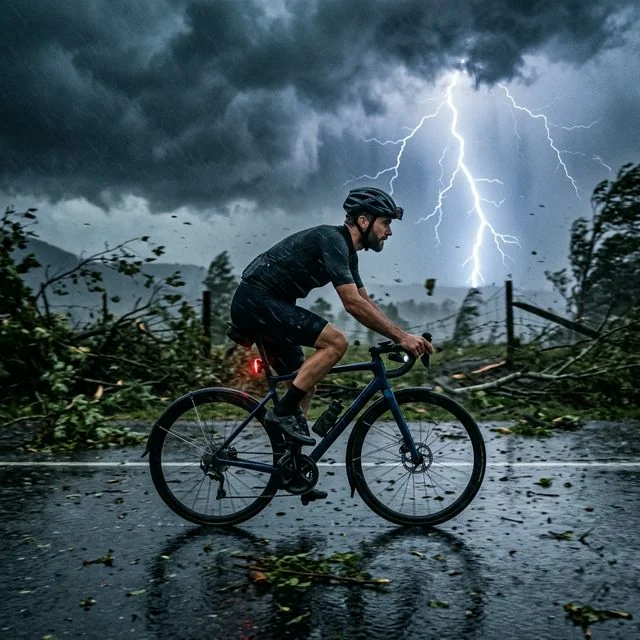
If the Roman emperor Marcus Aurelius lived in the modern era, he would very likely be an endurance athlete. Not because of his physique — though as a military commander his fitness was surely considerable — but because his way of thinking aligns remarkably well with the spirit of endurance sport.
Stoicism was born roughly 2,300 years ago in Athens, founded by Zeno of Citium. It is not a philosophy of passive “endurance,” but a practical system for maintaining inner calm and excellence in an uncertain world.
Endurance sport, it turns out, is the perfect training ground for practicing this system.
Core Principle One: The Dichotomy of Control
The Philosophy
Epictetus said: “Some things are within our power, while others are not. Within our power are opinion, motivation, desire, aversion… Not within our power are the body, property, reputation, office.”
Application to Endurance Sport
What you cannot control:
- The weather on race day
- Other athletes’ performances
- Sudden mechanical failure
- Road conditions
- Your genetic gifts
- Wind direction and temperature
What you can control:
- Your level of preparation
- Your response to adversity
- Your fueling strategy
- Your mindset and focus
- Your level of effort
- How you interpret what happens
Much of an athlete’s suffering comes from trying to control the uncontrollable. “Why is it a headwind today?” “Why is he faster than me?” “Why do my legs feel so heavy today?” These complaints change nothing — they only drain your precious mental energy.
The Stoic athlete puts full attention on the controllable part: “The headwind is a fact. What I can control is how I adjust my riding strategy.” This simple cognitive shift can save enormous psychological resources.
Core Principle Two: Amor Fati (Love Your Fate)
The Philosophy
Nietzsche developed this Stoic concept further: not merely accepting what happens to you, but loving it. Every obstacle, every setback, is an indispensable part of your story.
Application to Endurance Sport
Imagine this scenario: you have trained for three months for a race, and on race day it pours with rain.
- Non-Stoic reaction: “This is ruined. Three months of preparation wasted. There’s no way to ride well in this weather.”
- Stoic reaction: “This rain is part of today’s race. Everyone is riding in the same rain. This is a chance to demonstrate my adaptability and mental resilience.”
Notice the distinction: this is not “pretending the rain doesn’t exist” or “forcing yourself to feel happy” — it is genuinely reinterpreting the situation. The rain is not an obstacle to your plan — the rain is part of the plan, because your plan now includes the rain.
This mindset has a striking practical effect: it lets you stay calmer and more resilient in adversity than everyone around you. While others complain about the weather, you are already adjusting your strategy.
Core Principle Three: Memento Mori (Remember You Will Die)
The Philosophy
This is not a morbid reminder, but a reminder about priorities. Life is finite, and therefore every moment is precious.
Application to Endurance Sport
In a broader sense, Memento Mori reminds us: the days you can ride are limited. Your body will not stay this capable forever. You will not always have a group of friends to ride with.
This awareness is not meant to make you anxious, but to make you more appreciative. Appreciate every morning you get to go out and ride. Appreciate the fact that your body can still climb, still sprint. Appreciate the riding companions beside you.
In competition, Memento Mori has a more concrete application: this moment will not come again. The race you are experiencing right now, this climb, this breath — all of it happens only once. This awareness can pull you back from a mindset of “waiting for it to be over” into a state of “fully experiencing it.”
Core Principle Four: The Obstacle Is the Way
The Philosophy
Marcus Aurelius wrote: “The impediment to action advances action. What stands in the way becomes the way.”
Application to Endurance Sport
This may be the Stoic principle most directly applicable to endurance sport. Every difficulty you encounter — a flat tire, cramping, mechanical failure, getting lost — is not merely an obstacle. It is simultaneously an opportunity to train your problem-solving ability, mental resilience, and adaptability.
A rider who has never flatted during a race will never know how fast they can change a tire under pressure. A person who has never gotten lost on a long ride will never develop the instinct for navigating unfamiliar terrain.
Difficulty is not an accident — it is part of the training.
Daily Practice: The Stoic Athlete’s Toolkit
Morning Rehearsal
Seneca suggested spending a few minutes each morning imagining what could go wrong. Not to be pessimistic, but to be prepared. Before you ride, think: what if I get a flat? What if the weather suddenly changes? What if my energy isn’t what I expect?
This “negative visualization” means that when difficulty actually arrives, you won’t panic — because you’ve already rehearsed it mentally.
Deliberate Practice of Discomfort
Cato would walk the streets in thin clothing during cold weather, deliberately accustoming himself to discomfort. In endurance sport, this means occasionally training in imperfect conditions — headwind, rain, cold — rather than always waiting for “perfect” training conditions.
Evening Reflection
Marcus Aurelius wrote in his journal every night, reflecting on his own behavior. As an athlete, you can ask yourself after every ride:
- At what moment today did I lose my composure? Why?
- Where did I waste energy on things I couldn’t control?
- Was my response to difficulty the response of the athlete I want to become?
Stoicism Is Not Indifference
A common misunderstanding is that Stoicism demands you suppress emotion and become a cold, indifferent machine. Quite the opposite. Stoic philosophers took emotion very seriously — they simply distinguished between healthy emotion (a response grounded in rational judgment) and unhealthy emotion (a response grounded in mistaken belief).
Feeling disappointed when a race doesn’t go as expected — this is a healthy emotion.
Concluding that you are worthless because the race didn’t go as expected — this is an unhealthy belief.
Stoicism teaches you to work on the latter, not the former.
“You cannot control the wind, but you can adjust your sails.”
The spirit of this saying is the most precious gift Stoicism offers every endurance athlete. In an impermanent world, do what you can, accept what you cannot change, and in the process, become a better person.
Related Reading
- Embracing Suffering: The Philosophy of Pain in Endurance Sport
- Mental Toughness Training: How Pro Riders Stay Focused Through Pain
- The Longevity Framework of Lifelong Training: How Endurance Sport Can Stay With You Into Your Eighties
- The Science of Habit Formation: Automating Training So You No Longer Rely on Willpower Alone
#PUSHBIKE 原來這麼好玩! 小朋友 滑步車 初體驗 超可愛
6 年前
元宇宙單車運動!智騎 X7 Pro 智能訓練台 ThinkRider 居家線上練功
5 年前
全台首發神車錶! iGPSPORT iGS630 兩趟一日北高的續航! 超強導航、功率訓練、超人性APP! Garmin & Bryton 有對手了嗎? | 公路車 |CT Yeh
3 年前
免費UCI指定競賽騎乘軟體 Mywhoosh 概覽初體驗 / 畫質的天花板!? 用鈔能力做出來的 / 公路車 / CT Yeh
2 年前
本週北高前練習,連同天比的226們也來⋯鐵車真的太猛了 #cycling #北高
2 年前
一個測試有沒有認真練車的方法😂 #公路車
10 個月前
2019 柯P 超越北高 第一集團實錄 (11小時實錄請參考另一部影片) 一日雙城 一日北高 NeverStop Taiwan Long Distance Cycling Challenge
7 年前
2022台北國際自行車展 訓練台 試騎心得大全 差點腿軟走出! 元宇宙武嶺!| Garmin Tacx Oreka Xpedo Wahoo | 公路車 | CT Yeh
4 年前