Imposter Syndrome: The Psychological Battle of Amateur Cyclists
You Might Recognize This Voice
“I’m not really a serious cyclist, I just ride on weekends.”
“When I see those people’s results, I’m too embarrassed to even say I ride.”
“Would signing up for this race be overreaching? Someone at my level would just be embarrassing myself out there.”
“Wearing this kit feels like I’m pretending to be a pro, but my power output is only…”
If these inner monologues feel familiar, you’re not alone. This is Imposter Syndrome—a psychological state of being convinced that your achievements are luck and that you don’t deserve your place. It was first described by psychologists Pauline Clance and Suzanne Imes in 1978, and has since been found to be widespread across all fields, including sports.
Why Endurance Sports Are Especially Prone to Triggering Imposter Syndrome
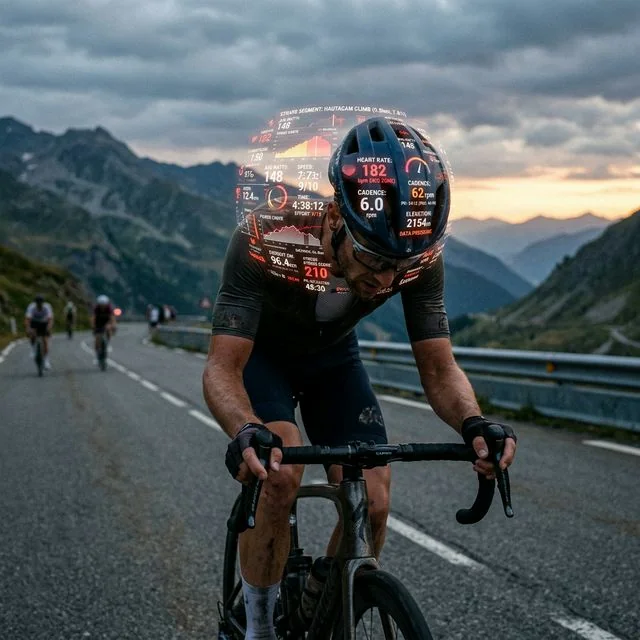
The Transparency of Data
In most areas of life, your “performance” is vague and subjective. But in cycling, everything is numbers: FTP, W/kg, climbing times, Strava rankings. These numbers mercilessly place you on an objective ladder, and you can clearly see how many people above you are stronger.
When you know someone’s FTP is 1.5 times yours, or someone climbs the same mountain in half your time, the thought “I’m a fraud” becomes especially convincing.
The Amplifying Effect of Strava and Social Media
Social media always presents a curated reality. Your Strava feed is filled with other people’s KOMs, PRs, and epic rides. What you don’t see is: they also have days when their legs are too dead to ride, they also have embarrassing moments of being dropped by beginners, they also have moments of gasping for air and wanting to quit.
But you only see their highlights, and you compare them to your everyday state. This comparison is fundamentally unfair.
The Myth of the “Real Cyclist”
There’s an implicit hierarchy in cycling culture. Some people are considered “real cyclists”—they have coaches, sponsors, full-carbon bikes, and train twenty hours a week. And you, a working professional who only rides on weekends, how dare you put yourself in the same category as them?
But here’s the question: what exactly is a “real cyclist”? Is it averaging over 35 km/h on daily rides? Is it owning a bike worth NT$300,000? Is it being able to train full-time?
If you think about these criteria, you’ll find they’re arbitrary. No matter where you set the bar, there will always be people on both sides of it. And the bar itself only exists in your mind.
The Five Manifestations of Imposter Syndrome
Psychologist Valerie Young categorized Imposter Syndrome into five types, each of which is common among amateur cyclists:
1. The Perfectionist
“If I can’t ride perfectly, then it’s not good enough.” This type of person becomes extremely anxious over the slightest deviation in training, and one bad ride can erase ten good ones. They set unrealistic standards and then feel like frauds for not meeting them.
2. The Superhero
“A real cyclist would train even in a typhoon.” This type of person tries to prove they “deserve” the identity through excessive effort. They train to the point of injury and neglect rest, because resting makes them feel like they’re not serious enough.
3. The Natural Genius
“If I have to work hard to achieve something, it means I don’t have talent.” This type believes real cyclists should be “born”—they don’t need to look at heart rate training zones, don’t need to read about nutrition, don’t need a coach. If you need these “crutches,” it means you’re not cut out for this.
4. The Lone Wolf
“If I need help from others, it means I’m not good enough.” This type refuses to join a team or ask experienced riders for advice, because seeking help would expose their “inadequacy.”
5. The Expert
“I don’t know enough about cycling to have an opinion.” This type may have been riding for five years and completed over a dozen races, yet still feels like a “beginner.” They keep learning but always feel they don’t know enough.
Strategies for Combating Imposter Syndrome
Redefine Your Frame of Reference
Who are you comparing yourself to? If you compare yourself to professional cyclists, of course you’ll feel like a fraud. But that’s as absurd as an accountant feeling unworthy of being called a “finance professional” just because they’re not Warren Buffett.
Try narrowing your frame of reference from “everyone who rides” to “people riding under similar conditions as me.” A working professional who can only train six hours a week and a full-time athlete are not on the same playing field.
An even better approach: compare yourself to who you were yesterday. Are you stronger than last year? Have you improved since you started riding? That’s a meaningful comparison.
Collect Counter-Evidence
Imposter Syndrome makes you see only the evidence supporting “I’m a fraud” while ignoring all the evidence against it. Deliberately collect counter-evidence:
- A list of challenges you’ve completed
- Your progression trajectory (from your first 50K to now)
- Positive feedback others have given you
- Every moment you persevered through difficulty
Write these down and put them somewhere you can see. Pull them out when the imposter’s voice gets especially loud.
Acknowledge Its Existence
Interestingly, merely knowing that the concept of “Imposter Syndrome” exists can reduce its impact. Because now you know: this isn’t a fact, it’s a well-studied psychological pattern. Your feelings are real, but feelings are not facts.
The next time that voice appears, try saying to yourself: “Ah, Imposter Syndrome again. Hello there, old friend. I know you’re here, but I don’t have to listen to you.”
Talk About It
This is the most powerful weapon. When you muster the courage to tell a riding buddy, “Actually, I’ve always felt like I don’t deserve to ride alongside you,” you’ll be amazed at how many people feel the same way.
Imposter Syndrome is strongest in the dark. When you bring it into the light, it loses most of its power.
You Don’t Need Anyone’s Permission
You don’t need to reach a certain FTP to be qualified to call yourself a “cyclist.” You don’t need to have ridden a certain distance to be qualified to sign up for a race. You don’t need to own a certain brand of bike to be qualified to join a group ride.
You ride. So you’re a cyclist. It’s that simple.
That voice telling you you’re “not good enough” isn’t the voice of wisdom—it’s the voice of fear. And fear’s advice is never worth listening to.
“Start before you feel ready. Compete before you feel qualified. Speak up before you feel entitled. The perfect moment will never come, but you can make a perfect choice in an imperfect moment.”
The next time you sign up for a race, don’t let your hands shake. You belong there.
Related Reading
- Strava Anxiety and Social Media Pressure: The Mental Health of Cyclists in the Data Age
- Sports Psychology: How to Break Through Mental Barriers to Improve Riding Performance
- Overtraining Fatigue and Mental Burnout in Cycling: Identification and Recovery Strategies
- Overtraining Syndrome: How to Identify, Prevent, and Recover
「悲情男車友」創作單曲 爆笑MV / 公路車 / CT Yeh / 4K劇情版
7 個月前
一個測試有沒有認真練車的方法😂 #公路車
10 個月前
車友來我家測FTP...好硬啊🤣 #cycling #公路車
2 年前
公路車 爬坡 破PR 紀錄 小技巧 分享
6 年前
CT 喇低賽) 單車 比賽總是沒照片? 攝影師的觀點大公開 姿勢就是力量! 請加速1.25倍收看
7 年前
單車元宇宙新霸主?TrainingPeaks Virtual 實測 / Zwift 完美平替? 還是超越?/ 有台灣國旗!前身 indieVelo / 公路車 / CT Yeh
1 年前
#公路車 #Fitting 靠人工智慧APP 幫你調整單車
6 年前
西進武嶺 8000名單車友數據分析 PART1 | 從新手到高手數量/瓦數/推力比/FTP推力比/功率計使用率 大解析 | 公路車 | CTYeh
5 年前