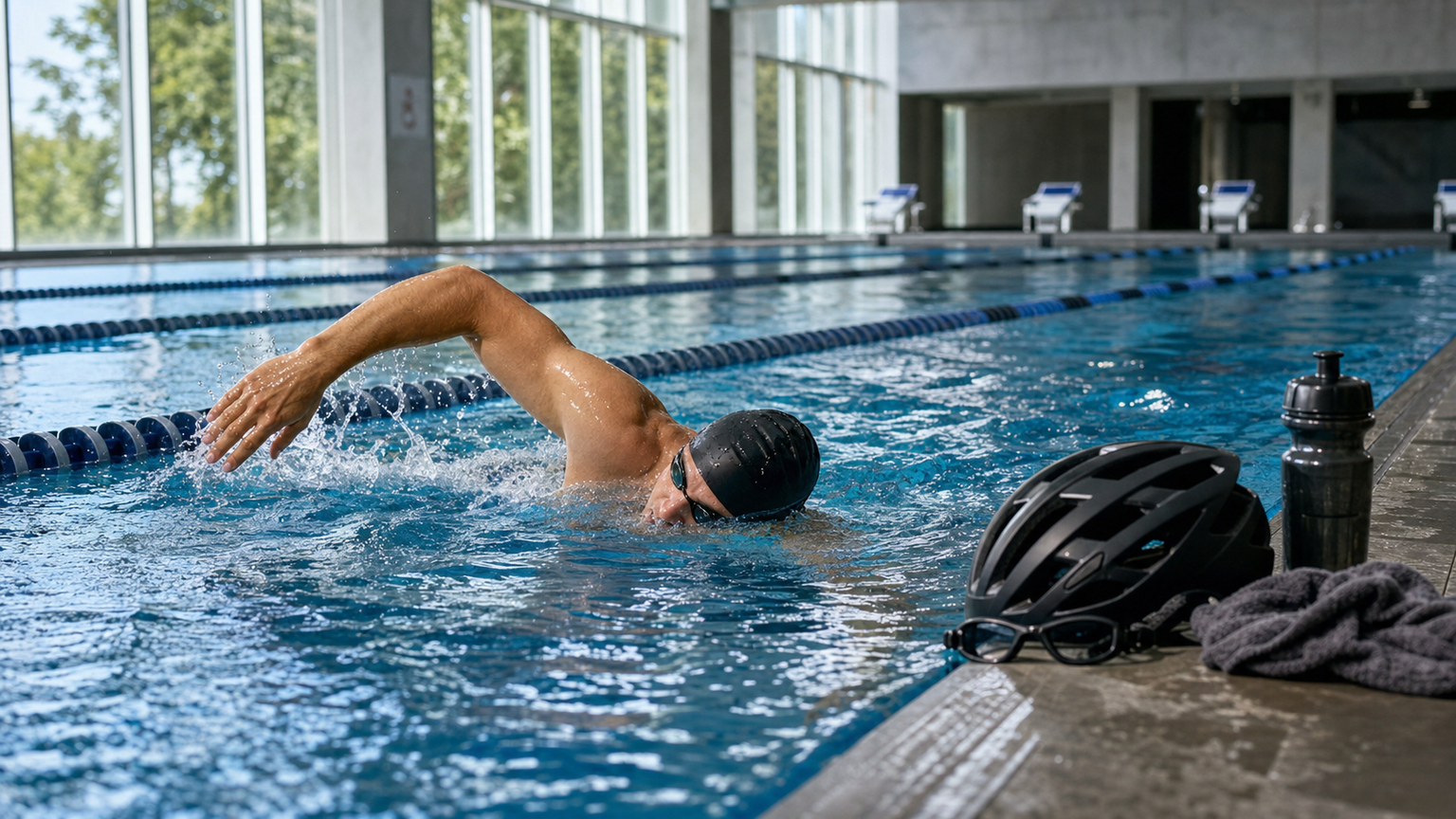
Swimming as Cross-Training: Cardiorespiratory Benefits for Cyclists
Cycling is a highly repetitive, lower-limb-dominant sport that can lead to overuse of specific muscle groups over time, while cardiorespiratory stimulation is also relatively confined to a particular movement pattern. As a full-body, low-impact aerobic exercise, swimming provides diverse stimuli that cycling training cannot offer, making it an extremely valuable cross-training option.
Physiological Complementarity Between Swimming and Cycling
Comprehensive Development of the Cardiorespiratory System
Cycling is primarily driven by the lower limbs, and the cardiorespiratory system is trained in response to the demands of the lower-limb muscles. Swimming, on the other hand, engages the entire body’s musculature—arms, shoulders, back, and core working simultaneously—so the heart must supply a broader range of muscle groups at once. This different pattern of stimulation enhances overall cardiac output and improves the heart’s overall efficiency.
Research shows that swimming training can significantly improve the following physiological indicators:
- Maximal Oxygen Uptake (VO2max): Full-body exercise challenges the aerobic system more comprehensively than lower-limb-only exercise
- Stroke Volume: The amount of blood pumped per heartbeat increases
- Angiogenesis: Capillary density within muscles increases, improving oxygen utilization efficiency
Strengthening the Upper Body and Core
When cycling, the upper body primarily plays a supporting and stabilizing role and rarely receives strengthening stimuli. The pulling motion of swimming requires strong shoulder, back, and core muscles, effectively filling the gaps left by cycling training and improving overall postural stability on the bike.
The Best Tool for Active Recovery
The buoyancy of water reduces joint load, while water pressure provides a gentle compressive massage effect and promotes blood circulation. Doing an easy swim the day after a high-intensity ride is a more effective active recovery strategy than static rest, accelerating the removal of metabolic waste and reducing muscle soreness.
Analysis of Different Strokes for Cyclists
Freestyle (Front Crawl)
- The most recommended stroke, with the highest aerobic benefits
- Strengthens shoulder joint stability and back muscles
- Breathing rhythm training (breathing every 2 or 3 strokes) improves respiratory efficiency
Breaststroke
- Places greater stress on the knees; not recommended in large volumes for cyclists with knee issues
- Hip external rotation training provides supplementary benefits for cycling posture
Backstroke
- Excellent for thoracic spine extension, directly counteracting the forward-leaning posture of cycling
- Suitable as recovery swimming
- An alternative choice for those with shoulder problems
Butterfly
- Highest training intensity, with significant core and back demands
- Suitable for advanced athletes with a swimming foundation
- Not recommended as a primary cross-training stroke (high technical demands and significant fatigue accumulation)
Integrating a Swimming Training Plan
Beginners: Start with Water Adaptation
If you are unfamiliar with swimming technique, it is recommended to invest in a few adult swimming lessons first to ensure proper freestyle technique before entering training. Poor swimming technique is not only inefficient but also prone to causing shoulder injuries.
Weeks 1–4 (Building the Foundation):
- 1–2 sessions per week
- 400–600 meters per session, primarily freestyle
- Focus: smooth technique, not speed
Intermediate Training: Structured Swimming Workouts
Suggested Weekly Schedule:
| Day | Training Content |
|---|---|
| Monday | High-intensity cycling |
| Tuesday | Swimming 800–1200m (active recovery) |
| Wednesday | Moderate-intensity cycling |
| Thursday | Swimming interval training |
| Friday | Rest |
| Saturday | Long-distance cycling |
| Sunday | Easy swimming (recovery) or rest |
Sample Swimming Interval Workouts
Aerobic Base Training (Total 1200m):
- Warm-up: 200m easy freestyle
- Main set: 8 × 100m (moderate intensity, 30 seconds rest per 100m)
- Cool-down: 200m easy backstroke
High-Intensity Intervals (Total 1000m):
- Warm-up: 200m
- Main set: 10 × 50m sprints (all-out, 60 seconds rest)
- Cool-down: 200m easy
Common Questions and Solutions
Q: Will swimming make my cycling ability regress?
No. Research shows that as long as cycling training volume is not reduced, adding swimming training not only does not affect cycling performance but actually brings positive effects by improving overall cardiorespiratory function.
Q: Swimming consumes too much energy and affects my cycling training—what should I do?
Swimming training volume should be increased progressively, initially scheduled after cycling sessions or on rest days. As the body adapts, you can gradually increase swimming volume without affecting cycling quality.
Q: I don’t know how to swim. Is it worth learning?
For serious cyclists, the return on investment in learning to swim is quite high, especially during injury recovery periods (swimming allows you to maintain cardiorespiratory training while recovering from leg injuries) and during winter cross-training.
Off-Season Swimming Intensification Plan
When cycling opportunities decrease in winter, swimming is the best alternative for maintaining cardiorespiratory fitness. Here is an outline of an 8-week off-season swimming plan:
- Weeks 1–2: 600–800m per session, technique-focused
- Weeks 3–4: Increase to 1000–1200m, begin incorporating interval segments
- Weeks 5–6: 1500–2000m, building aerobic base
- Weeks 7–8: Incorporate high-intensity segments to simulate high-heart-rate training
Conclusion
Swimming is the most worthwhile cross-training skill for cyclists to invest in. It provides low-impact cardiorespiratory stimulation, full-body muscular development, and active recovery—a combination of three benefits that is hard to find in other training modalities. Whether used for injury recovery, winter maintenance, or as a supplement to annual training, swimming can make you a more complete and more durable cyclist.
Related Reading
- Swimming Training for Cyclists: How Cross-Training Enhances Riding Performance
- Cardiorespiratory Cross-Training Between Cycling and Swimming: The Scientific Basis of Complementary Training
- Cross-Transfer Benefits of Swimming and Cycling for Cardiorespiratory Fitness: Aerobic Capacity Transfer Across Disciplines
- Swimming Catch-Up for Cyclists: Water-Based Training to Improve Upper-Body Strength and Cardiorespiratory Fitness
靠單車減肥35公斤 心得分享與整理
7 年前
一起升級!海鷗盃LSD團練...JJSC Zone2招待 騎到手抖 / 公路車 / CT Yeh
1 天前
西進武嶺 免費訓練分析服務 Intervals | 練不夠還是練過頭?你哪一種類型選手?AI模型告訴你! | 備戰神器 | 公路車 訓練 | CT Yeh
4 年前
#公路車 #Vo2Max #最大攝氧量 測驗 體驗 | 心肺測試
6 年前
#PUSHBIKE 原來這麼好玩! 小朋友 滑步車 初體驗 超可愛
6 年前
一輪盃環湖挑戰賽 | TIME新車首航 | 一輪帶我飛 | 百萬流量都在場 | 4K畫質 | 公路車 | CT Yeh
3 年前
海鷗戰歌「十人同心」完整版 #公路車 #cycling
8 個月前
大家都在開箱的...單車用藍芽對講耳機真的有幫助嗎? SENA BiKom 20 長距離旅遊 & 海鷗繞圈賽 實際體驗心得 / 公路車 / CT Yeh
9 個月前