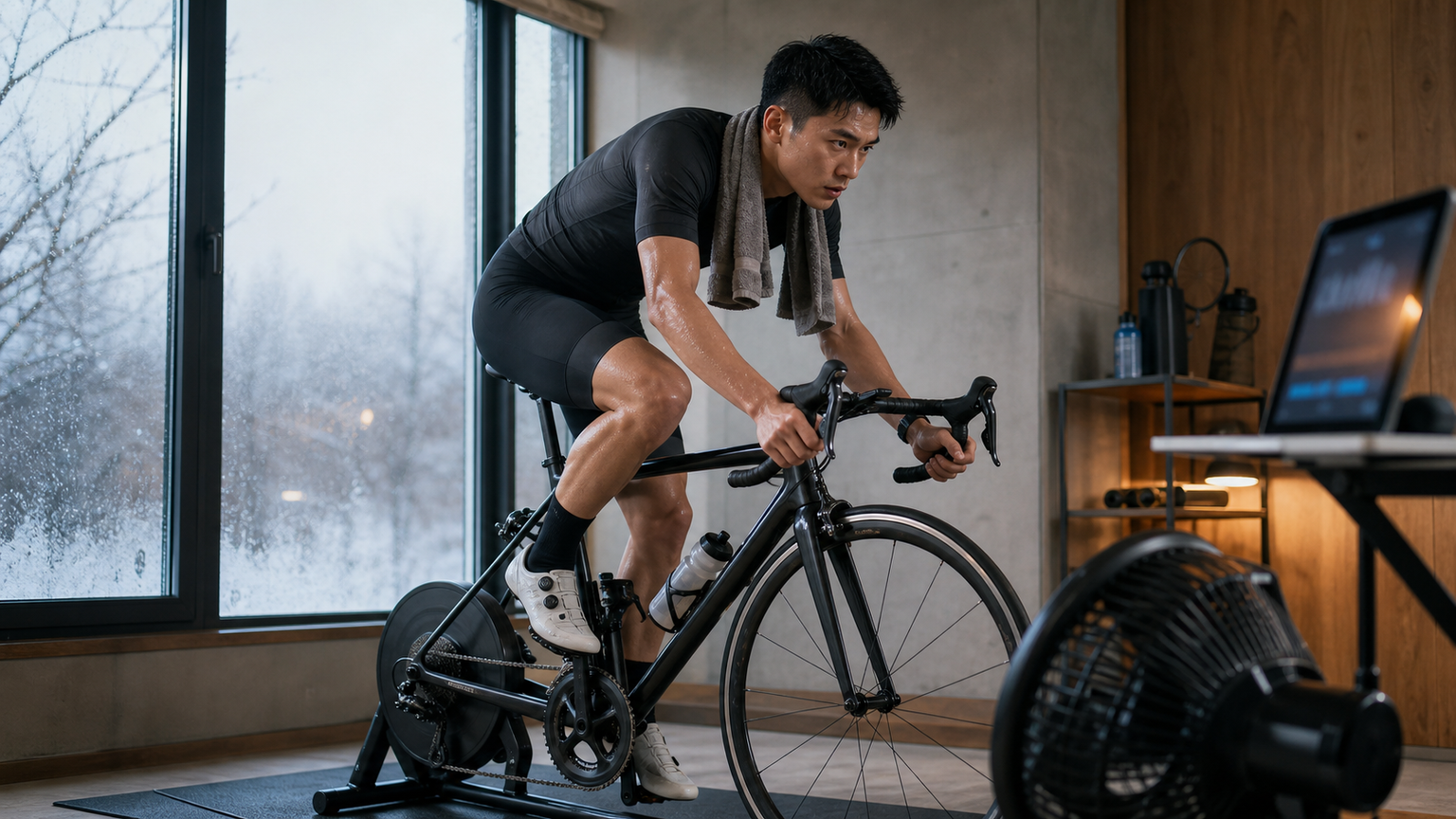
Roller Training Plan: Maximizing the Benefits of Winter Indoor Training
Winter indoor cycling training (commonly known as “roller training” or “trainer workouts”) was once viewed as a last resort, but with advances in smart trainer technology and the development of training science, more and more top cyclists are proactively choosing to use indoor trainers for high-quality structured training during the winter. When executed correctly, winter indoor training can even surpass the training benefits of outdoor riding in certain aspects.
The Advantages of Indoor Training
Control Over Training Quality
Outdoor riding is constrained by traffic, weather, and terrain, making it difficult to precisely control training intensity. Indoor trainers allow you to:
- Precisely lock in power zones (ERG mode automatically adjusts resistance)
- Train without interruptions (no red lights, no coasting downhill)
- Execute every training segment exactly as planned
The Best Tool for Power Training
Indoor training with a power meter is the most efficient way to improve your FTP (Functional Threshold Power). Power data from each session is clearly recorded, and your progress curve is easy to track at a glance.
Time Efficiency
A 60-minute high-quality indoor interval session often delivers greater training benefits than 90 minutes of outdoor riding (accounting for warm-up, stopping at red lights, coasting downhill, and other non-productive time).
The Four Phases of Winter Training
Phase 1: Base Aerobic (Weeks 1–4)
Goal: Build the aerobic engine, enhance fat metabolism capacity, and lay the foundation for subsequent high-intensity training.
Training Characteristics:
- Intensity: Z2 (56–75% of FTP, able to converse easily)
- Session duration: 60–90 minutes
- Weekly frequency: 3–4 sessions
Typical Z2 Workout Plan:
- 10-minute warm-up (gradually building to the lower end of Z2)
- 60 minutes of steady Z2 (power fluctuations kept within ±10W)
- 10-minute cool-down
Why is Z2 important?
Z2 training activates mitochondrial biogenesis in slow-twitch muscle fibers, enhancing aerobic metabolic capacity. This is the physiological foundation of all endurance performance, and it takes considerable time to fully develop—winter is the ideal time to accumulate Z2 volume.
Phase 2: Aerobic Threshold Development (Weeks 5–8)
Goal: Raise the lactate threshold, allowing the body to sustain aerobic metabolism at higher power outputs.
Training Types Added:
Tempo Ride:
- Intensity: Z3 (76–90% of FTP)
- Duration: 20–40 minutes (can be broken into segments)
- Feel: Breathing noticeably faster but manageable, speech becomes difficult
Typical Tempo Workout Plan:
- 15-minute warm-up
- 3 × 12 minutes @ 85% FTP (5-minute recovery between intervals)
- 10-minute cool-down
Phase 3: VO2max Development (Weeks 9–12)
Goal: Increase maximal oxygen uptake and broaden the ceiling of aerobic capacity.
Training Types:
VO2max Intervals:
- Intensity: Z5 (106–120% of FTP)
- Duration: 3–8 minutes per interval
- Recovery: Equal time or longer
Typical VO2max Workout Plan:
- 20-minute warm-up (including 3 × 30-second sprint activations)
- 5 × 4 minutes @ 115% FTP (4-minute recovery)
- 15-minute cool-down
Note: VO2max training is high-intensity; schedule at most 2 sessions per week, and ensure adequate recovery afterward.
Phase 4: Pre-Season Preparation (Weeks 13–16)
Goal: Shift training modes to prepare for spring outdoor riding.
- Increase the proportion of outdoor riding (when weather permits)
- Add short-duration sprint training
- Maintain Z2 base volume without chasing maximum training load
Strategies to Make Indoor Training More Enjoyable
The biggest challenge of indoor training is mental fatigue. The following strategies can significantly improve training consistency:
Use Training Platforms
- Zwift: Virtual world riding with structured training plans and community features
- TrainerRoad: Focused on training effectiveness, with AI-adaptive training plans
- Wahoo SYSTM: Diverse training formats with integrated video and music
Media Pairing
- Long Z2 sessions: Pair with podcasts, audiobooks, or TV series
- High-intensity intervals: Pair with high-BPM music, avoiding distracting media
Environment Setup
- Ventilation and cooling: Indoor riding generates far more heat than outdoor riding; a large fan is essential (not just for comfort, but also to prevent overheating from affecting performance)
- Sweat protection: Heavy sweating can corrode the frame and components
- Trainer mat: Protects the floor and provides vibration damping
FTP Testing and Training Zone Setup
Accurate FTP values are the prerequisite for correctly setting training zones. It is recommended to perform an FTP test every 4–6 weeks:
20-Minute FTP Test Protocol:
- Warm up thoroughly (20–30 minutes, including 3 × 1-minute sprints)
- Ride at maximal effort for 20 minutes, aiming for a steady, consistent output
- 20-minute average power × 0.95 = estimated FTP
- Update all zone settings based on the new FTP
Common Mistakes in Winter Indoor Training
- Going hard every session: Lacking a Z2 training base and doing only high-intensity work is the most common mistake in winter training
- Neglecting recovery: The precise control of indoor training can sometimes lead to overtraining
- Not hydrating: Fluid loss in the hot indoor environment far exceeds expectations; replenish 700–1000ml per hour
- Skipping the warm-up: In a static indoor environment, muscles need a thorough warm-up to safely enter high-intensity training
Conclusion
Winter is not a training void—it is a critical window for building the foundation of the next season. Through a structured indoor training plan, you can arrive at the spring racing season with a higher FTP and a stronger aerobic engine, demonstrating real progress on the road. Invest in a good trainer, pair it with a systematic training plan, and winter will become the period of your fastest improvement all year.
Related Reading
- Trainer vs. Outdoor Riding: Is Indoor Training Really More Efficient?
- Bicycle Trainers: The Training Effects of Rollers, Smart Trainers, and Direct-Drive Trainers
- Smart Trainer Structured Training Guide: Use Scientific Methods to Improve Riding Performance
- How to Maintain Training During Typhoon Season: Tips for Using an Indoor Trainer
沉浸室內單車練功房開箱! 100吋大畫面,最便宜的花費? 居然還能K歌!? | 公路車 | CT Yeh
3 年前
ThinkRider 智騎 XXPRO 訓練台,高階機種功能 只要 1/3價格!? 實測功率對比、噪音實測 / 公路車 / CT Yeh
1 年前
Fitting訓練兩用功率車 ! Thinkrider ST900 完整實測!/ 坡度升降 / 鄰居測試/ smart bike/公路車/ CT Yeh
2 年前
實景訓練台) 彰化經典百K 高強度喵團 90分鐘 跟著一起練功 2019 Indoor workout Changhua Classic 100 Taiwan
7 年前
邁金 T500 訓練台開箱!有下坡輔助、路感模擬、不用插電、直驅電機 !兩萬級距頂規享受新選擇!/ 公路車 / 室內訓練 / CT Yeh
1 年前
單車AI教練!全新 ChatGPT4o 幫你分析訓練成果!排武嶺課表,分析騎車姿勢! 太神了! / 公路車 / CT Yeh / feat. 緯緯
2 年前
西進武嶺 免費訓練分析服務 Intervals | 練不夠還是練過頭?你哪一種類型選手?AI模型告訴你! | 備戰神器 | 公路車 訓練 | CT Yeh
4 年前
訓練台體驗) 2019台北自行車展 三大家 訓練台體驗 Tacx Neo Flux 2 Xepdo Apx Wahoo Kickr
7 年前