Post-Run Recovery Strategies: The Science of Ice Baths, Massage, and Sleep
“Training makes you tired; recovery makes you stronger.” Many runners pour all their energy into training while neglecting the importance of recovery. In fact, muscles don’t grow during running—adaptation occurs during rest and recovery periods. This article analyzes the effectiveness of various recovery methods from a scientific perspective.
1. What Happens to the Body After Exercise
Running (especially long runs or intervals) causes the following damage to the body:
- Micro-tears in muscle fibers: Particularly from eccentric contractions (downhill running)
- Glycogen depletion: Primary energy stores are consumed
- Inflammatory response: Damaged muscle tissue triggers inflammation
- Neural fatigue: The central nervous system needs to recharge
- Dehydration and electrolyte imbalance: Requires replenishment of fluids and minerals
2. Scientific Evaluation of Various Recovery Methods
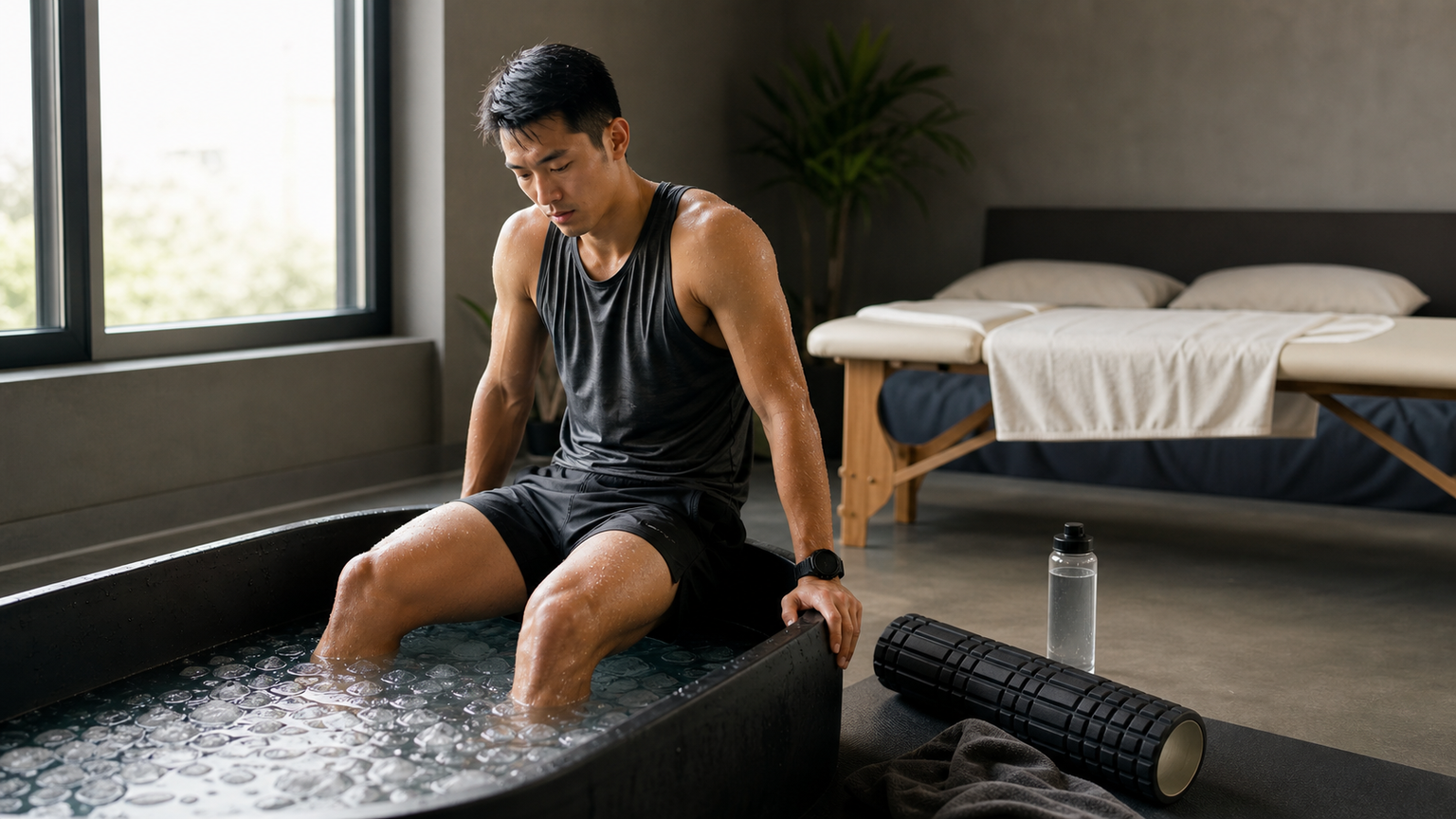
Method 1: Cold Water Immersion
How to do it: After running, soak your lower body in 10–15°C cold water for 8–15 minutes
Scientific basis:
- Low temperature constricts blood vessels, reducing inflammation
- Lowers muscle temperature, suppressing swelling
- Alternating hot and cold (optional) promotes blood circulation
Effectiveness assessment:
| Advantages | Disadvantages |
|---|---|
| Significantly reduces delayed onset muscle soreness (DOMS) | May suppress long-term adaptation effects |
| Subjective recovery feels noticeable | Uncomfortable and requires willpower |
| Effective for post-race recovery | Frequent use may reduce training benefits |
Recommended timing: After races, multi-day events (e.g., ultramarathons), and high-intensity intervals
Not recommended: Routine use after every training session (reduces long-term training adaptation)
Method 2: Massage
Types and effects:
| Massage Type | Timing | Effect |
|---|---|---|
| Effleurage (light stroking) | Immediately after running | Promotes blood circulation |
| Deep tissue massage | 24–48 hours after running | Eliminates muscle knots |
| Foam rolling (self-massage) | After daily training | Relaxes fascia, reduces soreness |
| Sports massage | 1–2 days before a race | Muscle activation (light) |
Foam rolling guidelines:
- Roll each area for 60 to 90 seconds
- Move slowly; pause on tight spots once found
- Key areas: calves, IT band, quadriceps, glutes
- Avoid rolling directly over joints (knees, ankles)
Method 3: Sleep
Sleep is the most important recovery tool, bar none.
The impact of sleep on running performance:
Research shows that sleep deprivation (<6 hours) affects athletic performance:
- Endurance decreases by 15–20%
- Reaction time increases by 11%
- Increased emotional distress
- Higher injury risk
Sleep recommendations for runners:
| Training Intensity | Recommended Sleep Duration |
|---|---|
| Light training (<40 km/week) | 7–8 hours |
| Moderate training (40–70 km/week) | 8–9 hours |
| High-intensity training (>70 km/week) | 9–10 hours |
Tips for improving sleep quality:
- Avoid strenuous exercise 2 hours before bed
- Maintain a consistent sleep schedule
- Avoid caffeine before bedtime
- Keep the bedroom at 16–19°C
- Avoid using your phone before bed (blue light suppresses melatonin)
Method 4: Active Recovery
Light aerobic exercise promotes blood circulation and accelerates the removal of metabolic waste:
- Walking: 20–30 minutes of easy walking
- Swimming: 20 minutes of easy swimming (non-impact, the best recovery option)
- Yoga: 60 minutes of gentle yoga
- Cycling: 30 minutes of low-resistance riding
Method 5: Nutritional Supplementation
Golden replenishment window: Within 30 minutes after running (fastest glycogen synthesis)
| Supplement | Goal | Recommended Foods |
|---|---|---|
| Carbohydrates | Replenish glycogen | Bananas, white rice, bread |
| Protein | Repair muscle | Eggs, soy milk, chicken breast |
| Electrolytes | Replenish lost minerals | Sports drinks, salt, nuts |
| Antioxidants | Reduce oxidative stress | Berries, turmeric, vitamin C |
Recommended ratio: Carbohydrates:Protein = 3:1 (e.g., 1 bowl of rice + 1 serving of protein)
Method 6: Compression Garments
- Compression calf sleeves: Supported by modest research; helpful for reducing DOMS
- Best usage: Wear immediately after running for 2–4 hours
- Effectiveness assessment: Significant subjective improvement; moderate objective results
3. Systematic Recovery Plan After Long Runs
Post-Marathon Recovery Timeline
| Days | Recommended Activities |
|---|---|
| Days 1–2 | Complete rest, ice bath, light massage |
| Days 3–4 | Light activities such as walking, swimming |
| Days 5–7 | Easy short runs (3–5 km), listen to your body |
| Days 8–14 | Gradually resume easy mileage; no intensity work |
| Days 15–21 | Add light tempo runs |
| Day 22 onward | Gradually return to normal training plan |
4. Overtraining Syndrome
Accumulated insufficient recovery can lead to overtraining syndrome, with symptoms including:
- Consistently declining performance
- Elevated resting heart rate (more than 5 bpm above normal)
- Worsening sleep quality
- Low mood, irritability
- Frequent illness (suppressed immunity)
- Loss of motivation for running
How to identify it: Measure your resting heart rate every morning. If it stays more than 5 bpm above baseline for 3 consecutive days, reduce training volume immediately.
Treatment: The only remedy is adequate rest, typically requiring 2–6 weeks of significant volume reduction.
Conclusion
Recovery is not laziness—it is an indispensable part of training. Building a recovery system that works for you is the key to improving year after year. The simplest recovery formula: adequate sleep + proper nutrition + active recovery—and you’ll already be ahead of most runners.
Related Reading
- Post-Run Ice Bath vs. Hot Bath: Which Recovery Strategy Fits Your Training Cycle?
- The Science of Running Recovery: Comparing Cold Water Baths, Foam Rolling, and Massage, and When to Use Them
- Do Post-Run Ice Baths Actually Work? Latest Scientific Research Explained
- Scientific Recovery After Running: The Golden Recovery Methods of Ice Baths, Foam Rolling, and Nutritional Supplementation
CT暗黑廚房) 車友必備 宇宙無敵鮮蚵湯 幫助訓練恢復 天然食補 好市多 超肥鮮蚵 破PR
7 年前
摔車後補裝備: 好市多新款單車安全帽& Specialized Romin 北高整路屁股都不痛的坐墊 | 一千元居然有MIPS | CT Yeh | 公路車
4 年前
[教學] Premiere 影片 手震 修正 教學 防抖 單眼 影像 GoPro 穩定 Video Stabilization
8 年前
西進武嶺 免費訓練分析服務 Intervals | 練不夠還是練過頭?你哪一種類型選手?AI模型告訴你! | 備戰神器 | 公路車 訓練 | CT Yeh
4 年前
滑雪新手們慘摔學習全紀錄(請開字幕),滑雪好好玩 | Snowboard + Ski | 岩原 スキー場 | 滑雪APP使用 | GoPro Max
6 年前
靠單車減肥35公斤 心得分享與整理
7 年前
#公路車 #Fitting 靠人工智慧APP 幫你調整單車
6 年前
一日北高常見問題大集合 | 攻略 | 路線 | 訓練 | 補給 | 自行車 單車 | 一日雙城 | 雙塔 | TWB北高360 | 屁股痛
6 年前