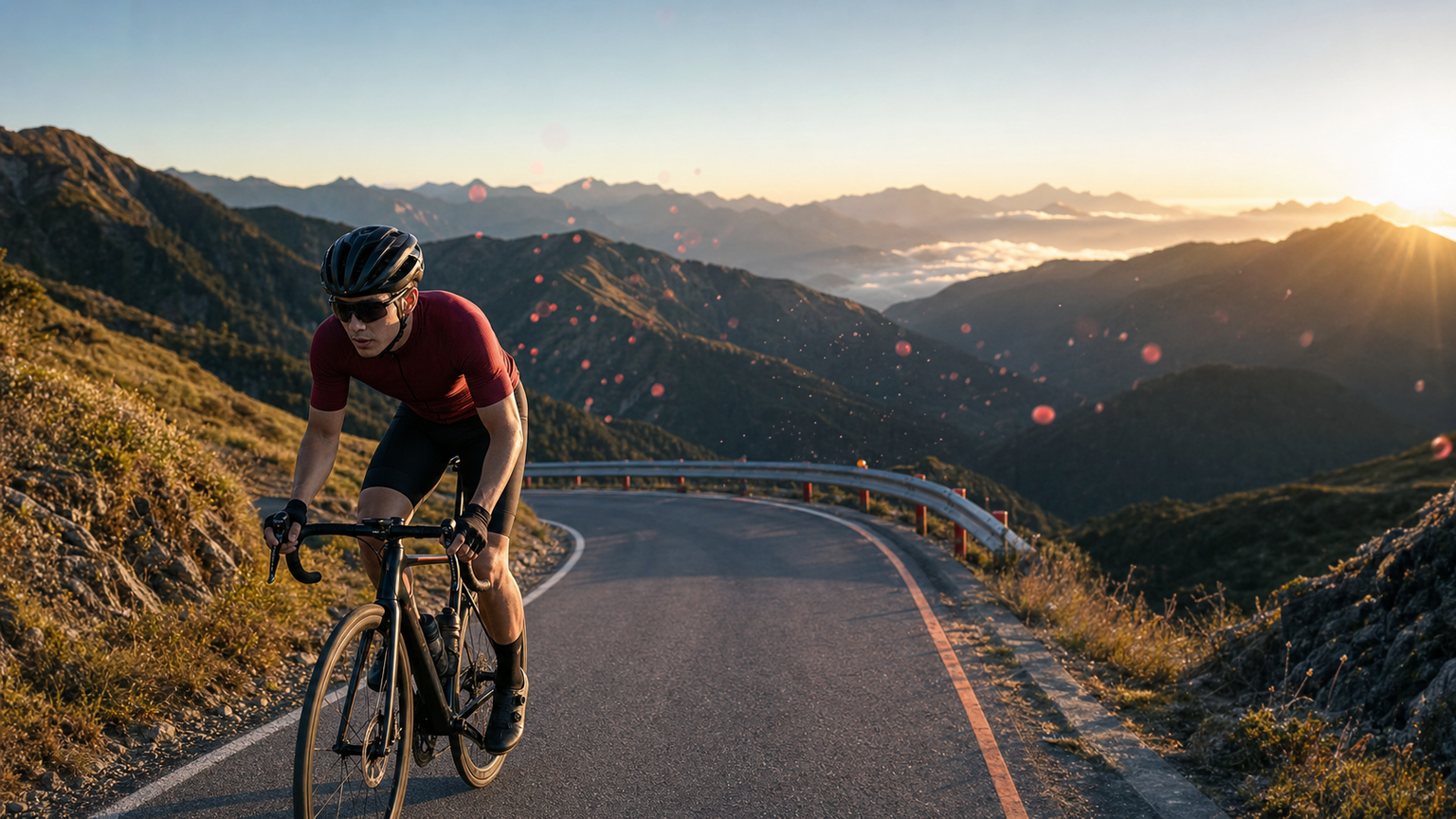
Benefits of Altitude Training for Cyclists: The Effect of Altitude on Red Blood Cells
Altitude training has long been a key tool for professional cyclists. Tour de France riders train at high-altitude locations (2,000–3,000 meters) for several weeks each year to enhance their oxygen-carrying capacity. Taiwan boasts a unique geographical advantage—mountain routes such as Hehuan Mountain and Wuling—allowing local cyclists to also engage in altitude training.
The Physiological Mechanisms of Altitude Training
Reactions Triggered by Hypoxic Conditions
At high altitudes, the oxygen concentration (partial pressure) in the air decreases. Take Taiwan’s Hehuan Mountain (approximately 3,416 meters) as an example:
| Altitude | Relative Oxygen Level | Main Effects |
|---|---|---|
| 0 meters (sea level) | 100% | Baseline |
| 1,500 meters | 85% | Minor effects |
| 2,000 meters | 80% | Performance begins to be affected |
| 3,000 meters | 72% | Significant effects; altitude sickness begins |
| 3,416 meters (Wuling) | 69% | Training intensity must be reduced |
EPO: The Body’s Natural Response
When the body senses a hypoxic environment, the kidneys secrete erythropoietin (EPO). EPO stimulates the bone marrow to produce more red blood cells, enhancing the blood’s oxygen-carrying capacity.
Key physiological changes:
- Increased hematocrit: May rise from the normal 40–45% to over 50%
- Increased red blood cell count: Blood oxygen-carrying capacity improves by 5–10%
- Enhanced VO2max potential: After returning to lower altitudes, VO2max can improve by 1–4%
Duration of Altitude Training Benefits
- 3–5 days after leaving altitude: EPO levels return to normal
- 2–3 weeks after leaving altitude: Red blood cell benefits peak
- 4–6 weeks after leaving altitude: Benefits gradually fade
Ideal race timing: Race 2–3 weeks after descending to enjoy maximum benefits.
Taiwan’s Advantage for Altitude Training
Taiwan has the highest density of high-mountain roads in Asia, making it a natural altitude training base for cyclists.
Altitude Training Routes in Taiwan
| Route | Altitude | Features |
|---|---|---|
| Wuling (Hehuan Mountain) | 3,275 meters | Highest point on Taiwan’s roads; rideable by bike |
| Lishan | 2,000 meters | Suitable for moderate-intensity training |
| Cingjing Farm | 1,750 meters | Suitable for introductory altitude training |
| Alishan | 2,216 meters | Southern option |
| Taipingshan | 1,950 meters | Yilan option |
Sample Wuling Altitude Training Plan (3 Days)
Day 1 (Arrival):
- Easy ride for 1–2 hours (altitude acclimatization)
- No high-intensity training
- Pay attention to hydration (fluid loss is faster at altitude)
Day 2 (Acclimatization):
- Moderate-intensity ride for 2–3 hours (Zone 2–3)
- Monitor heart rate; at altitude, heart rate is typically 10–20 beats higher than at lower elevations
- Descend immediately if headache or nausea occurs
Day 3 (Training):
- Climbing intervals or a medium-to-long distance ride
- Intensity reduced by 15–20% compared to lower-altitude training
The Live High Train Low (LHTL) Strategy
A strategy commonly used by professional cyclists: train at low altitude during the day for high-intensity sessions, and sleep at high altitude at night (to benefit from hypoxic EPO stimulation).
Taiwan application: Stay at Cingjing Farm (1,750 meters), ride daily to Wushe (approximately 900 meters) for high-intensity training, then return to Cingjing to sleep.
Altitude Training Precautions
Altitude Sickness
Symptoms:
- Headache (most common)
- Nausea, vomiting
- Fatigue, dizziness
- Severe cases: pulmonary edema, cerebral edema
Prevention:
- Ascend gradually (no more than 500–600 meters of elevation gain per day)
- Get adequate rest
- Stay hydrated
- Avoid alcohol
- Descend immediately if symptoms appear
Adjusting Training Intensity
During altitude training, the same power output requires greater cardiovascular effort. Recommendations:
- Control intensity by heart rate (rather than power)
- Maintain the same heart rate and accept lower power output
- Avoid full FTP testing at altitude
Other Methods of Hypoxic Training
Cyclists who cannot travel to high mountains may consider:
- Hypoxic tents: Sleep in a nitrogen-enriched tent to simulate altitude conditions; prices range from approximately NT$50,000–150,000
- Altitude training masks: Limited effectiveness and increase training difficulty (not true hypoxia)
- Hypoxic training centers: Some sports science institutions offer hypoxic training equipment
Scientific Research Conclusions
According to multiple studies, the benefits of altitude training for cycling performance:
- 3–4 weeks of altitude training (2,000–3,000 meters)
- Can improve 10km time trial performance by 1–3%
- VO2max improvement of 1–4%
- Benefits vary by individual (genetic factors influence EPO response)
Conclusion
Taiwan’s unique geographical environment makes altitude training more accessible to local cyclists than almost anywhere else in the world. The Hehuan Mountain road and Wuling are world-class altitude training venues, and leveraging this advantage is a key pathway for Taiwanese cyclists to elevate their competitive performance.
Related Reading
- The Scientific Benefits of Altitude Training on Cyclists’ Hemoglobin
- Benefits of High-Altitude Training for Cyclists: Taiwan’s Natural Advantage at Wuling
- The Physiology of High-Altitude Cycling: Red Blood Cell Production and Performance Enhancement
- High-Altitude Running Training: The Effect of Altitude on Red Blood Cell Production
中秋團練!GoPro Hero 9 拍攝絲般順滑,ft. 新竹某校隊 公路車
5 年前
騎單車去大屯山賞雪! 助航台滑冰 全記錄 | 台北R友大集合 | 下雪打雪仗囉 | 4K超高畫質
5 年前
一日北高/長距離團騎 常見問題補充篇 / 組團或跟團的眉角 / 壯車友容易被瘦車友慢性拉爆 / 原來屁股痛可能是這個原因...? / 風場配速法 / 公路車 / CT Yeh
2 年前
台北闊瀨陡坡 騎旅 / 日本單車雜誌編輯車友臨時加入!/ 髮香才是最強的 / feat. 北迴歸線小隊 / 公路車 CT Yeh
6 個月前
單車 一日北高 ( 雙城 ) 肥宅雙人瘋狂行 紀錄片 REACTO
10 年前
小野田真的存在!日本赤城山爬坡公路賽 台灣首發團完全實錄 | 頭文字D真實賽道! | 看完東奧自行車賽後好想再去騎一次啊! | 公路車 | CT Yeh
4 年前
訓練台體驗) 2019台北自行車展 三大家 訓練台體驗 Tacx Neo Flux 2 Xepdo Apx Wahoo Kickr
7 年前
太平山單車員工旅遊 | 這樣玩CP值最高!| 公路車
5 年前