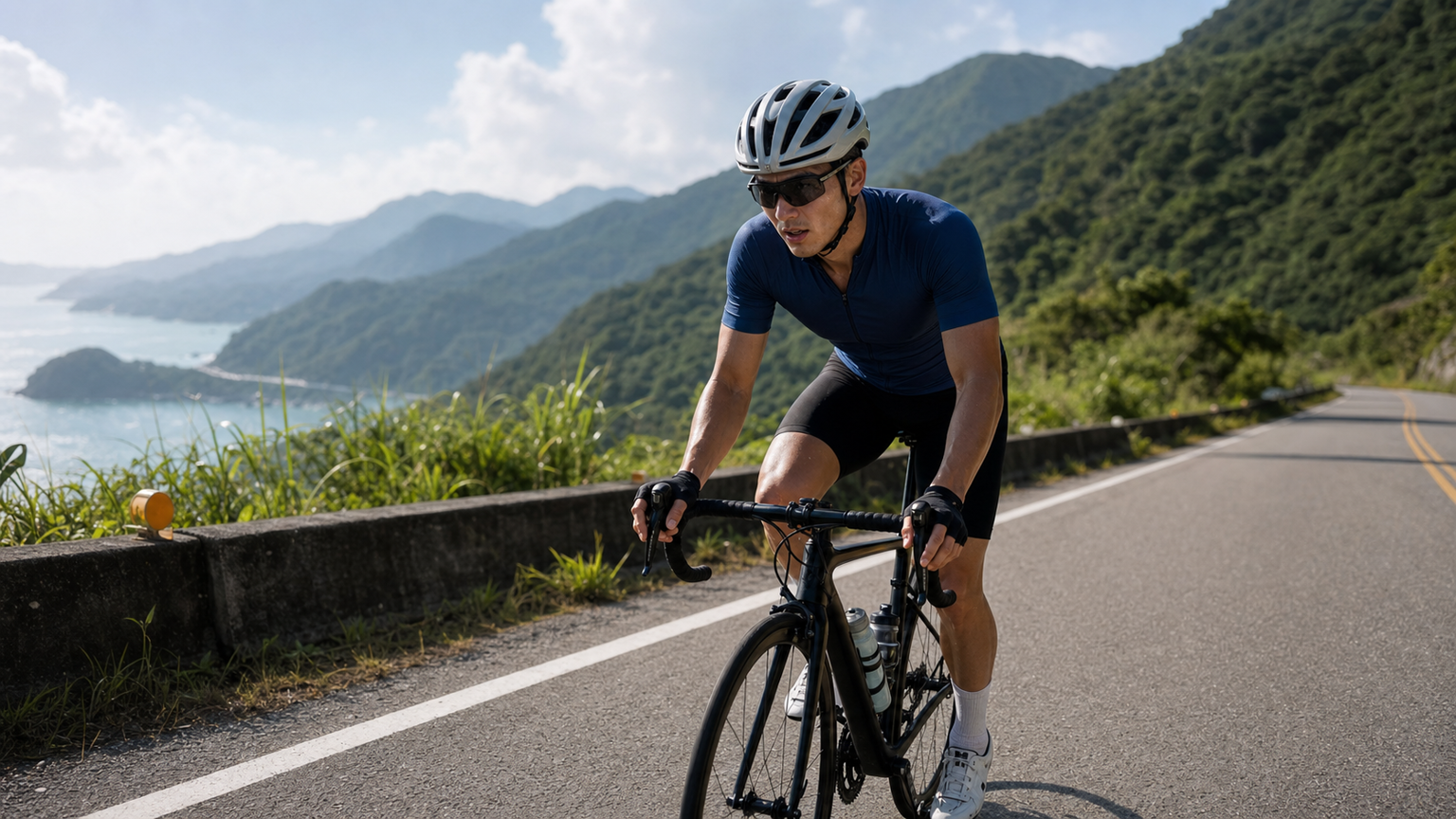
What Is Cardiac Drift? How to Avoid Overexertion on Long Rides
Have you ever noticed that at the same speed and the same power output, your heart rate is 10-15 beats higher after 3 hours of riding than it was when you started? This is “cardiac drift,” an important physiological signal on long rides.
What Is Cardiac Drift?
Cardiac drift refers to the gradual rise in heart rate over time at a sustained, steady power output. In theory, the same power output should correspond to the same heart rate, but on long rides, heart rate “drifts” upward.
Typical Cardiac Drift Values
| Ride Duration | Power (assumed 250W) | Heart Rate |
|---|---|---|
| 30 min | 250W | 145 bpm |
| 60 min | 250W | 148 bpm |
| 90 min | 250W | 152 bpm |
| 120 min | 250W | 158 bpm |
| 150 min | 250W | 164 bpm |
In this example, power stayed the same, but heart rate rose by 19 bpm over 2.5 hours — that is cardiac drift.
Causes of Cardiac Drift
1. Dehydration
Dehydration is the primary cause. As the body loses fluid:
- Blood volume decreases (blood becomes more “concentrated”)
- Stroke volume (blood pumped per beat) decreases
- To maintain the same cardiac output, heart rate must increase
Rule of thumb: A 1% loss of body weight in fluid raises heart rate by roughly 3-5 bpm; a 2% loss raises it 5-10 bpm and performance begins to decline.
2. Heat
In hot conditions (highly relevant during Taiwan’s summer):
- The body must divert blood from working muscles to the skin for heat dissipation
- Skin vasodilation “competes” with muscles for blood supply
- The heart must work harder, raising heart rate
A special note for Taiwanese summers: Riding in temperatures above 30°C (86°F) causes cardiac drift to accelerate 2-3 times faster than in cool weather.
3. Glycogen Depletion
As muscle glycogen is progressively depleted:
- The body shifts toward greater reliance on fat oxidation (a less efficient fuel source)
- Cardiac efficiency declines
- A higher heart rate is required to sustain the same power output
4. Mental and Central Nervous System Fatigue
Long rides also tax the central nervous system, increasing perceived exertion, which indirectly affects heart rate regulation.
How to Monitor Cardiac Drift
Efficiency Factor (Decoupling)
Platforms like TrainingPeaks offer a “decoupling” metric to quantify the degree of cardiac drift:
- Decoupling < 5%: Good aerobic efficiency (stable heart rate)
- Decoupling 5-10%: Normal range, may be influenced by heat or dehydration
- Decoupling > 10%: Significant drift, warrants attention
Self-Monitoring Methods
- Track heart rate over time: Compare average heart rate in the first 30 minutes versus the last 30 minutes of the ride
- Watch the heart rate-to-power ratio: It should remain relatively stable over time
- Note when “it feels harder than the numbers suggest”: Rising perceived exertion without a drop in power is a warning sign
Prevention and Management Strategies
Strategy 1: Proactive Hydration
Goal: Keep fluid loss within 2% of body weight.
Hydration guidelines for summer riding in Taiwan:
- Before the ride: Drink 500ml of water 2 hours in advance
- During the ride: Drink 150-250ml every 20-30 minutes (don’t wait until you feel thirsty)
- In hot conditions: You may need 700-1,000ml per hour
- Replenish electrolytes: Add 0.5-1g of sodium per 500ml of water (to avoid hyponatremia)
Sweat monitoring: After a ride wearing dark clothing, examine the extent of white salt residue to estimate sodium loss.
Strategy 2: Carbohydrate Intake
On long rides, regularly consuming carbohydrates not only sustains energy but also slows the cardiac drift caused by glycogen depletion.
- After riding beyond 60 minutes, consume 60-80g of carbohydrate per hour
- Use a glucose + fructose blend (which can raise the gut’s absorption ceiling to 90g/hour)
Strategy 3: Heat Acclimation Training
Systematic training in hot conditions helps the body adapt to heat:
- Ride in hot conditions for 10-14 consecutive days (even at reduced intensity)
- The body will: increase plasma volume, improve sweat gland function, and lower exercise heart rate
- Research shows that after heat acclimation, cardiac drift magnitude in hot environments can be reduced by 40-50%
Taiwan’s summer advantage: Riders who consistently train through Taiwan’s summer typically develop strong heat tolerance.
Strategy 4: Adjust Pacing Strategy
If you notice persistent cardiac drift during a long ride:
- Lower your target power (to bring heart rate back into the target zone)
- Don’t force yourself to hold power while ignoring heart rate signals
- Prioritize water and electrolytes at the next aid station
A Heart Rate Management Plan for Long Rides
Using an 8-hour Gran Fondo as an example:
| Time Block | Target Power | Target Heart Rate | Notes |
|---|---|---|---|
| 0-2 hrs | 80% FTP | Low Zone 3 | Hydrate, don’t go out too hard |
| 2-4 hrs | 75% FTP | Zone 2-3 | Actively fuel with carbohydrate |
| 4-6 hrs | 70% FTP | Zone 2 | Monitor drift, adjust pacing |
| 6-8 hrs | By feel | Accept higher heart rate | Energy gels + caffeine |
Cardiac Drift and Training Purpose
It’s worth noting that in certain Zone 2 training sessions, allowing moderate cardiac drift (<5%) can more accurately test aerobic efficiency. If your Zone 2 rides show almost no cardiac drift, it suggests a solid aerobic base; if drift is pronounced, it may indicate insufficient base training or inadequate recovery that day.
Conclusion
Cardiac drift isn’t a disease — it’s your body’s language. Learning to interpret it lets you make better pacing and fueling decisions on long rides. On rides exceeding 4 hours, these decisions can mean the difference of 30 minutes or more in your finishing time.
Related Reading
西進武嶺 免費訓練分析服務 Intervals | 練不夠還是練過頭?你哪一種類型選手?AI模型告訴你! | 備戰神器 | 公路車 訓練 | CT Yeh
4 年前
JE22 百里任務體驗,心跳不能過150,三小時內有可能...? 沒有天時地利難度有多高? / 公路車 / CT Yeh
1 年前
#公路車 #Vo2Max #最大攝氧量 測驗 體驗 | 心肺測試
6 年前
[教學] Dashware 教學 如何製作有 速度 功率 心律的 騎車影片 Guages Video
8 年前
如果Pogačar騎西進武嶺可以多快?會破2嗎?各種情況深度推估探討 / 公路車 / CT Yeh
2 年前
2025 自行車錶排行榜 兩萬車友大數據 / Garmin Bryton 排名會大洗牌嗎? / 全新的碼表前身分析 /公路車 / CT Yeh
1 年前
一日北高常見問題大集合 | 攻略 | 路線 | 訓練 | 補給 | 自行車 單車 | 一日雙城 | 雙塔 | TWB北高360 | 屁股痛
6 年前
東進武嶺 西進武嶺 AI 配速 上線囉 公路車
5 年前