Running Music and Headphone Buying Guide: The Advantages of Bone Conduction Headphones for Outdoor Exercise
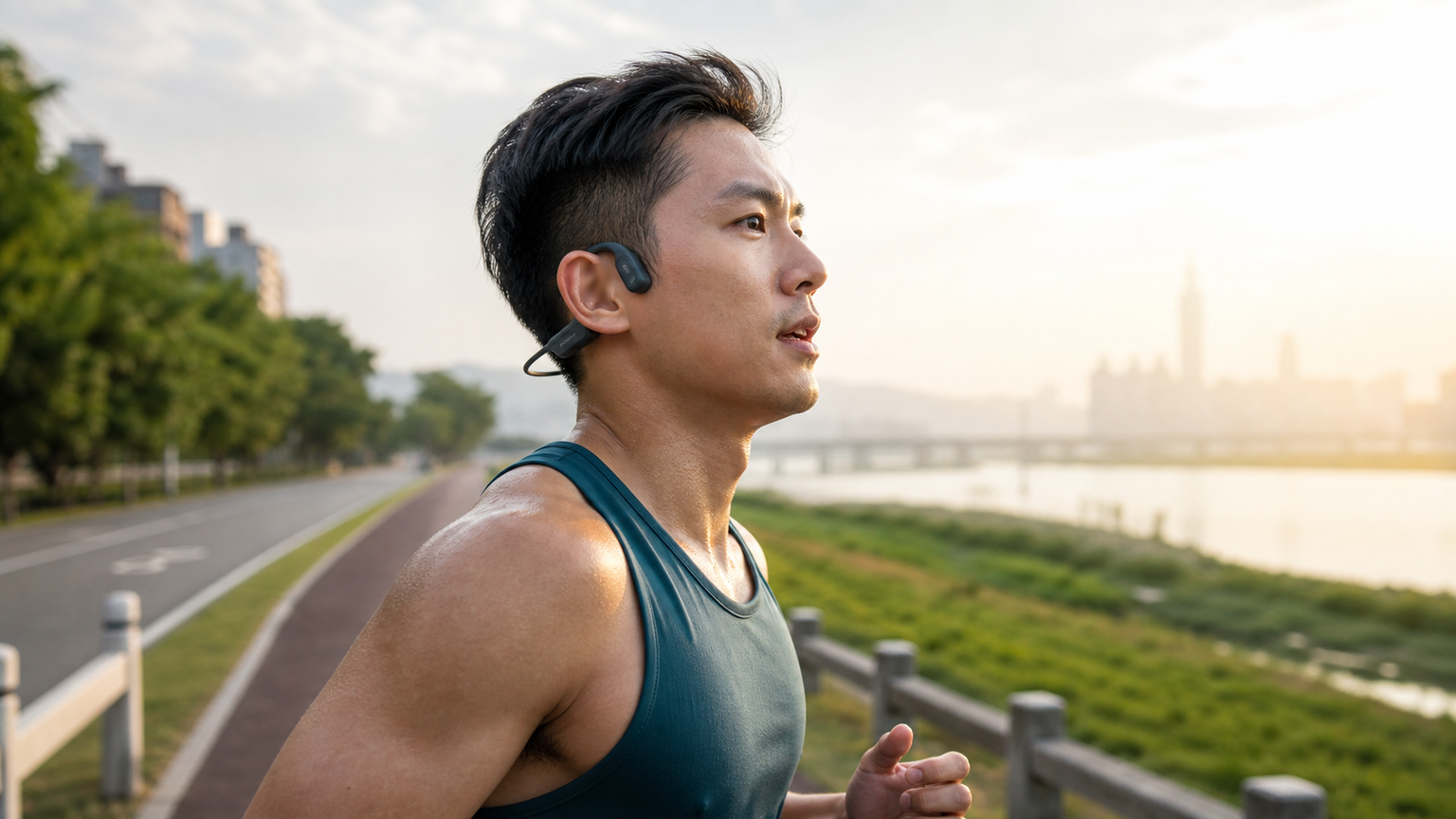
Running Music and Headphone Buying Guide: The Advantages of Bone Conduction Headphones for Outdoor Exercise
Music can boost training motivation, but when running outdoors, headphone choice is a matter of safety. Traditional in-ear headphones block out external sounds, posing a safety hazard when running on roads or trails. This article compares various types of running headphones, with a focus on the pros and cons of bone conduction headphones.
Safety Considerations for Running with Music
Many road race events in Taiwan have regulations prohibiting closed-back headphones, for reasons including:
- Inability to hear vehicles approaching from behind
- Inability to hear instructions from officials or race staff
- Delayed reaction time in emergency situations
A survey by Running USA shows that 75% of road runners use headphones, but fewer than 30% use open-ear or bone conduction designs.
Headphone Type Comparison
In-Ear
The most common headphone type, which almost completely seals off external sound once worn.
Running Suitability Rating: ★★☆☆☆
Pros:
- Best sound quality with strong bass response
- Effective noise isolation (suitable for noisy gym environments)
- Wide range of price options
Cons:
- Unsafe for outdoor running (cannot hear traffic)
- Running vibration may cause the earphones to loosen
- Prolonged ear canal sealing may cause discomfort
- Under Taiwanese regulations, using closed-back headphones while running on roads raises safety concerns
Recommended Scenarios: Indoor treadmills, gym strength training
Open-Ear/Hook
Headphones that hook onto the outer ear rather than inserting into the ear canal, without sealing off external sound.
Running Suitability Rating: ★★★★☆
Pros:
- Retains awareness of ambient sounds
- More comfortable to wear
- Suitable for most road race events
Cons:
- Sound quality not as good as in-ear (more sound leakage)
- May shift position during intense exercise
Representative Products: JBL Endurance Run (hook style), SONY WF-SP900
Bone Conduction Headphones
Bone conduction headphones are the safest choice for outdoor exercise, transmitting sound to the inner ear through vibration of the cheekbones, completely bypassing the ear canal.
Running Suitability Rating: ★★★★★ (outdoor safety)
How Bone Conduction Works
Normal sound transmission path: air vibration → eardrum → ossicles → cochlea → nerve
Bone conduction path: cheekbone vibrator → skull → cochlea → nerve (bypasses the eardrum)
Pros:
- Both ears remain completely open, allowing clear perception of ambient sounds (traffic, footsteps, horns)
- Does not affect ear canal health
- Suitable for outdoor sports requiring environmental awareness
- Generally permitted in road race events
Cons:
- Inferior sound quality (especially bass)
- Cheekbone vibration sensation at high volumes
- Wind noise may overpower music when cycling at speed
- Music leaks to surroundings at high volumes (not suitable for quiet places like libraries)
Bone Conduction Headphone Brand Comparison
Shokz (formerly AfterShokz)
Market leader in bone conduction headphones, with the best sound quality in the category.
OpenRun Pro Series (NT$4,500-5,500):
- Flagship model with noticeably enhanced bass
- IP55 water resistance, suitable for all weather conditions
- 8-hour battery life
- Suitable for both cycling and running
OpenRun Series (NT$3,000-4,000):
- Best value bone conduction option
- Meets the needs of most runners
Naenka Runner (China)
A bone conduction brand that has risen quickly in recent years, offering high value for money.
Runner Pro 3 (NT$2,000-3,000):
- Built-in 32GB storage for standalone music playback (no phone needed)
- Ideal for runners who don’t want to carry a phone in the later stages of a marathon
Bose Ultra Open Earbuds
Open-ear design (not bone conduction), clipped onto the outer ear, with sound quality superior to bone conduction.
- Taiwan price: approximately NT$7,900
- Suitable for outdoor exercisers who prioritize sound quality
How to Choose the Right Running Headphones for You
| Need | Recommended Headphone Type |
|---|---|
| Outdoor running safety first | Bone conduction (Shokz OpenRun) |
| Sound quality first (outdoor) | Open-ear headphones (Bose Ultra Open) |
| Indoor gym | In-ear wireless headphones |
| Long-distance marathon | Bone conduction (lightweight, comfortable, safe) |
| Limited budget | Shokz OpenRun (around NT$3,000) |
Water Resistance Rating Explained
Running sweat and rainy-day cycling both require water resistance:
| Rating | Description | Suitable For |
|---|---|---|
| IPX4 | Splash-proof (from all directions) | Training sweat |
| IPX5 | Resists low-pressure water jets | Rainy-day cycling |
| IPX7 | Can withstand brief submersion (1m/30min) | Swimming (limited) |
| IP55 | Dust-proof + water jet resistant | All-weather outdoor use |
It is recommended to choose running headphones with at least an IPX5 rating.
Conclusion
When choosing headphones for outdoor running and cycling, safety should always take priority over sound quality. Although bone conduction headphones don’t match in-ear models in sound quality, they offer the most balanced choice for outdoor exercise while ensuring you can still hear ambient sounds. The Shokz OpenRun series has a solid reputation and good after-sales service in Taiwan, making it an ideal starting point for most runners.
Related Reading
- Running Headphone Buying Guide: Safety and Sound Quality Comparison Between Bone Conduction and Open-Ear Headphones
- Running Headphone Selection Guide: Comprehensive Comparison of Safety and Sound Quality Between Bone Conduction and In-Ear Headphones
- Road Running Music Device Buying Guide: Safety, Sound Quality, and Running Comfort Comparison of Bone Conduction Headphones
- Running Headphone Buying Guide: Bone Conduction vs In-Ear, Which Is Better for Road Running?
大家都在開箱的...單車用藍芽對講耳機真的有幫助嗎? SENA BiKom 20 長距離旅遊 & 海鷗繞圈賽 實際體驗心得 / 公路車 / CT Yeh
9 個月前
單車 重低音 藍芽喇叭 音質實測 SoundBot SB525 Real Sound Test
8 年前
用了AirTag 單車就不怕被偷?盲點大測試 結果… |公路車|CT Yeh
5 年前
3C開箱) 重低音藍芽喇叭 SoundBot SB526 音質實測 美國聲霸 單車戶外 大音量
7 年前
3C開箱) SoundBot 老車升級智慧音響 SB360 藍芽 免持 接收器 Aux in 手機 汽車音響 美國聲霸
7 年前
白沙屯媽祖進香在家走!UREVO 坡度自調走步機 / 可連接訓練遊戲APP MyWhoosh / 邊看直播邊走起來 / CT Yeh
11 個月前
2026 車錶排行榜!誰是最多車友正在使用?練家子最愛哪款?🏆 (2萬名車友數據) / 公路車 / CT Yeh
5 個月前
#公路車 #Vo2Max #最大攝氧量 測驗 體驗 | 心肺測試
6 年前