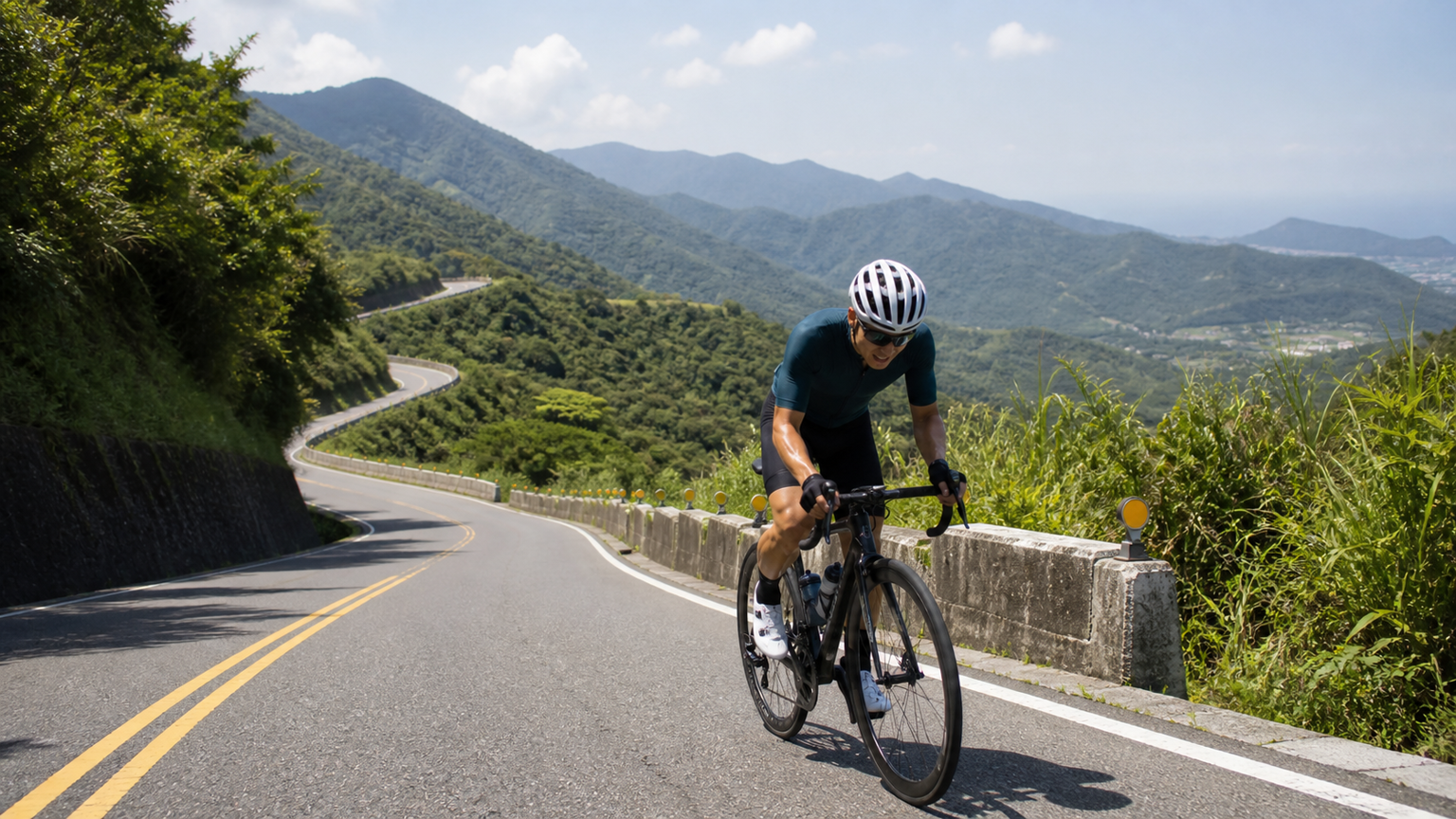
Road Cycling for Beginners: From Choosing a Bike to Your First 100km Ride
Stepping into the world of road cycling is, for many people, a journey full of excitement mixed with a bit of anxiety. This guide will walk you through everything from the basics of choosing a bike to completing your very first 100km ride.
1. Why Choose a Road Bike?
The road bike is defined by its lightweight frame, narrow tires, and drop handlebars, all designed to maximize speed and efficiency on paved roads. Compared to mountain bikes or leisure bikes, every pedal stroke on a road bike converts more power into forward momentum, whether on flats or climbs.
For beginners, the appeal of road cycling includes:
- High fitness value: Engages the quads, glutes, and core muscle groups while providing low-impact aerobic exercise
- Wide range: You can easily cover the distance most people would walk in a full day within just two hours
- Active community: Taiwan has a large number of cycling clubs across the island, making it easy to find riding partners
- Clear goals: Concrete milestones such as “completing 100km” or “conquering Wuling” give you something to work toward
2. Budget Planning
The first question most beginners face is “how much should I spend?” Here are the common entry-level price ranges:
| Budget Range | Bike Category | Representative Models |
|---|---|---|
| NT$15,000–25,000 | Entry-level aluminum | Giant Contend, Merida Scultura |
| NT$25,000–50,000 | Advanced aluminum | Trek Domane AL, Specialized Allez |
| NT$50,000–100,000 | Entry-level carbon fiber | Giant TCR Advanced, Cannondale Synapse |
| NT$100,000+ | High-end carbon fiber | BMC Teammachine, Pinarello GAN |
Recommendation: Beginners don’t need to buy the most expensive bike right away. A NT$20,000–35,000 aluminum bike is more than enough for most riders, and aluminum frames also require less maintenance in Taiwan’s typhoon-prone, salt-air climate.
3. Choosing the Right Frame Size
Frame size is the single most important factor when choosing a bike. The wrong size doesn’t just hurt efficiency — it can also cause knee, back, and neck pain.
Simple Height-to-Size Reference (for guidance only)
| Height | Recommended Frame Size |
|---|---|
| 155–165 cm | XS / 47cm–50cm |
| 165–175 cm | S / 50cm–54cm |
| 175–182 cm | M / 54cm–56cm |
| 182–190 cm | L / 56cm–58cm |
| Above 190 cm | XL / 58cm and up |
The best approach is to visit a physical bike shop for a test ride and ask the staff for a “bike fit” — an adjustment of your riding position to confirm that saddle height and reach match your body proportions.
4. Essential Gear Checklist
Beyond the bike itself, the following gear forms the basic setup for safe riding:
Safety Essentials (non-negotiable)
- Helmet: Certified to CNS, CE, or CPSC standards, budget NT$1,000–5,000
- Bike lights: White in front, red in back — essential for night riding or tunnels
- Reflective vest or clothing: Especially important given Taiwan’s sometimes low visibility on roads
Riding Efficiency Gear
- Clipless pedals and cycling shoes: Improve pedaling efficiency by 20–30%, though they take practice to get used to
- Gloves: Reduce hand numbness and improve grip comfort
- Cycling shorts: Padded cycling shorts greatly reduce saddle discomfort on long rides
Repair Tools
- 2 spare inner tubes
- A pump or CO₂ inflator
- Tire levers
- A hex wrench set
5. Training Plan: Working Toward Your First 100km
If you’re completely new to endurance sports, we recommend a 12-week progressive plan to gradually build up your mileage.
Weeks 1–4: Building the Foundation
- Ride 3 times per week, 30–50km each session
- Keep your heart rate at 60–70% of max (a pace where you can still hold a conversation)
- Focus: learning to shift gears, drink water, and establish a fueling rhythm
Weeks 5–8: Increasing Intensity
- Ride 3–4 times per week, with one longer ride of 60–70km
- Add one interval session per week (climbs or fast segments)
- Focus: controlling your cadence, aiming for 85–95 rpm
Weeks 9–12: The Final Push to 100K
- One long ride per week, increasing distance from 80 → 90 → 100km
- Keep other days as recovery rides (easy 40–50km)
- Focus: fueling strategy — refuel with an energy bar or banana every 45 minutes
6. Preparing for Your 100km Day
The Day Before
- Make sure you get enough sleep (7–8 hours)
- Do a final bike check: tire pressure, brakes, gears
- Prepare your supplies: 2–3 bottles of water, 3–4 energy bars or rice balls
Race/Ride Day
- Eat breakfast 1.5–2 hours before departure (focus on carbohydrates)
- Warm up for 10 minutes
- Keep an easy pace for the first 30km — don’t let other riders pull you into going too fast
- Refuel every 45–60 minutes; don’t wait until you feel hungry to eat
7. Recovery After the Ride
After your first 100km, your muscles need 48–72 hours to recover. During this period:
- Increase protein intake (1.2–1.6g per kg of body weight)
- Do light stretching, especially for the front and back of the thighs and the glutes
- Avoid jumping straight into high-intensity training
Completing your first 100km ride is a milestone every road cyclist remembers. Remember, speed and time don’t matter — what matters is finishing safely, enjoying the process, and looking forward to your next, longer challenge.
Related Reading
- How to Choose Your First Road Bike? A Complete Buying Guide Under NT$30,000
- How to Choose Your First Road Bike: A Complete Beginner’s Buying Guide
- How to Choose Your First Road Bike? Budget Allocation, Used Bike Tips, and Common Buying Mistakes
- Road Bike Buying Guide: How to Spend Your NT$30,000–$60,000 Budget
單車 一日北高 ( 雙城 ) 肥宅雙人瘋狂行 紀錄片 REACTO
10 年前
太平山單車員工旅遊 | 這樣玩CP值最高!| 公路車
5 年前
滑雪新手們慘摔學習全紀錄(請開字幕),滑雪好好玩 | Snowboard + Ski | 岩原 スキー場 | 滑雪APP使用 | GoPro Max
6 年前
一日北高常見問題大集合 | 攻略 | 路線 | 訓練 | 補給 | 自行車 單車 | 一日雙城 | 雙塔 | TWB北高360 | 屁股痛
6 年前
公路車 | 塔塔加驚險員工旅遊 | 還好手腳快沒被抓交替!
5 年前
碟煞公路車 優缺點?換車一年半實際經驗分享 / 公路車 / CT Yeh
2 年前
梅山36彎 奮起湖 #公路車 之旅 2400m
6 年前
新屋團體繞圈賽 | 眾多菁英好手賽道奔馳 | 千瓦女子軍團 | 無敵交管狂獲好評 明年你一定不能錯過 | #公路車
5 年前